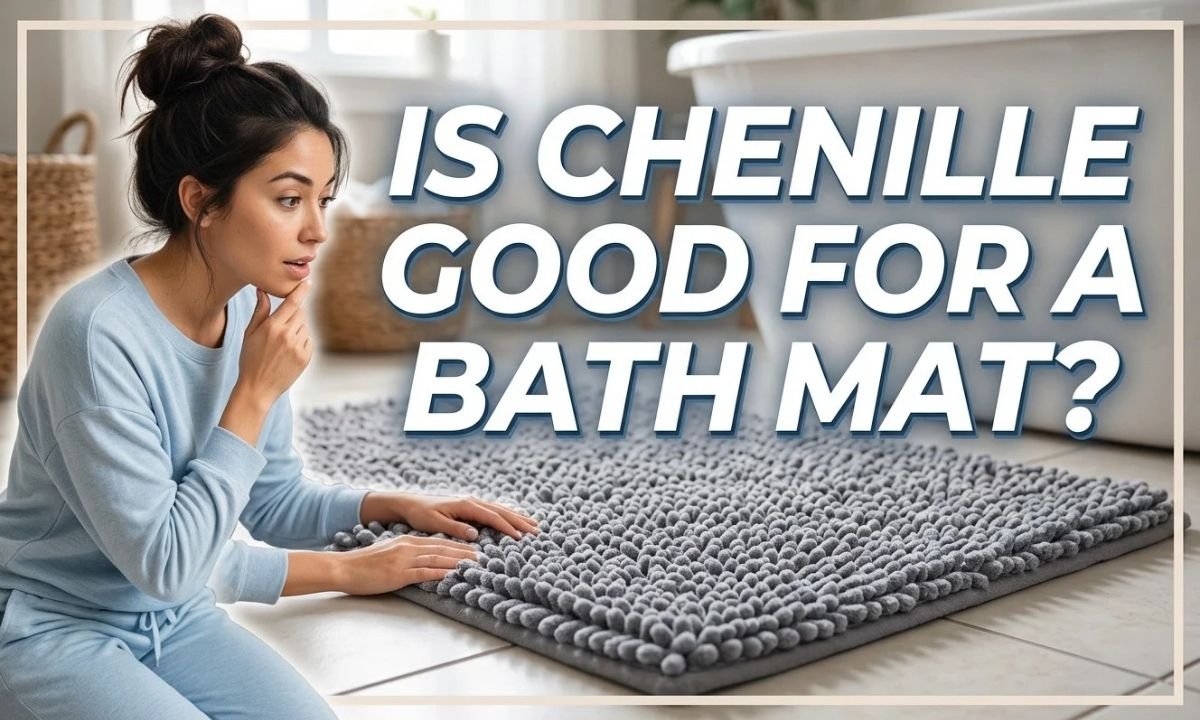
Yes. Chenille can be an excellent material for a bath mat because its soft, textured pile can absorb moisture while giving your feet a comfortable surface after a shower. The best choice depends on what the chenille is made from, how densely it is constructed, how quickly it dries, and whether the backing provides reliable grip.
In U.S. homes, a bath mat has to handle a simple but demanding routine: wet feet coming out of a shower or tub, hard bathroom flooring, frequent laundering, and the need to dry between uses. Chenille is well suited to that job when the mat is properly constructed. Its raised yarns create a textured surface that can pick up moisture and feel noticeably softer than many flat bathroom rugs.
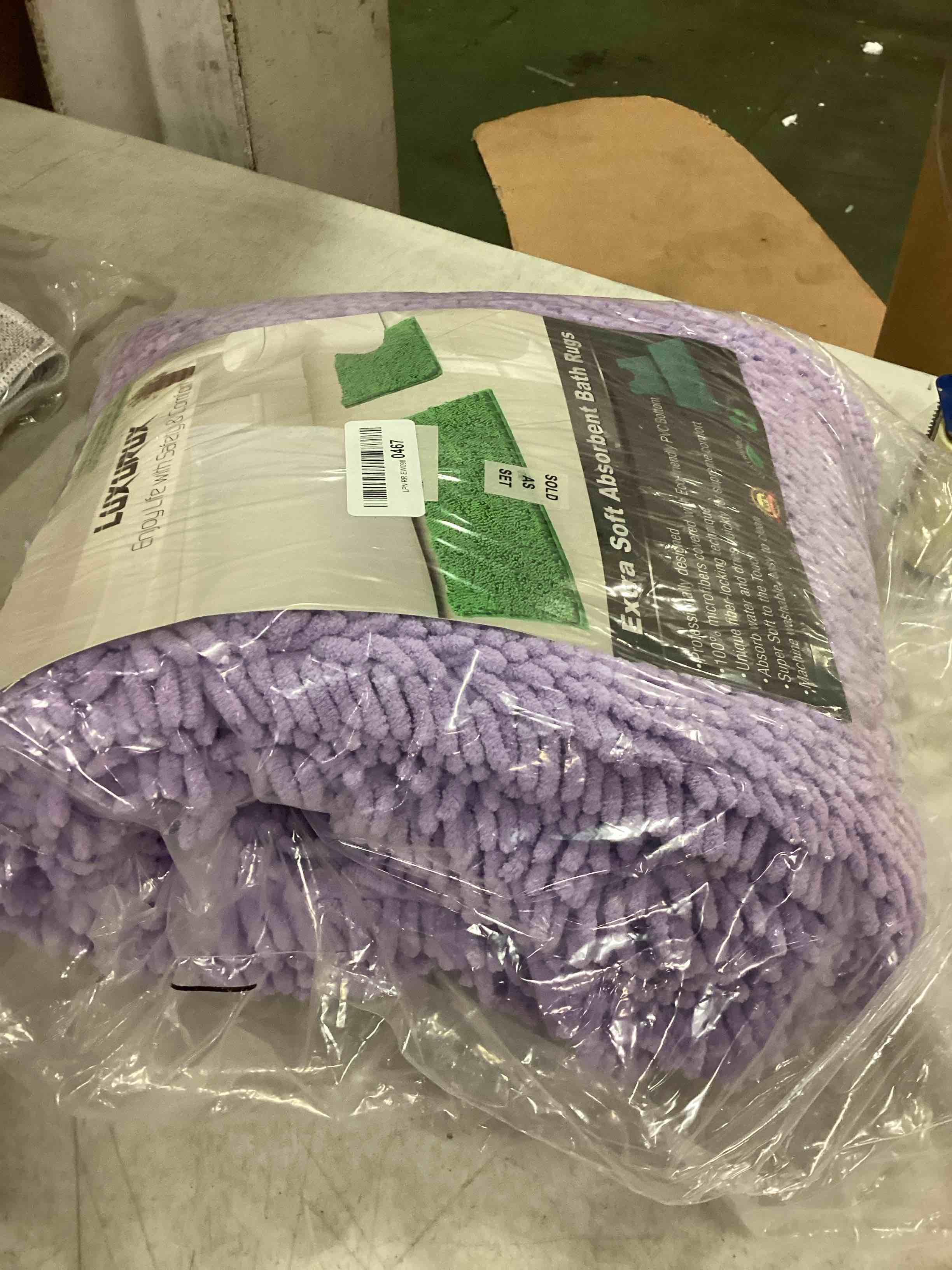
There is one detail that often gets overlooked when shopping for chenille bath mats: chenille describes a type of yarn or fabric construction, not one specific fiber. A chenille bath mat may use polyester or microfiber, cotton, or a blend. That difference affects absorbency, drying speed, feel, washability, and durability. For most U.S. bathrooms, microfiber chenille is attractive when quick moisture pickup and plushness are priorities, while cotton chenille can appeal to people who prefer a natural fiber.
Chenille is not automatically the safest or fastest-drying option simply because it is absorbent. The backing matters just as much. A soft textile surface can still move on a smooth bathroom floor if the backing is unsuitable, worn, or placed over a wet floor. For everyday use, look for a well-constructed mat with an appropriate non-slip backing and follow the manufacturer’s care instructions.
Source: s3.amazonaws.com
Why Chenille Works Well for Bath Mats
Chenille works well as a bath mat because its construction creates a soft, textured pile with many exposed yarn surfaces. Those raised fibers can contact wet feet and help move moisture away from the skin. The same construction also gives chenille its characteristic plush feel, which is one reason it is widely used for bathroom rugs.
The practical advantage is most noticeable when you step out of a shower or bath onto a dry mat. Instead of standing directly on cold tile, vinyl, or another hard floor, your feet meet a cushioned textile surface that can collect some of the water left on your skin. A sufficiently absorbent mat can also help reduce the amount of water transferred onto the surrounding floor.
However, the word chenille does not tell you everything about performance. A thin, loosely constructed cotton chenille mat and a thick microfiber chenille mat can behave differently. Fiber type, pile height, density, backing, overall thickness, and ventilation all influence how useful the mat will be.
Source: n.nordstrommedia.com
Soft underfoot
Chenille is valued for its plush texture, making it comfortable for bare feet after bathing or showering.
Good moisture pickup
The textured pile gives water plenty of fiber surface to contact, although actual absorbency varies with fiber and construction.
Warm-feeling surface
A raised textile pile provides more separation from cold bathroom flooring than a very thin flat mat.
Decorative versatility
Chenille bath rugs are available in many colors, pile styles, patterns, and sizes, making them easy to coordinate with common U.S. bathroom layouts.
Chenille Is a Construction, Not a Single Material
This distinction is essential when comparing bath mats. Chenille yarn can be produced from different fibers, so two products labeled chenille may have different performance characteristics. Many contemporary bath mats use polyester or microfiber chenille because synthetic fibers can be formed into plush, highly textured piles. Other mats use cotton chenille for a more traditional textile feel.
When a product description simply says chenille, check the material specification before deciding whether it is right for your bathroom. If you want fast moisture pickup and relatively simple maintenance, microfiber chenille is often worth considering. If natural fiber is a priority, cotton chenille may be more appealing, but you should still evaluate its drying requirements and construction.
Microfiber or polyester chenille
Often chosen for soft, plush construction and quick moisture pickup. Exact performance depends on the fiber specification and pile design.
Cotton chenille
Provides a natural-fiber option with a soft textile feel. Drying behavior and durability depend on the weave, pile, weight, and backing.
Blended chenille
Combines different fibers and can balance softness, absorbency, appearance, and maintenance, but the blend percentage should be checked.
Is Chenille Absorbent Enough for a Bath Mat?
Yes, chenille can provide very good moisture absorption, but absorbency should not be judged from the chenille label alone. The amount of water a bath mat can pick up depends on its fiber chemistry, pile structure, weight, density, and backing. A thick microfiber chenille mat can feel highly absorbent because its textured surface offers a large amount of fiber area for water to contact.
For everyday use, think about two separate properties: initial water pickup and total water capacity. A mat may pick up water quickly from your feet without being able to hold large amounts of water indefinitely. Once the pile becomes saturated, additional water may remain on the surface or move through to the floor.
This is why a chenille mat should be paired with a realistic bathroom routine. A single-person bathroom with good ventilation may have plenty of time for a chenille mat to dry between showers. A busy family bathroom with several showers close together may require a thinner or faster-drying construction, more frequent rotation, or a second mat.
Source: ak1.ostkcdn.com
Look at fiber type
Microfiber and polyester chenille can be engineered for rapid moisture pickup, while cotton relies on the natural absorbency of its cellulose fibers.
Consider pile density
A dense pile can provide more material for moisture pickup, but very thick construction may also retain more water and require more drying time.
Check the backing
A waterproof or water-resistant backing can limit how much moisture reaches the floor, but it can also reduce airflow through the underside.
Think about bathroom traffic
A mat used by several people in quick succession has a greater drying challenge than one used by a single person once or twice a day.
Absorbency Does Not Mean the Mat Stays Dry
A common mistake is treating high absorbency as automatically better. A mat that absorbs a large amount of water but remains damp for a long time may be less convenient than a slightly thinner mat that dries more readily. Persistent dampness can also make the bathroom feel less fresh and can contribute to unpleasant odors when the mat is not washed and dried properly.
The best balance is enough absorbency to handle the water coming from normal post-shower use without creating a permanently damp textile. If your bathroom has limited ventilation, prioritize a construction that can be lifted, hung, or otherwise exposed to moving air after use.
For frequent showers
Choose a construction that can release moisture efficiently and consider rotating mats if the first mat is still damp when the next shower begins.
For poorly ventilated bathrooms
Avoid choosing a mat solely for maximum thickness. Drying behavior may matter more than extra plushness.
How Chenille Compares With Other Bath Mat Materials
Chenille is a strong all-around choice, but it is not automatically the best material for every bathroom. Cotton, microfiber, memory foam, bamboo, and stone-style bath mats each solve a slightly different problem. The right comparison depends on whether your priority is absorbency, drying speed, cushioning, natural fibers, or easy maintenance.
For many shoppers, the most useful comparison is chenille versus cotton. Both can be soft and absorbent, but their behavior depends heavily on the specific construction. Microfiber chenille generally emphasizes rapid moisture pickup and plushness, while cotton bath mats can provide a traditional textile feel and strong moisture capacity. Neither label alone guarantees better performance.
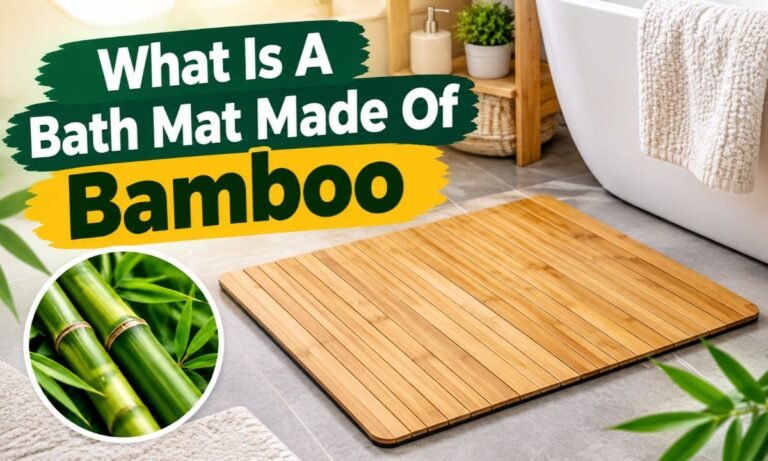
Memory foam is different because its main advantage is cushioning rather than textile absorbency. Bamboo and rigid mineral-style mats prioritize drainage or rapid surface drying rather than a plush underfoot experience. A chenille mat is therefore most attractive when you want a combination of softness, moisture pickup, and a conventional washable bathroom rug.
Source: tvcmall.com
Chenille
Best suited to shoppers who want a soft, textured, absorbent surface and a conventional bathroom-rug appearance.
Cotton
A good option for people who prefer natural fiber and a classic textile feel, provided the mat can dry adequately.
Microfiber
Useful when quick moisture pickup and relatively fast drying are high priorities. Many microfiber bath mats use a chenille-style construction.
Memory foam
Better suited to shoppers who prioritize cushioning at the sink or vanity rather than maximum textile absorbency.
Bamboo or rigid mats
Useful when drainage, a firm surface, or a minimalist appearance matters more than softness.
Chenille vs. Microfiber: They Are Not Opposites
Chenille and microfiber are sometimes presented as competing materials, but they describe different aspects of a textile. Chenille refers primarily to the yarn or surface construction, while microfiber refers to very fine fibers. A bath mat can therefore be made from microfiber chenille. In fact, many plush bathroom rugs combine the two concepts.
When comparing products, read the full material description instead of assuming that a product labeled chenille is made from cotton or that a product labeled microfiber cannot be chenille. This small distinction makes product comparisons much more accurate.
Chenille answers the construction question
It describes the characteristic fuzzy, textured yarn or pile used to create the surface.
Microfiber answers the fiber question
It describes very fine synthetic fibers commonly used to create soft, absorbent textiles.
Are Chenille Bath Mats Safe on Bathroom Floors?
A chenille bath mat can be safe for everyday bathroom use, but safety depends heavily on the backing and how the mat is placed. The soft chenille surface itself is not what keeps the mat from sliding. That job belongs to the backing and the interaction between the backing and the floor.
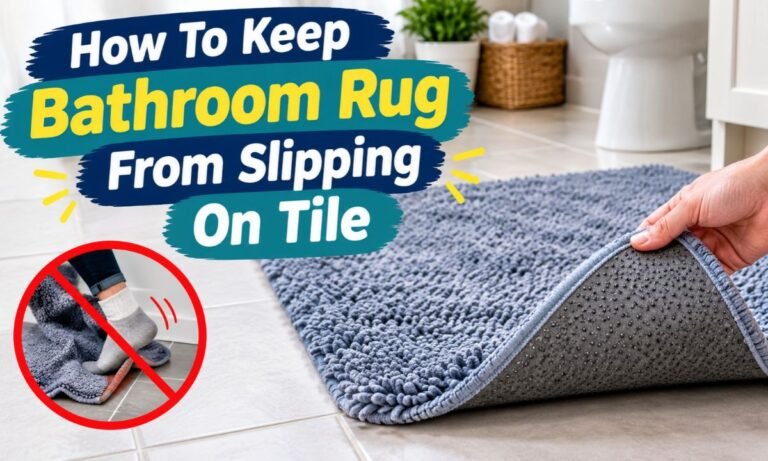
For U.S. bathrooms with smooth tile, vinyl, laminate, or other hard surfaces, look for a backing specifically designed to reduce movement on the intended floor type. Common backing materials include PVC, rubber, EVA, and other coatings. Do not assume that every non-slip backing works equally well on every floor.
Keep the underside of the mat and the floor beneath it clean and appropriately dry. Water trapped underneath can reduce traction and create a slipping hazard. A mat that has developed a damaged, cracked, peeling, or degraded backing should be replaced rather than treated as if its original grip is still reliable.
Source: n.nordstrommedia.com
Use the mat on an appropriate surface
Follow the manufacturer’s instructions for the flooring type and placement conditions.
Keep the underside clean
Dirt, residue, and moisture can interfere with how the backing contacts the floor.
Inspect the backing regularly
Replace the mat if the backing becomes brittle, cracked, peeling, severely worn, or unable to keep the mat stable.
Do not confuse a bath rug with an in-shower mat
A textile chenille rug intended for the bathroom floor should not automatically be placed inside a tub or shower. Use a product specifically designed for that wet environment when required.
Why the Backing Can Matter More Than the Chenille
If two bath mats have similarly absorbent chenille surfaces but different backing systems, the backing can be the deciding factor for practical use. A plush mat that moves when stepped on can create a bigger problem than a less luxurious mat that remains stable.
Backing also affects maintenance. Some rubber, PVC, and EVA materials can be damaged by excessive heat or unsuitable cleaning methods. Always use the care instructions supplied with the specific mat rather than applying a generic laundry routine.
Stable placement
The mat should remain where you place it instead of bunching, curling, or sliding under normal foot traffic.
Dry underside
Keeping moisture from accumulating beneath the mat helps preserve traction and protects the flooring.
Good condition
A damaged backing is a reason to replace the mat, even if the chenille surface still looks attractive.
How to Care for a Chenille Bath Mat
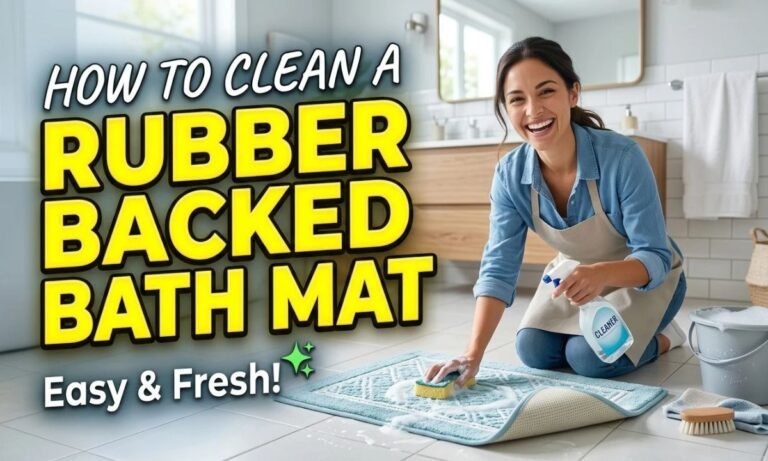
The safest way to care for a chenille bath mat is to follow its specific care label because chenille surfaces and backing materials can have very different requirements. A mat with a washable polyester surface and a rubber or PVC backing should not automatically be treated like an ordinary cotton towel.
Regular cleaning matters because bath mats collect water, skin oils, hair, dust, and bathroom debris. Launder the mat according to the manufacturer’s recommended schedule and conditions. Between washes, allow it to dry thoroughly rather than leaving it bunched on the floor.
High heat deserves particular attention. Some textile surfaces tolerate machine drying, while certain non-slip backings can deteriorate when repeatedly exposed to excessive heat. If the care label permits machine drying, use the temperature specified by the manufacturer. If it recommends air drying, follow that instruction.
Source: tvcmall.com
Check the care label first
The manufacturer’s instructions take priority because fiber content, pile construction, and backing materials vary.
Shake out loose debris
Removing hair, lint, and grit before washing can reduce unnecessary debris in the washing machine.
Use appropriate detergent
Use the detergent and wash temperature recommended on the care label. Avoid bleach unless the manufacturer specifically permits it.
Avoid excessive heat
High heat can damage some synthetic fibers or non-slip backing materials, so follow the specified drying temperature.
Dry completely
Return the mat to the bathroom only after it is thoroughly dry, particularly when the bathroom has limited ventilation.
Signs It Is Time to Replace a Chenille Bath Mat
A chenille bath mat does not have a fixed replacement date because service life depends on construction, traffic, washing frequency, and care. Instead, inspect the mat periodically. Persistent odor after proper washing and drying, severe flattening, significant fraying, damaged edges, or a deteriorating non-slip backing are practical warning signs.
The backing deserves special attention because a mat can still look attractive from the top while becoming less stable underneath. If the backing has started peeling, cracking, shedding material, or losing its ability to keep the mat in place, replacement is usually more sensible than continuing to use it.
Persistent odor
If odor remains after proper laundering and complete drying, the mat may no longer be practical for regular bathroom use.
Flattened or damaged pile
Severe compression, shedding, or fraying can reduce comfort and moisture-handling performance.
Worn backing
Cracking, peeling, or loss of grip indicates that the mat may no longer provide the intended stability.
Who Should Choose a Chenille Bath Mat?
Chenille is a particularly good choice if your main priorities are softness, a plush bathroom feel, and reliable moisture pickup from wet feet. It works well in many U.S. homes where the bath mat sits outside the shower or tub and is washed regularly.
It may be less suitable if your bathroom has very poor airflow, the mat is used repeatedly without enough time to dry, or you strongly prefer a thin, lightweight mat that can be dried quickly. In those situations, a lower-pile microfiber construction or another quick-drying design may be more practical.
The best chenille bath mat is therefore not necessarily the thickest or softest one. Look for a balance between absorbency, drying time, stability, care requirements, and the amount of bathroom traffic the mat will handle.
Source: sc04.alicdn.com
Choose chenille if softness is a priority
The raised pile gives chenille bath mats a noticeably cushioned and comfortable feel under bare feet.
Choose microfiber chenille for quick moisture handling
Microfiber chenille can be a practical option when fast moisture pickup and relatively easy maintenance are important.
Choose cotton chenille for a natural-fiber preference
Cotton chenille can suit shoppers who prefer natural textile fibers and a classic bath-rug feel.
Consider alternatives for poor ventilation
If your bathroom stays humid for long periods, prioritize drying performance rather than simply choosing the thickest pile.
A Simple Buying Checklist
Before buying a chenille bath mat, read beyond the product title. Confirm the fiber content, dimensions, backing material, washing instructions, drying instructions, and intended placement. For U.S. shoppers, checking the actual dimensions in inches is especially useful because a mat that looks large online may be too small for the space beside a standard tub, shower, or vanity.
Also consider whether you want a single mat or multiple mats that can be rotated. A second mat can be useful in a high-traffic bathroom because it gives the first mat time to dry completely while the clean mat is in use.
Fiber content
Identify whether the chenille is polyester, microfiber, cotton, or a blend.
Pile height
Higher pile can feel plusher, but more material can also retain more moisture.
Backing
Check the backing type and whether the manufacturer lists it as appropriate for your flooring.
Size
Measure the available floor area in inches before ordering, especially around toilets, tubs, shower doors, and vanities.
Care
Confirm that the washing and drying method fits your household routine and available laundry equipment.
Frequently Asked Questions
Q
Is chenille better than cotton for a bath mat?
Neither is universally better. Microfiber chenille is often appealing when you want plushness and quick moisture pickup, while cotton can be preferable if you want a natural fiber and traditional textile feel. The specific construction, thickness, backing, and drying conditions matter more than the material name alone.
Q
Does chenille dry quickly?
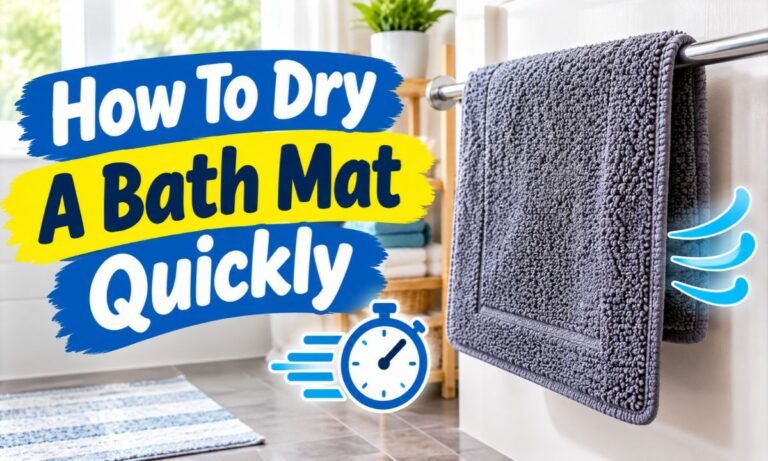
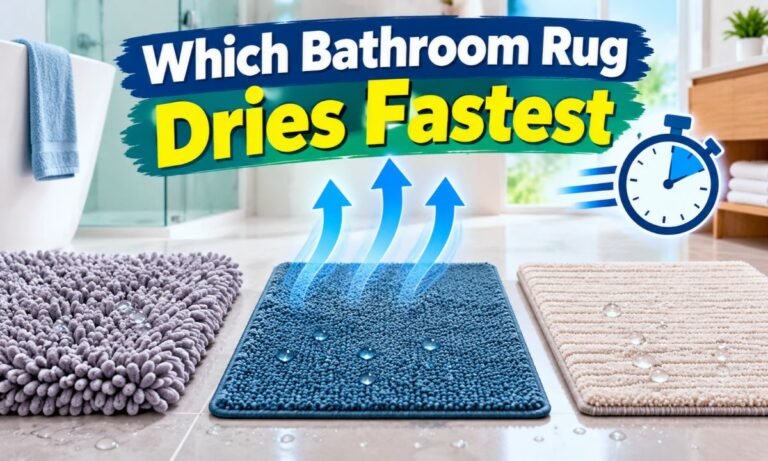
Chenille can dry reasonably well, but drying speed varies considerably. A thin or lower-pile microfiber chenille mat may dry more readily than a very thick chenille mat. Backing, humidity, airflow, and how much water the mat has absorbed also affect drying time. In a humid bathroom, hanging or otherwise exposing the mat to moving air can help it dry more completely.
Q
Are chenille bath mats machine washable?
Many chenille bath mats are machine washable, but you should not assume that every chenille mat can be washed the same way. Check the care label for the correct water temperature, cycle, detergent, and drying method. Mats with rubber, PVC, EVA, or other non-slip backings may have restrictions on heat or drying.
Q
Is chenille safe for bathroom floors?
A chenille bath mat can be safe when it has an appropriate non-slip backing and is used under the conditions specified by the manufacturer. Keep the floor and underside of the mat appropriately dry and inspect the backing for wear. Do not assume that a textile chenille bath rug is suitable for placement inside a tub or shower unless it is specifically designed and labeled for that use.
Q
What is the best chenille bath mat for a humid bathroom?
For a humid bathroom, prioritize a construction that can dry thoroughly between uses rather than simply choosing the thickest pile. A relatively low or moderate pile, breathable placement, good ventilation, and appropriate laundering can be more useful than maximum plushness. If the mat remains damp for long periods, consider rotating it with a second mat or choosing a faster-drying alternative.
✦ Wrapping Up
Conclusion
So, is chenille good for a bath mat? Yes. Chenille is a strong choice when you want a soft, comfortable surface that can absorb moisture after a shower or bath. Its textured construction makes it especially appealing for people who dislike stepping onto cold, hard bathroom flooring.
The key is to look beyond the word chenille. Check whether the mat uses microfiber, polyester, cotton, or a blend; consider how thick and dense the pile is; inspect the backing; and make sure the mat can dry adequately in your bathroom. A plush chenille mat may feel wonderful but can be less practical if your bathroom stays humid and the mat never gets a chance to dry.
For most households, a well-made microfiber chenille bath mat with a suitable non-slip backing offers a useful balance of softness, moisture pickup, appearance, and everyday practicality. If natural fiber is your priority, cotton chenille can also be a good option when its drying and care requirements fit your routine.
💡 Key Takeaway
Before buying, compare the fiber content, pile thickness, backing, dimensions, and care instructions. Choose the chenille bath mat that matches your bathroom’s ventilation, floor type, traffic level, and drying routine rather than choosing solely by softness or appearance.
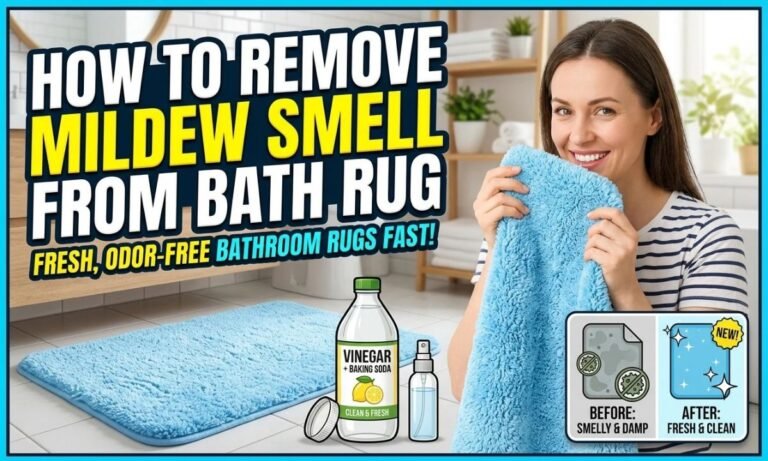
Learn how to remove mildew smell from a bath rug using washing, deodorizing, and proper drying. Includes tips for rubber-backed rugs and stubborn odors.



One Comment