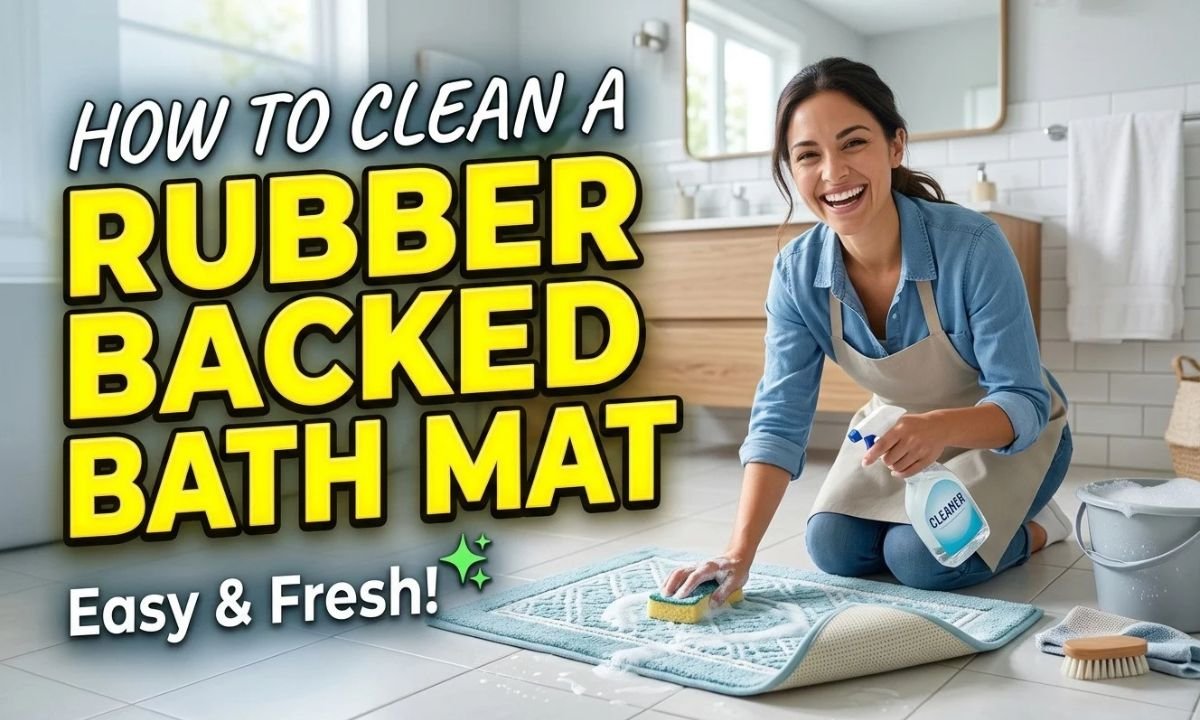
The safest way to clean a rubber backed bath mat is to check its care label, remove loose dirt, wash it with cool water and mild detergent when machine washing is allowed, and air dry it completely. Avoid high heat, harsh cleaners, and wringing because they can damage the rubber backing.
In U.S. homes, rubber backed bath mats are common in bathrooms because they add a layer of comfort and help keep the mat from sliding on smooth floors. The same rubber or latex backing that provides grip also needs special care. Heat, harsh chemicals, and rough handling can cause the backing to crack, peel, or lose its grip.
Before cleaning, look for the care label attached to the mat. Some rubber backed mats are machine washable, while others should be hand washed or spot cleaned. When the label is missing, a gentle hand-cleaning method with mild detergent and cool water is a cautious starting point.
A clean mat should be free of visible dirt, soap residue, and musty odor. It should also be completely dry before you place it back on the bathroom floor. Keeping the mat dry between uses is just as useful as the cleaning itself because moisture can encourage mildew and unpleasant odors.
Source: tipsbulletin.com
What You Need Before Cleaning a Rubber Backed Bath Mat
Gather a few basic supplies before you start. You usually do not need a specialty bathroom cleaner. Mild liquid laundry detergent, cool or lukewarm water, a soft brush or cloth, and a clean place to dry the mat are enough for routine cleaning.
If the mat has heavy staining or visible mildew, start with the care label rather than choosing a stronger chemical. Different backing materials can react differently to cleaners, so the manufacturer’s instructions should take priority.
Source: pinterest.com
Mild liquid detergent
Use a small amount of mild detergent that can rinse away easily. Too much detergent can leave residue in the fabric.
Soft brush or cloth
A soft brush can loosen dirt from textured fabric without the aggressive scrubbing that can wear the backing.
Cool or lukewarm water
Cooler water is a cautious choice for rubber backed mats because excessive heat can shorten the life of the backing.
Drying rack or clean surface
Choose a well-ventilated place where the mat can dry fully without direct heat.
Check the Care Label First
The care label is the most important instruction for your particular mat. Look for directions about machine washing, water temperature, detergent, drying, and restrictions such as spot cleaning only.
If the label says hand wash or spot clean, do not assume that a general washing-machine method is safe. Construction varies between cotton, microfiber, chenille, latex-backed, and other bath mats.
Machine washable
Use the permitted water temperature and cycle, then follow the label’s drying instructions.
Hand wash only
Clean the mat in a tub or large basin with mild detergent and gentle handling.
Spot clean only
Treat individual dirty areas instead of soaking or machine washing the whole mat.
How to Clean a Rubber Backed Bath Mat by Hand
Hand washing is a useful option when the label does not allow machine washing or when the rubber backing is older and you want to minimize mechanical stress. The basic process is simple: shake off loose debris, wash gently, rinse thoroughly, and air dry.
Start by taking the mat outside or to an easy-to-clean area and shake it gently. Remove hair, lint, and loose dirt before adding water. This keeps loose debris from turning into muddy residue during washing.
Source: storables.com
Step 1: Remove loose dirt
Shake or gently vacuum the fabric side to remove hair, dust, lint, and loose particles.
Step 2: Prepare the water
Fill a bathtub, basin, or large utility sink with cool or lukewarm water and add a small amount of mild detergent.
Step 3: Clean the fabric
Submerge the washable portion and gently work the soapy water through the fibers with your hands or a soft brush.
Step 4: Clean the backing
Turn the mat over and gently wipe the rubber side with a soft cloth or brush. Pay attention to grooves and textured areas where dirt can collect.
Step 5: Rinse thoroughly
Rinse with clean water until the water runs clear and you no longer feel a slippery detergent film.
Step 6: Remove excess water
Press the mat gently to release water. Do not twist or aggressively wring it because bending and twisting can stress the backing.
How to Handle a Mat With Suction Cups
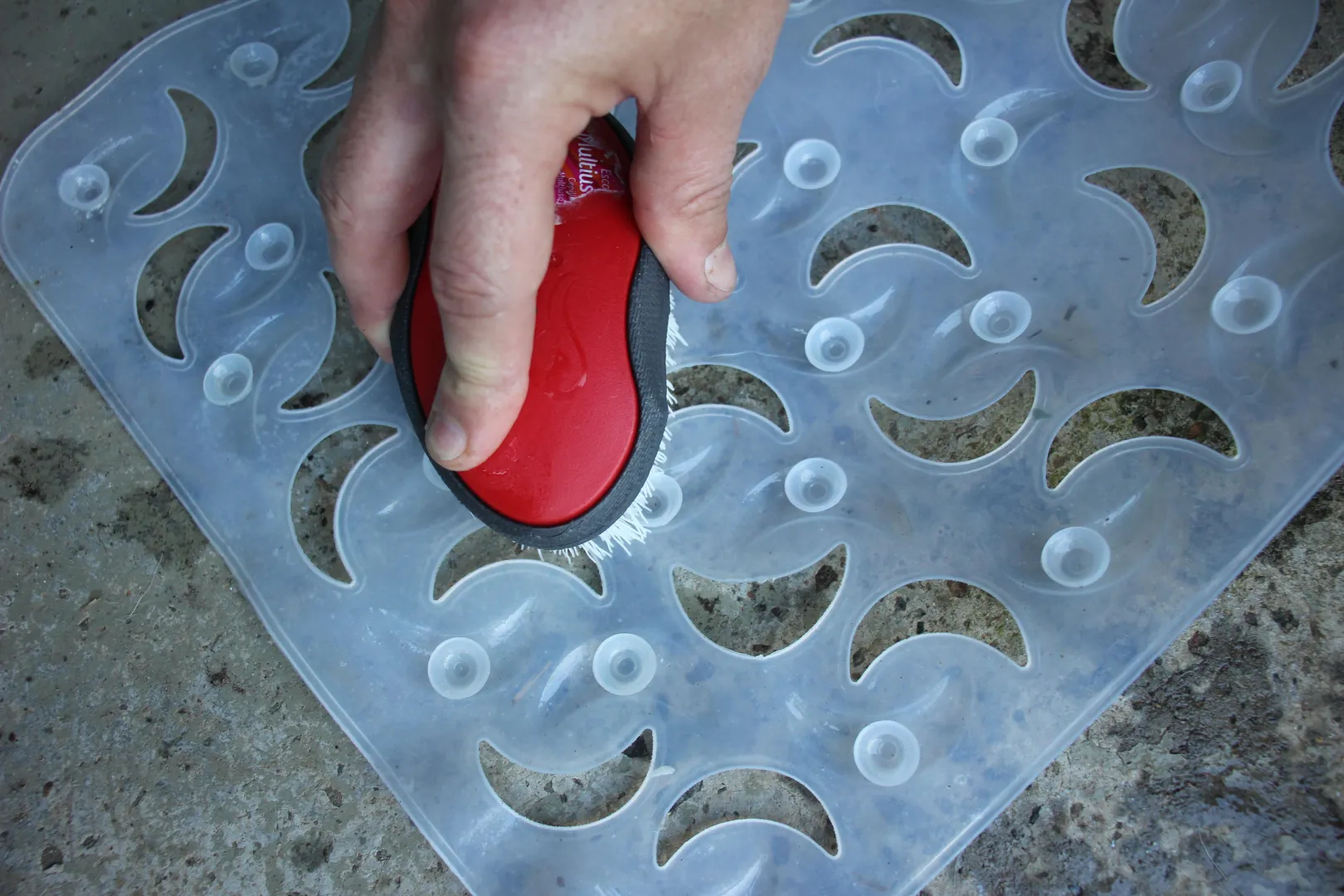
If the mat has suction cups, clean around each cup because dirt and moisture can collect underneath them. Lift the mat from the bathroom floor instead of dragging it across the surface.
Use a soft brush around the suction cups and textured underside. Rinse away all loosened residue, then dry the mat with the suction-cup side exposed to moving air.
Inspect every suction cup
Check for trapped hair, soap residue, dark spots, or damaged rubber.
Do not scrape aggressively
Avoid sharp tools that could cut or gouge the rubber.
How to Machine Wash a Rubber Backed Bath Mat
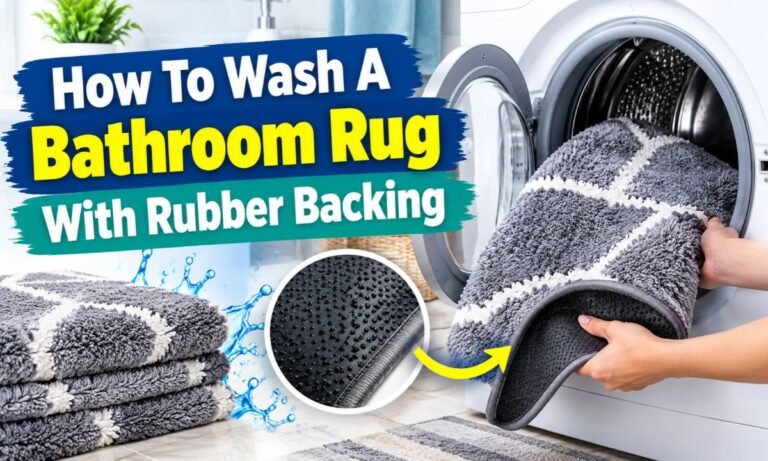
If the care label says the mat is machine washable, use a gentle approach. Cool water and a gentle cycle are a sensible default for protecting the backing, but the label’s specific instructions should always take priority.
Before washing, remove loose dirt and inspect the rubber. If you see extensive cracking, peeling, or crumbling, hand cleaning or replacement may be more appropriate than putting the damaged mat through a washer.
Source: myhomemyglobe.com
Use a gentle cycle
Choose the gentlest machine cycle permitted by the care label rather than a heavy-duty cycle.
Use cool water
Cool water is a conservative choice when the label does not require a higher temperature.
Use mild detergent
Measure detergent according to the product directions and avoid adding more than needed.
Avoid overloading
Give the mat enough room to move through the wash without packing the machine tightly.
Remove it promptly
Take the mat out when the wash cycle finishes so it does not sit wet inside a closed washer.
Should You Wash It With Towels?
Do not automatically add a rubber backed bath mat to a large load of towels. The mat can become heavy when saturated, and extra friction may put unnecessary stress on an aging backing. If the care label permits machine washing, a small, balanced load is generally easier to manage.
The manufacturer’s instructions should decide whether the mat can be washed with other items. If the mat is delicate or already showing signs of backing failure, hand washing is the more cautious option.
Small balanced load
Avoid stuffing the washer with heavy fabrics that increase friction and weight.
Separate when needed
Wash the mat separately if its care instructions recommend it or if the backing is fragile.
How to Remove Mildew, Odor, and Stains
Persistent odor or dark buildup usually means the mat needs more than a quick rinse. Start with gentle cleaning and make sure the mat dries completely. A damp mat left flat on a bathroom floor can develop odors again even after washing.
For a washable mat with a stain, spot test any cleaning solution on a hidden area first. Avoid assuming that a strong cleaner is better. Rubber, latex, fabric, dyes, and adhesives can have different tolerances.
Source: howtocleaneasily.com
For ordinary dirt
Use mild detergent and a soft brush, then rinse thoroughly.
For musty odor
Clean the mat thoroughly and focus on complete drying. Persistent odor can indicate that moisture is trapped in the backing or that the material is deteriorating.
For visible mildew
Follow the care label and use only a cleaner compatible with the mat’s materials. Rinse thoroughly after cleaning.
For stubborn stains
Pre-treat a small area only after confirming that the cleaner is suitable for the fabric and backing.
Why You Should Be Careful With Bleach
Chlorine bleach is not a good default cleaner for a rubber backed bath mat. It can damage some rubber, textile fibers, dyes, and backing materials. Unless the manufacturer specifically permits it for your mat, choose a gentler cleaning method.
Never mix bleach with vinegar, ammonia, or other household cleaners. Combining incompatible cleaners can create dangerous fumes.
Read the label
Use the manufacturer’s cleaning instructions before applying a chemical treatment.
Never mix cleaners
Use one cleaning product at a time and follow its label directions.
How to Dry a Rubber Backed Bath Mat Without Damaging It
Drying is one of the most important parts of caring for a rubber backed bath mat. Unless the care label specifically allows machine drying, air drying is the safer default. High heat can cause some rubber or latex backings to crack, peel, curl, or deteriorate.
After washing, gently press out excess water. Place the mat over a sturdy drying rack or another surface that allows air to circulate around both sides. Reshape it while damp so it can dry in its normal form.
Source: snappyliving.com
Air dry
Let the mat dry naturally in a well-ventilated location unless the manufacturer gives different instructions.
Avoid high heat
Do not use high dryer heat unless the care label specifically permits machine drying.
Improve airflow
Spread the mat so air can reach the fabric and backing rather than leaving it folded or bunched.
Dry completely
Wait until both sides are fully dry before putting the mat back on the bathroom floor.
Can You Put a Rubber Backed Bath Mat in the Dryer?
Only do so when the care label specifically says machine drying is permitted, and then follow the stated temperature and cycle. If the label is unclear, air drying avoids exposing the rubber backing to unnecessary heat.
If you notice a rubber smell, cracking, peeling, curling, or crumbling after drying, stop using high heat. Those signs can indicate that the backing is deteriorating.
Safest default
Air dry the mat when the drying instructions are unknown.
Watch the backing
Inspect the rubber after every deep cleaning, especially if the mat is older.
Common Mistakes That Can Ruin a Rubber Backed Bath Mat
Most problems come from treating a rubber backed mat like an ordinary towel or fabric rug. The fabric may tolerate a cleaning method that the rubber backing cannot. Protecting the backing should therefore guide the washing and drying choices.
If the backing begins to fail, cleaning cannot restore the original material. A mat with badly deteriorated backing can also lose its non-slip function, so inspection matters after washing.
Source: capturingwonderland.com
Using high heat
Hot washing and especially high dryer heat can accelerate damage to some rubber or latex backings.
Using too much detergent
Excess detergent can leave residue that makes the mat feel coated and may attract more dirt.
Using harsh chemicals
Strong cleaners can affect rubber, adhesives, dyes, and textile fibers.
Wringing the mat
Twisting a wet mat can put stress on the bond between the fabric and backing.
Leaving it damp
A damp mat can develop musty odors and encourage unwanted microbial growth.
Ignoring damaged backing
Cracking, peeling, or crumbling rubber can reduce traction and may mean the mat needs replacement.
When Should You Replace the Bath Mat?
Consider replacing the mat when the backing is extensively cracked, peeling, or crumbling, or when it no longer stays securely in place. Cleaning removes dirt, but it cannot repair deteriorated rubber.
A small cosmetic mark is different from structural damage. Focus on whether the backing remains firmly attached and whether the mat still performs its intended non-slip function.
Peeling backing
Large areas separating from the fabric are a sign that the mat is reaching the end of its useful life.
Crumbling rubber
Loose rubber particles indicate material breakdown rather than ordinary dirt.
Loss of grip
If the mat moves easily on the floor when it previously stayed in place, replace it rather than relying on a damaged backing.
How Often Should You Clean a Rubber Backed Bath Mat?
Cleaning frequency depends on how much the bathroom is used, how quickly the mat dries, and whether several people share the space. A frequently used bathroom generally needs more frequent washing than a lightly used guest bathroom.
As a practical routine, wash a heavily used washable bath mat about weekly or every one to two weeks, while less-used mats may need cleaning less often. More important than following a rigid calendar is preventing the mat from staying damp and dirty for long periods.
Source: creativehomemaking.com
Busy household
Clean the mat around weekly or more often when it stays damp, becomes visibly dirty, or develops an odor.
Lightly used bathroom
A longer interval may be reasonable when the mat stays clean and dries completely between uses.
After heavy contamination
Clean the mat promptly when it has been exposed to a spill, visible buildup, or another reason for immediate cleaning.
How to Keep It Cleaner Between Washes
Lift the mat from the floor after bathing or showering when practical so air can reach the underside. Do not leave it bunched up while wet.
Keep the bathroom ventilated and make sure the mat can dry fully. Regular light maintenance can reduce the amount of deep cleaning needed.
Lift and dry
Allow air to reach both sides instead of leaving the mat flat on a wet floor.
Shake out debris
Remove hair and loose dirt before they become embedded in the fibers.
Frequently Asked Questions
Q
Can I put a rubber backed bath mat in the washing machine?
Yes, but only when the care label says machine washing is allowed. Use the recommended temperature and cycle, with mild detergent, and follow the label for drying.
Q
What is the best way to clean a rubber backed bath mat by hand?
Use cool or lukewarm water and a small amount of mild detergent. Gently scrub the fabric and rubber backing, rinse well, press out excess water, and air dry completely.
Q
Can I use bleach on a rubber backed bath mat?
Do not use chlorine bleach as a default cleaner because it can damage some rubber and textile materials. Use only products that the care label or manufacturer permits.
Q
Why does my rubber backed bath mat smell after washing?
A lingering smell can happen when the mat does not dry fully or when residue remains in the fabric or backing. Clean it again if appropriate and improve airflow during drying.
Q
How do I know if my rubber bath mat needs to be replaced?
Replace it when the backing is badly cracked, peeling, or crumbling, or when the mat no longer stays securely in place. Cleaning cannot repair deteriorated rubber.
✦ Wrapping Up
Conclusion
Learning how to clean a rubber backed bath mat is mostly about protecting the backing while removing dirt, residue, and moisture. Check the care label first, then use a gentle cleaning method that matches the mat’s construction.
For machine-washable mats, cool water, mild detergent, and a gentle cycle are a cautious approach. For mats that cannot be machine washed, hand cleaning works well when you avoid aggressive scrubbing and twisting. Unless the manufacturer allows machine drying, air drying is the safer choice.
Once the mat is clean, make sure it is completely dry before putting it back on the bathroom floor. Regular cleaning, good airflow, and inspection of the rubber backing can help the mat stay cleaner and usable for longer.
💡 Key Takeaway
Check the care label, clean gently with mild detergent, rinse away all residue, air dry completely, and replace the mat if the rubber backing becomes cracked, peeling, or crumbly.
Can water under a bath mat cause it to slip? Learn why trapped water can reduce grip, how to check your mat, and practical ways to prevent bathroom slips.
Learn what size bathroom rug works best for a double vanity, including runner sizes, two-rug layouts, measuring tips, clearances, and placement examples.









One Comment