Your bath mat usually slips because the backing has lost grip, the floor is wet or coated with cleaner, the mat is worn or curled, or the mat is not designed for that type of floor.
If you live in the United States and your bath mat keeps sliding across the bathroom floor, the problem is usually easier to solve than it seems. A mat needs good contact with a clean, dry floor and a backing that can create enough grip to resist movement. When any of those conditions fail, the mat can shift when you step on it.
This matters because a moving bath mat is more than a minor annoyance. Loose mats and rugs can contribute to slips and trips, especially in bathrooms where water is common. The safest approach is to find out why the mat is moving, correct the floor or backing problem, and replace the mat if it has become worn or damaged.
Source: ar.pinterest.com
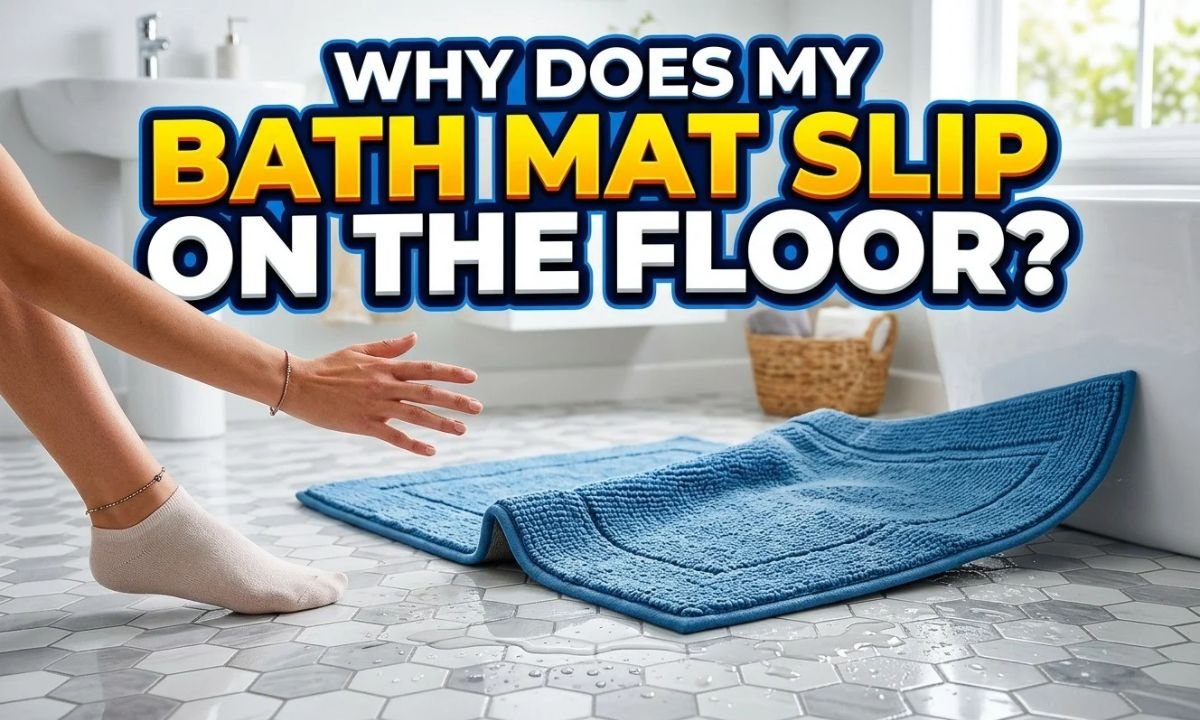
Why Does My Bath Mat Slip on the Floor?
The most common reason is a loss of friction between the bath mat backing and the bathroom floor. Friction is the resistance that helps keep two surfaces from sliding against each other. A rubber, latex, textured, or other nonslip backing is designed to increase that resistance, but its grip can change with moisture, dirt, wear, and age.
The floor matters just as much as the mat. Smooth ceramic or porcelain tile, vinyl, laminate, and other hard surfaces can become more difficult for a mat to grip when they are wet or have a film of soap, lotion, wax, or cleaning product on them.
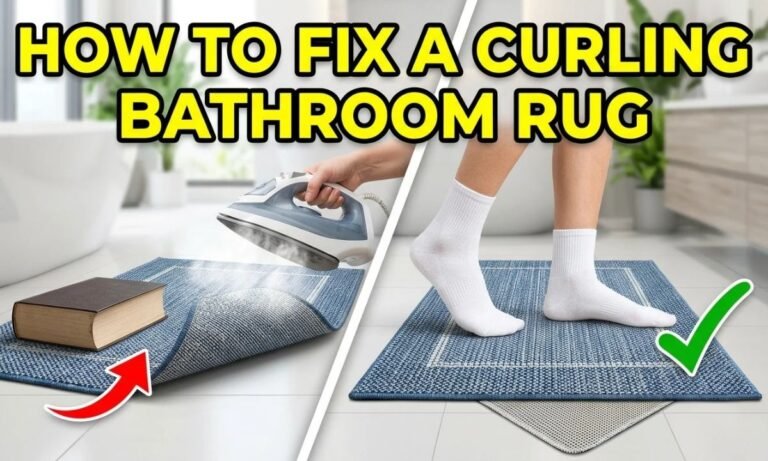
The mat can also move because its edges have curled or the backing has started to crack, peel, crumble, or flatten. In that situation, cleaning the floor may help only temporarily because the mat itself is no longer making consistent contact with the surface.
Source: onegoodthingbyjillee.com
Worn backing
Repeated washing and everyday use can wear down or damage some nonslip backings, reducing their ability to stay in place.
Wet floor
Water between the backing and floor can reduce the grip that normally helps the mat stay stationary.
Dirty surfaces
Dust, hair, soap residue, and other debris can form a thin layer between the mat and floor.
Curled edges
A curled or bunched mat does not sit flat, which can make movement and tripping more likely.
Your Floor May Be Part of the Problem
A bath mat cannot create reliable grip if the surface underneath it is coated with something slippery. Floor cleaners, polish, soap residue, body oils, and standing water can all change the contact between the backing and the floor.
If the mat starts sliding shortly after you mop, check whether a cleaning product is leaving a residue. Follow the flooring manufacturer’s cleaning instructions rather than adding stronger chemicals or mixing cleaners.
Check for moisture
Lift the mat and see whether water is collecting underneath it or around its edges.
Check for residue
Look for a cloudy, greasy, or slick film on the floor and clean it using a method suitable for the flooring material.
How to Tell What Is Making Your Bath Mat Move
Start with the simplest checks before buying anything. Remove the bath mat, inspect its underside, and examine the floor underneath it. This quick inspection can often reveal whether the problem comes from the mat, the floor, or both.
Run your hand over the backing without placing your hand on a wet surface. A backing that feels smooth in areas where it once had texture may have worn down. Also look for cracks, peeling, hardened rubber, missing sections, or areas that have become sticky or brittle.
Next, check whether the floor is clean and completely dry. Put the mat back only after both surfaces are clean and dry. If it still moves under normal foot pressure, the backing may no longer provide enough grip.
Source: storage.googleapis.com
If the floor is wet underneath
Improve drying and reduce the amount of water reaching the area before assuming the mat itself is defective.
If the backing is damaged
A replacement mat is usually more sensible than continuing to use a backing that has visibly deteriorated.
If the mat is flat but still slides
The backing may not be compatible with the floor or may simply have too little grip for the surface.
If only one bathroom has the problem
Compare the floor finish and cleaning routine in that bathroom with the floor where the same type of mat stays in place.
Check the Backing Before Trying a Quick Fix
Turn the mat over and inspect the entire underside. A good backing should remain intact and make reasonably even contact with the floor. If large sections are peeling or breaking apart, adding another layer underneath may not be the best long-term solution.
Also check the care instructions. Some bath mats have backings that can be damaged by high heat, harsh detergents, aggressive washing, or improper drying. Follow the manufacturer’s instructions for your particular mat.
Good sign
The backing is intact, reasonably flat, and free from visible damage.
Warning sign
The backing is cracked, peeling, curled, brittle, or missing in several areas.
How to Stop a Bath Mat From Slipping
The safest fix depends on why the mat is moving. Start with cleaning and drying because those steps are simple and do not require modifying the mat. If the backing is worn or unsuitable for the floor, replace the mat or use a compatible nonslip underlay that the flooring and mat manufacturers allow.
Do not rely on a temporary fix if the mat continues to move when stepped on. A bath mat should lie flat and remain reasonably stable during ordinary use.
Source: onegoodthingbyjillee.com
1. Clean the floor
Remove soap residue, dust, hair, and other material from the floor using a cleaner appropriate for the flooring.
2. Dry the floor completely
Make sure there is no standing water or damp film underneath the mat.
3. Clean the bath mat
Follow its care label so dirt and residue do not build up on the backing or fabric.
4. Let the mat dry
A damp mat can remain wet against the floor and may lose stability as water collects underneath it.
5. Flatten the mat
If it has curled edges or folds, allow it to flatten according to the manufacturer’s care instructions.
6. Inspect the backing again
Replace the mat if the backing is visibly damaged or no longer provides dependable grip.
Use a Nonslip Underlay When Appropriate
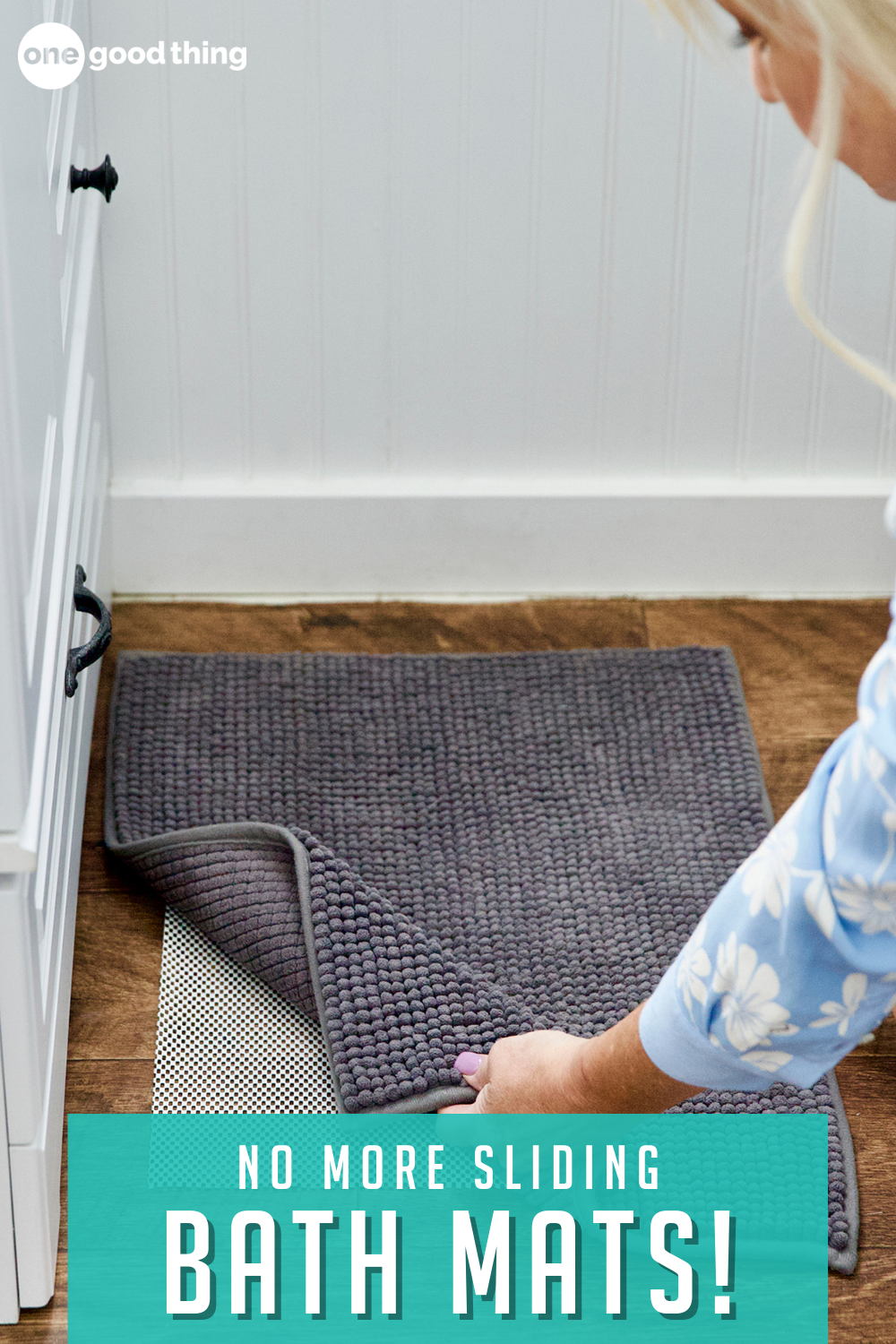
A separate nonslip underlay can help when the bath mat itself is in good condition but needs additional grip. Choose an underlay made for the type of floor and mat you have, and make sure it does not create a new trip hazard or interfere with the flooring.
Cut or place the underlay so it stays beneath the mat rather than extending into the walking path. Check it regularly because moisture, dust, and wear can affect its performance.
Keep it fully covered
The underlay should not create exposed edges that can catch a foot.
Keep both surfaces clean
Dirt between the underlay and floor can reduce stability.
Check compatibility
Some backing materials or adhesives may react poorly with particular flooring finishes, so follow the flooring and product instructions.
Why Bath Mats Start Sliding After Washing
If a bath mat stayed in place when it was new but now slides after washing, inspect the backing and review the care instructions. Some nonslip materials can deteriorate when exposed to unsuitable temperatures, aggressive washing, or drying methods.
Washing can also change the shape of the mat. If the fabric shrinks unevenly or the backing curls, the mat may no longer sit flat. This can reduce the amount of surface area touching the floor and make movement easier.
Do not assume that more washing will restore grip. If the backing has visibly deteriorated, cleaning it again is unlikely to restore the original material.
Source: ifrmmy.com
Use the recommended wash setting
Follow the care label rather than using a hotter or more aggressive cycle simply to get the mat cleaner.
Use the recommended drying method
Some mats and backing materials have specific drying limits. Follow the manufacturer’s instructions.
Inspect after washing
Look for cracks, peeling, curling, or other changes before putting the mat back on the floor.
When Cleaning Is Not Enough
A bath mat that remains unstable after both the mat and floor have been properly cleaned and dried may simply be worn out. This is especially likely when the underside has lost its texture or has started breaking down.
Replacing a damaged mat is preferable to repeatedly adding temporary fixes to a backing that no longer works. A new mat should be selected for the actual bathroom floor and the way the space is used.
Replace when damaged
Cracked, peeling, badly curled, or deteriorated backing is a strong reason to stop relying on the mat.
Replace when movement continues
If the mat repeatedly shifts during normal use despite a clean, dry floor, choose a different nonslip design.
Does the Type of Bathroom Floor Matter?
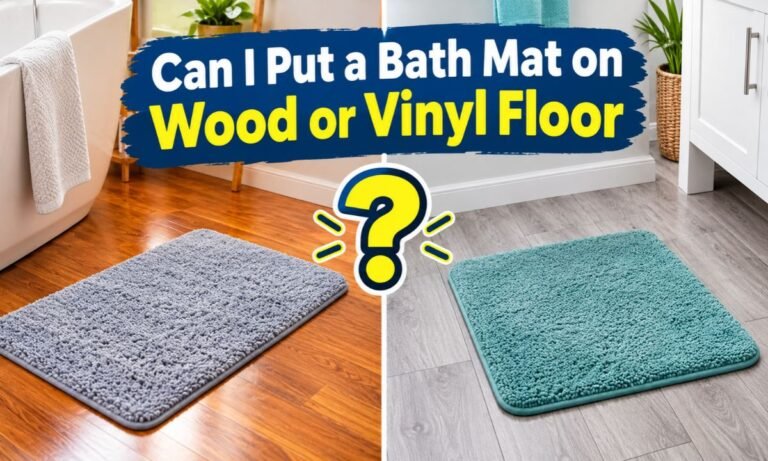
Yes. The same bath mat can behave differently on different flooring. A backing that grips one surface well may provide less traction on another because surface texture, finish, moisture, and cleaning residue affect the contact between the two materials.
Smooth hard floors deserve extra attention because a thin layer of water or residue can change the interaction between the backing and floor. If the bathroom floor itself becomes slippery when wet, a nonslip bath mat addresses only part of the problem.
For this reason, look for a mat described as suitable for your flooring type rather than assuming that every product labeled nonslip will perform the same way everywhere.
Source: indiamart.com
Ceramic or porcelain tile
Check for water, soap film, and cleaning residue, especially on smooth finishes.
Vinyl flooring
Use products that are compatible with the flooring and avoid materials or adhesives that can damage the finish.
Laminate flooring
Keep excess moisture away from the floor and follow the flooring manufacturer’s care instructions.
Natural stone
Use cleaning products approved for the specific stone and finish, since some common cleaners can damage or alter stone surfaces.
A Bath Mat Cannot Fix a Slippery Floor by Itself
If you notice that the uncovered bathroom floor is slippery whenever it gets wet, treat that as a separate issue. A mat can absorb water and provide a more stable stepping area, but it does not change the traction characteristics of the surrounding floor.
Keep water from spreading beyond the mat, clean spills promptly, and consider whether the floor needs a more appropriate slip-resistant solution. For flooring changes or specialized treatments, follow the flooring manufacturer’s guidance or ask a qualified flooring professional.
Watch the area around the mat
Water that reaches uncovered flooring can still create a slip hazard.
Do not cover every problem with a mat
If the underlying floor is consistently slippery, address the floor condition as well.
Common Mistakes That Can Make a Bath Mat Less Safe
Some quick fixes can create new problems if they make the mat uneven, leave adhesive residue, damage the flooring, or fail to hold the mat securely. The goal is not simply to make the mat harder to move by any method; it is to create a stable, flat surface without introducing another hazard.
Avoid using an improvised material that curls, bunches, or extends beyond the edges of the mat. Also avoid placing a mat over a wet floor and assuming that the mat will remain stable once water reaches the backing.
Source: weekendbuilds.com
Using a loose towel as a permanent mat
A towel may absorb water but can bunch or move more easily than a properly designed bath mat.
Ignoring curled edges
A curled edge can create both movement and a trip point.
Leaving water underneath
Moisture trapped beneath the mat can affect grip and keep the area damp.
Using unsuitable adhesive
An adhesive that is not approved for the flooring can leave residue or damage the surface.
Keeping a visibly damaged mat
A deteriorating backing is a reason to replace the mat rather than repeatedly trying to restore it.
When Should You Replace a Bath Mat?
Replace the mat when the backing is cracked, peeling, badly worn, permanently curled, or no longer keeps the mat reasonably stable. Replacement also makes sense when the mat has become difficult to clean or remains damp for long periods because of its condition.
A new bath mat should sit flat, match the size of the area, and have a backing designed to provide traction on your type of floor. If the product has specific care or installation instructions, follow them from the beginning.
Replace it for damaged backing
Visible deterioration can prevent the mat from making consistent contact with the floor.
Replace it for persistent movement
A mat that keeps sliding after proper cleaning and drying should not be trusted simply because it looks attractive or feels soft.
How to Choose a Bath Mat That Stays in Place
When replacing a slippery bath mat, focus first on stability and compatibility rather than appearance alone. Look for a product with a clearly described nonslip or skid-resistant backing and check whether the manufacturer identifies suitable floor types.
The mat should be large enough for the area where you normally step out of the shower or tub without creating a tight obstruction around doors, cabinets, or other fixtures. It should also lie flat without bunching.
A nonslip label is useful, but it is not a guarantee that the mat will never move. Real-world performance depends on the backing, floor surface, moisture, cleaning, wear, and installation conditions.
Source: ar.pinterest.com
Check the backing
Look for an intact textured or nonslip backing appropriate for your floor.
Check the dimensions
Choose a size that covers the intended stepping area without creating a new obstruction.
Check care instructions
Make sure you can maintain the mat without damaging its nonslip properties.
Consider drying
A mat that dries reasonably well can be easier to maintain in a frequently wet bathroom.
What a Good Result Looks Like
After installation, the bath mat should sit flat with no obvious folds or raised corners. It should not slide noticeably when you step on it normally, and the floor beneath it should remain reasonably clean and dry.
Check the mat again after cleaning, after heavy use, and whenever you notice movement. A bath mat is a maintenance item, not a set-and-forget safety device.
Flat
The mat has no dangerous folds, bunched sections, or curled corners.
Stable
Normal stepping does not cause obvious sideways movement.
Clean and dry underneath
The floor and backing are free from standing water and significant residue.
Frequently Asked Questions
Q
Why does my bath mat slide on tile?
Smooth tile, water, soap residue, and a worn or unsuitable backing can all reduce grip. Clean and dry the tile and mat, then inspect the backing for damage.
Q
How do I stop my bath mat from moving?
Start with a clean, dry floor and a clean, dry mat. If the backing is worn, replace the mat or use a compatible nonslip underlay that is suitable for your flooring.
Q
Can washing make a bath mat slippery?
It can if washing or drying damages the backing or changes the mat’s shape. Follow the care label and inspect the underside after washing for cracks, peeling, or curling.
Q
Should I use double-sided tape under a bath mat?
Only use a product specifically suitable for both the mat and your flooring. An unsuitable adhesive can leave residue, damage finishes, or create an uneven surface.
Q
When should I replace a slipping bath mat?
Replace it when the backing is cracked, peeling, badly worn, permanently curled, or still slides after the floor and mat are clean and dry.
✦ Wrapping Up
Conclusion
If you have been wondering why your bath mat slips on the floor, start by checking the basics: the condition of the backing, the cleanliness of the floor, moisture underneath the mat, and whether the mat sits completely flat. These factors often explain why a mat that once stayed in place suddenly begins sliding.
Clean and dry both surfaces, follow the mat’s care instructions, and inspect the backing for wear. If the mat continues to move or has visible damage, replacing it with a properly sized nonslip mat designed for your floor is usually more practical than relying on repeated temporary fixes.
Finally, remember that the mat is only one part of bathroom safety. Keep surrounding floors as dry and clean as possible, and do not ignore a floor that remains unusually slippery when wet.
💡 Key Takeaway
Lift the mat, clean and dry both surfaces, inspect the backing, and test the mat again. If it still shifts or the backing is damaged, replace it with a compatible flat, nonslip bath mat.
Should a bath mat match the towels? Learn when matching works, when to mix colors and textures, and how to create a coordinated bathroom without overmatching.







3 Comments