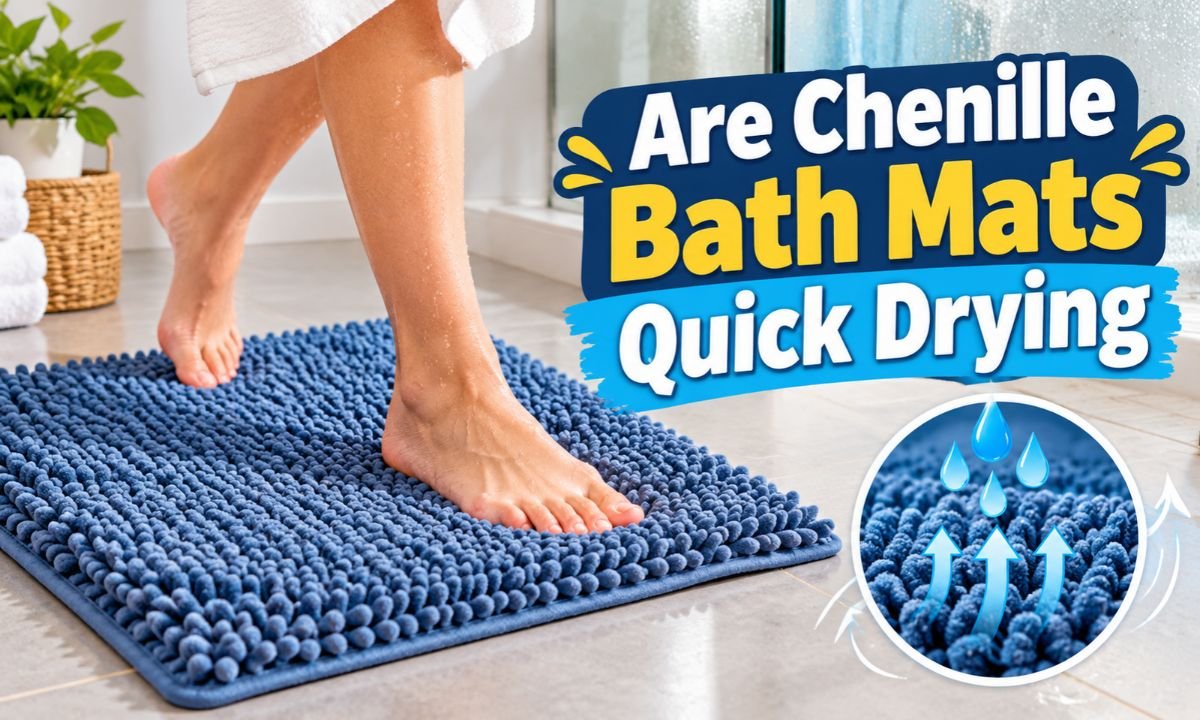
Yes, chenille bath mats can dry quickly, but their drying time depends on thickness, airflow, humidity, and how much water they absorb.
In American homes, a bath mat often sits beside a bathtub, shower, or bathroom vanity. It catches water from wet feet and helps keep hard floors dry. A chenille bath mat can feel soft underfoot and soak up splashes, but it still needs time and airflow to release that moisture.
The word quick-drying on a bath mat label does not mean the mat will dry in minutes after every shower. A thin mat in a warm, well-ventilated bathroom may dry much sooner than a thick, plush mat left on a damp floor. Room humidity, the mat’s backing, and the number of people using the bathroom each day also matter.
If you want a bathroom mat that feels comfortable without staying wet for hours, look beyond the chenille fabric alone. Check the pile, overall thickness, care instructions, and backing. Simple habits, such as hanging the mat after use and washing it regularly, can also help it dry more effectively.
Source: amazon.ca
Are Chenille Bath Mats Really Quick Drying?
Yes, many chenille bath mats dry at a reasonable rate, but not every chenille mat is quick drying. Chenille describes a soft, textured yarn or fabric construction rather than a guaranteed drying performance. The material, fiber blend, pile height, backing, and overall thickness all affect how quickly a mat releases water.
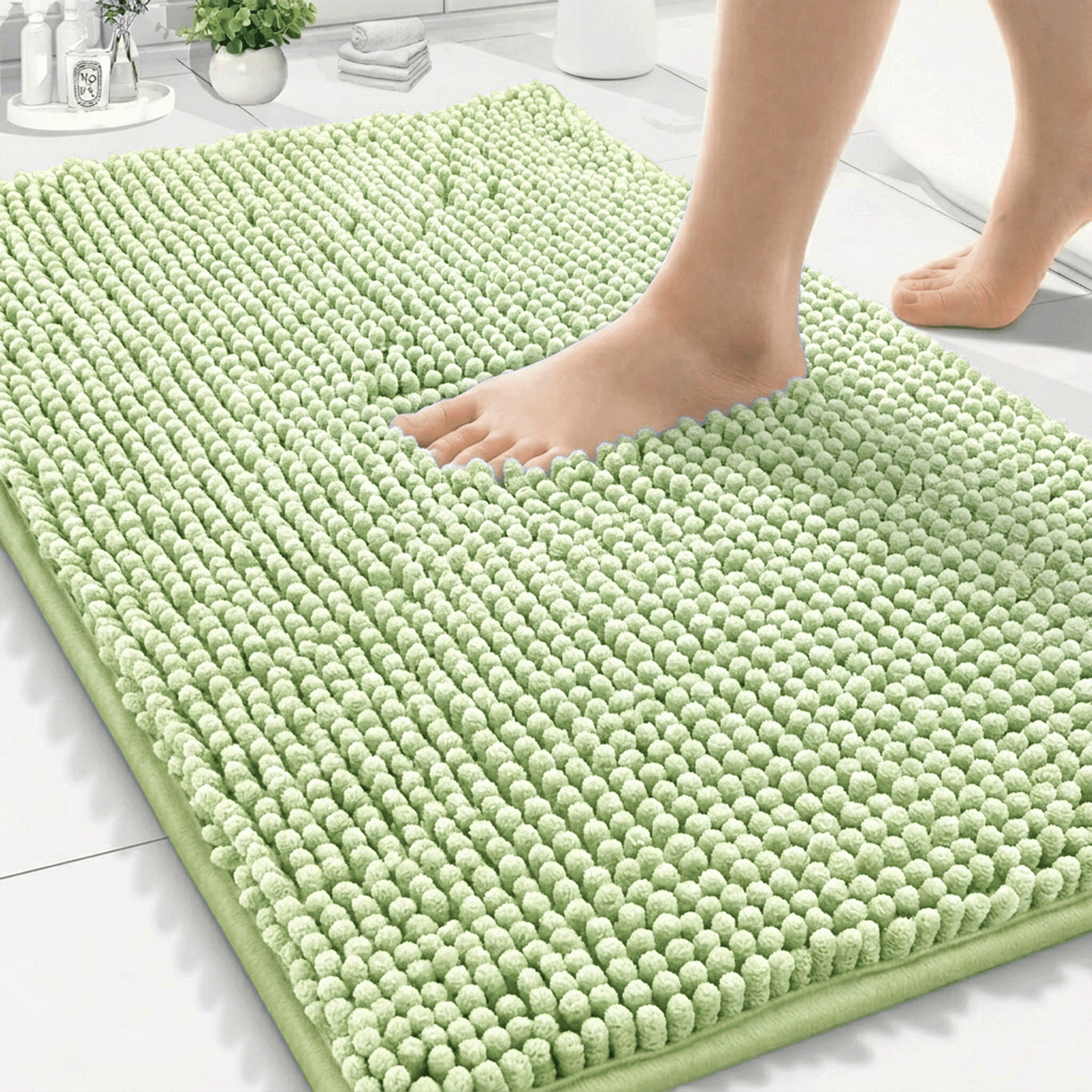
Many modern chenille bath mats use polyester or microfiber fibers. These fibers can form a soft, fluffy surface that absorbs water from your feet. Their fine strands also create a large surface area that can help moisture spread and evaporate when air moves around the mat.
However, absorbing water and drying quickly are two different things. A mat that soaks up a lot of water may keep your floor dry, yet still need extra time to release that moisture. A thick mat can feel dry on top while the lower fibers and backing remain damp.
For this reason, the phrase quick drying should be treated as a product claim to evaluate, not a promise that applies to every chenille bath mat. Without a published drying test under stated conditions, there is no single reliable drying time for all mats.
Source: bidfta.com
Good moisture absorption
Many chenille mats pick up water from wet feet and small splashes. This can help keep bathroom floors more comfortable and less wet.
Drying depends on airflow
Moisture leaves the fabric more readily when air can reach the fibers. A mat left flat on a damp floor may dry more slowly.
Construction makes a difference
A thick, dense mat may feel softer but hold more water than a thinner mat with a less bulky pile.
What Does Quick Drying Mean for a Bath Mat?
Quick drying means a mat releases absorbed moisture fast enough for practical daily use under the conditions in which it is used. It does not have a universal time limit. A manufacturer may use the term to describe a fabric feature, but that wording alone does not tell you how many minutes or hours the mat needs to dry.
A useful way to judge your mat is to check whether it becomes dry throughout between normal bathroom uses. Feel the pile, inspect the underside, and check whether the floor below it is damp. If the mat remains wet underneath after the top feels dry, it needs better airflow or more drying time.
Dry to the touch
The surface no longer feels wet, although the deeper pile or backing may still contain moisture.
Dry throughout
The surface, deeper fibers, and underside no longer feel damp. This is a more useful standard for judging readiness for the next use.
How Long Does a Chenille Bath Mat Take to Dry?
A chenille bath mat may dry within several hours in favorable conditions, while a thick mat in a humid, poorly ventilated bathroom may remain damp much longer. The actual time depends on how wet the mat became, its thickness, room temperature, airflow, and the type of backing.
There is no universal drying-time figure that applies to every chenille mat. Without a controlled test for the exact product, giving a precise number of minutes would be misleading. Use the following examples as practical comparisons rather than measured drying results.
A lightly damp mat in a warm room with a fan or open airflow has better drying conditions than a saturated mat in a small bathroom with the door closed. A mat used by several family members throughout the day may also receive more water before it has a chance to dry completely.
Instead of relying only on the clock, check the mat at intervals. Feel the surface and underside, and lift it to inspect the floor. If either remains damp, hang the mat up or improve airflow before using it again.
Source: bidfta.com
Lightly damp mat
A thin mat exposed to moving air may dry relatively quickly because it contains less water and has more opportunity to release moisture.
Thick, saturated mat
A plush mat that has absorbed water from several showers may need substantially longer to dry, especially when its backing limits airflow.
Humid bathroom
When the room air already contains a lot of moisture, water evaporates from the mat more slowly.
Freshly washed mat
A washed mat may contain much more water than one used after a single shower. Removing excess water through a suitable spin cycle, when permitted by the care label, can help shorten drying time.
How to Tell Whether Your Mat Is Fully Dry
Start by pressing your hand gently into several parts of the chenille pile. The surface should not feel cool and damp from retained water. Then lift a corner and check the underside, especially around thick seams and the edges.
Next, inspect the floor beneath the mat. A damp patch may mean the backing has trapped moisture or that water has passed through the fabric. If the mat still feels wet, hang it over a drying rack so air can reach both sides.
Do not put the mat back on a wet floor simply because the top feels dry. Trapped moisture can prolong drying and may contribute to musty odors. Let both the mat and the floor dry before laying it flat again.
Check more than one spot
The center, thick edges, and underside may dry at different rates.
Look for moisture below
Lift the mat and check whether the floor feels damp or shows signs of trapped water.
What Affects the Drying Speed of Chenille Bath Mats?
The drying speed of a chenille bath mat comes down to how much water it holds and how easily that water can escape into the surrounding air. Several factors work together, so a mat that dries quickly in one bathroom may stay damp longer in another.
The most useful factors to check are fabric thickness, pile density, ventilation, humidity, temperature, and backing. These details help explain why two mats advertised as quick drying can perform differently in daily use.
When comparing mats, avoid judging drying speed from softness or appearance alone. A fluffy surface may feel luxurious, but a deeper pile can hold more water. A thinner mat may dry sooner but offer less cushioning underfoot.
Source: amazon.com
Fabric thickness
Thicker fabric generally contains more material and may retain more moisture. It often needs more time for air to reach the deeper fibers.
Pile density
Closely packed fibers can slow airflow through the mat. A more open pile may allow moisture to escape more easily, depending on the construction.
Room humidity
Humid air reduces the difference between the moisture in the fabric and the surrounding air, slowing evaporation.
Air movement
Moving air carries moisture away from the fabric surface. A working exhaust fan or suitable drying rack can help.
Backing material
Rubber or other water-resistant backing may restrict airflow through the underside. The effect depends on the design and how the mat is positioned.
Amount of absorbed water
A mat used by several people or soaked during cleaning starts with more water to release than a lightly damp mat.
Does Microfiber Chenille Dry Faster Than Regular Chenille?
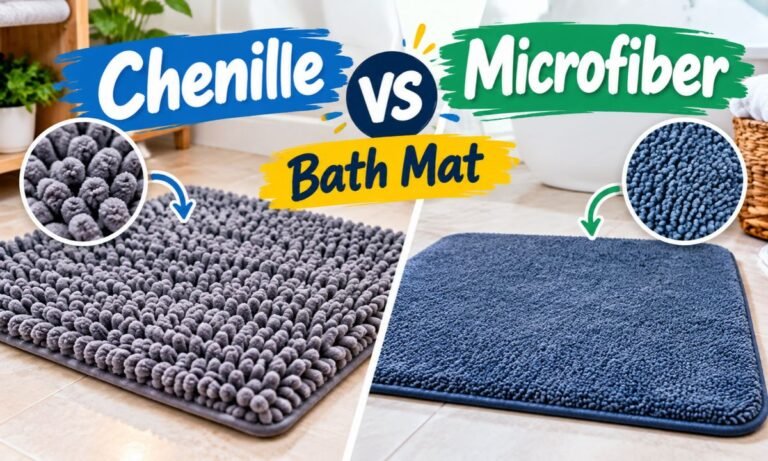
The answer depends on the fibers and the way the mat is made. Microfiber chenille often uses fine synthetic strands that provide a soft surface and help spread absorbed water. However, the microfiber label alone does not prove that a particular mat dries faster than every other chenille mat.
A dense microfiber mat with a thick pile and water-resistant backing may dry more slowly than a thinner chenille mat with an open structure. To compare two products fairly, look for published drying-test results that use similar amounts of water and the same room conditions.
If the seller does not provide test details, treat quick-drying claims as a general description rather than a verified comparison. Product construction and the conditions in your bathroom remain important.
Compare the full design
Look at pile height, overall thickness, backing, washing instructions, and any documented drying tests rather than fiber names alone.
Balance softness and drying
Choose a pile that feels comfortable without being so bulky that it becomes difficult to dry between uses.
Does a Rubber-Backed Chenille Mat Take Longer to Dry?
It can. A rubber-backed mat may have less airflow through its underside than a mat made entirely from absorbent fabric. When moisture collects deep in the pile, the backing can make it harder for that side to dry while the mat lies flat.
The backing also helps keep the mat in place, which can be useful on smooth bathroom floors. Still, the mat must be lifted and dried as needed. Follow the care label because some backings can crack, peel, or lose their grip if exposed to unsuitable heat or harsh cleaning methods.
Lift it after use
Check the underside and allow air to reach it when the floor or backing feels damp.
Avoid excess heat
Use a dryer only if the care label allows it, and follow the listed temperature and cycle limits.
How to Make a Chenille Bath Mat Dry Faster
The easiest way to help a chenille bath mat dry faster is to lift it off the floor and expose more of its surface to moving air. Leaving it flat on a damp floor can slow drying, especially if the mat has a dense pile or a water-resistant backing.
You do not need special equipment for most everyday drying. A shower rod, laundry rack, or suitable clothesline can provide better airflow. The goal is to let moisture escape without damaging the fibers or backing.
Bathroom ventilation matters too. Run the exhaust fan during and after a shower according to its instructions, or open a window when outdoor conditions make that practical. A fan can help move air, but keep electrical equipment away from water and use only equipment intended for the location.
If the mat becomes heavily soaked, remove excess water according to its care instructions. Never twist or wring a mat aggressively if doing so could damage the backing, seams, or pile.
Source: amazon.com
Step 1: Lift the mat
After showering, move the mat away from the wet floor so moisture cannot remain trapped underneath it.
Step 2: Hang it correctly
Drape the mat over a drying rack or suitable rod so air can reach as much of the fabric as possible. Avoid folding it into a thick bundle.
Step 3: Improve ventilation
Use the bathroom exhaust fan or another safe source of air movement. Follow the fan’s instructions and keep electrical devices away from splashes.
Step 4: Let both sides dry
Check the pile and backing. If one side remains damp, reposition the mat when practical to improve airflow.
Step 5: Check before reuse
Feel the center, edges, and underside. Return the mat to the floor only when the mat and floor are dry.
Should You Use a Dryer to Dry a Chenille Bath Mat?
You can use a clothes dryer only when the care label says the mat is dryer-safe. Some chenille mats can tolerate a suitable machine-drying cycle, while others have rubber or latex backing that may deteriorate under high heat. Heat can also affect adhesives, seams, and synthetic fibers.
Check the label before washing or drying the mat for the first time. If tumble drying is permitted, use the specified setting and temperature. If the label calls for air drying, hang the mat in a well-ventilated area instead.
Do not assume that every mat described as machine washable is also safe for tumble drying. Washing and drying are separate care requirements.
Follow the label
Use only the drying method and temperature approved for the exact mat.
Protect the backing
Avoid high heat unless the manufacturer explicitly permits it. Stop if the backing shows signs of damage.
Air-dry when unsure
If the care instructions are missing or unclear, contact the manufacturer rather than guessing about dryer safety.
Can Sunlight Help a Chenille Bath Mat Dry Faster?
A suitable outdoor drying spot can help because moving air and warmth support evaporation. However, direct sunlight is not always the best choice for every mat. Strong sun or excessive heat may fade some colors or affect certain backing materials over time.
Check the care instructions before leaving a mat in direct sunlight. A shaded, airy place may offer a better balance of airflow and fabric protection. Keep the mat secure so wind does not carry it away or drop it onto a dirty surface.
Choose an airy location
Prioritize steady airflow and enough room for the mat to hang without bunching.
Protect the color and backing
Avoid prolonged direct sun if the manufacturer warns against it or the mat shows signs of fading or backing damage.
How to Wash a Chenille Bath Mat Without Slowing Drying
Regular washing removes dirt, body oils, and residue that collect in bath mat fibers. Clean fibers alone do not guarantee faster drying, but good care helps maintain the mat and reduces the buildup that can make it unpleasant to use.
Check the care label before washing. Some mats can go into a washing machine, while others need a gentler method. Water temperature, detergent type, spin settings, and drying method should match the manufacturer’s directions.
Do not use more detergent than needed. Excess detergent can leave residue in the pile, and residue may affect the fabric’s feel. Avoid bleach, fabric softener, or strong cleaning agents unless the manufacturer permits them for that material.
After washing, remove as much excess water as the care instructions allow. Hang the mat so air can circulate around it, and wait until it is fully dry before putting it back on the bathroom floor.
Source: walmart.com
Read the care label first
Confirm whether the mat is machine washable, which water temperature is allowed, and which drying method is suitable.
Use a suitable wash cycle
Choose the recommended cycle and detergent. Do not overload the washer if doing so prevents the mat from moving freely.
Remove excess water safely
Use a spin cycle only when the care label allows it. Avoid forceful twisting that could damage the backing or seams.
Dry before replacing
Hang the mat in a ventilated place and check both sides before returning it to the floor.
How Often Should You Wash a Chenille Bath Mat?
Wash frequency depends on how often the bathroom is used, how much water the mat absorbs, and whether the room stays humid. A mat used by several people each day may need cleaning more often than one in a guest bathroom used only occasionally.
Inspect the mat regularly instead of following a rigid schedule alone. Visible dirt, lingering odors, a slippery underside, or a mat that stays damp are signs that it needs attention. Follow the manufacturer’s washing instructions to avoid damaging the fibers or backing.
Between washes, lift the mat after use, let it dry fully, and clean the floor underneath. These simple habits help prevent moisture from remaining trapped between the mat and the floor.
For busy bathrooms
Check the mat frequently and wash it when it becomes soiled, smells unpleasant, or no longer dries well between uses.
For guest bathrooms
Allow the mat to dry after use and wash it as needed based on visible dirt, moisture, and the manufacturer’s care guidance.
Signs Your Chenille Bath Mat Is Not Drying Properly
A chenille bath mat that remains damp for long periods may need better airflow, less frequent use, or a different design. The first step is to identify where the moisture remains. A wet surface, damp underside, and musty smell can point to different care problems.
Do not cover up a persistent damp smell with fragrance sprays. Check the mat, clean it according to the care label, and allow it to dry fully. If an odor returns soon after washing and drying, inspect the backing and fibers for signs of wear or persistent contamination.
A damp floor beneath the mat also deserves attention. It can indicate trapped moisture or water passing through the mat. Dry the floor, check for leaks or repeated splashes, and make sure the mat does not remain flat on a wet surface.
Source: amazon.co.uk
The pile stays wet
Possible causes include a thick construction, heavy water absorption, poor ventilation, or repeated use before drying is complete.
The underside feels damp
The backing may limit airflow, or moisture may be trapped between the mat and floor. Lift the mat after use and improve airflow around both sides.
A musty odor develops
Persistent moisture and soil may contribute to unpleasant odors. Wash the mat according to its care instructions and dry it completely.
The backing cracks or peels
The mat may have suffered wear or damage from unsuitable heat, cleaning, or age. Stop using it if the backing no longer grips the floor reliably.
The floor stays wet
Check for excess splashing, a soaked mat, or a leak. Dry the floor promptly and address the source of the water.
When Should You Replace a Chenille Bath Mat?
Replace the mat when its pile is badly worn, the backing peels or cracks, or it repeatedly develops odors that remain after proper washing and drying. A mat with damaged non-slip backing may shift underfoot and become a fall hazard.
Persistent moisture can also signal that the mat is not a good fit for your bathroom. If it never dries between showers despite reasonable airflow and correct care, consider a thinner design or one with a more open construction. A replacement should suit both the room’s humidity and the amount of daily use.
Replace damaged backing
Do not rely on a mat whose non-slip surface has deteriorated or no longer holds it securely in place.
Replace persistently unpleasant mats
If proper washing and complete drying do not resolve a recurring odor, replacing the mat may be the practical choice.
Chenille vs. Other Bath Mat Materials for Drying Speed
Chenille is only one option for a bathroom floor mat. Cotton, flat microfiber, memory foam, and diatomaceous earth mats each handle water differently. The best choice depends on whether you value softness, water absorption, fast drying, easy washing, or a slim shape that fits beneath a door.
A material name does not tell the whole story. A thick cotton mat may dry more slowly than a thin cotton mat, just as a dense chenille mat may take longer than a more open version. Backing and construction can matter as much as the fiber itself.
For a busy family bathroom, a mat that can be washed easily and hung to dry may be more practical than one with an extra-thick pile. For a bathroom used less often, a plush chenille mat may be comfortable as long as it dries fully between visits.
Source: amazon.co.uk
Chenille
Often soft and absorbent, with a textured pile. Drying speed depends on thickness, fiber type, backing, and airflow.
Cotton
Can feel comfortable and absorb water well. Thick cotton mats may retain substantial moisture and need sufficient drying time.
Flat microfiber
Often lightweight and easy to hang. Some designs may dry faster than bulky mats, but performance depends on the fabric and construction.
Memory foam
Offers cushioning, but foam and layered construction can retain moisture differently from a simple fabric mat. Follow the specific care instructions.
Diatomaceous earth
Rigid mineral-based mats handle water differently from textile mats and may suit people who prefer a firm surface. They lack the soft feel of chenille and require care according to the manufacturer’s directions.
Which Bath Mat Is Best for a Humid Bathroom?
For a humid bathroom, a thin, easy-to-hang mat may be more practical than a deep, plush mat. A design that exposes plenty of fabric to moving air can be easier to dry after each shower. The room’s ventilation still matters, so even a thin mat can remain damp in a poorly ventilated space.
If you prefer chenille, look for a moderate pile, manageable thickness, and care instructions that fit your routine. Check the underside for moisture each day, especially when several people share the bathroom.
If a textile mat repeatedly stays wet, consider improving ventilation or switching to a design that is easier to lift and dry. No fabric can compensate fully for a room that remains damp all day.
Choose easy maintenance
A mat that fits your washing and drying routine is more practical than one that needs more care than you can provide.
Consider the floor
Choose a mat with suitable grip and a compatible backing for your flooring. Keep both surfaces clean and dry.
What to Look for When Buying a Quick-Drying Chenille Bath Mat
When shopping for a quick-drying chenille bath mat, focus on practical design details rather than relying on the product title. A seller may describe a mat as absorbent or quick drying, but those words do not provide a standardized drying time unless the manufacturer explains how performance was measured.
Start with the construction. A moderate pile and manageable thickness may be easier to dry than an extra-deep, dense mat. Then check the backing, washing instructions, and dimensions to make sure the mat suits your bathroom.
Think about your household routine too. If people shower one after another in the morning, the mat may receive new moisture before it dries. A mat that is easy to hang, wash, and reposition can be more useful than one that simply feels thick and plush.
Finally, check the product details for actual care guidance. A clear label that explains washing, drying, and backing limitations is more useful than a broad claim without supporting information.
Source: amazon.com
Moderate pile height
A less bulky pile may be easier to dry while still offering a soft surface. Balance comfort with the amount of moisture the mat can hold.
Manageable size and weight
Choose a mat you can lift and hang without difficulty. A large, heavy mat may be harder to handle after it becomes wet.
Suitable backing
Look for a backing compatible with your floor and check whether it requires air drying or special heat limits.
Clear washing instructions
The label should explain the approved cleaning and drying methods so you can care for the mat without guessing.
Evidence for drying claims
Prefer manufacturers that explain their drying tests and conditions. Do not treat an unsupported quick-dry label as proof of a specific performance level.
Easy hanging
A lightweight, flexible mat that fits over a drying rack may be easier to keep dry between showers.
Is a Thicker Chenille Bath Mat Better?
A thicker chenille mat may feel softer and provide more cushioning underfoot, but extra thickness can make drying harder. More fibers can hold more water, and the deeper pile may take longer to dry all the way through.
A thinner mat may dry sooner but offer less cushioning and a different feel. The better choice depends on how often the mat gets wet, how well the bathroom is ventilated, and whether you can hang it after each use.
If fast drying is your main goal, avoid choosing a mat based on thickness alone. Look for a balance of comfort, manageable weight, good airflow, and simple care.
Choose thicker for comfort
A plush mat may suit a bathroom where comfort matters and there is enough time and space for thorough drying.
Choose lighter for easier drying
A thinner mat may be easier to hang, handle, and dry between frequent uses.
Frequently Asked Questions
Q
Are chenille bath mats quicker to dry than cotton bath mats?
Not always. Chenille mats made with synthetic fibers may release moisture well under suitable conditions, but drying speed depends on thickness, pile density, backing, and airflow. A thin cotton mat may dry faster than a thick chenille mat, while a dense cotton mat may take longer than a lightweight chenille design.
Compare the full construction and care instructions instead of choosing by fiber name alone. If the manufacturer provides comparable drying-test results, those details offer a stronger basis for comparison.
Q
Can chenille bath mats dry overnight?
Yes, a chenille bath mat may dry overnight if it is only moderately damp and the room has suitable airflow. However, a saturated or thick mat in a humid bathroom may still be damp the next morning.
Hang the mat so air can reach both sides, use suitable bathroom ventilation, and check the underside before placing it back on the floor. Do not assume it is dry just because the surface feels dry.
Q
Why does my chenille bath mat smell even after drying?
A lingering odor may come from trapped moisture, accumulated body oils, detergent residue, or soil in the fibers. A mat that is put away while damp may develop a musty smell, especially in a humid bathroom.
Wash the mat according to its care label, use an appropriate amount of detergent, and let it dry completely. If the odor returns despite proper cleaning and drying, inspect the backing and consider replacing the mat.
Q
Can I put a chenille bath mat in the washing machine?
Some chenille bath mats are machine washable, but others require different care. The answer depends on the fibers, backing, seams, and manufacturer’s instructions.
Check the label before washing. Use the approved water temperature and cycle, and do not assume that a machine-washable mat is also safe for a hot dryer. Incorrect washing or drying can damage the backing and reduce its grip.
Q
Should I leave my chenille bath mat on the floor after every shower?
You can leave it flat if the mat and floor dry well between uses, but lifting it after a shower is often a better choice when moisture remains underneath. A wet mat pressed against a damp floor has less opportunity for air to circulate.
Hang it over a suitable rack or rod, dry the floor beneath it, and return it only when both surfaces are dry. This routine is especially helpful in bathrooms shared by several people.
Q
Are chenille bath mats suitable for humid climates?
They can be suitable in humid climates, but drying may take longer when the surrounding air contains a lot of moisture. A thin, manageable mat may be easier to maintain than a thick, dense design in a room with limited ventilation.
Choose a mat that is easy to lift and wash, use the bathroom exhaust fan when available, and allow the mat to dry fully between uses. If it remains damp despite these steps, consider a different construction or improve room ventilation.
✦ Wrapping Up
Conclusion
Chenille bath mats can dry quickly enough for everyday bathroom use, but the fabric name alone cannot guarantee fast drying. Thickness, pile density, backing, humidity, and airflow all affect how long a mat stays damp. A thick, absorbent mat may keep water off your feet and floor while still needing extra time to dry completely.
The simplest way to improve drying is to lift the mat after use, hang it where air can reach both sides, and keep the bathroom well ventilated. Follow the care label when washing or using a dryer, and check the underside before putting the mat back on the floor. These habits help you get more practical use from the mat without risking damage to its fibers or backing.
If your bathroom stays humid or several people use the shower in quick succession, consider a thinner chenille mat that is easy to handle and dry. If your current mat remains damp or develops a recurring musty smell, improve its drying routine and inspect it for wear. Replace it if the backing is damaged or it no longer stays securely in place.
💡 Key Takeaway
After your next shower, lift your chenille bath mat, hang it over a suitable rack, and let air reach both sides. Check the pile, backing, and floor before putting it back down. When buying a replacement, prioritize manageable thickness, clear care instructions, and a design that fits your bathroom’s ventilation and daily use.







3 Comments