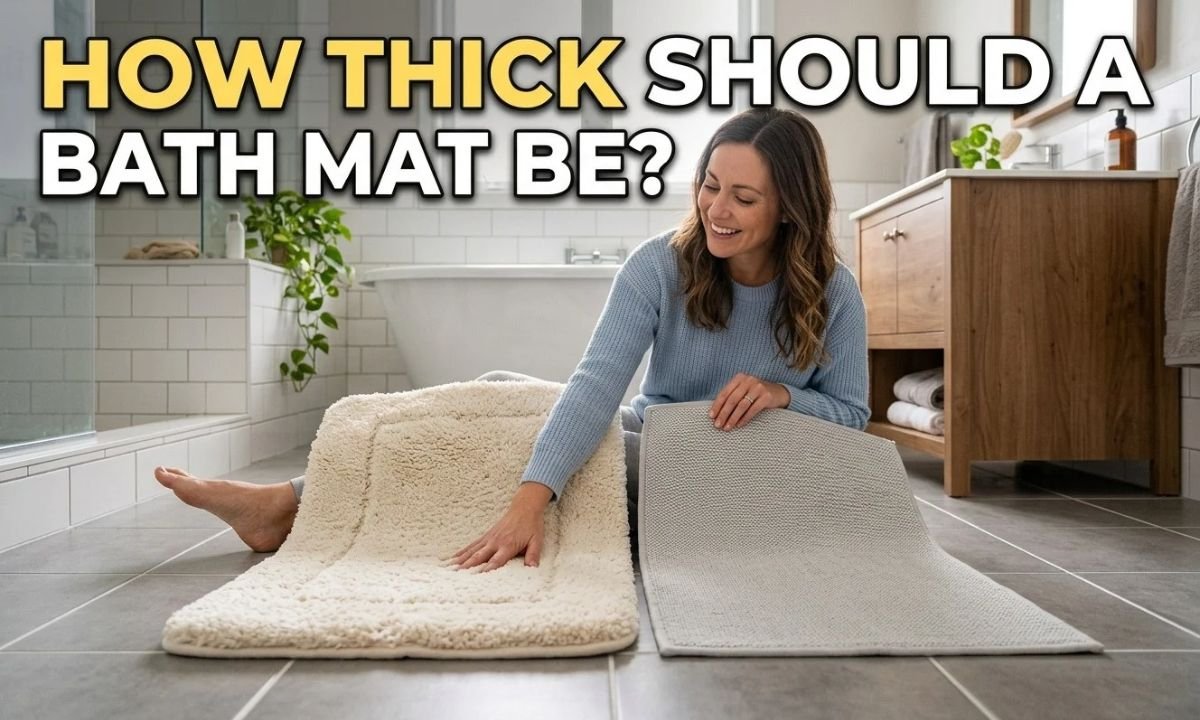
A bath mat around 0.5 to 1 inch thick usually offers a good balance of comfort, absorbency, and practical clearance.
For bathrooms in U.S. homes, a bath mat does not need to be extremely thick to work well. A profile around 0.5 to 1 inch is a practical range for many tubs, showers, and vanities because it can provide cushioning without becoming unnecessarily bulky.
The right thickness depends on more than how soft the mat feels. The pile or overall construction, backing, drying ability, location, and clearance beneath nearby doors can all change which thickness makes sense. A plush 1-inch chenille mat may feel comfortable beside a shower but may be inconvenient if a bathroom door swings over it.
There is no single industry-standard thickness that makes every bath mat appropriate. Product specifications show that mats sold in the U.S. can vary considerably, with some common plush chenille models measuring about 1 inch thick. The best choice is therefore the thickness that fits the available space while providing the comfort and moisture control you actually need.
Source: Bing
What Is the Ideal Thickness for a Bath Mat?
For most bathrooms, about 0.5 to 1 inch is a practical thickness range. A thinner mat can be easier to position around doors and cabinets, while a thicker mat can provide more cushioning under bare feet.
The most useful target depends on where the mat will sit. A mat placed directly in front of a shower or tub can benefit from moderate cushioning and absorbency. A mat beside a vanity may not need as much loft, especially if it sits near drawers, cabinet doors, or a bathroom entry door.
Current retail specifications also show that approximately 1-inch-thick plush chenille bath mats are readily sold in the U.S. market. That makes 1 inch a realistic upper end for a plush everyday bath mat, rather than an unusual thickness.
Source: Bing
About 0.25 to 0.5 inch
A good low-profile range when clearance, easy movement, or a flatter feel matters more than maximum cushioning.
About 0.5 to 0.75 inch
A versatile middle range that can provide noticeable softness while remaining relatively easy to place.
About 0.75 to 1 inch
A plush option for people who prefer a softer, more cushioned surface, provided surrounding doors and fixtures have enough clearance.
More than 1 inch
Not automatically better. Extra height can make a mat harder to position, may interfere with doors, and can create a bulky surface that is less practical in some bathrooms.
Why 1 Inch Is Common for Plush Bath Mats
Plush microfiber and chenille mats often use a high-pile construction to create a soft surface that traps water from wet feet. Several current U.S. retail listings describe bath mats around 1 inch thick, showing that this profile is common among thicker chenille designs.
That does not mean every 1-inch mat performs the same way. Two mats can have the same measured thickness but feel different because one has dense fibers, another has a thicker backing, and another has a more compressible pile. Thickness should therefore be treated as one specification rather than a complete measure of quality.
How Thick Should a Bath Mat Be for Different Bathroom Areas?
The best thickness changes with the location. Before choosing a thick mat, consider what opens, closes, or moves around it. A bathroom mat that works beside a freestanding tub may not work in front of an inward-swinging door.
The surface beneath the mat also matters. Smooth tile, vinyl, stone, and other hard bathroom flooring can make a cushioned mat feel comfortable, but the underside still needs to remain stable. A thick mat that shifts is less useful than a thinner mat that stays firmly in place.
Source: Bing
Outside a shower
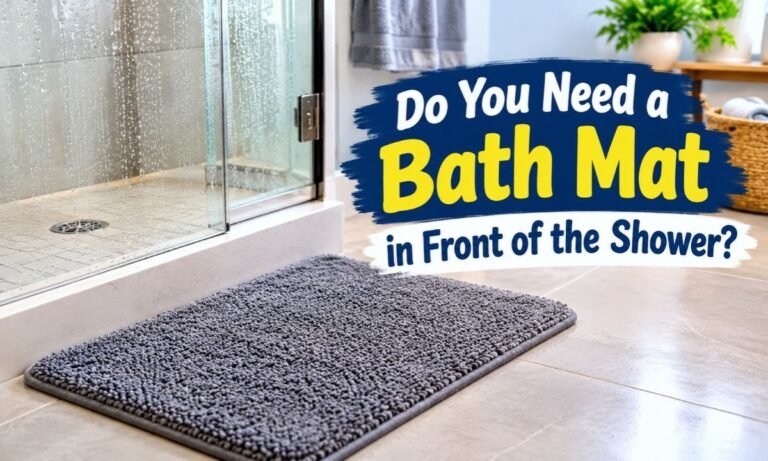
About 0.5 to 1 inch can provide a comfortable landing area for wet feet. Choose a construction that absorbs water and can dry between uses.
Outside a bathtub
About 0.5 to 1 inch works well when there is sufficient floor space. Check the location of the tub edge and nearby doors before choosing a high-pile mat.
In front of a vanity
About 0.25 to 0.75 inch is often practical, especially where cabinet doors, drawers, or a bathroom door could contact the mat.
Near a bathroom door
Choose the lowest profile that provides the comfort you want. Measure the actual clearance instead of assuming a standard door gap.
In a small bathroom
A low- to medium-profile mat can be easier to manage because there is less room for the mat to overlap doors, fixtures, or walking paths.
If a Door Swings Over the Bath Mat
Door clearance can be the deciding factor. Measure the vertical gap between the bottom of the door and the floor at the point where the mat will sit. Then compare that measurement with the mat’s actual thickness, including its backing.
Do not assume that a mat advertised as 0.5 inch thick will behave exactly like a 0.5-inch slab. Soft pile can compress under weight, while a rubber or foam backing may maintain more of its height. When clearance is tight, a low-profile mat is the safer practical choice.
If the door catches the mat, do not force the door across it. Move the mat, select a thinner design, or address the clearance problem rather than allowing the mat to bunch up.
Measure at the mat location
The relevant clearance is the gap where the door actually passes over the mat, not a measurement taken several inches away.
Include the backing
Consider the entire assembled mat thickness, because a non-slip backing contributes to the total height.
Leave practical clearance
If the door barely clears the mat, choose a thinner option rather than relying on compression of the pile.
Does a Thicker Bath Mat Absorb More Water?
A thicker bath mat can hold more absorbent material, but thickness alone does not prove that it will absorb more water or dry faster. Fiber type, density, construction, and backing all affect how a mat handles moisture.
Plush chenille and microfiber bath mats commonly use dense or high-pile fibers designed to capture moisture from wet feet. However, a very dense or thick construction can also retain more water, so drying conditions matter.
For everyday use, look for a balance between absorbency and drying. A mat that absorbs moisture but stays damp for long periods may need more frequent washing and drying. A thinner, quick-drying design may be more practical in a bathroom with heavy daily use.
Source: Bing
Thickness
Adds physical volume and can contribute to cushioning and moisture capacity, but does not measure absorbency by itself.
Fiber construction
Dense microfiber and chenille constructions can create a soft, absorbent surface without requiring extreme overall thickness.
Backing
Rubber, TPR, PVC, and other backing materials can change the mat’s stability, flexibility, and drying characteristics.
Drying environment
Ventilation, bathroom humidity, and how often the mat is lifted or washed can affect how quickly it becomes dry.
Thick Does Not Always Mean Better
A very thick mat can feel luxurious underfoot, but extra loft may not provide a meaningful benefit if your main goal is quick drying or easy cleaning. In a frequently used family bathroom, a moderate thickness can be a more practical compromise.
Think of thickness as a comfort and clearance specification. Use absorbency, drying behavior, construction, and backing to judge the rest of the mat.
What Thickness Is Best for Bathroom Safety?
For bathroom safety, a stable mat is more important than choosing the thickest available option. Bathroom floors can become wet and slippery, and a mat that slides, folds, curls, or creates an unexpected height change can introduce another hazard.
A moderate or low profile is often easier to manage where people walk frequently. If someone in the household has difficulty with balance or is particularly vulnerable to falls, avoid creating unnecessary floor-level changes and consider professional or clinical safety guidance when appropriate.
A bath mat should also be placed on a clean, dry, reasonably flat surface. Manufacturer instructions commonly warn that moisture beneath a mat can reduce its grip. A non-slip backing cannot compensate for every flooring condition.
Source: Bing
Prioritize stability
A mat should remain in place instead of sliding or bunching when stepped on.
Avoid excessive height
Extra thickness can create a larger transition between the floor and surrounding surfaces, especially if the mat has a firm backing.
Keep the underside dry
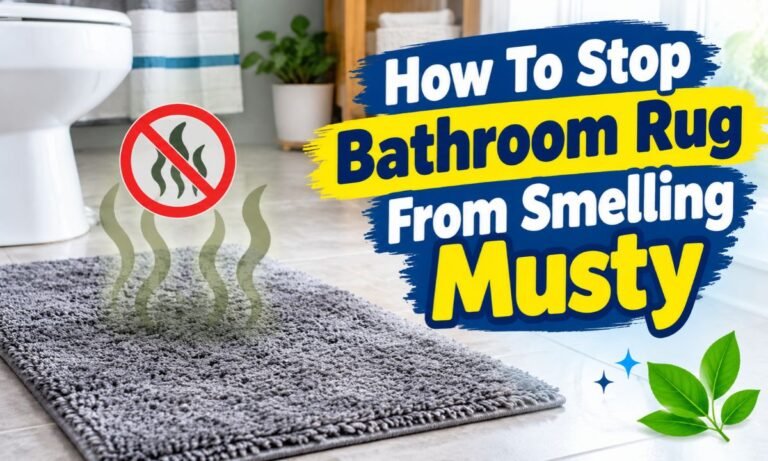
Moisture trapped beneath a mat can affect traction and may also contribute to unwanted odors or floor problems.
Inspect the edges
Replace or reposition a mat if its edges curl, the backing deteriorates, or the mat repeatedly moves out of position.
Should Older Adults Use a Thinner Bath Mat?
There is no universal thickness that is appropriate for every older adult. The better approach is to minimize trip and slip hazards. If a person has balance, mobility, or vision difficulties, a mat should not create an unstable or unexpected transition.
For higher-risk bathrooms, other safety measures may matter more than thickness, including stable flooring, suitable grab bars, adequate lighting, and appropriate bathing equipment. A healthcare professional can help assess an individual’s fall risk when needed.
How to Choose the Right Bath Mat Thickness
Choose bath mat thickness by checking the location first, then the available clearance, and finally the comfort and moisture needs. This prevents the common mistake of choosing a thick mat simply because it feels softer in a product photo.
Start by deciding where the mat will sit. Measure the available floor area and check whether a door, cabinet, drawer, or shower door moves across that space. Once the physical constraints are clear, select the thickness that fits without interfering with those moving parts.
Source: Bing
Step 1: Identify the placement
Decide whether the mat will sit outside the shower, beside a tub, in front of a vanity, or near a doorway.
Step 2: Measure clearance
Check the gap beneath any door that needs to pass over the mat and inspect cabinet or drawer movement.
Step 3: Set your thickness range
Start around 0.25 to 0.5 inch for tight areas and consider 0.5 to 1 inch where greater cushioning is useful and clearance permits it.
Step 4: Check construction
Look at pile, fiber, backing, absorbency, washing instructions, and drying requirements rather than relying on thickness alone.
Step 5: Check stability
Make sure the mat is intended for the floor type and that the underside remains stable during normal use.
Step 6: Recheck after washing
Follow the care instructions and inspect the mat after laundering for curling, backing deterioration, or changes in shape.
A Simple Thickness Decision Table
Use the following ranges as practical starting points rather than rigid standards. The actual assembled thickness and your bathroom layout should determine the final choice.
Choose about 0.25 to 0.5 inch if
You have limited door clearance, want a flatter walking surface, or need a mat that is easy to place around bathroom fixtures.
Choose about 0.5 to 0.75 inch if
You want a balance of cushioning, absorbency, and manageable height for ordinary bathroom use.
Choose about 0.75 to 1 inch if
You prefer a plush surface and have enough clearance around doors, cabinets, and walking paths.
Avoid extra thickness if
The mat catches on a door, creates a noticeable trip point, bunches underfoot, or stays excessively damp because of its construction and bathroom conditions.
Common Bath Mat Thickness Mistakes
The most common mistake is treating thickness as a quality score. A thicker mat can feel softer, but the additional height can create practical problems if it interferes with doors or becomes difficult to keep dry.
Another mistake is comparing only the listed pile height. Product measurements may describe the pile, total thickness, or a rounded specification, so check the manufacturer’s measurement method when clearance is important.
Source: Bing
Buying the thickest mat available
Maximum thickness is not the same as maximum usefulness. Choose enough cushioning for your needs without creating clearance or stability problems.
Ignoring door clearance
A plush mat can become unusable if a bathroom door cannot swing freely across it.
Assuming all 1-inch mats feel the same
Different fibers, densities, backing materials, and construction methods can make mats with similar measurements feel and perform differently.
Choosing softness over stability
A very soft mat is not a good trade if it slides, bunches, or curls at the edges.
Forgetting maintenance
A thick mat may require more drying time and careful laundering. Follow the manufacturer’s cleaning instructions instead of assuming every bath mat can be washed and dried the same way.
When a Thick Bath Mat Is the Wrong Choice
A thick mat is a poor fit when it blocks a door, interferes with a cabinet or drawer, sits unevenly, or creates a walking hazard. It can also be less practical if the bathroom has high humidity and poor ventilation and the mat remains damp between uses.
In those situations, reducing the thickness can solve the problem without giving up the basic purpose of a bath mat. A medium-profile, absorbent mat with a stable backing may provide a better overall result.
How Thick Should a Bath Mat Be for a Plush Feel?
If comfort is your main priority, around 0.75 to 1 inch is a reasonable place to start. This range is common among plush chenille and microfiber designs and can provide noticeable cushioning beneath bare feet.
The feel still depends on the construction. A dense low-pile mat can feel firmer than a taller but loosely constructed mat, while a foam-backed mat can feel different from a fiber-only design at the same measured thickness.
For a plush mat, check whether the added height creates any clearance problems before buying. The most comfortable mat is not useful if a door cannot open or if the mat creates an awkward transition in a narrow walking area.
Source: Bing
For soft comfort
Look around 0.75 to 1 inch when the bathroom has enough clearance.
For a flatter feel
Look around 0.25 to 0.5 inch, especially in tighter spaces.
For balanced everyday use
Around 0.5 to 0.75 inch can offer a useful middle ground.
Frequently Asked Questions
Q
Is a 1-inch bath mat too thick?
Not necessarily. A 1-inch bath mat can be a practical choice when you want a plush surface and have sufficient clearance. It becomes too thick when it interferes with a door, cabinet, walking path, or other bathroom fixture.
Q
Is a thicker bath mat better?
Not automatically. Extra thickness can improve cushioning, but material, construction, absorbency, drying time, backing, and stability also affect performance. A moderate-thickness mat may be more practical for everyday use.
Q
What is a good bath mat thickness for a small bathroom?
About 0.25 to 0.75 inch is often easier to manage in a small bathroom. Choose the lowest profile that provides enough comfort while leaving doors, cabinets, and walking paths unobstructed.
Q
Can a thick bath mat go under a bathroom door?
It can only do so if the door has enough clearance. Measure the gap between the bottom of the door and the floor at the exact location where the mat will sit. If the door catches the mat, use a thinner design or move the mat.
Q
How thick should a bath mat be for older adults?
There is no single thickness suitable for every older adult. Stability and minimizing trip hazards are more important than maximizing thickness. A lower-profile mat may be preferable when floor-level changes are a concern, and people with significant fall risk may benefit from an individualized home safety assessment.
✦ Wrapping Up
Conclusion
For most U.S. bathrooms, a bath mat around 0.5 to 1 inch thick provides a useful balance of softness, moisture handling, and everyday comfort. A thinner 0.25- to 0.5-inch profile is often more practical when clearance is tight, while a 0.75- to 1-inch mat can suit people who prefer a plush feel.
The final choice should depend on the complete mat and the bathroom layout, not thickness alone. Check the backing, pile construction, absorbency, drying needs, stability, and clearance around doors and fixtures before buying.
If you are choosing a new bath mat, measure the floor area and the clearance beneath nearby doors first. Then select the thickest option that fits comfortably without blocking movement or creating a stability problem.
💡 Key Takeaway
Start with about 0.5 to 1 inch for general use, move toward 0.25 to 0.5 inch when clearance or stability is a concern, and choose up to about 1 inch for plush comfort when the space allows it.
Learn how often you should wash a bath mat, what changes the schedule, how to clean different materials, and how to keep your mat fresh between washes.
Learn how to remove mildew smell from a bath rug using washing, deodorizing, and proper drying. Includes tips for rubber-backed rugs and stubborn odors.
Should a bath mat match the towels? Learn when matching works, when to mix colors and textures, and how to create a coordinated bathroom without overmatching.






2 Comments