No, you do not need a rug in front of the toilet. A rug is optional and should depend on comfort, floor type, cleaning needs, and bathroom safety.
In American homes, bathrooms can range from small powder rooms to large primary bathrooms with a separate toilet area. A rug in front of the toilet may add warmth to cold tile, soften the floor, and help catch a few drops of water. Still, it is not a required part of a well-designed bathroom.
The best choice depends on how you use the room. If your bathroom floor stays dry and is easy to clean, leaving the area bare can be a simple and practical option. If the floor feels cold or you want a softer surface underfoot, a small, washable bath mat may work well when placed safely away from the toilet base.
Why You Might Want a Rug in Front of the Toilet
A toilet-area rug can make a bathroom feel warmer, softer, and more finished. It is most useful when it solves a real problem, such as a cold floor or a need for extra comfort. If it only adds decoration and makes cleaning harder, you may be better off without it.
Think about what happens in your bathroom each day. A guest powder room may need very little fabric on the floor, while a family bathroom may benefit from a washable mat near the toilet. The right choice is the one that fits your routine rather than a rule about how bathrooms should look.
Source: sc04.alicdn.com
Warmer feet
Tile and stone floors can feel cold, especially during winter in parts of the United States. A soft rug offers a warmer surface when you step onto the floor.
More comfort
A cushioned mat can feel softer underfoot than hard flooring. This may be welcome in a bathroom where people spend time getting ready.
A finished look
A rug can link the toilet area with towels, shower curtains, wall colors, or a nearby vanity. It can also add color to a plain room.
A softer landing
A mat may provide a more comfortable surface for bare feet. However, it should not be treated as a fall-prevention device unless its construction and placement meet the needs of the user.
Does a Toilet Rug Help Absorb Water?
A bath mat can absorb small amounts of water that reach the floor from wet feet or nearby splashes. This may help keep the surrounding floor from feeling damp. Its usefulness depends on where the water comes from and whether the mat can dry between uses.
A rug is not a fix for a leaking toilet, a loose water connection, or water that collects around the base. If you notice repeated wet spots, find the source before covering the area. Water from a plumbing leak needs attention, not another layer of fabric.
For small splashes
A washable mat may help absorb occasional moisture when it sits in a suitable location.
For repeated puddles
Check the toilet, supply line, nearby sink, and shower for a leak or other source of water.
Reasons to Leave the Floor Bare
Leaving the floor in front of the toilet bare can make everyday cleaning easier. You can sweep, mop, and wipe the area without moving a rug first. This matters because the floor around a toilet needs regular attention, even when the rest of the bathroom looks clean.
Fabric can collect dust, hair, lint, and moisture. If a rug stays damp or is not washed often, it may develop an unpleasant smell. A bare floor does not remove every hygiene concern, but it gives you fewer fabric items to maintain.
Simpler cleaning
You can clean the floor and the space around the toilet without lifting a mat each time.
Less trapped moisture
A bare floor allows you to see wet spots and dry them directly instead of finding dampness underneath a rug.
Fewer items to wash
Without a toilet rug, you have one less fabric item to launder, dry, and replace.
A less crowded room
Small bathrooms may feel more open when the floor remains visible. A rug can make a tight layout look busy or obstruct a narrow path.
Is a Toilet Rug Less Hygienic?
A toilet rug is not automatically unhygienic. Its condition, location, cleaning schedule, and exposure to moisture all matter. A clean, dry, washable rug can be used in a bathroom, but a soiled or damp one needs prompt care.
The area around a toilet can be exposed to droplets and other bathroom contaminants. A rug placed close to the toilet base may be harder to clean thoroughly, especially if it has a thick pile or a shape that fits tightly around the fixture. Keeping the floor accessible can make it easier to wipe the area.
There is no universal rule that every toilet rug must be removed. Instead, use one only if you can keep it clean and dry. If someone in the home has a greater need to avoid contamination, follow their care instructions and consider whether a removable rug adds unnecessary work.
Wash when soiled
Follow the care label and clean the rug promptly if it gets contaminated.
Dry it fully
Do not put a damp mat back on the floor or leave it folded in a pile.
Clean underneath
Lift the rug during routine bathroom cleaning and inspect the floor below it.
Should You Put a Rug Around the Toilet or in Front of It?
If you decide to use a rug, placing it in front of the toilet is often easier to manage than fitting fabric tightly around the base. A small rectangular mat can provide a soft place for your feet while leaving the toilet base accessible for cleaning.
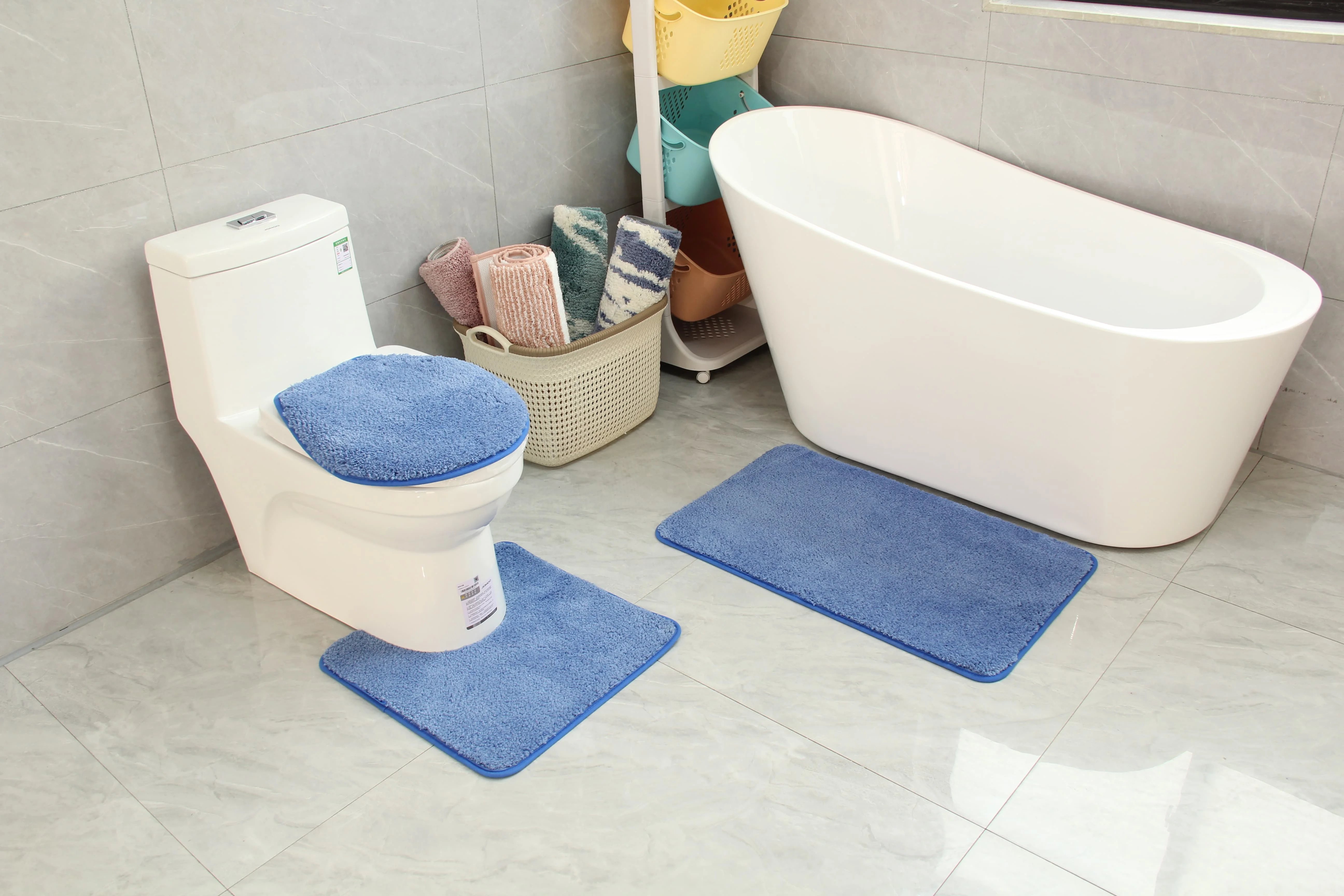
A contour rug has a curved or U-shaped cutout designed to fit around the bottom of a toilet. It may create a fitted look, but the shape can make it harder to clean close to the base. The best layout depends on the room, the rug’s fit, and how easily you can lift it.
Source: df0e4g4866x0s.cloudfront.net
Rectangular mat
Works well when you want a simple, removable surface in front of the toilet. Keep it clear of the base and the path through the room.
Contour rug
Fits around the front of the toilet base, but may collect dust or moisture near the fixture and can be harder to position on a small floor.
Long runner
May suit a large bathroom or a long vanity area, but a runner is rarely necessary just for the toilet. Make sure it does not narrow the walking path.
No rug
Keeps the floor open and allows easy access for cleaning around the entire fixture.
How Much Space Should You Leave Around the Toilet?
Leave enough open floor around the toilet for comfortable use, cleaning, and safe movement. A rug should not touch the toilet base or sit where it catches the user’s feet when standing up or sitting down. The exact amount of open space depends on the bathroom layout and the needs of its users.
Measure the available floor before buying a mat. Check the distance from the toilet base to the vanity, wall, shower, or doorway. Also account for the rug’s thickness and whether a door can swing over it without catching the edge.
A mat that looks small in a product photo may take up much of a narrow bathroom floor. Use painter’s tape to mark the proposed rug size on the floor, then walk through the room and check the door movement before making a choice.
Check the door
Make sure the door clears the rug and does not push it into a fold when opened.
Keep the base accessible
Avoid placing fabric tightly against the toilet, where it can make cleaning more difficult.
Protect the walking path
Do not let the rug create a narrow route between the toilet, vanity, shower, or exit.
How to Choose the Right Toilet Rug
Choose a toilet rug by looking at its fit, backing, fabric, wash instructions, and drying needs. A plush rug may feel comfortable, while a thin cotton mat may be easier to wash and dry. Neither is automatically the better option for every bathroom.
Start with the floor rather than the color. A rug that looks good but slides on smooth tile can create a hazard. A mat that stays wet for long periods can also become unpleasant to use, even if it matches the towels perfectly.
Size and shape
Choose a size that fits the open floor without crowding the toilet or blocking the route through the bathroom.
Washable fabric
Look for care instructions that suit your laundry routine and the level of cleaning the bathroom requires.
Suitable backing
Choose a backing intended for your floor type, and follow any restrictions for heated floors or delicate finishes.
Drying time
Consider how quickly the rug can dry in your bathroom. Thick rugs may take longer than thin mats, especially in rooms with poor airflow.
Low profile
A low-profile edge can reduce the chance of catching a toe or interfering with a door, although the rug still needs to stay flat.
Which Materials Work Best?
Cotton, microfiber, chenille, and memory foam are common bath mat materials. Their feel, water handling, and care needs differ, so compare the product label rather than relying on the material name alone.
Cotton is often easy to launder when the care label allows machine washing. Microfiber can feel soft and may dry relatively quickly depending on its thickness and construction. Chenille offers a textured, plush feel, while memory foam provides cushioning but may need careful drying and handling.
No material removes the need for regular cleaning. For a toilet-area rug, a fabric that you can wash and dry without trouble may be more useful than one that feels especially thick underfoot.
Cotton
Consider it if you want a familiar fabric and simple laundering, subject to the care label.
Microfiber
Consider it for a soft feel and convenient care, while checking the pile and drying instructions.
Chenille
Consider it if you prefer a plush texture, but check whether the thicker fibers dry fully between uses.
Memory foam
Consider it if cushioning is your main priority, but verify washing and drying requirements before buying.
Does the Rug Need a Non-Slip Backing?
A toilet rug should not slide when someone steps on it. A suitable non-slip backing can help, but it is not a guarantee that the rug will stay in place on every floor. Dust, soap residue, moisture, worn backing, and the floor finish can affect grip.
Check the manufacturer’s guidance for your flooring. Some backing materials may be unsuitable for certain finishes, and rubber or latex products can leave marks or react with some surfaces. If the manufacturer does not confirm compatibility, ask the flooring supplier before using the rug.
Inspect the backing after washing and over time. If it becomes brittle, curls, sheds, or no longer grips the floor, replace the rug or stop using it until the problem is resolved. Do not assume that adding a loose pad will solve the issue unless the pad is suitable for both the rug and the floor.
Test the placement
After setting down the rug, press it with your foot and check that it stays flat and does not move easily.
Keep the floor clean
Remove dust, hair, and moisture from the floor and backing as directed by the product instructions.
Check the edges
Do not use a mat with curled corners, folded edges, or damaged backing.
How to Keep a Toilet Rug Clean
A toilet rug needs a regular cleaning routine because it sits in a high-use area. The right schedule depends on how often the bathroom is used, whether children or pets share the room, how much moisture reaches the mat, and whether the rug becomes visibly dirty.
There is no single washing interval that suits every household. Follow the care label and clean the rug whenever it becomes soiled, smells musty, or feels damp for too long. A heavily used shared bathroom will usually need more frequent attention than a rarely used guest bathroom.
A Simple Cleaning Routine
Start by lifting the rug before cleaning the bathroom floor. Shake off loose debris outdoors if practical, or remove it with a vacuum suitable for the rug. Check the underside and floor for moisture, residue, or damage before putting the mat back.
Step 1: Check the label
Confirm whether the rug can be machine washed, what water temperature to use, and whether it can go in a dryer.
Step 2: Wash when needed
Use the recommended cleaning method. If the rug has been contaminated, handle it carefully and avoid shaking it in a way that spreads debris.
Step 3: Clean the floor
Clean the floor under the rug and around the toilet using products suitable for the flooring and the type of soil.
Step 4: Dry completely
Dry the rug fully according to its label. Make sure the floor beneath it is also dry before returning it.
Step 5: Inspect the backing
Look for peeling, cracking, curled edges, or loss of grip before using the rug again.
What If the Rug Smells Musty?
A musty smell can mean that moisture remains in the fibers, backing, or floor below the rug. Lift the mat, check the floor, and let both dry fully. Wash the rug according to its care label if it can be cleaned safely.
Improve airflow when possible by using the bathroom exhaust fan as intended and allowing damp items to dry in a suitable place. If the smell returns quickly, the rug may be holding moisture or the floor may have a separate dampness problem.
Do not cover a persistently damp floor with another rug. If you find signs of a plumbing leak, damaged flooring, or moisture that does not go away, investigate the source and arrange repairs when needed.
Remove moisture first
Dry the rug and floor rather than trying to hide the smell with fragrance.
Avoid harsh mixtures
Never mix household cleaning products, especially bleach with ammonia or acids. Follow the product labels.
Replace when necessary
If a rug remains smelly after proper cleaning and drying, replacing it may be more practical than continued treatment.
Bathroom Rug Placement for Different Homes
The best toilet rug setup depends on the size of the bathroom, the flooring, and the people who use it. A layout that works in a large primary bathroom may be awkward in a narrow powder room. Consider how the room functions before adding another fabric item.
Small Bathrooms and Powder Rooms
In a small bathroom, a bare floor or a single compact mat may be the easiest option. Too many rugs can interrupt the walking path and make the room feel crowded. Keep the area near the toilet clear enough for comfortable movement and easy cleaning.
If you want a mat, mark its outline with painter’s tape first. Open the door, stand in front of the toilet, and walk toward the sink to check whether the marked area gets in the way.
Use one mat at most when space is tight
Avoid overlapping rugs or placing small mats so close together that their edges become tripping points.
Keep the door clear
Choose a thickness and position that allow the door to open and close without catching the mat.
Family Bathrooms
A family bathroom may benefit from a washable mat if several people use the room each day. However, more users can also mean more dirt, moisture, and laundry. Choose a rug that can be cleaned without adding a difficult chore to the household routine.
If young children use the bathroom, pay close attention to movement and placement. A loose rug can shift underfoot, so remove it if you cannot keep it flat and secure. Teach children to dry wet areas and avoid leaving a soaked mat on the floor.
Prioritize simple care
A mat that is easy to wash and dry is more practical than one that requires special handling every time it gets dirty.
Check it often
Look for dampness, curled corners, and loose backing as part of routine bathroom cleaning.
Bathrooms Used by Older Adults or People With Mobility Needs
In a bathroom used by someone with balance or mobility concerns, floor coverings need extra care. A rug can shift, wrinkle, or catch a foot, even when it appears to be in the right place. A bare floor may be the simpler option if the rug cannot be kept securely flat.
Do not assume that a soft or non-slip bath mat makes the bathroom safe for every user. If a person needs support when sitting, standing, or turning, consider a broader bathroom safety assessment. A qualified occupational therapist or other appropriate health professional can help identify suitable changes for that person’s needs.
Remove loose rugs
If the mat moves or its edges lift, remove it rather than relying on careful stepping.
Keep routes open
Avoid rugs that interfere with a walker, cane, wheelchair, or access to grab bars.
Assess the whole bathroom
Look at lighting, grab bars, floor grip, toilet height, and the route to the doorway rather than focusing only on the rug.
Bathrooms With Heated Floors
If your bathroom has radiant floor heating, check both the flooring instructions and the rug manufacturer’s guidance before covering the area. Some floor systems and rug backings have limits on heat exposure or insulation. A thick mat may also reduce how readily heat reaches the room.
Do not assume every rubber-backed or memory-foam rug is suitable for heated flooring. If compatibility is unclear, choose a product specifically approved for the floor system or leave the area uncovered.
Read both sets of instructions
Check the flooring and mat guidance before placing a rug over a heated surface.
Avoid thick coverings unless approved
Use only a rug whose construction and backing are suitable for the heating system.
Should the Toilet Rug Match the Towels?
Your toilet rug does not need to match your towels exactly. Matching colors can create a coordinated look, but a similar shade or shared accent color can work just as well. You can also skip the rug and let the towels provide the main color in the room.
If you choose a rug, consider the whole bathroom rather than one item at a time. A neutral mat can balance colorful towels, while a muted rug can soften a room with patterned shower curtains. The key is to choose a design that fits the room without sacrificing comfort, cleaning, or safety.
Match the color family
Use similar warm or cool shades for a coordinated appearance without buying identical sets.
Choose a neutral rug
White, beige, gray, or other quiet shades can work with many towel colors, though lighter fabrics may show stains more readily.
Keep patterns simple
If the shower curtain or towels already have a bold print, a plain rug can make the room feel less busy.
Let function decide
Do not keep a rug that slips, stays wet, or is hard to wash simply because it completes a matching set.
Common Mistakes to Avoid
The most common toilet-rug mistakes involve poor placement, difficult care, and ignoring moisture. A rug should make the bathroom more comfortable without making routine cleaning or movement harder. A few simple checks can prevent many of these problems.
Choosing a rug that is too large
A large mat can block a narrow route, interfere with a door, or cover too much of the floor. Measure the space and check the layout before buying.
Putting fabric against the toilet base
A tight fit may look neat, but it can make it harder to clean around the fixture and notice moisture near the base.
Ignoring the underside
Dirt and moisture can collect under a rug. Lift it during cleaning and make sure the floor is dry before replacing it.
Assuming non-slip means fall-proof
Backing can lose grip or behave differently on different floors. Check the rug’s condition and remove it if it shifts.
Using a damp rug every day
A mat that never dries can develop a musty odor. Improve drying conditions or choose a different mat, or leave the floor bare.
Covering a plumbing leak
If the floor repeatedly becomes wet, inspect the toilet and nearby plumbing instead of hiding the water with a rug.
Choosing looks over care
A delicate rug that needs special cleaning may not suit a busy bathroom. Choose one you can maintain as directed.
Quick Decision Guide: Do You Need a Toilet Rug?
Use the table below to decide whether a rug solves a real need in your bathroom. These are practical guidelines, not strict rules. If two conditions point in different directions, give more weight to safe movement, moisture control, and ease of cleaning.
Choose the Setup That Fits Your Bathroom
If comfort is your main goal, try a small washable mat that stays flat and does not touch the toilet base. If hygiene and easy floor care matter more, keep the area bare. You can change the setup if the mat creates extra work or does not dry well.
Cold floor, enough space, and easy laundry
A small, washable rug may be useful if it stays secure and can dry fully.
Frequent dampness or musty smells
Leave the floor bare while you address the moisture source and improve drying.
Small bathroom with a narrow path
Skip the rug if it crowds the walking area or catches the door.
A mat that slides or curls
Remove it until you can replace it with a suitable option that stays flat.
Heated floors or delicate flooring
Use a rug only if the floor and rug instructions confirm that the combination is suitable.
A bathroom used by someone with balance concerns
Favor a clear, stable route and get individualized advice if bathroom safety is a concern.
What to Do Before You Buy a Toilet Rug
You do not need to buy a rug just because bathroom sets often include one. First, decide what you want it to do. If you cannot name a clear benefit, leaving the floor bare is a reasonable starting point.
Measure the open floor
Check the space in front of the toilet and the route to the vanity or door. Include the door swing and any nearby fixtures.
Check the floor surface
Confirm that the backing is suitable for tile, vinyl, stone, wood, or another floor material.
Read the care label
Make sure you can wash and dry the rug using the methods the manufacturer permits.
Test the layout
Mark the rug’s footprint with painter’s tape and use the bathroom as usual to check whether the area feels cramped.
Review after a week
Notice whether the rug stays dry, remains flat, and makes the room more comfortable. If it causes more work or creates a hazard, remove it.
Frequently Asked Questions
Q
Is it sanitary to have a rug in front of the toilet?
It can be sanitary if the rug is washable, kept dry, and cleaned whenever it becomes soiled. However, fabric can collect dust, hair, moisture, and bathroom contaminants. If you cannot maintain it easily, leaving the floor bare may be more practical.
Q
Should a toilet rug touch the toilet base?
It is generally better to leave a small gap between the rug and the toilet base. This makes it easier to clean around the fixture and spot water that may collect near the base. The rug should also stay clear of the toilet’s usable space and the walking path.
Q
Can I use a regular area rug in front of the toilet?
A regular area rug is not always suitable for bathroom use. It may lack a backing designed for damp floors, have care instructions that make washing difficult, or take too long to dry. A bath mat intended for bathroom conditions is usually easier to maintain, provided its backing is compatible with your flooring.
Q
How often should I wash a rug in front of the toilet?
The schedule depends on bathroom use, moisture, visible dirt, and the rug’s care instructions. Wash it whenever it becomes soiled, and do not wait if it has been contaminated. Let it dry completely before putting it back on the floor.
Q
Is a toilet contour rug better than a rectangular mat?
Neither shape is always better. A contour rug fits around the toilet base, while a rectangular mat is often easier to lift and clean underneath. Choose the shape that leaves the floor accessible, stays flat, and does not interfere with movement.
Q
Should I put a rug in front of the toilet in a small bathroom?
Only if there is enough space for the rug without blocking the door or narrowing the walking path. In a small bathroom, a bare floor can look less crowded and is often easier to clean. If you want a mat, mark its size on the floor before buying it.
Q
Can a toilet rug cause a musty smell?
Yes, a rug that stays damp can develop a musty odor, especially if moisture is trapped beneath it. Lift the rug, dry the floor, and wash the mat according to its care label. If the smell returns or the floor remains wet, investigate the moisture source rather than covering it.
✦ Wrapping Up
Conclusion
You do not need a rug in front of the toilet to have a comfortable or attractive bathroom. A rug can add warmth, softness, and color, but it also needs regular cleaning and proper drying. In a small bathroom, a room with persistent moisture, or a space used by someone with balance concerns, leaving the floor bare may be the better choice.
If you decide to use a rug, choose one that fits the available space, has backing suitable for your floor, stays flat, and can be washed and dried as directed. Keep it away from the toilet base, inspect it for wear, and remove it if it begins to slide or hold moisture.
💡 Key Takeaway
Measure the floor, check the walking path, and decide whether a rug adds real comfort. If it does, choose a washable, floor-compatible mat that stays flat. If it makes cleaning harder or creates a safety concern, skip it.
Learn what size bath rug fits a standard U.S. tub, how to measure your bathroom, which common sizes work best, and how to avoid door and clearance problems.
Should a bath mat match the towels? Learn when matching works, when to mix colors and textures, and how to create a coordinated bathroom without overmatching.