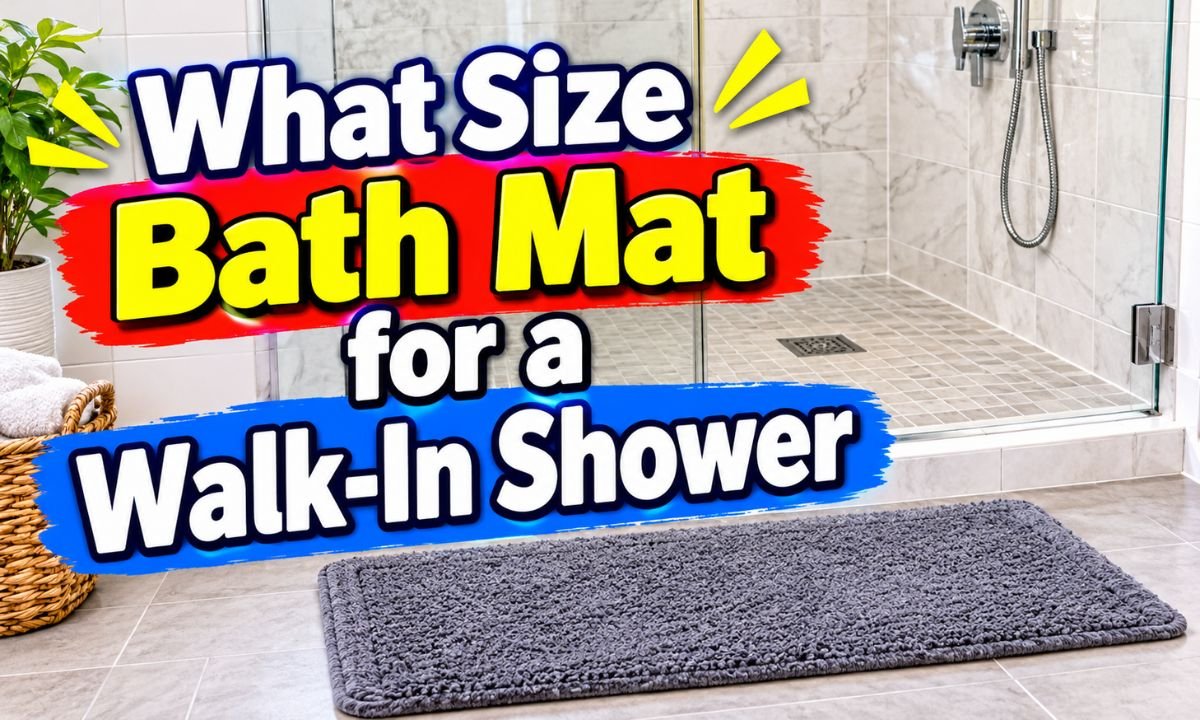
A 20 x 32-inch or 21 x 34-inch bath mat is a practical starting point for most walk-in showers. Choose a 24 x 40-inch mat for a wider step-out area, provided it fits without blocking doors or walkways.
In American homes, walk-in showers come in many sizes. Some fit into a compact guest bathroom, while others stretch across a large primary bathroom. The right bath mat should fit the floor outside the shower, catch water from wet feet, and leave enough room to walk without stepping on curled edges.
There is no single standard bath mat size for every walk-in shower. A small 17 x 24-inch mat may work beside a narrow shower, while a 20 x 32-inch or 21 x 34-inch option offers more room for stepping out. Larger bathrooms may have space for a 24 x 40-inch mat or a longer runner.
One detail can change your choice: a bath mat placed outside the shower is not the same as a shower mat placed inside it. An absorbent fabric rug belongs on a suitable bathroom floor. A mat used inside a wet shower must be designed for that purpose and must be compatible with the shower floor. This distinction matters for both fit and safety.
The best way to choose is to measure the area where your feet land after you leave the shower. Then check the mat’s width, length, backing, thickness, and care instructions. A well-fitted mat should catch water without creating a new tripping or slipping risk.
Source: m.media-amazon.com
What Size Bath Mat Works Best for a Walk-In Shower?
For the floor just outside a walk-in shower, start with a 20 x 32-inch or 21 x 34-inch bath mat. These dimensions offer a useful balance between foot coverage and floor space. They can work in many standard bathrooms, but the final choice depends on the shower exit, nearby fixtures, and available floor area.
A 24 x 40-inch mat is another option for a wider step-out area. It gives you more room to stand after a shower and can catch water from more than one step. However, it needs enough clearance around the toilet, vanity, and bathroom door.
Small bathrooms often need a more compact mat. A 17 x 24-inch option may be enough when the shower opens onto a narrow strip of floor. If the mat covers only part of the landing area, you may need to adjust its position rather than buy a much larger rug.
These are practical shopping ranges, not building codes or universal standards. Bath mat sizes vary by brand, and some sellers use different names for similar dimensions. Always use the actual measurements on the product label.
Source: m.media-amazon.com
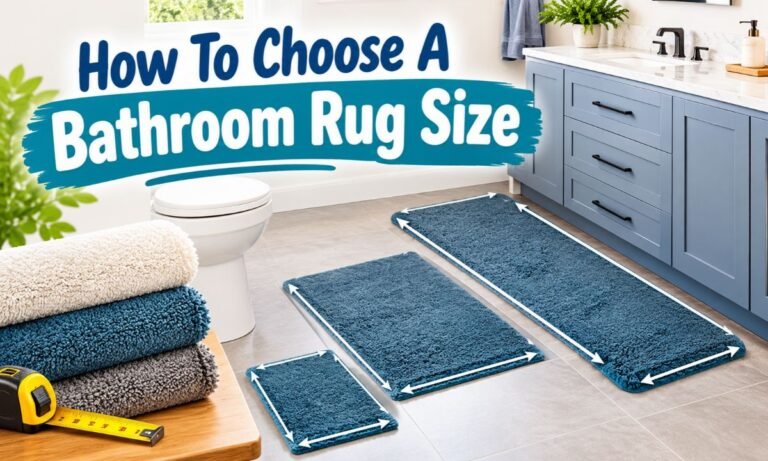
Small mat: 17 x 24 inches
A useful option for a compact bathroom, a narrow shower exit, or a limited floor area.
Standard mat: 20 x 32 inches
A versatile size for many single shower exits and smaller bathrooms.
Medium-large mat: 21 x 34 inches
Offers a little more coverage and can suit a wider landing area.
Large mat: 24 x 40 inches
Provides more standing space when the bathroom floor can accommodate it.
Runner: 20 x 60 inches
May work beside a long shower or double vanity, but only when the full length stays clear of doors and walking routes.
Does the Shower’s Size Determine the Bath Mat Size?
Not by itself. A 36 x 36-inch shower does not automatically need a 36-inch mat. The mat usually sits outside the shower, so the available landing area matters more than the shower’s inside dimensions.
For example, a compact shower may open onto a large bathroom floor. In that case, a 24 x 40-inch mat could fit well. A much larger shower in a narrow bathroom may need a 20 x 32-inch mat because there is less clear floor space.
Measure the landing area
Focus on the floor where you step out and dry your feet.
Check nearby fixtures
Leave room for vanity drawers, toilet access, and door movement.
Standard Bath Mat Sizes for Different Walk-In Showers
The table below compares common bath mat dimensions with the bathroom layouts they may suit. Use it as a starting point when shopping, not as a fixed sizing rule. The shape of the room and the placement of the shower opening can change the best choice.
The width is the shorter side, and the length is the longer side in this guide. Some brands list dimensions in the opposite order, so check the product diagram before ordering.
Source: m.media-amazon.com
17 x 24 inches
Best suited to compact bathrooms, narrow shower exits, and small floor spaces.
20 x 30 inches
A compact standard option for a small landing area.
20 x 32 inches
A practical general-purpose choice for many shower exits.
21 x 34 inches
A slightly longer choice when you want more room for wet feet.
24 x 40 inches
A larger option for wide shower openings and bathrooms with more clear floor space.
20 x 60 inches
A long runner for a suitable open floor area beside a long shower or vanity.
Which Size Should You Choose for a 36-Inch Shower?
A 36-inch-wide shower may work well with a 20 x 32-inch mat outside the opening if the landing area is also wide enough. A 21 x 34-inch mat can offer more coverage when the bathroom layout allows it.
Do not assume the mat must match the shower width. Check where the shower door opens, where the water tends to drip, and how much room you have to stand. The mat should sit in the natural step-out zone without touching a moving door.
Compact layout
Try a 17 x 24-inch or 20 x 30-inch mat if the available floor space is tight.
Open layout
Consider a 20 x 32-inch or 21 x 34-inch mat if it fits with clear space around it.
What About a 48-Inch or 60-Inch Walk-In Shower?
A wider shower can create a larger landing area, but it does not always require a wider bath mat. A 21 x 34-inch mat may still cover the main step-out spot. A 24 x 40-inch mat may be more suitable if you have enough open floor space.
For a long shower, think about the exit point rather than the full shower length. A long runner can make sense beside a long bathroom fixture or along a wide open area, but it should not extend into a narrow route to the toilet or door.
Measure the exit
Base the mat size on the area where you step out, not the full shower length.
Keep the route open
Avoid a runner that narrows the path between the shower, vanity, and bathroom door.
How to Measure for a Bath Mat Outside a Walk-In Shower
Measure the clear floor area before you shop. This simple step helps prevent a mat from being too short, too wide, or awkwardly placed. You only need a tape measure, a pencil, and a little time.
Measure the space after accounting for the shower door, vanity, toilet, and other items that may limit the mat’s position. If the bathroom has a hinged door, include the full swing area. For a sliding shower door, check the door track and the place where the panel moves.
Source: m.media-amazon.com
Measure the width
Measure across the clear floor area where you want the mat to sit.
Measure the length
Measure from the shower edge toward the open bathroom floor, stopping before any fixture or walkway.
Check the door swing
Open and close nearby doors to make sure they do not catch the mat.
Mark the proposed size
Use painter’s tape to outline the mat’s dimensions on the floor and test the layout.
Check the walking route
Walk around the taped outline and confirm that it does not create a narrow or awkward path.
Use a Simple Measurement Example
Suppose the clear floor area outside your shower measures 28 inches wide and 38 inches long. A 20 x 32-inch mat may fit with some open floor around it, while a 24 x 40-inch mat would be too long for that measured space.
This is a hypothetical example, not a recommended clearance standard. The main idea is to choose a mat that fits fully within the usable floor area and does not overlap a door path or create a raised edge in a walking route.
Do not stretch the measurement
A mat that is slightly too large can curl, bunch, or sit under a fixture.
Allow for real movement
Leave enough open space to step, turn, and walk without catching the mat’s edge.
Check the Mat Before Removing Its Packaging
Read the listed dimensions and compare them with your floor measurements. Check whether the product includes a thick foam layer, a raised border, or a non-slip backing that needs a specific floor type.
If you order online, keep the packaging until you have checked the size and inspected the mat. A product photo can make a mat look larger or smaller than it is.
Read the full dimensions
Check both sides rather than relying on labels such as small, standard, or large.
Check the thickness
A thick edge may catch a door or create a raised transition on the floor.
Bath Mat Outside the Shower vs. Shower Mat Inside It
A bath mat and a shower mat serve different purposes. A bath mat usually sits on the bathroom floor outside the shower. It absorbs water from your feet as you step out. A shower mat is designed for use on the wet shower floor and must be suitable for that surface.
This difference is important because a soft fabric bath rug is not automatically safe to place inside a shower. It may become waterlogged, move underfoot, or fail to drain. A mat with suction cups is not automatically suitable for every shower floor either.
Before using any mat inside a shower, read the product instructions and confirm that the material and attachment method suit your exact floor. Some suction-cup designs are intended only for smooth, non-textured surfaces. They may not grip textured shower bases, grout lines, or uneven floors.
Source: m.media-amazon.com
Bath mat outside the shower
Choose an absorbent, quick-drying mat with backing that is compatible with your bathroom floor.
Shower mat inside the shower
Choose a product specifically designed for wet shower use and follow its surface and installation instructions.
Do not assume all non-slip mats are alike
A backing made for dry bathroom floors may not work in a shower, and suction cups may not work on textured surfaces.
What Size Shower Mat Goes Inside a Walk-In Shower?
For an inside-shower mat, measure the usable shower floor and choose a product that fits without covering the drain or interfering with the shower door. A square 20 x 20-inch or roughly 20 x 27-inch design may suit some compact shower floors, while larger shower-rated mats may be available for wider spaces.
Do not select an inside-shower mat by applying the outside bath rug sizes in this guide. The shower floor shape, drain location, slope, texture, and product design all affect fit. The manufacturer’s stated dimensions and surface limits should guide the choice.
If the shower floor is textured or has many grout lines, do not assume a suction-cup mat will stay in place. Use only a product that the manufacturer confirms is suitable for that surface. If no suitable product is approved, avoid adding an incompatible mat.
Keep the drain clear
Do not cover the drain or block the path that lets water flow away.
Check the surface
Confirm whether the mat is approved for smooth, textured, tiled, or uneven shower floors.
Test the attachment
Follow the maker’s instructions and check that the mat stays flat and secure before use.
Can You Use a Regular Bath Rug Inside a Walk-In Shower?
No, not unless the product is specifically made and labeled for wet shower use. Regular cotton, chenille, microfiber, and memory foam bath rugs are generally intended for the dry bathroom floor. They can hold water and may not provide stable footing when soaked.
Keep fabric rugs outside the shower. If you want a mat under your feet while showering, select a shower-rated product and follow its care instructions. Remove and dry it as directed so water and residue do not build up underneath.
Use the right product
A bath rug is for drying feet; a shower mat is for the wet shower floor when approved for that surface.
Avoid improvised solutions
Do not place towels, loose rugs, or ordinary foam mats inside the shower.
How to Choose the Right Bath Mat Material and Backing
The right size is only part of the decision. The material affects how much water the mat can absorb, how it feels underfoot, and how long it takes to dry. The backing affects how the mat behaves on your bathroom floor.
For a mat outside the shower, look for a balance of absorbency, easy care, and a stable fit. A thick mat may feel soft, but it can take longer to dry. A thin mat may dry sooner but may offer less cushioning.
Source: m.media-amazon.com
Cotton
Cotton mats can absorb water and are often easy to wash, depending on the care label.
Microfiber
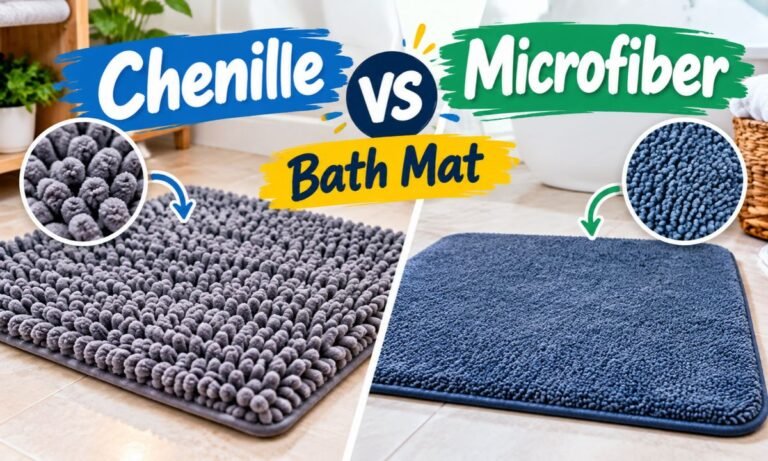
Microfiber mats can feel soft and may dry quickly, but drying time depends on pile, backing, airflow, and room conditions.
Chenille
Chenille has a soft, textured surface that can catch water from feet. Its thick pile may need extra time to dry.
Memory foam
Memory foam mats offer a cushioned feel, but check the backing and drying instructions before placing one in a damp bathroom.
Rubber or PVC backing
These backing types may help limit movement on some floors, but compatibility varies. Follow the floor and mat manufacturers’ instructions.
Which Backing Is Best for Tile Floors?
A backing that grips clean, dry tile may be useful, but the word non-slip alone does not prove that a mat will stay put. Dust, soap residue, moisture, floor finish, and the backing material can all affect how the mat behaves.
Check whether the backing is suitable for your specific tile and grout. Some rubber or latex backings may not be recommended for certain finished floors. Follow the flooring maker’s guidance, especially with natural stone, delicate finishes, or newly installed flooring.
After placing the mat, test it gently with your hand and foot before normal use. If it shifts, curls, or slides, remove it and choose a compatible alternative rather than relying on it.
Clean the floor
Remove dust, soap residue, and moisture before placing a floor mat.
Check for movement
Do not use a mat that slides or bunches when you step near its edge.
Protect the floor finish
Follow the floor manufacturer’s advice about rubber, latex, and other backing materials.
Does a Thick Bath Mat Need More Space?
Thickness does not change the mat’s listed length and width, but it can affect how well the mat fits beneath doors and around fixtures. A thick mat may also create a raised edge that your foot can catch.
Check the height of the bathroom door above the floor and the clearance under nearby cabinets. If the door touches the mat, choose a thinner option or move the mat to a safer location.
Check door clearance
Open and close the door over the mat to make sure it moves freely.
Avoid curled edges
Replace or reposition a mat that no longer lies flat.
How to Place a Bath Mat for a Walk-In Shower
Place the bath mat where you naturally step after leaving the shower. The goal is to catch water before it spreads across the bathroom floor. The mat should sit flat and leave a clear path to the vanity, toilet, and door.
Do not push the mat so close to the shower that its edge sits under a door or catches on the shower track. If the shower has a hinged glass door, test its full movement before settling on a position.
Source: m.media-amazon.com
Position it at the exit
Center the mat on the main step-out area when the floor plan allows.
Keep it flat
Smooth out folds and make sure all edges rest on the floor.
Keep the drain and shower track clear
Do not let an outside mat cover a floor drain or interfere with a sliding door.
Leave a clear route
Keep the path to the sink and bathroom door open.
Should the Bath Mat Touch the Shower Door?
It is usually better to leave a small gap rather than let the mat press against a moving shower door or track. A mat caught beneath a door can bunch up, curl, or shift out of position.
The exact gap depends on the shower design and mat thickness. Open and close the door several times after positioning the mat. If the door catches it, move the mat or choose a smaller size.
Sliding door
Keep the mat away from the track and the panel’s travel path.
Hinged door
Check the full door swing so the bottom edge does not push the mat.
Should You Use One Large Mat or Two Small Mats?
One mat is often simpler for a single walk-in shower because it creates one clear landing area. Two smaller mats may work in a larger bathroom with a separate shower exit and vanity area.
More mats also mean more edges to step around and more items to wash and dry. Choose two only when each mat has a clear purpose and neither one narrows the walking route.
One mat
Useful for a single shower exit and a compact bathroom layout.
Two mats
Useful when the shower and vanity have separate open floor areas.
Common Bath Mat Sizing Mistakes to Avoid
A mat can look right in a product photo and still be awkward in your bathroom. Most sizing problems happen when shoppers focus on the shower dimensions but forget the floor around it. A quick fit check can prevent wasted money and reduce avoidable trip hazards.
The safest choice is not always the biggest mat. It is the mat that stays flat, fits the step-out area, and does not interfere with normal movement.
Source: bathroomexplorer.com
Buying without measuring
A mat may be too wide for the space or too short to cover the main landing area. Measure first.
Choosing a mat that is too thick
A raised edge can catch a foot or prevent a door from moving freely.
Ignoring the shower door
A mat that touches a door or track may bunch up or shift.
Using a fabric rug inside the shower
Ordinary bath rugs are not made for standing on in a wet shower.
Assuming suction cups work on every floor
Textured or uneven surfaces may prevent the cups from gripping.
Leaving a wet mat on the floor
A damp mat can trap moisture against the floor and develop an unpleasant smell.
Keeping a damaged mat
Replace a mat that has curled edges, cracked backing, loose fibers, or poor grip.
What If No Standard Size Fits?
Choose a smaller mat that fits the clear floor area rather than forcing an oversized one into the room. If the shower exit is unusually wide or angled, look for a different shape, such as a square mat or a short runner.
You can also use painter’s tape to mark the dimensions of two possible mats. Compare the outlines while opening doors and walking through the bathroom. This gives you a simple way to judge the fit before you order.
Try a different shape
A square or narrow mat may fit a corner or angled layout better than a long rectangle.
Prioritize the landing area
Cover the main step-out zone instead of trying to cover the whole bathroom floor.
How to Keep a Walk-In Shower Bath Mat Clean and Dry
A bath mat works best when it can dry between uses. Water, soap residue, and skin oils can collect in the fibers and on the backing. Regular care helps limit odor and keeps the mat in better condition.
Follow the care label because washing and drying needs vary by fabric and backing. A mat that is machine washable may still need a gentle cycle, mild detergent, or air drying.
Source: towelexpert.com
Hang it when practical
Allow air to reach both sides instead of leaving the mat damp on the floor.
Wash as directed
Use the care label to choose the right water temperature and washing method.
Dry it fully
Do not put a mat back on the floor while its backing or underside is still damp.
Clean beneath it
Lift the mat during routine floor cleaning and let the floor dry before replacing it.
Inspect the backing
Look for cracking, peeling, discoloration, or signs that the mat no longer stays in place.
How Often Should You Wash a Bath Mat?
Wash a bath mat when it becomes visibly dirty, smells musty, or no longer feels fresh. How often that happens depends on how many people use the bathroom, how often the mat gets wet, and how well the room ventilates.
A busy family bathroom may need more frequent washing than a guest bathroom. If the mat stays damp for long periods, improve airflow and drying rather than relying on washing alone.
Check it often
Look for odor, damp backing, stains, and changes in texture.
Follow the care label
Avoid bleach, high heat, or harsh cleaners unless the maker permits them.
When Should You Replace a Bath Mat?
Replace a bath mat when it no longer lies flat, has damaged backing, sheds heavily, or develops an odor that remains after proper cleaning and drying. A mat that slides should not stay in use just because its fabric still looks good.
There is no single replacement date that fits every mat. Its condition, care, use, and material matter more than its age alone.
Replace damaged backing
Peeling or cracked backing can make the mat less stable.
Replace persistent problem mats
Do not keep a mat that remains musty or damp despite proper care.
A Simple Size Decision for Your Bathroom
If you are still unsure, match the mat to the clear floor area rather than the shower’s total width. Start with a 20 x 32-inch mat for an average step-out space. Move up to 21 x 34 inches or 24 x 40 inches only when the extra coverage fits without blocking movement.
For a very small bathroom, a 17 x 24-inch mat may be the better choice. For a long, open bathroom, a runner may work, but it should not cross a busy walking route. These choices are practical starting points, not fixed rules.
Source: m.media-amazon.com
Choose 17 x 24 inches
When the shower exit has very limited floor space.
Choose 20 x 32 inches
When you need a useful everyday mat for a typical step-out area.
Choose 21 x 34 inches
When the landing area is a little wider or longer.
Choose 24 x 40 inches
When the bathroom has enough clear floor space for a larger mat.
Choose a runner
When the bathroom has a long, open area and the runner will not obstruct access.
A Final Fit Check Before You Buy
Before placing an order, compare the product dimensions with your measurements. Confirm that the mat is meant for use outside the shower, that its backing suits your floor, and that the thickness will not interfere with nearby doors.
If you need a mat for inside the shower, stop and check the manufacturer’s wet-use instructions instead. A regular bath rug is not a substitute for a shower-rated mat. If the shower floor is textured or uneven, confirm compatibility before choosing a suction-cup design.
Measure twice
Check the clear width and length of the floor.
Check the product type
Confirm whether the mat is intended for the bathroom floor or the wet shower base.
Check stability
Make sure the mat lies flat and does not slide or catch underfoot.
Frequently Asked Questions
Q
Is a 20 x 32-inch bath mat big enough for a walk-in shower?
Yes, a 20 x 32-inch mat can be large enough for the floor outside many walk-in showers. It offers a useful landing area without taking up too much bathroom floor space. Measure the exit area first to confirm that it fits your layout.
Q
Should a bath mat be wider than the shower door?
Not necessarily. The mat should cover the area where you step out, but it does not need to match or exceed the shower door width. Check the door’s movement and make sure the mat does not catch on the track or block the walking route.
Q
What size bath mat is best for a small walk-in shower?
A 17 x 24-inch or 20 x 30-inch mat may work well in a small bathroom. The better choice depends on the open floor area outside the shower. Choose the largest size that lies flat and leaves enough room to walk safely.
Q
Can I put a regular bath mat inside a walk-in shower?
No. A regular fabric bath mat is generally made for the dry bathroom floor, not for standing on in a wet shower. Use a shower-rated mat only when its instructions confirm that it suits your shower floor and surface type.
Q
Is a larger bath mat always safer?
No. A larger mat may cover more floor, but it can also block doors, narrow a walkway, or create edges that catch your feet. A flat, stable mat that fits the available space is a better choice than an oversized one.
Q
Can I use a suction-cup mat on a textured walk-in shower floor?
Do not assume that it will work. Many suction-cup mats require a clean, smooth surface, and texture or grout lines can prevent a secure grip. Read the manufacturer’s instructions and use the mat only on approved surfaces.
Q
How far should a bath mat sit from a walk-in shower?
Place it close enough to catch water from your first step, but keep it clear of the shower door and track. There is no universal gap because shower designs differ. Test the door and walking path before settling on the position.
✦ Wrapping Up
Conclusion
For many walk-in showers, a 20 x 32-inch or 21 x 34-inch bath mat is a sensible place to start. A smaller 17 x 24-inch mat can suit a tight bathroom, while a 24 x 40-inch mat may fit a wider landing area. The right choice depends on the usable floor space, not just the shower’s dimensions.
Remember that a bath mat outside the shower and a shower mat inside it are different products. Choose an absorbent floor mat for the step-out area and a shower-rated mat only when it is approved for your shower’s surface. Check the backing, thickness, door clearance, and care instructions before use.
💡 Key Takeaway
Measure the clear floor area outside your walk-in shower, mark a 20 x 32-inch outline with painter’s tape, and check the fit before buying. Choose a larger or smaller size only when your layout allows it to lie flat and leave a clear walking path.
Learn what size bath rug fits a standard U.S. tub, how to measure your bathroom, which common sizes work best, and how to avoid door and clearance problems.
Do rubber backed bath mats slip when wet? Learn why they can move, what affects grip, how to test your mat, and how to reduce slipping in a U.S. bathroom.