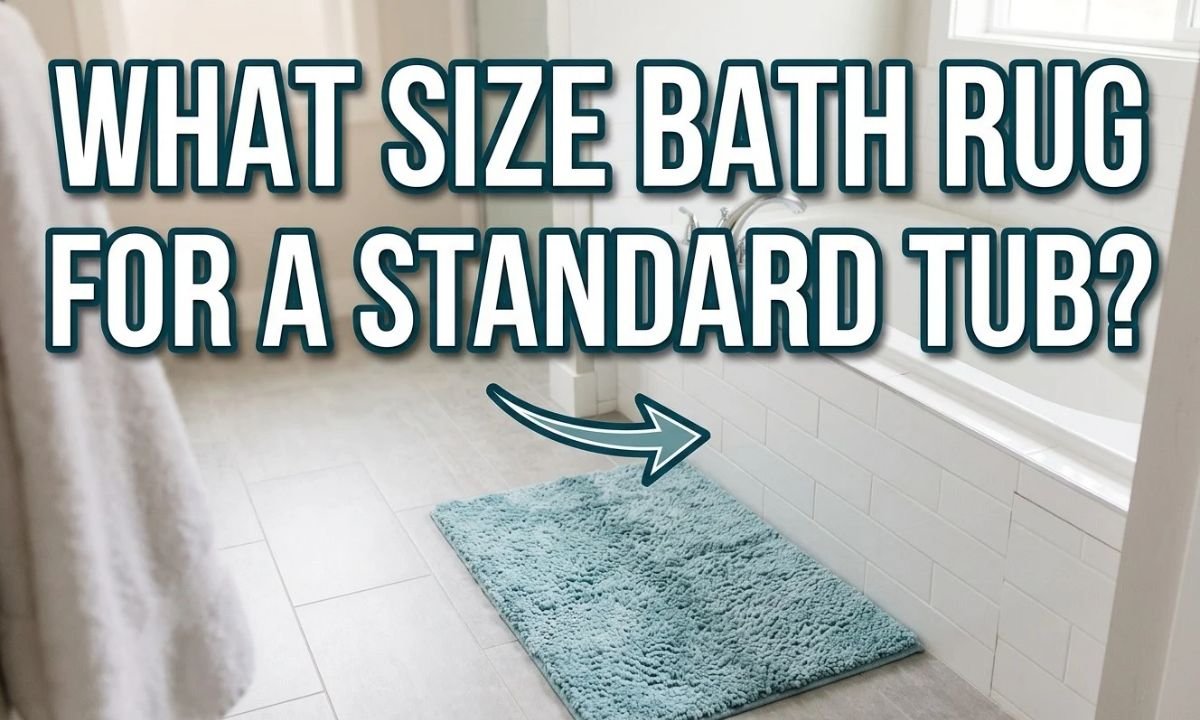
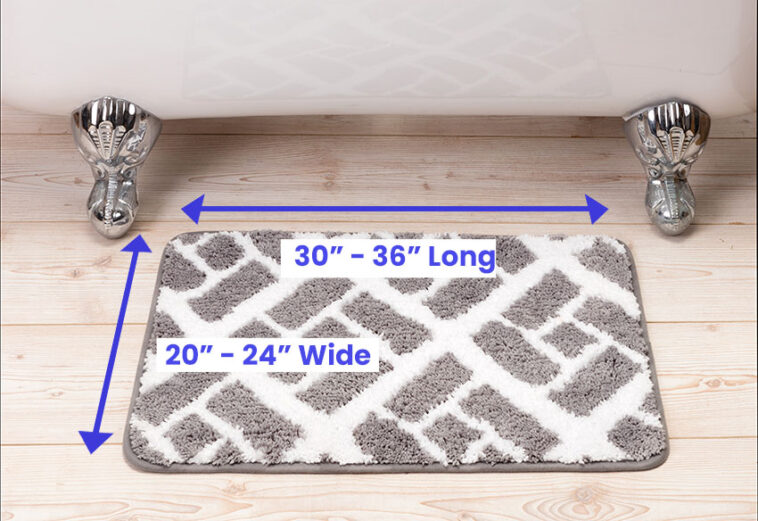
For a standard U.S. bathtub, a 20 x 30-inch or 21 x 34-inch bath rug is usually the best starting point. Choose a 24 x 36-inch rug when you have more open floor space and want broader coverage.
If you are shopping for a bath rug for a typical American bathroom, the most useful measurement is not the tub itself but the clear floor area where you step out. Standard residential alcove tubs are commonly around 60 inches long and roughly 30 to 32 inches wide, but the available floor space outside the tub varies considerably from one bathroom to another.
There is no single officially standardized bath-rug dimension. Retailers commonly sell sizes such as 20 x 30, 20 x 32, 21 x 34, and 24 x 36 inches. For most standard tub-and-shower combinations, a medium rectangular rug in this range provides enough space for wet feet without taking over the floor.
The safest way to choose is to measure the open floor in front of the tub, check the door swing and nearby fixtures, and then select the largest practical rug that leaves comfortable clearance. A larger rug is not automatically better if it bunches under a door, blocks a cabinet, or creates a tripping point.
Source: Bing
What Size Bath Rug Fits a Standard Tub?
For most standard tubs, start with a 20 x 30-inch, 20 x 32-inch, or 21 x 34-inch bath rug. These dimensions are large enough to cover the primary step-out area while remaining compact enough for many typical U.S. bathrooms.
A 24 x 36-inch bath rug is the next useful size when the bathroom has a wider clear area beside the tub. It provides more room for both feet and can visually balance a larger bathroom, but it should only be used when the surrounding floor can accommodate it without interfering with doors or fixtures.
The term standard can be confusing because bath-rug manufacturers do not use one universal size standard. One brand may call 20 x 30 inches standard, while another may describe 21 x 34 inches as its standard or medium option. Compare the actual measurements instead of relying on the product label alone.
Source: Bing
Best all-around starting point
A 20 x 30-inch rug is compact, widely available, and suitable for many standard tub exits.
More generous coverage
A 21 x 34-inch rug offers a little more length and is useful when the floor beside the tub allows it.
Largest common choice for a standard bath
A 24 x 36-inch rug gives more coverage but needs more clearance around doors, cabinets, and other fixtures.
Why the Tub Length Does Not Determine the Rug Length
A standard tub may be about 60 inches long, but that does not mean a 60-inch rug is appropriate. The bath rug is normally intended to catch water where you step out, not to reproduce the full length of the bathtub.
A full-length runner can make sense in a large bathroom or along a long vanity, but it may be excessive beside a conventional alcove tub. A medium rectangular rug generally concentrates coverage where it is most useful.
Standard Bath Rug Sizes Compared
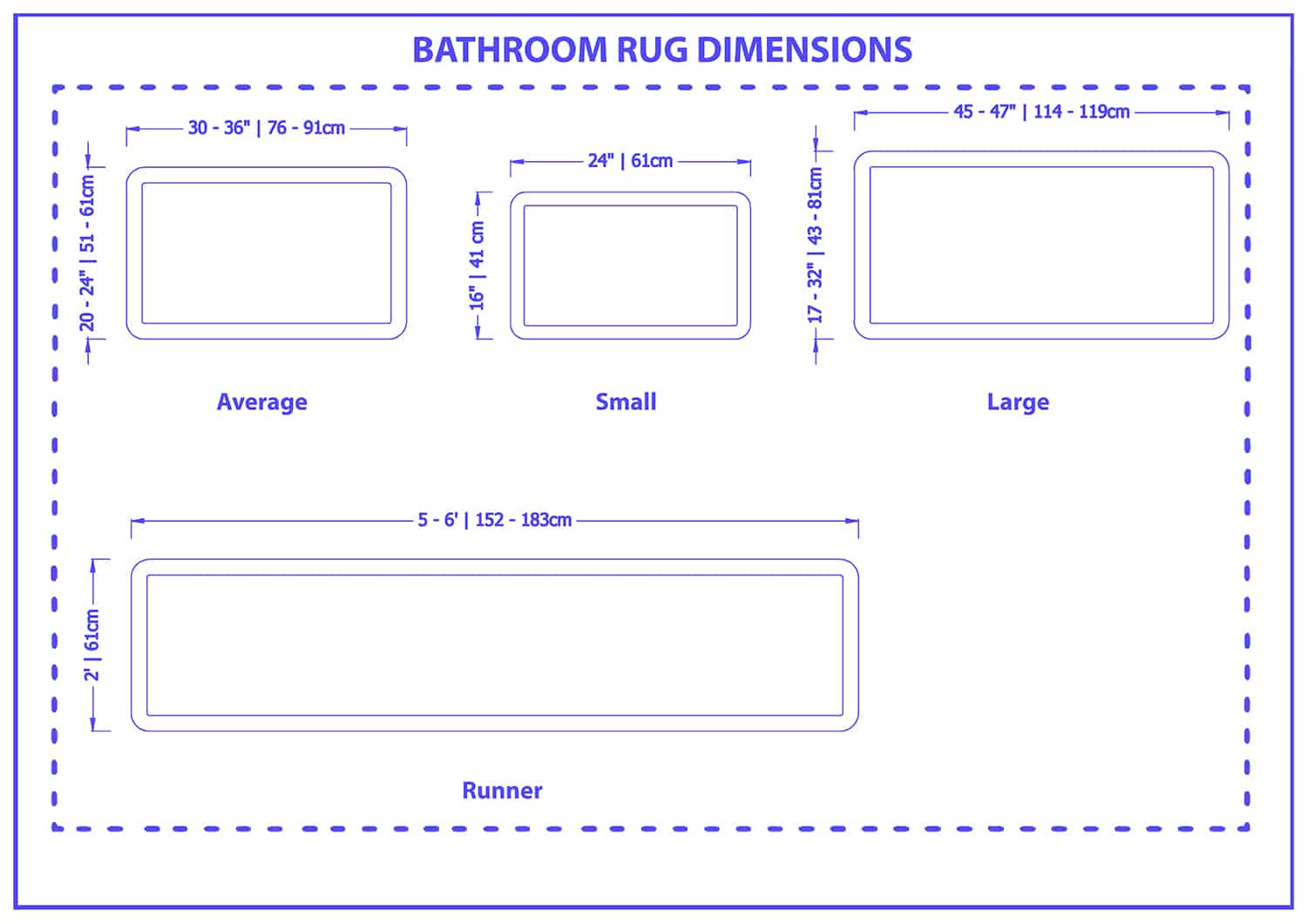
The following sizes cover most bathroom layouts. Use the table as a starting point, then confirm the actual usable floor dimensions in your bathroom. Product dimensions can vary slightly between manufacturers even when the size label sounds the same.
The main decision is coverage versus clearance. A larger rug catches more water and creates a more substantial landing area, while a smaller rug is easier to fit around doors, toilets, vanities, and narrow walkways.
Source: Bing
17 x 24 inches
A compact option for small bathrooms, powder rooms, pedestal sinks, or unusually tight tub areas.
20 x 30 inches
A common medium size that works well at many standard tub and shower exits.
20 x 32 inches
A slightly longer alternative to 20 x 30 inches when you want additional coverage without moving to a large rug.
21 x 34 inches
A popular medium-to-standard size that provides more coverage around a tub or vanity.
24 x 36 inches
A larger rectangular rug for bathrooms with sufficient open floor space.
24 x 40 inches
A generous choice for larger bathrooms or wider tub-side areas where clearance permits.
24 x 60 inches
A runner-style size better suited to long vanities, large bathrooms, or extended floor zones than a typical tub exit.
Quick Size Guide for a Standard Tub
If you want a simple decision, measure the open floor extending outward from the tub. If approximately 30 inches of width and at least 20 inches of usable depth are available, a 20 x 30-inch rug is a reasonable starting point. If you have more room and want greater coverage, consider 21 x 34 or 24 x 36 inches.
Do not force a larger rug into a narrow bathroom just because it offers more surface area. The usable floor area, not the nominal bathroom size, should control the final choice.
How to Measure for a Bath Rug Beside Your Tub
Measuring takes only a few minutes and is more reliable than choosing a rug from the tub size alone. You need the clear floor dimensions in the area where the rug will sit, plus enough clearance for doors and nearby fixtures.
Start with the floor directly outside the tub or shower opening. This is the primary wet-foot landing zone. Measure its width and the distance available from the tub edge toward the opposite wall or fixture.
Then check every moving or opening object around the proposed rug. A bathroom rug can fit perfectly when measured as an empty rectangle but become impractical once a bathroom door, vanity drawer, cabinet door, or toilet is taken into account.
Source: Bing
Step 1: Measure the open floor
Measure the length and depth of the unobstructed floor where you want the rug to sit.
Step 2: Identify the step-out area
Focus on the spot where your feet land when you exit the tub. That area deserves priority over unused floor farther away.
Step 3: Check door clearance
Open and close the bathroom door fully. Make sure the rug does not prevent the door from opening or catch beneath it.
Step 4: Check cabinets and drawers
Open vanity doors and drawers while measuring. The rug should not bunch against them or prevent full access.
Step 5: Account for rug thickness
A thick, plush rug occupies more vertical clearance than a thin mat, especially beneath a swinging door.
A Simple Measurement Example
Suppose the clear floor outside your tub measures about 32 inches across and 25 inches from the tub edge to the next obstruction. A 20 x 30-inch rug may fit comfortably if its 30-inch side is oriented across the available width and the 20-inch side extends into the room. A 24 x 36-inch rug would not be appropriate if either dimension exceeds the available clear space.
This example is hypothetical, but it illustrates the central rule: match the rug to the actual floor rectangle rather than assuming that the room or tub has a universal rug requirement.
Should a Bath Rug Be as Wide as the Tub?
Not necessarily. A bath rug does not have to match the full width or length of a standard tub. Its primary purpose is to provide a dry, comfortable landing surface where people step out, so positioning and usable coverage matter more than exact fixture matching.
For an ordinary 60-inch alcove tub, a medium rug centered around the main exit area can be more practical than a rug running the entire tub length. If the bathroom has multiple tub access points or a wide open floor area, a larger rug or runner may make more sense.
The best visual proportion also depends on the rest of the bathroom. A very small mat can look lost in a large room, while an oversized rug can make a compact bathroom feel crowded.
Source: Bing
For a compact bathroom
Favor 20 x 30 inches or a similar medium size if the floor is limited.
For a roomy bathroom
Consider 21 x 34 or 24 x 36 inches if the additional coverage does not interfere with circulation.
For a long tub-side area
A runner may work, but it is usually a layout decision rather than a requirement for a standard tub.
20 x 30 vs. 21 x 34 vs. 24 x 36 Inches
These three sizes are close enough to serve similar purposes, but their differences matter when your bathroom has tight clearances. The choice should depend on how much floor you have available and how much coverage you actually need.
A 20 x 30-inch rug is usually the easiest fit. A 21 x 34-inch rug adds several inches of coverage without becoming dramatically larger. A 24 x 36-inch rug adds even more surface area and can look more substantial, but it also requires more open floor.
Source: Bing
Choose 20 x 30 inches when
You want a compact tub-side mat, have limited floor space, or need to protect door and cabinet clearance.
Choose 21 x 34 inches when
You have moderate floor space and want a little more coverage than a 20 x 30-inch mat.
Choose 24 x 36 inches when
Your bathroom has a generous clear floor area and you prefer a wider, more substantial landing zone.
Which Size Is the Safest Default?
If you cannot decide and your measurements allow all three sizes, 20 x 30 inches is the conservative default. It provides useful coverage while leaving more surrounding floor exposed. If your priority is a more generous landing area and the bathroom has plenty of clearance, 21 x 34 or 24 x 36 inches can be reasonable upgrades.
Common Bath Rug Sizing Mistakes to Avoid
Most bath-rug sizing problems come from measuring the wrong thing. People often compare the rug with the tub dimensions and overlook the floor, doors, and fixtures surrounding it.
Another common mistake is assuming that a larger rug automatically provides better protection. If the rug extends into a doorway or sits too close to a toilet or vanity, the added coverage can create a practical problem rather than solving one.
Source: Bing
Choosing by the word standard
Standard is not a universal dimension for bath rugs. Check the actual length and width listed by the manufacturer.
Measuring the tub instead of the floor
A 60-inch tub does not require a 60-inch rug. Measure the open landing area where the rug will actually sit.
Ignoring door swing
A thick rug can stop a bathroom door from opening fully or become caught underneath it.
Buying a rug that is too large
Oversized rugs can crowd narrow bathrooms and interfere with toilets, vanities, cabinets, or walking paths.
Forgetting the rug backing
A non-slip backing or separate rug pad can change the final thickness and available clearance.
Assuming every rug is machine washable
Care requirements vary by material, construction, and backing. Check the manufacturer’s care instructions before washing.
Avoid Creating a Tripping Hazard
A bath rug should lie flat and remain stable during normal use. Avoid placing it where an edge curls upward, where it slides easily across smooth flooring, or where a door repeatedly catches the pile. If the rug moves during ordinary use, address the underlying fit or traction problem rather than simply adding more rug.
What Size Bath Rug Works for Different Tub Setups?
The best size changes when the bathtub style or surrounding floor plan changes. A standard alcove tub in a compact guest bathroom needs a different approach from a freestanding soaking tub in a large primary bathroom.
For an alcove tub with a shower, prioritize the area immediately outside the shower curtain or shower door. For a freestanding tub, the surrounding floor may support a larger rectangular, oval, or round rug because there is often more open space around the fixture.
Source: Bing
Standard alcove tub
Start with 20 x 30 or 21 x 34 inches and move to 24 x 36 inches only when the floor has enough clearance.
Tub and shower combination
Center the rug around the primary shower exit rather than trying to cover the full tub length.
Freestanding tub
A larger 24 x 36 or 24 x 40-inch rug may work if the surrounding floor is open enough, while a round rug can suit a more symmetrical layout.
Small bathroom
Use the smallest size that safely covers the step-out area without blocking the door or nearby fixtures.
When a Runner Makes More Sense
A runner is useful when the bathroom has a long, narrow circulation area or a long vanity that benefits from continuous coverage. It is not automatically the best choice for a standard tub. In a compact bathroom, a medium bath rug usually uses the available floor more efficiently.
Bath Rug vs. Bath Mat: Does Size Change?
The terms bath rug and bath mat are often used interchangeably, so size alone does not create a strict distinction. In general, a bath mat is more focused on absorbing water and providing a stable step-out surface, while a bath rug can place more emphasis on appearance and room styling.
For a standard tub, function should come first because the rug will regularly encounter moisture. Look for a construction appropriate for bathroom use, adequate absorbency for the area, and a stable backing or other appropriate method of keeping the rug from sliding.
Source: Bing
For heavy wet-foot traffic
Prioritize absorbency, drying characteristics, stability, and appropriate care instructions.
For primarily decorative use
A decorative rug may work in a dry area of the bathroom, but it should not be assumed to perform like a purpose-built bath mat.
For either option
The dimensions still need to fit the actual floor space and maintain adequate clearance.
Frequently Asked Questions
Q
What is the most common bath rug size for a standard tub?
20 x 30 inches is a common starting size for a standard tub or shower exit. Other widely sold sizes include 20 x 32 and 21 x 34 inches, so there is no single universal standard. Always compare the actual dimensions with your available floor space.
Q
Is a 24 x 36 bath rug too big for a standard tub?
Not necessarily. A 24 x 36-inch rug can work well beside a standard tub if the bathroom has enough clear floor space. It becomes a poor choice when it interferes with the bathroom door, vanity, toilet, drawers, or normal walking paths.
Q
Should a bath rug go directly against the bathtub?
It can sit close to the tub edge when the layout allows, but it does not need to cover every inch beside the tub. The important area is the step-out zone where wet feet contact the floor. Keep the rug flat and positioned so it does not interfere with doors or other fixtures.
Q
How much of the floor should a bath rug cover?
There is no required percentage of bathroom floor coverage. The rug should cover the practical wet-foot landing area while leaving enough clear floor for doors, fixtures, and comfortable movement. In most standard tub bathrooms, a medium rectangular rug is sufficient.
Q
Can I use a runner beside a standard bathtub?
Yes, if the bathroom has a long enough clear floor area and the runner does not interfere with doors or fixtures. A runner is more useful when you want continuous coverage along a long tub or vanity. For a typical tub exit, a 20 x 30 or 21 x 34-inch rug is usually simpler.
Q
How do I know if my bath rug is too large?
A rug is too large when it blocks a door, interferes with vanity drawers or cabinets, crowds another fixture, restricts the walking path, or creates folds and bunching. If any of these occur, move down to a smaller size even if a larger rug would provide more water coverage.
✦ Wrapping Up
Conclusion
For a standard U.S. bathtub, a 20 x 30-inch or 21 x 34-inch bath rug is a practical choice for most bathrooms. A 24 x 36-inch rug can provide more coverage when the surrounding floor is wide enough to accommodate it safely and comfortably.
The key is to measure the floor rather than the tub. Identify where you step out, measure the usable space, and then check every door, drawer, cabinet, toilet, and walkway that could conflict with the rug. Because bath-rug sizing varies between manufacturers, use the listed dimensions instead of assuming that a label such as standard or medium means the same measurement everywhere.
💡 Key Takeaway
If your bathroom has a typical tub-shower combination and you want a simple starting point, measure the clear floor outside the tub and look first at 20 x 30 or 21 x 34 inches. Choose 24 x 36 inches only when the extra coverage fits without compromising clearance or safe movement.