For most U.S. bathrooms, cotton is the best all-around material for a bathroom rug because it is absorbent, comfortable, widely washable, and easy to maintain. Microfiber is a better choice when fast drying is your top priority, while bamboo works well when you want a firm, low-maintenance surface outside the main splash zone.
For a typical U.S. bathroom, the best rug material is not simply the softest or most attractive option. A good bathroom rug has to deal with wet feet, shower splash, humidity, regular washing, and hard flooring such as ceramic tile, porcelain tile, luxury vinyl, or natural stone. The material you choose affects how much water the rug holds, how quickly it dries, how comfortable it feels, and how much work it takes to keep clean.
Cotton is the strongest all-purpose choice for many American households because it combines absorbency, softness, and easy laundering. Turkish cotton can be especially useful when you want a balance between absorbency and faster drying. Microfiber is worth considering for busy bathrooms where the rug needs to dry quickly between showers. Bamboo and teak are different: they do not function like absorbent fabric rugs, but their slatted construction allows water to drain and evaporate rather than remain trapped in textile fibers.
There is no single material that is best for every bathroom. A well-ventilated guest bathroom, a heavily used family bathroom, a small apartment bathroom, and a bathroom with a consistently damp floor can all call for different priorities. The right decision comes down to water exposure, ventilation, cleaning habits, comfort, and whether the rug needs to sit directly outside a shower or tub.
Source: hometown.in
Why Cotton Is the Best All-Around Bathroom Rug Material
If you want one straightforward recommendation, choose a washable cotton bathroom rug. Cotton is naturally absorbent, comfortable under bare feet, and available in many weaves, thicknesses, and price ranges. It is also one of the easiest materials to find in U.S. stores, so replacing a worn rug or buying a second one for rotation is usually simple.
Cotton works particularly well beside a shower or bathtub because its fibers can absorb water from wet feet rather than allowing the water to spread immediately across the floor. A cotton rug can also provide a warmer, softer surface than ceramic or porcelain tile, which makes it comfortable during colder mornings.
The main weakness is drying time. A thick, heavily tufted cotton rug can hold a substantial amount of water, and a bathroom with poor ventilation may leave it damp for too long. That is why a washable cotton rug should be hung, draped, or otherwise positioned so air can circulate around it after use.
Not all cotton rugs behave exactly the same way. Turkish cotton, Egyptian cotton, terry constructions, looped cotton, and tufted cotton can differ in thickness, absorbency, and drying speed. For a wet shower exit, a moderately thick washable cotton rug can be more practical than an extremely dense decorative rug.
Source: potterybarn.com
Best for everyday use
Cotton provides a strong balance of water absorption, softness, appearance, and routine washability.
Best for bare feet
Cotton generally feels natural and comfortable underfoot, especially in looped, terry, or tufted constructions.
Main drawback
Thick cotton can remain damp longer than lighter synthetic materials, especially in bathrooms with limited airflow.
What to look for
Choose a washable design with a suitable backing and a thickness that your bathroom can dry effectively.
Turkish Cotton vs. Egyptian Cotton
Turkish and Egyptian cotton are both used in bathroom textiles, but they can provide different performance characteristics. Turkish cotton is commonly valued for a balance between softness, absorbency, and relatively efficient drying, while Egyptian cotton is often associated with a softer, more luxurious feel and higher absorbency. The actual performance still depends on the weave, pile, weight, and construction of the individual rug.
For a frequently wet shower exit, do not choose a rug solely because its label says Turkish or Egyptian cotton. Check the complete care instructions and construction. A thinner, well-constructed cotton rug may dry more conveniently than a very thick premium rug.
Microfiber Is Best When Fast Drying Matters
Microfiber is one of the best choices for a bathroom where the rug gets wet repeatedly throughout the day. The fine synthetic fibers create a soft, absorbent surface while keeping the rug relatively lightweight. That combination can make microfiber practical for family bathrooms, shared bathrooms, and spaces where several people shower close together.
Compared with a very thick cotton rug, a lightweight microfiber rug may be easier to move, wash, and dry. This matters because moisture management is more important than simply choosing a material advertised as moisture resistant. A bathroom rug that stays wet for long periods is harder to keep fresh, regardless of what fiber it contains.
Microfiber also offers plenty of cushioning and can feel plush beneath bare feet. Some microfiber bath rugs use chenille-style construction, which creates a textured pile that picks up water quickly. However, the quality of the backing varies considerably, so inspect the underside before buying.
One trade-off is long-term care. Some microfiber rugs have specific washing and drying instructions, and excessive heat or aggressive laundering may shorten the useful life of certain constructions. Always follow the care label rather than assuming that every microfiber rug can be treated the same way.
Source: walmart.com
Best for busy bathrooms
Microfiber is a practical choice when several people use the bathroom and quick moisture management is important.
Soft and lightweight
Microfiber can provide a plush feel without the weight of some thick cotton or memory foam designs.
Good for frequent movement
Its relatively light construction makes many microfiber rugs easy to pick up, hang, shake out, and wash.
Check the care label
Heat, fabric softener, and certain washing methods may affect microfiber performance depending on the specific construction.
Is Microfiber Better Than Cotton?
Microfiber is not universally better than cotton. It is usually the better choice when fast drying, light weight, and a plush synthetic feel matter most. Cotton is usually the better choice when you want a natural fiber, classic bath-rug feel, and straightforward laundering. If your bathroom is well ventilated and you prefer natural textiles, cotton remains a strong choice. If the rug repeatedly becomes wet during the day, microfiber may be more convenient.
Bamboo and Teak Are Best for a Low-Maintenance, Spa-Style Bathroom
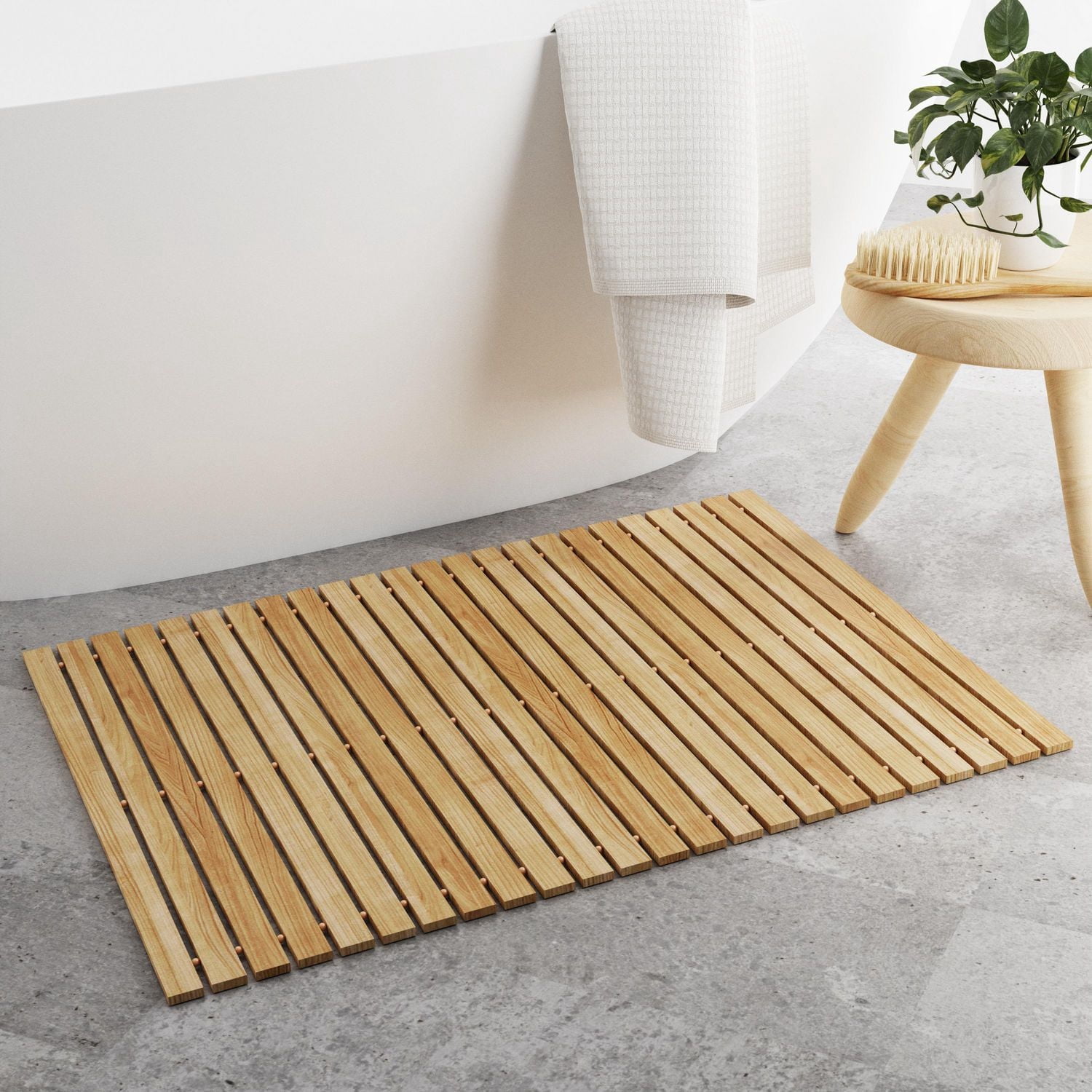
Bamboo and teak bath mats are useful when you do not want an absorbent textile directly under your feet. Slatted designs allow water to pass through the gaps and evaporate from the surrounding surfaces. That makes them fundamentally different from cotton and microfiber rugs, which capture water inside their fibers.
A bamboo bath mat can be attractive outside a shower or bathtub and can create a clean, spa-inspired appearance. It also does not need to be placed in a washing machine. Depending on the manufacturer’s instructions, routine care may involve wiping the surface and allowing it to dry.
The biggest limitation is comfort. Bamboo and teak are firm rather than plush, so they are not the best choice if you want a soft landing for wet feet. Grip is another concern. A wooden mat can move on smooth or wet flooring if its underside does not provide enough traction.
Bamboo should also not be treated as automatically waterproof or mold-proof simply because it is a plant-based material. Construction, finish, ventilation, and maintenance all matter. Follow the manufacturer’s care instructions and keep the mat dry between uses when possible.
Source: walmart.ca
Best for a spa-style look
Wooden slats create a clean, natural appearance that works especially well with minimalist bathroom designs.
Low textile maintenance
Bamboo and teak do not require the same routine laundering as cotton or microfiber rugs.
Not the softest option
Choose a textile rug instead if cushioning and warmth under bare feet are high priorities.
Grip matters
Look for a stable design and suitable underside because smooth wet floors can increase the chance of movement.
Should a Bamboo Mat Go Inside the Shower?
Usually, a bamboo bath mat is better positioned outside the shower or tub rather than directly inside it unless the manufacturer specifically states that the product is designed for that application. A mat that is intended for shower use needs appropriate traction, construction, and water exposure ratings. For ordinary step-out areas, a slatted bamboo mat can be a practical alternative to an absorbent rug.
How Chenille, Memory Foam, Nylon, and Polyester Compare
Cotton and microfiber are not the only practical bathroom-rug materials. Chenille, memory foam, nylon, and polyester each solve a different problem. The best option depends on whether your priority is comfort, washability, durability, water resistance, or quick drying.
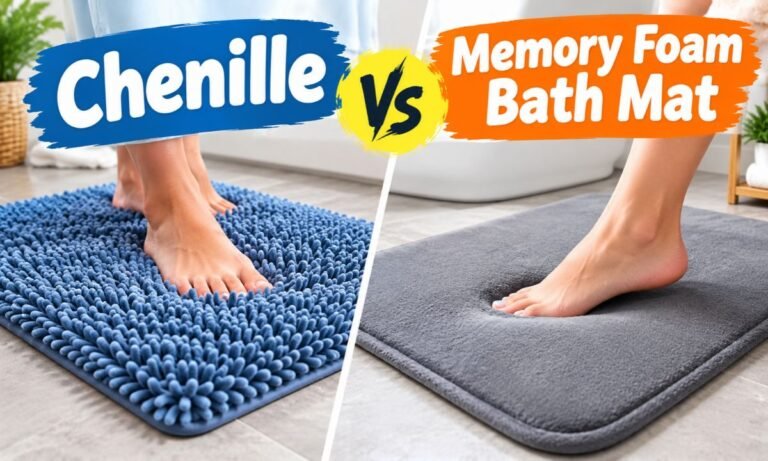
Chenille is especially useful when you want a soft, textured surface with good water pickup. Many chenille bath rugs are made for regular laundering, although their thicker pile can still take time to dry. Memory foam is the comfort-focused option. Its cushioning can make hard tile feel softer, but the foam core may require more careful cleaning and drying than a simple textile rug.
Nylon and polyester are useful synthetic choices when durability and stain resistance matter. They can hold their shape well and are available in many colors and patterns. However, synthetic does not automatically mean non-absorbent or faster drying. Construction, pile height, density, and backing all influence real-world performance.
A useful way to compare materials is to ask what you need the rug to do rather than asking which fiber sounds most premium. A lightweight polyester rug may be better for a decorative vanity area, while a cotton or microfiber mat may be better for a shower exit.
Source: wayfair.com
Chenille
A good choice for a plush, textured feel and strong water pickup, especially when the rug is washable.
Memory foam
Best when cushioning is the main priority, but check the manufacturer’s cleaning instructions before buying.
Nylon
Useful for durability, stain resistance, and frequent laundering when the construction supports it.
Polyester
A versatile synthetic option that can offer durability, color variety, and resistance to moisture and stains.
What About Wool, Jute, and Sisal?
Wool, jute, and sisal are generally better suited to bathrooms with limited moisture exposure than to the floor directly outside a frequently used shower. Jute and sisal are particularly vulnerable to prolonged moisture, while wool can require more specialized care. In a powder room without a shower or bathtub, decorative natural-fiber rugs can make more sense because the water exposure is much lower.
Full bathroom
Favor materials designed for repeated moisture and routine cleaning.
Powder room
A decorative natural-fiber rug can be more practical because there is usually much less direct water exposure.
The Material Is Only Half the Decision: Check the Backing and Construction
A great bathroom rug material can still be a poor choice if the rug slides, traps moisture, or cannot be cleaned according to the way you use your bathroom. Before buying, inspect the backing, pile height, edges, and care instructions.
Non-slip performance is especially important on smooth surfaces such as ceramic tile, porcelain tile, polished stone, and some vinyl floors. A rug that moves when stepped on can create a trip hazard. Look for a backing designed for the intended floor type, and make sure the manufacturer does not prohibit use on your particular flooring.
Also consider how much of the floor the rug covers. A very thick rug may feel comfortable, but if it prevents a bathroom door from opening or traps moisture underneath, its extra cushioning may not be worth the trade-off. Low- and medium-pile rugs are often easier to position around vanities, toilets, and doors.
Finally, read the care label before purchasing. A rug that technically can be washed but cannot fit into your home washer may be less practical than a simpler design. The best bathroom rug is one you will actually clean and dry regularly.
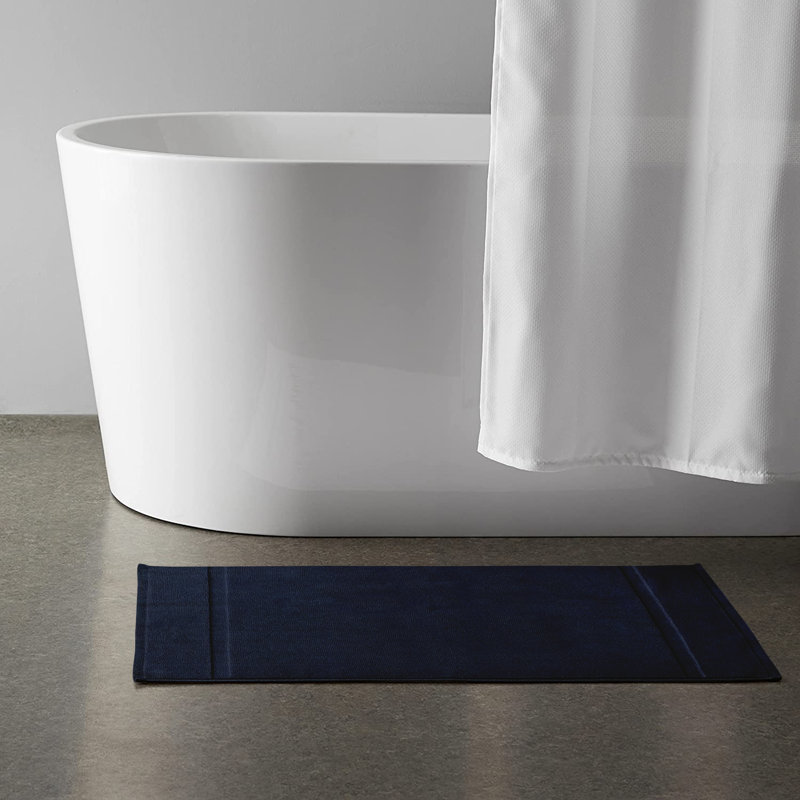
Source: lowes.com
Check the underside
Choose a backing that provides suitable traction for your floor and follow any flooring-specific warnings.
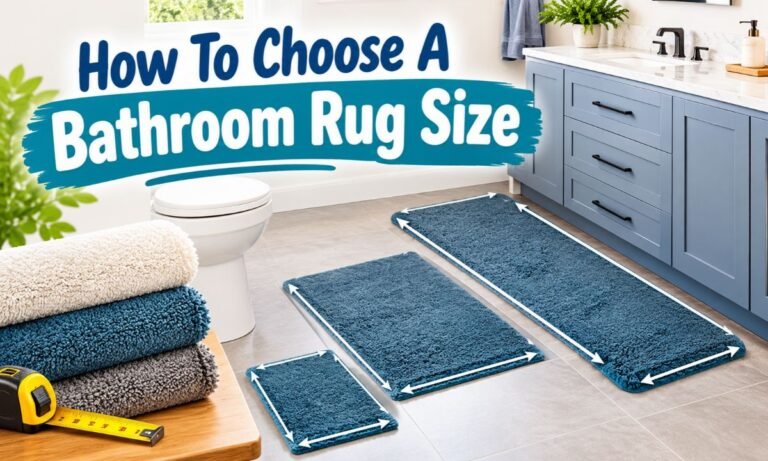
Measure before buying
Confirm that the rug fits the shower exit, vanity area, and door clearance without creating a raised obstruction.
Consider pile height
Thicker is not always better. A lower profile can be easier to dry, clean, and fit around bathroom fixtures.
Read care instructions
Confirm washing, drying, bleach, and temperature restrictions before committing to a particular material.
Cotton vs. Microfiber vs. Bamboo at a Glance
The simplest comparison is this: cotton is the best all-around textile, microfiber is the practical quick-drying alternative, and bamboo is the low-maintenance firm option. Your bathroom’s moisture level and your cleaning habits should decide which advantage matters most.
Choose cotton if
You want absorbency, natural fibers, softness, and straightforward routine washing.
Choose microfiber if
You want a lightweight, soft rug that handles frequent wet feet and needs to dry efficiently.
Choose bamboo if
You prefer a firm, decorative surface that allows water to pass through rather than being absorbed.
Choose memory foam if
Maximum cushioning matters more to you than the easiest possible washing and drying.
Choose nylon or polyester if
You prioritize synthetic durability, stain resistance, and a broad selection of colors and patterns.
Frequently Asked Questions
Q
What is the best material for a bathroom rug overall?
For most U.S. households, washable cotton is the best overall bathroom rug material because it combines absorbency, comfort, availability, and easy routine care. If your bathroom stays humid or the rug is used repeatedly throughout the day, microfiber may be a better practical choice because it is lightweight and commonly designed for quick drying.
Q
Is cotton or microfiber better for a bathroom rug?
Cotton is usually better when you want a natural fiber, classic bath-rug feel, and strong absorbency. Microfiber is usually better when quick drying, light weight, and frequent use are more important. Neither is automatically superior; the better material depends on how often the rug gets wet and how easily your bathroom can dry it.
Q
What bathroom rug material dries the fastest?
Lightweight microfiber and some synthetic constructions generally dry faster than thick cotton rugs because they can hold less bulk water and are easier to ventilate. Actual drying time depends on the rug’s thickness, pile, backing, room humidity, airflow, and how wet the rug becomes.
Q
Are bamboo bath mats better than fabric rugs?
Bamboo mats are better if you want a firm, low-maintenance surface that allows water to pass through. Fabric rugs are better if you want softness and water absorption. Bamboo is therefore an alternative to a traditional bath rug rather than a direct replacement for a plush cotton or microfiber mat.
Q
How often should you wash a bathroom rug?
A practical starting point is weekly washing for frequently used fabric bathmats, with more frequent cleaning when the rug becomes visibly dirty, stays damp, or is exposed to heavy household use. The American Cleaning Institute recommends washing bathmats weekly and emphasizes keeping bathroom surfaces dry and clean.
Always follow the manufacturer’s care label because washing temperature, drying method, and detergent recommendations vary by material and backing.
Q
What material should you avoid in a wet bathroom?
Avoid materials that are not designed to tolerate repeated moisture, especially in the area directly outside a shower or tub. Jute and sisal are poor choices for consistently wet areas, while delicate wool rugs can require more careful maintenance. Ordinary decorative area rugs should also not be treated as substitutes for a purpose-built bath mat.
✦ Wrapping Up
Conclusion
So, what is the best material for a bathroom rug? For most U.S. bathrooms, washable cotton is the safest all-around recommendation. It provides the combination most people want: comfortable under bare feet, absorbent after a shower, widely available, and relatively easy to launder. Choose a moderate-weight construction if your bathroom does not have strong ventilation, because a very thick rug can take longer to dry.
Choose microfiber instead if your bathroom has heavy daily traffic or you need the rug to dry efficiently between uses. Choose bamboo or teak when you prefer a firm, minimalist surface and do not need the rug itself to absorb water. Memory foam makes sense when cushioning is the priority, while nylon and polyester can work well when durability and stain resistance matter.
Whatever material you choose, pay attention to the backing, floor compatibility, size, and care instructions. A high-quality rug that stays wet, slides around, or cannot be washed conveniently is not a good bathroom rug in practice. Good ventilation and regular cleaning matter just as much as the fiber itself because controlling moisture is the key to keeping a bathroom environment fresh.
💡 Key Takeaway
If you want the simplest choice, start with a washable cotton bathroom rug with a suitable non-slip backing. If your main concern is fast drying, choose microfiber; if your priority is a low-maintenance spa-style surface, choose a properly designed bamboo or teak mat.
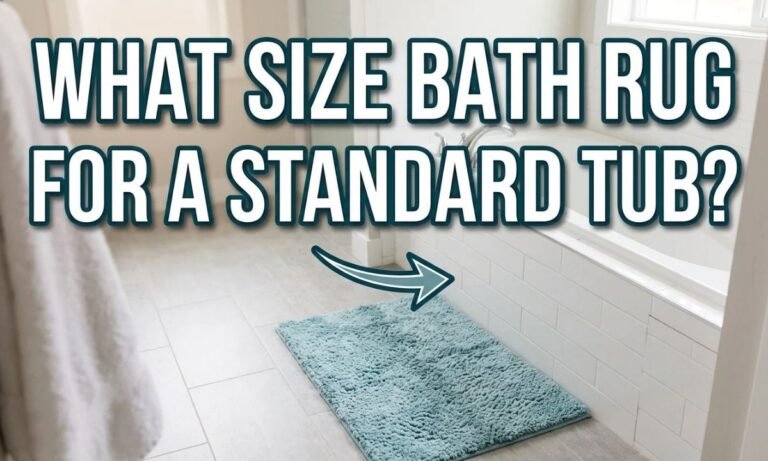
Learn what size bath rug fits a standard U.S. tub, how to measure your bathroom, which common sizes work best, and how to avoid door and clearance problems.
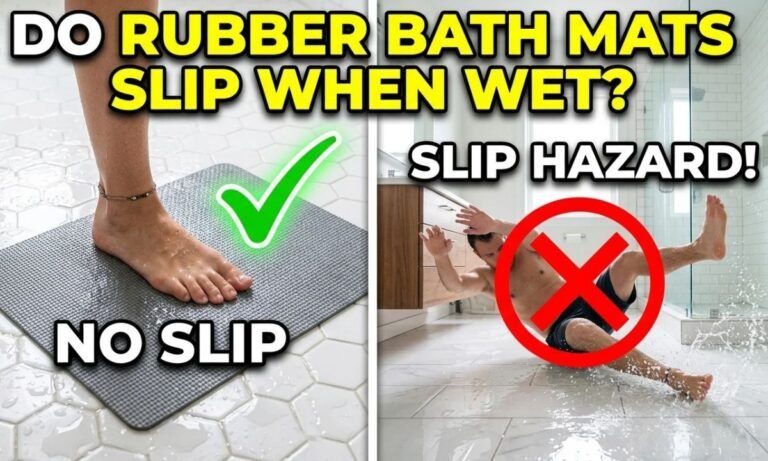
Do rubber backed bath mats slip when wet? Learn why they can move, what affects grip, how to test your mat, and how to reduce slipping in a U.S. bathroom.






3 Comments