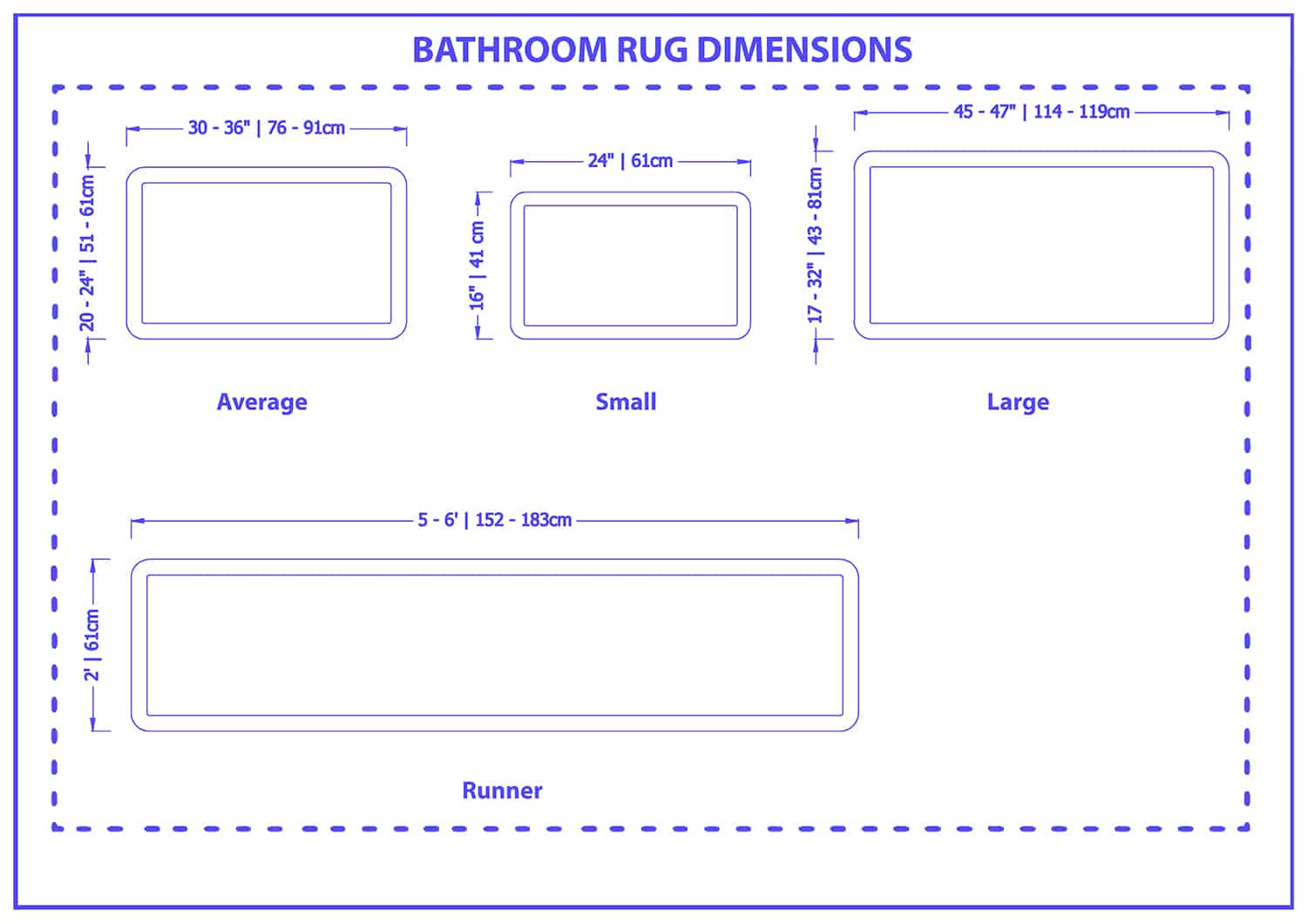
For most U.S. double-vanity bathrooms, a 24 x 60 inch or 24 x 72 inch runner is a practical starting point. Choose the length based on your vanity width and available floor space. Two 20 x 30, 21 x 34, or 24 x 36 inch rugs are another good option when you want separate mats for each sink.
If you are furnishing a primary bathroom in a U.S. home, the best bathroom rug for a double vanity is usually determined by the vanity width, the open floor in front of it, and the way the bathroom is used. There is no single universal size because a 60-inch vanity, a 72-inch vanity, and a larger custom vanity need different proportions.
A long runner is often the simplest solution because it visually connects both sink areas and gives two people a continuous place to stand. A 24 x 60 inch runner is a common starting size, while a 24 x 72 inch runner can provide better coverage for a wider vanity or a longer wall. Two individual rugs can work better when the bathroom has tight door swings, separate sink zones, or a layout that does not suit one continuous rug.
The key is to measure the actual bathroom rather than buying solely from a standard size chart. Before purchasing, check the distance from the vanity to the opposite fixture or wall, make sure cabinet doors and drawers can open freely, and confirm that the bathroom door does not catch the rug.
Source: Bing
What Is the Best Bathroom Rug Size for a Double Vanity?
For many double-vanity bathrooms, a 24 x 60 inch runner is a sensible starting point. If your vanity is wider or the available floor area calls for more length, a 24 x 72 inch runner may provide better visual and functional coverage. The runner should sit parallel to the vanity and leave enough surrounding floor for doors, drawers, and normal movement.
A double vanity does not automatically require a very large bathroom rug. The goal is to cover the areas where people actually stand while keeping the rug proportional to the room. A rug that is too short can make the vanity look visually disconnected, while one that is too large can crowd nearby fixtures or create clearance problems.
If you prefer individual mats, two matching rugs can define each sink separately. Common rectangular sizes such as 20 x 30 inches, 21 x 34 inches, or 24 x 36 inches can work depending on the available space. The two-rug approach is particularly useful when each sink has its own cabinet section and there is enough room to maintain a deliberate gap between the mats.
Source: Bing
24 x 60 inches
A practical runner size for many standard double-vanity layouts, especially when the vanity is around 60 inches wide.
24 x 72 inches
A longer option for wider vanities or bathrooms where additional length creates a better visual balance.
Two individual mats
Useful when you want a separate rug at each sink or when one long runner would interfere with another fixture.
Why a Runner Often Works Well
A runner creates one continuous surface beneath both sink positions. This can make a long vanity wall look more cohesive than two unrelated small mats, especially in a primary bathroom with a symmetrical double-sink arrangement.
The runner should not be chosen simply because it is long enough. Its width matters too. A very narrow runner may leave your feet partly on tile while standing at the sink, whereas an excessively wide rug can reduce the amount of visible floor and make a smaller bathroom feel crowded.
Continuous coverage
One rug can cover the standing areas for both sinks without creating a visual break.
Simple placement
A rectangular runner is generally easy to center and align with a straight double vanity.
How to Match the Rug Size to Your Vanity Width
Start by measuring the full width of the double vanity, including the cabinet sections that sit beneath both sinks. Then measure the usable floor space extending outward from the vanity. These two measurements tell you more than a generic bathroom-rug size chart can.
For a vanity around 60 inches wide, a 60-inch-long runner can align closely with the cabinet, while a 72-inch runner provides additional length beyond the vanity ends. For a vanity around 72 inches wide, a 72-inch runner may create a straightforward proportional match. If your vanity is substantially wider, you may need a larger area rug or a custom-size solution rather than forcing a standard bath runner into the space.
There is no requirement that the rug exactly match the vanity width. Some layouts look better with a little floor visible at each end, while others benefit from a rug that extends somewhat beyond the cabinet. The deciding factor is whether the proportions look balanced and the rug remains safely clear of other fixtures.
Source: Bing
Measure the cabinet
Record the full left-to-right width of the vanity rather than measuring only one sink cabinet.
Measure usable depth
Measure from the front of the vanity toward the room until you reach the next fixture, wall, or walking path.
Check the ends
Make sure the rug does not run into a wall, toilet, tub, doorway, or another obstruction.
Use painter’s tape
Mark the proposed rug dimensions on the floor before buying. This makes it much easier to judge whether the size feels crowded or undersized.
A Simple Measurement Example
Suppose a U.S. primary bathroom has a 60-inch double vanity and 30 inches of clear floor extending toward the center of the room. A 24 x 60 inch runner can provide continuous coverage while preserving some open floor around it. If the room has more length and the vanity wall looks visually underfilled, a 24 x 72 inch runner may be a better proportion.
This is a planning example rather than a fixed rule. If the bathroom door swings across the proposed rug area or a toilet sits close to the vanity, the shorter or narrower option may be more practical.
60-inch vanity
Consider a 24 x 60 inch runner when the available floor is limited, or a 24 x 72 inch runner when additional length fits comfortably.
72-inch vanity
A 24 x 72 inch runner can provide a natural proportional starting point when the room has sufficient clearance.
Should You Use One Long Rug or Two Rugs?
Both layouts can work well. Choose one long runner when you want the two sink areas to read as one unified zone. Choose two rugs when you want each sink to have its own landing area, when the vanity has a center break, or when the room’s doors and fixtures make a long rug inconvenient.
Two rugs can also be easier to remove and wash individually. If one area receives more water or traffic than the other, separate mats allow you to clean or replace one without moving the entire rug.
A runner generally creates a cleaner continuous line, but symmetry matters with two rugs. Use matching or intentionally coordinated rugs and place them at comparable distances from each sink. Avoid placing two small mats so close together that they bunch, overlap, or constantly shift.
Source: Bing
Choose one runner when
The vanity is long and straight, the floor is open, and you want a continuous visual line beneath both sinks.
Choose two rugs when
You prefer separate sink zones, have a center cabinet arrangement, or need to work around doors and other fixtures.
Avoid oversized individual mats
A pair of large mats can consume too much floor space and leave awkward gaps around the vanity or nearby fixtures.
When Two 2 x 3 Foot Rugs Make Sense
Two 2 x 3 foot rugs can be a practical choice when each sink has a distinct standing area and the room has enough width for a comfortable gap between them. They are also easier to reposition than one long runner.
However, two mats are not automatically better for every double vanity. If the vanity is visually continuous and the bathroom has a long, unobstructed floor area, separate rugs can make the space look more fragmented than a single runner.
Best for symmetry
Matching rugs can emphasize the two-sink arrangement without requiring a large continuous rug.
Best for flexibility
Individual mats can be removed, washed, dried, and repositioned separately.
How Wide Should a Double Vanity Bathroom Rug Be?
A width of about 24 inches is a useful starting point for a double-vanity runner because it gives you a meaningful standing surface without taking over the bathroom floor. Wider rugs can work in larger primary bathrooms, particularly when there is plenty of clearance between the vanity and the opposite fixtures.
The correct width depends on how far you naturally stand from the vanity. Stand at the sink and imagine where your feet land during normal use. The rug should extend far enough into the room to provide a comfortable landing area but should not reach so far that it interferes with another fixture or the main walking path.
If you have a deeper bathroom and want more visual coverage, a wider rectangular rug can work, but treat it as an area-rug decision rather than simply buying the widest bath mat available. Bathroom rugs have to coexist with doors, cabinets, toilets, tubs, and wet areas.
Source: Bing
Around 20 inches wide
Useful for narrow spaces where a wider rug would reduce walking clearance.
Around 24 inches wide
A versatile runner width for many double-vanity bathrooms.
30 inches or more
Better suited to larger bathrooms with enough open floor to prevent crowding.
Do Not Let the Rug Become a Clearance Problem
A rug that fits the vanity but blocks the bathroom door is not the right size. The same applies if the rug catches on vanity drawers, restricts access to a toilet, or bunches against the tub. Measure every moving part around the proposed rug footprint before buying.
Low-profile construction can help when the rug sits near a door. Even then, check the actual door clearance because thickness, backing, and floor transitions vary between bathrooms.
Door swing
Open and close the door over the proposed rug area to make sure the edge or pile does not catch.
Vanity drawers
Pull every drawer open and confirm that the rug does not prevent the drawer from clearing the floor.
Nearby fixtures
Keep enough floor space around toilets, tubs, showers, and other fixtures for comfortable movement.
Where Should You Place a Rug in Front of a Double Vanity?
Place the rug parallel to the vanity and center it on the sink area when possible. The goal is to position the rug where your feet naturally land rather than pushing it against the cabinet simply because the dimensions seem to match.
Leave a small amount of visible flooring around the rug when the layout allows it. A narrow border of tile or wood can help define the rug and prevent the bathroom from looking visually cramped. The exact amount of exposed flooring depends on the room, so do not force a particular gap if doing so would reduce useful standing space.
If the double vanity sits opposite a tub or shower, consider whether the vanity rug and wet-zone mat should be separate. A rug that works beautifully at the vanity may not be the most practical surface for collecting water directly outside a shower.
Source: Bing
Center with the vanity
Align the rug with the overall vanity rather than with only one sink.
Keep it parallel
A straight runner generally looks most natural when its long edge follows the vanity.
Protect wet zones separately
Use an appropriately placed bath mat at a shower or tub when that area receives significant water.
What About a Rug in the Middle of a Large Bathroom?
A large primary bathroom can sometimes accommodate an area rug rather than a narrow vanity runner. This works best when the room has substantial open floor and the rug can sit without crowding the vanity, tub, toilet, or doorways.
For a large rug, think of the bathroom as a room with several functional zones. The rug can visually connect the vanity and central floor area, while smaller absorbent mats can handle the places where water is most likely to land.
Use an area rug for open space
A larger rug can work when the bathroom has enough unobstructed floor to maintain comfortable circulation.
Do not cover every surface
Leaving visible hard flooring around fixtures can make a bathroom easier to clean and keep the layout visually balanced.
How to Choose the Right Rug Material for a Double Vanity
Once you have the dimensions, choose a rug construction that matches how the bathroom is used. A double vanity can be a high-traffic area, especially in a shared primary bathroom where two people get ready at the same time.
Absorbency is useful around sinks, but a very thick rug may take longer to dry. A lower-profile rug can be easier to keep dry and may create fewer problems around doors and drawers. Washability also matters because bathroom rugs routinely encounter moisture, dust, hair, and cosmetic residue.
Look for a secure, non-slip setup appropriate for your flooring. A rug that slides when someone steps onto it can create a fall hazard. Follow the rug and flooring manufacturer’s instructions for any backing or rug pad, particularly on delicate, sealed, heated, or specialty flooring.
Source: Bing
Quick-drying construction
Useful in a bathroom because damp textiles can stay wet between uses.
Makes routine cleaning easier and is practical for a high-use vanity area.
Low profile
Can reduce interference with doors and drawers and is often easier to maintain.
Secure footing
Use a suitable non-slip backing or rug pad according to the flooring and rug manufacturer’s instructions.
Should a Double Vanity Rug Be Thick and Plush?
Not necessarily. A plush rug can feel comfortable under bare feet, but thickness is not the same as performance. In a bathroom, a thinner rug may be preferable if it dries faster, clears the door, and stays firmly in place.
Before choosing a thick bath rug, test the available clearance under nearby doors and drawers. If the rug will be exposed to frequent water, also consider how easily it can be lifted and dried.
Choose plush when
Comfort is a priority and you have sufficient clearance for the rug’s pile height.
Choose low profile when
Door clearance, drawer clearance, drying time, or easy maintenance is more important.
Common Double Vanity Rug Sizing Mistakes
The most common mistake is choosing a rug from a standard bath-mat category without measuring the vanity and surrounding floor. A typical single-sink mat may be comfortable for one person but can look undersized when placed beneath a long double vanity.
Another mistake is assuming that a longer rug is always better. A 72-inch runner may look attractive on a 60-inch vanity, but if the extra length reaches a doorway or another fixture, the additional coverage is not useful. Bathroom rugs have to work within a three-dimensional space that includes moving doors and drawers.
It is also easy to overlook the wettest part of the bathroom. A vanity runner should not be expected to perform every function in the room. If the shower or tub is several feet away, it may make more sense to use a separate absorbent mat in that zone.
Source: Bing
Buying by vanity type alone
Knowing that a vanity has two sinks is not enough. Width, depth, room layout, and clearance determine the usable rug size.
Ignoring door clearance
A rug that catches under a swinging door can become a daily nuisance and a potential trip hazard.
Using a rug that is too narrow
A very narrow runner may technically span the vanity but leave little comfortable standing space.
Covering the entire bathroom
More rug coverage is not automatically better. Excessive coverage can complicate cleaning and interfere with fixtures.
Skipping the floor test
Tape the proposed dimensions on the floor first. This simple test can reveal clearance problems before you spend money.
A Five-Minute Pre-Purchase Check
Measure the vanity width, measure the open floor in front of it, and mark your preferred rug dimensions with painter’s tape. Open every nearby door and drawer, walk through the room normally, and check whether the taped outline creates an obstruction. If everything moves freely and the rug covers the areas where you stand, the proposed dimensions are much more likely to work.
Measure
Record the vanity width and available floor depth.
Mark
Use tape to create the exact proposed rug footprint.
Move
Test doors, drawers, and normal walking paths.
Adjust
Reduce the rug size if it creates interference or increase it only when additional coverage genuinely improves the standing area.
Double Vanity Bathroom Rug Size Chart
Use this chart as a starting point rather than a strict rule. The best size is the largest practical rug that fits the available floor without interfering with doors, drawers, fixtures, or circulation.
For a typical double vanity, a 24 x 60 inch runner is a useful baseline. Move to a 24 x 72 inch runner when the vanity and room proportions support the extra length. If the bathroom is compact, two smaller matching rugs may provide better control over the available space.
Source: Bing
24 x 60 inches
Good starting point for many standard double-vanity bathrooms and narrow layouts.
24 x 72 inches
Useful for longer vanity walls and rooms with enough open floor.
20 x 30 inches each
A compact two-rug option when each sink has its own standing zone.
21 x 34 inches each
A slightly larger individual-mat option that can provide more foot coverage.
24 x 36 inches each
A roomier two-rug layout for bathrooms with enough space around each sink.
Larger area rug
Consider only when the bathroom has substantial open floor and the rug can remain clear of doors and fixtures.
Which Size Should You Choose?
If you want the simplest answer, start with a 24 x 60 inch runner for a standard double vanity. Choose a 24 x 72 inch runner when the vanity is longer or when the extra length creates better proportions without obstructing anything. If the room is tight or you prefer separate sink zones, use two matching mats instead.
For an unusual vanity, do not force the bathroom into a standard size. Measure the available floor and consider a custom or larger area-rug solution if standard runners leave awkward gaps. The objective is a comfortable, stable, easy-to-maintain standing surface rather than a particular number on the label.
Best general starting point
24 x 60 inch runner.
Best longer-runner option
24 x 72 inch runner when the room provides sufficient clearance.
Best flexible option
Two coordinated rugs sized to each sink area.
Frequently Asked Questions
Q
What size rug goes in front of a 60-inch double vanity?
A 24 x 60 inch runner is a practical starting point for a 60-inch double vanity. A 24 x 72 inch runner can also work if the bathroom has enough open floor and the additional length does not interfere with doors, drawers, or nearby fixtures. Two smaller matching rugs are another option.
Q
Is a 2 x 6 rug good for a double vanity?
Yes. A 2 x 6 foot rug is the same basic footprint as a 24 x 72 inch runner and can work well along a double vanity. Check the actual vanity width and available floor before purchasing because the extra length may not suit every layout.
Q
Should a bathroom rug be the same width as the vanity?
It does not have to be exactly the same width. A rug can be somewhat shorter or longer than the vanity as long as the proportions look balanced and the rug covers the main standing area. Clearance from walls, doors, drawers, and fixtures matters more than achieving an exact width match.
Q
Can I put two rugs in front of a double vanity?
Yes. Two matching or coordinated rugs can work especially well when each sink has a distinct standing area or when the bathroom layout makes a continuous runner inconvenient. Leave enough space between the rugs to prevent bunching and make sure neither mat interferes with cabinet doors or drawers.
Q
How deep should a double vanity bathroom rug be?
Around 20 to 24 inches of depth is a useful starting point for a runner, with wider rugs possible in larger bathrooms. Choose the depth based on where your feet land while using the sink and how much open floor remains between the vanity and other fixtures.
Q
Should the bathroom rug go under the vanity?
Usually, a bath rug is placed in front of the vanity rather than underneath the cabinet. Keeping the rug outside the cabinet footprint makes it easier to remove, wash, and dry and reduces the chance that the rug will interfere with cabinet doors or drawers.
Q
What if a 24 x 60 inch runner is too short for my vanity?
Measure the vanity and consider a 24 x 72 inch runner if the room has enough clearance. If the vanity is substantially wider than standard runners, a larger area rug or custom-size rug may be more appropriate. Do not increase the size if doing so would block a doorway or crowd another fixture.
✦ Wrapping Up
Conclusion
For most U.S. bathrooms with a double vanity, a 24 x 60 inch runner is a sensible place to start, while a 24 x 72 inch runner provides more length for wider vanities and larger rooms. Two individual mats can be equally practical when the bathroom layout calls for separate sink zones.
The right size is ultimately the one that fits the actual floor plan. Measure the vanity, measure the available floor, mark the proposed dimensions with tape, and test every nearby door and drawer before buying. Then choose a rug that provides comfortable footing without creating a clearance or maintenance problem.
If your bathroom is unusually large, unusually narrow, or has a custom vanity, prioritize the measurements of the room over standard size charts. A well-fitted rug should support the way you use the bathroom rather than forcing the layout to accommodate the rug.
💡 Key Takeaway
Measure your double vanity and the clear floor in front of it first. For a typical layout, compare a 24 x 60 inch and 24 x 72 inch runner using painter’s tape, then choose the largest option that leaves doors, drawers, fixtures, and walking paths unobstructed.
Learn what size bath rug fits a standard U.S. tub, how to measure your bathroom, which common sizes work best, and how to avoid door and clearance problems.











3 Comments