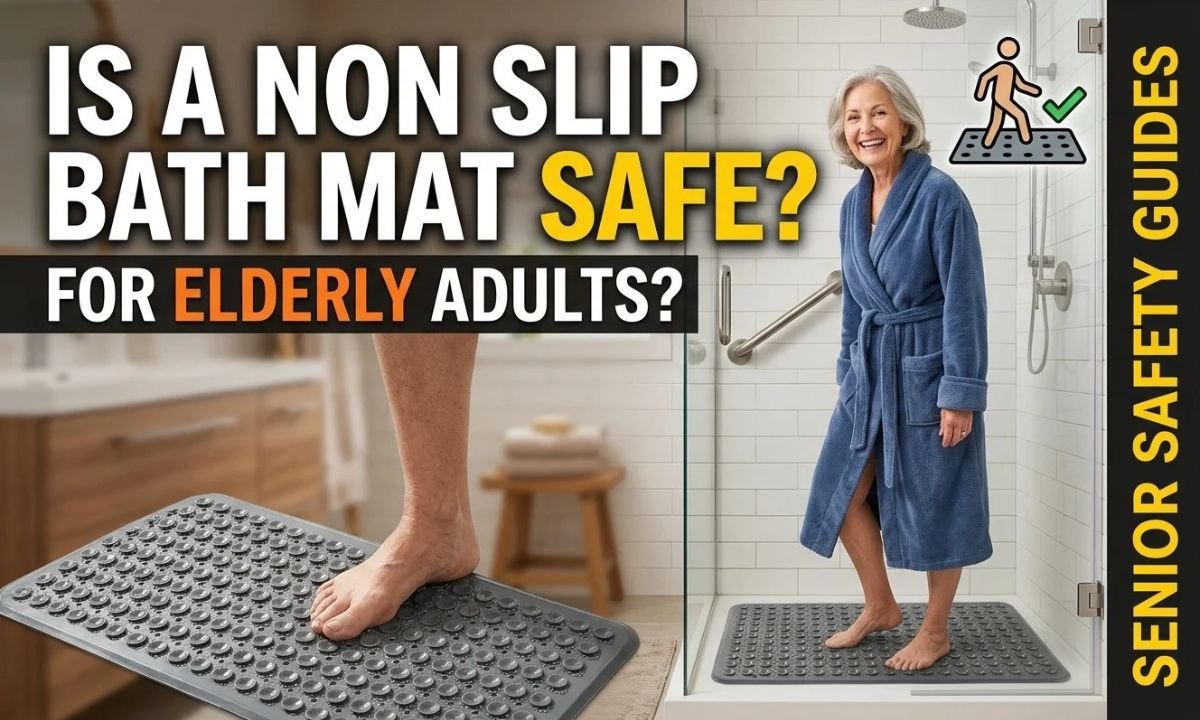
Yes, a properly placed non slip bath mat can be a useful part of bathroom safety for older adults, but it is not automatically safe just because it is labeled non slip.
For older adults in the United States, bathroom safety deserves extra attention because wet floors, tubs, showers, and transfers around the toilet can create slip and fall hazards. U.S. health guidance from MedlinePlus and the National Institute on Aging recommends nonskid mats or strips in areas that may get wet and also stresses the value of grab bars, good lighting, and removing loose rugs.
The key is where the mat is used and how securely it stays in place. A non-skid bath mat outside the tub should sit flat on a dry, stable floor, while a mat designed for use inside a tub or shower should be made for wet surfaces and stay firmly attached. A loose, curled, worn, or constantly wet mat can create a new hazard instead of reducing one.
Source: easierforseniors.com
What Makes a Non Slip Bath Mat Safe for an Older Adult?
The safest mat is one that stays where it is supposed to stay and does not become a trip hazard. The words non slip on a package are not enough by themselves. The mat should match the surface, fit the space, and remain stable during normal use.
For a mat outside the tub or shower, look for a backing designed to grip the bathroom floor without sliding. The mat should lie completely flat, with no folded corners or raised edges. It should also be large enough to provide a useful landing area without extending into the main walking path.
Inside a tub or shower, use a product specifically designed for wet areas. MedlinePlus recommends non-slip suction mats or rubber or silicone decals in the bottom of a tub and a non-skid bath mat outside the tub for firm footing.
Source: greatsenioryears.com
Stable backing
The backing should resist movement on the type of bathroom floor where the mat will be used.
Flat edges
Edges and corners should stay flat so an older adult does not catch a foot or mobility aid on them.
Correct location
A mat made for outside the tub is not automatically suitable for use inside the tub or shower.
Good condition
Replace a mat when the backing becomes worn, cracked, curled, or unable to grip the floor.
Non Slip Does Not Mean Fall Proof
A non slip bath mat can reduce one type of hazard, but it cannot prevent every fall. Older adults may also face risks from dizziness, poor vision, muscle weakness, balance problems, medications, slippery footwear, or difficulty getting in and out of a tub.
The Centers for Disease Control and Prevention and the National Institute on Aging recommend several bathroom safety measures in addition to nonslip surfaces. These include grab bars, better lighting, and removing things that can cause trips.
Think about the whole bathroom
Check the tub, shower, toilet area, sink area, lighting, floor, and walking route rather than relying on one mat.
Watch for changing needs
A bathroom setup that works today may need changes if balance, strength, vision, or mobility changes.
Where Should an Elderly Person Use a Non Slip Bath Mat?
The right type of mat depends on whether it will be inside the wet bathing area or outside it. These two locations have different safety needs, so they should not be treated as the same application.
Inside a bathtub or shower, the main goal is to improve traction on a surface that becomes wet. Outside the tub or shower, the goal is to provide firm footing when the person steps onto the bathroom floor.
Source: spadonehome.com
Inside the tub or shower
Use a bath mat or nonslip surface designed specifically for wet bathing areas. Follow the product instructions for cleaning and attachment.
Outside the tub or shower
Use a non-skid bath mat that stays firmly on the bathroom floor and does not slide when stepped on.
Near the toilet
Be cautious with small loose toilet rugs. Any floor covering should stay firmly in place and should not interfere with standing, sitting, or mobility aids.
Why the Mat Outside the Tub Matters
Stepping out of a tub or shower can be a difficult moment for someone with reduced balance or leg strength. The floor may also have water on it. MedlinePlus specifically recommends using a non-skid bath mat outside the tub for firm footing and keeping the floor outside the tub or shower dry.
A mat that shifts when weight is placed on it can be more dangerous than a bare, dry floor. Check its position regularly, especially after cleaning the bathroom or moving the mat.
Keep the surrounding floor dry
A mat cannot compensate for a large amount of water spreading across the bathroom floor.
Leave enough clear space
Do not place a mat where its edge can interfere with a walker, cane, wheelchair, or normal walking path.
What Should You Look for in a Safe Bath Mat for Seniors?
For an older adult, the most useful features are stability, a low trip profile, suitable traction, easy maintenance, and a size that fits the bathroom without creating obstacles. A soft or attractive mat is not necessarily a safer mat.
The surface also needs to remain practical when wet. A mat that absorbs water but takes a long time to dry may need more frequent cleaning and drying. Moisture, soap residue, and dirt can affect how a surface feels underfoot and how well the mat performs.
Source: bathroomexplorer.com
Secure grip
Choose a mat with a backing or attachment method appropriate for the floor or bathing surface.
Low profile
A thinner edge can make it easier to step over and may reduce interference with mobility aids.
Flat construction
Avoid mats that curl, buckle, or develop raised edges after washing.
Easy cleaning
A mat that can be cleaned according to its care instructions is easier to keep in good condition.
Appropriate size
The mat should cover the useful standing area without creating unnecessary edges across the walking route.
Are Suction Cups Always Better?
Not necessarily. Suction cups can help a mat stay in position on a suitable smooth tub or shower surface, but their performance depends on the surface and the condition of the mat. A product designed for one type of surface may not grip another surface in the same way.
Before use, follow the manufacturer’s instructions and check that the mat is firmly attached. If the suction cups no longer hold or the mat repeatedly moves, it should not be treated as a dependable safety surface.
Check the surface
Confirm that the mat is intended for the specific tub or shower surface.
Check before use
Make sure the mat is secure rather than assuming it stayed attached after cleaning or repositioning.
How Can You Tell if a Non Slip Bath Mat Is Creating a Hazard?
A simple safety check can reveal problems before they cause a fall. Look at the mat when it is dry and again after the bathroom has been used. Pay particular attention to movement, curling, trapped moisture, and changes in the backing.
The National Institute on Aging advises older adults to avoid throw rugs and recommends nonslip mats, strips, or carpet on surfaces that may get wet. This highlights an important distinction: a floor covering should reduce slipping without becoming a separate tripping hazard.
Source: amazon.com
The mat moves when stepped on
Stop using it until the cause is corrected or replace it with a more suitable mat.
Edges curl upward
A curled edge can catch a foot, cane, walker, or wheelchair.
The backing is damaged
Cracks, peeling, or worn grip can reduce stability.
The mat stays soaked
Excess moisture can make the surrounding area less safe and may indicate that the mat needs better drying or replacement.
The mat blocks a mobility aid
A mat that catches a walker or interferes with a wheelchair path should be repositioned or removed.
A Quick Safety Test
With the bathroom dry, inspect every edge and corner. Gently press and move the mat with your foot before normal use. It should remain stable and flat. If it slides, folds, or catches on a mobility aid, do not rely on it for safety.
After a shower or bath, check whether water has spread beyond the mat. Dry the surrounding floor promptly. If an older adult has difficulty bending down to check or move a mat, a caregiver can perform this inspection.
Pass
The mat remains flat, stable, and clear of the walking path.
Fail
The mat shifts, curls, blocks movement, or contributes to a wet walking surface.
What Other Bathroom Safety Measures Should Seniors Use?
A bath mat is only one part of a safer bathroom. For older adults with fall risk, the larger setup can matter just as much. U.S. guidance recommends combining nonslip surfaces with grab bars, adequate lighting, and removal of loose rugs and other trip hazards.
Grab bars deserve special attention because they provide support during movements such as getting into or out of a tub and sitting down or standing up at the toilet. A decorative towel bar should not be treated as a grab bar.
Source: grayingwithgrace.com
Install appropriate grab bars
The CDC recommends grab bars inside and outside the tub or shower and next to the toilet.
Improve lighting
Use adequate bathroom lighting and consider a night-light for trips to the bathroom after dark.
Remove loose rugs
Loose throw rugs can become trip hazards and are discouraged in fall-prevention guidance.
Keep floors dry
Clean up water around the tub, shower, sink, and toilet as soon as practical.
Consider mobility needs
A shower chair, handheld shower head, or other appropriate equipment may help some people who have difficulty standing safely.
When Should You Ask a Professional to Check the Bathroom?
If an older adult has repeated falls, major balance problems, dizziness, significant weakness, or difficulty transferring in and out of the tub, a general bath mat may not address the main problem. MedlinePlus recommends asking a health care provider about a referral to an occupational or physical therapist when someone is unsure what bathroom changes are needed.
A professional assessment can consider how the person actually moves through the bathroom. That may be more useful than choosing safety products based only on appearance or general product descriptions.
After a bathroom fall
Review the entire bathroom rather than simply replacing the mat.
With major mobility changes
Ask a qualified health professional about equipment and layout changes suited to the person’s needs.
Common Mistakes to Avoid With Elderly Bath Mats
Many bathroom mat problems come from treating the product label as a guarantee of safety. A mat can be marketed as non slip and still become unsuitable because of the floor surface, wear, moisture, poor placement, or changes in the user’s mobility.
The safest approach is to check the mat as part of the bathroom rather than as a stand-alone product. If the mat creates a new trip or transfer problem, removing or replacing it may be safer than continuing to use it.
Source: artofit.org
Using a regular rug as a bath mat
A decorative rug may not have the grip or construction needed for a wet bathroom environment.
Putting an indoor mat inside the shower
Only use a mat that is specifically designed and labeled for wet bathing areas.
Ignoring curled edges
A damaged edge can become a trip point even if the rest of the mat still looks usable.
Using too many small mats
Several small floor coverings can create multiple edges and obstacles in a small bathroom.
Skipping regular cleaning
Follow the care instructions so the mat can remain clean and in usable condition.
Relying on the mat alone
A mat cannot replace grab bars, adequate lighting, dry floors, and other appropriate fall-prevention measures.
What If the Mat Keeps Sliding?
First, stop relying on the mat until the problem is corrected. Check whether the floor is wet, dusty, uneven, or incompatible with the mat’s backing. Also inspect the mat for damage or wear.
If the mat continues to move after proper cleaning and placement, replace it with one intended for that surface. For a person with significant fall risk, consider having the whole bathroom assessed rather than repeatedly trying different loose floor coverings.
Avoid makeshift arrangements that create additional edges, bumps, or obstacles.
Reassess the location
The safest solution may involve changing the bathroom layout or using a different safety surface.
Is a Non Slip Bath Mat Safe for Elderly Adults With Walkers or Canes?
It can be, but the mat needs extra scrutiny when a walker, cane, or other mobility aid is used. The mat should not catch the device, fold under its wheels or tips, or force the person to make an awkward step.
A mobility aid changes the way a person approaches the bathroom floor. A mat that feels stable under a person’s feet may still create a problem for a walker or wheelchair. Keep the route as clear and predictable as possible.
Source: poshsevenreviews.com
Check the approach
Make sure the user can reach the mat without stepping over an awkward edge.
Check the device
Make sure walker legs, cane tips, or wheelchair wheels do not catch on the mat.
Keep transfers clear
The area used to sit, stand, enter, or exit the bathing area should remain unobstructed.
What About Someone With Poor Balance?
For someone with poor balance, a mat should be viewed as one part of a larger fall-prevention plan. The National Institute on Aging recommends home safety changes such as grab bars and nonslip surfaces and also notes the value of strength and balance activities and appropriate mobility aids.
If balance problems are significant or new, discuss them with a health care professional. Dizziness, medication effects, vision problems, and other conditions can contribute to falls and may need attention beyond bathroom equipment.
Prioritize stability
Choose a bathroom setup that minimizes unnecessary stepping, twisting, reaching, and transfers.
Address the cause when possible
A fall-prevention plan may need to consider vision, medications, balance, strength, and mobility.
Frequently Asked Questions
Q
Are non slip bath mats good for elderly adults?
Yes, a properly selected and secured non slip bath mat can improve footing in a bathroom. It should be used with other safety measures because no mat can prevent every fall.
Q
Should an elderly person use a bath mat inside or outside the tub?
The answer depends on the mat. Use a product designed for the wet tub or shower floor inside, and use a stable non-skid mat outside for firm footing.
Q
Can a loose bath mat be dangerous for seniors?
Yes. A loose or curled mat can become a trip hazard, especially for someone using a cane, walker, or wheelchair. Replace or reposition it if it moves or catches mobility equipment.
Q
Are suction cup bath mats safe for older adults?
They can be suitable when they are designed for the tub or shower surface and remain firmly attached. Check the suction and condition of the mat regularly instead of assuming it will stay secure.
Q
What else should an elderly person have in a safe bathroom?
Useful measures include grab bars, good lighting, dry floors, clear walking paths, and suitable shower equipment. A professional home safety assessment can help when balance or mobility is limited.
✦ Wrapping Up
Conclusion
So, is a non slip bath mat safe for elderly adults? It can be a helpful safety feature when the mat is designed for its location, stays firmly in place, lies flat, and is kept in good condition. U.S. guidance supports nonslip surfaces in wet bathroom areas, but it also recommends addressing other fall hazards.
The biggest mistake is treating a non slip label as a guarantee. For an older adult, the safer approach is to inspect the complete bathroom, remove loose rugs and other hazards, keep floors dry, provide adequate lighting, and install appropriate grab bars where needed.
If the older adult has fallen in the bathroom, has serious balance problems, or struggles with transfers, consider professional guidance from a health care provider, occupational therapist, or physical therapist. The right solution may involve more than changing the bath mat.
💡 Key Takeaway
Before an older adult uses a bath mat, make sure it is designed for the exact location, lies flat, does not move, does not interfere with mobility equipment, and is part of a wider bathroom fall-prevention plan.
Learn what size bathroom rug works best for a double vanity, including runner sizes, two-rug layouts, measuring tips, clearances, and placement examples.
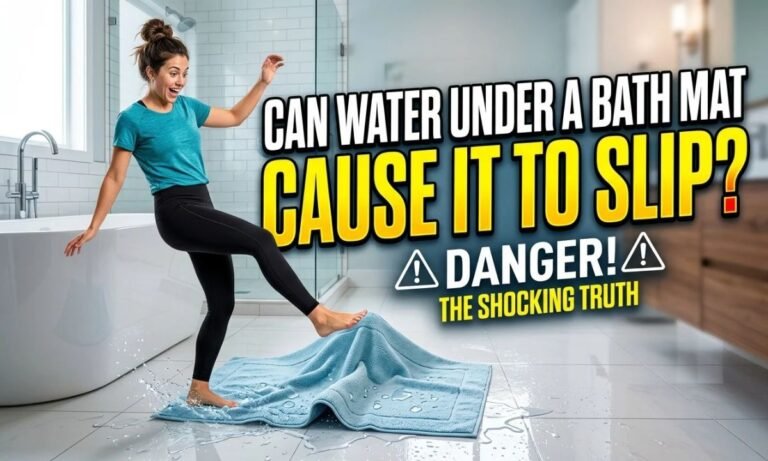
Can water under a bath mat cause it to slip? Learn why trapped water can reduce grip, how to check your mat, and practical ways to prevent bathroom slips.
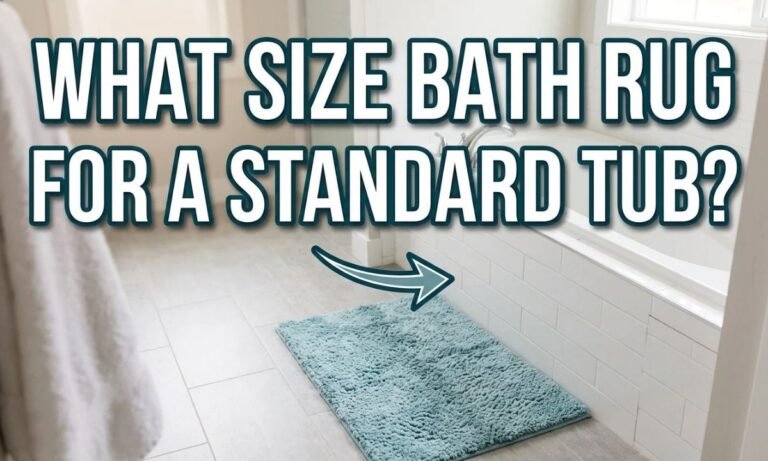
Learn what size bath rug fits a standard U.S. tub, how to measure your bathroom, which common sizes work best, and how to avoid door and clearance problems.