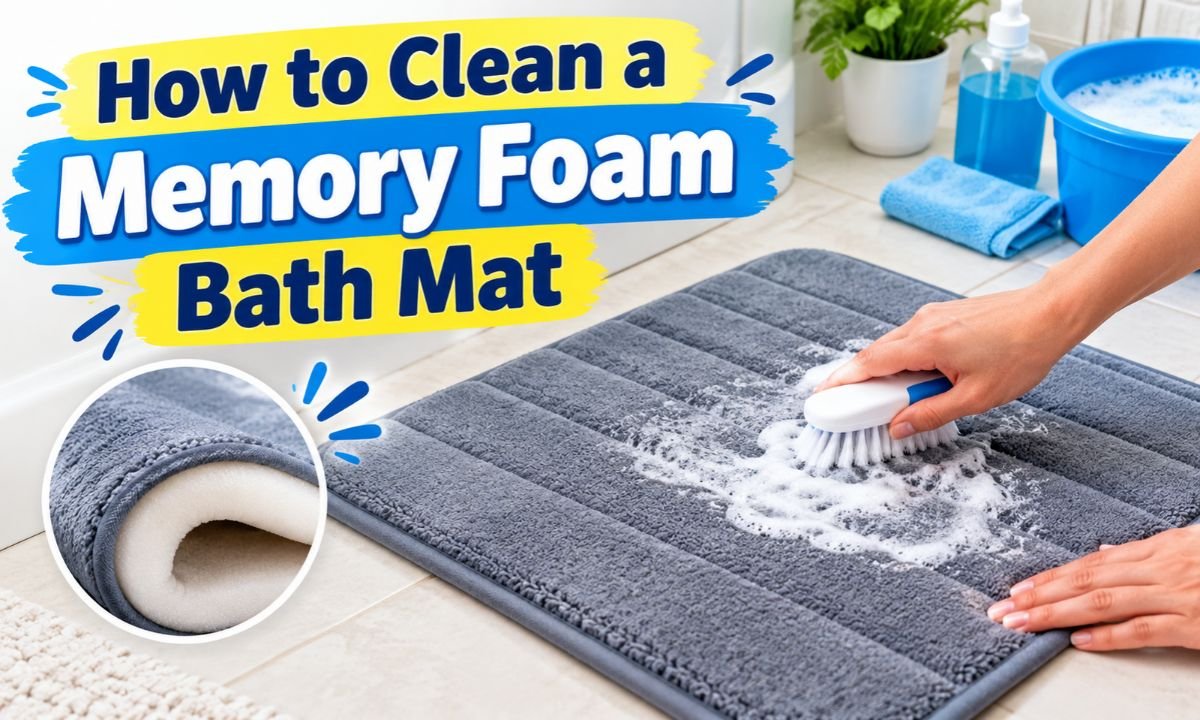
Clean a memory foam bath mat with mild detergent, cool or lukewarm water, and gentle handling. Follow its care label, avoid harsh chemicals and high heat, and let it dry completely before placing it back on the floor.
In American homes, a memory foam bath mat often sits beside the shower, bathtub, or bathroom sink. It cushions your feet on cold tile and helps soak up water after a shower. However, soap, body oils, loose hair, and damp air can leave the mat dirty or smelly over time. A simple cleaning routine helps keep it fresh without wearing out the foam.
The safest way to clean this type of mat depends on its fabric cover, foam core, and backing. Some mats can go in a washing machine, while others need hand washing. The care label is your first guide because memory foam can lose its shape when it is soaked, twisted, or exposed to too much heat. When the label is missing, gentle spot cleaning is a sensible place to start.
This guide explains how to clean a memory foam bath mat by hand, when machine washing may be suitable, how to treat common stains, and how to dry the mat fully. You will also learn how to deal with lingering odors, reduce moisture between washes, and spot signs that the mat needs replacing.
Source: memoryfoamlab.com
Understand What Makes Memory Foam Bath Mats Different
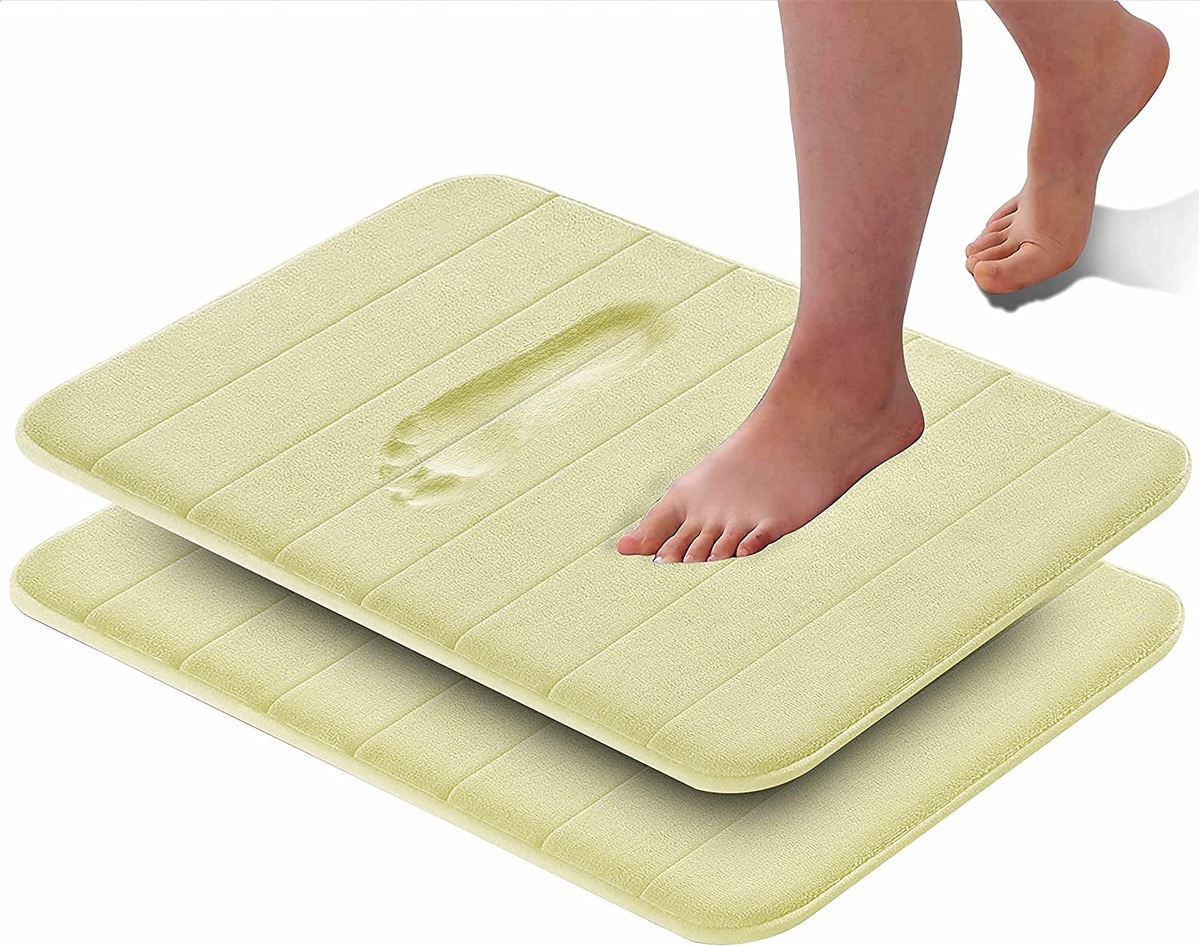
A memory foam bath mat usually has a soft fabric surface attached to a foam layer. The fabric absorbs water from your feet, while the foam cushions your steps. Some mats also have a rubber, latex, or other non-slip backing that helps hold them in place.
These layers do not always react to water, soap, and heat in the same way. The fabric may tolerate a normal wash, but the foam or backing may not. That is why a cleaning method that works for a cotton bath rug may not suit a memory foam mat.
Memory foam can hold water within its structure. If you soak it for too long or leave it in a pile while wet, drying may take much longer. Trapped moisture can also contribute to a musty smell. Gentle cleaning and careful drying are therefore just as important as removing dirt.
Source: tipsbulletin.com
Fabric cover
The upper layer collects water, dust, hair, soap residue, and body oils. Clean it with a method approved for the fabric.
Foam core
The inner layer provides cushioning. Avoid twisting, crushing, or applying unnecessary heat because these actions may damage its structure.
Non-slip backing
The underside may contain rubber, latex, or a coated material. Harsh cleaners and high heat can weaken some backing materials.
Check the Care Label Before You Start
Look for washing symbols and written instructions on the mat or its packaging. Check whether the manufacturer allows machine washing, specifies a water temperature, permits tumble drying, or recommends spot cleaning only. Follow any restrictions on detergent or drying methods.
If the label says not to machine wash the mat, do not assume a gentle cycle will be safe. If the label is missing, inspect the backing and use a damp-cloth cleaning method first. Contact the manufacturer when you need to know whether a particular mat can be immersed.
Machine washable
Use the permitted cycle, water temperature, detergent, and drying method listed on the label.
Hand wash only
Clean the mat gently by hand and avoid prolonged soaking if the instructions do not permit it.
Spot clean only
Treat dirty areas with a lightly damp cloth and a suitable mild cleaner rather than immersing the whole mat.
What You Need to Clean a Memory Foam Bath Mat
Gather your cleaning supplies before you begin. You do not need a special foam cleaner for routine care when the mat’s instructions allow mild soap or laundry detergent. Simple supplies are often enough to remove everyday dirt without leaving a heavy chemical residue.
Choose a clean work area with enough room to spread the mat flat. A bathtub or large basin may work for a washable mat, while a counter or clean floor can work for spot cleaning. Make sure the surface is clean so dirt does not transfer back onto the mat.
Source: heatedtowelracks.com
Mild laundry detergent
Use a small amount of a gentle detergent suitable for the mat’s fabric and washing method. Avoid adding more soap in the hope of getting a better clean.
Cool or lukewarm water
Use the temperature permitted by the care label. Avoid hot water when the mat’s heat tolerance is unknown.
Soft cloth or sponge
Use a clean cloth to lift dirt and work a small amount of diluted cleaner into surface stains.
Clean towels
Absorb extra moisture by pressing towels against the mat instead of wringing or twisting the foam.
Drying space
Prepare a well-ventilated area where the mat can lie flat or hang in a supported position, as its construction permits.
Soft brush if needed
Use a soft brush only on fabric that can tolerate brushing. Avoid stiff bristles that may pull threads or damage the surface.
Cleaning Products to Avoid
Do not reach for bleach, strong bathroom sprays, abrasive powders, or solvent-based cleaners unless the manufacturer specifically approves them. Such products may fade fabric, weaken a backing, or leave residues that are hard to rinse away. Mixing cleaning products can also release dangerous fumes.
Fabric softener is usually unnecessary for this task. It may leave a coating on absorbent fibers, and extra fragrance can hide rather than solve a musty odor. A small amount of suitable detergent followed by thorough rinsing is a better starting point.
Bleach
Avoid it unless the product instructions clearly allow it. It can discolor fabric and harm some backing materials.
Strong solvents
Do not use paint thinner, acetone, or similar products on the mat.
Excessive detergent
Too much soap can be difficult to rinse out and may leave the surface feeling sticky.
How to Clean a Memory Foam Bath Mat by Hand
Hand cleaning is a useful option when the care label allows gentle washing but does not permit a washing machine. It also gives you more control over the amount of water used. For mats with an unknown construction, begin with surface cleaning rather than soaking the whole item.
Work slowly and use light pressure. The aim is to remove dirt from the fabric without forcing large amounts of water into the foam. If the mat becomes heavily saturated, stop and check the care instructions before continuing.
Source: storables.com
Step 1: Shake Off Loose Dirt and Hair
Take the mat to a suitable area and gently shake it to release loose hair, dust, and debris. You can also use a vacuum with an upholstery attachment if the fabric and backing tolerate it. Avoid aggressive beating, which may damage the foam or loosen the layers.
Check the underside as well. Hair and dust can collect along the edges and in the backing. Removing loose debris first prevents it from spreading through the fabric during washing.
Remove loose hair
Lift hair with your fingers or a suitable vacuum attachment instead of scraping the foam with a sharp tool.
Inspect the edges
Look for fraying, loose seams, or peeling backing before adding water.
Step 2: Prepare a Mild Cleaning Solution
Mix a small amount of mild detergent with cool or lukewarm water in a clean basin. Follow the detergent label and use only enough to make a light solution. A highly concentrated mixture is not needed for routine dirt and may be harder to rinse away.
If you are unsure how the fabric will react, test the solution on a small, hidden area. Dab it on with a cloth and check for color transfer, texture changes, or damage after the area has dried. Stop if you notice any adverse change.
Step 3: Clean the Surface Gently
Dip a soft cloth or sponge into the solution and wring it out so it is damp rather than dripping. Blot dirty areas and wipe in gentle strokes. Do not scrub hard, press deeply into the foam, or flood the mat with water.
Pay attention to the area where your feet usually land. This section may collect body oils and soap residue. Clean the rest of the surface as needed, and use a separate clean cloth for the backing if the manufacturer permits it to be wiped.
Step 4: Remove Soap Residue
Dampen another clean cloth with plain water and wipe the treated areas. Rinse and wring out the cloth as needed, then repeat until the surface no longer feels soapy. Use as little water as practical while still removing the cleaner.
Do not pour a bucket of water over the mat unless its instructions allow full washing. Soap left behind can attract dirt and leave a stiff or slippery surface, while excess water can make the foam slow to dry.
Step 5: Press Out Excess Moisture
Place a clean, absorbent towel over the damp area and press down gently. Move to a dry part of the towel as it absorbs water. You may repeat this step with another towel if needed.
Never twist, wring, or tightly roll the mat to squeeze out water. These actions may distort the foam, damage the backing, or loosen bonded layers. Keep the mat supported while moving it to the drying area.
Step 6: Air-Dry the Mat Completely
Lay the mat flat on a clean, ventilated surface when possible, or use a supported drying position that does not stretch the foam. Keep it away from direct high heat, radiators, and hot dryer vents. A fan can help move air around the mat without heating it.
Turn the mat when the care instructions permit and the surface is stable enough to handle. Check both sides, especially the thickest areas and the backing. Do not return it to the bathroom floor while it still feels damp or cool from retained moisture.
Can You Wash a Memory Foam Bath Mat in a Washing Machine?
You can machine-wash a memory foam bath mat only when its care label or manufacturer says that machine washing is allowed. The fact that a mat fits inside the washer does not mean its foam, seams, or backing can handle the cycle. When the instructions are missing, do not assume that a machine wash is safe.
Machine washing can expose the mat to repeated movement, water, and detergent. Some designs can tolerate these conditions, while others may stretch, tear, lose their shape, or develop damaged backing. Follow the instructions for the exact mat rather than relying on a general rule for all bath rugs.
Source: i.pinimg.com
How to Machine-Wash an Approved Mat
If the label permits machine washing, remove loose debris first and use the recommended cycle and water temperature. Use a small amount of mild detergent and avoid overloading the washer. The mat should have enough room to move without being crushed against a full load.
Use only the spin setting approved by the manufacturer. A high-speed spin can put extra stress on foam and backing, so do not select it by habit. If the care label does not explain the spin setting, check the manufacturer’s instructions before proceeding.
When the cycle ends, remove the mat promptly and inspect it for damage. If the foam feels distorted or the backing has begun to peel, do not put it back on the floor. Follow the approved drying method and make sure the entire mat is dry before use.
Use a gentle cycle when specified
Select the cycle stated on the care label rather than assuming every mat needs the same setting.
Use mild detergent
Avoid excessive soap, bleach, and unnecessary additives.
Check the machine load
Do not force the mat into a crowded washer or wash it with heavy items that could pull or crush it.
Follow drying instructions
Do not use a dryer unless the manufacturer specifically permits it and gives suitable heat guidance.
When You Should Not Use a Washing Machine
Avoid machine washing when the label says hand wash or spot clean only. Do the same when the backing is cracked, peeling, sticky, or brittle, or when seams have begun to separate. These conditions can worsen during a wash cycle.
If the mat is unusually thick, has bonded layers, or has an unknown construction, check the product instructions before immersing it. Gentle surface cleaning is a safer first step when the material’s limits are unclear.
How to Remove Stains From a Memory Foam Bath Mat
Treat stains as soon as practical, before they settle into the fabric. Blot the affected area with a clean cloth rather than rubbing the stain deeper into the fibers. Test any cleaner on a hidden spot first, and check whether the mat’s material permits the treatment.
Different stains need different approaches. Soap residue may respond to a gentle rinse, while body oils may need a mild detergent solution. Unknown stains should be treated cautiously because aggressive chemicals can damage the fabric or foam.
Source: i.pinimg.com
Soap and Shampoo Residue
Soap and shampoo can leave a dull, sticky, or slightly stiff patch on a bath mat. Use a cloth dampened with plain water to wipe the area, then check whether the residue has lifted. If it remains, apply a small amount of diluted mild detergent and wipe again with a clean damp cloth.
Avoid adding more soap before removing the old residue. A heavy layer of cleaner can make the surface harder to rinse and may leave the mat feeling less absorbent.
Body Oil and Cosmetic Marks
Body lotion, makeup, and skin oils may leave darker marks on the fabric. Blot the area with a clean cloth, then use a mild detergent solution if the care label permits it. Work from the outside of the mark toward the center to limit spreading.
Do not use nail polish remover, strong degreasers, or solvent-based products to remove cosmetics. They can affect synthetic fabrics, foam, or backing materials. If the stain remains after gentle cleaning, repeat a suitable treatment rather than increasing the chemical strength.
Mildew-Like Spots or Musty Marks
Dark spots and musty odors can indicate that a mat has stayed damp, but appearance alone cannot confirm whether mold is present. Do not dry-brush suspected growth, since that may spread particles into the air. Keep the mat away from other fabrics while you assess the problem.
Follow the manufacturer’s cleaning instructions if the mat has a small affected area and is otherwise in good condition. If the spots cover a large area, return after cleaning, or are embedded in the foam, replacement may be the more practical option. A porous mat that cannot be cleaned and dried fully may not be worth keeping.
How to Remove Musty Odors From a Memory Foam Bath Mat
A musty smell often means the mat has stayed damp for too long or has a buildup of dirt and residue. Start by checking whether the mat is wet underneath, whether the bathroom has poor airflow, and whether the backing or foam has changed. Masking the odor with perfume does not solve the source of the problem.
If the mat is washable, clean it according to its label and dry it fully. If it is spot-clean only, use a lightly damp cloth and an approved cleaner. Avoid soaking the mat simply because it smells bad, since more water can make the drying problem worse.
Source: res.cloudinary.com
Improve Airflow Around the Mat
After a shower, hang or lift the mat in a supported position if its construction allows it. Open a window when practical or run the bathroom exhaust fan to help remove moist air. Do not leave the mat folded over itself or pressed against a wet shower curtain.
Check the floor beneath the mat as well. Water trapped between the mat and the floor can contribute to odors and may affect some floor finishes. Dry both surfaces before returning the mat to its usual position.
Should You Use Baking Soda or Vinegar?
Baking soda and vinegar are common household cleaning suggestions, but neither is automatically safe for every memory foam bath mat. Powders can be difficult to remove from a damp or textured surface, and vinegar may affect some materials or finishes. Use these products only if the manufacturer allows them and you can remove all residue.
Never mix vinegar with bleach or with other cleaners unless the product labels explicitly confirm that the combination is safe. Mixing household cleaning products can release harmful gases. A mild detergent and complete drying are better first steps for ordinary dirt and moisture-related odors.
If the smell remains after suitable cleaning and full drying, inspect the foam and backing for persistent dampness, breakdown, or visible growth. A mat that continues to smell musty may need replacing rather than repeated soaking or stronger chemicals.
How to Dry a Memory Foam Bath Mat Without Damaging It
Drying is a key part of cleaning a memory foam bath mat. Even when the surface feels dry, moisture may remain inside the foam or beneath the backing. Putting a damp mat back on the bathroom floor can trap that moisture and lead to a musty smell.
The right drying time depends on the mat’s thickness, how much water it absorbed, room temperature, humidity, and airflow. There is no single drying time that works for every mat. Check the full thickness and underside rather than relying on a fixed number of hours.
Source: tidyhere.com
Use Towels to Remove Water First
Place the mat on a clean towel and press another towel against its surface. Apply gentle pressure without bending or twisting the foam. Replace the towel when it becomes wet and continue until it absorbs as much surface moisture as practical.
Do not stand on the mat to force out water or clamp it tightly between heavy objects. Excess pressure can distort the foam or damage the backing.
Choose a Drying Area With Good Airflow
Lay the mat flat on a clean drying rack or another suitable surface when the care instructions permit it. Ensure air can reach the underside, and use a fan to improve circulation if needed. Keep the mat away from open flames, hot heating elements, and intense direct heat.
If the manufacturer allows hanging, support the mat so its weight does not stretch the foam or pull on the seams. Turn it as needed to help both sides dry. In a humid bathroom, move it to a drier room with better airflow rather than leaving it beside the shower.
How to Tell When the Mat Is Dry
Press several areas of the mat, including the center, edges, and underside. It should not feel damp, cool from retained moisture, or heavier in one wet section. The backing should also feel dry before the mat goes back on the floor.
If the mat still smells musty or feels wet inside, give it more drying time. Do not use a hair dryer on a hot setting or place it on a radiator to speed up the process unless the manufacturer explicitly allows that method. High heat can harm foam and some backing materials.
How Often Should You Clean a Memory Foam Bath Mat?
Clean your mat when it becomes visibly dirty, develops an odor, or collects enough residue to feel unpleasant. The right schedule depends on how often the bathroom is used, how quickly the mat dries, and whether several people share the space. A mat used by a busy household may need attention more often than one in a rarely used guest bathroom.
A fixed weekly schedule is not a rule for every home. Instead, inspect the mat regularly and wash it at a frequency that matches its condition and care instructions. Quick maintenance between full washes can reduce buildup and help the mat dry faster.
Build a Simple Maintenance Routine
After showers, lift the mat so air can reach the underside when practical. If it gets soaked, move it to a ventilated drying area rather than leaving it flat on a wet floor. Wipe up standing water around the shower or tub to prevent the mat from sitting in a puddle.
Check the backing and seams during routine bathroom cleaning. Look for peeling, cracks, fraying, and changes in the foam’s shape. These signs can matter as much as surface dirt because a mat that no longer grips the floor can create a slip hazard.
After use
Allow air to circulate around the mat and remove standing water from the floor.
During regular bathroom cleaning
Inspect the surface, backing, and edges for dirt, residue, or damage.
When it becomes dirty or smells
Use the cleaning method permitted by the care label, then dry it fully.
Before returning it to the floor
Check that both the mat and the floor are dry and that the backing still grips properly.
Common Cleaning Mistakes to Avoid
Most problems arise when a mat is treated like an ordinary towel or cotton rug. Memory foam and its backing may need gentler care, so more water, stronger soap, and higher heat are not always better. Use the manufacturer’s instructions as the main guide.
Source: i.ytimg.com
Assuming every mat is machine washable
Different products use different foam types, fabrics, seams, and backing materials. Check the label before placing the mat in a washer.
Using hot water without checking
High temperatures may affect foam or backing. Use the temperature specified by the manufacturer.
Wringing or twisting the mat
Twisting can distort the foam and put stress on the seams. Press water out with clean towels instead.
Adding too much detergent
Excess soap can leave residue, attract dirt, and take longer to rinse out.
Putting a damp mat back on the floor
Trapped moisture can cause odors and may affect the floor underneath. Wait until both sides are fully dry.
Using high heat to speed up drying
A hot dryer, radiator, or heating element may damage foam or backing. Air-dry unless the label allows another method.
Ignoring a damaged backing
Peeling or cracked backing may no longer provide reliable grip. Replace the mat if it slips or cannot sit safely on the floor.
Mixing household cleaners
Never combine bleach, vinegar, ammonia, or other cleaners without clear label guidance. Some combinations can release toxic gases.
Troubleshooting Problems After Cleaning
If the mat still looks dirty, smells bad, or feels different after cleaning, check the likely cause before repeating the wash. More detergent or more water may make some problems worse. Use the following guide to decide what to do next.
The Mat Still Smells Musty
First, check whether the foam or underside is still damp. If it is, move the mat to a well-ventilated place and allow it to dry fully. Then inspect the backing and foam for persistent odor or visible damage.
If the smell remains after proper cleaning and drying, the odor may be coming from material that cannot be cleaned thoroughly. Consider replacing the mat, especially if you also see persistent spots, peeling, or foam breakdown.
The Mat Feels Stiff or Sticky
Stiffness or stickiness may result from detergent residue, a change in the fabric, or damage to the backing. If the care label permits, wipe the surface with a clean cloth dampened with plain water to remove leftover soap. Avoid soaking the mat simply to make it feel softer.
If the backing remains sticky, cracked, or flaky after the mat is fully dry, stop using it on a smooth floor. Cleaning may not restore the original grip or material condition.
The Foam Has Lost Its Shape
A mat that remains flattened, lumpy, or uneven after drying may have a damaged foam core. Allow it to dry fully in a supported position and inspect it again. Do not apply heat or heavy pressure in an attempt to restore its shape.
If the foam does not recover or the layers have separated, replacement is usually more practical than further cleaning. An uneven mat can also become a tripping hazard.
The Mat Slips After Washing
Check whether the mat or floor is still damp and whether soap residue remains on either surface. Clean the floor with a method suitable for its finish, then let both surfaces dry before testing the mat again.
If the backing has peeled or no longer grips the floor, stop using the mat in that location. Do not rely on a damaged backing to prevent slips, and do not apply an adhesive or coating unless the manufacturer approves it.
When Is It Time to Replace a Memory Foam Bath Mat?
Replace the mat when cleaning no longer restores a usable, hygienic surface or when its structure makes it unsafe. A bath mat does not have one universal replacement age because quality, use, care, and drying conditions vary. Its condition is a more useful guide than a fixed number of months.
Look closely at the foam, backing, seams, and surface fabric. A mat that stays damp, smells musty after proper cleaning, or shows signs of material breakdown may not be worth trying to save. Repeated cleaning will not repair a deteriorated foam core or restore a backing that has lost its grip.
Persistent odor
A musty smell that remains after appropriate cleaning and complete drying may indicate a problem within the mat.
Visible mold-like growth
If suspected growth is widespread, returns after cleaning, or is embedded in porous foam, replacement may be the more practical option.
Peeling or cracked backing
A damaged underside may not hold the mat securely on a smooth floor.
Torn seams or exposed foam
Open seams can let more water reach the inner layers and make cleaning harder.
Permanent lumps or flattening
A mat that no longer lies flat may cause a trip hazard or feel uncomfortable underfoot.
Keep Bathroom Floors Safe
Before placing a cleaned mat back down, make sure the floor is dry and the mat lies flat. Check that the backing is intact and does not slide when gently tested on the dry surface. Follow the manufacturer’s directions for any floor compatibility limits.
Do not use a damaged mat simply because the top still looks clean. If it moves unexpectedly, curls at the edges, or exposes a slippery backing, remove it until it can be replaced. A clean mat is only useful if it can be used safely.
A Simple Cleaning Plan for Different Mat Types
The easiest way to choose a cleaning method is to match it to the manufacturer’s care instructions and the mat’s current condition. This table summarizes common situations. It is a general guide, not a replacement for the exact product label.
Choose the Method That Fits Your Mat
Start with the least aggressive method that can remove the dirt. If a damp cloth works, there is no need to soak the mat. If a full wash is needed, use it only when the construction and label permit it.
Care label allows machine washing
Use the specified cycle, water temperature, detergent, and drying method. Check the mat for damage afterward.
Care label allows hand washing
Use mild detergent and gentle handling. Avoid twisting the foam and follow any limits on soaking.
Care label says spot clean only
Use a damp cloth and a suitable mild cleaner. Remove residue with a separate clean cloth.
Care label is missing
Start with cautious surface cleaning, test a hidden area, and contact the manufacturer if you need to know whether immersion or machine washing is safe.
Mat has persistent odor or damage
Inspect the foam and backing. Replace it if the material cannot be cleaned and dried properly or no longer lies flat and grips the floor.
Frequently Asked Questions
Q
Can I put a memory foam bath mat in the washing machine?
Yes, but only if the care label or manufacturer permits machine washing. Use the recommended cycle and water temperature, along with a small amount of mild detergent. If the label says hand wash or spot clean only, follow that instruction instead.
Q
Can I put a memory foam bath mat in the dryer?
Use a dryer only when the manufacturer explicitly allows it and provides suitable drying instructions. High heat may damage foam, seams, or non-slip backing. When dryer use is not approved, press out excess water with towels and air-dry the mat in a well-ventilated area.
Q
How do I clean a memory foam bath mat without soaking it?
Remove loose hair and dust, then wipe dirty areas with a soft cloth dampened with a mild detergent solution. Use another clean cloth dampened with plain water to remove soap residue. Press the area with a dry towel and let the mat dry completely before use.
Q
Why does my memory foam bath mat smell after washing?
The mat may still contain moisture in the foam or beneath the backing. Detergent residue or material breakdown can also contribute to an odor. Allow the mat to dry fully with good airflow, inspect both sides, and consider replacing it if the musty smell remains after proper cleaning and drying.
Q
Can I use bleach on a memory foam bath mat?
Avoid bleach unless the manufacturer specifically permits it for your mat. Bleach may discolor the fabric or damage some foam and backing materials. Never mix bleach with vinegar, ammonia, or other cleaners, as dangerous gases may form.
Q
Can I use vinegar to clean a memory foam bath mat?
Do not assume vinegar is safe for every mat. It may affect some materials or finishes, and its use does not replace proper cleaning and drying. Check the care instructions first, and never mix vinegar with bleach or other cleaning products.
Q
How often should I wash my memory foam bath mat?
Wash it when it becomes visibly dirty, develops an odor, or collects noticeable residue, while following the manufacturer’s care instructions. The best schedule depends on bathroom use, how often the mat gets wet, and how quickly it dries. Lift or hang it after use when practical to improve airflow.
Q
How long does a memory foam bath mat take to dry?
Drying time varies with foam thickness, how wet the mat became, room humidity, temperature, and airflow. A lightly damp surface may dry sooner than a saturated foam core. Check the center, edges, and underside, and wait until the whole mat is dry before placing it back on the floor.
Q
Can I use baking soda to remove odors from a memory foam bath mat?
Use baking soda only if the manufacturer allows it and you can remove the powder completely. Residue may remain trapped in textured fabric or damp foam. Start by cleaning the mat as directed and improving airflow, since moisture is a common cause of musty odors.
Q
What should I do if the backing starts peeling?
Stop using the mat on a smooth bathroom floor if the backing no longer grips properly. Cleaning will not necessarily restore a damaged coating. Replace the mat if the backing is cracked, peeling, sticky, or otherwise unable to keep the mat in place.
✦ Wrapping Up
Conclusion
Learning how to clean a memory foam bath mat starts with one simple step: check the care label. Use mild detergent, cool or lukewarm water when permitted, and gentle cleaning methods that suit the fabric, foam, and backing. If the mat cannot be machine-washed, surface cleaning or careful hand washing may be the better option.
Drying matters just as much as washing. Press out extra water with clean towels, improve airflow, and keep the mat off the bathroom floor until the foam and backing are fully dry. Avoid twisting, harsh chemicals, and unapproved heat, which can damage the mat or shorten its useful life.
Regular checks can help you catch stains, lingering odors, and backing damage before they become bigger problems. If the mat stays musty after proper care, loses its shape, or slips on the floor, replacing it is safer than trying stronger cleaning methods.
💡 Key Takeaway
Check the care label today, remove loose dirt, clean the mat with a suitable mild solution, and air-dry it fully before putting it back on the bathroom floor.
Is chenille good for a bath mat? Learn how chenille performs for absorbency, softness, drying, safety, durability, and care before choosing one for your bathroom.
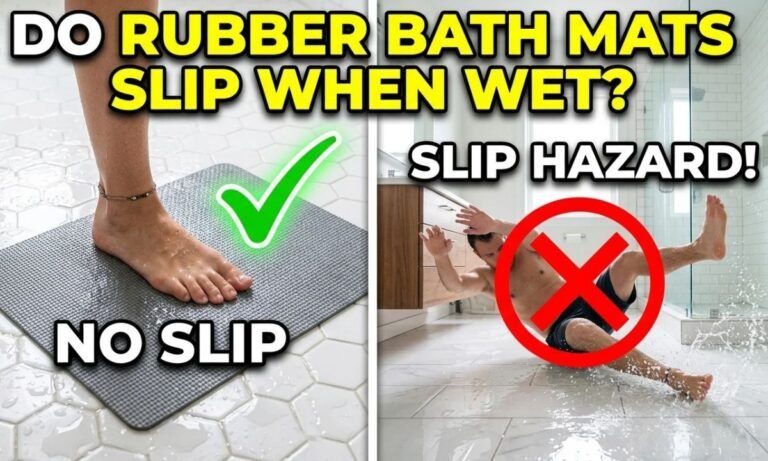
Do rubber backed bath mats slip when wet? Learn why they can move, what affects grip, how to test your mat, and how to reduce slipping in a U.S. bathroom.
Find out what is the best material for a bathroom rug, including cotton, microfiber, bamboo, chenille, memory foam, and more. Compare absorbency, drying speed, comfort, safety, and care.
Learn what size bathroom rug works best for a double vanity, including runner sizes, two-rug layouts, measuring tips, clearances, and placement examples.