For a long bathroom vanity, a runner that is 24 to 30 inches wide and 60 to 72 inches long is a useful starting point. Choose the final size based on your vanity length, available floor space, door clearance, and walking path.
In American homes, long bathroom vanities often serve two sinks, a wide countertop, or a large primary bathroom. A well-sized runner can soften the hard floor, catch small splashes, and give you a comfortable place to stand while brushing your teeth or getting ready. The right rug should suit the vanity without filling every inch of open floor.
The best size depends on more than the length of your cabinet. You also need to consider the room’s shape, the space between the vanity and the opposite wall, and whether a door swings over the rug. Measure the usable floor area before shopping, then compare a few common runner sizes to find one that fits your bathroom and daily routine.
What Size Bathroom Runner Works Best for a Long Vanity?
For many long bathroom vanities, a runner that measures 24 inches wide by 60 to 72 inches long works well. It gives you a soft standing area while keeping the rug narrow enough for many bathroom layouts. A longer vanity or a large primary bathroom may need a 30-by-84-inch runner, provided the floor plan has enough open space.
These measurements are starting points, not fixed design rules. A 72-inch runner may fit a six-foot vanity nicely, but it could feel too long if a toilet, shower entrance, or door sits close to one end. The room’s usable floor area matters more than matching the cabinet measurement exactly.
For a balanced look, choose a rug that follows the main standing zone in front of the sink. It can cover the area used by one or two people without reaching into places where it would be stepped on awkwardly, folded by a door, or trapped under a cabinet.
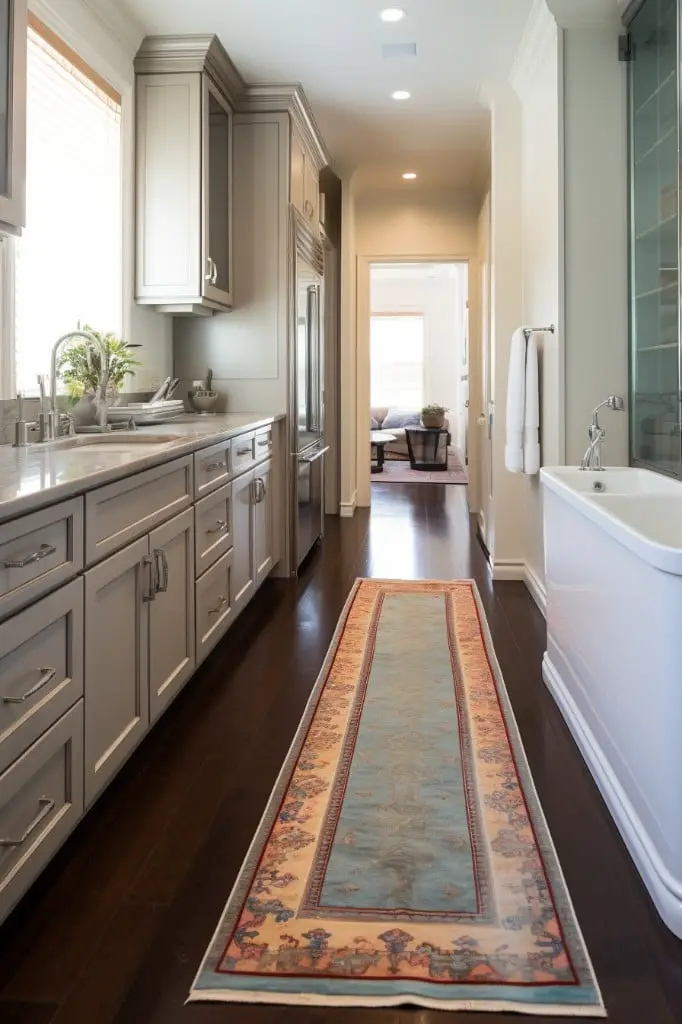
Source: storage.googleapis.com
Small long vanity
A runner around 20 to 24 inches wide and 48 to 60 inches long may suit a compact bathroom with a vanity that is long but has limited floor space.
Standard long vanity
A 24-by-60-inch or 24-by-72-inch runner is a useful option when there is a clear standing area along the cabinet.
Large double vanity
A 24-by-72-inch or 30-by-84-inch runner may work when the vanity is wide and the bathroom has enough room for safe walking and door clearance.
Extra-wide bathroom
A wider runner can provide more coverage, but measure the gap between the vanity and opposite fixtures before choosing one.
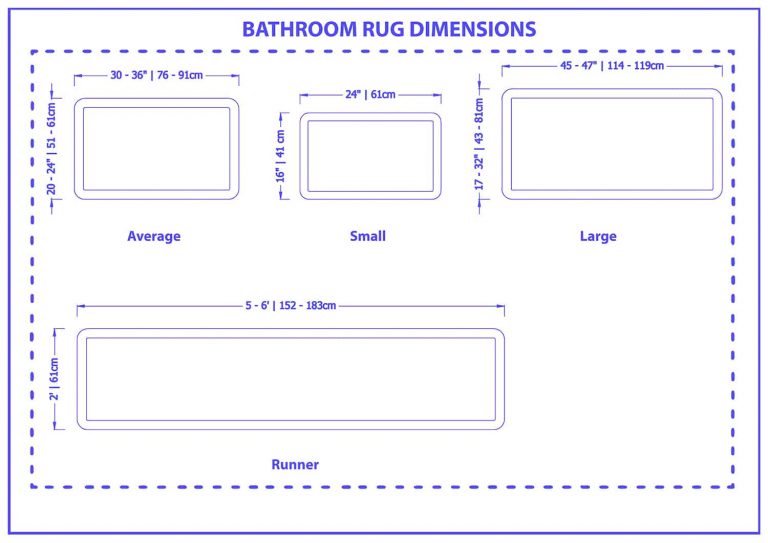
Common Bathroom Runner Sizes and Their Uses
Bathroom runners come in several standard and near-standard sizes, although exact choices vary by maker. The table below gives practical examples for planning your purchase. Treat each size as a possible fit rather than a guarantee that it will work in every bathroom.
20 by 48 inches
Useful for a narrow bathroom or a shorter standing zone where a larger rug would crowd the floor.
24 by 60 inches
A versatile option for many medium-length vanities and bathrooms with limited floor space.
24 by 72 inches
A common starting size for longer vanities, including some double-sink layouts.
30 by 72 inches
Provides more width for a broad standing area when the bathroom has enough clearance.
30 by 84 inches
May suit a long vanity in a spacious bathroom, but requires careful checks around doors and nearby fixtures.
How to Match Runner Length to Vanity Length
Start by measuring the full width of your vanity from one outside edge to the other. Then decide how much of that length you want the rug to cover. The runner usually looks best when it follows the main sink area while leaving enough floor visible to keep the room from feeling crowded.
You do not need to buy a runner that matches the vanity’s exact length. A rug that is a little shorter can look neat and deliberate, especially when the vanity sits between a wall and another fixture. A runner that is too long may extend into a toilet area or block the path to the shower.
A useful design approach is to leave a modest strip of bare floor at both ends when the layout allows it. The amount depends on the room, so do not treat a specific border measurement as a rule. The key is to create a clear visual relationship between the rug and the cabinet.
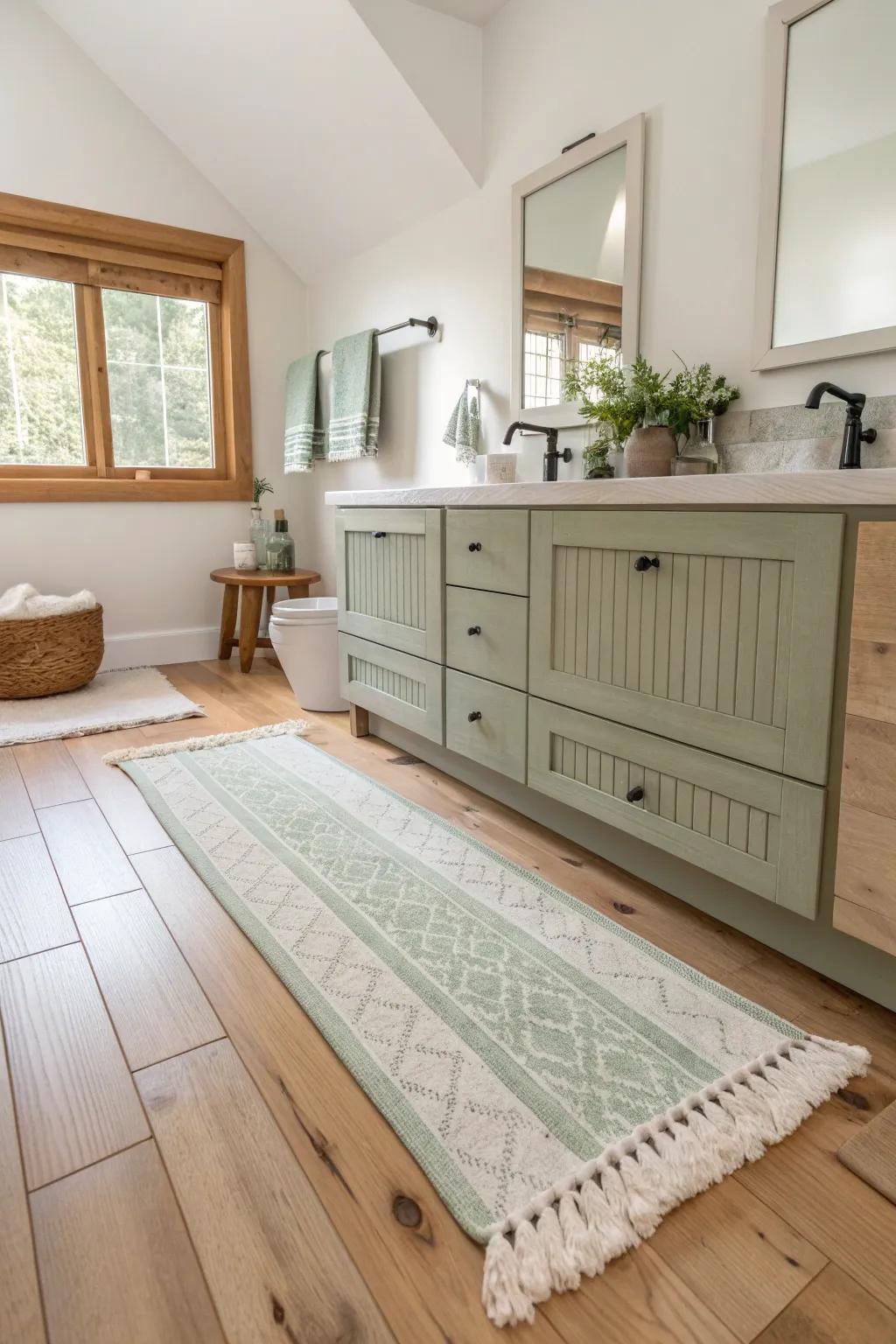
Source: stillways.com
Measure the cabinet
Record the vanity’s full outside width, including any end panels that extend beyond the cabinet doors.
Mark the standing area
Identify where people stand most often while using the sink, mirror, and countertop.
Compare runner lengths
Use painter’s tape to mark possible rug lengths on the floor. Check whether the ends interfere with nearby fixtures or walking routes.
Check the visual balance
Stand at the bathroom entrance and look at the taped outline. The rug should relate to the vanity without making the room appear crowded.
Example: Choosing a Runner for a 72-Inch Vanity
Imagine a double vanity that is 72 inches wide. A 24-by-60-inch runner would cover much of the central standing zone while leaving more exposed floor near the ends. A 24-by-72-inch runner would align with the vanity’s length, creating a more continuous look if the surrounding floor is clear.
If the bathroom has a toilet close to one end, the shorter runner may be the better fit. If there is open floor along the entire vanity, the longer option may create a more unified appearance. These are hypothetical layout examples; the actual choice depends on the room’s measurements.
Choose 24 by 60 inches
Consider this size when the bathroom has limited open floor or when you want a smaller rug in front of the main sink area.
Choose 24 by 72 inches
Consider this size when the full standing zone is clear and you prefer a runner that follows the vanity’s length.
Consider a custom size
If standard sizes leave awkward gaps or create clearance problems, look for a shorter or narrower option rather than forcing a poor fit.
How Wide Should a Bathroom Runner Be?
For many long vanities, a runner between 20 and 30 inches wide offers a good balance between comfort and floor coverage. A 24-inch width is a useful first option because it can cover the main standing area without taking up too much room. Wider runners may feel more comfortable in a large bathroom, but they also use more of the walking space.
To find the right width, measure the open floor from the front of the vanity to the nearest obstacle. This might be a toilet, a bathtub, a shower curb, or the opposite wall. The runner must fit within that space without becoming a trip hazard or blocking access to fixtures.
Remember that the listed rug width is not the same as the total open area you need. You may want a small strip of bare floor between the rug and another fixture, depending on the layout. This can make cleaning easier and keep the room from looking packed with fabric.
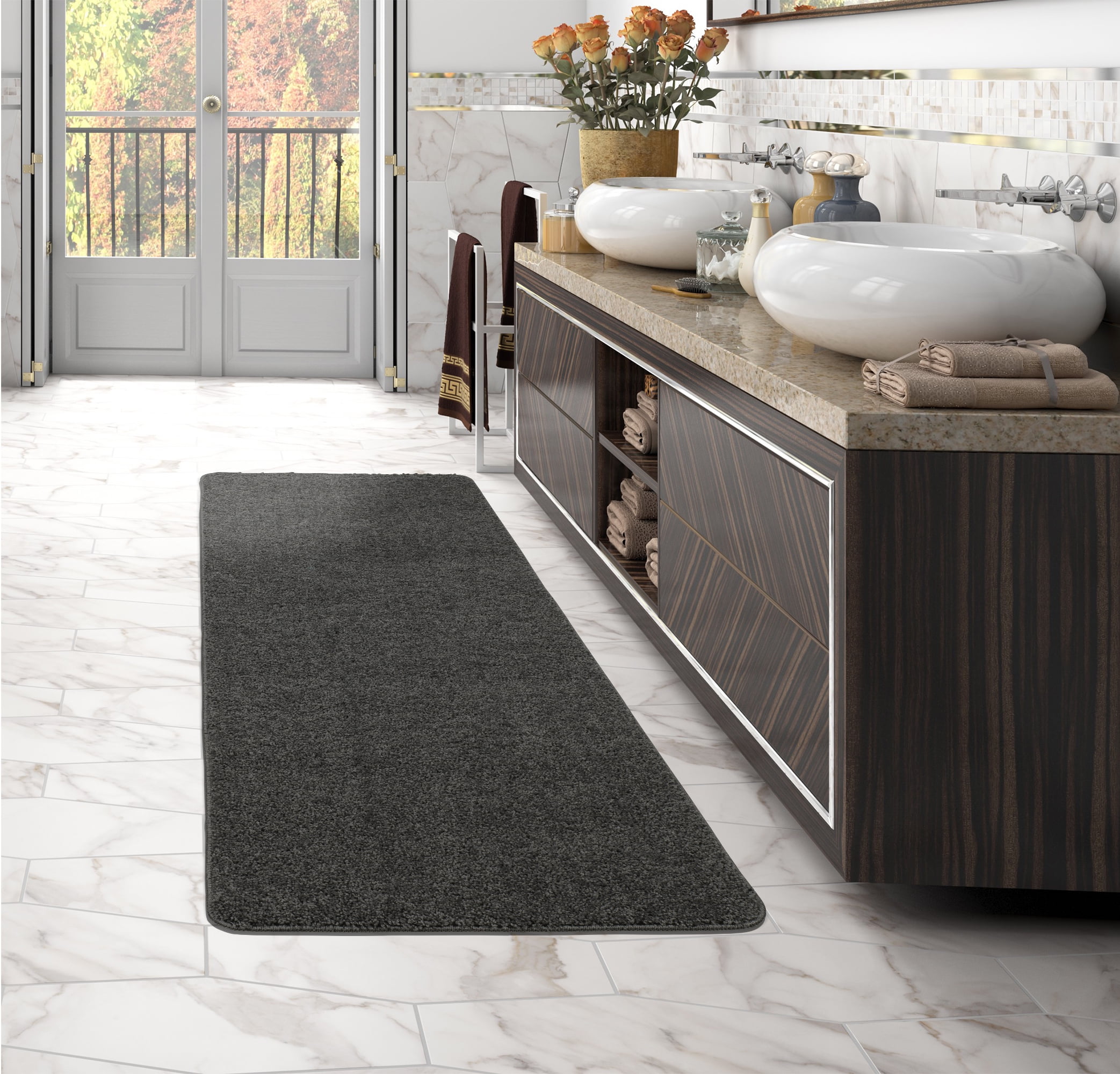
Source: amazon.com
20 inches wide
May suit a narrow bathroom or a compact standing area, especially where a wider rug would leave little room to walk.
24 inches wide
A flexible choice for many standard bathroom layouts and long vanity fronts.
27 to 30 inches wide
May provide more foot coverage in a spacious bathroom, as long as doors and fixtures remain clear.
More than 30 inches wide
Consider this only when the room has enough floor space and the rug does not interfere with normal movement.
Measure the Space in Front of the Vanity
Use a tape measure to find the distance from the vanity’s front edge to the nearest fixed obstacle. If the distance is 40 inches, for example, a 24-inch runner will leave more exposed floor than a 30-inch runner. Both may fit, but the wider option could feel crowded if the bathroom also has a narrow walking path.
Check the space with cabinet doors and drawers open. A rug that fits when everything is closed may catch under a drawer or interfere with access when you reach for towels or cleaning supplies. Mark the planned width with painter’s tape and walk through the room before making your choice.
Measure the narrowest point
If the floor space changes along the vanity, use the tightest section when checking whether a runner will fit.
Keep fixtures accessible
Leave room to approach the toilet, shower, and storage without stepping over a bunched or curled rug.
Test door movement
Confirm that the rug does not stop a door from opening or cause the door to drag across the fabric.
Should a Runner Cover the Entire Length of a Double Vanity?
A runner does not have to cover the full length of a double vanity to work well. It should cover the main standing area in front of the sinks and leave enough open floor for safe movement. A shorter rug may be more practical when the vanity sits near a toilet, shower, or doorway.
A runner that spans most of a double vanity can help connect the two sink areas visually. This is especially useful in a large primary bathroom where a small bath mat might look out of proportion. However, a rug that extends too far can make the room feel busy and may interfere with the way people move between fixtures.
Think about how two people use the bathroom. If both stand at the sinks at the same time, a longer runner may provide a shared soft surface. If one sink is used more often or the room has a narrow walkway, a shorter runner or two separate mats may be easier to manage.
Source: storage.googleapis.com
One shared runner
A long runner can connect both sink areas and create a unified look when the floor plan is open.
Two separate mats
Individual mats can suit a divided layout or a bathroom where the sinks have distinct standing zones.
A shorter central runner
A shorter rug may work when the ends of the vanity are close to a door, toilet, or shower entrance.
When Two Bathroom Mats May Work Better
Two separate mats can make sense when the vanity has two distinct sink areas and enough space between them. Each mat can sit where a person stands without extending across the entire cabinet. This arrangement may also make it easier to lift, wash, and dry each mat.
The trade-off is that two mats create more edges on the floor. If their corners curl or their backing slides, they may be less convenient than one well-fitted runner. Choose between the two layouts based on floor space, cleaning needs, and how people use the room.
Use two mats for separate zones
This can work when each sink has a clear standing area and a long runner would extend into a crowded section.
Use one runner for a shared zone
This can work when both sinks sit along one uninterrupted stretch of open floor.
How to Measure for a Bathroom Runner Before Buying
The most reliable way to choose a bathroom runner is to measure the floor rather than guess from the vanity size. A few minutes with a tape measure and painter’s tape can help you avoid a rug that looks too short, blocks a door, or crowds the walking path. Measure the room when the floor is clear and note any fixed obstacles.
You will need a tape measure, a notepad, and optional painter’s tape to mark the rug’s outline. Measure both the length and width of the usable area. If the floor has an unusual shape, measure each section instead of assuming that the room is a perfect rectangle.
Source: storage.googleapis.com
Step 1: Measure the vanity
Write down the full cabinet length and the distance from the front edge to the opposite obstacle.
Step 2: Mark the standing zone
Identify where you usually stand to brush your teeth, wash your face, apply makeup, or use the sink.
Step 3: Check nearby fixtures
Measure around the toilet, shower entrance, bathtub, storage units, and any other items that limit the floor space.
Step 4: Account for doors and drawers
Open every nearby door and drawer fully. Make sure the planned rug will not catch, fold, or prevent normal access.
Step 5: Mark the proposed size
Use painter’s tape to outline a 24-by-60-inch, 24-by-72-inch, or other suitable option on the floor.
Step 6: Walk through the layout
Walk from the doorway to the sink and shower. Check that the rug does not create a narrow passage or an awkward step.
A Simple Example of Bathroom Runner Measurements
Suppose a vanity measures 72 inches long, and the usable floor in front of it measures 36 inches from the cabinet to the nearest obstacle. A 24-by-72-inch runner may fit the basic floor area, leaving 12 inches of the measured depth outside the rug. A 30-inch-wide runner would leave only 6 inches outside the rug, so the wider option may feel more crowded.
These calculations describe the amount of floor not covered by the rug, not a required clearance standard. The actual space needed depends on the room layout, fixture access, and door movement. Use the measurements to compare options, then test the layout before buying.
Usable depth
36 inches.
Runner width
24 inches.
Remaining uncovered depth
36 minus 24 equals 12 inches.
Alternative runner width
30 inches, leaving 6 inches of uncovered depth in the same example.
Choose a Runner Material That Suits Bathroom Use
The right bathroom runner should feel comfortable underfoot and handle regular moisture. Size determines how much floor the rug covers, but material affects how it feels, how quickly it dries, and how easy it is to clean. A large rug that stays damp can be less practical than a smaller one that dries well between uses.
Cotton, microfiber, chenille, and synthetic blends are common choices for bathroom rugs. Their performance varies by construction, thickness, backing, and care instructions. Do not assume that every rug made from the same fiber will absorb or dry at the same rate.
For a long vanity, consider the number of people using the bathroom and how often the floor gets wet. A household with several people may need a rug that can be washed and dried often. A guest bathroom used less frequently may work well with a different texture or decorative finish.
Source: www.yahoo.com
Cotton
Cotton rugs can feel soft and absorb water well. Check the care label, as some designs may shrink or take longer to dry than expected.
Microfiber
Microfiber rugs can feel soft and may dry quickly, depending on their pile and construction. Check the label for washing and drying limits.
Chenille
Chenille can offer a plush feel and a textured surface. A thick chenille rug may hold moisture, so drying time and care requirements matter.
Synthetic blends
Some synthetic rugs are easy to care for and resist wear, but water absorption and comfort vary by fiber and design.
Does a Thicker Runner Work Better?
A thicker runner may feel softer, but extra thickness does not automatically mean better performance. A dense rug can take longer to dry, and its raised edge may catch under a door. In a bathroom, comfort needs to be balanced with moisture control and a flat, stable fit.
If you prefer a plush rug, check its total height, including the backing. Compare that measurement with the clearance beneath nearby doors. Choose a rug that can dry fully between uses and follow the manufacturer’s washing instructions.
Choose comfort carefully
Look for a pile that feels good underfoot without making the rug unstable or difficult to maintain.
Check the backing
Make sure the backing suits the floor type and does not leave residue or cause damage.
Plan for drying
Choose a construction you can wash, hang, or dry according to the care label.
Keep the Runner Safe on Tile and Other Bathroom Floors
A bathroom runner should stay in place when you step on it, turn toward the sink, or move between fixtures. Tile, polished stone, and some vinyl floors can be slippery when wet. A rug that slides or curls at the edges can add a trip risk, especially in a busy bathroom.
Look for a rug with a suitable non-slip backing or use a rug pad approved for both the rug and the floor. Not every backing works on every surface. Some rubber or latex materials may react with certain floor finishes, so check the rug and flooring instructions before use.
Do not rely on the rug’s weight alone to keep it from moving. Test it on a dry floor and check its position during normal use. If the rug shifts, bunches, or develops curled corners, remove it until you can correct the problem.
Source: amazon.com.au
Use a compatible non-slip solution
Check the backing or rug pad instructions to confirm that it is suitable for your specific floor.
Keep edges flat
Replace or correct a runner that curls, folds, or develops raised corners.
Keep the floor dry
Wipe up standing water and allow both the floor and rug to dry when needed.
Check door clearance
Do not use a rug that catches under a door or moves when the door opens.
What If the Runner Keeps Sliding?
First, lift the runner and check whether the floor is wet, dusty, or coated with residue. Clean the floor using a method suitable for its material, then let it dry fully. Put the rug back only when both surfaces are dry.
If the runner still slides, check whether its backing is worn or unsuitable for the floor. A compatible rug pad may help, but follow the floor maker’s care advice to avoid discoloration or damage. If the rug remains unstable, choose a different design rather than accepting repeated movement.
Inspect the backing
Look for worn areas, loose material, or damage that could prevent the runner from staying flat.
Review floor compatibility
Confirm that the rug or pad is approved for the exact floor surface.
Replace an unstable rug
If cleaning and a compatible pad do not solve the problem, choose a more suitable runner.
Common Mistakes When Choosing a Long Bathroom Runner
The most common sizing mistake is choosing a rug based only on the vanity’s length. The cabinet may be long, but the usable floor in front of it may be narrow or interrupted by a door, toilet, or shower. A rug that looks right in a product photo may not fit the real room.
Another mistake is treating a runner as a way to cover as much bare floor as possible. A bathroom still needs clear walking routes and easy access to fixtures. A smaller rug that fits the room well often works better than a large rug that forces people to step around its edges.
People also sometimes focus on color and texture before checking size and safety. A rug can match the vanity beautifully and still be a poor choice if it slips, catches a door, or stays damp. Measure first, confirm the construction, and then choose a style that suits the room.
Source: storage.googleapis.com
Buying the longest available size
A long runner may extend into another fixture zone or block a clear route through the bathroom.
Ignoring rug width
A runner can match the cabinet length but still be too wide for the usable floor area.
Forgetting door clearance
A thick rug may prevent a door from opening fully or cause the rug to bunch.
Choosing a slippery backing
A decorative rug without suitable grip may shift on smooth flooring.
Overlooking care needs
A rug that is difficult to wash or dry may not suit a busy bathroom.
Assuming all dimensions are exact
Check the listed measurements and product details. Actual dimensions and available sizes can vary by maker.
How to Tell Whether Your Runner Is Too Large
A runner may be too large if its edges sit close to several fixtures, if doors drag over it, or if people must step around it to reach the toilet or shower. It may also look crowded when the rug reaches from wall to wall or covers nearly all the visible floor around the vanity.
To check the fit, temporarily place the rug or mark its outline with painter’s tape. Walk through the bathroom as you normally would and open all nearby doors and drawers. If the rug makes the route awkward or blocks access, try a shorter or narrower size.
Look for blocked paths
The route between the entrance, vanity, toilet, and shower should remain clear.
Watch the edges
The rug should lie flat rather than curl against a wall, fixture, or door.
Check the overall look
Leave enough visible floor to create a balanced arrangement when the room layout allows it.
How to Make a Long Bathroom Runner Look Balanced
A well-placed runner can help a long vanity feel connected to the rest of the bathroom. Its shape should follow the main line of the cabinet, while its color and texture should support the room’s existing finishes. The goal is a comfortable standing zone that looks planned rather than added as an afterthought.
Color is a matter of preference, but the room’s main finishes can help narrow the options. A neutral runner may suit a bathroom with patterned tile, while a subtle pattern can add interest to a room with plain walls and simple cabinets. Match the rug to the room as a whole rather than trying to copy every color exactly.
The runner’s position also affects how balanced the room feels. Centering it along the main sink area can create a clear visual line. In a bathroom where the vanity sits off-center, placing the rug in the main standing zone may work better than forcing it to align with the room’s walls.
Let the cabinet’s length inform the runner’s placement, but adjust for fixtures and walking space.
Coordinate with the floor
Choose a color and pattern that work with the tile, stone, or vinyl rather than competing with it.
Balance texture and pattern
A simple runner can calm a busy floor, while a subtle pattern may add interest to a plain room.
Leave some floor visible
Visible floor around the rug can make the arrangement feel lighter and easier to maintain.
Should the Runner Match Bathroom Towels?
The runner does not need to match the towels exactly. Coordinating colors can make the room feel unified, but using different shades of the same color often looks more natural. For example, a light gray runner can work with charcoal towels and white cabinets without making every item look identical.
You can also use the runner to connect separate finishes. A muted blue rug may tie in with a shower curtain or wall detail, while a beige or cream runner may soften a room with cool tile. Choose a design you like after confirming that the size, backing, and care requirements suit the bathroom.
Coordinate, do not copy
Use a related color or pattern instead of requiring an exact match between the rug and towels.
Consider the floor color
A rug should remain visually distinct enough from the floor that its edges are easy to see.
Prioritize fit and care
A coordinated color cannot make an unsuitable size or unstable backing a good choice.
How to Care for a Bathroom Runner After Installation
A bathroom runner lasts longer when you keep it clean, dry it fully, and follow the maker’s care instructions. Moisture can collect in a thick pile or beneath a rug that stays in one place all day. Lift the runner from time to time to check the floor and let both surfaces dry when needed.
Wash the rug at the interval recommended on its care label. The right method depends on the fibers, backing, and construction. Some rugs can go in a washing machine, while others need gentle hand washing or spot cleaning.
If the runner develops a persistent damp smell, curled corners, a damaged backing, or repeated slipping, inspect it before continuing to use it. Cleaning may solve some problems, but a worn or unstable rug may need to be replaced. Keep the floor underneath clean as well, especially if the bathroom has smooth tile or stone.
Source: storage.googleapis.com
Wash as directed
Follow the label for water temperature, detergent, machine washing, and drying.
Allow full drying
Do not return a wet rug to the floor if it can trap moisture underneath.
Inspect the backing
Look for cracking, peeling, residue, or loss of grip.
Check the floor
Lift the rug to look for trapped water, discoloration, or residue that may need attention.
Replace when needed
Choose a new runner if the old one stays damp, becomes unstable, or can no longer be cleaned properly.
How Often Should You Wash a Bathroom Runner?
There is no single washing schedule that fits every bathroom. A runner used by several people or exposed to frequent splashes may need more frequent cleaning than one in a lightly used guest bathroom. The rug’s care label provides the starting point, and its actual condition helps you decide when it needs attention.
If the rug feels damp for long periods, increase ventilation and allow it to dry fully between uses. If it remains wet despite reasonable drying, consider a thinner or more washable design. Repeated dampness can also be a sign that the rug is too large for the way the bathroom is used.
Check it regularly
Look for damp spots, visible soil, odors, and changes in the rug’s backing.
Adjust for use
A shared primary bathroom may need more frequent washing than a rarely used guest bath.
Follow the care label
Avoid heat or cleaning products that may damage the fibers or backing.
A Quick Decision Guide for Your Bathroom Layout
The easiest way to narrow your options is to match the runner to the room’s usable floor space and the way you use the vanity. Start with a 24-inch width if the layout allows it, then compare 60-, 72-, and 84-inch lengths against the available floor. Choose the longest option that fits comfortably without blocking movement.
Use the table below as a planning guide rather than a strict sizing chart. The suggested dimensions are examples, not measurements established by a universal bathroom design standard. Your floor plan, fixture positions, and personal comfort should determine the final choice.
Source: amazon.com
Compact bathroom with a long vanity
Start by testing a 20-by-48-inch or 24-by-60-inch runner. A shorter rug may preserve more open floor.
Medium bathroom with a double vanity
Compare 24-by-60-inch and 24-by-72-inch runners. Select the one that covers the standing zone without crowding nearby fixtures.
Large primary bathroom
Consider 24-by-72-inch, 30-by-72-inch, or 30-by-84-inch options if the measured floor space supports them.
Bathroom with an inward-swinging door
Choose a size and thickness that stay clear of the door’s path. A shorter or thinner rug may work better.
Bathroom with a narrow passage
Use a narrower runner and test the walking route before purchasing.
What to Do If No Standard Size Fits
If standard sizes leave an awkward gap or overlap with a fixture, do not force the largest available rug into the space. A smaller runner may provide enough coverage while keeping the floor easier to navigate. You can also consider two separate mats if the bathroom has two distinct standing zones.
Custom sizing is another option when the vanity sits along an unusually long or narrow floor area. Before ordering a custom rug, confirm the finished dimensions, edge construction, backing, and cleaning requirements. Make sure the supplier’s measurements include any binding or border that affects the total size.
Try a smaller standard size
This may solve clearance problems without sacrificing the main standing area.
Consider separate mats
Two mats may fit better than one long runner when the vanity area is divided.
Check custom options
Confirm exact finished dimensions and care instructions before placing an order.
Frequently Asked Questions
Q
What size runner should I use for a 60-inch bathroom vanity?
A 24-by-48-inch or 24-by-60-inch runner is a useful starting point for a 60-inch vanity. Choose the shorter option if the bathroom has limited floor space or nearby fixtures. A 24-by-60-inch runner may suit a clear standing area if its edges do not interfere with doors or walking routes.
Q
What size runner works best for a 72-inch double vanity?
For a 72-inch double vanity, compare a 24-by-60-inch runner with a 24-by-72-inch runner. The shorter size can fit a limited standing zone, while the longer option can follow more of the cabinet’s length. Check the available floor space before choosing either size.
Q
Should a bathroom runner be the same length as the vanity?
No. A bathroom runner can be shorter than the vanity and still look balanced. Its main job is to cover the standing area, not to match the cabinet exactly. Choose a length that suits the floor plan and leaves doors, fixtures, and walking paths clear.
Q
How much space should be between a bathroom runner and the vanity?
There is no single gap that works for every bathroom. The runner should sit close enough to cover the main standing zone without being pushed under the cabinet or catching on projecting trim. Use painter’s tape to test its placement and leave enough space for cleaning and normal movement.
Q
Can I use a 24-by-72-inch runner in a small bathroom?
Yes, if the bathroom has enough clear floor space for the full runner. Measure the area in front of the vanity and check the toilet, shower, and door clearances. If the runner blocks a route or makes the room feel crowded, choose a shorter or narrower size.
Q
Is a bathroom runner better than two separate bath mats?
A runner can work better when the vanity has one long, open standing area. Two separate mats may suit a bathroom where the sinks have distinct standing zones or where a long rug would interfere with nearby fixtures. Both layouts can work if the mats remain flat, stable, and easy to clean.
Q
Should the bathroom runner fit under the vanity?
Usually, a freestanding bathroom runner should sit in front of the vanity rather than extend underneath it. A rug trapped under the cabinet may be difficult to remove and clean. Keep the rug clear of cabinet supports, projecting trim, and moving drawers.
Q
What is the safest backing for a bathroom runner?
Choose a backing or rug pad that is designed for your specific floor type and follow the product instructions. Compatibility matters because some backing materials can react with certain floor finishes. The runner should remain flat and stable when you walk on it, and you should remove it if it keeps sliding or curling.
✦ Wrapping Up
Conclusion
For many long bathroom vanities, a runner measuring 24 inches wide and 60 to 72 inches long is a practical place to start. A smaller rug may work better in a compact room, while a larger primary bathroom may have space for a wider or longer option. The right size depends on the actual floor plan, not just the cabinet length.
Measure the vanity and the usable floor area, check the door and fixture clearances, and mark the proposed rug size with painter’s tape. Then choose a material that suits your household’s cleaning routine and a backing that works with your floor. A runner that fits well, stays flat, and dries fully will be more useful than one chosen only for its appearance.
💡 Key Takeaway
Measure your vanity and the open floor in front of it, then test a 24-by-60-inch or 24-by-72-inch outline with painter’s tape. Choose the size that covers your standing area while keeping doors, fixtures, and walking paths clear.
Do rubber backed bath mats slip when wet? Learn why they can move, what affects grip, how to test your mat, and how to reduce slipping in a U.S. bathroom.
Learn how to remove mildew smell from a bath rug using washing, deodorizing, and proper drying. Includes tips for rubber-backed rugs and stubborn odors.
Learn how often you should wash a bath mat, what changes the schedule, how to clean different materials, and how to keep your mat fresh between washes.
Learn what size bathroom rug works best for a double vanity, including runner sizes, two-rug layouts, measuring tips, clearances, and placement examples.