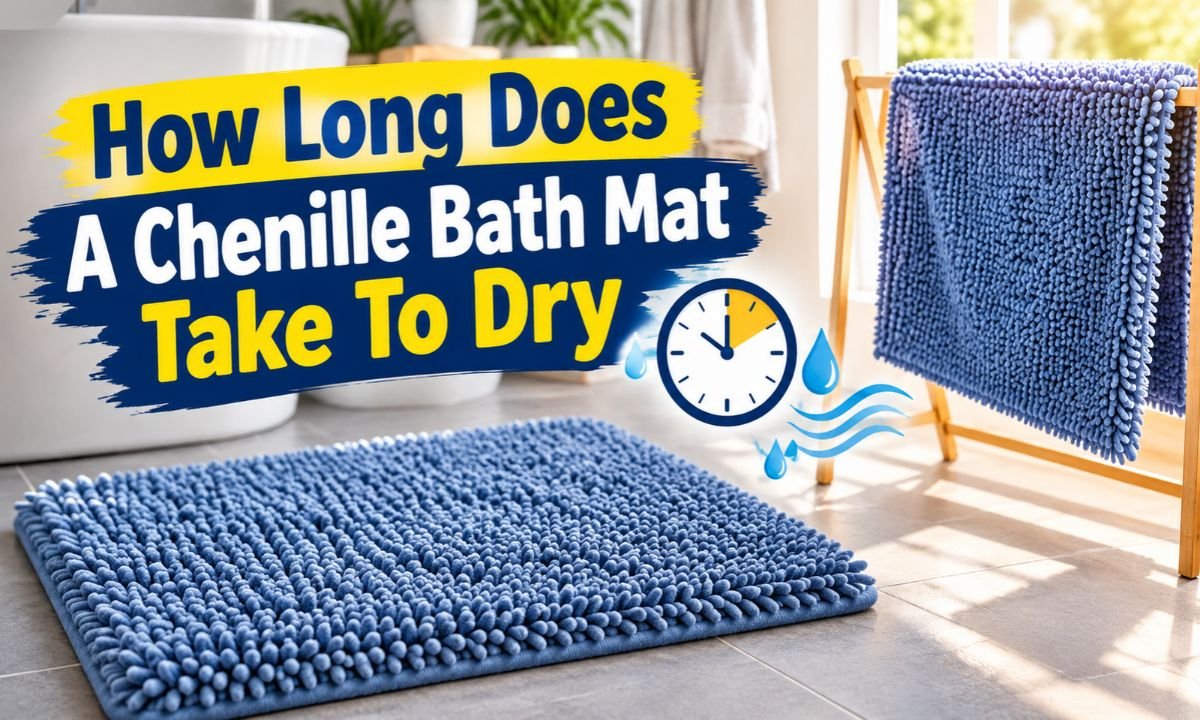
A chenille bath mat usually takes 4 to 12 hours to air-dry, but thick mats in humid bathrooms may need 24 hours or longer.
In American homes, a chenille bath mat often sits beside a bathtub, outside a shower, or in front of a bathroom sink. It feels soft under bare feet and helps catch water after a shower. However, its thick fibers can hold moisture, so the mat may take longer to dry than a thin cotton towel.
The exact drying time depends on the mat’s thickness, how wet it is, the room temperature, and the airflow around it. A mat in a warm room with a fan may dry within a few hours. The same mat in a damp bathroom with a closed door may stay wet much longer.
The best way to dry a chenille bath mat is to remove as much water as possible without harming its backing, then hang it where air can reach both sides. Always check the care label before washing, using a dryer, or applying heat. This guide explains what affects drying time, how to speed up the process, and how to tell when your mat is fully dry.
How Long Does a Chenille Bath Mat Take to Dry?
A chenille bath mat generally takes around 4 to 12 hours to air-dry after ordinary bathroom use or a light rinse. After a full wash, the drying time can be longer because water reaches deeper into the fibers and backing. A thick mat that has been soaked may need 24 hours or more, especially in a humid room.
These times are practical estimates, not guaranteed drying times from a controlled test. There is no single drying time for every chenille bath mat. Two mats that look alike can dry at different speeds because their pile height, density, backing, and care instructions may differ.
A useful rule is to judge the mat by its condition rather than the clock. The surface may feel dry while the dense fibers underneath remain damp. Check the underside and the deepest part of the pile before placing the mat back on a bathroom floor.
Lightly damp after a shower
Allow roughly 4 to 8 hours as an initial estimate when the mat has good airflow and the bathroom is not very humid.
Wet after regular bathroom use
Plan for about 6 to 12 hours, depending on how much water the mat has absorbed and whether air reaches both sides.
Freshly washed and spun
Allow around 6 to 12 hours as a starting estimate, but a dense mat may take longer.
Heavily soaked or thick
Expect 12 to 24 hours or longer if water remains trapped in the pile or backing.
Humid bathroom with little airflow
Drying may extend beyond 24 hours because moist air slows evaporation.
Why These Drying Times Are Estimates
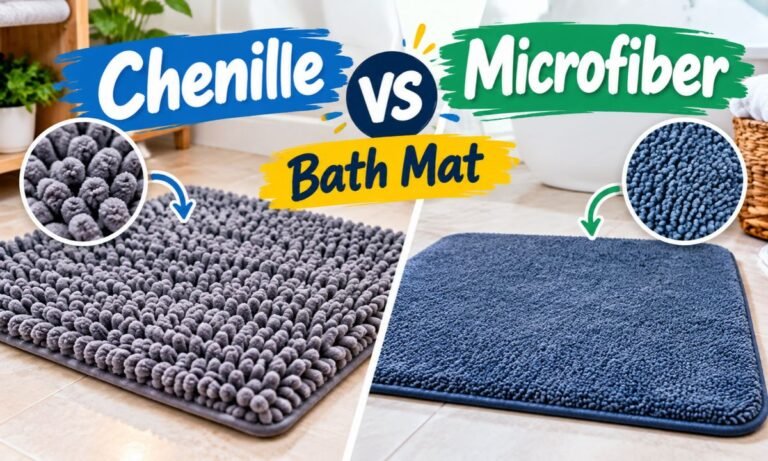
Chenille bath mats vary in construction. Some have short, loose fibers that release water quickly, while others have a deep, dense pile that holds more moisture. Some also have a rubber, latex, or other coated backing that can slow drying on the underside.
The estimates in this guide are general planning ranges, not measured results for a specific product. Your mat’s care label and actual condition are more useful than a fixed time limit.
What Affects the Drying Time of a Chenille Bath Mat?
The biggest factors are the amount of water in the mat, its construction, and the conditions around it. You can often shorten drying time by changing where and how you dry the mat, even when you cannot change its material.
Understanding these factors helps you decide whether the mat needs more time, better airflow, or a different drying method. It also helps explain why a mat can remain damp long after the top feels dry.
Fiber thickness and density
A thick chenille pile can trap more water between fibers. A dense mat may take longer to dry than a thin mat with a similar surface area.
Backing material
A coated or non-slip backing may limit airflow through the underside. Check the product label because heat can damage some backing materials.
Room humidity
Humid air slows evaporation. Bathrooms often become damp after showers, so opening the door or running a suitable exhaust fan can help.
Air movement
Moving air helps carry moisture away from the fibers. A fan placed at a safe distance can improve airflow around the mat.
Temperature
Warmer air can support faster evaporation when humidity and airflow are also favorable. Avoid direct high heat unless the care label allows it.
How much water the mat absorbed
A mat that only caught a few drops will dry sooner than one left in standing water or washed without an effective spin cycle.
Does a Thick Chenille Bath Mat Take Longer to Dry?
Usually, yes. A thick mat has more fibers and spaces that can hold water. Moisture may also remain near the base of the pile, where air moves less freely than it does across the surface.
If you have a thick mat, spread it out fully rather than folding it over a rail. Make sure the fibers are not pressed against another damp item. Turning the mat over partway through drying can help the underside release moisture.
Does the Non-Slip Backing Change Drying Time?
It can. Some chenille mats have a backing designed to grip the floor, and this layer may reduce airflow through the bottom. Depending on the material, the backing may also be sensitive to heat, strong cleaning products, or prolonged exposure to moisture.
Do not assume that every non-slip mat can go in a tumble dryer. Check the care label and dry the mat in a way that protects the backing. If the backing becomes cracked, sticky, curled, or brittle, stop using the mat until you have checked whether it remains suitable for the floor.
How to Dry a Chenille Bath Mat Faster
The simplest way to speed up drying is to remove extra water first, then expose as much of the mat as possible to moving air. You do not need a special appliance for most mats. A clean towel, a suitable drying rack, and a well-ventilated room may be enough.
Before starting, check the care label for washing and drying limits. If the label is missing, treat the mat gently, avoid high heat, and pay close attention to the backing.
Step 1: Remove the mat from standing water
Lift the mat away from a wet shower floor or puddle. Do not leave it bunched up in a damp corner, where moisture can remain trapped.
Step 2: Remove extra water gently
If the mat has just been washed, use a permitted washing machine spin cycle or press it between clean towels. Do not twist it hard unless the manufacturer allows twisting.
Step 3: Hang or spread it out
Use a sturdy drying rack or wide rail that supports the mat without folding it into a thick bundle. If hanging is not suitable for the backing, lay it flat on a clean, dry rack.
Step 4: Improve airflow
Open the bathroom door when practical and run the exhaust fan if available. A portable fan can move air across the mat, but keep electrical equipment away from water.
Step 5: Turn the mat over
After a few hours, check the underside and turn the mat if the drying setup allows it. This helps expose damp areas that were facing the rack or floor.
Step 6: Check before reuse
Feel the center of the pile, the edges, and the backing. Put the mat back only when it is dry throughout and its backing is in good condition.
Use a Clean Towel to Remove Extra Moisture
A clean, absorbent towel can remove some surface water before the mat goes on a rack. Lay the towel over the wet mat and press gently with your hands. You can also place the mat between two towels and press down evenly.
Avoid rubbing the chenille fibers aggressively. Rough handling can flatten the pile or pull at loose fibers. This method removes some water but does not replace proper air-drying.
Choose a Drying Rack With Good Airflow
A rack allows air to move around more of the mat than a solid, flat floor does. Position the mat so that most of its surface remains open to the air, and avoid placing it directly against a wall or another wet item.
If the mat is heavy, make sure the rack can support its weight. A narrow rail can leave deep folds that dry slowly, so use a broad support or spread the mat flat when needed.
Use a Fan Without Creating a Safety Risk
A fan can help carry humid air away from the fibers. Set it on a stable, dry surface and aim the airflow across the mat rather than placing the appliance where it could be splashed. Keep cords and plugs away from wet floors and follow the appliance manufacturer’s instructions.
An exhaust fan can also help remove moisture from the bathroom. If the room remains damp after showers, improve ventilation before relying on a longer drying period alone.
Can You Put a Chenille Bath Mat in the Dryer?
You can put some chenille bath mats in a tumble dryer, but only when the care label permits it. The fiber pile, backing, seams, and any attached grip layer can respond differently to heat and tumbling. A dryer setting that works for one mat may damage another.
If the label allows tumble drying, follow the stated temperature and cycle instructions. When it recommends low heat, do not replace that setting with high heat to save time. If the label says to air-dry, use a rack instead.
Check the label first
Look for the permitted drying method and any temperature limits. Follow the manufacturer’s directions if they differ from general advice.
Avoid high heat unless clearly allowed
Excess heat may damage certain synthetic fibers, soften or crack some backing materials, or weaken adhesive layers.
Do not overload the dryer
A crowded drum can limit movement and airflow. Only dry the mat with other items if the care instructions allow it and the load can tumble freely.
Inspect the backing afterward
Check for cracking, curling, stickiness, or other changes before placing the mat on the floor.
What If the Care Label Is Missing?
When you cannot confirm the permitted dryer setting, air-drying is the safer default. Remove extra water gently and spread the mat on a rack in a ventilated area. This takes longer but avoids exposing an unknown backing to dryer heat.
Do not use a heater, hot iron, or direct high heat to make up for the longer wait. If the mat has an unusual coating or a delicate backing, contact the manufacturer when possible.
Can You Use a Hair Dryer?
A hair dryer is usually not the best tool for drying an entire bath mat. It concentrates heat in a small area and may overheat fibers or backing if held too close. It can also take a long time to reach moisture trapped deep in a thick pile.
Air-drying with a fan is generally more practical. If the manufacturer specifically permits a handheld dryer for spot drying, use only the allowed setting and keep the appliance well away from water.
How to Tell When Your Chenille Bath Mat Is Fully Dry
A chenille bath mat is ready to use when the pile, underside, and backing are dry, not just when the surface feels dry. The center of the mat deserves special attention because it can hold moisture longer than the outer edges.
Check the mat in a few places before returning it to the floor. If any area feels cool and damp, give it more time. A mat that is only partly dry can transfer moisture to the floor and may develop an unpleasant smell if it stays damp repeatedly.
Feel the deepest fibers
Part the chenille pile and touch the area close to the base. Look for dampness rather than judging only the fluffy top.
Check the underside
Run your hand over the backing, seams, and corners. These areas may dry more slowly when airflow is limited.
Compare the center and edges
The edges may feel dry first. Check the middle separately because it may retain more moisture.
Look for a persistent damp smell
A musty odor can signal that the mat has remained wet or needs cleaning. Smell alone cannot prove whether it is fully dry, so also check the fibers and backing.
Confirm the backing is unchanged
Look for peeling, cracks, sticky spots, or curling. A damaged backing may no longer grip the floor as intended.
Why Does the Surface Feel Dry While the Inside Is Still Wet?
Water near the surface can evaporate before water deeper in the pile. Dense fibers can slow air movement, so moisture may remain near the backing even when the mat looks fluffy and dry.
This is why a quick touch on the top is not enough. Separate the fibers in the center, inspect the underside, and allow more time if you find any damp areas.
Why Is Your Chenille Bath Mat Taking So Long to Dry?
If your bath mat remains wet for more than 12 hours, do not assume it is defective. First check how wet it was, whether both sides can breathe, and whether the bathroom is still humid. If it remains damp after 24 hours in a well-ventilated room, review the drying method and the mat’s construction.
Long drying times often result from several small problems working together. A thick mat on a damp floor, in a closed bathroom, with its backing pressed against a solid surface, may struggle to release water.
The mat is lying flat on a solid floor
Lift it onto a suitable rack or place it on a clean, dry surface where air can reach the underside.
The bathroom is humid
Use the exhaust fan, open the door when practical, and move the mat to a drier room if needed.
The mat was not spun after washing
If machine washing is permitted, use the recommended spin cycle to remove extra water before air-drying.
The mat is folded or bunched up
Spread it out so water does not remain trapped between overlapping layers.
The backing limits airflow
Turn the mat over when suitable or use a rack that exposes the underside without bending or damaging the backing.
The mat may need cleaning
If it smells musty or has visible residue, wash it according to the care label and dry it fully before reuse.
What If the Mat Still Feels Damp After 24 Hours?
Move the mat to a dry, well-ventilated room and spread it out. Use a fan to move air across it, turn it over when possible, and check the center and backing again after a few hours.
If the mat remains damp despite good airflow, the pile may be holding a large amount of water or the backing may be restricting evaporation. Do not force the process with high heat unless the care label explicitly allows it.
If the mat has a persistent musty odor, visible mold-like growth, or a damaged backing, stop using it until you can clean it safely and confirm that it is suitable for reuse. Follow the manufacturer’s cleaning guidance, and replace the mat if it cannot be cleaned or its backing no longer works safely.
How Can You Prevent a Musty Smell?
Let the mat dry fully between uses, especially when several people share the bathroom. Hang it after showers instead of leaving it flat on a wet floor. Regular washing, when allowed by the care label, also helps remove body oils, soap residue, and other material that can contribute to odor.
A musty smell is a sign to investigate, not proof of a specific cause. Check the room for ongoing dampness and make sure the mat is not staying wet underneath. If the bathroom itself remains damp, improving ventilation can help the mat and other fabrics dry more effectively.
Air-Drying vs. Machine-Drying a Chenille Bath Mat
Air-drying gives you more control over heat exposure and is the practical default when the care label is unclear. Machine-drying may be faster for mats that are specifically approved for a tumble dryer, but it requires the correct setting.
The best method depends on the mat’s backing, fiber construction, and the time available. Use the comparison below to choose a method that fits the care instructions rather than assuming that the fastest option is always the best.
Which Drying Method Should You Choose?
Use air-drying for mats that require it or when the label does not clearly permit machine drying. Choose a tumble dryer only when the manufacturer’s instructions allow it, and follow the stated heat setting and cycle limits.
Air-drying on a rack
Suitable for most mats when performed according to their care instructions. It avoids direct dryer heat, but may take several hours or longer.
Air-drying with a fan
Useful when the room has limited natural airflow. Keep the fan stable, dry, and away from splashes.
Tumble-drying on an approved setting
May reduce drying time if the label permits it. Heat and tumbling can damage some fibers or backings, so follow the product instructions.
Direct heat from a heater or hot appliance
Avoid unless the manufacturer specifically permits the method. Concentrated heat can harm materials and create an avoidable safety risk.
A Simple Drying-Time Example
Imagine two chenille bath mats have both been washed. Mat A is thin, has little water left after spinning, and hangs in a room with moving air. Mat B is thick, holds more water, and lies flat in a humid bathroom. Mat A may dry within several hours, while Mat B may need much of a day or longer.
This is a hypothetical comparison, not a measured test. It shows why drying time depends on more than the mat’s size or the number of hours since washing. Removing extra water and improving airflow can make a meaningful difference without exposing the mat to excess heat.
How to Care for a Chenille Bath Mat Between Washes
Daily care can reduce the amount of moisture your mat holds and help it stay fresh between washes. The main goal is simple: remove it from standing water, let air reach both sides, and avoid leaving it damp for long periods.
You do not need to wash a bath mat after every shower if it remains clean and dries fully between uses. However, shared bathrooms, heavy daily use, visible dirt, and persistent odors may mean it needs more frequent washing.
Hang it after showers
Use a rack or rail that supports the mat without folding it into a thick bundle. Let the underside breathe.
Keep the floor beneath it dry
Lift the mat after use and dry any standing water. This helps prevent moisture from remaining trapped between the mat and the floor.
Wash according to the care label
Follow the recommended water temperature, detergent guidance, and machine-washing limits. Some mats require gentler care than others.
Avoid excessive fabric softener
Use only products permitted by the manufacturer. Residue can affect how fibers absorb water or feel, depending on the material.
Inspect the mat regularly
Look for worn fibers, loose seams, odors, or backing damage. Replace a mat that cannot be cleaned properly or no longer grips the floor safely.
How Often Should You Wash a Chenille Bath Mat?
There is no single washing schedule for every household. A mat used by several people each day may need washing more often than one used in a guest bathroom. Visible soil, odor, frequent splashes, and how well the mat dries between uses are useful signs to consider.
Follow the manufacturer’s cleaning instructions and let the mat dry completely after each wash. Washing it often will not solve a bathroom ventilation problem, so address persistent dampness at the same time.
Can You Leave a Chenille Bath Mat on the Floor Overnight?
You can leave a mat on the floor overnight if it is already dry and the floor beneath it is dry. If the mat is wet after a shower, hanging it or placing it on a suitable drying rack is a better option.
A wet mat pressed against the floor has less airflow underneath. That can slow drying and leave moisture trapped between the mat and the floor. If the floor is made of wood or another moisture-sensitive material, remove the mat and dry the floor promptly.
Frequently Asked Questions
Q
How long does a chenille bath mat take to dry after washing?
A washed chenille bath mat may take about 6 to 12 hours to air-dry if you remove extra water and provide good airflow. A thick mat or one with a moisture-retaining backing may take 24 hours or longer. Check the pile and underside before reuse rather than relying only on the estimated time.
Q
Can a chenille bath mat dry overnight?
Yes, a thin or moderately thick mat may dry overnight if it has been spun or pressed to remove excess water and hangs in a well-ventilated room. A heavily soaked mat in a humid bathroom may still be damp in the morning. Check the deepest fibers and backing before putting it back on the floor.
Q
Why does my chenille bath mat stay wet underneath?
The underside may stay wet because the mat is lying on a solid floor, the backing restricts airflow, or the pile holds water near its base. Lift the mat, move it to a dry rack, and let air reach both sides. If the mat remains damp for more than a day despite good airflow, inspect it for trapped moisture and follow its care instructions.
Q
Is it safe to put a chenille bath mat in a tumble dryer?
It is safe only when the manufacturer’s care instructions permit tumble drying. Use the approved temperature and cycle, and inspect the backing afterward. If the label is missing or unclear, air-drying is the safer default because some backing materials can be damaged by heat.
Q
Does a fan make a chenille bath mat dry faster?
A fan can help by moving moist air away from the fibers, especially in a room with limited natural airflow. Place the mat where air can reach both sides and keep electrical equipment away from splashes and wet floors. A fan helps evaporation but does not guarantee a particular drying time.
Q
What should I do if my chenille bath mat smells musty?
Check whether the pile and backing are still damp, then wash the mat according to its care label if cleaning is needed. Dry it fully in a well-ventilated area before reuse, and improve bathroom airflow if moisture keeps building up. If visible mold-like growth or a persistent odor remains after appropriate cleaning, stop using the mat until you can determine whether it can be cleaned safely or should be replaced.
Q
Can I put a damp chenille bath mat back on the bathroom floor?
It is better to wait until the mat is dry throughout. A damp mat can trap moisture against the floor, slow drying, and contribute to musty odors. If you must clear the drying area, move the mat to another suitable rack or dry surface instead of leaving it bunched up on the floor.
✦ Wrapping Up
Conclusion
A chenille bath mat usually takes about 4 to 12 hours to air-dry, but a thick or heavily soaked mat may need 24 hours or longer. The exact time depends on the mat’s pile, backing, moisture level, room humidity, and airflow. These ranges are practical estimates, so always check the mat itself before reuse.
To speed up drying, remove extra water gently, spread the mat on a suitable rack, improve airflow, and turn it over when needed. Use a tumble dryer only if the care label allows it. Avoid high heat, and inspect the backing for damage before placing the mat back on the floor.
💡 Key Takeaway
After your next shower or wash, lift the chenille bath mat off the wet floor, remove excess water, and let air reach both sides. Check the center of the pile and the backing before reuse, and give the mat more time if either area still feels damp.
Learn how to remove mildew smell from a bath rug using washing, deodorizing, and proper drying. Includes tips for rubber-backed rugs and stubborn odors.



One Comment