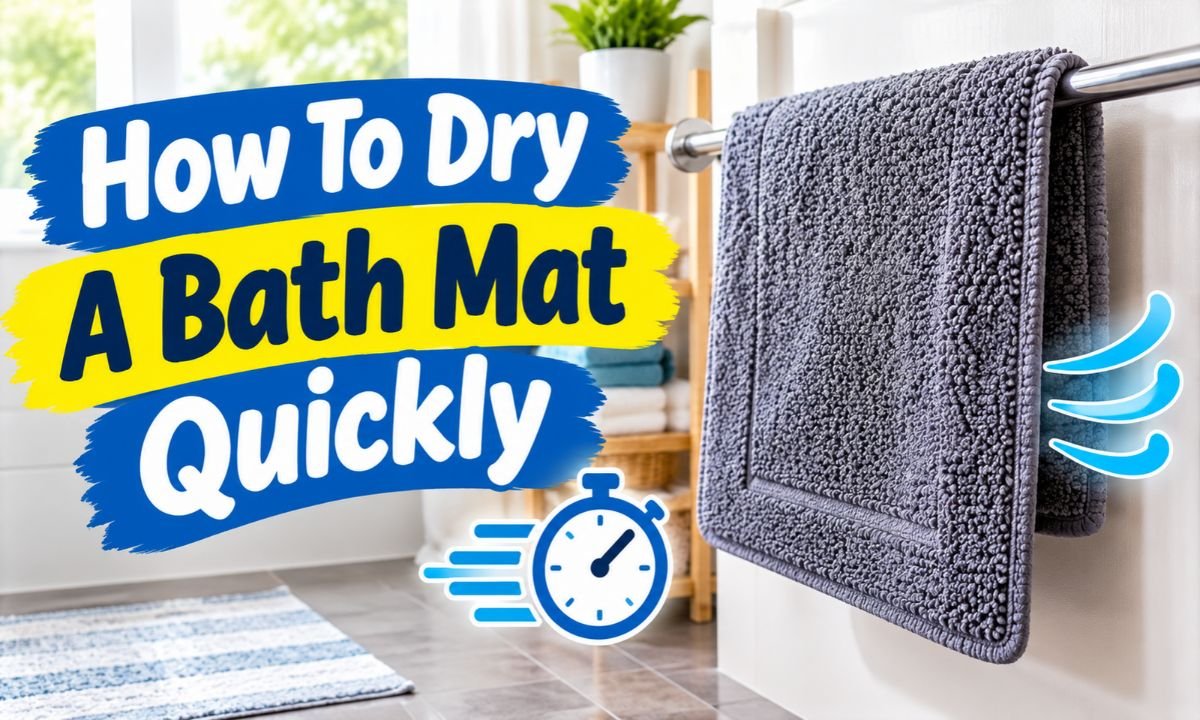
To dry a bath mat quickly, press out extra water, roll it in a dry towel, then hang it in a warm, well-ventilated place.
In American homes, bath mats help keep bathroom floors dry after a shower or bath. Yet a wet mat can stay damp for hours, especially in small bathrooms with poor airflow. Whether you live in a humid Southern state, a cool Northern home, or an apartment with no outdoor drying space, the right method can help your mat dry sooner.
The quickest safe approach is to remove as much water as possible before drying the mat. Use a clean towel to absorb moisture, then hang the mat so air can reach both sides. A fan or a dehumidifier can help, while a clothes dryer is an option only when the care label allows it. The material and backing matter because high heat can damage some bath mats.
This guide explains how to dry cotton, microfiber, chenille, memory foam, and rubber-backed bath mats. You will also learn how to spot trapped moisture, avoid common drying mistakes, and keep the mat fresh between washes. The goal is simple: get the mat dry without damaging it or making your bathroom floor unsafe.
How Long Does a Bath Mat Take to Dry?
A bath mat may dry in a few hours or take most of a day. The time depends on its thickness, material, room temperature, humidity, and airflow. A thin cotton mat in a breezy room usually dries sooner than a thick memory foam mat in a closed bathroom.
There is no single drying time that works for every mat. A mat can feel dry on top while the underside and inner layers still hold water. Check both sides before using it again.
The estimates below are general planning guides, not tested drying times. Your mat may need more or less time depending on its construction and the conditions in your home.
Thin cotton mat
May dry within a few hours when excess water is removed and air can move around it.
Microfiber or chenille mat
May take several hours because the fibers can hold water, especially when the pile is thick.
Memory foam mat
May take longer because moisture can remain inside the foam rather than only on the surface.
Rubber-backed mat
May dry slowly on the underside if the backing traps moisture against the floor or another surface.
What Makes a Bath Mat Dry Faster?
The main factor is how much water remains in the mat. Removing excess water first reduces the amount that must evaporate. Air movement then helps carry moisture away from the fibers and backing.
Humidity also matters. Air that already contains a lot of water cannot take up moisture as readily as drier air. A bathroom with a working exhaust fan, an open drying area, or a dehumidifier may provide better conditions than a closed, steamy room.
Less water
Blot or press the mat with a dry towel before hanging it.
More airflow
Use a fan or place the mat on a rack where air reaches both sides.
Lower humidity
Run the bathroom exhaust fan or use a dehumidifier when suitable.
Suitable warmth
A comfortably warm room can help, but avoid direct high heat that may harm the fibers or backing.
The Fastest Safe Way to Dry a Bath Mat
The best starting method is to remove water with a towel and then hang the mat with space around it. This works for many washable mats and does not rely on high heat. Before you begin, check the care label for restrictions on wringing, spinning, and machine drying.
If the mat has a rubber or latex backing, do not twist it hard. Strong twisting can stretch the backing or cause cracks. Press gently instead, and keep the backing away from heat sources unless the manufacturer gives clear permission.
What you need
A clean, absorbent bath towel, a drying rack or sturdy shower bar, and good airflow. A fan can help if the room feels damp.
Where to dry it
Choose a clean place where the mat can hang freely without touching the floor, a wall, or another wet item.
Step 1: Remove the Mat From the Wet Floor
Lift the mat as soon as you notice that it is wet. Leaving it flat on tile, vinyl, laminate, or wood can trap moisture underneath. Some flooring finishes and seams may be damaged by long contact with water.
If the mat has a non-slip backing, lift it carefully and check the floor beneath it. Wipe away any pooled water, then leave the floor clear while the mat dries.
Check the floor
Dry any puddles before setting up the mat to prevent slips and limit moisture exposure.
Step 2: Press Out Extra Water
Lay the mat flat on a clean, dry towel. Roll the towel and mat together, then press down gently with your hands. The towel should absorb some of the water without the need for forceful twisting.
For a thick mat, unroll it and repeat with a dry section of the towel. If the towel becomes soaked, replace it with another dry one. This step is especially helpful when the mat has just come out of a wash.
Use gentle pressure
Avoid wringing foam mats or bending a stiff backing sharply.
Repeat if needed
A second towel press can remove more water when the first towel becomes wet.
Step 3: Hang the Mat With Space Around It
Place the mat over a drying rack, a sturdy shower bar, or another clean support that can hold its weight. Spread it out rather than folding it into a thick bundle. The more surface area exposed to air, the easier it is for moisture to escape.
If the mat is heavy when wet, use a strong rack and make sure it cannot slip off. For a rubber-backed mat, avoid sharp clips that may puncture or tear the backing.
Expose both sides
Hang the mat so air can move around the top and bottom. Turn it over when one side remains damp.
Avoid crowded spaces
Keep it away from wet towels and clothes that block airflow.
Step 4: Improve Airflow
Set a fan nearby to move air across the mat. You do not need a strong blast of air; steady movement can help carry away moisture. Keep the fan on a dry, stable surface and well away from splashes.
If the bathroom is humid, run its exhaust fan according to the manufacturer’s directions. You can also move the mat to a dry, airy room if there is enough space and the mat will not create a trip hazard.
Use a fan safely
Keep electrical equipment away from water, wet hands, sinks, tubs, and shower spray.
Reduce room humidity
Use ventilation or a dehumidifier suitable for the room instead of sealing the mat in a closed bathroom.
Step 5: Check the Mat Before Using It
Touch the thickest area, the edges, and the underside. If any part feels cool and damp, give it more time. A quick surface check alone may miss water held deep in the fibers or foam.
Once dry, check the backing for cracks, peeling, or a sticky feel. If the backing has deteriorated, the mat may no longer grip the floor as intended and should not be used on a slippery surface.
Check the center
Thick pile and foam can hold moisture longer than the edges.
Check the underside
Make sure moisture has not remained against the backing.
How to Dry Different Types of Bath Mats
The right drying method depends on what the mat is made of and how it is built. A simple cotton mat can often handle more mechanical action than a foam mat or one with a rubber backing. Always follow the care label when it differs from general advice.
Do not assume that every bath mat can go into a clothes dryer. The outer fabric, inner foam, stitching, and backing may react differently to heat. A method that works for one part can damage another.
Cotton
Press with a towel and hang freely. Use a washing machine spin cycle or tumble dryer only if the care label permits it.
Microfiber
Blot extra water and hang with room around the fibers. Avoid excessive heat, which may affect synthetic fibers.
Chenille
Gently press out moisture and spread the pile so air can reach it. Shake or fluff the fibers after drying if the care instructions allow it.
Memory foam
Press gently with towels and air-dry flat or draped as directed by the manufacturer. Do not twist or apply high heat.
Rubber-backed
Remove water gently and hang or drape it where both sides can dry. Keep it away from radiators, hot vents, and direct high heat unless approved.
How to Dry a Rubber-Backed Bath Mat Quickly
A rubber-backed bath mat needs care because the backing may crack, peel, or lose its grip when exposed to unsuitable heat or rough handling. Start by laying the mat on a towel and pressing gently to absorb water. Then hang it over a wide rack so the backing is not sharply folded.
Check the underside during drying. If it stays wet while the fabric feels dry, move the mat to a spot with better airflow and turn it over when practical. Do not place it directly on a heater or use a hot hair dryer to speed things up.
Before putting the mat back, make sure the backing and floor are both dry. A wet backing can reduce reliable contact with the floor, so do not use the mat until it sits flat and grips as intended.
Avoid harsh twisting
Press water out with a towel rather than wringing the mat.
Avoid unapproved heat
Use air movement instead of a radiator, heating element, or high-temperature dryer setting.
Inspect for wear
Replace a mat with peeling, cracked, or brittle backing if it no longer stays securely in place.
How to Dry a Memory Foam Bath Mat
Memory foam can hold water inside its structure, so the surface may feel dry before the center does. Press the mat between clean towels without twisting it. Then follow the care label for whether it should lie flat or hang over a broad support.
Keep the mat in a ventilated area and allow enough time for the foam to dry throughout. Avoid folding it tightly while wet, and do not assume a warm dryer is safe. Excess heat may affect the foam, fabric, or adhesive used in the mat.
If the foam remains damp after the surface dries, turn it or reposition it so air can reach the other side. Do not put it back on the bathroom floor until the full thickness is dry.
Press, do not twist
Gentle pressure removes water without putting unnecessary strain on the foam.
Give the center time
Check the thickest area before deciding that the mat is ready to use.
How to Dry a Cotton or Microfiber Bath Mat
Cotton and microfiber mats are often easier to dry than thick foam mats, but pile height and construction still matter. After pressing out excess water, hang the mat in a well-ventilated area and spread it out so the fibers are not packed together.
If the label allows machine drying, use the recommended setting. When the label calls for air-drying, do not use a dryer simply because the mat looks like an ordinary towel. Check the underside and seams before putting it away.
Loosen the pile
Gently spread thick fibers so air can pass through them.
Follow the label
Use only approved washer and dryer settings for the specific mat.
Can You Use a Clothes Dryer to Dry a Bath Mat?
Yes, some bath mats can go in a clothes dryer, but others should only air-dry. The care label is the deciding guide. A mat with rubber backing, foam, glued layers, or heat-sensitive fibers may be damaged by a dryer setting that is too hot.
If the label permits tumble drying, use the recommended temperature and cycle. Do not guess based on the mat’s outer fabric, because the backing and inner layers may have different limits. Remove the mat when the cycle ends and check whether the center and underside are dry.
If the label is missing or unclear, air-drying is the more cautious option. A towel press followed by good airflow can shorten drying time without exposing the mat to unnecessary heat.
Dryer allowed
Use only the temperature and cycle stated on the care label.
Dryer not allowed
Hang or drape the mat with space around it, and use a fan to move air.
Label unclear
Choose air-drying until you can confirm the manufacturer’s instructions.
Should You Use a Hair Dryer?
A hair dryer is usually not the best way to dry a whole bath mat. It treats a small area at a time, may heat the backing unevenly, and can leave the inner layers damp. A fan moving room-temperature air is a more practical choice for most mats.
If the manufacturer permits a hair dryer for a particular material, keep it at the approved setting and distance. Never use it near standing water, a wet floor, or a bathtub filled with water. Electrical safety matters more than saving a few minutes.
Better option
Use a fan and a drying rack to provide steady airflow across a larger area.
Avoid
Do not leave a hot hair dryer unattended or direct high heat at rubber, foam, or adhesive layers.
Can You Put a Bath Mat on a Radiator?
Do not drape a bath mat over a radiator or heating element unless the appliance instructions and mat care label clearly allow it. The mat can block heat flow, overheat, or suffer damage, especially when it contains rubber, foam, or synthetic fibers.
Place the mat on a separate rack in a ventilated area instead. Keep the rack clear of heaters and other hot surfaces, and make sure the mat cannot fall onto the appliance.
Keep heat sources clear
Do not cover heaters or block vents with fabric.
How to Dry a Bath Mat in a Small Bathroom
A small bathroom can make drying hard because there may be little space to hang a large mat. The key is to get the mat off the floor and create a path for air to move around it. You do not need a large drying room to do this.
Choose a spot where the mat can hang securely without blocking the door, shower, sink, or walkway. If the bathroom stays humid, moving the mat to another dry room may work better than leaving it in a closed space.
Use a folding rack
A compact rack can support the mat while leaving space between the fabric and nearby walls.
Use the shower bar carefully
Hang the mat only if the bar is secure enough to support its wet weight and the mat will not slide off.
Move it to a dry room
A laundry area or ventilated spare room can provide more airflow when bathroom space is limited.
Use an Exhaust Fan and a Portable Fan
A bathroom exhaust fan helps remove moist air from the room. A portable fan moves air across the mat, helping moisture leave the fibers. These methods serve different roles and can work together when used safely.
Run the exhaust fan according to its instructions, especially after showers. Place a portable fan where it cannot be splashed or knocked over, and keep cords away from wet surfaces. If the room remains damp, a dehumidifier in a suitable dry location may also help.
Ventilate the room
Use the exhaust fan to help clear moist air after bathing.
Move air over the mat
Position the fan to circulate air without blowing water toward electrical outlets.
Do Not Leave the Mat Folded Over Itself
Folding a wet mat in half can create a thick layer where water stays trapped. The outside may dry while the inner surfaces remain damp. Spread the mat as widely as your available rack allows.
If the mat is too large for one support, drape it over two stable supports with enough space between the layers. Check that the weight is balanced so the mat cannot slip or pull the rack over.
Keep layers apart
Arrange the mat so both sides receive airflow instead of pressing wet surfaces together.
Common Reasons a Bath Mat Stays Wet
If a mat still feels damp after hours of drying, look at the amount of water, the airflow, and the mat’s construction. Adding heat is not always the right fix. First find out where the moisture is trapped and whether the room is helping or slowing evaporation.
The table below matches common symptoms with likely causes and practical next steps. These are troubleshooting possibilities, not a diagnosis of every mat.
Wet center
The mat may be thick or hold water in its inner layers. Press it with a dry towel and give it more time with airflow.
Wet backing
The mat may be hanging too close to a wall or folded so air cannot reach the underside. Reposition it.
Musty odor
The mat may have stayed damp for too long or may need washing. Wash according to its care label and dry it fully.
Peeling backing
Heat, age, or wear may have damaged the backing. Avoid further heat and replace the mat if it no longer stays secure.
The Room Is Too Humid
A damp bathroom slows drying because the air has less capacity to take up more moisture. This is common after long showers, in windowless bathrooms, and in homes where ventilation is weak. Leaving the door closed without ventilation may allow moisture to linger.
Use the exhaust fan and, when practical, move the mat to a drier room. If condensation often remains on walls or windows, review the room’s ventilation and moisture control rather than relying on faster mat drying alone.
Try better ventilation
Run the exhaust fan as directed and allow humid air to leave the room.
Look for repeated moisture
Persistent condensation or musty smells may point to a wider bathroom moisture problem.
The Mat Is Too Thick to Dry Flat
Thick pile and foam can retain water deep inside the mat. If the outer surface dries first, the center may still be wet. A second towel press can help remove water before you continue air-drying.
Turn the mat over when possible and keep it spread out. If it repeatedly stays damp for a long time in your bathroom, consider using a thinner mat that suits the space and your comfort needs.
Press again
Use a dry towel to absorb moisture from the thickest section.
Allow more airflow
Do not stack other laundry against the mat or leave it crumpled.
The Mat Has a Musty Smell
A musty smell can develop when a mat remains damp or when soil and body oils build up in the fibers. Drying alone may not remove the source of the odor. If the mat smells stale after it dries, wash it according to the care label.
Do not mix cleaning products or use bleach unless the care instructions permit it. If the mat remains visibly moldy, has a persistent odor after proper washing, or has damaged backing, replacing it may be the more practical option.
Wash when needed
Follow the fabric and backing care instructions instead of using a harsh cleaner at random.
Dry it fully
Make sure both sides and the center are dry before returning the mat to the bathroom.
Mistakes to Avoid When Drying a Bath Mat
A few common shortcuts can damage a mat or create a safety problem. The safest approach is to remove water gently, improve airflow, and follow the maker’s care instructions. Avoid methods that trade a small time saving for a damaged backing or a risk around electricity.
If you are unsure whether a method is safe for the mat, choose air-drying. It may take longer, but it avoids exposing unknown materials to heat or rough handling.
Using high heat without checking
A hot dryer, radiator, or heating vent may damage rubber, foam, glue, or synthetic fibers.
Twisting the mat hard
Forceful wringing can stretch fabric, damage seams, or crack the backing.
Leaving it flat on the floor
Moisture can stay trapped under the mat and may affect the floor finish.
Using a damp mat too soon
A wet mat can transfer water to the floor and may not grip as intended.
Ignoring a damaged backing
A mat that curls, peels, or slides can become a slip hazard.
Be Careful With Electrical Equipment
Fans and dehumidifiers can help dry a mat, but electricity and water must stay apart. Keep appliances, plugs, and cords away from shower spray, sinks, wet floors, and pooled water. Follow the appliance instructions for bathroom use.
Do not handle plugs or switches with wet hands. If you cannot position an appliance safely, move the mat to another room and let it air-dry there.
Keep the area dry
Wipe up water before setting up a fan or other electrical appliance.
Follow the appliance instructions
Use only equipment approved for the intended location and conditions.
How to Keep a Bath Mat From Staying Wet
The easiest way to dry a bath mat quickly is to stop it from becoming soaked again and again. Simple habits after each shower can help the mat dry between uses. They also make it easier to spot a ventilation problem before it leads to a persistent odor.
You do not need to wash a bath mat after every use if it remains clean and dries well. The right washing schedule depends on how often it is used, whether it gets dirty, and how well the bathroom dries.
Hang it after each use
Lift the mat from the floor so air can reach the underside.
Run the exhaust fan
Help clear moist air after showers, following the fan’s instructions.
Keep the floor dry
Wipe up standing water instead of letting it collect under the mat.
Wash when needed
Clean the mat when it is soiled, smells stale, or needs routine care, following its label.
Choose a Mat That Suits Your Bathroom
If your bathroom stays humid, a thin mat that is easy to hang may be more practical than a thick, heavy one. Cotton, microfiber, chenille, and foam mats all feel different underfoot and have different care needs. Check the drying instructions and backing before choosing one.
A mat should also stay securely in place on your floor. Comfort and quick drying are useful, but neither matters if the mat slides when you step on it. Replace worn backing and keep both the floor and mat underside clean and dry.
For small bathrooms
Consider a lighter mat that fits on a compact rack without folding it into several wet layers.
For humid homes
Look for care instructions that suit your ability to air-dry the mat between uses.
For safety
Choose a mat suitable for your floor and stop using it if its backing no longer holds securely.
A Simple Drying Plan for Busy Days
When you need the mat again soon, focus on the steps that remove water first. A fan cannot make up for a mat that is dripping wet and folded into a thick bundle. Towel pressing followed by open-air drying is a sensible starting point.
For example, after washing a mat, gently press it with a dry towel, hang it over a rack, and direct a fan across it from a safe position. Check the underside and center before returning it to the floor. The actual drying time will depend on the material and room conditions.
First few minutes
Remove the mat from the wet floor and press out excess water with a clean towel.
During drying
Hang it fully open, improve airflow, and turn it over if one side stays damp.
Before reuse
Check the center, seams, backing, and bathroom floor for remaining moisture.
How to Tell When the Mat Is Truly Dry
A dry surface is not enough, especially for foam and thick chenille. Press the center between your fingers, feel the underside, and check the edges and seams. If any part feels damp or noticeably cooler from retained moisture, continue drying.
Smell can offer another clue, but it is not a reliable moisture test by itself. A mat can smell normal and still be damp inside. Check its full thickness before placing it on the floor.
Touch both sides
Check the upper fabric and the backing separately.
Check thick areas
Pay extra attention to the center and any padded sections.
Inspect the floor
Make sure the surface under the mat is dry before putting it back.
Frequently Asked Questions
Q
What is the fastest way to dry a wet bath mat?
Press the mat between clean, dry towels to remove extra water, then hang it fully open in a well-ventilated place. Use a fan to move air across it if you can position the fan safely. Check the center and underside before putting the mat back on the floor.
Q
Can I put a rubber-backed bath mat in the dryer?
Only do so if the care label explicitly allows machine drying and gives a suitable setting. Heat can damage some rubber or latex backings, causing cracks, peeling, or loss of grip. If the label is missing or unclear, towel-press the mat and air-dry it instead.
Q
Why is my bath mat still wet underneath?
The underside may not get enough airflow, or the backing may hold moisture against the fabric or floor. Hang the mat so both sides receive air, turn it over when needed, and avoid folding wet sections together. Also make sure the bathroom itself is not too humid.
Q
Can I dry a bath mat with a fan overnight?
A fan can help a bath mat air-dry overnight if the room has enough ventilation and the mat is spread out. Keep the fan on a stable, dry surface away from water and follow its instructions for unattended use. Thick foam mats may still need more time, so check the center before reuse.
Q
How do I dry a memory foam bath mat without damaging it?
Press it gently between dry towels and follow the manufacturer’s instructions for flat or hanging air-drying. Do not twist the foam or apply high heat unless the care label specifically permits it. Give the center enough time to dry before putting the mat back on the floor.
Q
Will sunlight dry a bath mat faster?
A suitable outdoor space may provide airflow and warmth that help a mat dry. However, strong direct sunlight and heat may affect some dyes, synthetic fibers, foam, or rubber backing. Check the care label, avoid prolonged exposure when the material is sensitive, and never leave the mat where rain can soak it again.
Q
How can I stop my bath mat from smelling musty?
Hang the mat after each use, improve bathroom ventilation, and wash it when needed according to its care label. Make sure it dries all the way through before returning it to the floor. If a musty smell persists after proper washing and drying, inspect the mat for damage or signs of mold and consider replacing it.
✦ Wrapping Up
Conclusion
Drying a bath mat quickly starts with removing excess water, not adding more heat. Press the mat with a clean towel, hang it so air reaches both sides, and use safe airflow to help moisture escape. Choose the drying method based on the mat’s material and care label.
Rubber-backed and memory foam mats need extra care because heat, twisting, and trapped moisture can damage them. Always check the center and underside before reuse, and keep the floor beneath the mat dry. If the mat keeps smelling musty or its backing begins to peel, wash it properly or replace it when needed.
💡 Key Takeaway
For your next wet bath mat, press it with a dry towel, hang it fully open, improve airflow with safe ventilation, and check both sides before putting it back on the floor.
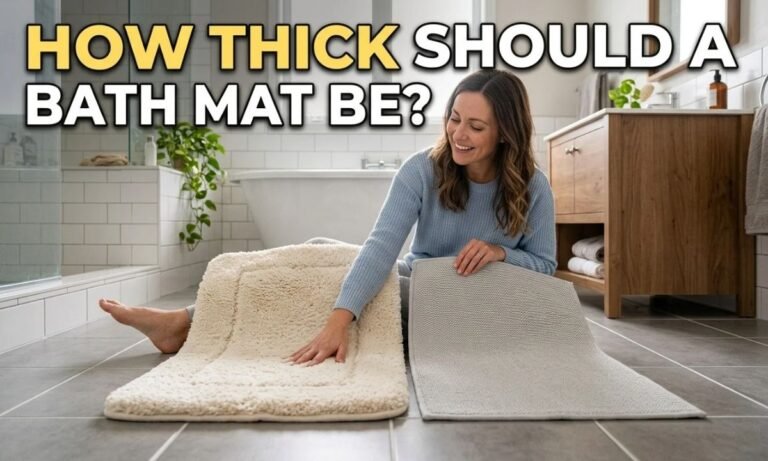
Learn how thick a bath mat should be for comfort, absorbency, drying, door clearance, and bathroom safety, with practical thickness ranges for different needs.



One Comment