Wash a rubber-backed bathroom rug with mild detergent and cool or lukewarm water if its care label allows machine washing. Use a gentle cycle, avoid bleach and fabric softener, and air-dry it away from direct heat.
In American homes, bathroom rugs help keep tile floors dry after showers and add comfort to busy family bathrooms. These rugs collect loose hair, dust, soap residue, and moisture every day. Regular cleaning helps remove that buildup, but a rug with a rubber backing needs more care than an ordinary cotton bath mat.
The key is to clean the fabric without damaging the layer underneath. Heat, harsh cleaners, and rough washing can cause rubber or latex backing to crack, peel, or lose its grip. Before washing, check the care label, inspect the backing, and choose a method that suits the rug’s material and condition.
Why Rubber-Backed Bathroom Rugs Need Special Care
A rubber-backed bathroom rug has two main parts: a soft upper layer and a backing designed to help the rug stay in place. The top may contain cotton, polyester, microfiber, chenille, or a blend of fibers. The underside may use natural rubber, synthetic rubber, latex, or a rubber-like coating.
These layers do not always respond to water, detergent, and heat in the same way. The fabric may tolerate a regular wash, while the backing can weaken if exposed to high temperatures or strong chemicals. A damaged backing may peel away or leave small pieces on the floor.
Bathroom moisture also creates a reason to wash rugs often enough. Damp fibers can hold soap residue, body oils, hair, and dirt. If the rug stays wet for long periods, unpleasant odors may develop.
Fabric care
The upper surface needs enough cleaning to remove dirt and residue without rough treatment that harms its fibers.
Backing care
The underside needs protection from excessive heat, harsh chemicals, and mechanical wear.
Drying care
The entire rug needs to dry well before it returns to the bathroom floor.
Rubber and Latex Are Not Always the Same
Some rugs use a flexible rubber layer, while others have a latex coating that can become brittle with age. The word rubber on a product description does not tell you every detail about its materials or washing limits. Follow the specific care label rather than assuming that all non-slip rugs can handle the same treatment.
Look for care symbols
Check for washing temperature, machine-wash permission, drying limits, and any warning against bleach or tumble drying.
Check the underside
If the backing feels sticky, flakes off, or has large cracks, avoid machine washing until you determine whether the rug can still be safely cleaned.
What to Check Before Washing the Rug
Start with the care label and the condition of the backing. These checks help you decide whether to use a washing machine, wash the rug by hand, or skip washing because the backing has deteriorated. Do not assume that a rug is machine washable simply because it is small enough to fit inside the washer.
If the label is missing, inspect the materials and choose the gentlest practical method. When the backing is fragile or the construction is unclear, hand washing is often the more cautious option. Test a small, hidden area with diluted detergent and water before cleaning the whole rug.
Read the care label
Look for permitted wash methods, water temperature, detergent restrictions, and drying instructions.
Inspect for damage
Check for loose rubber pieces, peeling edges, cracks, sticky spots, or areas where the backing separates from the fabric.
Remove loose debris
Shake the rug outdoors or over a suitable bin, then vacuum the fabric side if the material allows it.
Check washer capacity
Make sure the rug fits without crowding the drum and will not exceed the washer’s load limits when wet.
Gather the Right Cleaning Supplies
You usually need only a mild laundry detergent, a clean basin or suitable washer, and a place where the rug can air-dry. A soft brush or clean cloth can help with spots, but avoid stiff bristles that pull at the pile or scrape the backing.
Do not mix cleaning products to make a stronger solution. In particular, never mix chlorine bleach with ammonia or acidic cleaners. For routine rug washing, a mild detergent is generally a better starting point than a strong disinfectant.
Mild laundry detergent
Choose a product that suits the rug’s fabric and follow the label directions for the load size.
Soft cloth or brush
Use gentle pressure to lift stains without damaging the fibers or backing.
Drying space
Prepare a clean, ventilated area where the rug can dry fully without direct high heat.
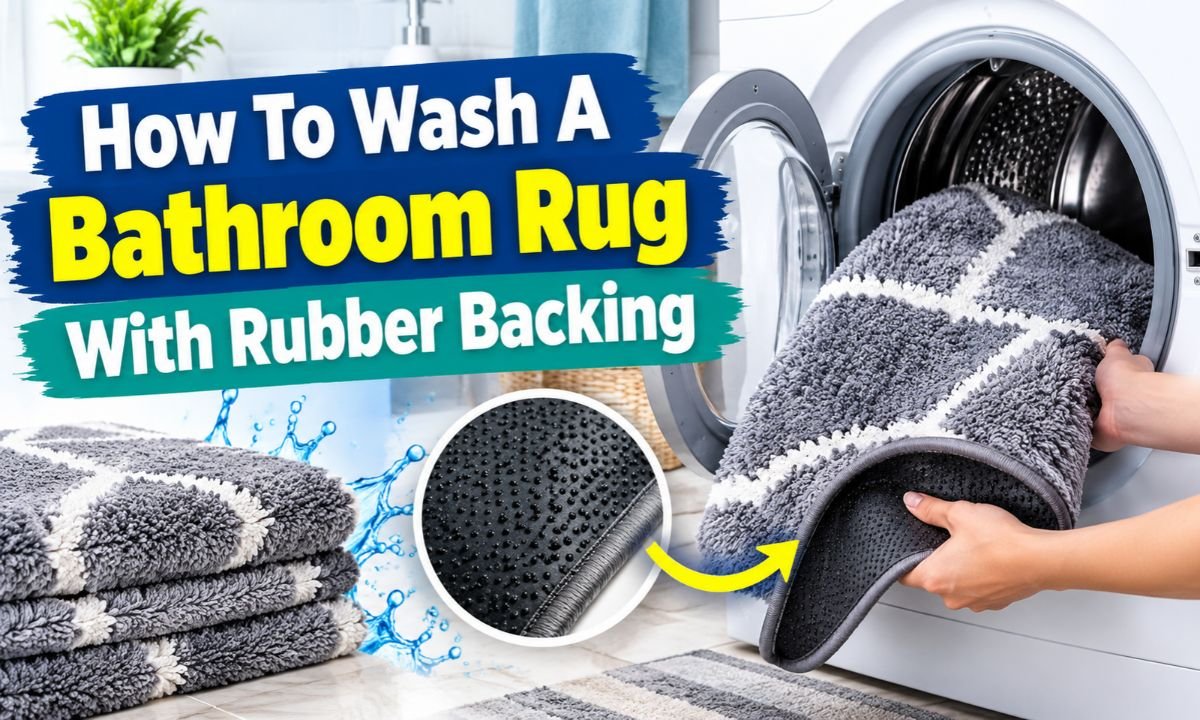
How to Wash a Bathroom Rug With Rubber Backing in a Washing Machine
If the care label permits machine washing, use a gentle cycle with cool or lukewarm water and a modest amount of mild detergent. Avoid high spin settings if the manufacturer warns against them. A gentle wash helps clean the fabric while reducing unnecessary stress on the backing.
The following steps suit many machine-washable rubber-backed rugs, but the product’s own instructions take priority. If the label says not to machine wash the rug, use a suitable hand-washing method instead.
Step 1: Shake out dirt
Remove hair, dust, lint, and loose debris before the rug goes into the washer. This reduces the amount of dirt and fiber entering the machine.
Step 2: Pre-treat visible stains
Apply a small amount of diluted mild detergent to the stained fabric. Blot or rub lightly with a soft cloth, then test for color changes first.
Step 3: Load the washer carefully
Place the rug in the drum without forcing it into a tight space. Wash it with similar colors and compatible items only if the washer instructions and rug label allow this.
Step 4: Add mild detergent
Measure the detergent according to its label and the load size. Too much detergent can leave residue in the fabric and may require an extra rinse.
Step 5: Choose a gentle cycle
Select the approved temperature and a delicate or gentle cycle. Avoid hot water unless the rug manufacturer specifically permits it.
Step 6: Use a suitable spin setting
Choose a low or moderate spin if allowed by the care label. If the rug is heavy or the washer becomes unbalanced, stop the cycle and follow the machine’s instructions.
Step 7: Remove the rug promptly
Take the rug out when the cycle ends. Do not leave it sitting wet in the drum for hours, as trapped moisture can contribute to odors.
Should You Wash the Rug With Towels?
Some care labels allow a rug to be washed with similar towels, but this is not a universal rule. A few compatible items may help distribute the load, yet too many heavy towels can overload the washer or prevent the rug from moving freely.
Avoid washing the rug with items that have hooks, zippers, rough edges, or colors that may bleed. Do not add a second rug merely to balance the load unless the washer’s instructions and the rugs’ care labels support that choice.
Check the total load
A wet rug can weigh much more than a dry one. Leave enough room for the washer to move the load as intended.
Avoid rough items
Heavy or abrasive laundry can cause extra friction and may damage the rug’s backing.
What if the Rug Is Too Large for the Washer?
Do not squeeze a large bathroom rug into a small washer. A crowded drum can prevent proper rinsing and place extra strain on the machine. Hand wash the rug if its label permits that method, or use a suitable larger machine when the manufacturer allows machine washing.
Use a suitable washer
Choose a machine that can handle the rug’s wet weight and size.
Do not force the load
If the drum cannot move freely, remove the rug and select another approved cleaning method.
How to Hand Wash a Rubber-Backed Bathroom Rug
Hand washing is a useful option when a rug is too large for your washer, when its label requires hand cleaning, or when you want to reduce the movement and friction of machine washing. It still requires care because soaking, scrubbing, and wringing can damage some backings.
Use a bathtub, large basin, or other clean surface that can safely hold the rug and water. Make sure the surface is suitable for the cleaning products you use, and never leave a heavy wet rug where it could create a slip or lifting hazard.
Step 1: Remove loose dirt
Shake or vacuum the dry rug as appropriate for its fabric. Remove hair and grit before adding water.
Step 2: Prepare a mild wash solution
Fill the basin with cool or lukewarm water and add a small amount of mild detergent. Follow the detergent label rather than guessing at a strong concentration.
Step 3: Clean the fabric gently
Press the wash water through the fibers with your hands or a soft cloth. Work on stained areas with light strokes instead of aggressive scrubbing.
Step 4: Limit soaking
Soak only as long as the care label allows. If no soaking time is given, clean the rug without leaving it submerged for an extended period.
Step 5: Rinse thoroughly
Drain the dirty water and rinse with clean water until detergent residue is gone. Do not direct forceful water jets at a backing that is already peeling.
Step 6: Remove excess water carefully
Press the rug gently against the basin or between clean towels. Do not twist, wring, or sharply fold the rubber backing.
Step 7: Air-dry completely
Lay the rug flat or hang it in a supported position if its construction allows. Ensure air reaches both sides and check that the backing is dry before reuse.
Can You Scrub the Rubber Side?
Avoid hard scrubbing on the rubber side. If the underside has loose dirt, wipe it gently with a damp cloth and mild soapy water, provided the care instructions permit this. Rinse away the soap with a clean, damp cloth and avoid soaking a backing that the manufacturer says must stay relatively dry.
If the underside is sticky, cracked, or shedding pieces, stop cleaning and inspect the damage. Washing will not restore a worn backing, and using a rug that has lost its grip may increase the chance of slipping.
Use light pressure
A soft cloth is less likely than an abrasive brush to scrape the coating.
Stop if material comes loose
Visible flakes or peeling during cleaning can signal that the backing is deteriorating.
Which Water Temperature and Detergent Should You Use?
Cool or lukewarm water is a cautious starting point for many rubber-backed bathroom rugs, but the care label determines the correct temperature. Hot water may harm some backing materials or weaken the bond between the fabric and the underside. A rug designed for a specific wash temperature should be cleaned according to those instructions.
Choose a mild laundry detergent that is suitable for the rug’s fibers. More detergent does not always mean a cleaner rug. Excess soap can remain trapped in a thick pile, making the surface feel stiff or causing the rug to attract more dirt.
Use a measured dose
Follow the detergent label and adjust for the actual load size. Avoid pouring in extra detergent to treat odor.
Skip fabric softener
Fabric softener can leave a coating on fibers and may affect absorbency. It is best avoided unless the rug manufacturer expressly permits it.
Avoid chlorine bleach
Bleach can discolor fabric and may damage backing materials. Use it only if the product label specifically permits the exact bleach type and method.
Do not use harsh solvents
Solvents and strong cleaning chemicals may attack the backing or release unwanted fumes.
Can You Use Vinegar to Remove Odors?
Vinegar is not required for routine cleaning, and it should not be treated as a guaranteed solution for every rug odor. Acids may affect certain materials, coatings, or dyes, so check the manufacturer’s guidance before using vinegar on the fabric or backing.
Start by washing with mild detergent, rinsing well, and drying the rug fully. If the smell remains, check whether the backing is breaking down or whether the rug is being returned to a damp floor before it has dried.
Do not mix products
Never mix vinegar with chlorine bleach or other cleaners. Dangerous fumes can result from incompatible cleaning chemicals.
Find the source of the odor
Persistent smells may come from trapped moisture, detergent residue, or deteriorating backing rather than surface dirt alone.
How to Dry a Bathroom Rug Without Damaging the Backing
Air-drying is generally the cautious choice for a rubber-backed bathroom rug unless its care label clearly permits a specific dryer setting. High heat can cause some backing materials to crack, curl, shrink, or separate from the fabric. Even when the top feels dry, moisture may remain in a thick pile or along the underside.
After washing, remove excess water without twisting the rug. Place it over a sturdy drying rack or lay it flat in a clean, ventilated area. If you hang it, support its weight so the wet fabric does not stretch or pull away from the backing.
Provide airflow
Leave space around the rug and, when practical, allow air to reach both sides.
Avoid direct high heat
Keep the rug away from radiators, hot vents, and other intense heat sources unless the manufacturer gives different instructions.
Turn the rug if needed
If the care instructions allow it, change its position during drying to help moisture escape from the underside.
Wait until it is fully dry
Check the thickest part of the pile and the backing before putting the rug back on the floor.
Can a Rubber-Backed Rug Go in the Dryer?
Only use a clothes dryer if the rug’s care label explicitly allows it and gives a suitable temperature or cycle. Some rugs can tolerate limited low-heat drying, while others require air-drying. If the label is missing or unclear, air-drying avoids the risk of exposing the backing to unsuitable heat.
Do not assume that a no-heat or air-fluff cycle is approved for every rug. Tumbling can still bend, rub, or stress a backing that has started to deteriorate.
Follow the label
Use the exact drying method and limits listed by the manufacturer.
Inspect after drying
Look for curling, peeling, cracking, or loose fragments before using the rug again.
How Can You Tell When the Rug Is Dry?
Touch the fabric in thick areas and feel the underside, edges, and corners. If any section feels cool and damp or has a musty smell, allow more drying time. Do not place the rug on a smooth bathroom floor while moisture remains underneath.
Check both sides
The fabric and backing can dry at different rates.
Check the drying area
Poor airflow and high humidity can slow drying, especially in small bathrooms.
How Often Should You Wash a Rubber-Backed Bathroom Rug?
Wash frequency depends on how often the rug gets wet, how many people use the bathroom, whether pets walk across it, and how quickly it dries. A rug used by several people each day may need more frequent cleaning than one in a guest bathroom used only now and then.
There is no single schedule that suits every home or rug. Use visible dirt, odor, dampness, and the care label to guide your routine. If the rug stays damp between showers, improve drying and ventilation rather than relying on washing alone.
Busy family bathroom
Inspect the rug often and wash it when it becomes soiled, develops odor, or no longer feels fresh. A weekly wash may suit some households if the label permits it.
Guest bathroom
Wash after periods of frequent use or when the rug is visibly dirty. Store it clean and fully dry between uses if the bathroom is rarely used.
Pet-friendly bathroom
Remove hair and dirt regularly, and wash as needed when the rug picks up pet debris or odors.
Damp or poorly ventilated bathroom
Hang the rug to dry after use when practical, and address poor airflow or leaks that keep the floor and backing wet.
A Simple Between-Wash Routine
Small daily habits can reduce the amount of grime that builds up between washes. Shake out loose hair when practical, lift the rug after heavy use, and let the underside dry. If the bathroom has an exhaust fan, use it as intended to help remove moisture from the room.
Lift the rug
Allow air to reach the floor and backing after showers.
Clean the floor beneath it
Remove dust and moisture before replacing the dry rug.
Inspect the backing
Look for changes in texture, cracks, peeling, and loss of grip.
Common Washing Mistakes and How to Avoid Them
Most problems arise when a rug is cleaned more aggressively than its materials allow. High heat, excess detergent, hard scrubbing, and poor drying can leave the fabric clean while damaging the backing. A gentle process and a careful inspection after washing help you catch issues before putting the rug back into use.
Using hot water without checking
Why it fails: Some backings cannot tolerate high temperatures. What to do instead: Follow the care label and choose cool or lukewarm water when permitted.
Adding too much detergent
Why it fails: Excess soap may remain in thick fibers and contribute to residue or odor. What to do instead: Measure the detergent and rinse thoroughly.
Using fabric softener
Why it fails: A coating may affect the way the fabric absorbs water. What to do instead: Skip it unless the manufacturer specifically approves it.
Wringing the rug
Why it fails: Twisting can stress the bond between the fabric and backing. What to do instead: Press out water gently or use clean towels.
Drying on a hot radiator
Why it fails: Direct heat may damage the backing. What to do instead: Use a ventilated drying area away from intense heat.
Putting a damp rug back on the floor
Why it fails: Moisture can become trapped underneath and may leave the floor wet. What to do instead: Wait until both sides are fully dry.
Ignoring loose backing
Why it fails: Damaged material may continue to peel during washing or use. What to do instead: Stop and assess whether the rug needs replacement.
Why Does the Backing Peel After Washing?
Peeling can result from age, repeated wear, unsuitable heat, harsh cleaning, or a weakening bond between the fabric and backing. One wash may reveal damage that had already begun. Peeling does not automatically prove that a particular wash setting caused the problem.
If only a tiny edge has lifted, check whether the manufacturer offers a repair method that is suitable for the material. Do not apply random glue or coating to the underside because it may alter the grip, damage the floor, or create a new residue problem. If the backing is broadly cracked or shedding, replacement is usually the more practical option.
Check the whole underside
Look for widespread cracking, sticky patches, flaking, and separation.
Do not rely on damaged grip
A rug that slides or sheds backing should not be used as a non-slip mat.
What if the Rug Still Smells After Washing?
First, confirm that the rug has dried completely. Then check for detergent residue, trapped debris, and signs that the backing itself is breaking down. If the odor remains after a suitable wash and full drying, repeat cleaning only if the care label allows it.
A persistent musty smell may also point to moisture beneath the rug or poor bathroom ventilation. Clean and dry the floor before replacing the rug, and investigate any ongoing leak or damp patch rather than masking the smell with fragrance.
Rinse again if residue remains
Use clean water and the approved wash method to remove excess detergent.
Inspect for deterioration
A strong odor from a sticky, cracked, or flaking backing may mean the rug has reached the end of its useful life.
Troubleshooting: What Went Wrong After Washing?
If the rug looks or feels different after cleaning, identify the symptom before trying another product or wash cycle. A second wash will not fix every problem, and repeated cleaning may cause more damage if the backing is already failing.
The rug feels stiff
Possible cause: Detergent residue or dried fibers. Next step: If the backing remains sound, rinse again using the approved method and air-dry.
The rug smells musty
Possible cause: Incomplete drying, trapped moisture, or a deteriorating backing. Next step: Dry both sides, clean the floor beneath it, and inspect the underside.
The backing has curled
Possible cause: Heat exposure, age, or material stress. Next step: Stop using high heat and check whether the rug still lies flat and grips the floor.
Rubber flakes are coming off
Possible cause: Backing deterioration. Next step: Stop machine washing and assess whether replacement is needed.
The rug slides on tile
Possible cause: Worn backing, soap residue on the floor, or a damp underside. Next step: Clean and dry the floor, then test the rug only if the backing appears intact.
The washer becomes unbalanced
Possible cause: A heavy wet rug or an uneven load. Next step: Stop the machine safely and follow its instructions before redistributing or removing the load.
When Should You Replace the Rug?
Replace a bathroom rug when the backing is widely cracked, sheds pieces, separates from the fabric, or no longer holds the rug in place. A clean upper surface does not make a damaged non-slip backing safe. The same applies if the rug curls up at the edges and creates a tripping hazard.
If the fabric is still sound but the backing has failed, check whether the manufacturer provides a safe repair option. Otherwise, choose a replacement designed for your floor type and follow its care instructions from the start.
Replace for loss of grip
A rug that slides underfoot may increase the risk of a fall, especially on smooth tile.
Replace for severe deterioration
Widespread flakes, cracks, or separation are signs that cleaning is unlikely to restore the backing.
A Quick Decision Guide for Rubber-Backed Rugs
Use this table to choose a cleaning method based on the rug’s care label and condition. It is a practical starting point, not a substitute for instructions supplied with a particular product.
Machine washable and backing intact
Use the approved gentle cycle, mild detergent, and permitted water temperature. Air-dry unless the label clearly allows another method.
Hand wash only
Clean in a basin with mild detergent and cool or lukewarm water if allowed. Rinse gently and avoid twisting.
Care label missing
Inspect the backing and test a hidden area. Use cautious hand cleaning if the materials appear sound, or contact the manufacturer if the material is unclear.
Backing cracked or peeling
Avoid machine washing and do not rely on the rug for slip resistance. Check repair guidance or replace it.
Rug remains damp or smelly
Improve airflow, dry both sides fully, and check the floor beneath the rug. Inspect for backing damage if the smell persists.
The Safest Default When Instructions Are Unclear
When you cannot find the care label, do not assume that hot water, a dryer, or a strong stain remover is safe. Begin with loose-debris removal and a small spot test using a mild detergent solution. If the backing is already damaged or the rug’s material reacts poorly to water, stop and seek manufacturer guidance.
Choose the least aggressive suitable method
Avoid high heat, forceful scrubbing, long soaking, and twisting.
Confirm before using chemicals
Do not apply bleach, solvents, or other strong products unless the care instructions allow them.
Research Notes and Useful Next Questions
The central cleaning advice in this guide is based on general textile-care principles: follow the product label, use an appropriate detergent, avoid unapproved heat, rinse well, and dry fully. Exact temperature limits, dryer permissions, and chemical restrictions depend on the rug’s materials and manufacturer.
No direct hands-on washing test or review of a named rug model is claimed here. The supplied image list contains one unique image URL, and that URL includes a thumbnail path that conflicts with the stated image rules. It is repeated in the image fields only to preserve the supplied URL without inventing alternatives; it should be replaced by seven verified, distinct, compliant image assets before publication.
Reader question: Can I use hot water?
Basis: Inferred next need from the washing task. Answer: Only when the rug’s care label explicitly permits the temperature.
Reader question: Why is the rug still smelly?
Basis: Inferred next need after washing. Answer: Check incomplete drying, soap residue, moisture beneath the rug, and backing deterioration.
Reader question: Can I use the dryer?
Basis: Inferred next need during drying. Answer: Use a dryer only when the manufacturer permits the specified cycle.
Reader question: How often should I wash it?
Basis: Inferred next need for ongoing care. Answer: Set the schedule by use, visible soil, odor, dampness, and label guidance.
Frequently Asked Questions
Q
Can I wash a rubber-backed bathroom rug in a washing machine?
Yes, if the rug’s care label permits machine washing and the backing is in good condition. Use the approved water temperature, a gentle cycle, and mild detergent. If the label says hand wash only or the backing is peeling, do not put it in the machine.
Q
Can I wash a rubber-backed bath mat with towels?
You can wash it with compatible towels if both care labels allow the same settings and the washer has enough room. Avoid overloading the drum or adding rough items that may cause extra friction. Washing the rug alone may be more suitable for a small or delicate load.
Q
Should I use fabric softener on a bathroom rug?
It is best to avoid fabric softener unless the manufacturer specifically approves it. Softener can leave residue on fibers and may reduce the way some fabrics absorb water. Mild detergent and a thorough rinse are usually sufficient for routine cleaning.
Q
How do I remove a musty smell from a rubber-backed rug?
Wash the rug using its approved method, rinse out detergent, and dry both sides completely. Clean and dry the floor underneath before putting it back. If the smell persists or the backing feels sticky, cracked, or flaky, the material may be deteriorating and replacement may be needed.
Q
Can I put a rubber-backed bathroom rug in the dryer?
Only if the care label explicitly permits machine drying and specifies an appropriate setting. High heat can damage some rubber and latex backings. When instructions are missing or unclear, air-dry the rug in a well-ventilated area.
Q
Can I use bleach on a rubber-backed bathroom rug?
Do not use chlorine bleach unless the manufacturer specifically permits it for that rug. Bleach can discolor some fabrics and damage certain backing materials. Never mix bleach with vinegar, ammonia, or other incompatible cleaning products.
Q
Why is my bathroom rug slippery after washing?
The floor or backing may still be damp, soap residue may remain, or the backing may have worn down. Clean and dry the floor, then inspect the underside. Do not keep using the rug as a non-slip mat if it slides, curls, or sheds backing material.
✦ Wrapping Up
Conclusion
The best way to wash a bathroom rug with rubber backing is to follow its care label, use mild detergent, and avoid unapproved heat or harsh chemicals. Machine washing is suitable for rugs labeled as machine washable, while gentle hand washing is a useful option for rugs that require more care.
Drying matters as much as washing. Allow air to reach both sides, wait until the rug is completely dry, and inspect the backing before returning it to the floor. If the rubber layer cracks, peels, or loses its grip, replace the rug rather than relying on it to prevent slips.
💡 Key Takeaway
Check the care label and backing first, wash with mild detergent using an approved gentle method, and air-dry fully before putting the rug back on the bathroom floor.






One Comment