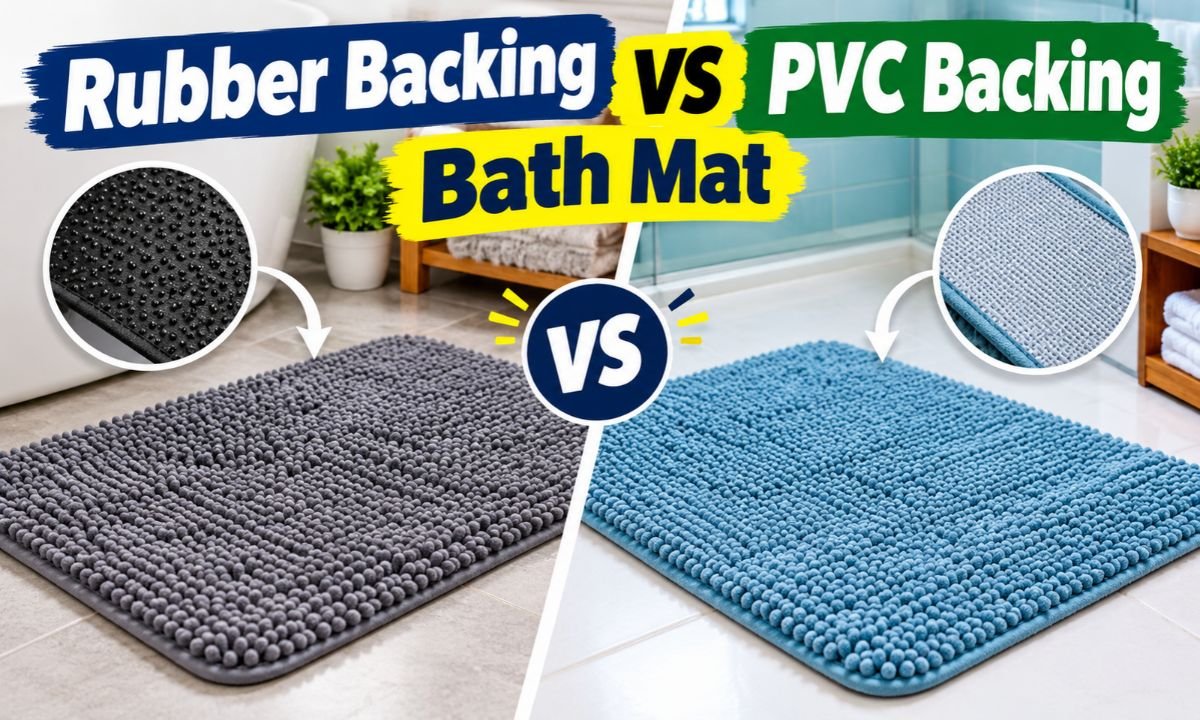
Rubber backing often offers flexible grip, while PVC backing can provide a firm, water-resistant base. The better choice depends on floor type, moisture, care needs, and the mat’s design.
In American homes, a bath mat helps keep water off the floor after a shower or bath. It can also make a bathroom feel warmer and more comfortable. When shopping at a US home store or online, you may see mats with rubber or polyvinyl chloride, also called PVC, backing. Both materials can help a mat stay in place, but they do not perform the same way in every bathroom.
The key is to look beyond the material name. Rubber-backed mats may offer a flexible base, while PVC-backed mats may have a firmer feel and can resist water. Yet grip, drying time, floor compatibility, and service life also depend on the backing formula, surface texture, fabric, and care instructions. A well-made mat with the right backing for your floor can be more useful than a cheaper mat with a label that sounds better.
Source: arcmats.com
What Is the Difference Between Rubber and PVC Bath Mat Backing?
Rubber and PVC are different materials used to form the bottom layer of a bath mat. That layer can help the mat grip the floor, protect the underside of the fabric, and limit water from passing through. The exact performance depends on how the backing is made and how it is attached to the rest of the mat.
Rubber is an elastic material that can bend and flex. Bath mats may use natural rubber, synthetic rubber, or a blend. These materials are not identical, so two mats sold as rubber-backed can have different levels of grip, flexibility, and resistance to cleaning products.
PVC is a type of plastic made from polyvinyl chloride. It can be formulated to be flexible or relatively firm. Manufacturers use PVC in many household products because it can be shaped into different textures and thicknesses. In a bath mat, it may form a solid backing, a textured base, or part of a foam-like structure.
Neither name tells you everything you need to know. A textured PVC backing may grip one floor better than a smooth rubber backing, while a rubber formula designed for traction may perform well on another surface. Read the product details and look for clear instructions about the intended floor type.
Source: housediamond.com
Rubber backing
An elastic base that may offer good grip and flexibility. Its performance depends on the rubber type, texture, condition, and compatibility with the floor.
PVC backing
A plastic base that can be made firm or flexible. It may resist water well, but its grip and long-term behavior vary by formulation and design.
Fabric surface
The top layer that touches your feet. Cotton, microfiber, chenille, and other fabrics affect softness, absorbency, and drying.
Why the Backing Material Matters
A bath mat sits between a wet foot and a hard floor. If its underside moves easily, the mat can slide when someone steps onto it. A suitable backing helps reduce that movement, but it cannot remove every risk, especially when soap or water gets between the mat and the floor.
The backing also affects care. Some materials need gentle washing, while others may be damaged by high heat, harsh chemicals, or repeated folding. A mat that looks fine on top may still need replacement if its underside cracks, peels, curls, or loses grip.
Grip
Choose a backing designed for your exact floor surface, and keep both the floor and the mat underside clean.
Floor contact
Check whether the manufacturer permits use on your tile, vinyl, laminate, stone, or other flooring.
Long-term care
Follow the care label to help prevent damage to the backing and its bond with the fabric.
Rubber Backing vs PVC Backing Bath Mat: Side-by-Side Comparison
Rubber backing is often worth considering when flexibility and grip are priorities. PVC backing can be useful when you prefer a firmer base or a backing designed to resist water. However, these are general material traits, not guarantees about every finished bath mat.
The table below compares common design considerations. Treat each point as a guide for checking a specific product, rather than a universal ranking of all rubber and PVC mats.
Source: sc04.alicdn.com
Grip
Rubber can provide useful traction, but a textured PVC base may also grip well. The floor surface and backing design matter more than the name alone.
Flexibility
Rubber is generally elastic. PVC can be flexible or firm, depending on its formulation and construction.
Water resistance
Both materials can help limit water penetration through the backing. A water-resistant underside does not make the whole mat waterproof.
Comfort
The upper fabric and padding usually have a greater effect on foot comfort than the backing material by itself.
Care
Both materials need care suited to their construction. Machine washing, heat exposure, and chemical tolerance depend on the product label.
Floor compatibility
Either material may be unsuitable for some finishes. Confirm the product’s stated compatibility before placing it on the floor.
Which Backing Has Better Grip?
There is no reliable winner based on material name alone. Grip depends on the backing’s texture, contact area, flexibility, and ability to stay flat against the floor. A clean, dry floor can also make a major difference.
If the mat is meant for smooth bathroom tile, check that the manufacturer specifically approves it for that surface. A mat made for carpet may not grip hard tile well. Likewise, a mat intended for a shower floor is not automatically suitable for use outside a tub or shower.
Do not assume that a rubber label means a mat cannot slip. Soap residue, dust, loose fibers, and moisture under the backing can all affect traction. If the mat shifts when you press it with your hand or foot, stop using it until you can correct the problem or replace it.
Check the surface
Use the mat only on a floor type approved by the manufacturer.
Check the fit
Choose a mat that lies flat without curled corners or raised edges.
Check it often
Replace a mat if its backing becomes slick, cracked, detached, or unable to stay in place.
Which Backing Handles Water Better?
Rubber and PVC can both be made resistant to water. PVC is often used in products that need a plastic barrier, while rubber can also resist water depending on the type and formulation. Neither property proves that water cannot pass through seams, stitching, worn spots, or the fabric above the backing.
A mat that keeps water from reaching the floor may still trap dampness underneath. That moisture can leave the floor wet for longer and may contribute to odors or surface damage if it is not allowed to dry. Lift the mat after a shower and check the floor beneath it instead of assuming that a water-resistant backing solves the problem.
For frequent showers
Prioritize a mat that dries well, is easy to lift, and has clear washing and drying instructions.
For wet floors
Remove standing water and dry the floor before putting the mat back.
Durability: Which Backing Lasts Longer?
The longer-lasting option depends on material quality, use, cleaning, and the bond between the backing and the fabric. A well-made rubber-backed mat may remain flexible for a long time, while a poorly made one may harden, crack, or separate. PVC backing can also wear, split, or become less flexible under unsuitable conditions.
Bathroom conditions can speed up wear. Repeated wetting, body oils, cleaning products, direct sunlight, high heat, and frequent washing may affect the backing. Dragging the mat across a rough floor can also damage its underside.
There is no dependable lifespan that applies to all rubber-backed or PVC-backed bath mats. Instead of relying on a fixed replacement schedule, check the mat regularly for damage, poor grip, peeling, odor that remains after cleaning, and signs that moisture is being trapped underneath.
Source: rugstars.co.uk
Cracking
Small cracks can spread and may signal that the backing is losing its ability to stay intact.
Peeling or separation
If the backing separates from the fabric, the mat may no longer lie flat or function as intended.
Loss of grip
A mat that slides more than it used to should be checked and removed from use if it cannot be made stable.
Persistent odor
A lingering smell may indicate trapped moisture or buildup. Clean and dry the mat according to its care label, and replace it if the issue remains.
How to Extend the Life of Either Backing
Good care can help either type last longer. First, follow the care label rather than assuming the mat can go in a washing machine or dryer. Some backings may be damaged by heat, while some fabric and backing combinations require hand washing.
After use, lift the mat so air can reach the underside and the floor. Hang it in a well-ventilated spot when the care instructions allow. Avoid folding a wet mat tightly or leaving it bunched against a wall, where moisture can remain trapped.
Use cleaning products approved for the material. Strong solvents, bleach, or abrasive tools may damage certain backing compounds. If the manufacturer does not state that a cleaner is suitable, do not assume it is safe to use.
Wash as directed
Use the stated water temperature, detergent type, and wash method.
Dry fully
Allow both the fabric and the backing to dry before returning the mat to the floor.
Avoid excess heat
Do not tumble-dry or place the mat near a heat source unless the care instructions permit it.
Inspect the underside
Look for splits, peeling, sticky patches, discoloration, and changes in flexibility.
Absorbency and Drying Time Depend on More Than the Backing
If you want a bath mat that absorbs water well, pay close attention to its upper fabric. Cotton, microfiber, and chenille can absorb water in different ways. The amount of fabric, pile height, padding, and airflow also affect how quickly the mat dries.
Rubber or PVC backing does not automatically make a mat absorbent. The backing sits beneath the fabric and may limit water passing through the bottom. A mat with a thick, absorbent top can still take a long time to dry if the underside blocks airflow or the mat stays flat on a damp floor.
This matters in US homes where several people use the same bathroom each day. A mat that remains damp between showers may feel unpleasant and can develop odors. In a busy bathroom, easy drying and simple care may be more useful than a backing material chosen on its name alone.
Source: m.media-amazon.com
Cotton
Often valued for absorbency and a familiar towel-like feel. A thick cotton mat may need enough airflow and time to dry fully.
Microfiber
Can feel soft and absorb water quickly, depending on its construction. Thickness and backing still affect drying.
Chenille
Its textured yarns can feel plush and pick up moisture. Dense designs may hold water longer than thinner ones.
Thin fabric mats
May dry faster than thick mats under similar conditions, though absorbency and comfort can differ.
How to Tell Whether a Mat Dries Well
Look for care instructions that explain washing and drying. Product photos may show the surface, but they rarely prove how quickly a mat dries in a real bathroom. Unless a manufacturer provides a clear test method, avoid treating claims such as quick-drying as a measured guarantee.
Consider the room as well as the product. A small bathroom with limited airflow can keep a mat damp for longer than a larger room with an open door and good ventilation. If the mat is still wet underneath hours after use, lift it more often, improve airflow where practical, or consider a thinner design.
Lift the mat
Let air reach both sides instead of leaving the backing flat against a damp floor.
Check the floor
Wipe away moisture under the mat before laying it down again.
Choose the right thickness
A less bulky mat may be easier to dry if your bathroom has limited ventilation.
Floor Compatibility: Tile, Vinyl, Laminate, and Wood
The floor under your bath mat should guide your purchase. A backing that works on ceramic tile may not be suitable for every vinyl plank, laminate, natural stone, or finished wood floor. The backing ingredients and the floor’s protective finish can interact, especially when moisture or heat is present.
Some flooring makers warn against certain rubber-backed mats because particular backing compounds can stain, discolor, or affect the finish. PVC is not automatically safe either. The exact backing formulation, floor coating, and conditions matter, so do not rely on a broad claim that one material is safe for every surface.
If you have luxury vinyl plank, laminate, sealed wood, or natural stone, check the flooring manufacturer’s care guidance first. Then confirm that the bath mat maker approves the backing for that floor type. When the instructions conflict, follow the more restrictive guidance or ask the manufacturer for clarification.
Source: dubairubbermats.com
Ceramic or porcelain tile
Check the backing’s grip on the actual tile and grout layout. A smooth, wet tile surface can still be slippery.
Vinyl flooring
Confirm that the backing is compatible with the flooring finish. Do not assume every rubber or PVC compound is safe.
Laminate
Prevent water from remaining under the mat. Check both the floor maker’s rules and the mat’s care guidance.
Finished wood
Use only a backing approved for the finish, and lift the mat often so trapped moisture does not remain against the surface.
Natural stone
Follow the stone supplier’s advice about backing compatibility, cleaning agents, and moisture.
What If You Are Unsure About Your Floor?
Do not test an unknown backing by leaving it on a valuable floor for days. Start by reading the product and flooring instructions. If the compatibility remains unclear, contact the manufacturer and describe the exact floor material and finish.
Once you have confirmed compatibility, keep the mat clean and dry the floor underneath it on a regular basis. Inspect the surface for discoloration or changes in finish. If you see a problem, remove the mat and seek advice from the flooring maker before trying cleaning chemicals.
Do not guess
Material names alone do not prove compatibility with a particular floor finish.
Avoid trapped moisture
Lift the mat after use and dry both the floor and backing.
Cleaning and Maintenance: What Should You Check?
The safest cleaning method is the one approved for the finished mat. Some rubber-backed bath mats can be machine-washed on a gentle cycle, while others require hand washing. PVC-backed mats also vary, so the backing material alone cannot tell you whether a washer or dryer is suitable.
Before washing, remove loose hair and dust from the surface and underside. Use a cleaner and water temperature permitted by the care label. Do not add bleach, solvents, or strong cleaning agents unless the maker says they are safe for the specific mat.
After washing, inspect the backing before putting the mat back. Look for a change in texture, a sticky feel, peeling, cracks, or edges that curl upward. If the mat no longer lies flat or grips the floor as intended, replacing it is safer than trying to repair a damaged backing with household glue.
Source: m.media-amazon.com
Read the label
Check whether the mat allows machine washing, hand washing, air drying, or tumble drying.
Clean the underside
Remove dirt and residue that can interfere with contact between the backing and the floor.
Dry before reuse
Make sure the fabric and backing are dry enough for the mat to lie flat without trapping moisture.
Skip improvised repairs
Glue and other household fixes may change the backing’s grip or damage the floor.
How Often Should You Wash a Bath Mat?
There is no single washing schedule that fits every household. A mat used by several people, exposed to frequent splashes, or left damp in a poorly ventilated room may need more frequent washing than one used in a dry guest bathroom.
Use visible dirt, odor, dampness, and the care label to guide your routine. Wash the mat when needed, and do not let a wet mat sit on the floor for long periods. If it remains musty after correct cleaning and complete drying, replacement may be the more practical choice.
Daily habit
Hang or lift the mat after use when practical, and let the underside air out.
Regular inspection
Check for residue, persistent dampness, and changes in the backing.
Which Backing Should You Choose for Your Bathroom?
Choose the backing that fits your floor, care routine, and need for traction. Rubber may suit someone looking for a flexible base, while a suitable PVC design may work for someone who prefers a firmer backing. Neither should be chosen without checking the product’s intended use and floor compatibility.
For a family bathroom, easy cleaning and reliable grip may matter most. For a guest bathroom, a mat that is easy to lift and dry may be more useful. If the floor is delicate or the bathroom stays damp, compatibility and moisture management should come before color or softness.
Think about the full mat rather than one layer. A thick, soft top with a poor backing can be a bad fit, just as a grippy backing with a fabric surface that stays wet may not suit a busy household. The most useful choice balances grip, drying, comfort, cleaning, and floor protection.
Source: 5.imimg.com
Choose rubber when
The specific product offers suitable grip and flexibility, is approved for your floor, and fits your care routine.
Choose PVC when
The product has the right texture and firmness for your needs, with clear floor compatibility and maintenance instructions.
Prioritize quick drying when
The bathroom has limited airflow or several people use it throughout the day.
Prioritize floor protection when
You have vinyl, laminate, finished wood, natural stone, or another surface that may react to unsuitable backing materials.
A Simple Bath Mat Buying Checklist
Before buying, check the label and product details rather than relying on a short listing title. The details should tell you what the backing is made from, what floor types it suits, how to clean it, and whether the mat is intended for use outside a shower or tub.
If a listing does not answer a key safety question, ask the manufacturer before buying. A low price is less useful if the mat slides, damages the floor, or needs frequent replacement. Choose a product that fits the room and that you can maintain correctly.
Material
Confirm whether the backing is rubber, PVC, a blend, or another material.
Floor suitability
Check that the backing is approved for your bathroom floor and its finish.
Traction
Look for a design made for your surface, and ensure the mat lies flat.
Care
Confirm the permitted wash method and drying instructions.
Size and placement
Choose a size that fits the space without blocking a door or creating a raised edge in a walking path.
Replacement signs
Plan to replace the mat if it cracks, peels, curls, develops persistent odor, or loses grip.
Common Mistakes to Avoid
The biggest mistake is assuming that a backing material guarantees safety. Rubber and PVC are broad material categories, and their finished products can vary in texture, flexibility, and traction. A label alone cannot prove that a mat will remain stable on every wet bathroom floor.
Another mistake is focusing only on absorbency. A mat may soak up water well but still trap dampness beneath its backing. Likewise, a backing that limits water penetration may not stop the upper fabric from becoming saturated.
Do not ignore the floor maker’s care rules. Some floor finishes can be affected by unsuitable backing compounds or prolonged moisture. A mat that is safe for one type of tile or vinyl is not necessarily safe for another surface.
Finally, do not keep using a mat with a damaged underside. Tape, glue, or other improvised fixes can create uneven spots and may introduce new compatibility problems. When the mat no longer lies flat or stays in place, replace it.
Source: mul-t-mat.ca
Mistake: Buying by material name alone
Better approach: Compare the actual design, stated floor compatibility, and care instructions.
Mistake: Leaving the mat wet on the floor
Better approach: Lift it after use and allow air to reach the backing and floor.
Mistake: Assuming all mats are machine-washable
Better approach: Follow the exact washing and drying instructions for the product.
Mistake: Ignoring slipping or curled edges
Better approach: Stop using a mat that moves or creates a trip hazard until the problem is corrected.
When Is a Bath Mat Not the Right Safety Tool?
A fabric bath mat with rubber or PVC backing is not the same as a purpose-built shower or bathtub safety mat. It should not be placed inside a tub or shower unless the manufacturer explicitly designs and approves it for that use.
People who need added support while standing or stepping out of a shower may need more than a bath mat. Properly installed grab bars and other suitable bathroom safety features may help address risks that a floor mat cannot. If balance or mobility is a concern, consider advice from a qualified health or home-safety professional.
Outside the shower
Use a bath mat intended for the bathroom floor and approved for that surface.
Inside the tub
Use only a product specifically designed for tub or shower use, and follow its installation instructions.
For extra support
Do not rely on a bath mat as a substitute for suitable grab bars or other safety measures.
What the Available Evidence Can and Cannot Tell You
General material properties help explain why rubber and PVC behave differently, but they do not establish a universal winner for bath mats. A useful comparison would test specific products on defined floor surfaces, under the same conditions, and after repeated washing and drying. Without that information, claims about which backing lasts longer or grips better should remain qualified.
Manufacturer descriptions can establish the materials and care instructions a company reports for its product. They do not automatically prove independent performance or compatibility with every bathroom floor. Likewise, customer comments may point to issues worth checking, but one person’s experience does not establish how all mats made from the same material will perform.
For this guide, the recommendations are based on general material distinctions and practical decision analysis, not hands-on testing of the seven pictured products. No comparative slip test, drying-time measurement, floor-finish test, or durability test has been conducted here. That limit matters because backing formulas and mat construction can differ even when the product labels use the same material name.
Source: arcmats.com
Documented product information
Use the exact manufacturer’s material description, care label, and stated floor compatibility when evaluating a particular mat.
General material analysis
Rubber is elastic, and PVC can be made firm or flexible. These traits help frame the comparison but do not rank finished products by performance.
Not established here
No universal winner, exact lifespan, measured drying time, or verified slip-resistance rating has been established for rubber-backed versus PVC-backed bath mats.
A Practical Way to Compare Two Specific Mats
If two mats appear similar, compare their care labels, backing descriptions, dimensions, and stated floor compatibility. Give more weight to clear, relevant product information than to broad phrases such as premium grip or extra durable.
If a manufacturer provides a test result, check what was tested, on which surface, and under what conditions. A result for dry tile may not predict performance on a soapy or damp floor. A durability claim without a method or comparison should not be treated as proof that one backing lasts longer.
Compare like with like
Look at similar mat sizes, top fabrics, thicknesses, and intended uses.
Check the test conditions
See whether a grip or durability claim names the surface, method, and relevant use conditions.
Favor clear instructions
A mat with specific cleaning and compatibility guidance is easier to assess than one with vague claims.
Frequently Asked Questions
Q
Is rubber backing better than PVC backing for a bath mat?
Not in every case. Rubber may offer flexibility and useful grip, while PVC can provide a firm or flexible water-resistant base. The better option depends on the specific backing, floor type, mat construction, and care instructions.
Q
Which bath mat backing is less likely to slip?
Neither material guarantees a slip-free mat. Texture, backing quality, floor compatibility, and cleanliness affect grip. Choose a product approved for your floor, keep the underside clean, and stop using the mat if it moves or curls.
Q
Can rubber-backed bath mats damage vinyl or laminate floors?
Some backing compounds may discolor or affect certain floor finishes, so compatibility must be checked for the exact product and flooring. PVC backing is not automatically safe either. Read both manufacturers’ guidance and avoid leaving moisture trapped under the mat.
Q
Does PVC backing make a bath mat waterproof?
No. PVC backing may resist water, but that does not make the entire mat waterproof. Water may pass through seams, worn areas, or the upper fabric, and moisture can still collect underneath. Lift the mat after use and dry the floor.
Q
Which backing dries faster after a shower?
The backing material alone cannot determine drying time. The top fabric, padding, mat thickness, airflow, and moisture level all matter. A thin mat with an easy-care surface may dry faster than a thick, dense mat, regardless of whether its backing is rubber or PVC.
Q
Can I machine-wash a rubber-backed or PVC-backed bath mat?
Only if the manufacturer permits it. Some mats can be machine-washed, while others need hand washing or special drying methods. Follow the exact care label and avoid high heat or strong cleaners unless the instructions say they are suitable.
Q
How can I tell when a bath mat needs replacing?
Replace it when the backing cracks, peels, curls, becomes sticky, or loses grip. Persistent odor after proper cleaning and drying is another reason to consider replacement. A damaged mat may no longer stay flat or perform as intended.
✦ Wrapping Up
Conclusion
When comparing rubber backing vs PVC backing bath mat options, focus on the whole product rather than the material name alone. Rubber can offer flexibility and useful traction, while PVC can provide a firm or flexible base that resists water. Neither material guarantees better grip, longer life, or universal floor compatibility.
For a bathroom in a US home, start with the floor type and the manufacturer’s compatibility guidance. Then compare grip, fabric absorbency, drying needs, cleaning instructions, and the condition of the backing. A mat that stays flat, dries fully, and suits your floor is a more useful choice than one selected only because its backing sounds better.
Keep the mat clean, lift it after use, and let both sides dry. Check the backing regularly for damage, and replace the mat if it begins to slide or no longer lies flat. These simple habits help you get more value from either material while reducing avoidable bathroom hazards.
💡 Key Takeaway
Before buying, confirm floor compatibility, read the care label, and choose a backing that stays flat and provides suitable grip on your actual bathroom floor.
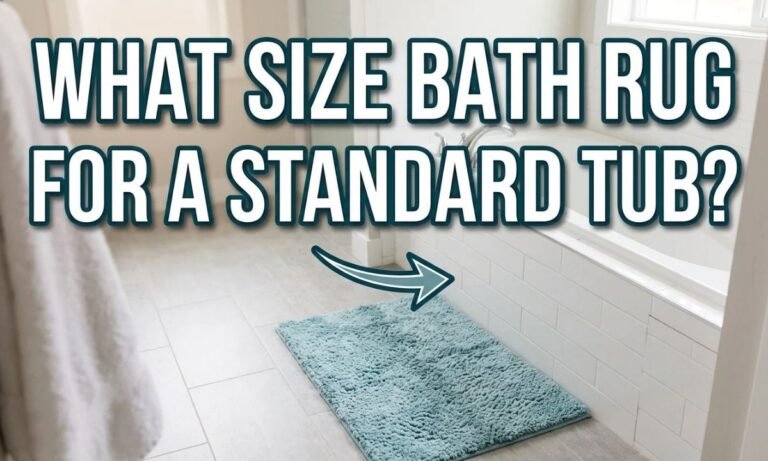
Learn what size bath rug fits a standard U.S. tub, how to measure your bathroom, which common sizes work best, and how to avoid door and clearance problems.