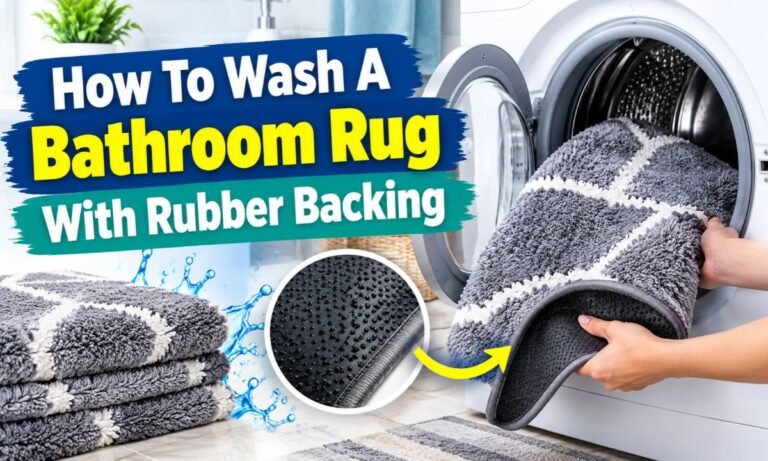
Can You Put a Chenille Bath Rug in the Dryer? Safe Drying Tips
If you are asking, “can you put a chenille bath rug in the dryer,” the answer depends on the rug. Chenille is soft and fluffy, but bath rugs can also have a backing that reacts badly to heat. The fiber, backing, stitching, and care label all matter.
In normal home laundry, I treat the care label as the first step. A rug may look like a simple washable mat, yet its backing can need very different care. When the label permits machine drying, a low heat or gentle cycle is usually a safer choice than high heat.
The main goal is not just to get the rug dry. You also want to keep the chenille soft, protect the backing, prevent shrinkage, and help the rug keep its shape. That is why the right drying method matters almost as much as the wash cycle.

Can You Put a Chenille Bath Rug in the Dryer?
So, can you put a chenille bath rug in the dryer? **Sometimes, yes.** Many washable chenille rugs are designed to handle gentle machine drying, but not every rug has the same fibers or backing.
Check the care tag before putting the rug into the dryer. Look for wording such as “tumble dry low,” “low heat,” “air dry,” or “do not tumble dry.” If the label says not to use a dryer, follow that instruction even if the rug seems sturdy.
If no care label is available, the safer choice is to avoid high heat. Air drying or using a very low heat setting can reduce the chance of damage, especially when you are not sure what material sits under the chenille.

- ✦ Low heat
Use low heat only when the care instructions allow machine drying. Low heat puts less stress on fibers and backing.
- ✦ Air drying
Air drying is a good option when the label says to avoid heat or when the backing may be heat sensitive.
- ✦ High heat
Avoid high heat unless the manufacturer clearly says it is safe. Excess heat can affect some fibers, backing materials, and rug shape.
Why the Care Label Matters
A chenille bath rug is not made from chenille alone. It may have a backing, glue, non-slip coating, or stitched edge. These parts can have different heat limits.
The manufacturer knows the materials and construction of that specific rug. That makes the care label more useful than a general rule about all chenille bath rugs.
- ✦ Look for drying symbols
A square with a circle usually relates to tumble drying. Dots inside the symbol show the heat level allowed.
- ✦ Check the full label
Do not check only the drying symbol. Washing, bleach, ironing, and other care instructions can also affect the rug.
What Happens If You Use Too Much Heat?
The biggest mistake when drying a chenille bath rug is using more heat than the material needs. A dryer can make a wet rug feel dry very fast, but fast drying is not always gentle drying.
High heat may cause some chenille fibers to lose their soft feel. Depending on the construction, it may also cause shrinkage, flattening, warping, or damage to the rug’s backing.
This is one reason I prefer a lower setting when the care label gives you a choice. A little more drying time is often worth it when the goal is to keep the rug looking and feeling good.

- ✦ Fiber damage
Strong heat can affect some synthetic or blended fibers and may change their texture over time.
- ✦ Backing damage
Rubber, latex, and some coated backings may become brittle, peel, crack, or lose their grip when exposed to too much heat.
- ✦ Loss of shape
Uneven heating or shrinkage can make a rug curl, ripple, or stop lying flat.
- ✦ Flattened pile
Excess heat and heavy tumbling may reduce the fluffy feel that makes chenille bath rugs comfortable.
Rubber and Latex Backings Need Extra Care
Many bath rugs have a non-slip backing. If yours uses rubber or latex, check its care instructions before using a dryer. Heat can be harder on these materials than it is on the chenille surface.
If the label warns against tumble drying, let the rug air dry instead. This can take longer, but it avoids unnecessary heat on the backing.
- ✦ Watch for cracking
A damaged backing may show cracks, flakes, or rough spots after repeated heat exposure.
- ✦ Watch for peeling
If the backing starts to separate from the rug, stop using high heat and follow the manufacturer’s care advice.
How to Dry a Chenille Bath Rug Safely in a Dryer
If your label says the rug is dryer safe, the process is simple. The key is to use a gentle setting and avoid treating a heavy, wet rug like a normal load of clothes.
Before drying, remove as much loose water as you can during the wash cycle. Do not twist the rug hard by hand, as that can stress the backing or distort its shape.
Then place the rug in the dryer with enough room for it to move. A crowded drum can slow drying and create uneven heat.

- ✦ Step 1: Read the label
Confirm that tumble drying is allowed and note the recommended heat level.
- ✦ Step 2: Shake the rug
Give the rug a gentle shake to loosen the chenille pile before placing it in the dryer.
- ✦ Step 3: Choose low heat
Select low heat or another setting named on the care label. Do not choose high heat just to finish faster.
- ✦ Step 4: Check it during drying
Pause the dryer from time to time. Remove the rug when it is dry rather than letting it run for a long extra cycle.
- ✦ Step 5: Reshape it
Lay the rug flat or place it where it can cool and settle into its normal shape.
Should You Dry a Chenille Rug by Itself?
A small chenille bath rug can often be dried by itself or with other soft items if the care label allows it. Drying it alone makes it easier to check its condition and prevents it from getting trapped under heavier laundry.
Avoid filling the dryer with heavy towels when you are trying to protect a delicate rug. A large load can limit airflow and may keep the rug damp for too long.
- ✦ Small load
Give the rug enough space to tumble freely and let warm air reach the whole surface.
- ✦ Avoid heavy items
Heavy towels can add weight and friction while the rug tumbles.
When You Should Air Dry a Chenille Bath Rug
Air drying is the safer choice when the care label says not to tumble dry. It is also useful when the rug has a heat-sensitive backing or when you are unsure about the materials.
To air dry, first remove extra water without twisting the rug. Then spread it flat in a clean, well-ventilated area or hang it in a way that does not stretch the fabric.
Avoid leaving a wet rug bunched up on the floor. Thick chenille can hold water, and trapped moisture can lead to a stale smell or slow drying.

- ✦ Lay it flat
Flat drying helps reduce stretching and can help the rug keep its original shape.
- ✦ Improve airflow
Use a fan or open a window when practical. Good airflow helps moisture leave the rug faster.
- ✦ Turn the rug
If one side stays damp, turn the rug so both sides can dry well.
- ✦ Keep it clean
Dry the rug in a clean area so fresh laundry does not pick up dust or dirt.
How to Wash a Chenille Bath Rug Before Drying
Drying starts with the wash. If you wash a chenille bath rug too roughly, the fibers and backing can take more stress before the rug even reaches the dryer.
Start by checking the care label. Shake out loose dirt, then wash with the recommended water temperature and cycle. A mild detergent is often a practical choice for washable rugs, but the product label should guide your selection.
Do not assume that every chenille rug can use the same wash method. Some have special backing materials or finishes that need different care.

- ✦ Shake out dirt
Remove loose hair, dust, and debris before washing.
- ✦ Use the correct cycle
Follow the wash cycle listed on the care tag instead of choosing a stronger cycle for convenience.
- ✦ Avoid excess detergent
Too much detergent can leave residue in thick fibers and may make rinsing harder.
- ✦ Inspect the backing
Before drying, check for cracks, peeling, or loose areas that could worsen with heat.
Can You Wash Chenille Bath Rugs With Towels?
It depends on the care label and the rug’s condition. Towels can add lint, weight, and friction, so I prefer a smaller load when caring for a soft chenille rug.
If you do wash the rug with towels, use similar colors and compatible care instructions. Never mix a delicate rug with items that need a very hot or aggressive cycle.
- ✦ Match care needs
Only combine items that can safely use the same water temperature and wash cycle.
- ✦ Avoid lint problems
Some towels shed lint, which can cling to a textured chenille surface.
Common Mistakes When Drying a Chenille Bath Rug
Most drying problems come from a few simple mistakes. People often focus on the soft chenille surface and forget that the rug may have a separate backing that needs gentler care.
Another common mistake is assuming that a rug must be completely dry before checking it. A quick inspection during the cycle can help you catch problems early.

- ✦ Using high heat
High heat can put unnecessary stress on chenille fibers and heat-sensitive backing.
- ✦ Ignoring the care tag
The care tag is the best guide for the exact rug you own.
- ✦ Overloading the dryer
A packed drum can reduce airflow and make thick rugs take longer to dry.
- ✦ Leaving the rug in too long
Once the rug is dry, continuing the cycle adds more tumbling and heat without much benefit.
- ✦ Drying a damaged rug
A cracked or peeling backing may deteriorate faster with heat and tumbling.
- ✦ Putting it away while damp
Stored moisture can create odor and may encourage mildew growth.
What If the Rug Comes Out Stiff?
A chenille rug can feel less soft after washing and drying. This may happen because of detergent residue, heat, compression, or the way the fibers dry.
Try following the care label more closely on the next wash. A gentle wash, proper rinsing, and lower drying heat may help the rug keep a softer feel.
- ✦ Check detergent use
Use only the amount recommended for the load and product.
- ✦ Reduce heat
If machine drying is allowed, try a lower setting rather than increasing heat.
How Often Should You Wash and Dry a Chenille Bath Rug?
There is no single schedule that fits every home. A bath rug used by several people may need more frequent washing than one used by one person in a dry bathroom.
Moisture is the main factor to watch. If the rug stays damp for long periods, wash and dry it sooner. Regular cleaning also helps remove skin oils, dust, hair, and other daily debris.
The important part is to let the rug dry fully between uses and follow its care instructions each time. Good airflow in the bathroom can also help reduce how long the rug stays wet.
- ✦ Light use
A rug used by one person in a well-ventilated bathroom may need less frequent washing.
- ✦ Heavy use
Busy family bathrooms may need more frequent cleaning because the rug gets wet more often.
- ✦ Slow drying
If the rug remains damp for many hours, improve airflow and consider washing it more often.
- ✦ Visible soil
Wash the rug when it looks dirty, smells stale, or has picked up noticeable debris.
How to Tell If Your Chenille Bath Rug Is Dryer Safe
If you are still wondering, “can you put a chenille bath rug in the dryer,” inspect the care label before making the choice. The label should tell you whether tumble drying is allowed and, in many cases, which heat level to use.
If the label is missing, look at the rug’s product instructions if you still have them. You can also check the manufacturer’s care guide for the exact model.
When you cannot confirm the drying method, air drying is the cautious option. It avoids exposing an unknown backing or fiber blend to unnecessary heat.
- ✦ Dryer symbol with one dot
This commonly indicates a low heat setting, but always follow the complete care instructions supplied with the rug.
- ✦ Dryer symbol with two dots
This generally permits a higher heat level than one dot, but the manufacturer’s instructions still take priority.
- ✦ Crossed-out dryer symbol
This means the rug should not be tumble dried. Choose the recommended air-drying method instead.
- ✦ No label
When care information is missing, avoid high heat and choose air drying when practical.
What About a Chenille Rug With No Backing?
A chenille rug with no heat-sensitive backing may have fewer drying concerns, but that does not mean every such rug belongs in a hot dryer. Fiber content and construction still matter.
The safest approach remains the same: follow the manufacturer’s instructions and use low heat when machine drying is approved.
- ✦ Check fiber content
Cotton, polyester, microfiber, and blended chenille products can have different care needs.
- ✦ Check construction
Edges, stitching, pile height, and added coatings can affect how a rug handles heat.