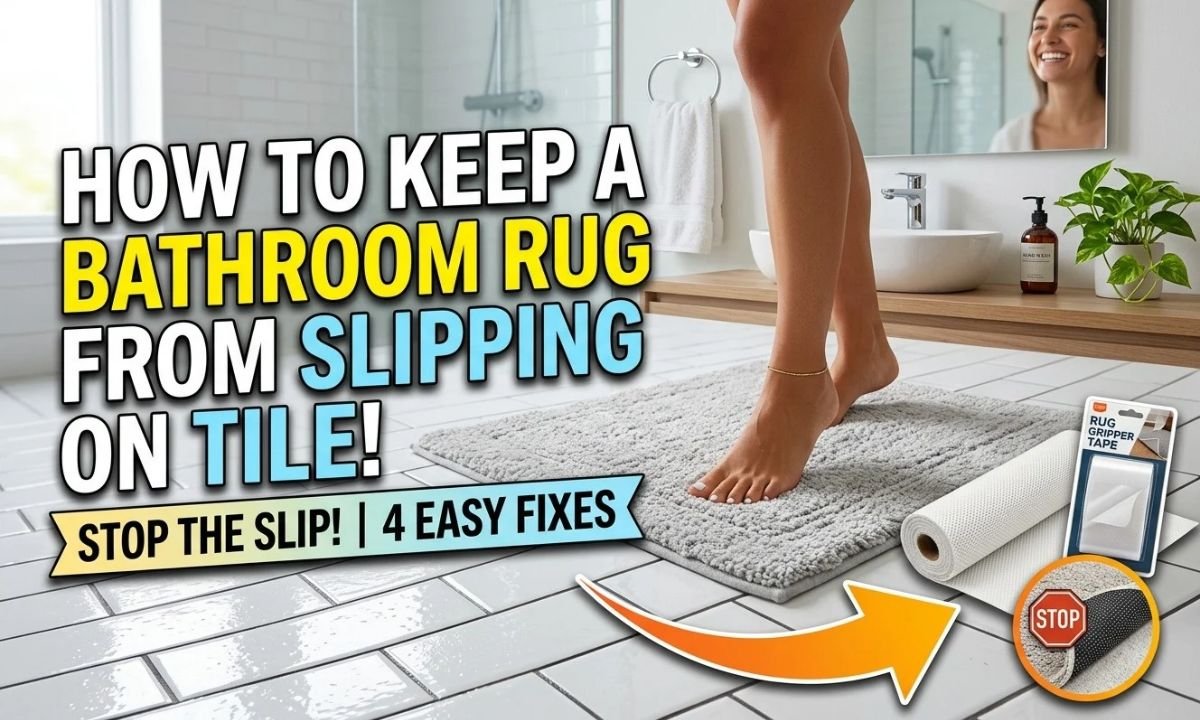
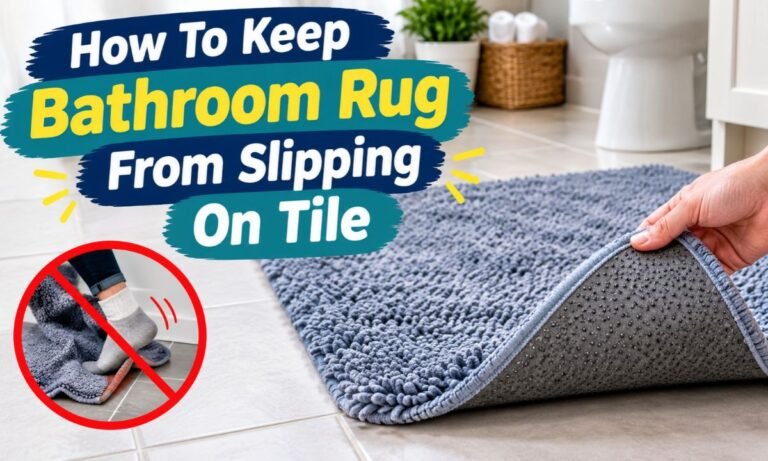
The easiest way to keep a bathroom rug from slipping on tile is to place a properly sized non-slip rug pad underneath it. For a small rug, a tile-safe rug gripper can also work. Keep both the tile and rug backing clean and dry, and replace any mat with a worn, cracked, or peeling backing.
In U.S. bathrooms, smooth ceramic and porcelain tile can make a loose bath rug move when you step out of a shower or tub. That movement is more than annoying because a rug that bunches, folds, or slides under your feet can create a trip or slip hazard.
The good news is that you usually do not need to replace the whole bathroom floor or permanently attach the rug. A non-slip pad, a rug with a suitable grip backing, or carefully chosen rug grippers can add friction between the rug and tile. The right method depends on the rug size, backing, tile finish, moisture level, and whether you rent your home.
Source: cdn.sanity.io
Why Bathroom Rugs Slide on Tile
Bathroom rugs slide when the contact between the rug backing and the tile does not create enough friction to resist movement. Smooth glazed tile, dust, soap residue, hair, and water can all reduce the grip available under the rug.
The backing also matters. A fabric-only rug usually has less traction against smooth tile than a rug with a textured rubber, latex, or thermoplastic rubber backing. Even a rug that originally stayed in place can become less stable when its backing wears down.
Moisture is another key factor. Water can form a thin layer between two surfaces, making it easier for the rug to move. That is why a rug that seems stable when the floor is dry may shift after someone steps out of the shower.
Source: i2.wp.com
Smooth tile
Glazed ceramic and porcelain tile can provide a very smooth surface, so a rug needs enough friction from its backing or an added pad.
Water and soap residue
Moisture and residue can reduce traction and may also interfere with some adhesive products.
Worn backing
Cracked, peeling, brittle, or flattened backing may no longer provide the grip it did when the rug was new.
Lightweight rugs
A very light rug can move more easily than a heavier, well-supported mat, especially in a high-use area.
The Rug and the Floor Both Need to Be Clean
Before adding a grip product, remove loose dirt, hair, soap film, and other residue from the tile. Clean the rug backing according to its care instructions, then let everything dry completely.
Do not put a wet rug or wet rug pad back onto the tile and expect it to grip properly. A dry, flat contact surface gives the backing or pad a better chance to hold.
Check the tile
Remove dirt and residue, then allow the area to dry fully.
Check the backing
Look for cracks, peeling, sticky residue, or areas where the original grip has worn away.
Use a Non-Slip Rug Pad Under the Bathroom Rug
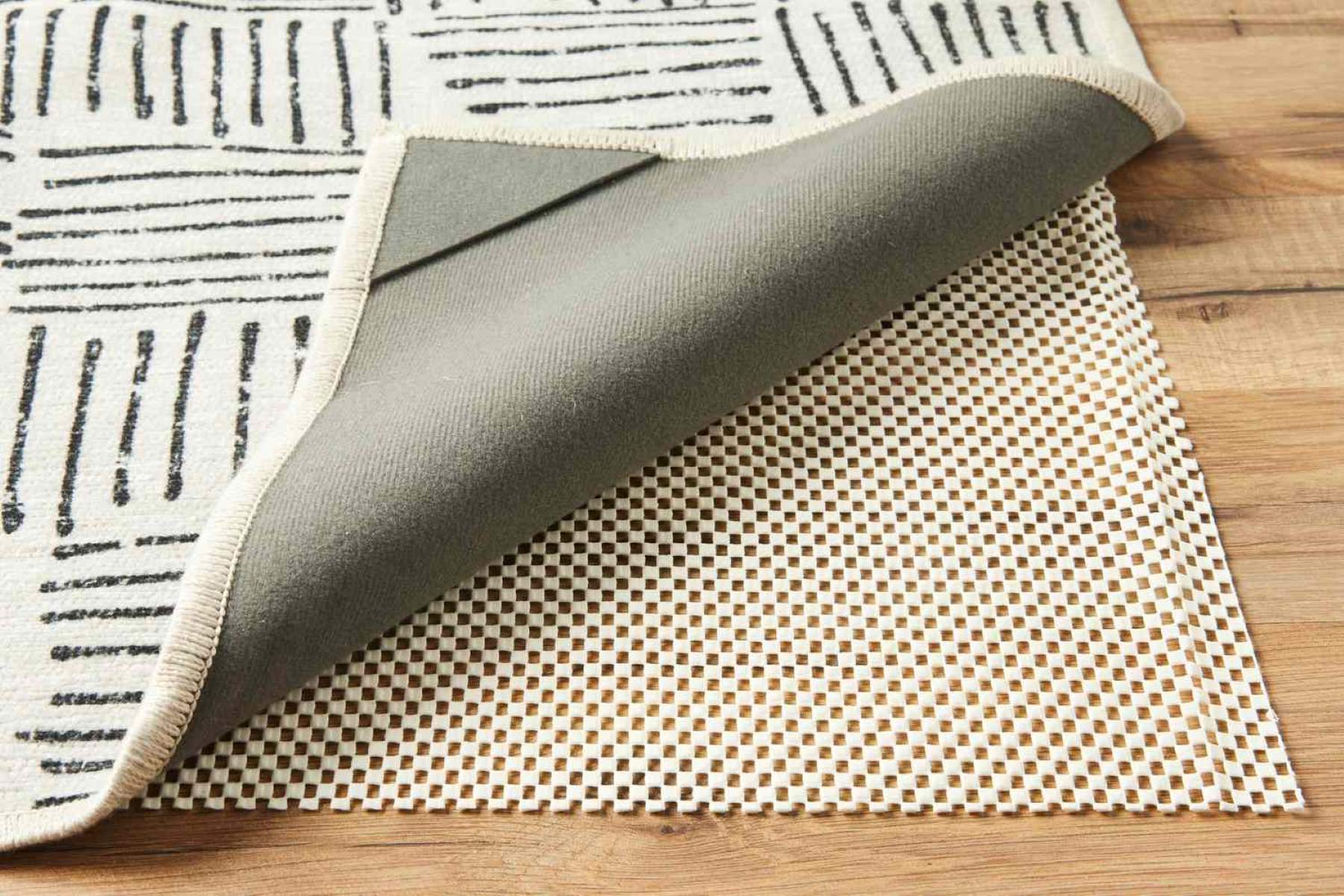
For an existing bathroom rug, a non-slip rug pad is one of the simplest ways to improve stability without permanently attaching the rug to the tile. The pad sits between the rug and floor and adds a grippy layer on the underside.
Choose a pad specifically labeled for hard floors and suitable for bathroom use. A pad that is too large can extend beyond the rug, create a visible edge, or become a trip point. Trim it so it remains hidden beneath the rug.
After placing the pad, smooth out wrinkles before putting the rug on top. The rug should lie flat, and the pad should not bunch or curl around the edges.
Source: m.media-amazon.com
Choose the right size
The pad should fit beneath the rug without sticking out around the perimeter.
Use a hard-floor design
Look for a non-slip pad intended for tile or other hard flooring rather than a pad made only for carpet.
Keep the pad flat
Wrinkles, folds, and curled edges can create new trip hazards even when the center of the rug stays in place.
Inspect it regularly
Lift the rug periodically to check for trapped moisture, dirt, deterioration, or changes in the tile finish.
How to Install a Rug Pad Correctly
Start with a clean, dry floor. Lay the pad flat and position it so it sits completely underneath the rug. If the pad is larger than the rug, trim it carefully with scissors before final placement.
Place the rug over the pad and press it flat from the center toward the edges. Walk over the rug normally and check whether it stays flat instead of shifting, bunching, or curling.
Success sign
The rug stays flat when you walk across it and the edges do not creep toward the shower, tub, toilet, or doorway.
Failure sign
If the rug and pad move together, lift both pieces and check for moisture, dirt, wrinkles, or a pad that does not suit the tile.
Try a Bathroom Rug With a Non-Slip Backing
If your current rug keeps sliding even after you clean the floor, replacing it with a bathroom rug that has a suitable non-slip backing may be simpler than repeatedly adding accessories.
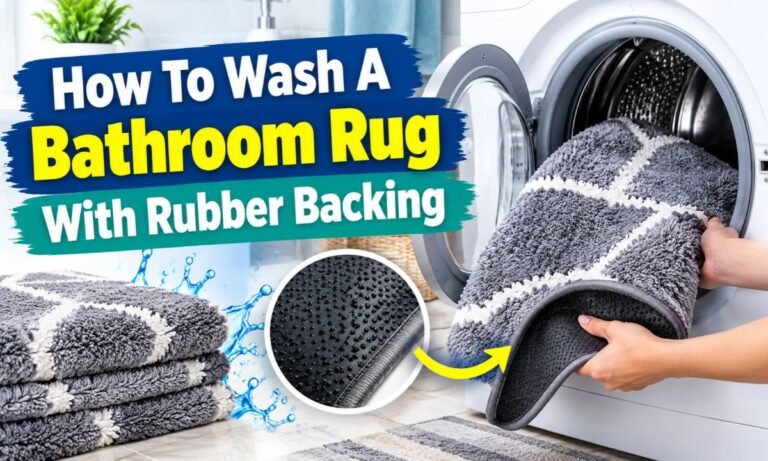
Look for a backing made for hard floors and check the care instructions before buying. Rubber, latex, and thermoplastic rubber are common grip materials, but the exact performance depends on the backing design, tile surface, moisture, and condition of the material.
A built-in backing also reduces the number of separate pieces you need to position. That can be useful in small bathrooms where a loose pad can shift or become difficult to align.
Source: cybergolduk.com
Textured backing
A textured underside can provide more mechanical contact with smooth tile than a plain fabric backing.
Flat construction
A rug that lies flat is less likely to catch your foot or create a raised edge.
Care instructions
Follow the washing and drying directions because excessive heat or improper cleaning can damage some non-slip backings.
When Replacing the Rug Makes More Sense
Consider replacement when the backing is cracking, peeling, becoming brittle, or losing large sections of its grip surface. Adding another product underneath a deteriorating backing may only postpone the problem.
Replacement is also reasonable when the rug repeatedly moves despite a correctly installed pad or gripper. A different rug with a suitable non-slip backing may be easier to maintain.
Replace worn backing
Do not rely on a backing that is visibly deteriorating.
Replace persistent problem rugs
If repeated adjustments are needed, choose a rug designed for stable use on hard bathroom floors.
Use Rug Grippers or Double-Sided Rug Tape for Small Rugs
Rug grippers and double-sided rug tape can be useful when a small bathroom rug moves at the corners or along the edges. They create extra resistance between the rug and floor, but they are not automatically suitable for every tile finish.
If you use an adhesive product, choose one that specifically states it is appropriate for tile or the particular floor finish in your bathroom. Test it first in a hidden area if the tile manufacturer permits testing. Some adhesives can leave residue, and removing strong adhesive can be harder than preventing the movement in the first place.
For renters or anyone concerned about floor damage, a non-adhesive rug pad is usually a simpler starting point. Adhesive products are better treated as a targeted solution rather than something to cover the entire underside of the rug.
Source: rugsandpads.com
Use corner grippers
Small grippers can help when the main problem is a rug corner that lifts or shifts.
Apply tape to the rug
If the product instructions allow it, placing tape on the rug backing can avoid directly bonding adhesive to the tile.
Test first
Check a hidden area for residue or finish changes before committing to adhesive over a visible section.
Remove carefully
Peel adhesive slowly rather than pulling sharply, and follow the tape manufacturer’s removal instructions.
Why Adhesive Fixes Are Not Always the Best Long-Term Answer
Bathrooms are humid environments, and rugs are frequently washed or moved for cleaning. Adhesive products can lose their effectiveness or leave residue as conditions change.
They can also make routine cleaning less convenient. If you need to lift the rug often to clean underneath, a removable non-slip pad can be easier to manage.
Good use
A small rug with a limited movement problem may benefit from a few properly placed grippers.
Poor use
Do not cover a deteriorating rug backing with adhesive and assume the rug is permanently safe.
Keep the Tile and Rug Dry Enough to Maintain Grip
Even a good non-slip setup can become less stable when water collects underneath the rug. After a shower or bath, check the area around the rug and dry standing water promptly.
Avoid placing a regular decorative bathroom rug inside the tub or shower unless it is specifically designed for that wet location. A rug intended for use outside the shower is not the same as a bath or shower mat designed for direct exposure to water.
Lift the rug and pad occasionally so the floor underneath can be cleaned and fully dried. This is especially useful in humid bathrooms where moisture can remain trapped between layers.
Source: storables.com
Dry standing water
Wipe up visible water around the rug instead of allowing a wet film to remain under it.
Air out the rug
Follow the care instructions and allow the rug to dry fully after washing or heavy wetting.
Clean underneath
Periodically lift the rug and any pad to remove dirt and check for moisture.
What If the Rug Still Slides After Drying?
If the floor and rug are clean and dry but the rug still moves, check the backing and the pad. Make sure the pad is flat, correctly sized, and designed for hard flooring.
If everything appears correct and the rug still shifts when you step on it, try a different non-slip pad or replace the rug with one that has a more suitable backing. Persistent movement means the current combination is not providing enough resistance.
Rug moves with the pad
The pad may not be gripping the tile well enough or may be unsuitable for the floor.
Rug moves on the pad
The upper surface of the pad may not be gripping the rug backing effectively.
Only one corner moves
A localized gripper may solve the problem if the rest of the rug remains stable.
Avoid These Common Bathroom Rug Mistakes
A rug can look secure while still being unsafe under real bathroom conditions. The most useful check is not whether it feels heavy or looks attractive, but whether it stays flat and stable when someone steps onto it.
Avoid relying on furniture to hold a bathroom rug in place. Bathroom rugs normally sit in walking areas where furniture may not provide a practical anchor, and moving the rug for cleaning becomes harder.
Also avoid putting a rug over a visibly wet floor and assuming the backing will compensate for the moisture. Grip products work best when installed according to their instructions and maintained in good condition.
Source: m.media-amazon.com
Do not ignore curled edges
A curled corner can catch a toe even if the center of the rug does not move.
Do not use an oversized pad
A pad that sticks out can create an edge that catches feet or looks uneven.
Do not assume every rubber backing is identical
Backing material, texture, condition, and compatibility with the floor all affect performance.
Do not skip maintenance
Dirt, moisture, worn backing, and damaged pads can reduce the stability of a previously secure setup.
Extra Care for Smooth or Heated Tile
If your bathroom has polished, glazed, or otherwise delicate tile, be cautious with adhesives and rubber products. Check the tile and flooring manufacturer’s recommendations before using a new material underneath the rug.
For radiant-heated floors, also check the flooring and rug-pad instructions for heat compatibility. A material that works on ordinary tile should not automatically be assumed suitable for a heated floor.
Check the flooring guidance
Use the tile or flooring manufacturer’s care instructions when they provide restrictions for adhesives, rubber, or other floor coverings.
Check the rug-pad guidance
Follow the pad manufacturer’s instructions for heated floors, cleaning, moisture, and replacement.
A Simple Step-by-Step Fix for a Sliding Bathroom Rug
If you want one straightforward process, start with the least invasive option. Clean and dry the floor, inspect the rug, then add a correctly sized non-slip pad before considering adhesive products.
This approach lets you identify the real problem instead of adding several layers of tape, grippers, and pads at once. If the rug remains stable after the first fix, there is no reason to add another product.
Source: i.pinimg.com
Step 1: Remove the rug
Take the rug and any existing pad out of the area so you can inspect both surfaces.
Step 2: Clean the tile
Remove dirt, hair, soap residue, and other debris, then allow the tile to dry completely.
Step 3: Inspect the backing
Replace the rug if its backing is badly cracked, peeling, brittle, or otherwise deteriorated.
Step 4: Add a non-slip pad
Choose a hard-floor-compatible pad and trim it so it remains hidden beneath the rug.
Step 5: Flatten everything
Smooth the pad and rug from the center outward so there are no folds, wrinkles, or curled edges.
Step 6: Test the rug
Step on it normally from several directions and check whether it shifts, bunches, or curls.
Step 7: Add a targeted gripper if needed
If only a corner or edge moves, use a compatible rug gripper rather than adding adhesive across the entire rug.
How to Know the Fix Is Working
A successful setup should leave the rug flat and stable during normal walking. The edges should remain down, the rug should not bunch beneath your feet, and the pad should not creep out from underneath.
Check the rug again after several days of normal bathroom use. If it starts shifting, look for moisture, dirt, pad movement, or backing deterioration rather than simply adding more adhesive.
Stable edges
The corners and sides stay flat instead of lifting or curling.
No bunching
The rug does not form folds when you walk across it.
No pad exposure
The pad remains hidden beneath the rug instead of sliding beyond the edges.
Frequently Asked Questions
Q
What is the easiest way to keep a bathroom rug from slipping on tile?
Start with a non-slip rug pad made for hard floors. Clean and dry the tile first, then place the correctly sized pad flat beneath the rug.
Q
Does double-sided tape work on bathroom tile?
It can help, especially for small rugs, but adhesive may leave residue or affect some finishes. Choose a tile-compatible product and test it in a hidden area first.
Q
Should a bathroom rug have a rubber backing?
A suitable textured rubber, latex, or thermoplastic rubber backing can improve grip on smooth tile. Check the care instructions because backing materials vary.
Q
Why does my bathroom rug keep sliding even with a non-slip pad?
Check for moisture, dirt, wrinkles, or a pad that is incompatible with the floor. Also inspect the rug backing for wear, cracks, or peeling.
Q
Can I use a regular bathroom rug inside the shower?
No. A rug intended for the bathroom floor is not automatically designed for direct shower use. Use a mat specifically designed for that wet location and follow its instructions.
✦ Wrapping Up
Conclusion
The most practical answer to how to keep a bathroom rug from slipping on tile is to improve the grip between the rug and the floor. For most existing rugs, a properly fitted non-slip pad is a simple place to start. A rug with a suitable non-slip backing can also solve the problem without an extra layer.
Before using tape or adhesive grippers, make sure the product is compatible with your tile and understand that adhesives can leave residue. Whatever method you choose, keep the tile and rug backing clean and dry, keep the rug flat, and replace damaged or deteriorating materials.
If the rug still moves after you have cleaned the floor, checked the backing, and installed a suitable pad correctly, changing the rug or pad is usually more sensible than continually adding more grip products.
💡 Key Takeaway
Clean and dry the tile, inspect the rug backing, place a correctly sized non-slip pad underneath, and test the rug from several directions. If it still moves, use a compatible targeted gripper or replace the worn rug.
Learn how often you should wash a bath mat, what changes the schedule, how to clean different materials, and how to keep your mat fresh between washes.






3 Comments