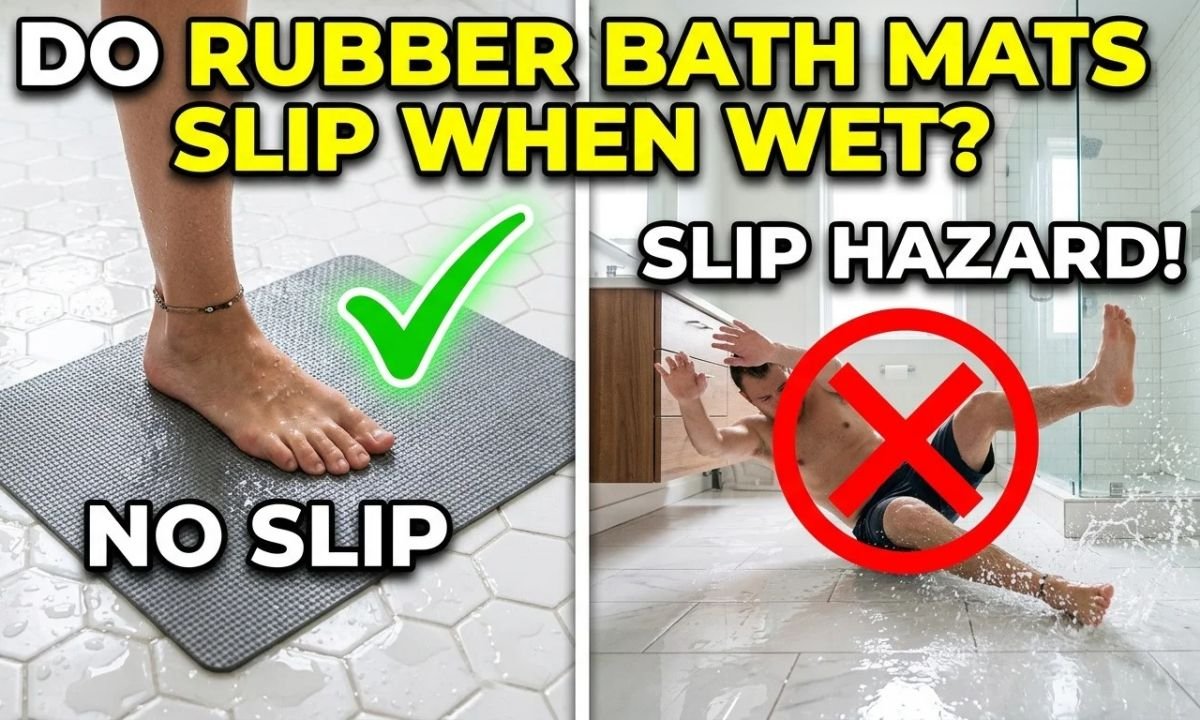
Yes, rubber backed bath mats can slip when wet, but a good-quality mat on a clean, suitable floor should resist movement. Water, soap residue, worn backing, curled edges, and the wrong floor surface can all reduce grip.
In U.S. homes, rubber backed bath mats are commonly placed outside showers and bathtubs to catch water before it reaches hard bathroom flooring. The rubber or other grippy backing is designed to increase contact with the floor, but it does not make a mat permanently slip-proof.
The key point is that rubber backing works through contact and friction. If water or residue gets between the backing and the floor, the mat may move more easily. A mat can also become less reliable as its backing ages, cracks, peels, or loses its original texture.
Source: amazon.com
Why Can Rubber Backed Bath Mats Slip When Wet?
Rubber backing helps a bath mat resist movement, but the grip depends on the condition of both the mat and the floor. A thin layer of water can reduce the contact between the backing and a smooth floor, allowing the mat to shift when someone steps on it.
The word rubber also covers different backing designs. Some mats use a solid rubber-like layer, while others use dots, patterns, mesh, latex, PVC, or thermoplastic rubber. Their grip can vary, so the label alone does not prove how a particular mat will behave in your bathroom.
Source: shopee.ph
Water underneath the mat
A film of water can separate the backing from the floor and make sliding easier, especially on smooth surfaces.
Soap and cleaning residue
Residue can coat the floor or backing and interfere with direct contact between the two surfaces.
Worn backing
Old rubber or latex can become hard, smooth, cracked, or detached, reducing the mat’s ability to resist movement.
Curled edges
A curled corner can make the mat less stable and can also create a separate tripping hazard.
Does Water Always Make a Rubber Backed Mat Slip?
No. Some mats are designed to maintain useful traction in damp bathroom conditions. However, no ordinary floor mat should be treated as completely slip-proof under every combination of water, flooring, footwear, cleaning residue, and wear.
A mat that stays in place on a dry floor may behave differently after a shower. If the floor beneath it remains wet, the mat may gradually move as people step on and off it.
Good grip
The backing stays in contact with a clean floor and the mat remains flat when stepped on.
Reduced grip
Moisture, residue, wear, or an unsuitable floor surface allows the mat to shift.
What Makes a Rubber Backed Bath Mat Stay in Place?
A bath mat stays in place when its backing can maintain friction with the floor while the mat is being stepped on. The design of the backing matters, but so do the surface condition, mat size, flatness, and amount of moisture.
For a mat outside a shower or bathtub, the floor should be suitable for the backing and reasonably clean. Tile, vinyl, and other hard bathroom surfaces can behave differently depending on their texture, finish, sealants, and contamination.
Source: amazon.in
Backing material
Rubber, latex, PVC, TPR, and similar materials may provide more grip than a plain fabric underside.
Backing coverage
A backing that makes broad, consistent contact can behave differently from a few widely spaced grip points.
Flat construction
A mat that lies flat has more predictable contact with the floor than one with raised or curled areas.
Floor condition
Clean flooring gives the backing a better chance to maintain direct contact.
Does the Type of Bathroom Floor Matter?
Yes. The same bath mat can behave differently on different bathroom floors. Smooth tile, textured tile, vinyl, stone, and other hard surfaces do not provide identical contact conditions.
A backing that performs well on one floor should not automatically be assumed to work equally well on another. If you are replacing a mat because it slides, test the replacement on the actual floor where it will be used.
Smooth surfaces
They can provide broad contact but may become very slippery when contaminated with water or residue.
Textured surfaces
The texture can change how the backing contacts the floor and may affect the mat’s stability.
Dirty or coated surfaces
Dust, soap film, wax, polish, or other residue can interfere with the backing’s contact.
How to Check if Your Rubber Backed Bath Mat Is Slipping
You can check a bath mat without performing a complicated test. First, inspect the floor and the underside of the mat. Then make sure the mat is positioned flat in its normal location.
Do not rely on a single hand test as proof that a mat is safe for every situation. A mat can resist a light push and still move when a person steps onto it with wet feet.
Source: slipsaway.co.uk
1. Inspect the underside
Look for cracks, peeling, missing grip material, hardened areas, or sections where the backing has separated from the mat.
2. Check the floor
Look for standing water, soap residue, dust, or cleaning products underneath the mat.
3. Lay the mat flat
Make sure the entire mat sits flat and that no corner or edge is curled upward.
4. Apply gentle sideways pressure
With the mat empty, gently push it sideways with your hand. Easy movement is a warning that the setup needs attention.
5. Recheck after normal use
If the mat shifts after showers or repeated use, treat that movement as more meaningful than a dry-floor test.
What Does a Failing Bath Mat Look Like?
A failing mat may creep across the floor, bunch in the middle, develop curled corners, or slide when someone steps onto it. The underside may also become noticeably smoother or harder than it was when new.
If cleaning the floor and washing the mat according to its care instructions does not restore stable placement, replacement is usually more sensible than continuing to use a mat that repeatedly moves.
Repeated movement
The mat changes position during ordinary bathroom use instead of remaining where it was placed.
Damaged backing
The rubber or other grip layer is cracked, peeling, missing, or visibly deteriorated.
Persistent curling
Edges or corners no longer lie flat after normal washing and drying.
How to Stop a Rubber Backed Bath Mat From Sliding
Start with the simplest causes before buying accessories or replacing the mat. Remove the mat, clean the floor according to the flooring manufacturer’s care instructions, and let the surface dry. Then inspect and clean the mat according to its own care label.
If the backing is damaged or the mat continues to move on a clean, suitable surface, replacing it with a mat designed for that floor may be more appropriate than trying to force the old mat to work.
Source: aqviz.com
Keep the floor clean
Remove residue that can interfere with contact between the backing and the bathroom floor.
Keep the mat flat
Replace a mat that remains badly curled, folded, or distorted after normal care.
Follow washing instructions
Use the cleaning and drying method recommended for the specific backing because excessive heat can damage some rubber or latex materials.
Allow the mat to dry
Regularly lift and dry the mat so moisture does not remain trapped underneath for long periods.
Consider a compatible non-slip underlay
If the manufacturer permits it and the floor is suitable, a purpose-made underlay can provide additional stability.
Should You Use Tape or Adhesive Under a Bath Mat?
Do not assume that household tape, glue, or another adhesive is suitable for bathroom flooring. Adhesives can damage some floors, leave residue, or interfere with the manufacturer’s care instructions.
If extra grip is needed, use an accessory specifically intended for bath mats and compatible with your flooring. Follow the product instructions and check whether the mat manufacturer permits an additional pad or grip.
Check floor compatibility
Some flooring materials and finishes can be damaged or stained by adhesive products.
Check the mat instructions
The backing may require direct floor contact or may not be compatible with additional products.
Rubber Backed Bath Mat vs. Suction Mat: They Are Not the Same
A rubber backed bath rug placed outside a shower or bathtub is designed to sit on the bathroom floor. A suction-cup bath mat is generally designed for a wet bathing surface such as the floor of a bathtub or shower when the product specifically states that it is suitable for that location.
The distinction matters because a mat intended for the floor outside a tub should not automatically be placed inside the shower. Always follow the manufacturer’s intended-use instructions.
Source: ar.pinterest.com
Rubber backed floor mat
Usually intended to absorb water and provide a more stable surface outside the tub or shower.
Suction-cup bath mat
Designed to grip a compatible smooth bathing surface through suction cups or a similar underside design.
Inside-shower use
Only use a mat inside a tub or shower when its instructions specifically allow that application.
Can You Put a Regular Rubber Backed Bath Rug Inside the Shower?
Not unless the manufacturer specifically says it is made for shower use. A floor rug designed to sit outside a shower may not have the construction, drainage, or grip system needed for continuous exposure to water.
For an in-shower application, choose a product specifically designed for the tub or shower surface and follow its installation and cleaning instructions.
Check the intended use
The product instructions should clearly identify whether the mat is designed for use inside a tub or shower.
Check the surface
Some suction-based designs require a smooth, non-porous surface to work as intended.
When Should You Replace a Rubber Backed Bath Mat?
Replace a rubber backed bath mat when its backing can no longer keep it stable, when the backing is visibly deteriorating, or when the mat remains damaged after normal care. There is no single replacement schedule that applies to every mat because use, washing, moisture, materials, and floor conditions vary.
A mat that repeatedly slides on a clean floor deserves attention even if it still looks attractive. The practical purpose of the backing is to help keep the mat in position, so repeated movement is a useful sign that the setup may no longer be performing as intended.
Source: alamy.com
Cracking
Cracks in the backing can indicate material deterioration and may reduce stable contact.
Peeling
A backing that separates from the fabric can create uneven contact and movement.
Loss of grip
If the mat begins sliding on a clean, compatible floor, its useful life may be ending.
Permanent curling
Edges that stay raised can increase the chance of catching a foot.
Does Frequent Washing Damage Rubber Backing?
It can. The effect depends on the backing material and the care instructions for the specific mat. Excessive heat, unsuitable detergents, and improper drying can shorten the life of some rubber or latex backings.
Follow the manufacturer’s washing and drying instructions instead of assuming that every rubber backed mat can tolerate the same temperature or dryer setting.
Use the care label
The manufacturer’s instructions are the best guide for washing temperature, detergent, drying method, and other care limits.
Inspect after washing
Check for cracking, peeling, stiffness, or separation before returning the mat to the bathroom.
Common Mistakes That Make Bath Mats More Likely to Slip
Many slipping problems come from the setup rather than the basic idea of a rubber backed mat. A mat can have a grippy underside and still become unstable if it is placed over water, residue, an unsuitable surface, or a damaged backing.
Avoid treating the phrase non-slip as an absolute guarantee. Product descriptions can describe intended performance, but real-world stability depends on the specific mat, floor, moisture, maintenance, and condition.
Source: amazon.com
Leaving water underneath
A wet film can interfere with direct contact between the backing and floor.
Ignoring soap buildup
Residue can reduce traction and may make a previously stable mat move.
Using a damaged mat
Cracked, peeling, hardened, or curled backing should not be treated as if it were new.
Using the wrong mat in the shower
A floor bath rug is not automatically suitable for placement inside a tub or shower.
Assuming all rubber backings perform alike
Backing material, pattern, coverage, thickness, and construction can all affect how the mat behaves.
What Is the Safest Response if Your Mat Slides Underfoot?
Stop using the mat in that location until you identify the reason it is moving. Clean and dry the floor, inspect the backing, and follow the mat’s care instructions. If it still slides, replace it with a product designed for the surface and intended use.
If someone has already fallen or the bathroom presents a broader slip hazard, address the wet flooring and other hazards rather than relying on the bath mat alone.
Remove the immediate hazard
Move or remove a mat that is actively sliding instead of continuing to step onto it.
Fix the underlying condition
Check water, residue, floor compatibility, backing condition, and mat placement.
Frequently Asked Questions
Q
Do rubber backed bath mats slip when wet?
They can. Rubber backing helps resist movement, but water, soap residue, worn backing, curled edges, and an unsuitable floor can still cause a mat to slide.
Q
Why does my rubber backed bath mat slide on tile?
Water, soap film, dust, or cleaning residue can reduce contact between the backing and tile. A worn or damaged backing can also lose grip over time.
Q
How do I keep a rubber bath mat from slipping?
Keep the floor clean and dry, keep the mat flat, follow its care instructions, inspect the backing regularly, and replace the mat if it repeatedly moves.
Q
Can I use a rubber backed bath mat inside a shower?
Only if the manufacturer says the mat is designed for shower use. A floor rug made for outside the shower is not automatically suitable for a continuously wet bathing surface.
Q
When should I replace a rubber backed bath mat?
Replace it when the backing cracks, peels, hardens, curls, or repeatedly loses grip after the floor and mat have been properly cleaned and maintained.
✦ Wrapping Up
Conclusion
So, do rubber backed bath mats slip when wet? They can, even though the backing is designed to reduce movement. The biggest factors are the condition of the backing, the amount of moisture underneath, the cleanliness and type of flooring, and whether the mat is being used for its intended purpose.
For a U.S. bathroom, the practical approach is simple: choose a mat made for the surface, keep the floor and backing clean, allow the mat to dry, inspect it for damage, and do not continue using it if it repeatedly slides underfoot.
💡 Key Takeaway
If your rubber backed bath mat is moving, remove it, clean and dry the floor, inspect the backing, and test the mat again. If it still slides or the backing is damaged, replace it with a properly sized mat designed for your bathroom floor.
Should a bath mat match the towels? Learn when matching works, when to mix colors and textures, and how to create a coordinated bathroom without overmatching.





2 Comments