Yes, you can leave a bath mat on the bathroom floor all day if it is clean, dry, and does not trap moisture underneath. However, a wet mat should be lifted and dried after each shower.
In American homes, bathrooms often have tile, vinyl, stone, or wood floors. A bath mat adds comfort when you step out of the shower, helps catch drips, and can make a cold bathroom floor feel warmer. It also gives your feet a soft place to land while you get dressed or brush your teeth.
The main concern is not how many hours a bath mat stays on the floor. It is how much moisture stays trapped in the fabric and beneath its backing. A dry mat in a well-ventilated bathroom can stay in place throughout the day. A soaked mat in a small bathroom with poor airflow needs more care.
This difference matters because mold and mildew need moisture to grow. The U.S. Environmental Protection Agency explains that moisture control is the key to preventing indoor mold. That means a simple habit, such as lifting your bath mat after a shower, can help keep your bathroom cleaner and fresher.
You do not need to put away your bath mat every time you leave the bathroom. You simply need to make sure it can dry fully between uses. The right routine also depends on the mat material, floor type, room humidity, and how often your family uses the shower.
Is It Okay To Leave A Bath Mat On The Floor All Day?
Yes, leaving a bath mat on the floor all day is usually fine when the mat is dry. There is no general household rule that says you must remove it after a certain number of hours. The important thing is to prevent water from staying trapped in the fabric or between the mat and the floor.
For example, imagine you take a shower at 7 a.m. and step onto a bath mat. If the mat dries fully and your bathroom has good airflow, you can leave it in its usual place until bedtime. You do not need to fold it up or store it in a closet.
However, the answer changes when the mat stays wet for hours. Thick cotton, microfiber, chenille, and memory foam mats can hold water inside their fibers or foam. If the backing sits flat against the floor, moisture may take longer to escape.
A damp mat can also make the bathroom floor slippery when you move it. If the underside is wet, lift it carefully, dry the floor, and let the mat air out before putting it back.
Dry bath mat
It can usually stay on the floor throughout the day if the floor beneath it is also dry.
Slightly damp bath mat
Lift it, spread it out, and allow air to reach both sides before using it again.
Soaked bath mat
Remove it from the floor and dry it fully. Check the floor for standing water.
Musty or moldy bath mat
Stop using it until you have cleaned it properly or replaced it if the growth cannot be removed.
Does The Time Of Day Matter?
The time of day matters less than the mat’s moisture level. A bath mat used in the morning can remain on the floor all afternoon if it dries properly. A mat used just before bed may need to hang overnight if it is still wet.
Think about the amount of water it absorbs rather than the clock. A thin cotton mat may dry faster than a thick memory foam mat, but room humidity and airflow can change the result.
Can A Dry Bath Mat Stay In Place Overnight?
Yes. A dry bath mat can generally stay on the bathroom floor overnight. Make sure the floor beneath it is dry and that the mat does not create a tripping or slipping risk.
If you shower at night, hang the mat before going to bed if it is wet. You can return it to the floor once both sides have dried.
Why You Should Not Leave A Wet Bath Mat On The Floor
Leaving a wet bath mat flat on the floor for long periods can create a moisture problem. Water can remain inside the fibers, foam, or backing. The underside may also block airflow, which slows drying.
This is especially important in bathrooms that already have high humidity. Warm air, damp towels, wet shower walls, and poor ventilation can all make it harder for a bath mat to dry.
The EPA explains that mold growth can begin when spores land on wet or damp surfaces. Its guidance also recommends controlling moisture and drying wet materials to help prevent mold. A bath mat is not the same as a building material, but the moisture-control principle applies to household fabrics too.
Leaving a wet mat in place does not mean mold will appear immediately. The risk depends on moisture, time, room conditions, and cleaning habits. Still, giving the mat room to dry is a sensible way to reduce the chance of odor and mildew.
Mold and mildew
Persistent dampness can create conditions that support unwanted growth on the mat or nearby surfaces.
Musty odors
A mat that never dries fully may develop a stale or damp smell.
Floor damage
Trapped water can affect some wood, laminate, and other moisture-sensitive floor finishes.
Slipping hazards
A wet underside or damp floor can make the mat move when someone steps on it.
How Moisture Gets Trapped Under A Bath Mat
Most bath mats have two main parts: a top layer that absorbs water and a bottom layer that helps the mat stay in place. Some mats have rubber, latex, PVC, or other backing materials.
The absorbent top can hold water after a shower. At the same time, the backing may reduce airflow underneath the mat. When the mat stays flat, the trapped moisture has fewer ways to escape.
This is why lifting the mat can help. Air can move around the fabric and the underside, which gives moisture a better chance to evaporate.
Can A Wet Bath Mat Cause Mold On The Floor?
It can contribute to mold growth if moisture remains trapped against a suitable surface for long enough. This is a greater concern when the bathroom has a leak, poor ventilation, condensation, or an already damp floor.
Hard tile and properly sealed stone do not absorb water in the same way as untreated wood. However, grout, cracks, edges, and nearby materials can still collect moisture.
If you notice dark spots, a musty smell, or repeated damp patches beneath the mat, lift it and inspect the area. Clean suitable hard surfaces with detergent and water, then dry them completely. If mold keeps returning, look for the moisture source rather than treating only the visible spot.
What To Do With Your Bath Mat After A Shower
The best habit is to lift your bath mat after a shower and let it dry in a way that allows air to reach both sides. This small step can help reduce trapped moisture and prevent a damp smell.
You do not need special equipment. A towel rack, shower rod, drying rack, or another suitable place can work. Choose a spot where the mat can spread out without touching a wet surface.
If your mat is very thick, do not fold it over itself. A thick fold can trap water in the center. Spread it as much as possible and follow the manufacturer’s instructions for its material.
Step 1: Remove excess water
If the mat is soaked, allow excess water to drain. Avoid twisting it if the care label warns against wringing.
Step 2: Lift it from the floor
Move it away from the wet floor so air can reach the underside.
Step 3: Spread it out
Drape it over a suitable drying rack or rail, or lay it flat on a clean surface that allows airflow.
Step 4: Improve bathroom airflow
Use the exhaust fan or open a window when practical to help remove humid air.
Step 5: Check before replacing it
Feel the top, edges, and underside. Return the mat only when it is dry and the floor beneath it is clean and dry.
Where Should You Hang A Bath Mat?
A shower rod, towel rack, drying rack, or clean clothesline can work if it supports the mat without stretching or damaging it. Make sure the mat does not block the bathroom door or create a falling hazard.
Some thick or heavy mats may become misshapen when hung from one edge. For those styles, a flat drying rack may be better. Always follow the care instructions supplied with the mat.
Shower rod
Useful for lightweight mats that can drape without stretching.
Drying rack
A good option for heavy mats that need support across a larger area.
Towel bar
Suitable for smaller, thinner mats when the bar can support their weight.
How Do You Know When The Mat Is Dry?
A dry mat should not feel cool and damp when you press your hand against the fabric. Check thick areas, stitched edges, and the underside because these spots may hold moisture after the top feels dry.
Also check the floor. If the floor looks wet or feels damp when you lift the mat, dry it before putting the mat back. A clean, dry surface is a better place for your bath mat.
How Different Bath Mat Materials Affect Drying
Not every bath mat dries at the same rate. Material thickness, fiber type, backing, and construction all affect how much water the mat holds and how easily that water escapes.
A thin cotton mat may dry more easily than a thick memory foam style in the same bathroom. A plush microfiber mat may feel dry on top while the base still holds moisture.
The material alone does not determine whether you can leave the mat on the floor. Your bathroom conditions matter too. A thin mat in a humid room may stay damp longer than a thicker mat in a room with good airflow.
Cotton Bath Mats
Cotton bath mats are soft and absorbent. They can be a practical option for everyday bathrooms, but a thick cotton mat may hold a fair amount of water after several people use the shower.
Spread a cotton mat out after use if it feels damp. Check the care label before washing or drying it, since some cotton mats can shrink or lose shape under unsuitable heat.
Microfiber And Chenille Bath Mats
Microfiber and chenille mats often have soft, dense fibers. These fibers can absorb water and feel comfortable underfoot, but a dense pile may take longer to dry than a thin woven mat.
Lift these mats regularly after showers. Pay special attention to the backing and the base of the fibers, where moisture may remain even when the surface feels dry.
Memory Foam Bath Mats
Memory foam bath mats offer a cushioned feel. However, their foam core and backing can make drying more challenging than it is with a thin fabric mat.
Avoid leaving a memory foam mat soaked on the floor. Check the manufacturer’s washing and drying instructions because some products cannot tolerate high dryer temperatures.
Rubber-Backed Bath Mats
Rubber-backed mats can help reduce movement on suitable floors, but their backing may limit airflow beneath the fabric. This makes it especially useful to lift the mat after it gets wet.
Do not assume that a rubber backing makes a mat waterproof or safe to leave on a wet floor. Inspect it for cracks, peeling, and wear. A damaged backing may lose grip and create a slipping risk.
Bamboo And Wooden Bath Mats
Bamboo and wooden bath mats have a different structure from absorbent fabric mats. Their open slats can allow water to pass through and air to move around the surface.
However, water can still collect beneath them or around their joints. Lift and clean them as directed by the maker, and make sure the floor beneath them does not remain wet.
Does Your Bathroom Floor Type Change The Answer?
Yes. Your floor type matters because some surfaces handle moisture better than others. A bath mat that stays dry on tile may still create problems on an unsealed wood floor if water gets trapped beneath it.
Even when the floor is water-resistant, repeated dampness can affect grout, seams, coatings, and nearby materials. It is best to keep the floor dry rather than depend on the surface to tolerate standing water.
Tile And Ceramic Floors
Tile is a common bathroom flooring choice. A dry bath mat can usually remain in place on a clean, dry tile floor.
Check the grout and the underside of the mat. Water may collect in grout lines or around damaged joints. If the mat repeatedly leaves wet patches, lift it and improve the drying routine.
Vinyl And Laminate Floors
Vinyl flooring generally handles normal bathroom moisture well when installed and maintained correctly. Still, trapped water around seams or edges can cause problems over time.
Laminate flooring may be more vulnerable to water entering joints and edges. Avoid leaving a wet mat on laminate, and dry any spills as soon as possible.
Hardwood Floors
Hardwood needs extra care around water. Even a mat with a moisture-resistant backing can trap condensation or water beneath it.
Use a bathroom mat that is approved for your flooring finish. Lift it regularly and check the wood for dark marks, swelling, soft spots, or changes in the finish. Do not allow water to remain under the mat.
Natural Stone Floors
Natural stone floors vary in porosity and finish. Some stone surfaces need regular sealing and special cleaning products.
Keep the mat dry and follow the flooring manufacturer’s care guidance. Avoid using a backing that could stain or damage the stone finish.
How Bathroom Ventilation Affects Your Bath Mat
Good ventilation helps a bath mat dry faster because it moves humid air out of the bathroom and supports evaporation. Poor ventilation can leave moisture in the room long after the shower ends.
The U.S. Environmental Protection Agency recommends increasing bathroom ventilation when moisture or mold is a recurring problem. Running an exhaust fan or opening a window can help, when practical.
If your bathroom has an exhaust fan, use it during showers and afterward according to the fan manufacturer’s guidance. Keep the fan clean and make sure it vents to the proper location rather than simply moving humid air into another enclosed space.
If you do not have a working fan, opening the bathroom door or window may improve airflow when outdoor conditions allow. In humid weather, however, outdoor air may not always help dry the room. An air conditioner or dehumidifier may be useful in persistently humid spaces.
Use the exhaust fan
Run it during showers and long enough afterward to reduce excess moisture.
Keep air moving
Allow fresh air into the bathroom when outdoor humidity and privacy conditions permit.
Dry wet surfaces
Wipe standing water from the floor, tub edges, and nearby surfaces.
Check for ventilation problems
Investigate a fan that makes unusual noise, does not move air, or fails to reduce bathroom condensation.
What If Your Bathroom Has No Window?
A bathroom without a window can still stay dry if it has suitable mechanical ventilation. Use the exhaust fan during showers and follow its operating instructions.
Lift your bath mat after use and allow it to dry in a place with good airflow. If the room stays damp even when the fan runs, the fan may need cleaning, repair, or professional inspection.
Why Does My Bath Mat Stay Wet All Day?
A bath mat that stays wet all day may be too thick for the room, used by several people, or exposed to repeated splashes. Poor ventilation and high indoor humidity can also slow drying.
Try lifting it after each use, spreading it out, and drying the bathroom floor. If the problem continues, consider a thinner mat that is easier to maintain.
How Often Should You Wash A Bath Mat?
Wash your bath mat on a regular schedule based on how often it is used, how quickly it dries, and the manufacturer’s care instructions. A frequently used family bathroom may need more frequent washing than a guest bathroom.
Whirlpool recommends washing bathroom floor mats at least once a week as part of routine care. Other manufacturers may give different schedules, so check the instructions for your particular mat.
Washing removes dirt, skin cells, hair, and other material that can collect in bathroom fabric. Drying matters just as much. A clean mat that goes back onto the floor while wet can still develop a musty smell.
Do not use very hot water or high dryer heat unless the care label allows it. Rubber-backed and memory foam mats may need special care.
Frequently used family bathroom
Consider weekly washing and inspect the mat between washes.
Lightly used guest bathroom
A less frequent schedule may work if the mat stays clean and dries fully.
Shared bathroom
Wash more often if several people use the same mat or if it becomes visibly dirty.
Mat with a musty smell
Wash it promptly according to its care label and improve drying conditions.
How To Wash A Bath Mat Safely
Start by checking the care label. The label tells you whether the mat can go in a washing machine and which water temperature and drying method are suitable.
Shake out loose dirt and hair. Use a suitable detergent and choose the wash cycle recommended by the manufacturer. Avoid mixing cleaning chemicals or adding products that could damage the fibers or backing.
After washing, remove the mat and inspect it for damage. Dry it completely before returning it to the bathroom floor. If the label does not allow machine drying, use an approved air-drying method.
Read the care label
Check the washing temperature, cycle, and drying limits.
Use suitable detergent
Follow the detergent instructions and avoid unnecessary harsh chemicals.
Protect the backing
Use the recommended wash and spin settings for rubber-backed mats.
Dry completely
Do not return a damp mat to the floor.
When Should You Replace A Bath Mat?
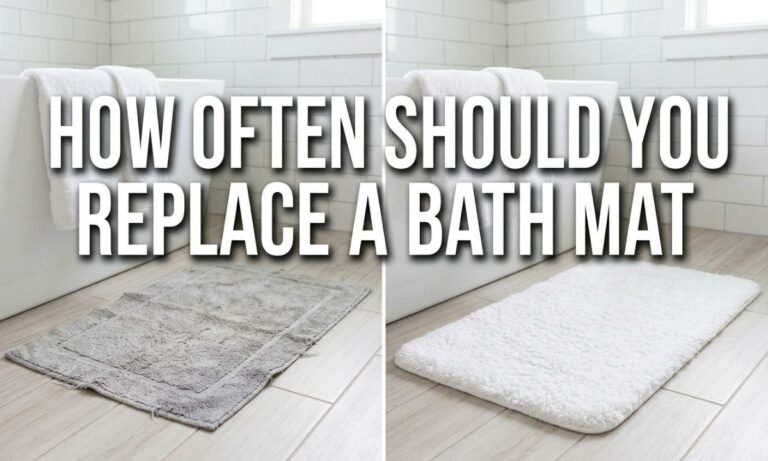
Replace a bath mat when it remains smelly after proper washing, shows persistent mold, or has a damaged backing that no longer grips the floor.
Other warning signs include loose fibers, torn seams, peeling rubber, and curled edges. These problems can make the mat harder to clean or increase the chance of slipping.
There is no single replacement date that fits every bath mat. A well-maintained mat may last longer than one that stays damp every day. Judge its condition rather than relying only on its age.
Signs Your Bath Mat Needs More Care
Your bath mat can show signs of moisture problems before you see visible mold. Pay attention to changes in smell, texture, drying time, and the condition of the floor beneath it.
A clean-looking mat is not always a dry mat. The underside and thick center may hold water even when the top feels normal. Checking these areas can help you catch problems early.
Musty smell
A stale or damp odor may mean the mat is not drying fully or needs washing.
Dark spots
Unusual spots may be dirt, stains, or mold. Inspect and clean the mat according to its material.
Wet underside
Moisture beneath the mat means it needs more airflow and drying time.
Sticky or damaged backing
The backing may be breaking down or reacting with the floor finish.
Wet floor after lifting
Dry the floor and investigate why water is collecting beneath the mat.
What To Do If Your Bath Mat Smells Musty
A musty smell is a sign that your mat needs attention. Remove it from the floor and check the underside, fibers, and surrounding floor for dampness.
Wash the mat if its care label allows it. Use the recommended detergent and drying method. Also clean and dry the floor beneath it.
If the odor returns quickly, look for a moisture problem in the bathroom. A leaking pipe, poor ventilation, repeated splashes, or a mat that is too thick for the room may be part of the problem.
If mold has penetrated a porous mat and cannot be cleaned properly, replacing it may be the more practical choice.
What If You Find Mold Under The Mat?
Lift the mat and inspect the floor carefully. Do not simply cover the affected area with the mat again.
For a small area of mold on a suitable hard surface, the EPA recommends cleaning with detergent and water and drying completely. Follow the surface manufacturer’s cleaning instructions as well.
If the affected area is extensive, water damage is serious, or mold keeps returning, seek qualified help. The EPA advises consulting a professional when mold covers more than about 10 square feet or when there is substantial water damage.
If anyone in the household has health concerns about mold exposure, consult a health professional before attempting cleanup.
Common Mistakes To Avoid When Leaving A Bath Mat Out
Most bath mat problems come from simple habits rather than the mat itself. A few small changes can help you keep the bathroom clean without adding a long daily chore.
The goal is to let the mat dry, protect the floor, and avoid creating a slipping hazard. You do not need to buy a new mat just because you want to leave one on the floor all day.
Leaving a soaked mat flat
A soaked mat needs to be lifted and dried rather than left against the floor.
Checking only the top
The backing and underside can stay wet after the visible fabric dries.
Putting it on a wet floor
Dry the floor before returning the mat to its normal place.
Ignoring a musty smell
A persistent odor deserves cleaning and a check for trapped moisture.
Using the wrong cleaning method
High heat, harsh cleaners, or unsuitable washing cycles can damage some materials.
Ignoring damaged backing
A worn or peeling backing may no longer keep the mat in place.
Should You Fold A Wet Bath Mat?
It is generally better not to fold a wet bath mat for storage. Folding can trap moisture between layers and slow drying.
Spread the mat out or use a suitable drying rack. If the manufacturer recommends a particular drying position, follow that advice.
Should You Put A Bath Mat Over A Heated Floor?
You can use some bath mats on heated bathroom floors, but check both the mat and flooring instructions first. Some backing materials may not be suitable for prolonged exposure to heat.
A thick mat can also reduce heat transfer to the room. Avoid covering areas if the heating system manufacturer warns against it, and never assume that every rubber-backed mat is compatible with every heated floor.
A Simple Daily Bath Mat Care Routine
A simple routine is often enough to keep your bath mat in good shape. The key is to check its moisture level after use and give it time to dry before placing it back on the floor.
This routine works for most everyday bathrooms, but adjust it for thick mats, several daily showers, humid rooms, and moisture-sensitive flooring.
After your morning shower
Lift the mat, spread it out, and run the bathroom fan as needed.
During the day
Let the mat dry fully. Check the floor beneath it if it was heavily soaked.
Before another shower
Make sure the mat is clean, dry, and has a backing that still grips the floor.
At the end of the day
Inspect the mat for damp spots or odor and leave it spread out if it still needs to dry.
Every week or as needed
Wash the mat according to its care label and dry it fully before use.
A Practical Example For A Busy Family Bathroom
Imagine a family of four shares one bathroom. Two people shower in the morning, and two more shower in the evening. The bath mat may receive water several times a day.
Leaving a thick mat flat on the floor between showers may not give it enough time to dry. In this case, lift it after each shower and spread it over a drying rack or suitable rail.
A thinner mat may also be easier to maintain in a busy bathroom. Wash it regularly, check the floor, and replace it when its backing or fabric becomes worn.
A Practical Example For A Guest Bathroom
A guest bathroom may only be used a few times each month. If the mat stays dry and the room has good airflow, there is usually no reason to remove it every day.
After a guest uses the shower, check whether the mat is wet. Lift it if needed, allow it to dry, and wash it before the next use if it has become dirty.
Frequently Asked Questions
Q
Can I leave my bath mat on the floor overnight?
Yes, you can leave a dry bath mat on the floor overnight. Make sure the floor beneath it is dry and the mat is not creating a slipping or tripping hazard.
If you shower at night and the mat becomes wet, hang it or spread it out to dry before going to bed.
Q
Should I pick up my bath mat after every shower?
It is a good idea to lift your bath mat after every shower if it becomes wet. This lets air reach the underside and helps moisture escape.
You do not need to remove a completely dry mat every time. The goal is to prevent dampness from staying trapped between the mat and the floor.
Q
Can a bath mat cause mold on bathroom tiles?
A wet bath mat can contribute to mold growth when moisture remains trapped underneath it. Tile itself is generally less absorbent than wood, but grout lines, cracks, and nearby materials can still hold moisture.
Lift the mat regularly, dry the floor, and improve ventilation if you notice repeated dampness or musty odors.
Q
How long should a bath mat take to dry?
There is no single drying time for every bath mat. A thin cotton mat may dry faster than a thick microfiber or memory foam mat.
Room humidity, ventilation, material, and the amount of absorbed water all affect drying. Instead of relying on a fixed number of hours, check the top, underside, and thickest areas before using it again.
Q
Is it better to hang a bath mat or leave it flat?
Hanging or spreading out a wet bath mat is generally better because it allows air to reach more of the surface. This can help the mat dry faster than leaving it flat against the floor.
For heavy or delicate mats, use a suitable drying rack that supports the material without stretching or changing its shape.
Q
Can I leave a rubber-backed bath mat on the floor all day?
Yes, if the mat and the floor beneath it are completely dry. However, rubber-backed mats can restrict airflow underneath, so lift them after they become wet.
Check the backing regularly for peeling, cracks, and wear. Follow the manufacturer’s instructions to avoid damage to the mat or floor.
Q
Why does my bathroom smell musty even when the bath mat looks clean?
A musty smell may come from moisture trapped inside the mat, beneath its backing, or in another part of the bathroom. A mat can look clean while still holding water in its fibers.
Lift and wash the mat as directed, dry the floor, and check the bathroom for leaks or poor ventilation. If the odor continues, investigate other damp areas instead of assuming the mat is the only cause.
Q
Can I leave a bath mat on a heated bathroom floor?
Some bath mats can be used on heated floors, but compatibility depends on the mat material and heating system. Check both manufacturers’ instructions before placing a mat over a heated surface.
Avoid covering areas that the heating system manufacturer says must remain uncovered. Also check whether the backing could react to prolonged heat.
✦ Wrapping Up
Conclusion
So, is it okay to leave a bath mat on the floor all day? Yes, as long as it stays clean and dry. You do not have to remove a dry bath mat every time you leave the bathroom or put it away before bedtime.
The real concern is trapped moisture. A wet mat can develop unpleasant odors and may support mold growth if it stays damp. This is why lifting it after a shower, spreading it out, and checking the floor beneath it are useful habits.
Your mat material and bathroom floor also matter. Thick microfiber, chenille, memory foam, and rubber-backed mats may need extra drying time. Wood and laminate floors need particular care because trapped water can affect their finish or structure.
Keep the bathroom ventilated, wash your mat according to its care label, and replace it when the backing or fabric becomes damaged. These simple steps can help your bath mat stay fresh without making daily bathroom cleaning difficult.
💡 Key Takeaway
You can leave a dry bath mat on the floor all day. After each shower, lift a wet mat, spread it out to dry, check the floor underneath, and return it only when both surfaces are completely dry.




2 Comments