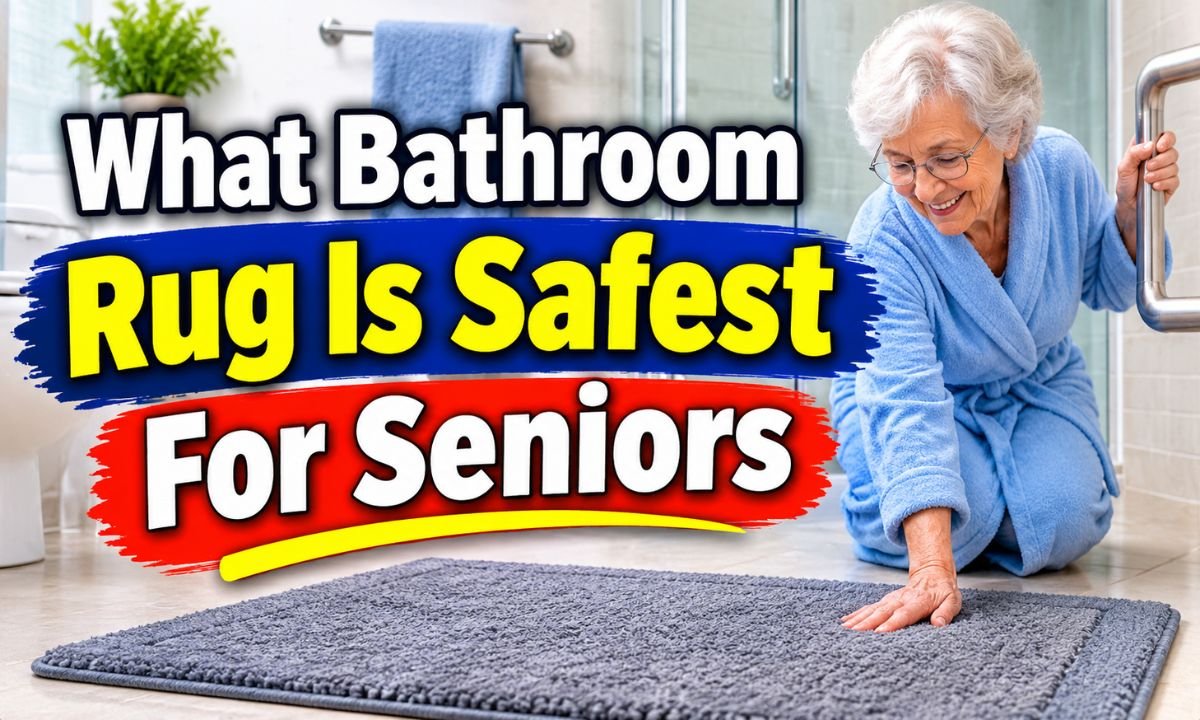
A low-profile bathroom rug with secure, non-slip backing, firm edges, and a flat surface is generally the safer choice for seniors, provided it does not create a trip hazard.
In American homes, bathrooms can become risky places for older adults. A wet tile floor, a small bath mat, or a rug that slides near the toilet can make a simple daily task harder. For seniors who want to stay safe and independent at home, choosing the right bathroom rug is one part of a larger fall-prevention plan.
The safest choice is not always the thickest or softest rug. A low-pile mat with a stable grip on the floor, no curled corners, and enough space to step on it can be a better option. The rug should also stay in place when someone walks across it with wet feet or uses a mobility aid. However, even a non-slip rug cannot make a wet bathroom floor completely safe.
Before buying a bath rug, check its backing, height, size, edge design, and care instructions. Also think about the senior’s balance, walking style, footwear, and use of a cane or walker. If a rug shifts, bunches up, or blocks a walking path, removing it may be safer than replacing it with another rug.
Source: flooringclarity.com
What Bathroom Rug Is Safest for Seniors?
A low-pile bathroom rug with a strong, floor-compatible non-slip backing is generally the best starting point for senior safety. It should lie flat, have smooth and secure edges, and remain stable during normal use. A mat that moves underfoot can create a sudden loss of balance, even if its surface feels soft.
Look for a rug designed for bathroom floors rather than a decorative area rug. Its backing should be suitable for the exact floor material in the home. Some backing materials may grip one type of floor but slide, leave marks, or react poorly on another.
There is one important exception. If the senior uses a walker, wheelchair, or has trouble lifting their feet, even a low rug may create an obstacle. In that case, a clear, dry floor may be safer than adding a mat.
Source: caregiver-aid.com
Low profile
A thin, flat design reduces the height change between the floor and the rug.
Secure backing
The underside should grip the floor without sliding, bunching, or shifting during use.
Flat edges
Smooth edges help reduce the chance of catching a toe or mobility aid.
Easy care
A washable mat that dries fully is easier to keep clean and free from dampness.
Suitable size
The rug should cover the intended standing area without extending into the walking route.
Why a Low-Pile Rug Is a Better Choice
Pile is the height of the fibers on a rug. A low-pile rug has short fibers and a flatter surface. This can make it easier to step onto and off than a thick, fluffy mat.
A thick rug may feel comfortable under bare feet, but it can create a raised edge. That edge may catch a toe, cane tip, walker leg, or wheelchair wheel. A low-pile design reduces this obstacle, although it does not remove every fall risk.
Less height difference
A flatter mat creates a smaller step between the floor and the rug.
Easier mobility
Short fibers are less likely to trap small wheels or mobility aid tips.
Simpler cleaning
A flat surface is often easier to shake out, wash, and dry.
When No Bathroom Rug May Be Safer
A bathroom rug is not essential for every senior. Someone who shuffles their feet, has limited leg strength, or depends on a walker may find even a thin rug difficult to cross. A loose mat can also be a problem when a caregiver helps with transfers.
If the rug creates an obstacle, remove it and focus on keeping the floor dry. A properly installed grab bar and suitable non-slip flooring may offer more useful support than a decorative mat. Ask an occupational therapist or other qualified professional to assess the bathroom if walking or transfers are difficult.
Frequent toe catching
Remove the rug if the senior repeatedly catches a foot on its edge.
Walker or wheelchair use
Check whether the device can cross the rug without catching or tipping.
Poor balance
Get an individual safety assessment if the senior struggles to stand or turn.
Which Bathroom Rug Features Matter Most?
The safest rug is one that stays flat and stable on the floor while allowing the senior to move without catching their feet. Do not judge a rug by its softness or appearance alone. Check how the backing works, how high the pile sits, and whether the edges stay flat after washing.
A product description may use words such as non-slip, anti-skid, or safety backing. These labels are not a guarantee that the mat will stay in place on every surface. Floor finish, water, soap residue, dust, and wear can all affect grip.
Source: caregiver-aid.com
Non-slip backing
Look for a backing made for the bathroom floor material. Follow the manufacturer’s instructions for cleaning and use.
Flat construction
Choose a design without thick borders, raised seams, or curled corners.
Firm surface
The top should feel stable rather than deeply cushioned or uneven.
Water control
A useful bath mat absorbs some water and can dry fully between uses.
Secure stitching
Check that the edges and seams do not loosen or form raised loops.
Rubber Backing vs. PVC Backing
Rubber and PVC are common materials used in rug backing. Both may offer grip, but neither is automatically safe on every floor. Their performance depends on the product design, floor finish, moisture, and care instructions.
A rubber-backed rug may be suitable for some bathroom floors, but certain backing materials can discolor or damage sensitive finishes. PVC-backed products also vary in texture and grip. Check the flooring manufacturer’s guidance before placing either type on vinyl, wood, laminate, or a specialty finish.
Do not assume that a rug is safe just because the underside feels sticky. Test its placement on a clean, dry floor while the bathroom is empty. If the backing moves, leaves marks, or becomes slippery, stop using it.
Rubber backing
Can provide grip, but check floor compatibility and the manufacturer’s care instructions.
PVC backing
Can also provide grip, but quality and performance differ between products.
No backing
A plain fabric rug can slide easily and should not be used as a loose bathroom mat.
Why Flat Edges and a Firm Surface Matter
A rug can have a good backing and still cause a fall if its edges curl. Moisture, poor storage, worn stitching, and repeated washing may change the shape of a mat. Inspect the full edge before each use.
A firm, low surface is also easier to cross than a deep pile. This matters when a senior takes short steps or uses a mobility aid. Avoid thick fringe, tassels, loose loops, and decorative borders that may catch a foot.
Avoid fringe
Loose strands can catch toes or mobility aid parts.
Check corners
Replace a mat if its corners keep lifting after proper cleaning and drying.
Which Bathroom Rug Materials Are Best for Older Adults?
Material affects comfort, water absorption, drying time, and cleaning. However, no fiber can make a poorly placed or loose rug safe. Start with the backing and shape, then choose a material that fits the household’s washing and drying routine.
Cotton, microfiber, and some synthetic fibers are common bath mat materials. Each has trade-offs. A mat that stays wet for a long time can become unpleasant and may contribute to odor or surface problems, so regular drying matters.
Source: askgazebo.com
Cotton
Often feels familiar and absorbs water, but a thick cotton mat may take longer to dry.
Microfiber
Can feel soft and absorb moisture, but check pile height and how well the mat dries.
Low-pile synthetic fiber
May offer a flatter surface and simple care, depending on the construction.
Memory foam
Can feel cushioned, but thick foam may create a raised obstacle and can hold moisture.
Bamboo or wood slats
Can provide a firm surface, but the design must be stable, dry, and free of gaps or sharp edges.
Is Cotton a Safe Choice?
Cotton can work when the rug has a secure backing, a low profile, and a flat shape. It absorbs water, which can help manage small drips after a shower. The downside is that a thick cotton rug may stay damp if it is not hung up or dried between uses.
Choose a design that can be washed according to its care label. After washing, check the backing and edges because heat or repeated cleaning may affect some materials. Never return a damp or misshapen rug to the bathroom.
Good fit
A thin cotton mat with compatible non-slip backing and easy washing.
Poor fit
A thick, loose cotton rug that shifts or remains wet for long periods.
Are Memory Foam Bath Mats Safe for Seniors?
Memory foam mats are designed to feel soft underfoot, but softness is not the same as stability. Some models are thick enough to create a noticeable step, and the foam may compress unevenly when someone stands on it.
A senior with steady balance may be comfortable using a thin, stable model if its backing is compatible with the floor. For someone who shuffles, uses a walker, or has trouble stepping over raised edges, a flatter mat or a bare dry floor may be a better choice.
Check thickness
Avoid a high cushion that creates a raised edge.
Check compression
The surface should not feel unstable or uneven under normal standing pressure.
Check drying
Follow care instructions and make sure the full mat dries before reuse.
How to Choose the Right Rug Size and Placement
A bathroom rug should sit where the senior needs a dry place to stand, not where it blocks movement. A large rug is not always safer. It may cover more floor, but it can also create more edges and obstacles.
Measure the space before buying. Consider the route from the bathroom door to the toilet, sink, shower, and any seat or transfer area. Keep the walking route clear and avoid placing a mat where a walker must turn or where a caregiver needs to stand.
Source: www.pinterest.com
Near the sink
Use a small, flat mat only if it stays outside the main walking route.
Outside the shower
Place a suitable mat on a dry, level area where the senior can step onto it without reaching or turning awkwardly.
Near the toilet
Avoid wrapping a loose rug around the toilet base if it narrows the space for safe sitting and standing.
At the doorway
Keep the door swing and entry path free from raised edges and loose mats.
How to Measure Before Buying
Use a tape measure to check the open floor area. Measure the width and length of the place where the mat may sit, then compare those measurements with the full size of the rug, including its border.
Leave a clear route between fixtures. Do not force a mat into a narrow gap just because it fits the space. A smaller mat placed safely may be better than a large mat that touches several walking paths.
Measure the clear floor
Record the usable width and length, not just the bathroom’s full dimensions.
Check the door
Make sure the rug does not catch under the door or shift when the door moves.
Plan mobility aid access
Allow enough room for the senior and their device to turn and move without crossing loose edges.
Where Should a Bath Mat Go After a Shower?
The mat should be in a position that allows the senior to step onto a stable surface without making a long reach or turning on a wet floor. If the person needs to hold a grab bar while stepping out, the mat must not interfere with that movement.
A caregiver or occupational therapist can help assess the best position when the senior needs assistance. The correct location depends on the shower entrance, grab bars, floor slope, and the person’s ability to stand and turn.
Keep the path short
Avoid making the senior take extra steps across a wet floor to reach the mat.
Keep support within reach
Do not place a rug where it blocks access to a grab bar or stable support.
How to Check Whether a Bathroom Rug Is Safe
Check a new rug before the senior uses it. The floor and backing must be clean and dry, and the mat must sit flat. Follow the product instructions because some backing materials are not suitable for every type of flooring.
Do not ask an older adult with poor balance to test a rug by walking across it alone. An able caregiver can inspect the mat first, then arrange a safe assessment with the senior’s usual mobility aid if needed.
Source: caregiver-aid.com
Inspect the underside
Look for damaged, worn, cracked, or peeling backing.
Check all edges
Make sure the corners and borders lie flat without curling.
Check the floor
Remove water, soap residue, dust, and loose debris before placing the rug.
Check for movement
With the bathroom empty, apply gentle pressure to different parts of the mat and see whether it shifts.
Check the walking route
Make sure the mat does not block a walker, cane, wheelchair, or safe transfer.
A Simple Bathroom Rug Safety Checklist
Use this checklist before putting a mat into daily use. It is a practical inspection, not a certified safety test. If the rug moves or creates a barrier, do not rely on its non-slip label.
Backing
The backing is intact and approved for the floor surface.
Corners
All corners remain flat and do not curl upward.
Surface
The top is even, without loose loops, holes, or deep ridges.
Moisture
The rug is dry enough for safe use and has no wet underside.
Access
The mat does not obstruct a walking aid or a transfer area.
What If the Rug Slides?
Stop using a rug that slides. First, remove it and inspect both the floor and the backing. Clean them according to the floor and product instructions, then allow both to dry fully.
If the mat still shifts, its backing may be worn or unsuitable for that floor. Replace it with a compatible design or leave the area clear. Do not use loose towels, folded fabric, or improvised tape as a quick fix.
Do not keep testing it in use
A sliding mat should not remain in the senior’s walking route.
Do not add random adhesive
Unapproved tape or glue may damage the floor or fail when wet.
Replace damaged backing
A mat with worn grip should be removed from service.
How to Keep a Senior’s Bathroom Rug Clean and Dry
A clean, dry rug is easier to use and less likely to develop unpleasant odors. Water, soap, and body oils can build up in the fibers and on the backing. A damp mat may also make the floor underneath wet, so drying both sides matters.
Follow the washing label rather than assuming every bath mat can go in a washing machine or dryer. Some backing materials can break down with high heat or harsh cleaning products. If the care label is missing, contact the maker or choose a safer cleaning method that does not damage the material.
Source: jennifermehditash.com
Lift and dry
After use, hang the mat or place it in a suitable spot where air can reach both sides.
Wash as directed
Use the care instructions for water temperature, detergent, and drying.
Clean underneath
Remove the rug and clean the floor so moisture and dirt do not collect below it.
Inspect after washing
Check whether the backing has cracked, peeled, stiffened, or lost its grip.
Replace when worn
Remove a mat that no longer lies flat or stays in place.
How Often Should You Wash a Bathroom Rug?
There is no single washing schedule that suits every household. A mat used by several people or exposed to frequent splashes may need more frequent cleaning than one used in a dry, lightly used bathroom.
Wash it when it becomes dirty, smells unpleasant, or remains damp despite normal drying. Check it regularly, and do not wait for visible mold or a strong odor before taking action.
After heavy use
Clean the mat when it becomes soaked or visibly dirty.
During routine care
Inspect it often and follow the manufacturer’s cleaning schedule.
After spills
Remove and dry the mat if soap, water, or another liquid gets underneath.
When Should You Replace a Bath Mat?
Replace the rug when its backing no longer grips, its edges curl, its fibers become loose, or it cannot be cleaned and dried properly. A mat that looks acceptable from above may still have a worn underside.
Do not rely only on age to judge condition. A heavily used rug may wear out sooner than a lightly used one. For senior safety, its current shape and stability matter more than how new it looks.
Worn backing
The underside is cracked, peeling, brittle, or slippery.
Damaged edges
The borders curl or create raised spots.
Persistent dampness
The mat does not dry fully between uses.
Loose fibers
Threads, loops, or pieces of backing detach from the mat.
Other Bathroom Changes That Help Prevent Falls
A bathroom rug cannot prevent every fall. Many bathroom hazards come from wet floors, poor lighting, a lack of support, and unsafe movement between the shower, toilet, and sink. A safer bathroom plan should address the whole room.
The Centers for Disease Control and Prevention advises older adults and caregivers to address home hazards as part of fall prevention. A bathroom assessment can help identify problems that a rug alone cannot fix.
Source: flooringclarity.com
Install grab bars
Use properly installed grab bars near the toilet and shower where support is needed. A towel rail is not a substitute.
Improve lighting
Make sure the bathroom entrance, toilet, sink, and shower are easy to see at night.
Keep the floor dry
Wipe up splashes promptly and fix leaks that leave water on the floor.
Use a suitable shower aid
A shower chair or transfer bench may help someone who cannot stand safely for the full shower.
Add stable support
Ask a qualified professional about safe grab bar locations and other changes for the person’s needs.
Do Non-Slip Bath Mats Replace Grab Bars?
No. A non-slip bath mat and a grab bar serve different purposes. A mat may help provide a more stable standing surface, while a properly installed grab bar gives the person a fixed handhold for balance and support.
A suction-cup bath mat is not a substitute for a grab bar. Nor should a senior pull on a towel rail, shower door, or glass panel to steady themselves. These items may not be designed to support body weight.
Use the right support
Choose grab bars designed for the task and installed according to the manufacturer’s instructions.
Check the installation
A qualified installer can confirm that the bar is attached to a suitable structure.
Should Seniors Use a Non-Slip Mat Inside the Shower?
The area inside a shower is different from the dry floor outside it. A bath mat designed for a dry bathroom floor should not automatically be used inside a shower or bathtub.
For a tub or shower, choose a product specifically designed for wet use and compatible with that surface. Follow the instructions for cleaning and placement. A shower chair, grab bars, and a professional safety assessment may also be needed.
Use the correct product
Choose a wet-area mat designed for the exact tub or shower surface.
Keep suction surfaces clean
Follow the maker’s directions and check that the mat is secure before use.
Do not treat a mat as a full solution
Consider grab bars and a seat if standing in the shower is difficult.
Common Bathroom Rug Mistakes to Avoid
Many rug-related falls are linked to poor placement, worn materials, or a mismatch between the rug and the person’s mobility needs. Avoid treating a product label as proof that the mat is safe in every situation.
The best approach is to keep the floor clear, choose a mat only when it helps, and inspect it often. If the senior has fallen or nearly fallen, address the cause rather than simply buying a thicker rug.
Source: flooringclarity.com
Buying the thickest mat
Extra padding can create a raised edge and make it harder to lift the feet.
Choosing by appearance
A stylish rug may have no suitable backing or may be too large for the room.
Using a loose towel
A folded towel can bunch up and slide, creating an unstable surface.
Ignoring floor compatibility
Some backing materials can stain, stick to, or damage certain floor finishes.
Leaving a wet rug down
A wet mat may allow moisture to collect beneath it and affect floor grip.
Keeping a damaged mat
Worn backing and curled edges can turn a once-useful rug into a hazard.
What If a Senior Has Already Fallen?
Do not assume the rug was the only cause. A fall may involve balance, medication effects, vision, footwear, muscle weakness, blood pressure changes, or other health factors. A health professional should assess a fall, especially if it is new or repeated.
If the person may have a serious injury, has severe pain, cannot get up safely, or has hit their head, seek urgent medical help. Do not move someone with a possible serious neck, back, or hip injury unless there is immediate danger.
Remove the immediate hazard
Keep the bathroom clear and dry while the cause is reviewed.
Report repeated falls
Arrange a clinical review to check for health, medicine, vision, and mobility factors.
Review the room
Ask about a home safety assessment if the bathroom layout may have contributed.
How to Choose a Bathroom Rug for Different Senior Needs
The right choice depends on how the person moves around the bathroom. A senior who walks without help may be able to use a thin, stable mat. Someone who uses a walker or has trouble lifting their feet may need a clear floor instead.
Do not use age alone to decide which rug is safe. Two people of the same age may have very different balance, strength, vision, and mobility needs. Consider the person’s usual movement and ask a qualified professional when the choice is unclear.
Source: bestbathrugs.com
For an active senior
A thin, low-pile mat with compatible non-slip backing may work if it stays flat and does not shift.
For someone with a cane
Check whether the cane tip catches on the edge or presses into the pile.
For someone with a walker
A clear walking route may be safer than a loose mat, especially if the walker wheels catch.
For someone with limited balance
Prioritize grab bars, a stable shower seat, and a professional assessment over a soft rug.
For wheelchair users
Avoid mats that catch wheels or interfere with transfers and turning space.
Best Choice for Seniors Who Use Walkers
A walker needs a firm, clear path. A rug can catch a front wheel or create a small height change that makes the device harder to move. If the senior uses a walker every time they enter the bathroom, consider leaving the walking route free of rugs.
If a mat is needed outside the shower, get an individual assessment of its position and thickness. Never place a loose mat where the walker must cross it to reach the toilet or sink.
Prioritize clear access
Keep the walker route open and wide enough for safe turning.
Avoid thick pile
Deep fibers may resist wheels and make movement less steady.
Best Choice for Seniors With Sensitive Feet
A senior with sensitive feet may prefer a soft surface, but comfort should not come at the cost of stability. Look for a low-profile material with a smooth, even feel and secure backing.
If the person has reduced feeling in their feet, check the floor and mat temperature and condition regularly. They may not notice a wet, rough, or damaged area. A clinician can advise on foot care when sensation is reduced.
Choose a smooth surface
Avoid rough fibers, hard ridges, and loose loops.
Check the mat often
Look for damp areas, worn spots, and debris that could irritate the feet.
Frequently Asked Questions
Q
Are rubber-backed bathroom rugs safe for seniors?
They can be suitable when the backing is designed for the bathroom floor and remains firmly in place. Check the flooring manufacturer’s guidance because some rubber compounds can discolor or damage certain surfaces. Remove any rug that shifts, curls, or leaves marks.
Q
Are thick bathroom rugs dangerous for elderly people?
They can create a trip hazard for people who shuffle their feet, have poor balance, or use a cane or walker. Thick pile and raised borders make the step onto the rug higher. A low-profile mat or a clear floor may be safer.
Q
Should seniors use a bathroom rug near the toilet?
Only if it stays flat and does not block the space needed to sit, stand, or turn. A small rug around the toilet may create several loose edges. If the area is narrow, keeping it clear is often the simpler choice.
Q
What is the safest bathroom rug for someone who uses a walker?
A clear floor is often the safest starting point because even a thin rug can catch a walker wheel or create a height change. If a mat is needed, have its placement and compatibility checked by a qualified professional. Keep the main walking route free of loose rugs.
Q
Can a non-slip bathroom rug prevent falls?
A suitable non-slip rug may reduce movement of the mat itself, but it cannot prevent all bathroom falls. Wet floors, poor balance, weak lighting, and a lack of support can still create risks. Use the rug as one small part of a broader safety plan.
Q
Is a bath mat inside the shower the same as a bathroom rug?
No. A bath mat for use inside a tub or shower is made for a wet area, while a bathroom rug is usually designed for the dry floor outside it. Use each product only as directed and check that it is suitable for the exact surface.
Q
How can I stop a bathroom rug from sliding?
Remove the rug and clean and dry the floor and backing according to their care instructions. Check that the backing is intact and suitable for the floor. If it still slides, replace it or remove it rather than relying on improvised tape or a folded towel.
✦ Wrapping Up
Conclusion
The safest bathroom rug for seniors is usually a low-profile, firmly backed mat with a flat surface and smooth edges. It should be compatible with the floor, easy to clean, and placed away from the main walking route. A thick, soft rug may feel nice, but it is not the best choice if it creates a raised edge or shifts underfoot.
The needs of the person matter more than the product label. A senior who walks steadily may be able to use a suitable bath mat, while someone who shuffles, uses a walker, or needs help with transfers may be safer with no loose rug at all. When in doubt, seek an occupational therapy or home safety assessment.
Remember that a bathroom rug is only one part of fall prevention. Keep the floor dry, improve lighting, install suitable grab bars, and use the right shower aids. Check the rug often and remove it as soon as it becomes worn, damp, loose, or uneven.
💡 Key Takeaway
Before buying a bathroom rug, measure the space, check floor compatibility, choose a low-profile design with secure backing, and make sure it does not obstruct the senior’s normal walking or mobility aid route.








2 Comments