Yes. A candle warmer lamp is generally safer than burning a candle because it melts wax without an open flame. However, it still creates heat and has electrical and burn risks.
Across the United States, scented candles are common in living rooms, bedrooms, bathrooms, and home offices. They help create a cozy space, but a small flame can become a serious fire risk. curtains, bedding, paper, and other household items can catch fire if they get too close. This is one reason many American households are switching to electric candle warmer lamps.
A candle warmer lamp uses a heated bulb to melt the wax in a jar candle. It releases fragrance without lighting the wick. This removes the direct fire risk that comes with an open flame. It can also reduce smoke and soot from wick burning. Still, the lamp itself gets hot, the wax can burn skin, and a faulty electrical device can cause trouble. The safest choice depends on how you use it, where you place it, and the quality of the device.
Source: cdn.mos.cms.futurecdn.net
Is A Candle Warmer Lamp Actually Safer Than A Burning Candle?
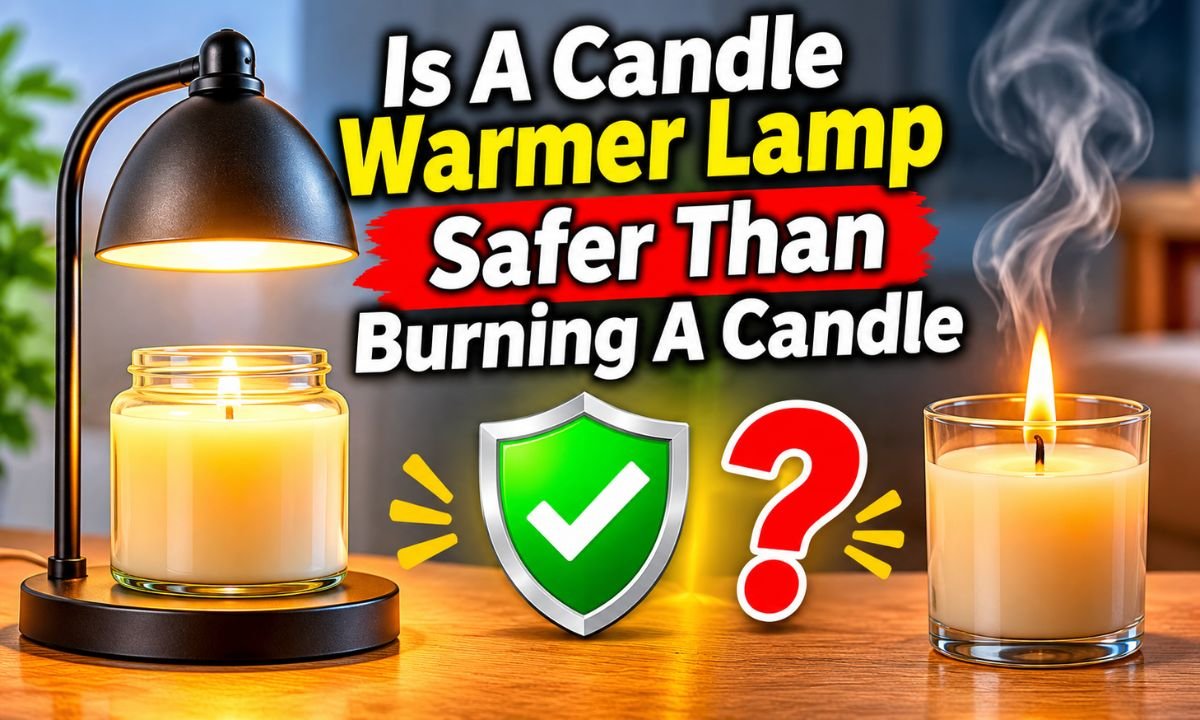
Yes. A candle warmer lamp is generally the safer option when comparing the fire risks of a lamp and a lit candle. The main reason is simple: the lamp warms wax without creating an open flame. A burning candle has a flame that can touch nearby objects or spread fire if the candle tips over.
The National Fire Protection Association (NFPA) reports that U.S. fire departments responded to an estimated average of 5,894 home structure fires caused by candles each year during 2020 through 2024. These fires led to an annual average of 63 civilian deaths and 532 civilian injuries. The figures show why reducing open-flame use at home matters.
A warmer lamp removes one major source of danger, but it does not remove every hazard. It is an electrical heating device. Its bulb, shade, base, and the wax beneath it can become hot during use. A poor-quality lamp or unsafe setup can still lead to burns, electrical problems, or fire.
The fair conclusion is that a properly made and correctly used candle warmer lamp usually has a lower fire risk than a burning candle. It should not be treated as a device that is safe to leave running without supervision.
Source: aircomfortlab.com
No open flame
The lamp melts the wax with heat from a bulb instead of lighting the wick. This removes the direct flame that can ignite nearby objects.
Less risk from tipping
A candle that tips while burning can spread hot wax and an active flame. A warmer lamp has no burning wick, although a tipped lamp can still spill hot wax.
Reduced wick smoke
The wax releases fragrance without wick combustion. This avoids the smoke and soot that can come from a burning wick.
Electrical hazards remain
A damaged cord, loose plug, poor wiring, or unsuitable bulb can create a separate safety problem.
What Makes An Open Flame So Risky?
A candle flame can ignite items that are easy to overlook. A curtain may move in a draft. A blanket may slide off a chair. A piece of paper may fall near the candle. Once a flammable item catches fire, the problem can grow quickly.
The NFPA reports that more than half of home candle fires begin when combustible items are too close to the flame. This includes bedding, furniture, curtains, decorations, and clothing. A warmer lamp avoids this particular flame hazard, although you should still keep its heated parts away from items that can burn.
Bedroom hazards
Bedding, pillows, blankets, and curtains can sit close to a bedside candle.
Pet and child hazards
A child or pet may knock over a candle or touch its flame.
Distraction hazards
A person may forget to extinguish a candle before leaving a room or going to sleep.
How Does A Candle Warmer Lamp Work?
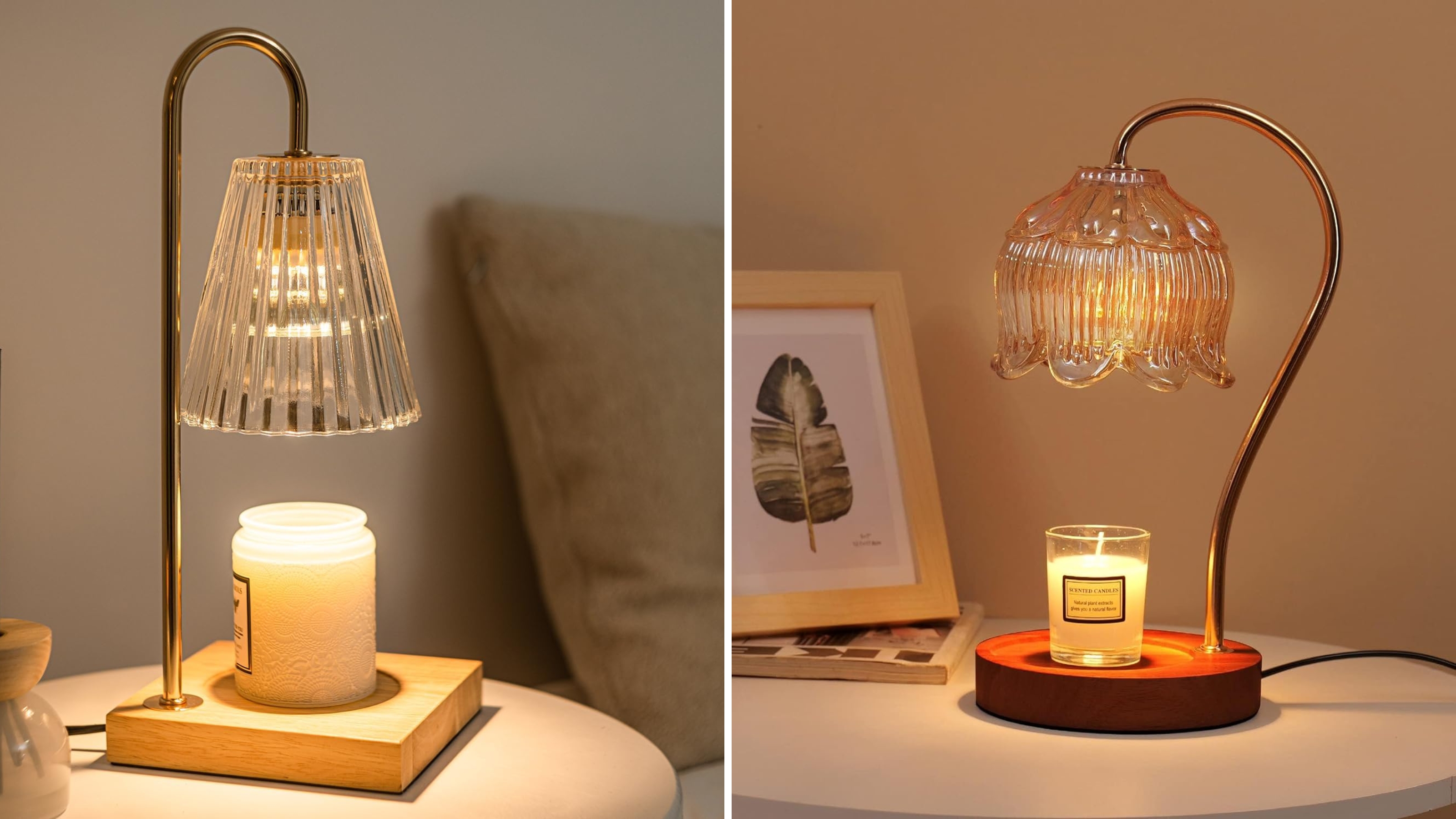
A candle warmer lamp uses a special heating bulb to warm the wax from above. You place a suitable jar candle on the base, position it beneath the bulb, and turn on the lamp. Heat slowly melts the top layer of wax and releases the candle’s fragrance.
Unlike a traditional candle, the wick does not need to burn. The wax stays in its container while the fragrance spreads through the room. Some models also include a dimmer, an adjustable lamp height, or an automatic timer.
The bulb is a heat source, not just a decorative light. It can become hot enough to cause a burn. The melted wax can also remain hot after you switch off the lamp. Always allow the unit and candle to cool before moving or cleaning them.
Source: m.media-amazon.com
Step 1: Position the candle
Place a compatible jar candle on the lamp base. Keep it centered under the bulb.
Step 2: Adjust the lamp
Set the height according to the manufacturer’s instructions. Do not guess the required bulb-to-candle distance.
Step 3: Turn on the lamp
Connect it to a suitable outlet and switch it on. Use the approved bulb and heat settings.
Step 4: Watch the melting wax
Check that the wax melts normally and stays inside its container. Turn the lamp off if you notice unusual heat, smoke, or damage.
Step 5: Switch off and cool
Turn off and unplug the lamp when finished, if the manual directs you to do so. Wait until the bulb and wax are cool before handling them.
Does The Wax Burn Inside A Candle Warmer Lamp?
No. The wax melts, but it does not burn in the way it does when a candle wick is lit. The bulb supplies heat to the wax, allowing its fragrance to spread without a flame.
This difference matters because melting and burning are not the same process. A melted wax pool can still be hot enough to cause a painful burn. Never touch it just because there is no visible flame.
Melting
Heat changes solid wax into liquid wax. The fragrance is released into the surrounding air.
Burning
A lit wick supports a flame that uses fuel and oxygen. This process can produce combustion byproducts.
Candle Warmer Lamp Vs. Burning Candle: Main Safety Differences
Both options release fragrance, but they do so in different ways. A burning candle uses a flame, while a warmer lamp uses electricity and a heated bulb. This changes the types of risks you need to manage.
The table below compares their main safety features. It focuses on normal household use rather than claiming that every lamp or candle has the same level of quality.
Source: bria.com.ph
Fire risk
A warmer lamp removes the open flame. A burning candle can ignite nearby materials if it is too close to them or gets knocked over.
Burn risk
Both can cause burns. A lamp has a hot bulb and melted wax, while a candle has a flame, hot wax, and a hot container.
Electrical risk
A warmer lamp needs electricity and can have wiring or plug problems. A regular candle does not need a power supply.
Smoke and soot
A warmer does not produce wick smoke or soot through combustion. A burning candle may produce both.
Supervision
Both need safe handling. A warmer lamp should not be assumed safe to leave running unattended.
Power outages
A warmer lamp will not work without electricity. A candle can still burn, but it is not a recommended emergency light source.
Which Option Has The Lower Fire Risk?
A properly used candle warmer lamp generally has the lower fire risk because it removes the open flame. This is its biggest safety advantage. It is especially useful in homes where a traditional candle could be close to loose fabric, decorations, or other combustible items.
However, an electrical warmer is not fireproof. A faulty heating part or unsuitable bulb can overheat. The U.S. Consumer Product Safety Commission (CPSC) has documented a recall involving electric candle warmers after heating elements detached and melted plastic housings. The reported incidents included two fires and nine cases of property scorching.
That recall involved a particular older warmer model, not all modern candle warmer lamps. Still, it shows why product quality, recalls, and proper use matter.
Lower flame-related risk
The warmer does not have a burning wick that can set nearby objects alight.
Separate electrical risk
A damaged or poorly made warmer may overheat or develop an electrical fault.
Which Option Produces Less Smoke?
A candle warmer lamp generally produces less smoke and soot because the wick does not burn. This can help reduce visible smoke and black marks that may appear when a candle burns poorly or sits in a draft.
This does not mean that warming scented wax creates completely clean or fragrance-free air. The candle can still release fragrance chemicals and other volatile compounds as the wax warms. People who react to scented products may still notice irritation or discomfort.
Warmer lamp
No burning wick means no wick-generated smoke or soot.
Burning candle
A flame may produce soot and combustion byproducts, especially when the wick is not maintained or the candle burns poorly.
Possible Safety Risks Of Using A Candle Warmer Lamp
A candle warmer lamp has fewer open-flame hazards, but it still needs care. It uses heat and electricity in the same small area. Understanding the possible problems helps you prevent accidents before they happen.
The most important risks are hot surfaces, melted wax, electrical faults, unstable placement, and misuse. Some problems come from the lamp itself, while others come from the way it is used.
Source: image9.slideserve.com
Hot bulbs
The warming bulb can become very hot during operation. Touching it or changing it too soon can cause a burn.
Hot melted wax
The wax can cause skin burns if it spills or touches your hands. A hot candle jar can also be painful to handle.
Electrical faults
Damaged cords, loose plugs, faulty switches, and poor wiring can create shock or fire hazards.
Overheating
Using an incorrect bulb or ignoring the manufacturer’s instructions can expose the lamp to excessive heat.
Unstable placement
A lamp near a table edge may fall if someone bumps the table or a pet knocks into it.
Flammable surroundings
Paper, curtains, blankets, and decorations should not touch the hot parts of the lamp.
Can A Candle Warmer Lamp Catch Fire?
Yes, although it does not use an open flame. An electrical fault, damaged heating component, or incorrect bulb can cause overheating. If a hot part comes into contact with combustible material, a fire may start.
A product recall is a useful reminder that electric warmers are not free from equipment failures. In the CPSC’s documented Candlsense warmer recall, the internal heating element could detach and melt the plastic casing. The recall covered specific models, so it should not be treated as evidence that every warmer has the same defect.
Check the model number and manufacturer before buying. Look for a recognized electrical safety certification, inspect the cord and plug, and stop using the lamp if it smells like burning plastic, sparks, or behaves unusually.
Burning smell
Switch off the unit if you smell burning plastic or insulation. Unplug it only if you can do so safely.
Sparks or crackling
Stop using the lamp. Do not touch exposed wires or attempt to repair live electrical parts.
Excessive heat
Turn off the lamp if its base, cord, or plug becomes unusually hot.
Visible damage
Replace a damaged unit rather than continuing to use it.
Can Hot Wax Cause Burns?
Yes. Melted candle wax can cause burns even though the wick is not lit. The wax may also spill if the candle jar is knocked over, moved too soon, or heated beyond its intended use.
Never lift a candle while its wax is hot. Let the wax cool and become solid before cleaning, moving, or storing the candle. If hot wax gets on your skin, cool the affected area with cool running water and seek medical advice for a serious burn.
Do not touch the wax pool
Wait for the wax to cool before handling the candle.
Avoid moving the lamp
Moving a running warmer can spill hot wax or cause the unit to fall.
Keep children away
Place the lamp where children cannot reach the bulb, hot jar, or melted wax.
Can A Poor-Quality Candle Warmer Cause Electric Shock?
Yes. A warmer lamp is an electrical appliance, so poor insulation, damaged wiring, or a faulty plug can create an electric shock risk. A device that looks attractive may still have weak internal construction.
Choose a lamp with a recognized safety certification, such as an applicable UL Listed or ETL Listed mark, and check that the certification applies to the actual product. A seller’s claim that a product is safe is not the same as independent certification.
Never use a lamp with a damaged cord, exposed wires, a loose plug, or signs of water damage. Keep it away from sinks, bathtubs, wet countertops, and other damp areas.
Check the plug
Do not use a plug that is cracked, loose, or discolored.
Check the cord
Replace a damaged lamp rather than wrapping damaged wiring with tape.
Keep hands dry
Never plug in or unplug the unit with wet hands.
How To Use A Candle Warmer Lamp Safely
The safest way to use a candle warmer lamp is to follow its manual, keep it away from flammable materials, and switch it off when you finish. Good habits can reduce the chance of burns, electrical faults, and overheating.
Before using a new lamp, check its bulb type, wattage, candle size limits, placement rules, and timer settings. These details can differ from one model to another. Do not assume that instructions for one lamp apply to another.
Source: m.media-amazon.com
Choose a stable surface
Place the warmer on a level, firm, heat-resistant surface where it cannot tip over easily.
Keep it away from flammable items
Do not place curtains, paper, bedding, clothing, or decorations near the hot bulb or lamp shade.
Use the correct bulb
Install only the bulb type and wattage approved by the manufacturer. A higher-watt bulb can create excessive heat.
Use a suitable candle
Check the jar material, candle size, and container limits in the lamp instructions.
Keep the area clear
Remove loose items from the lamp base and nearby surfaces before turning it on.
Switch it off after use
Turn off the lamp when you finish and unplug it if the manufacturer recommends this.
Step 1: Read The Manufacturer’s Instructions
Start with the manual before plugging in the lamp. Check the approved bulb, maximum candle size, lamp height, and recommended use time. Some models have timers, while others rely on a manual switch.
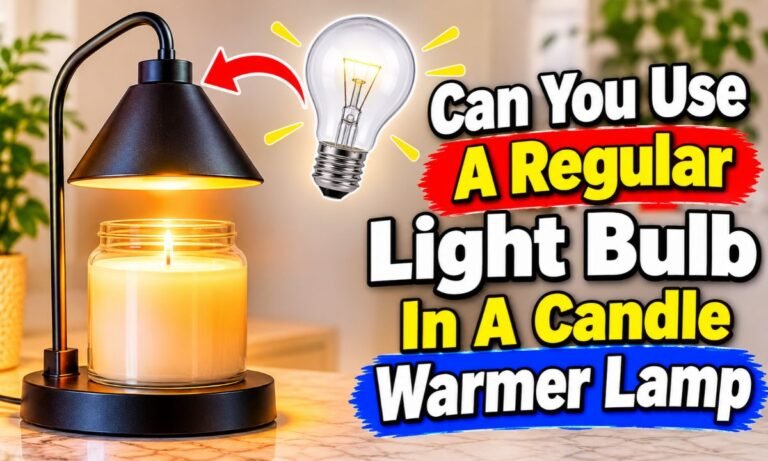
Never use a bulb simply because it fits the socket. The correct shape and wattage matter. A bulb with too much power may create more heat than the lamp can safely handle.
Check the wattage
Use the exact wattage stated in the manual.
Check the candle limit
Do not use a jar that is too tall, wide, or heavy for the lamp.
Step 2: Pick A Safe Location
Place the warmer on a firm surface away from curtains, furniture edges, bedding, and paper. Avoid placing it near a window where moving curtains could reach the hot bulb or shade.
A clear desk or stable side table may work well if the lamp is away from traffic and the cord cannot be pulled. Avoid narrow shelves and crowded bedside tables.
Good location
A stable, dry, level surface with clear space around the lamp.
Poor location
A crowded nightstand, unstable shelf, or surface near loose curtains.
Step 3: Check The Electrical Parts
Inspect the cord, plug, switch, and lamp before each use. If you see exposed wires, cracks, loose connections, or damaged insulation, do not switch on the device.
Plug the warmer into a suitable wall outlet. Avoid overloading an outlet or using an unsuitable extension cord. If the plug or outlet becomes hot, stop using the device and have the electrical issue checked.
Inspect the cord
Look for cuts, bends, exposed wires, and damaged insulation.
Check the outlet
Use an outlet that is in good condition and suitable for the appliance.
Step 4: Never Light The Candle Under The Lamp
Use the candle warmer as a replacement for lighting the wick, not as an extra heat source. Never burn the candle while the lamp is on. Doing so can add unnecessary heat and may damage the candle or container.
Some candle manufacturers also warn against returning a candle to normal burning after warming it. Heating may affect the wick position and the candle’s intended performance. Follow the candle maker’s instructions before changing how you use it.
Do not combine heating methods
Use either the warmer lamp or the candle wick, never both at the same time.
Check candle compatibility
Follow the candle manufacturer’s guidance about warming and later burning.
Step 5: Turn It Off And Let It Cool
When you finish enjoying the fragrance, switch off the warmer. Allow the bulb, candle jar, and wax to cool before touching them. Do not remove the candle while the wax is liquid.
Clean the lamp only when it is unplugged and cool. Follow the manual for bulb replacement and wax cleanup. If a candle jar is cracked or damaged, stop using it.
Signs of safe operation
The lamp remains stable, the candle stays centered, and there are no sparks, burning smells, or damaged electrical parts.
Signs to stop
Smoke, unusual noise, excessive heat, a damaged plug, or wax spilling from the container.
Is A Candle Warmer Lamp Safer For Homes With Children And Pets?
A candle warmer lamp can reduce some risks in homes with children and pets because it does not have an exposed flame. A curious child cannot accidentally blow the flame toward a curtain, and a pet cannot spread an active flame by knocking over a burning candle.
However, a warmer is not a childproof or pet-proof appliance. Its bulb, shade, base, and wax may be hot. A child who touches the lamp can still get burned. A pet that knocks it over can spill hot wax or damage the electrical parts.
For homes with young children or active pets, placement is especially important. Put the lamp on a surface they cannot reach or knock over. Keep its cord out of reach, and do not leave the appliance running in an area where children or pets can play.
Source: m.media-amazon.com
Use a secure location
Choose a stable surface away from jumping pets, active play areas, and table edges.
Hide the power cord safely
Keep the cord away from chewing pets and places where children may pull it.
Explain the heat risk
Teach children that the lamp and melted wax are hot, even when there is no flame.
Switch it off when leaving
Do not rely on a child or pet to stay away from a running warmer.
Is A Warmer Lamp Safe In A Bedroom?
A candle warmer lamp may be a better option than a burning candle in a bedroom because it does not create an open flame. This reduces the chance of bedding or curtains catching fire from a candle flame.
Still, a bedroom is not a good place to leave any heating appliance running while you sleep. Blankets, pillows, clothing, and other items can come into contact with the lamp. Turn it off before going to bed and keep it away from the bed and curtains.
Keep it away from bedding
Place the lamp on a clear surface with plenty of space around it.
Avoid overnight use
Turn off the warmer before sleeping, even if it has a timer.
Is A Candle Warmer Lamp Better For Older Adults?
A warmer lamp may be a useful alternative for older adults who want fragrance without managing a burning wick. It removes the need to light and extinguish an open flame.
However, the hot bulb and wax can still cause burns. People with limited mobility or difficulty handling small objects should keep the device in a safe position and avoid changing bulbs or moving hot candles.
Reduce handling
Choose a lamp with easy controls and a stable base.
Keep the surface clear
Leave enough space to reach the switch without touching hot parts.
Does A Candle Warmer Lamp Improve Indoor Air Quality?
A candle warmer lamp can reduce some air pollutants linked to burning a wick, but it does not make scented wax completely free of airborne chemicals. The difference is that a warmer releases fragrance without the combustion of a flame.
When a candle burns, the wick and wax support combustion. This can release soot and other combustion byproducts. Poor wick care, drafts, and an unsuitable candle setup may increase visible smoke.
When a warmer melts wax, the fragrance ingredients can still enter the air. Some scented products release volatile organic compounds, often called VOCs. These compounds can affect indoor air depending on the ingredients, concentration, and room conditions.
People with asthma, allergies, migraines, or sensitivity to fragrances may still experience discomfort around a warmer lamp. A room that smells pleasant to one person may feel irritating to another. Using less fragrance and allowing fresh air into the room can help.
Source: quiethome.life
Less wick smoke
A warmer does not burn the wick, so it avoids smoke and soot from wick combustion.
Fragrance still enters the air
The warmed wax releases scent chemicals, even without a flame.
Sensitivity can remain
People who react to scented candles may also react to fragrance released by a warmer.
Ventilation helps
Use scented products in a space with suitable airflow and stop if they cause discomfort.
Does A Warmer Lamp Produce Carbon Monoxide?
A properly working electric warmer lamp does not produce carbon monoxide through candle combustion because it has no flame and does not burn fuel. This is an important difference from devices that use combustion.
However, a warmer should not be viewed as a complete indoor air quality solution. It still releases fragrance into the room. If you want to avoid fragrance-related emissions, choose an unscented alternative instead.
No candle flame
The warmer does not use combustion to melt the wax.
Fragrance remains
Scented wax can still release airborne compounds as it warms.
How To Choose A Safer Candle Warmer Lamp
A safer candle warmer lamp should have sound electrical construction, a stable base, suitable heat controls, and clear instructions. Do not choose a lamp based on its appearance alone. A decorative design is not proof of safe construction.
Look for a recognized third-party safety certification that applies to the actual product. In the United States, UL and ETL marks are examples of recognized product safety certification marks. Check the exact model and certification details rather than relying only on a seller’s listing or a printed claim.
Source: cdn.mos.cms.futurecdn.net
Safety certification
Look for a genuine UL Listed or ETL Listed mark and verify the product details where possible.
Stable base
Choose a lamp that sits firmly on a flat surface and does not wobble easily.
Suitable bulb
Make sure the replacement bulb is easy to identify and available in the exact approved type.
Clear instructions
The product should explain bulb replacement, candle limits, placement, and safe operating procedures.
Timer function
A built-in timer can help prevent accidental long use, but it does not replace supervision.
Good electrical parts
Check the cord, plug, switch, and connections for signs of poor construction.
Why Does A Timer Matter?
A timer can make a candle warmer lamp easier to manage. It allows the device to switch off after a set period, reducing the chance that you forget to turn it off.
However, a timer is an extra safety feature, not a guarantee against overheating or electrical failure. The lamp should still be used according to its manual and switched off when you leave the room.
Choose a clear timer setting
Select a setting that matches the manufacturer’s recommended operating time.
Check the lamp after use
Make sure it has switched off and does not show signs of overheating.
Should You Buy A Cheap Candle Warmer Lamp?
A low price does not automatically mean a lamp is unsafe, just as a high price does not prove that it is safe. The important details are its construction, electrical certification, instructions, and compatibility with your candle.
Avoid products with no clear manufacturer details, missing safety instructions, questionable plugs, or no information about replacement bulbs. Saving a little money is not worth accepting an electrical hazard.
Check the manufacturer
Look for a real company name, contact information, and clear product details.
Check the certification
Verify the mark rather than trusting a general statement that the lamp is tested.
Check for recalls
Search the model name and manufacturer before purchasing or using an older device.
Common Candle Warmer Lamp Mistakes To Avoid
Most warmer lamp safety problems can be reduced by avoiding a few common mistakes. These mistakes often happen when people assume that a device without a flame does not need the same level of care as other heating appliances.
The following habits can increase the risk of burns, spills, overheating, or electrical problems. A few simple checks can make everyday use safer.
Source: aircomfortlab.com
Leaving the lamp on overnight
Do not leave the lamp operating while you sleep. Turn it off before going to bed.
Using the wrong bulb
Never install a higher-watt bulb or an unapproved replacement.
Lighting the candle under the lamp
Do not use the wick and warming bulb together.
Placing it near curtains
Keep the hot lamp away from fabric, paper, and other combustible objects.
Moving it while hot
Wait until the lamp and wax cool before moving the candle or cleaning the unit.
Ignoring a damaged cord
Stop using the warmer if the cord, plug, or switch shows damage.
Using an unsuitable jar
Only warm candles in containers approved by the candle and warmer manufacturers.
Assuming a timer makes it risk-free
A timer can reduce accidental long use, but it cannot prevent every electrical or heating fault.
What Should You Do If The Lamp Smells Like Burning Plastic?
A burning plastic smell is not normal and should never be ignored. Switch off the lamp immediately. If it is safe, unplug it without touching a damaged or overheated plug. If you see smoke, sparks, or flames, move away and follow your local emergency procedures.
Do not turn the warmer back on to see whether the smell goes away. Allow it to cool in a safe place and have the cause checked. If the device has damaged wiring or a faulty internal component, replace it rather than attempting an unsafe repair.
Stop operation
Switch off the warmer as soon as you notice the smell.
Disconnect safely
Unplug it only if the plug and outlet are safe to touch.
Inspect after cooling
Look for visible damage, melting, or discoloration without opening the electrical housing.
Do not reuse a faulty lamp
Replace the device or have it checked by a qualified professional.
What If The Wax Overflows?
Wax overflow may happen if a candle is unsuitable for the warmer or is heated for too long. Turn off the lamp and wait until the wax cools before cleaning the spill.
Do not wipe hot wax with your bare hands or try to move the candle while the wax is liquid. Follow the cleaning directions supplied with the warmer.
Turn off the warmer
Stop heating the candle if the wax is spilling or rising too high.
Allow it to cool
Wait until the wax is solid before removing it.
Check the candle
Do not reuse a cracked jar or a candle that does not fit the lamp.
Is A Candle Warmer Lamp Better Than A Flameless LED Candle?
If your main goal is to enjoy a pleasant fragrance, a candle warmer lamp may be a better fit than a regular burning candle. But if your main goal is to reduce fire and heat risks as much as possible, a battery-powered LED candle is generally the safer option.
An LED candle uses light to create the appearance of a flame. It does not need hot wax, a heating bulb, or an open flame. This removes many of the risks linked to both traditional candles and electric warmer lamps.
The trade-off is fragrance. Most basic LED candles do not release the scent of a real wax candle. You may need a separate fragrance product if you want both a flame-like appearance and a scented room.
Source: image9.slideserve.com
Candle warmer lamp
Best when you want the fragrance of a real scented candle without lighting its wick. It still has heat and electrical risks.
Traditional candle
Best when you want a real flame and natural candlelight, but it has the highest direct open-flame risk.
Battery-powered LED candle
Best when reducing fire and burn risks is the main concern. It does not normally provide the fragrance of a scented wax candle.
Which One Is Best For Different Homes?
The best choice depends on the people, pets, and activities in your home. A warmer lamp can be a useful middle ground for adults who want scented wax without an open flame. An LED candle is more suitable when there are young children, active pets, or a need for a low-heat decorative light.
A traditional candle may still suit someone who wants the real flame experience and can supervise it carefully. It should never be treated as a safe option to leave unattended.
Homes with young children
A battery-powered LED candle is generally the safer option because it has no flame or hot wax.
Homes with active pets
An LED candle avoids the hot bulb and wax found in a warmer lamp.
People who enjoy fragrance
A properly used warmer lamp can release scent without burning a wick.
People who want real candlelight
A traditional candle provides a real flame but requires careful supervision.
When Should You Stop Using A Candle Warmer Lamp?
Stop using a warmer lamp whenever you notice damage, unusual heat, smoke, sparks, or an electrical smell. These signs may point to a fault that could lead to an accident.
Do not try to fix a damaged power cord or internal heating component yourself. Electrical repairs should be handled by a qualified person. If the product has been recalled, follow the official recall instructions and do not continue using it.
Source: bria.com.ph
The plug becomes unusually hot
Stop using the lamp and have the outlet and appliance checked.
The cord is damaged
Do not plug it in again until the appliance has been safely repaired or replaced.
The bulb flickers abnormally
Switch off the lamp and check whether the bulb is the correct approved type.
The base becomes unstable
Stop using the unit if it wobbles, cracks, or no longer supports the candle safely.
The candle jar cracks
Stop warming the candle. Hot wax may leak and cause burns.
The device has a safety recall
Follow the manufacturer’s or relevant consumer safety agency’s instructions.
How Can You Check For A Candle Warmer Recall?
In the United States, you can check the Consumer Product Safety Commission website for product recalls and safety notices. Search by brand, model number, and product name. If you find a matching recall, compare the identifying details carefully.
Do not assume that a recall for one warmer applies to every product made by the same company. Check the exact model and follow the listed remedy. If you cannot identify your device or its safety information, contact the manufacturer before using it.
Find the model number
Check the product label, packaging, or user manual.
Search official records
Use the CPSC recall database rather than relying only on social media posts.
Follow the remedy
Stop using a recalled warmer and follow the instructions for repair, replacement, or refund.
Frequently Asked Questions
Q
Can I Leave A Candle Warmer Lamp On Overnight?
No. It is best to switch off a candle warmer lamp before going to sleep. Although it has no open flame, its bulb and melted wax remain hot during use. A timer can help limit operating time, but it does not remove every risk. Follow the manufacturer’s instructions and do not assume that an automatic shutoff makes overnight use safe.
Q
Can A Candle Warmer Lamp Start A House Fire?
Yes, it is possible. A faulty heating component, damaged wiring, unsuitable bulb, or unsafe placement can create a fire hazard. The lack of an open flame makes a warmer generally safer than a burning candle, but it does not make the appliance fireproof. Use a properly certified device and inspect it regularly.
Q
Does A Candle Warmer Lamp Produce Carbon Monoxide?
A properly working electric candle warmer lamp does not produce carbon monoxide through combustion because it does not burn fuel or create a flame. However, warming scented wax can still release fragrance compounds into the air. People who are sensitive to fragrance may still experience discomfort.
Q
Is A Candle Warmer Lamp Safe Around Babies?
A warmer lamp removes the open flame, but it is not completely safe around babies. The bulb, lamp shade, candle jar, and melted wax can become hot. Keep the appliance out of reach and never place it near a crib, play area, or changing table. A battery-powered LED candle is generally a safer decorative choice.
Q
Does A Candle Warmer Lamp Make A Candle Last Longer?
A warmer lamp may help you use a candle for longer because it melts the wax without burning the wick. However, the fragrance does not last forever. Fragrance ingredients gradually become less noticeable as the candle is warmed over repeated uses. The wax may remain even after much of its scent has faded.
Q
Can I Use Any Candle With A Candle Warmer Lamp?
No. You should use a candle that fits the lamp and has a suitable heat-resistant container. Check the maximum candle size and other limits in the warmer’s manual. Avoid damaged jars, unsuitable containers, and candles that do not sit securely on the base.
Q
Is A Candle Warmer Lamp Better Than A Candle Warmer Plate?
Both types melt wax without an open flame, but they heat it in different ways. A warmer lamp heats the wax from above with a bulb, while a plate warmer heats the container from below. Neither is automatically safer in every situation. Follow the manufacturer’s instructions for the exact device and candle, and check that the container is approved for that heating method.
Q
Should I Blow Out My Candle Before Using A Warmer Lamp?
A candle must be completely extinguished and cool before you place it under a warmer lamp. Never turn on the lamp while the wick is burning. Some candle makers also advise against burning a candle again after it has been warmed, because the wick may shift or the candle may no longer perform as intended. Follow the candle manufacturer’s guidance.
✦ Wrapping Up
Conclusion
A candle warmer lamp is generally safer than burning a candle because it releases fragrance without an open flame. This lowers the risk of fire from a burning wick and avoids the smoke and soot associated with wick combustion. It can be a useful choice for people who enjoy scented candles but want to reduce open-flame hazards in their homes.
However, a warmer lamp still uses electricity and heat. Its bulb, base, and melted wax can cause burns, while damaged wiring or an unsuitable bulb can create a fire or shock hazard. Safe placement, correct bulbs, suitable candles, and regular inspections are all important.
If your main concern is fire safety, a properly used candle warmer lamp is generally a better choice than a burning candle. If you want the lowest risk from flame and heat, a battery-powered LED candle is an even safer alternative. No matter which option you choose, follow the product instructions and avoid leaving heating devices running while you sleep or leave home.
💡 Key Takeaway
Choose a candle warmer lamp with a verifiable electrical safety certification, use only its approved bulb and compatible candle, place it on a stable heat-resistant surface, keep it away from children and flammable items, and switch it off before leaving the room or going to sleep.





2 Comments