No, you should not use just any regular light bulb in a candle warmer lamp. Use the exact bulb type, wattage, voltage, and base size listed by the lamp maker.
Across American homes, candle warmer lamps are a popular way to enjoy scented candles without lighting a wick. People use them in bedrooms, living rooms, home offices, and other spaces where they want a warm scent without an open flame. But when the original bulb burns out, finding a replacement can raise a simple question: Can you use an ordinary household light bulb instead?
The answer depends on the bulb and the design of your lamp. Most top-down candle warmer lamps use a special heating bulb, often a halogen bulb, to melt the top layer of candle wax. A regular LED bulb may fit a similar socket in some cases, but that does not mean it can produce the heat needed to warm the candle. An ordinary incandescent bulb may also have the wrong shape, base, or power rating.
The safest choice is to check the label on your lamp or read its instruction manual before buying a replacement. Some models use a GU10 halogen bulb, while other candle warmers use a different fitting and a lower-wattage warming bulb. This guide explains the differences, shows you what to check, and helps you avoid common replacement mistakes.
Source: storage.googleapis.com
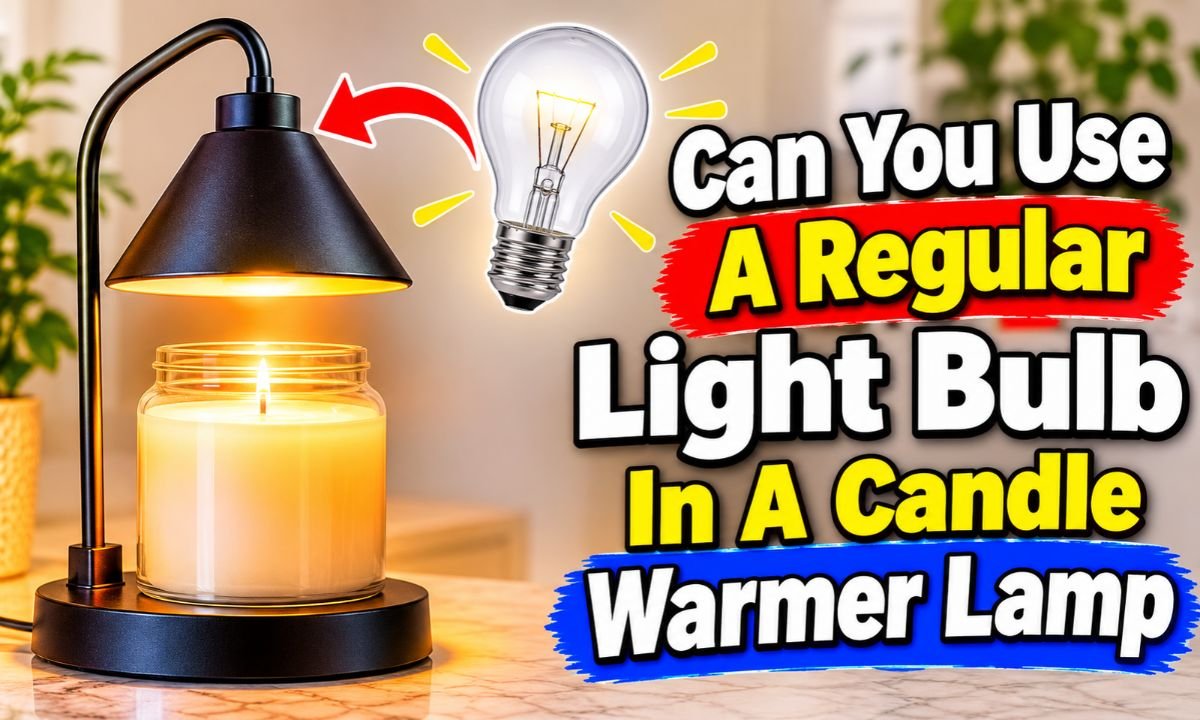
Can You Use A Regular Light Bulb In A Candle Warmer Lamp?
You generally cannot replace a candle warmer bulb with just any regular household light bulb. A candle warmer lamp uses its bulb as a heat source, while a standard room lamp mainly uses its bulb to provide light. These two jobs require different performance from the bulb.
Many candle warmer lamps use halogen bulbs that send heat toward the candle below. This heat melts the wax surface and helps release the candle’s fragrance. A regular LED bulb may light up the candle, but it usually will not warm the wax enough to do the job.
There are also differences between candle warmer designs. A top-down warming lamp may use a GU10 halogen spotlight, while a plug-in wax warmer may use a small warming bulb with a different fitting. Never assume that all products called candle warmers use the same bulb.
Source: lampinsider.com
Check the bulb type
Look for terms such as GU10 halogen, warming bulb, or another exact bulb type in the manual.
Check the wattage
Use the wattage stated by the manufacturer. Do not choose a stronger bulb to make the candle melt faster.
Check the socket
The bulb base must match the lamp socket. Similar-looking bulbs may have different fittings.
Check the voltage
Choose a bulb rated for the electrical supply and lamp model.
Why Does A Candle Warmer Need A Special Bulb?
A candle warmer lamp uses heat to soften the wax. Its bulb sits above the candle and directs warmth toward the wax surface. As the wax melts, the fragrance can move into the surrounding air.
The bulb must provide enough heat while staying within the lamp’s electrical and temperature limits. Its shape and position also matter because the lampshade helps direct heat toward the candle.
A regular room light bulb is not designed with this exact job in mind. Even if it turns on, it may not warm the candle properly. That is why matching the original bulb specifications matters.
Heat output
The bulb must provide suitable radiant heat to melt the candle wax.
Beam direction
Some warming bulbs direct heat toward a smaller area beneath the lamp.
Safe operation
The lamp’s socket, shade, wiring, and other parts are designed around an approved bulb specification.
What Type Of Bulb Does A Candle Warmer Lamp Use?
Many top-down candle warmer lamps use halogen bulbs. A common example is a GU10 50-watt halogen bulb, although some models require 35-watt bulbs or another specification. Other warmer designs use different bulb shapes and power ratings.
A GU10 bulb has two short pins with widened ends. It fits into a matching twist-lock socket. You push the pins into the correct openings and turn the bulb to lock it in place.
Do not treat 50 watts as a universal candle warmer requirement. Some manufacturers specify a lower wattage or a different bulb entirely. The number printed on your lamp or listed in its manual is more important than a general recommendation found online.
Source: manuals.plus
GU10 halogen
A common choice for top-down candle warmer lamps. It provides heat as well as light.
Small warming bulbs
Some traditional candle and fragrance warmers use special lower-wattage bulbs with different bases.
LED bulbs
Standard LEDs provide light efficiently but generally do not provide the heat needed for a halogen-style candle warmer.
Incandescent bulbs
These produce heat, but their shape, base, wattage, and heat pattern may not match the warmer.
Are GU10 Halogen Bulbs Regular Light Bulbs?
GU10 halogen bulbs are a type of light bulb, but they are not the same as the common household bulbs used in table lamps and ceiling fixtures. They have a specific base and are often used in spotlight-style fittings.
Some GU10 bulbs are made for general lighting. Others are sold as replacements for candle warmer lamps. Even when two bulbs share the GU10 base, their technology and wattage may differ.
For example, a GU10 50W halogen bulb may be suitable for a lamp that specifically requires a 50W GU10 halogen. A GU10 LED bulb is not automatically an acceptable substitute. Matching the full specification is the key.
Same base does not mean same function
A GU10 LED and a GU10 halogen bulb can fit similar sockets but produce very different amounts of heat.
Read the complete label
Look for the bulb technology, voltage, wattage, and any model-specific replacement instructions.
Do All Candle Warmer Lamps Use 50-Watt Bulbs?
No. A 50-watt bulb is common in some modern top-down warming lamps, but it is not a standard that applies to every candle warmer. Other models may call for 35-watt, 25-watt, or another specific warming bulb.
The correct wattage depends on the lamp’s design. Its socket, wiring, shade, and heat control system must be able to handle the bulb’s power and temperature.
Never increase the wattage because your candle seems slow to melt. If the wax is not warming, first check the candle position, bulb condition, lamp height, and the manufacturer’s instructions.
25 watts
May be specified for certain traditional warming lanterns and fragrance warmers.
35 watts
May be used in some top-down lamps designed for a lower heat output.
50 watts
Common in some GU10 halogen candle warmer lamps, but only suitable when the manufacturer allows it.
Can You Use An LED Bulb In A Candle Warmer Lamp?
A standard LED bulb is usually not a suitable replacement for a halogen bulb in a candle warmer lamp. LEDs are designed to produce light while using less electricity and limiting unwanted heat. That makes them useful for everyday lighting but less useful as a direct replacement for a bulb that must melt wax.
For example, imagine your candle warmer originally came with a 50-watt GU10 halogen bulb. You replace it with a GU10 LED bulb that uses much less power. The new bulb may fit and turn on, but the candle may stay firm or melt only slightly.
This does not mean every LED-based candle warmer is unsuitable. Some appliances use a separate heating element and an LED for light. In that design, the heating element does the warming. The important point is to distinguish a purpose-built LED warmer from a halogen lamp that someone has fitted with an ordinary LED replacement.
Source: amazon.com
The LED turns on but the wax stays hard
The bulb may produce light without providing enough radiant heat to warm the candle.
The candle melts very slowly
The bulb may not have the heat output required by the lamp design.
The lamp uses a separate heater
An LED may be suitable for the lighting function if the manufacturer designed the appliance that way.
Can You Use A Dimmable LED Bulb?
A dimmable LED bulb is not automatically suitable for a candle warmer lamp. Dimmable means that the bulb can adjust its light output when used with a compatible dimmer. It does not mean that it can provide the heat needed to melt wax.
There is also a difference between a lamp’s built-in dimmer and a dimmable bulb. Some candle warmer lamps use a dimmer to control the output of their heating bulb. Replacing that bulb with an LED may lead to poor heating or an electrical compatibility problem.
If your warmer has a dimmer, use only the bulb type approved for that model. Do not rely on the word dimmable on a bulb package as proof of compatibility.
Check dimmer compatibility
Confirm that the replacement bulb is approved for the lamp’s dimming system.
Check heating performance
Make sure the bulb is designed to provide the heat required by the warmer.
Can You Use A Regular Incandescent Bulb In A Candle Warmer?
An incandescent bulb produces heat, so it may seem like a reasonable substitute for a candle warmer bulb. However, producing heat is only one part of the job. The bulb must also match the lamp’s socket, voltage, wattage, size, and approved operating conditions.
A common household incandescent bulb may be too large for the lampshade or may have a different base. Even if it fits, its heat may not be directed toward the candle in the same way as the original warming bulb.
There is also a risk of using too much power. A higher-wattage bulb can make the socket, wiring, shade, or other lamp parts hotter than intended. This may damage the appliance or create a fire risk.
Therefore, do not use a standard incandescent bulb just because it produces heat. Only use one if the manufacturer specifically lists that bulb type and its exact electrical specifications.
Physical size
The bulb must fit inside the intended space without touching the shade or other parts.
Heat direction
A general-purpose bulb may not direct enough heat toward the candle surface.
Electrical rating
The wattage and voltage must remain within the lamp’s approved limits.
Is A Higher-Wattage Bulb Better For Melting Wax?
No. A higher-wattage bulb is not automatically better, and using one beyond the manufacturer’s limit can be dangerous. More electrical power can create more heat, but the lamp may not be built to handle it.
Excess heat can damage the bulb socket, electrical parts, lampshade, or nearby surfaces. It may also heat the candle jar more than intended. A candle warmer is designed to work within a specific range, so changing that range can create problems.
If your candle takes longer to melt than expected, check the bulb and setup rather than increasing the wattage. Use the original bulb specification and contact the manufacturer if the lamp still does not work correctly.
Never exceed the rated wattage
Follow the maximum wattage printed on the lamp or listed in its manual.
Do not remove heat guards
Keep all original protective parts in place during operation.
Stop if the lamp overheats
Turn it off, unplug it when safe, and allow it to cool before checking for damage.
How To Find The Correct Replacement Bulb
The best way to find a replacement bulb is to identify your candle warmer’s exact model and read its specifications. This avoids buying a bulb that fits the socket but does not provide the correct heat or electrical performance.
You do not need special equipment for this check. The lamp’s product label, instruction booklet, original packaging, or manufacturer’s support page may contain the information you need.
If the original bulb is still available, you can also use its printed markings as a starting point. However, do not rely on appearance alone. Some bulbs look almost identical but have different wattages or internal designs.
Step 1: Find the model number
Check the bottom of the lamp, its base, the original box, or the instruction manual.
Step 2: Read the bulb requirements
Look for the required bulb technology, base, voltage, wattage, and any maximum power rating.
Step 3: Check the original bulb
Read the markings on the old bulb if they are still visible and compare them with the manual.
Step 4: Find a compatible replacement
Buy a bulb that matches the full specification, preferably from the manufacturer or a trusted replacement supplier.
Step 5: Confirm before installation
Check the new bulb’s packaging and make sure every required specification matches.
Where Can You Find The Bulb Size?
Start by looking underneath the lamp. Many manufacturers place an electrical label on the bottom of the base or near the power cord. This label may show the voltage, maximum wattage, and other important details.
Next, check the manual. The replacement section often names the exact bulb type and explains how to remove the old one. If you cannot find the manual, search the manufacturer’s support page using the model number.
You can also contact customer support. Give them the model number and ask for the correct replacement bulb. This is especially useful when the original bulb has broken and you cannot read its markings.
Lamp label
Often provides the electrical rating and maximum wattage.
Instruction manual
Usually provides the exact replacement bulb type and installation steps.
Manufacturer support
Can help confirm compatibility when the model or bulb type is unclear.
What If You Cannot Find The Original Bulb?
If the original bulb is missing, do not guess based on the size of the opening. Two bulbs may have similar shapes but different bases, heat output, and electrical ratings.
Find the lamp’s model number and contact its manufacturer. If the company no longer offers the replacement, ask whether it approves an equivalent bulb from another supplier.
If you cannot confirm a suitable replacement, stop using the lamp until you have reliable information. A guessed bulb is not worth the risk of damaging the appliance.
Avoid trial and error
Do not insert different bulbs just to see which one fits or turns on.
Keep the old parts
If available, save the original bulb and its packaging so the model can be identified.
Ask for written confirmation
Request the exact replacement specification from the manufacturer when possible.
Regular Bulb Vs Candle Warmer Bulb: What Is The Difference?
The main difference is the job each bulb is designed to perform. A household bulb provides light for a room, while a candle warmer bulb must also produce suitable heat for melting wax.
A halogen warming bulb can perform both tasks. It provides visible light and radiant heat. A standard LED is designed to provide light with much less wasted heat, so it usually cannot replace a halogen warming bulb in the same appliance.
The table below compares common bulb types. It gives general guidance rather than a universal compatibility list because the exact lamp model always determines which bulb is suitable.
Halogen warming bulb
Often suitable for a top-down candle warmer when its base, voltage, and wattage match the manual.
Standard LED
Usually unsuitable as a direct replacement in a halogen-based warming lamp because its heat output is much lower.
Incandescent bulb
Produces heat but should only be used when the lamp maker approves its exact type and rating.
Purpose-built heating system
Some warmers use a separate heating element, so their lighting bulb does not need to produce the heat.
Which Bulb Should You Choose?
For a top-down warmer designed for a GU10 halogen bulb, choose the exact GU10 halogen specification in the manual. If your model requires 35 watts, do not buy a 50-watt version simply because it is easier to find.
For a traditional fragrance warmer that specifies a special 25-watt warming bulb, choose that exact type instead. A GU10 bulb will not become suitable just because it produces heat.
If the manufacturer lists an approved alternative, follow those instructions. Otherwise, avoid substituting another technology or bulb style.
Best replacement
The original manufacturer’s specified bulb or a confirmed equivalent.
Poor replacement choice
A standard LED or household bulb selected only because it fits.
Important limit
Never exceed the lamp’s rated wattage or use an unapproved bulb type.
How To Replace A Candle Warmer Lamp Bulb Safely
Replacing a candle warmer bulb is usually simple when you follow the manufacturer’s instructions. The main risks are burns from a hot bulb and electrical shock from handling a lamp that is still connected to power.
Before starting, make sure you have the correct replacement bulb. Place the lamp on a stable surface and keep the candle away from the area where you will work.
Never try to change the bulb while the lamp is on. Even after switching it off, the bulb and lampshade may remain hot for some time.
What you need
The correct replacement bulb, the instruction manual, and a clean, dry work surface.
Before you start
Switch off the lamp, unplug it, and wait until all hot parts have cooled completely.
Step-By-Step Bulb Replacement
Step 1: Turn off the candle warmer and unplug its power cord from the wall outlet. Do not rely only on the switch or timer.
Step 2: Allow the bulb, lampshade, and nearby parts to cool fully. If the lamp was running for a long time, give it enough time to reach a safe temperature.
Step 3: Remove the old bulb according to the manual. Some bulbs twist out, while others use a different release method. Do not force the bulb if it feels stuck.
Step 4: Install the new bulb using the correct method. For a GU10 bulb, align the pins with the socket openings, insert it, and turn it as directed by the manufacturer.
Step 5: Check that the bulb is secure and that no parts are loose or damaged. Do not touch the glass of a halogen bulb with bare fingers when the manufacturer advises against it.
Step 6: Put the lamp back together with all protective parts in place. Move the candle beneath the lamp and follow the normal operating instructions.
Twist-lock bulbs
Some GU10 bulbs require a gentle push and turn to lock into the socket.
Other fittings
Some warming bulbs use a different removal method, so follow the specific manual.
Damaged sockets
Do not use a lamp with a cracked, loose, scorched, or damaged socket.
How Do You Know The New Bulb Is Working?
A working bulb should turn on without flickering, unusual sounds, or signs of electrical trouble. Once the lamp has operated according to its instructions, the wax surface should begin to soften.
Do not expect every candle to melt at the same speed. Candle size, wax type, fragrance ingredients, bulb height, and the lamp’s heat setting can affect the process.
If the bulb lights up but the wax does not warm, switch the lamp off and check the bulb specification and candle position. Do not install a stronger bulb as a quick fix.
Normal operation
The bulb operates steadily and the candle wax gradually softens.
Possible problem
The bulb flickers, fails to turn on, or produces an unusual smell.
Next action
Turn off the lamp and inspect it only after it has cooled and been unplugged.
Common Mistakes To Avoid When Choosing A Bulb
Most bulb replacement problems happen when people focus on only one feature, such as the base size or wattage. A suitable replacement must meet all the lamp’s requirements at the same time.
It is also easy to assume that a candle warmer lamp works like an ordinary desk lamp. In reality, its bulb is part of a heating system, so changing it can affect both performance and safety.
Avoid these mistakes before installing a new bulb.
Choosing a bulb because it fits
A matching socket does not prove that the bulb has the right heat output or electrical rating.
Using a higher wattage
More power can create excessive heat and damage the lamp.
Replacing halogen with LED
A standard LED may light up but fail to melt the wax.
Ignoring voltage
The replacement must match the lamp’s electrical supply and specifications.
Touching a hot bulb
A recently used halogen bulb can cause burns. Always allow it to cool.
Using a damaged bulb
Do not install a bulb with cracked glass, damaged pins, or other visible defects.
Leaving the warmer unattended
Follow the manufacturer’s operating and timer instructions, and turn the appliance off when it is not needed.
Can The Wrong Bulb Damage A Candle Warmer?
Yes. An incompatible bulb can cause poor performance, overheating, or damage to the appliance. A bulb with the wrong wattage may place more heat and electrical demand on the socket than the lamp was designed to handle.
A bulb with the wrong base can also damage the socket if you try to force it into place. This can create a loose connection or damage the electrical contacts.
If you notice a burning smell, smoke, unusual heat, sparking, or repeated flickering, switch off the lamp and unplug it when safe to do so. Do not use it again until the cause has been checked.
Overheating
May indicate an incorrect bulb, damaged component, or another appliance fault.
Burning smell
Can indicate overheated materials or an electrical problem. Stop using the lamp.
Loose connection
May cause flickering, poor contact, or electrical arcing. Do not keep operating the lamp.
Candle Warmer Lamp Safety Tips
A candle warmer lamp does not use an open flame, but it still creates heat. The bulb, lampshade, and nearby surfaces can become hot during use. Treat the appliance like other heated household equipment.
Place the warmer on a stable, flat, heat-resistant surface. Keep it away from curtains, bedding, paper, and other items that can burn. Make sure children and pets cannot knock it over or touch hot parts.
Do not light the candle wick while the warmer is operating. Follow the lamp’s instructions for candle placement, operating time, and cleaning. If the appliance has a timer, use it as directed rather than treating it as a substitute for basic supervision.
Keep flammable items away
Do not place the warmer close to curtains, clothing, paper, bedding, or decorations.
Use a stable surface
Place the lamp on a level surface where it cannot easily fall or tip over.
Protect children and pets
Keep the appliance out of reach and prevent contact with hot parts.
Do not cover the lamp
Allow the appliance to release heat as designed. Never cover its shade or ventilation areas.
Avoid wet areas
Keep the electrical appliance away from water, sinks, and damp surfaces.
Inspect the power cord
Do not operate the warmer if its cord, plug, or housing is damaged.
Unplug when not in use
Follow the manual’s shutdown instructions and disconnect the appliance when it is not needed.
What Should You Do If The Candle Warmer Gets Too Hot?
If the lamp becomes unusually hot, turn it off and unplug it when safe. Allow it to cool fully before touching or inspecting it.
Check whether the correct bulb is installed and whether the shade and protective parts are in their proper positions. Look for signs of discoloration, melted material, cracks, or damage.
Do not continue using the lamp if the heat seems abnormal. Contact the manufacturer or a qualified repair professional if the appliance has a damaged socket, wiring, or other electrical parts.
Normal warmth
Some heat is expected because the bulb is designed to warm the candle.
Abnormal heat
Excessive heat, smoke, or a burning odor calls for immediate shutdown.
Visible damage
Stop using the appliance and seek manufacturer guidance or professional inspection.
Can You Leave A Candle Warmer On Overnight?
It is best not to leave a candle warmer operating overnight while you are asleep. Although the lamp does not need an open flame, its bulb and other parts still produce heat.
Use the built-in timer if your model has one, and follow the maximum operating time in the manual. A timer can reduce the time the appliance stays on, but it does not remove the need for safe placement and proper use.
Turn the lamp off before going to bed or leaving home. This simple habit helps limit unnecessary heat exposure and reduces the chance of an unattended appliance problem.
Use the timer
Select an approved shut-off setting when available.
Turn it off before sleep
Do not rely on the lamp to run safely without supervision all night.
Troubleshooting A Candle Warmer After Replacing The Bulb
If your candle warmer does not work properly after a bulb change, do not immediately assume the new bulb is defective. The problem may be an incorrect replacement, a loose connection, or damage to the lamp.
Start with the safest and simplest checks. Turn off and unplug the lamp before inspecting the bulb or socket. Never handle internal electrical parts while the appliance is connected to power.
Problem: The lamp does not turn on
Check the outlet and power connection. If the bulb specification is correct but the lamp still does not work, stop and contact the manufacturer.
Problem: The bulb lights but the candle does not melt
Check whether the replacement is the correct heating bulb and whether the candle is positioned as instructed.
Problem: The bulb flickers
A loose bulb, damaged socket, or electrical fault may be responsible. Unplug the lamp and stop using it if the problem continues.
Problem: The bulb burns out quickly
Check the replacement specification and installation method. Repeated failures may indicate an appliance fault.
Problem: The lamp smells like burning plastic
Turn it off immediately. Do not use it again until the cause has been identified.
Why Does My New Bulb Turn On But Not Melt The Candle?
The most likely explanation is that the new bulb produces light but not enough suitable heat. This can happen when a standard LED replaces a halogen warming bulb.
Another possibility is that the bulb has the wrong wattage or that the candle is too far below the heating source. Check the model’s instructions before adjusting the lamp height.
If the bulb is the correct type and the candle is positioned properly, the lamp may have another fault. Contact the manufacturer rather than trying a stronger bulb.
Incorrect bulb technology
A standard LED may not produce the heat needed by the lamp.
Incorrect bulb rating
A bulb with the wrong wattage may provide insufficient warming or exceed the lamp’s limits.
Incorrect positioning
A candle placed outside the intended warming area may receive less heat.
Frequently Asked Questions
Q
Can I use a 60-watt regular light bulb in a candle warmer lamp?
Only if the manufacturer specifically approves that bulb type and wattage for your model. A 60-watt household bulb may exceed the lamp’s rated limit or have the wrong base and shape. Never assume that a higher wattage will melt wax faster without causing problems.
Check the manual and the electrical label before choosing a replacement. If the lamp calls for a 50-watt GU10 halogen bulb, use that exact specification rather than a 60-watt household bulb.
Q
Can I use a 40-watt bulb in a candle warmer lamp?
A 40-watt bulb is suitable only if your candle warmer’s manufacturer lists that bulb type and wattage as compatible. If the lamp requires a 50-watt GU10 halogen bulb, a 40-watt bulb may not provide the expected heating performance.
The base and bulb technology matter just as much as the wattage. Check all the specifications before installing it.
Q
Can I use a GU10 LED bulb instead of a GU10 halogen bulb?
Usually not in a candle warmer designed around a GU10 halogen heating bulb. Although both bulbs may use the same base, an LED produces much less heat and may not melt the candle wax.
Use a GU10 LED only if the warmer’s manufacturer specifically approves it for that model. A matching socket alone does not establish compatibility.
Q
Do candle warmer lamps need special light bulbs?
Many candle warmer lamps need a specific warming bulb because the bulb provides the heat that melts the wax. Common examples include GU10 halogen bulbs in some top-down lamps and special lower-wattage warming bulbs in other designs.
The exact requirement varies by model. Read the instruction manual or contact the manufacturer before purchasing a replacement.
Q
Can I use a regular halogen spotlight bulb in my candle warmer?
Not automatically. A regular halogen spotlight may share the same base as the original warming bulb, but it must also match the required voltage, wattage, dimensions, and other specifications.
If the manufacturer approves the exact spotlight bulb for your model, it may be suitable. Otherwise, choose the specified warming bulb.
Q
Why does my candle warmer bulb keep burning out?
A bulb may burn out because of normal wear, an incorrect replacement, improper installation, or a problem with the lamp’s electrical parts. Frequent failures should not be treated as normal.
Unplug the warmer and let it cool. Check the bulb specifications and installation instructions. If the correct bulb continues to fail, contact the manufacturer or a qualified repair professional.
Q
Can I use a candle warmer lamp without its original bulb?
You should not operate the lamp without the correct bulb. The bulb is part of the warming system, and using an unapproved replacement or operating the appliance with missing parts may create problems.
Find a compatible replacement before using the warmer again. If the original bulb is no longer available, ask the manufacturer for an approved alternative.
✦ Wrapping Up
Conclusion
So, can you use a regular light bulb in a candle warmer lamp? In most cases, you should not. A candle warmer needs a bulb that provides the right amount of heat, fits the socket, and works within the appliance’s electrical limits. A standard LED usually does not provide enough heat, while an ordinary incandescent bulb may have the wrong size, wattage, or heat output.
Many top-down candle warmer lamps use GU10 halogen bulbs, but not every model uses the same type. Some require 25-watt or 35-watt bulbs, while others specify 50 watts. The safest way to choose a replacement is to follow the exact requirements in your lamp’s manual or on its rating label.
Remember that a bulb that fits is not always a bulb that works safely. Check the base, voltage, wattage, and technology before buying. Also, unplug the warmer and allow it to cool completely before changing the bulb.
💡 Key Takeaway
Before buying another bulb, find your candle warmer’s model number and check its manual. Purchase the exact approved replacement, never exceed the stated wattage, and stop using the lamp if you notice unusual heat, smoke, flickering, or a burning smell.



2 Comments