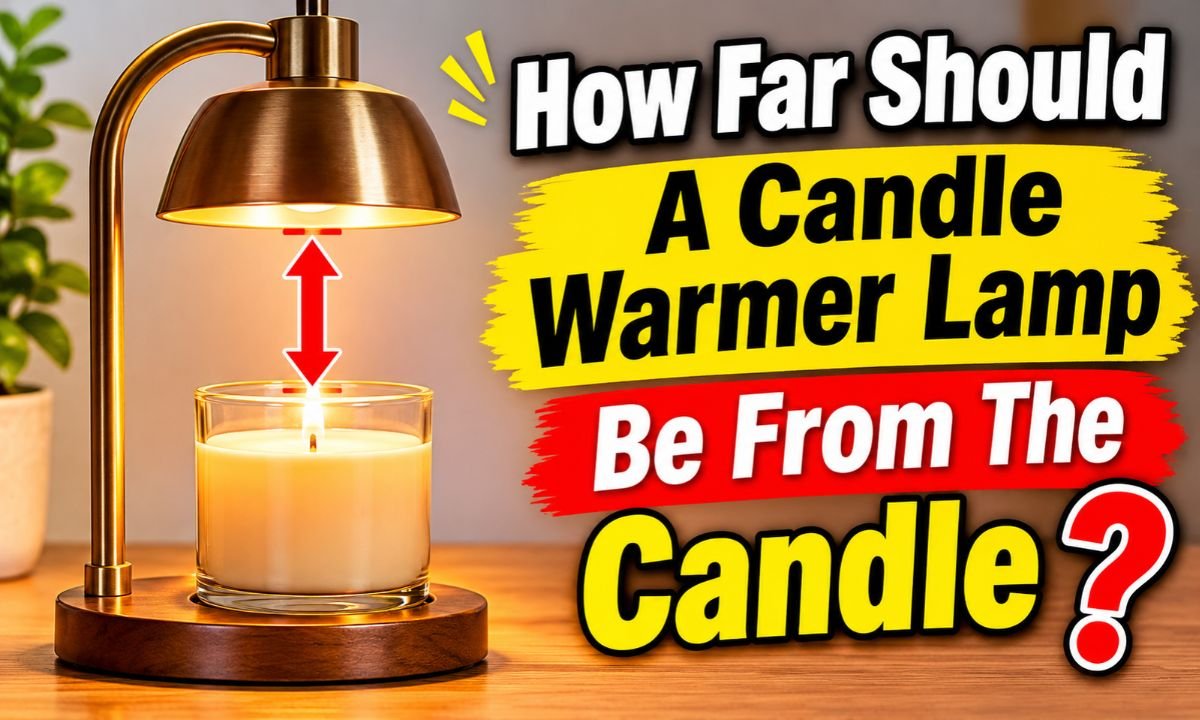
A candle warmer lamp should sit at the height specified by its maker, with the bulb above the candle and no contact between them. There is no single safe distance for every lamp.
In American homes, candle warmer lamps are often used in living rooms, bedrooms, kitchens, and home offices. They offer a way to enjoy the scent of a jar candle without lighting its wick. Still, the space between the bulb and the wax matters because it affects how quickly the candle warms and how evenly the wax melts.
The right height depends on the lamp design, bulb type, candle size, and the maker’s instructions. Some lamps have adjustable arms, while others have fixed shades. Rather than guessing a number of inches, start with the manual and the lamp’s intended position. Keep the bulb from touching the jar or wax, and stop using the lamp if you notice unusual heat, smoke, or damage.
Source: manuals.plus
Why the Distance Between a Candle and Its Warmer Lamp Matters
The distance controls how much heat reaches the top of the candle. A warmer lamp uses a heated bulb to warm the wax from above. The wax near the surface softens first, then the warm area can spread as the candle stays under the lamp.
Think of the gap as a heat control. A bulb placed farther away may warm the candle more slowly. A bulb placed too close may heat the surface too quickly or create more heat than the lamp and candle setup was designed to handle.
The correct position is not simply the one that melts wax fastest. It is the position allowed by the manufacturer that gives the candle enough warmth without contact, overheating, or damage.
Source: lampinsider.com
Too far away
The wax may take longer to soften. A low-powered bulb or a large gap can make the warmer seem weak.
Too close
The candle may receive more heat than intended. This can increase the chance of excessive surface heating, a hot jar, or damage to nearby items.
Correctly positioned
The lamp sits within its approved height range, the bulb does not touch the candle, and the wax warms without signs of overheating.
How a Candle Warmer Lamp Transfers Heat
The bulb gives off heat as well as light. That heat travels down toward the candle and warms the wax at the top. As the wax absorbs heat, it becomes soft and may form a shallow pool.
The rate of warming depends on the bulb’s heat output, the gap, the candle’s width, and the room conditions. A narrow jar and a wide jar may not warm in the same way under one lamp setting.
Bulb output
A bulb with more heat output may warm wax faster, but only use the bulb type and wattage approved for the lamp.
Candle width
A wide candle may take longer to warm across its surface than a small, narrow candle.
Is There a Recommended Distance in Inches?
There is no reliable inch measurement that applies to every candle warmer lamp. A fixed-height lamp and an adjustable-height lamp can have very different designs. Their bulbs may also produce different amounts of heat.
Some product listings show a height range or an adjustable arm, but the total lamp height is not the same as the gap between the bulb and the top of the candle. The shade shape, bulb position, and candle height all affect that gap.
Use the manual for the exact model whenever possible. If the manual gives a minimum or maximum clearance, follow it. If it does not state a distance, use the lamp as designed and contact the maker for clarification rather than choosing a number from another brand’s instructions.
Source: manuals.plus
Check the model instructions
Look for setup diagrams, height limits, bulb details, and any stated clearance between the shade or bulb and the candle.
Measure the actual gap if required
Measure from the lowest part of the bulb or shade identified by the maker to the top of the candle. Do not use the lamp’s overall height as the clearance.
Do not copy another model’s measurement
A distance that works for one lamp may not be suitable for a different bulb, shade, or arm design.
What If the Manual Does Not Give a Distance?
First, check the product label, setup sheet, and maker’s online instructions for the model number. Some makers explain the correct position with a picture instead of a measurement.
If the instructions still do not explain the clearance, keep the original lamp geometry. Do not add blocks, bend the arm, remove the shade, or fit a different bulb to change the heat level. Ask the manufacturer for the approved candle size and setup.
Avoid guesswork
Do not treat a distance shared for another lamp as a safe setting for yours.
Keep the original parts
Use the supplied shade, socket, arm, and approved bulb unless the maker lists a replacement.
How to Set the Correct Candle Warmer Lamp Height
Set up the lamp before switching it on. You need the lamp manual, the correct bulb, a suitable jar candle, and a firm, level surface. Make sure the lamp is unplugged while you inspect or adjust it.
The goal is to place the candle in the position intended by the maker. If the lamp has an adjustable arm, use only its built-in adjustment range. If it has a fixed arm, do not try to change its height.
Source: manuals.plus
Step 1: Read the instructions
Find the lamp model number and check its approved bulb type, wattage, candle size, and height settings.
Step 2: Check the candle
Choose a stable jar candle that fits on the base. Check the glass for cracks, chips, or other damage.
Step 3: Position the lamp
Place the lamp on a firm, level, heat-resistant surface. Keep it away from drafts and items that may fall against it.
Step 4: Adjust only if allowed
If the model has a height control, set it within the range shown in its instructions. Never force the arm or move the bulb by hand while it is hot.
Step 5: Check for clearance
Make sure the bulb and shade do not touch the jar, wax, lid, or any part of the candle. Leave the space required by the maker.
Step 6: Switch on and observe
Turn on the lamp and watch the first warming period. Follow the maker’s time limits and turn it off if you see smoke, unusual discoloration, or signs of damage.
Signs That the Lamp Is Positioned Correctly
A correctly set lamp should warm the wax without physical contact. The top may soften and form a shallow pool over time, depending on the bulb and candle. The jar should remain in good condition, and the lamp should sit firmly on its base.
A slow melt does not always mean the lamp is too high. The bulb may need replacement, the candle may be too wide, or the lamp may not be designed for that jar size.
Normal warming
The wax gradually softens, and the candle remains stable beneath the lamp.
No contact
The bulb and shade remain clear of the candle and its melted wax.
No warning signs
There is no smoke, burning smell, damaged wiring, cracked glass, or unstable movement.
How to Check the Gap Without Touching Hot Parts
Check the clearance while the lamp is unplugged and fully cool. If the maker provides a measurement, use a ruler to check the same reference points shown in the instructions.
Do not place a ruler, tape, paper, or other object beneath a hot bulb to measure the gap. If you cannot confirm the setup safely, let the lamp cool and check the manual again.
Measure when cool
Unplug the lamp and wait until the bulb and shade have cooled before making any physical check.
What Changes the Ideal Distance?
The right clearance depends on the complete lamp and candle setup. A distance cannot be judged by candle height alone because the bulb, shade, arm, and wax surface all play a part.
Before changing a setting, check these factors. They can explain why one candle warms quickly while another takes much longer under the same lamp.
Source: amazon.co.uk
Bulb type
Halogen and other approved warming bulbs can differ in heat output. Use only the type specified by the lamp maker.
Bulb wattage
The wattage rating must match the lamp’s limits. A higher-wattage bulb is not a safe shortcut for faster melting.
Candle height
A taller jar places its wax surface closer to the bulb than a shorter jar. Check the maker’s approved candle dimensions.
Candle width
A wider wax surface may need more time to warm across the top.
Room temperature
A cool room may slow the warming process. Avoid placing the lamp near an open window or strong air-conditioning flow.
Lamp design
A fixed shade, adjustable arm, dimmer, or timer can change how the lamp is meant to be used.
Fixed-Height Lamps
A fixed-height warmer has a set gap built into its design. The candle must fit the space allowed by the maker. If a jar is too tall, do not raise the base with books or other objects to make it fit.
Choose a candle that fits the lamp’s stated size limits. If the candle is too short or too wide for the design, another lamp may be a better match.
Best practice
Keep the lamp unchanged and use only candle sizes approved by its maker.
Adjustable-Height Lamps
An adjustable model gives you more control over the position of the shade. That does not mean you can place the bulb as close as you like. The adjustment range is a design limit, not an invitation to experiment beyond it.
Move the arm only as the instructions show. If the candle still does not warm well at an approved setting, check the bulb and candle compatibility before making another adjustment.
Best practice
Use the built-in height control and stay within the manufacturer’s stated range.
How Far Should a Candle Warmer Lamp Be From Different Candle Sizes?
The candle’s size helps you decide whether it fits the lamp, but it does not create a new universal distance. Use the lamp’s stated candle dimensions and clearance rules for every jar.
The table below is a fit guide, not a set of measured safety distances. It explains what to check before using different candle shapes and sizes.
Source: amazon.co.uk
Small jar candles
Check that the jar sits securely on the base and that the bulb remains at the maker’s intended height.
Medium jar candles
Confirm both jar height and width. A medium jar may fit one lamp but not another.
Large jar candles
Check the maximum approved jar dimensions. A wide jar may extend beyond the area the shade is designed to warm.
Tall candles
Make sure the top does not come too close to the bulb or shade. Do not use a taller candle if it exceeds the stated limit.
Can You Use a Large Jar Candle Under a Small Lamp?
Only use a large jar if its dimensions fall within the lamp’s stated limits. The jar must sit securely on the base, and the shade must have the required clearance.
Do not angle the candle, move the lamp off its base, or place the jar on an unstable platform to make the two fit. If the jar does not fit as intended, choose a larger compatible warmer.
Check the full jar
Consider its height, width, glass condition, and position under the shade rather than looking at the wax surface alone.
What Happens If the Candle Warmer Is Too Close?
A bulb placed closer than the maker allows can expose the candle to more heat than the design intends. The top layer may soften quickly, but faster melting does not prove that the setup is safe.
Excess heat can make the jar very hot. It may also affect the wax, fragrance, or other parts of the candle. The exact result depends on the candle, bulb, and lamp, so do not assume that all wax reacts in the same way.
If the jar becomes unusually hot, the wax smokes, or you notice a burning odor, switch off and unplug the lamp if you can do so safely. Let the setup cool before moving the candle or checking for damage.
Source: manuals.plus
Overheated glass
A hot jar can burn skin. Do not pick it up while it is warm.
Unusual smell or smoke
Turn the warmer off. Do not continue running it to see whether the smell goes away.
Damaged lamp parts
Stop using the lamp if its socket, cord, shade, or switch shows signs of damage.
Wax overflow
Do not fill the jar to the rim or leave melted wax unattended. Follow the candle maker’s care instructions.
Does a Closer Bulb Make the Candle Melt Faster?
A smaller gap can increase the heat reaching the candle, so it may warm faster. However, the effect depends on the bulb and lamp design. It is not a reason to move the bulb closer than the approved setting.
If the candle warms slowly, use the troubleshooting steps below. Changing the bulb to a higher wattage or forcing the arm downward can create an unsafe setup.
Safe approach
Keep the approved clearance and check whether the bulb is working as intended.
What If Your Candle Is Not Melting?
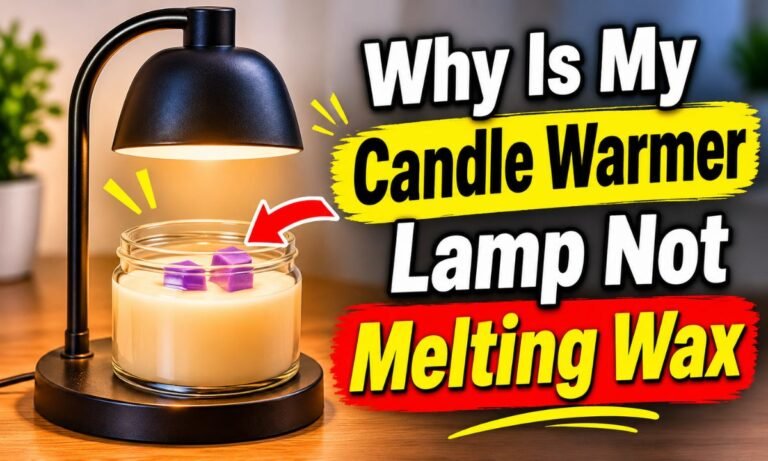
A candle that stays firm does not always need a lower lamp. The cause may be a worn bulb, an incorrect replacement bulb, a candle that is too wide, or a lamp that is not designed for that candle.
Check the easy and safe causes first. Unplug the lamp before inspecting the bulb or its parts, and allow it to cool fully.
Source: amazon.com
Check the power
Make sure the plug is secure and the outlet works. Stop if the cord or plug feels damaged or shows signs of overheating.
Check the bulb
Look for a loose or failed bulb after the lamp has cooled. Replace it only with the specified type and wattage.
Check the candle size
Compare the jar’s height and width with the lamp’s approved dimensions.
Check the setting
If the lamp has a dimmer or height control, use the settings described in its manual.
Check the room
Move the lamp away from drafts if the maker permits relocation. Keep it on a stable, suitable surface.
Troubleshooting by Symptom
Use the symptom to guide your next check. Do not try several changes at once, because that can make it harder to find the cause.
The wax stays hard
Check the bulb, power, candle dimensions, and approved height setting.
Only the center melts
The candle may be too wide for the heat pattern. Check its size limits and allow the warming process described by the maker.
The wax melts very quickly
Check that the bulb and dimmer match the manual. Do not reduce the gap below the approved range.
The jar becomes very hot
Switch off the lamp and let the candle cool. Do not use the setup again until you have checked the instructions and the jar for damage.
The lamp flickers or smells burnt
Stop using it, unplug it if safe, and inspect for damage only after it cools. Contact the maker if the cause is not clear.
Candle Warmer Lamp Safety Tips
A candle warmer does not have an open flame, but it still uses heat and electricity. Treat the bulb and shade as hot surfaces, and follow the maker’s safety rules.
Place the lamp where it cannot be knocked over. Keep it clear of curtains, paper, clothing, bedding, and other items that could come into contact with hot parts. Do not cover the lamp or leave objects on its shade.
Do not leave a warming candle unattended unless the manufacturer specifically states that the product is designed for that use. A timer can help limit a session, but it does not replace supervision or safe placement.
Source: manuals.plus
Use the correct bulb
Never exceed the stated wattage or use a bulb with an unapproved shape or fitting.
Keep the lamp dry
Keep it away from sinks, tubs, wet counters, and damp areas.
Protect the cord
Route the cord away from walkways, hot surfaces, and places where it may be pulled.
Keep children and pets away
Place the lamp where they cannot reach, tip, or pull it down.
Allow cooling time
Switch off and unplug the lamp before changing the bulb, adjusting parts, or moving the setup.
Inspect the candle jar
Do not warm a cracked, chipped, or damaged glass container.
Can You Leave a Candle Warmer Lamp On Overnight?
Do not assume that a candle warmer is safe to leave on while you sleep. Unless the manufacturer clearly approves unattended or extended operation, switch it off before going to bed or leaving home.
A timer is useful for limiting operation, but it cannot detect every problem. It does not make a damaged cord, poor clearance, or unsuitable candle safe.
Safer habit
Turn off and unplug the warmer when you finish using it, following the product instructions.
Is a Candle Warmer Lamp Safer Than a Burning Candle?
A warmer lamp avoids the exposed flame and burning wick of a lit candle. That removes some flame-related risks, but it does not remove the risks from hot surfaces, electricity, hot wax, or nearby items.
A warmer is not risk-free. Use it with the same care you would give any small heated electrical appliance.
Remember
No open flame does not mean no fire or burn risk.
Common Mistakes to Avoid
Most setup problems come from treating every candle warmer as if it uses the same bulb and height. A small adjustment may seem harmless, but the lamp’s design sets the limits for safe use.
Avoid these mistakes when setting up or troubleshooting your warmer.
Source: manuals.plus
Using a random distance from the internet
A measurement for another model may not match your lamp. Use your own manual.
Choosing a stronger bulb
A higher wattage can create excess heat and may damage the socket or lamp.
Raising the candle with household items
Books, boxes, and loose stands can make the candle unstable and change the clearance.
Bending a fixed lamp arm
This can damage the frame, wiring, or socket. Use only built-in adjustments.
Touching the bulb to check its heat
The bulb may be hot enough to burn skin. Let it cool before inspection.
Ignoring a damaged jar
Heat can make damaged glass a greater concern. Replace the candle rather than warming it.
Assuming faster melting is better
The aim is controlled warming within the maker’s limits, not the shortest possible melting time.
Why You Should Not Put a Candle Lid Under the Lamp
Do not place a lid between the bulb and the candle unless the manufacturer specifically designed the setup for it. A lid can change how heat reaches the jar and may become hot itself.
Remove the lid before warming if the candle and lamp instructions call for an uncovered candle. Store the lid away from the hot shade and bulb.
Simple rule
Keep the area under the shade clear except for the compatible candle.
A Simple Checklist Before Turning On Your Candle Warmer
A quick check can prevent many common setup errors. Use this list each time you move the lamp, change the candle, or replace the bulb.
Source: amazon.co.uk
Lamp compatibility
The candle fits the model’s approved height and width limits.
Correct bulb
The bulb has the specified fitting, type, and wattage.
Correct height
The arm is within its approved range, or the fixed lamp remains unchanged.
Clear space
The bulb and shade do not touch the candle, wax, lid, or nearby objects.
Stable surface
The base rests on a firm, level, heat-resistant surface.
Safe surroundings
The lamp is away from water, fabrics, paper, children, and pets.
Working condition
The cord, plug, switch, socket, and glass jar show no signs of damage.
What to Do If the Setup Still Seems Wrong
Turn the lamp off and unplug it if you notice poor clearance, an unstable base, a damaged jar, or a problem with the cord. Let all parts cool before checking them.
Find the model number and contact the manufacturer if the instructions do not explain the correct candle size or setup. If the electrical parts are damaged, do not try to repair a mains-powered lamp unless you are qualified to do so.
Stop and check
Do not keep using a lamp when you cannot confirm that its setup follows the maker’s instructions.
Frequently Asked Questions
Q
Should a candle warmer lamp touch the candle?
No. The bulb and shade should not touch the candle, wax, or jar. Keep the clearance specified by the manufacturer and make sure the candle sits securely on the base.
Q
Can I lower my candle warmer lamp to melt wax faster?
Only if the lamp has an approved height adjustment and the new setting stays within the maker’s stated range. Do not bend the arm or lower the bulb beyond its intended position. Faster melting is not worth creating excess heat.
Q
Does a candle warmer lamp need to be a certain number of inches above the candle?
Not every lamp uses the same clearance. The correct gap depends on the bulb, shade, and lamp design. Check the manual for a specific measurement rather than relying on a general inch recommendation.
Q
Why does my candle warmer melt only the top of the wax?
A warmer lamp heats the candle from above, so the top layer can soften before the lower wax. This is normal for this type of warmer. The depth and spread of the melted area depend on the bulb, candle size, and warming time.
Q
Can I use a taller candle under a fixed-height warmer?
Use a taller candle only if it fits the lamp’s stated size limits and leaves the required clearance. Never raise the candle with loose objects or force the lamp arm to make extra room.
Q
Can I use a higher-wattage bulb if my candle melts slowly?
No. Use only the bulb type and wattage listed by the lamp maker. A stronger bulb may create excess heat or damage the electrical parts. Check the approved bulb and candle size instead.
Q
How do I know if my candle is getting too hot?
Watch for smoke, a burning smell, damaged glass, unusual discoloration, or a jar that becomes excessively hot. Switch off the lamp, unplug it if safe, and let the setup cool before checking it.
✦ Wrapping Up
Conclusion
The right distance between a candle warmer lamp and its candle depends on the lamp’s design, bulb, and approved candle size. There is no single measurement that works for every model. Keep the bulb and shade clear of the candle, and use the height shown in the manufacturer’s instructions.
If your candle warms slowly, check the bulb, power, candle dimensions, and room conditions before changing the height. Never use a stronger bulb or force the arm closer to the wax. A steady setup and a little patience are better than excess heat.
💡 Key Takeaway
Unplug and cool your lamp, check its manual for the approved candle size and height, then use only the specified bulb and built-in settings.






2 Comments