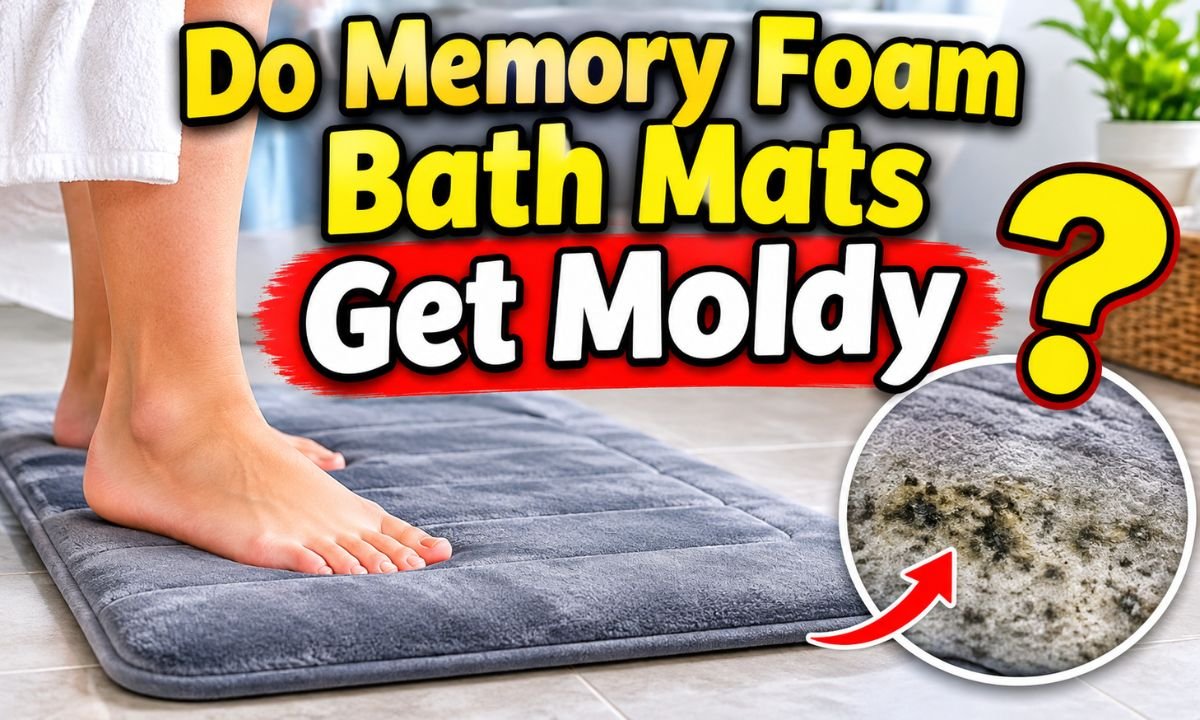
Yes, memory foam bath mats can get moldy when they stay damp for long periods, especially in poorly ventilated bathrooms.
In American homes, bathroom moisture is a common part of daily life. A shower in the morning, a bath at night, or several family members sharing one bathroom can leave bath mats damp throughout the day. Memory foam mats feel soft and cozy underfoot, but their thick construction can make it harder for trapped moisture to escape.
The good news is that memory foam does not automatically develop mold. Proper cleaning, regular airflow, and complete drying can help keep a mat in good condition. The main problem starts when water stays inside the foam, under the fabric, or between the mat and the bathroom floor. These damp conditions can allow mold and mildew to grow.
Understanding how moisture affects memory foam makes it easier to prevent problems. You also need to know which cleaning methods are safe, how to spot early warning signs, and when a moldy mat should be replaced rather than cleaned again.
Source: storables.com
Why Do Memory Foam Bath Mats Get Moldy?
Memory foam bath mats get moldy when they remain wet or damp for too long. Mold needs moisture to grow, and a bathroom can provide plenty of it. When water gets into the mat and cannot escape, the foam and fabric may stay damp long enough for mold to develop.
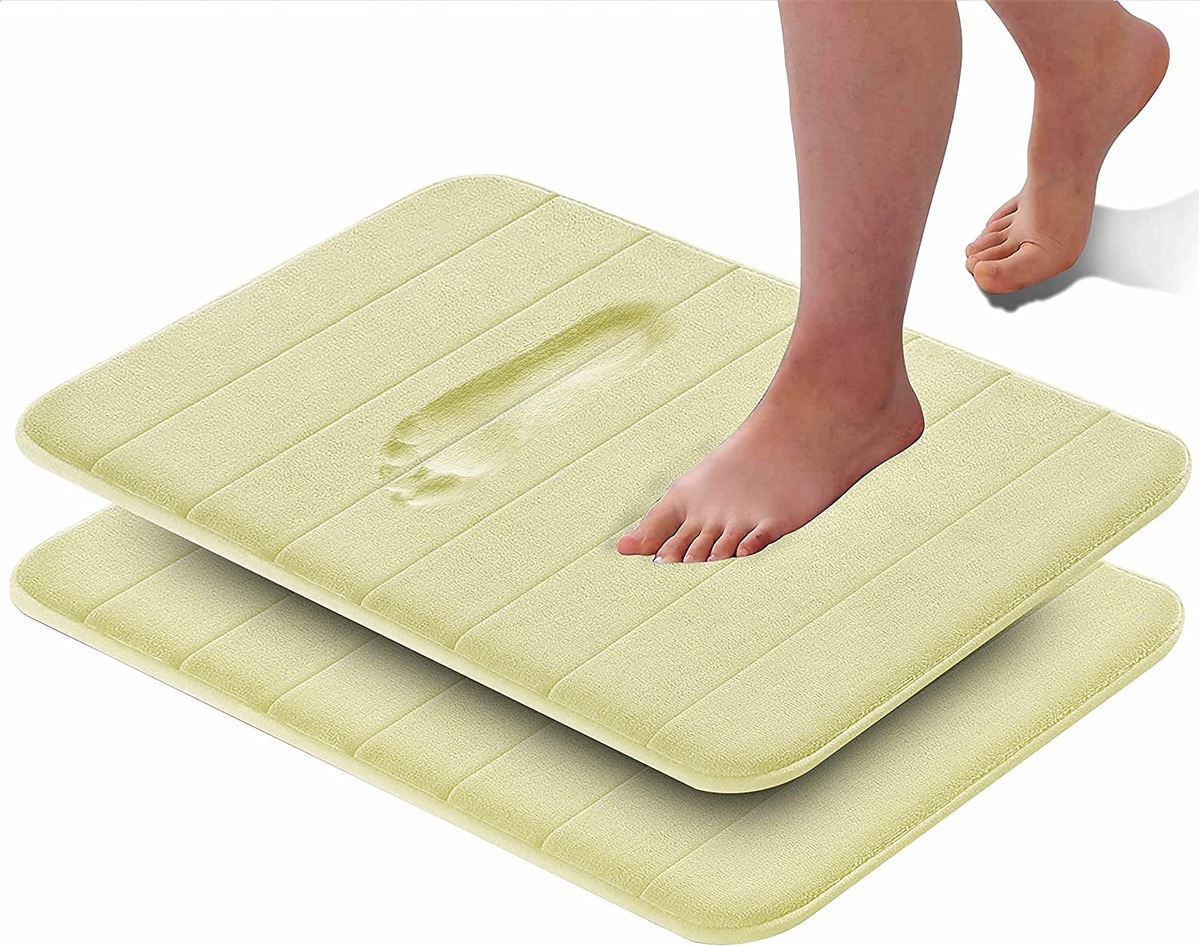
Memory foam is often made from polyurethane foam covered with polyester or microfiber fabric. Some mats also have a non-slip backing. These layers can hold moisture in different ways, so the surface may feel dry while the inside or underside remains damp.
The risk is higher when a mat stays flat on a tile, vinyl, or other bathroom floor after use. Water can collect beneath it, while limited airflow slows drying. A warm, humid bathroom can make this problem worse.
Mold does not need a large pool of water to grow. Repeated exposure to small amounts of moisture can create a suitable environment, especially when the mat never gets enough time to dry between showers.
Source: howtocleaneasily.com
Trapped water inside the foam
The thick foam layer can absorb or retain water. If the mat is not dried well, moisture may remain inside even when the outer fabric feels dry.
Poor air circulation
A mat left flat against the floor has less airflow underneath. This can slow evaporation and allow damp areas to remain hidden.
High bathroom humidity
Steam from hot showers raises indoor moisture. If the bathroom has no working exhaust fan or open window, the mat may take longer to dry.
Frequent daily use
A family may use the same bathroom several times a day. The mat may receive more water before it has fully dried from the last shower.
Dirt and soap residue
Skin oils, dust, hair, and soap can collect in the fabric. These deposits can make the mat harder to clean and may contribute to unpleasant odors.
Does Memory Foam Hold More Moisture Than Other Bath Mats?
It can. The answer depends on the foam thickness, fabric cover, backing, and overall design. A thick memory foam mat may take longer to dry than a thin cotton mat because moisture can remain inside its structure.
Cotton mats can also become moldy if they stay wet. However, a thin cotton mat may be easier to hang and dry than a thick foam mat. The important difference is not simply the material. It is how much water the mat holds and how quickly that water can escape.
Some memory foam mats have removable covers or special moisture-resistant features. These designs may make care easier, but they do not make the entire mat immune to mold.
Memory foam
Offers a cushioned feel but may take longer to dry when water reaches the inner foam.
Cotton
Absorbs water and may dry more easily when the mat is thin and has good airflow.
Microfiber
Can dry relatively quickly, depending on fabric thickness and construction.
Rubber-backed mats
Can trap moisture between the backing and floor if left in place while damp.
Can the Bottom of a Memory Foam Bath Mat Get Moldy?
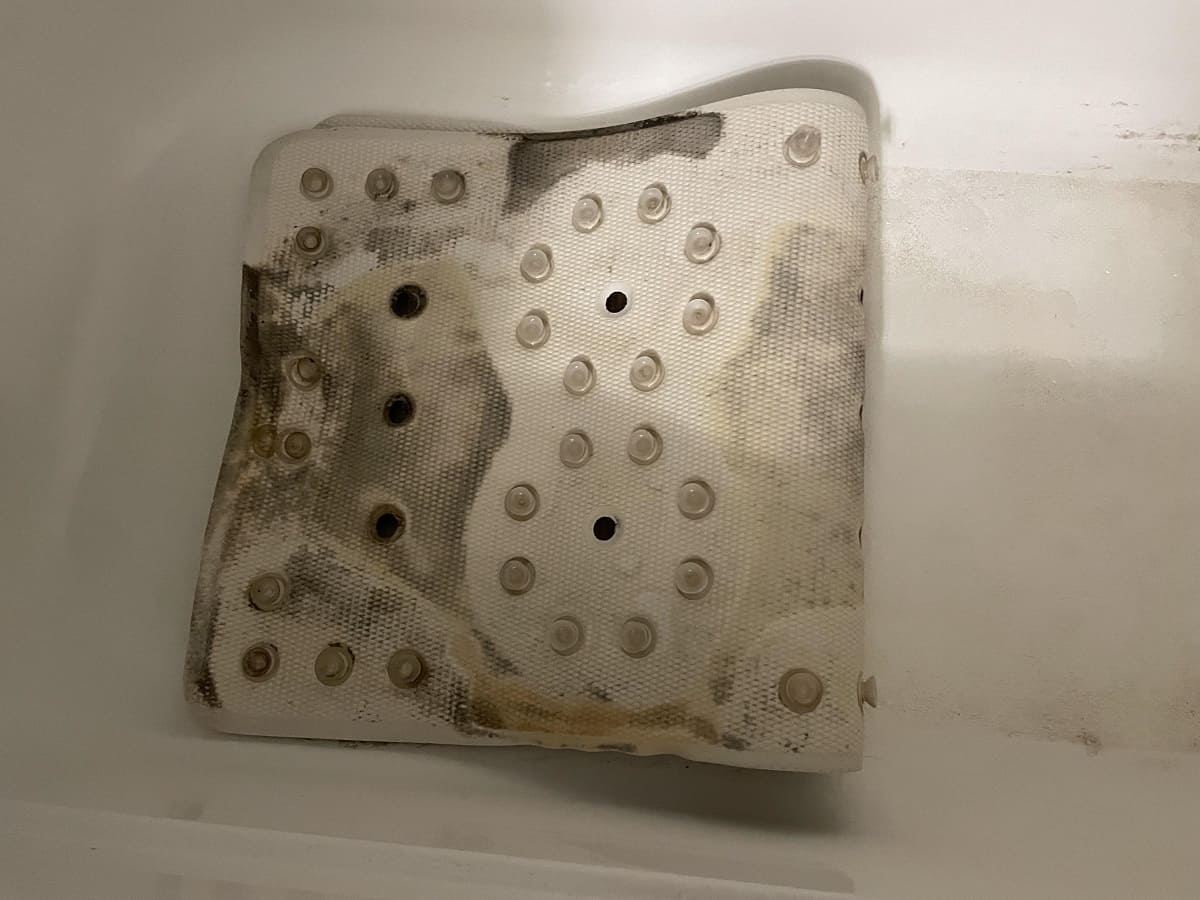
Yes. The underside may develop mold even when the top looks clean. This can happen when water runs through the fabric or collects between the mat and the floor.
Check the bottom during routine cleaning. Look for dark spots, discoloration, a sticky feel, or a musty smell. Also inspect the bathroom floor beneath the mat, since moisture can remain hidden there.
A non-slip backing does not always prevent moisture problems. If the mat has a rubber or coated backing, follow its care instructions and make sure both the backing and floor dry before putting it back.
Signs Your Memory Foam Bath Mat Has Mold or Mildew
The easiest way to spot a possible mold problem is to check the mat’s smell, appearance, and moisture level. Mold may appear as small spots, patches, or fuzzy growth. Its color can vary, so do not assume that only black or green spots indicate a problem.
A musty smell is another warning sign. If your bathroom smells damp even after you clean it, inspect the bath mat, its backing, and the floor beneath it. Mold can grow in areas that are not easy to see.
Keep in mind that not every stain or odor means mold is present. Soap residue, dirt, hard-water deposits, and ordinary wear can also change the mat’s appearance. Still, a persistent musty smell combined with dampness or visible growth deserves attention.
Source: dormouselife.com
Musty or earthy smell
A damp, stale smell that returns after washing may indicate moisture trapped inside the foam or possible mold growth.
Dark or unusual spots
Black, green, gray, or other colored patches may be signs of mold. Check the fabric, seams, edges, and underside.
Constant dampness
A mat that feels wet long after a shower may not be drying properly. Check whether the foam is holding water.
Slimy or sticky surface
A slippery or sticky feel can come from dirt, soap buildup, or biological growth. Clean and inspect the mat rather than ignoring the change.
Discoloration or fabric damage
Persistent stains, weakened fabric, or damaged foam may indicate that the mat needs closer inspection or replacement.
How to Tell Mold From Ordinary Dirt
Dirt often appears as loose particles or surface stains that may come off during normal cleaning. Soap residue can leave a dull or sticky layer, while hard-water deposits may create pale marks.
Mold may appear as spots or patches that remain after ordinary cleaning. It may also produce a persistent musty smell. However, appearance alone cannot identify the exact type of growth.
If you see or smell mold, treat it as a moisture problem. You do not need to identify the mold species before taking steps to remove the source of moisture and address the affected item.
Check the fabric
Look for spots, fuzzy patches, or stains that do not disappear with ordinary cleaning.
Smell the mat
Notice whether a musty smell remains after the mat has been cleaned and fully dried.
Inspect the foam and backing
Check for hidden damp areas, damaged layers, and unusual growth around seams and edges.
How to Prevent Mold on Memory Foam Bath Mats
The best way to prevent mold is to keep the mat from staying wet. You do not need expensive products or a complex cleaning routine. Small habits after each shower can make a real difference.
Start by lifting the mat off the floor when you finish using it. Let air move around both sides so moisture can escape. If the bathroom has an exhaust fan, run it during and after showers according to the fan’s instructions.
You should also give the mat enough time to dry before using it again. If several people share one bathroom, consider using a second mat while the first one dries. This simple change can prevent repeated soaking.
The U.S. Environmental Protection Agency identifies moisture control as a key part of mold prevention. Its general guidance recommends drying wet materials as soon as possible, ideally within 24 to 48 hours. This is a broad moisture-control guideline, not a guarantee that a bath mat is safe to leave wet for that long.
Source: moldhelpforyou.com
Lift the mat after every shower
Hang it over a suitable drying rack or spread it on a clean surface where air can reach both sides.
Improve bathroom ventilation
Use a working exhaust fan that vents outdoors. Open a window when practical and safe to help moisture escape.
Dry the bathroom floor
Wipe up puddles and water beneath the mat before putting it back. Do not trap moisture between the mat and the floor.
Wash the mat regularly
Follow the care label and clean away dirt, body oils, and soap residue before they build up.
Avoid repeated soaking
Use a separate towel to dry very wet feet before stepping on the mat. This reduces the amount of water it must absorb.
Allow complete drying
Do not return the mat to the bathroom floor while its foam or backing still feels damp.
Choose a Good Place to Dry the Mat
A drying rack in a well-ventilated room is often a useful option. It allows air to move around the mat and helps reduce moisture trapped underneath.
You can also hang the mat over a sturdy shower rail if its weight will not damage the rail. Make sure it is spread out rather than folded into a thick bundle.
Avoid leaving it in a closed laundry basket, on a damp bathroom floor, or inside a small unventilated closet. These places can slow drying and allow musty odors to develop.
Good choice
A clean drying rack in a room with good airflow.
Good choice
A sturdy shower rail that supports the mat without folding it tightly.
Poor choice
A damp floor, closed hamper, or crowded storage area.
Can a Fan or Dehumidifier Help?
Yes. A fan can help move air around a damp mat, while a dehumidifier can reduce excess moisture in the room. Both may help when the bathroom has poor natural airflow.
Place the mat where air can reach both sides. Do not direct strong heat at the foam unless the manufacturer specifically allows it. High heat may damage some foam materials or backing.
The CDC recommends keeping indoor humidity as low as practical, with a target of no more than 50 percent. A bathroom fan, air conditioner, or dehumidifier can help control excess humidity.
How to Clean a Moldy Memory Foam Bath Mat
Cleaning a memory foam bath mat depends on how badly it is affected and what the manufacturer allows. A lightly dirty mat may be suitable for gentle cleaning, but a mat with visible mold inside the foam may not be possible to clean completely.
The U.S. EPA explains that mold can grow into porous materials and fill small spaces. This can make complete removal difficult or impossible. A memory foam bath mat with mold inside its foam may therefore be a better candidate for replacement than repeated washing.
Before cleaning, check the care label. Some mats can be hand-washed, while others have removable covers or specific machine-washing instructions. Do not assume that all memory foam mats can go in a washing machine or dryer.
Source: storables.com
What you need
Mild laundry detergent, clean water, a soft cloth or sponge, a clean drying rack, and protective gloves if you are handling a moldy item.
What to avoid
Harsh chemicals, aggressive scrubbing, twisting, high heat, and soaking methods that are not approved by the manufacturer.
Step 1: Check the Care Label
Read the washing instructions before adding water or cleaning products. Look for directions about hand washing, machine washing, water temperature, detergent, and drying.
If the label says not to soak the mat, do not immerse it in a tub. If the instructions are missing, contact the manufacturer or use a cautious spot-cleaning method that does not saturate the foam.
Machine-washable
Use only the water temperature and cycle approved on the label.
Hand-wash only
Clean gently without twisting, stretching, or squeezing the foam too hard.
Spot-clean only
Use a small amount of suitable cleaning solution and avoid soaking the entire mat.
Step 2: Inspect the Mat Before Cleaning
Look at the top, bottom, edges, and seams. Check whether mold appears to be limited to a washable surface or whether it has spread into the foam.
If the foam has widespread visible mold, a strong persistent musty odor, or signs of deterioration, replacement is generally the more practical choice. Do not spend time trying to rescue a porous mat that cannot be cleaned and dried fully.
Step 3: Clean the Surface Gently
For a mat that the manufacturer permits you to clean, use a small amount of mild detergent in water. Apply the solution with a soft cloth or sponge, then gently wipe the affected washable surface.
Avoid hard brushing because it may damage the fabric or push dirt deeper into the foam. If the mat has a removable cover, clean the cover separately according to its instructions.
Use mild detergent
A small amount is usually enough for ordinary dirt and residue.
Rinse carefully
Remove detergent residue using the method allowed by the care label.
Do not wring the foam
Press gently to remove excess water if the cleaning instructions allow it.
Step 4: Dry the Mat Completely
Place the cleaned mat on a suitable drying rack or hang it in a well-ventilated area, depending on its design. Allow air to reach both sides and turn it occasionally if the manufacturer permits.
Do not use a clothes dryer unless the care label specifically allows it. Some memory foam materials can lose their shape or structure when exposed to unsuitable heat.
Check the foam and backing before returning the mat to the floor. A dry-looking surface does not prove that the inside is dry.
Use good airflow
Choose an open area with moving air rather than a closed bathroom.
Check both sides
Feel the fabric, backing, and edges for remaining dampness.
Wait if needed
Allow more drying time if the mat still feels cool or damp inside.
Step 5: Check the Bathroom Floor
Before putting the mat back, clean and dry the floor underneath it. Check the grout, floor edges, and nearby areas for water or signs of mold.
If the floor remains damp, fix that problem before replacing the mat. Otherwise, moisture may become trapped again and the same issue can return.
When Should You Throw Away a Moldy Memory Foam Bath Mat?
You should replace a memory foam bath mat when mold has spread into the foam, the mat cannot be dried fully, or a musty odor remains after appropriate cleaning. Repeated washing is not always enough to remove mold from porous materials.
The EPA advises that absorbent materials that become moldy may need to be discarded because mold can grow into their small spaces. This principle is relevant to thick foam mats, especially when the growth is not limited to a removable and washable cover.
Replacement is also sensible when the foam crumbles, the backing peels, or the mat no longer lies flat. A damaged mat may be harder to clean and can create additional maintenance or slipping concerns.
Source: theindoorhaven.com
Visible mold inside the foam
Growth that appears to extend beyond the surface may be difficult to remove completely.
Persistent musty odor
A smell that returns after suitable cleaning and complete drying suggests that the moisture or odor source remains.
Foam stays damp
If the inside repeatedly remains wet despite proper drying, the mat may no longer be practical to use.
Damaged construction
Cracked backing, crumbling foam, and separated layers are signs that the mat may need replacement.
Repeated mold growth
If mold returns after cleaning, investigate the moisture source and consider replacing the mat.
Can You Save a Mat With Mold on the Fabric Cover?
Possibly, but it depends on the mat’s construction. A removable cover that can be washed separately may be easier to clean than a one-piece mat with mold throughout the foam.
Check the manufacturer’s instructions and inspect the foam insert. If the foam is clean, undamaged, and can be dried fully, the cover may be washable. If the foam also has visible growth or a lasting musty smell, replacing the affected mat is a more sensible choice.
Do not assume that a clean-looking cover means the entire mat is free of mold. The inner layer needs attention too.
What If Mold Returns After Cleaning?
Recurring mold usually means the moisture problem has not been fixed or the affected material cannot be cleaned completely. Check the bathroom’s airflow, the floor beneath the mat, and the mat’s drying routine.
If the mat is still musty after suitable cleaning, replace it. If mold also appears on walls, grout, flooring, or other bathroom surfaces, address those areas as a separate moisture problem.
For widespread mold, water damage, or a problem you cannot safely handle, contact a qualified mold remediation professional.
How Often Should You Clean a Memory Foam Bath Mat?
There is no single cleaning schedule that works for every memory foam bath mat. The right frequency depends on how often the mat gets wet, how many people use it, how well the bathroom is ventilated, and what the care label allows.
A mat used by one person in a well-ventilated bathroom may need less frequent washing than one used by a large family. Still, regular inspection and prompt drying should be part of your routine.
For many households, checking the mat every few days and washing it according to its care instructions on a regular schedule is a useful starting point. Increase cleaning frequency if you notice dirt, odor, or repeated dampness.
Source: dormouselife.com
After every shower
Lift the mat and allow it to dry instead of leaving it flat on the bathroom floor.
During weekly bathroom cleaning
Inspect the top, underside, seams, and floor beneath the mat.
When dirt or odor appears
Clean the mat promptly using a method approved by the manufacturer.
After accidental soaking
Remove excess water and begin proper drying as soon as possible.
Factors That May Require More Frequent Cleaning
Some bathrooms need a more careful routine because the mat receives more moisture or has less time to dry. If several people use the same shower, the mat may become damp repeatedly throughout the day.
Bathrooms with poor ventilation also need attention. A thick mat may remain damp even when the rest of the room appears dry.
Pets, dirty feet, spills, and soap residue can add more material to the fabric. In these situations, inspect the mat more often and clean it when needed.
Multiple users
More showers mean more water and less drying time between uses.
Small bathroom
Limited airflow can allow humidity to remain high.
Frequent baths
Water splashes may soak more of the mat than a quick shower.
Pets and children
Extra dirt, spills, and wet footprints may require more frequent cleaning.
Common Mistakes That Make Memory Foam Bath Mats Moldy
Many mold problems begin with small care mistakes. A mat may look harmless when it is placed on the floor after a shower, but repeated moisture exposure can create problems over time.
Avoiding these mistakes can help extend the life of your mat. It can also reduce unpleasant odors and make your bathroom easier to keep clean.
Source: storables.com
Leaving the mat flat after use
This blocks airflow underneath and may trap moisture between the mat and floor. Lift it after each shower.
Putting it away while damp
A closed cabinet or hamper can hold moisture around the foam. Wait until the mat is completely dry.
Using too much detergent
Excess detergent may leave residue in the fabric. Use the amount recommended for the mat and rinse as directed.
Using unsuitable bleach
Chlorine bleach or other strong cleaners may damage the fabric, foam, or backing. Follow the product label and manufacturer instructions.
Using high dryer heat
High heat can damage some foam materials and backing. Use a dryer only when the care label permits it.
Ignoring a musty smell
A persistent odor may point to hidden moisture or mold. Inspect the mat and correct the drying problem.
Putting the mat on a wet floor
Water trapped underneath can encourage mold and may damage nearby flooring. Dry the floor first.
Should You Use Vinegar or Bleach on a Moldy Foam Mat?
Do not assume that vinegar or bleach is safe for every memory foam bath mat. Different fabrics, foam types, coatings, and backing materials can react differently to cleaning products.
Bleach can discolor fabric and damage some materials. Vinegar may also affect certain finishes or backing. The product manufacturer should be your first source for material-specific cleaning instructions.
The EPA recommends cleaning mold from hard surfaces with detergent and water, then drying them completely. Porous materials that have become moldy may need to be discarded because surface cleaning may not remove growth inside the material.
Never mix bleach with vinegar, ammonia, or other cleaning products. Mixing cleaners can release dangerous fumes. If you use any cleaning product, follow its label, provide good ventilation, and wear suitable protection.
Read the product label
Check whether the cleaner is suitable for the fabric and backing.
Avoid chemical mixtures
Never combine different cleaning products to make a stronger solution.
Do not soak without permission
Excess water can enter the foam and make complete drying harder.
Can You Put a Memory Foam Bath Mat in the Washing Machine?
Some memory foam bath mats are machine washable, but others are not. The material, thickness, backing, and construction determine which washing method is suitable.
Whirlpool advises checking the care label and does not recommend machine washing memory foam unless the product instructions specifically allow it. Hand washing may be the preferred method for some designs.
If the label allows machine washing, use the recommended cycle, water temperature, and detergent. Do not overload the washer or assume that the dryer is safe just because the mat can go in the washing machine.
Are Memory Foam Bath Mats a Good Choice for Humid Bathrooms?
Memory foam bath mats can work in humid bathrooms, but they need more attention when drying is difficult. Their soft feel is comfortable, yet their thicker construction may hold moisture longer than some thinner mats.
If your bathroom has a working exhaust fan, good airflow, and enough space to hang the mat, a memory foam design may be practical. If the room stays damp throughout the day, a thinner and easier-to-dry mat may be a better fit.
Think about your daily routine before choosing a mat. A product that feels comfortable but remains damp for long periods may create more maintenance than you want.
Source: theindoorhaven.com
Good for comfort
Memory foam provides cushioning and a soft surface for your feet.
Needs proper drying
The foam may retain moisture, so regular lifting and airflow are important.
Requires label-based cleaning
Not every model can be machine washed or tumble dried.
May not suit damp rooms
A bathroom with poor ventilation may make it difficult to dry a thick foam mat between uses.
What Are the Alternatives to Memory Foam Bath Mats?
If your current mat stays damp, consider a material that better fits your bathroom and cleaning routine. No bath mat is completely mold-proof, but some designs may be easier to dry and maintain.
Thin cotton mats are often easy to hang and wash. Microfiber mats can also be practical when they are not overly thick. Rubber-backed mats need special attention because moisture can collect underneath them.
Diatomaceous earth bath mats are another option. They are rigid products designed to absorb moisture at the surface and dry through evaporation. However, they have different care needs and may crack or become damaged if handled incorrectly.
Compare the material, cleaning instructions, drying time in your bathroom, and floor grip before making a change.
Thin cotton mat
A familiar option that can be easy to wash and hang dry.
Microfiber mat
A soft option that may dry relatively quickly depending on its thickness and construction.
Quick-drying fabric mat
A practical choice when regular lifting and drying are part of your routine.
Diatomaceous earth mat
A firm alternative that does not use a thick foam core but needs its own care and handling.
What Should You Look for When Buying a New Mat?
Choose a mat that matches your bathroom conditions rather than focusing only on softness or appearance. Look for clear washing and drying instructions before buying.
A removable cover can make cleaning easier if the inner foam can also be kept clean and dry. A suitable non-slip design is important, but the mat should not stay wet underneath.
Also consider the mat’s thickness. A thinner design may be easier to dry if your bathroom has limited ventilation. Whatever you choose, make sure it lies flat and stays secure on your floor.
Clear care instructions
Choose a mat with easy-to-understand washing and drying directions.
Practical construction
Consider removable covers, accessible seams, and materials that fit your cleaning routine.
Suitable backing
Look for a backing designed for your floor type and check it regularly for wear.
Easy drying
Choose a size and thickness that you can lift, handle, and dry without difficulty.
Special Moisture and Safety Concerns
A moldy bath mat is not just a cleaning issue. It can also point to a larger moisture problem in the bathroom. If the floor, wall, grout, or nearby cabinets remain damp, cleaning the mat alone will not solve the cause.
Mold exposure can affect people in different ways. The CDC notes that some people are more sensitive to mold, while people with allergies, asthma, chronic lung disease, or weakened immune systems may face greater health risks.
If you belong to one of these groups, avoid handling moldy materials when possible. Ask another household member or a qualified professional to handle the cleanup. Seek medical advice if you have health concerns related to mold exposure.
Source: moldhelpforyou.com
Protect yourself during cleanup
Use suitable gloves and other protective equipment when handling a moldy item. Avoid shaking or aggressively brushing it.
Keep children and pets away
Do not allow children or pets to play with or step on a moldy mat.
Fix the moisture source
Check for leaks, poor ventilation, and water collecting under bathroom fixtures.
Get help when needed
Contact a qualified professional for widespread mold, hidden water damage, or cleanup that cannot be handled safely.
Can Mold From a Bath Mat Spread to the Bathroom Floor?
Mold can grow on nearby surfaces when moisture and suitable conditions are present. If a mat stays wet against a floor, inspect the surface beneath it and nearby grout lines.
Hard, nonporous surfaces can often be cleaned with detergent and water, followed by complete drying. Porous or damaged materials may require a different approach.
If mold keeps returning, look beyond the mat. A plumbing leak, wet subfloor, or poor ventilation may be allowing moisture to build up.
Should You Use a Moldy Bath Mat Again?
Do not use a mat with visible mold or a persistent musty smell while you are deciding what to do. Keep it away from clean towels and other household fabrics.
If the growth is limited to a washable removable cover, follow the manufacturer’s cleaning instructions and inspect the foam. If mold has entered the foam or the odor remains, replace the mat.
A new mat will not solve the problem if it is placed on the same wet floor and left there after every shower. Correct the moisture conditions before using another one.
Frequently Asked Questions
Q
Do memory foam bath mats get moldy easily?
They can develop mold when they remain damp, but mold is not automatic. Thick foam may hold moisture longer than thin fabric, especially in a bathroom with poor airflow.
Lift the mat after every shower, allow both sides to dry, and clean it according to the manufacturer’s instructions. These habits help reduce the conditions that support mold growth.
Q
Can a memory foam bath mat get moldy underneath?
Yes. The underside can develop mold when water becomes trapped between the mat and the bathroom floor. This can happen even when the top looks clean.
Lift the mat regularly and inspect its backing and the floor beneath it. Dry both surfaces before putting the mat back.
Q
How do I get rid of a musty smell in a memory foam bath mat?
First, inspect the mat for visible mold and check whether the foam is damp. If the mat is suitable for cleaning, use the manufacturer’s approved method with a mild detergent and dry it completely.
If the musty smell remains after appropriate cleaning and drying, the foam may contain trapped moisture or contamination that cannot be removed. Replacing the mat is often the better option.
Q
Can I put a memory foam bath mat in the dryer?
Only if the manufacturer’s care label specifically permits it. Some memory foam mats can be damaged by heat or tumbling, which may change their shape or affect their backing.
If the label recommends air drying, use a clean drying rack or suitable hanging method in a well-ventilated area.
Q
How long does a memory foam bath mat take to dry?
Drying time depends on the foam thickness, amount of water, room humidity, and airflow. A thin mat in a ventilated room may dry faster than a thick mat in a small, humid bathroom.
Do not rely on a fixed number of hours. Check the fabric, foam, backing, and edges. Return the mat to the floor only when it is completely dry.
Q
Can I use bleach to remove mold from a memory foam bath mat?
Do not use bleach unless the manufacturer specifically allows it. Bleach can damage some fabrics, foam, and backing materials, and it may not remove mold that has grown inside porous foam.
Never mix bleach with vinegar, ammonia, or other cleaners. For a mat with mold inside the foam, replacement may be more appropriate than chemical treatment.
Q
Is a mold-resistant memory foam bath mat completely mold-proof?
No. A mold-resistant claim does not mean that a mat can never develop mold. Product features may help reduce certain problems, but moisture can still collect in the foam, fabric, or backing.
Read the manufacturer’s description and care instructions. Continue to lift, clean, and dry the mat properly.
Q
Should I replace my memory foam bath mat if it has black spots?
Black spots may be mold, but color alone cannot confirm what caused them. Inspect the fabric and foam, and check for a musty smell or persistent dampness.
If you suspect mold has spread into the foam or the mat cannot be cleaned and dried completely, replace it. Also check the floor underneath and correct any moisture problem.
Q
Are cotton bath mats better than memory foam for preventing mold?
A thin cotton mat may be easier to hang and dry than a thick memory foam mat. However, cotton can also develop mold when it remains damp.
The better option depends on the bathroom’s airflow, the mat’s thickness, and how easily you can clean and dry it. No material removes the need for regular care.
Q
Can I leave my memory foam bath mat on a heated bathroom floor?
Check the mat manufacturer’s instructions and the heated-floor manufacturer’s guidance before doing so. Not every foam material or backing is suitable for continuous contact with a heated surface.
A heated floor should not replace proper drying. Lift the mat after use, inspect the underside, and allow moisture to escape.
✦ Wrapping Up
Conclusion
Memory foam bath mats can get moldy when water remains trapped inside the foam, fabric, or backing. Thick construction, poor ventilation, repeated showers, and leaving the mat flat on a wet floor can all increase the risk. However, proper care can help keep a memory foam mat clean and usable.
The most useful habit is to lift the mat after every shower and let both sides dry completely. Clean it according to the care label, keep the bathroom well ventilated, and inspect the underside regularly. A musty smell, visible mold, or foam that stays damp should never be ignored.
If mold has spread into the foam or the smell remains after suitable cleaning, replacing the mat is often the safer and more practical choice. Also address any moisture on the bathroom floor so the same problem does not return with a new mat.
💡 Key Takeaway
After your next shower, lift your memory foam bath mat, dry the floor beneath it, and hang the mat where air can reach both sides. Check the foam and backing for dampness before putting it back. This simple routine can help reduce mold, mildew, and musty odors.
Find out what is the best material for a bathroom rug, including cotton, microfiber, bamboo, chenille, memory foam, and more. Compare absorbency, drying speed, comfort, safety, and care.