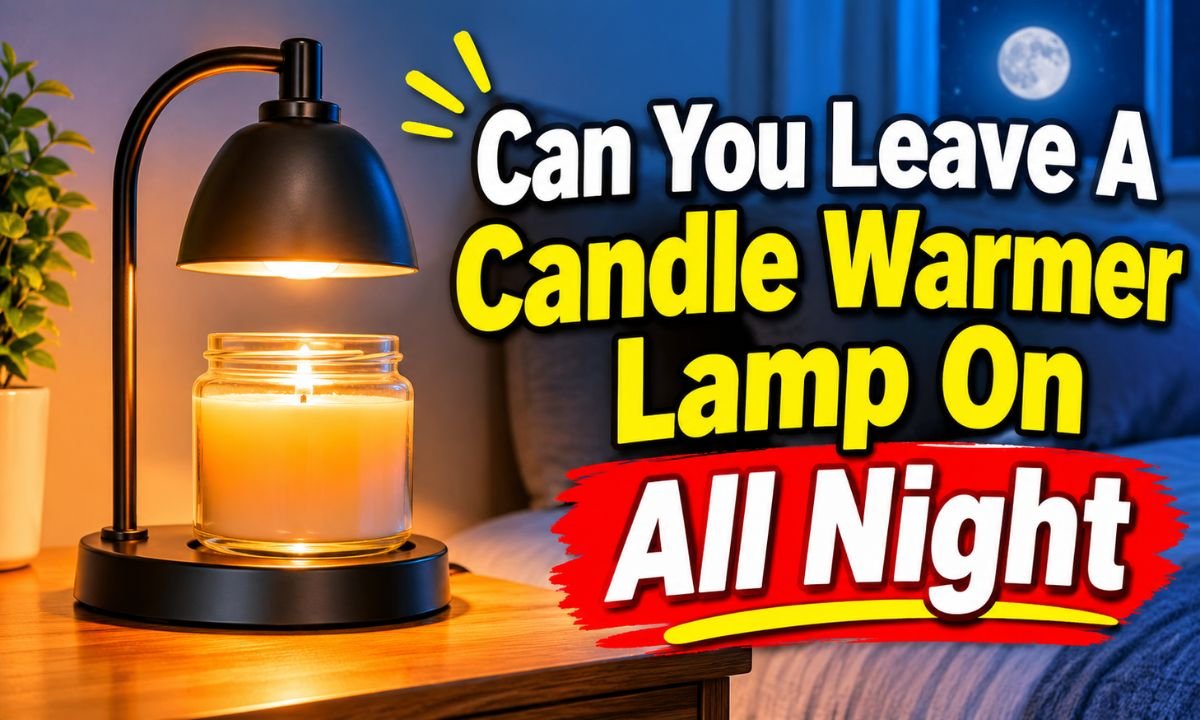
No. It is best not to leave a candle warmer lamp running all night while you sleep. Although it has no open flame, it still produces heat and uses electricity. Turn it off before bed unless the manufacturer gives clear instructions for a specific approved operating period.
In American homes, candle warmer lamps are popular in bedrooms, living rooms, home offices, and bathrooms. They melt scented candle wax with a heated bulb instead of a burning wick. This gives people a way to enjoy candle fragrance without an open flame. However, the lack of a flame does not make the lamp risk-free.
A candle warmer is still an electrical heating appliance. Its bulb, socket, wiring, base, and nearby surfaces can become warm during use. Leaving it on while you sleep means you cannot watch for a loose connection, unusual heat, a damaged cord, or a candle that has shifted. These risks make overnight use a habit worth avoiding.
The safest routine is simple: use the lamp while you are awake, follow its manual, set a built-in timer when available, and switch it off before going to sleep. A timer is helpful, but it should not replace proper supervision or the maker’s instructions. If you want fragrance throughout the night, consider a passive option that does not need a powered heat source.
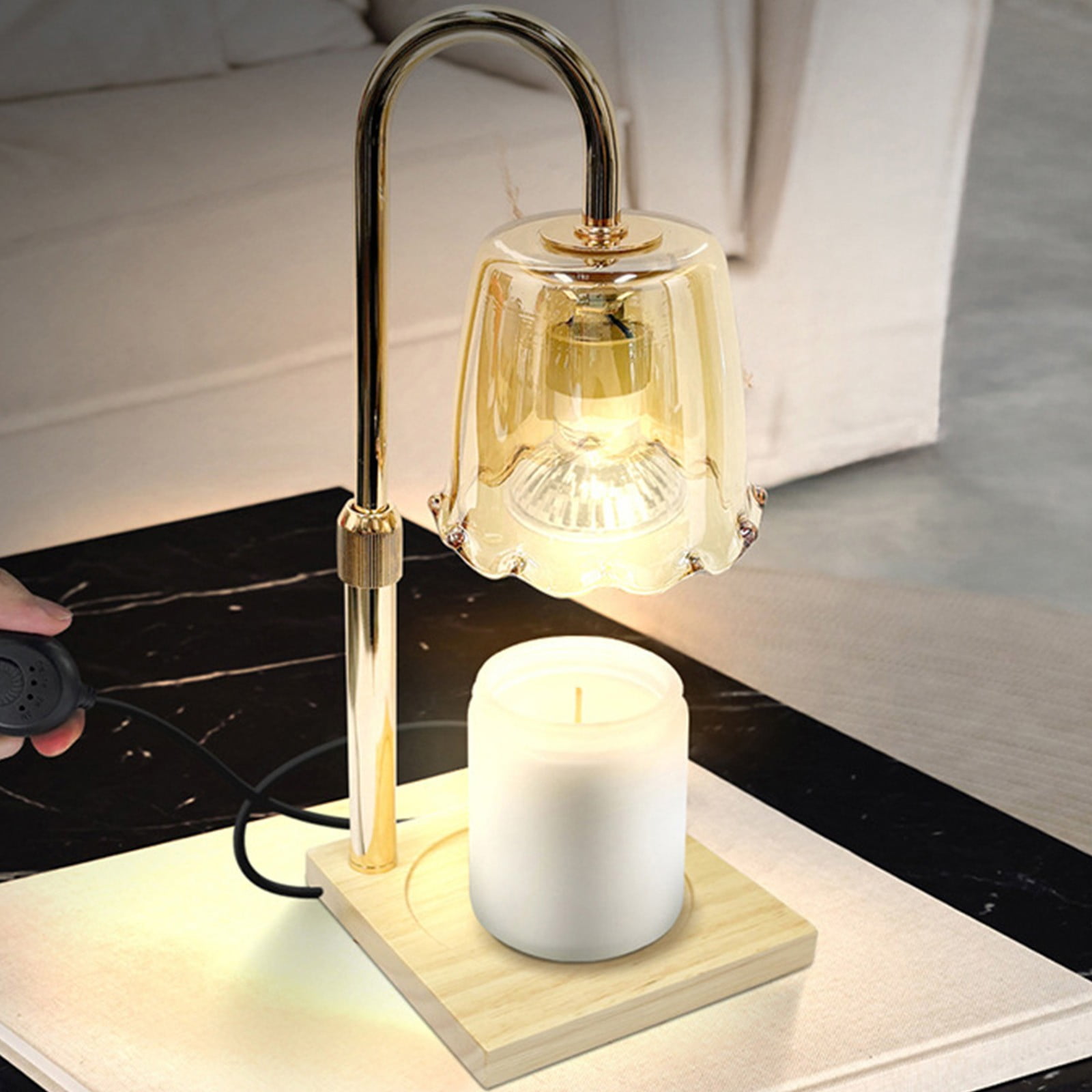
Source: walmart.com
Why You Should Not Leave a Candle Warmer Lamp On Overnight
A candle warmer lamp should not run unattended while you sleep because it combines heat, electricity, and melted wax. Each part creates a possible problem if something goes wrong. You may not notice a change in temperature, a burning smell, or an electrical fault until the situation becomes serious.
Unlike a traditional candle, a warmer does not need a flame to release fragrance. A bulb heats the top of the wax until it melts and releases scented oils into the air. This removes the open flame, but it does not remove every source of heat or electrical risk.
The U.S. Fire Administration advises people to blow out candles before leaving a room or going to bed. That guidance is for open-flame candles, not a direct rule for electric warmer lamps. Still, it supports a useful safety habit: do not leave heat-producing fragrance devices running when you cannot monitor them.
Source: amazon.com
Continuous heat
The bulb and its socket produce heat for as long as the lamp runs. Long use can raise the temperature of parts of the fixture and nearby objects.
Electrical faults
A damaged cable, loose plug, faulty switch, or poor connection can create a risk of overheating, electric shock, or fire.
Unattended operation
When you sleep, you cannot quickly respond to an unusual smell, a lamp that tips over, or a problem with the electrical supply.
Hot melted wax
The wax becomes liquid during use. A jar that gets knocked over or damaged can spill hot wax onto nearby objects or skin.
A Flameless Lamp Is Not a Heat-Free Appliance
The word flameless can create a false sense of security. It means the warmer does not need a burning wick to melt the wax. It does not mean the lamp stays cool or that every part is safe to touch.
The bulb transfers heat to the candle from above. The shade, socket, and nearby parts may also become warm. The exact temperature depends on the bulb, lamp design, height setting, brightness, room conditions, and length of use.
For this reason, treat the lamp like another small heating appliance. Use it on a suitable surface, keep the area clear, and turn it off when you are finished.
Important distinction
A warmer reduces the risk linked to an open candle flame, but it does not remove electrical or heat-related hazards.
What Happens If Something Goes Wrong While You Sleep?
A small problem can be harder to manage at night. For example, a loose plug may become hot, a cord may sit against bedding, or an unstable lamp may fall. You might not notice these changes until a smoke alarm sounds.
This does not mean every warmer will fail during overnight use. It means the risk is avoidable. Switching the appliance off before sleep removes the need to depend on it while you cannot monitor it.
How Long Can You Safely Run a Candle Warmer Lamp?
There is no single operating time that applies to every candle warmer lamp. The correct limit comes from the manufacturer’s instructions for the exact model. Some lamps include automatic shutoff settings, while others have no timer at all.
One product manual reviewed for this guide describes a maximum continuous operating period of four hours. The same manual lists timer options of two, four, and eight hours. This difference shows why a timer setting should not automatically be treated as the recommended continuous operating limit.
Another manufacturer’s guidance recommends avoiding continuous use beyond eight hours. These examples are product-specific, not universal rules. A lamp with a four-hour limit should not be operated for eight hours just because its timer or another model allows that period.
Source: aprettyhappyhome.com
Check the manual first
Look for maximum continuous operating time, timer instructions, bulb wattage, ventilation requirements, and warnings about unattended use.
Do not assume all-night use is approved
A timer that offers an eight-hour setting does not prove that the lamp is suitable for use while you sleep.
Follow the shorter limit
If the manual gives both a maximum operating time and a timer setting, follow the more restrictive operating instruction.
Allow cooling time
Switch off the lamp and let its parts cool before touching, moving, cleaning, or changing the bulb.
Example Operating Times and What They Mean
The table below gives examples of how product instructions can differ. These are not recommended run times for every candle warmer. Always use the instructions supplied with your own lamp.
Two-hour timer
The lamp switches off after the selected period if the timer works as intended. This can help limit use during an evening fragrance session.
Four-hour timer
Some models provide this setting, and some manuals also state a four-hour continuous-use limit.
Eight-hour timer
Some lamps offer this option, but the manufacturer may still place limits on continuous operation or unattended use.
No automatic timer
You must switch the lamp off yourself. Do not rely on the device to stop automatically.
Does a Longer Timer Mean the Lamp Is Safe Overnight?
No. A timer describes how the product controls its operating period. It does not establish that the device can safely run without supervision in every setting.
For example, a lamp with an eight-hour timer may still have a warning against extended continuous use. The timer may be intended for convenience rather than overnight operation.
If the manual does not clearly approve unattended operation, use the cautious approach. Turn the warmer off before bed.
Do Candle Warmer Lamps Have Fire Risks?
Yes. A candle warmer lamp can create a fire risk if it overheats, tips over, has faulty wiring, or sits too close to combustible materials. The risk is different from that of a burning candle, but it should not be ignored.
A useful example comes from a January 2024 product safety report published by the UK’s Office for Product Safety and Standards. The report identified a specific YUDOTECH candle warmer lamp model as presenting a serious fire risk because of electrical safety defects, including inadequate earthing and a fuse that did not work as designed.
This report does not mean all candle warmer lamps are unsafe. It shows that electrical construction and product quality matter. A decorative appearance or a built-in timer does not prove that a lamp meets appropriate safety standards.
In the United States, buyers should look for appropriate electrical safety certification from a recognized testing organization, such as UL or ETL, where applicable. Check the exact product and model rather than relying on a vague safety claim in an online listing.
Source: quiethome.life
Overheating
A lamp that runs longer than its approved operating period may develop excessive heat. The bulb, socket, and nearby surfaces deserve particular attention.
Electrical damage
Frayed insulation, a loose plug, damaged wiring, or a faulty switch can cause dangerous electrical conditions.
Flammable surroundings
Curtains, bedding, paper, clothing, and decorative materials can be affected by heat or become involved if a fire starts.
Unstable placement
A top-heavy lamp can fall if placed on an uneven surface or where a person or pet can knock it over.
Where Should You Place a Candle Warmer Lamp?
Place the lamp on a firm, level, dry, heat-resistant surface. A sturdy table or counter is usually more suitable than a soft surface such as a bed, sofa, or rug.
Keep the lamp away from curtains, blankets, books, paper decorations, and other items that can burn. Do not place it beneath a low shelf or inside a crowded display where heat can build up.
Keep children and pets away from the warmer. A pet may knock it over, while a child may touch the hot bulb, shade, or melted wax. Make sure the power cord does not hang where someone can pull it.
Good location
A clear, stable, level table with enough open space around the lamp.
Poor location
A bedside table crowded with papers, tissues, bedding, charging cables, or hanging fabric.
Avoid
Wet areas, unstable shelves, soft furniture, and places where the lamp can be bumped or covered.
Check the Lamp’s Electrical Condition
Before every use, look at the plug, cable, switch, and lamp body. Do not use the warmer if you see exposed wires, cracked parts, loose connections, or signs of melting.
Use only the bulb type and wattage listed in the manual. A bulb with a higher wattage can create more heat than the fixture is designed to handle.
Do not repair damaged wiring with tape or continue using a lamp that repeatedly flickers, trips a circuit, or smells like burning plastic. Unplug it if safe to do so and replace it or have it checked by a qualified professional.
How to Use a Candle Warmer Lamp More Safely
You can reduce avoidable risks by setting up the warmer correctly and keeping its operating period within the manufacturer’s limits. The goal is to enjoy the fragrance without leaving a hot electrical device running when you no longer need it.
Start by checking the manual and inspecting the lamp. Make sure the bulb is correctly fitted, the candle jar is suitable for the warmer, and the base is stable. Never use a lamp that has visible damage or an unknown bulb requirement.
Source: ireidea.com
Step 1: Read the instructions
Confirm the approved bulb, voltage, timer functions, maximum operating period, and any warnings about continuous use.
Step 2: Choose a safe surface
Set the lamp on a firm, flat, heat-resistant surface with clear space around it.
Step 3: Inspect the electrical parts
Check the cord, plug, socket, switch, and base for visible damage before connecting the lamp.
Step 4: Position the candle
Use a suitable candle jar and center it on the base. Make sure the lamp is stable and the bulb is correctly positioned above the wax.
Step 5: Select the correct setting
Adjust the height and brightness only as directed by the manufacturer. Do not use an incompatible bulb or modify the lamp.
Step 6: Set a timer if available
Choose an approved operating period that stays within the manual’s limit. Do not treat the timer as a substitute for supervision.
Step 7: Switch off after use
Turn off the warmer, unplug it when appropriate, and allow it to cool before moving or handling it.
What Should You Check Before Going to Bed?
Make a short bedtime check part of your evening routine. This helps prevent a warmer from being left on by mistake after you finish enjoying its fragrance.
Check the power switch rather than assuming the timer has already stopped the lamp. If the warmer has a separate wall switch or plug connection, confirm that the appliance is no longer receiving power.
Switch off the lamp
Make sure the bulb is no longer producing heat.
Unplug when appropriate
Disconnect the appliance if its manual recommends unplugging it after use or if it will remain unused.
Check the surroundings
Keep bedding, curtains, paper, and other objects away from the lamp.
Allow the lamp to cool
Do not touch a hot bulb or move a lamp while its components are still warm.
Check smoke alarms
Make sure your home’s smoke alarms are working and that you can hear them from sleeping areas.
Signs That You Should Stop Using the Warmer
A warmer should operate without unusual electrical behavior. Stop using it if you notice a strong burning smell, repeated flickering, unusual buzzing, a damaged cord, or visible discoloration around the socket.
If the plug or outlet is unusually hot, stop using the appliance. If you can safely disconnect it, do so. Do not touch exposed wires or attempt to remove a plug that appears melted or damaged. Get help from a qualified electrician when the outlet or household wiring may be involved.
If smoke or fire appears, do not take risks trying to save the lamp. Leave the area and contact emergency services.
Burning plastic smell
May indicate overheating or damaged electrical insulation.
Repeated flickering
May point to a loose bulb, faulty socket, or electrical connection.
Melting or discoloration
Can indicate excessive heat or contact with an unsuitable material.
Cracked candle jar
Stop heating the candle. Allow the wax and container to cool before handling them safely.
Can You Leave a Candle Warmer Lamp On While You Are Away?
It is best to turn off a candle warmer lamp before leaving home. Even if you plan to be away for only a short time, the device does not need to keep heating wax when nobody is there to enjoy the fragrance.
A timer may reduce the time the lamp operates, but it cannot protect against every electrical fault, physical impact, or problem with the surrounding area. A timer can also fail or be set incorrectly.
The safest approach is to switch the lamp off whenever you leave the room for an extended period or leave the home. This is especially important if the lamp has no automatic shutoff or if the manufacturer’s instructions prohibit unattended use.
Source: amazon.com
Leaving for work
Switch off the warmer and unplug it if recommended by the manual.
Going shopping
Do not leave the lamp heating a candle while nobody is home.
Leaving for a weekend
Disconnect the warmer before leaving. Do not rely on a long timer setting.
Moving to another room
Switch it off if you cannot monitor it or if the lamp will be out of sight for an extended period.
What If the Candle Warmer Has an Automatic Shutoff?
An automatic shutoff is a useful feature because it can stop the lamp after a selected period. However, it does not turn an otherwise unsuitable appliance into one that is safe to leave unattended.
Check whether the timer is built into the lamp or supplied through a separate smart plug. Read the instructions for both devices if you use an external timer. Make sure the electrical load and switching method are suitable for the warmer.
For routine use, select a short approved period and remain nearby while the lamp operates. Switch it off manually before sleeping rather than depending on a timer to manage every possible hazard.
Timer benefit
Helps prevent accidental long operating periods when used as directed.
Timer limitation
Does not detect every faulty connection, damaged cord, unstable base, or nearby fire hazard.
Can a Smart Plug Make Overnight Use Safe?
A smart plug can let you control power through an app or schedule. It may also offer a convenient way to switch a warmer off at a set time. However, remote control does not remove the risks of leaving a heated device running unattended.
A smart plug should never be used to bypass a manufacturer’s warning. Check its electrical rating and instructions, and use it only if both the plug and the candle warmer are compatible.
Do not assume that an internet connection, voice command, or app notification guarantees that the lamp has switched off. A manual check before bed remains the better habit.
Does Leaving a Candle Warmer On All Night Damage the Candle?
Long heating sessions can affect the candle’s wax and fragrance, even when the warmer does not have an electrical problem. The heat melts the wax at the top and allows fragrance oils to evaporate into the air.
As the fragrance evaporates, the candle may gradually lose its scent. Keeping it warm for hours when nobody is awake to enjoy it can waste fragrance without providing much benefit.
The exact effect depends on the wax blend, fragrance, candle size, bulb temperature, and length of use. There is no universal number of hours after which every candle loses its scent.
Source: lightenify.com
Fragrance loss
Long heating periods can allow more fragrance to evaporate, reducing the scent left in the wax.
Repeated melting
The upper wax layer may melt and cool many times, depending on how often you use the lamp.
Wax discoloration
Extended exposure to heat and light may affect some candle waxes and fragrance oils.
Uneven fragrance
The scent may become weaker over time as the more volatile fragrance components evaporate.
Does a Candle Warmer Make Candles Last Longer?
A candle warmer does not consume wax in the same way as a burning wick. Instead, it melts wax so that fragrance can escape. This means the candle may retain much of its wax while gradually losing its scent.
A candle can therefore appear nearly full but release little fragrance after repeated heating. The remaining wax is not necessarily useful if most of its fragrance has already evaporated.
You can avoid unnecessary fragrance loss by using the warmer for a reasonable session and switching it off when the room smells pleasant. There is no need to keep it running all night.
Can You Burn the Candle After Using a Warmer?
Be careful about lighting a candle after using it with a warming lamp. Yankee Candle warns that heating a candle with its warmer can cause the wick to shift, making later burning unsafe.
A displaced wick may not remain in the right position for normal burning. Follow the candle maker’s instructions rather than assuming that a warmed candle can always be lit again.
If the wick has moved, the jar is damaged, or the candle looks unusual, do not light it. Use the product only in a way approved by its manufacturer.
Safer Alternatives for Enjoying Fragrance While Sleeping
If you enjoy a pleasant scent at bedtime, you do not need to leave a candle warmer running overnight. Several alternatives can provide a comfortable atmosphere without keeping a heated electrical appliance on while you sleep.
The best option depends on whether you want fragrance, a soft decorative glow, or both. Some alternatives provide only light, while others release fragrance without a candle warmer.
Source: quiethome.life
Battery-powered flameless candles
These provide a decorative glow without an exposed flame or a heated wax jar. Choose a suitable battery-operated model and follow its battery safety instructions.
Reed diffusers
These use fragrance oil and reeds to release scent without electricity or a heated bulb. Keep them upright and away from children and pets.
Passive fragrance products
Some scented sachets and other passive products release fragrance without a powered heating element. Follow their placement and exposure instructions.
A short evening warming session
Use the candle warmer while awake, then switch it off before going to bed. This lets you enjoy the scent without overnight operation.
Are Flameless LED Candles Safe to Leave On Overnight?
Battery-powered LED candles are generally a better choice for overnight decorative lighting because they do not use an exposed flame or a bulb to melt candle wax.
They still need sensible placement and care. Keep them away from water, check battery compartments, and use products with secure battery covers when children or pets are present.
If your main goal is a soft glow rather than fragrance, an LED candle is a practical alternative to a powered candle warmer.
Are Reed Diffusers Better for Overnight Fragrance?
Reed diffusers release fragrance through reeds placed in scented liquid. They do not need a flame, electrical connection, or heating bulb, so they avoid the particular risks linked to an operating candle warmer.
However, the liquid can spill, and some fragrance oils may irritate skin or be harmful if swallowed. Keep the container stable and out of reach of children and pets.
Use the diffuser according to its label and avoid placing it near bedding or areas where it could easily tip over.
Common Mistakes to Avoid When Using a Candle Warmer Lamp
Many candle warmer problems begin with small mistakes. People may assume that a flameless device needs little supervision, choose a replacement bulb without checking its rating, or place the lamp near curtains because it looks like an ordinary table light.
Avoiding these habits makes everyday use more sensible. The key is to treat the warmer as a heating appliance, not simply as a decorative lamp.
Source: amazon.com
Assuming flameless means completely safe
The bulb and electrical parts still create heat. Continue to follow the manufacturer’s safety instructions.
Ignoring the operating limit
Do not exceed the stated continuous-use period, even if the warmer still appears to work normally.
Using the wrong bulb
An incompatible bulb can produce unsuitable heat and may damage the fixture.
Leaving the lamp near curtains
Keep fabrics and other combustible items away from the lamp and its heat source.
Relying only on a timer
A timer is not a replacement for safe placement, a sound electrical connection, and switching off before sleep.
Touching the bulb while hot
Allow the lamp to cool before changing the bulb or cleaning the fixture.
Moving the lamp while operating
Hot wax may spill, and the lamp may become unstable. Turn it off and allow it to cool first.
Why You Should Not Cover a Candle Warmer
Never cover a candle warmer with fabric, paper, or an improvised shade. A cover can trap heat around the bulb and fixture, raising the temperature beyond what the product was designed to handle.
Do not place decorative items on top of the lamp or wrap its cord in a way that traps heat. Keep its ventilation areas clear and use only the shade supplied or approved by the manufacturer.
Why You Should Not Use an Unapproved Extension Cord
A damaged or unsuitable extension cord can create an electrical hazard. If the manufacturer’s instructions require direct connection to a wall outlet, follow that requirement.
Never connect several extension cords together or use a loose, damaged, or overloaded power strip. If you need a longer reach, ask a qualified electrician about a safe outlet location.
Frequently Asked Questions
Q
Can I leave my candle warmer lamp on for eight hours?
Only if the manufacturer’s instructions clearly permit that operating period. Some candle warmer lamps have an eight-hour timer, while others have shorter continuous-use limits. An eight-hour timer does not automatically mean the lamp is approved for eight hours of unattended use. Check the manual and avoid leaving it running while you sleep.
Q
Can a candle warmer lamp catch fire?
Yes. Although it does not use an open flame, a candle warmer lamp can create a fire risk through overheating, electrical faults, damaged wiring, or contact with combustible materials. Use the correct bulb, keep the lamp on a stable heat-resistant surface, and stop using it if you notice burning smells, melted parts, or unusual heat.
Q
Should I unplug my candle warmer lamp when not in use?
Unplugging the lamp when it is not in use is a sensible precaution, particularly if the manufacturer recommends it. First switch the lamp off, and make sure you can disconnect it safely. Do not pull the cord to remove the plug. If the plug or outlet is damaged or unusually hot, stop using the appliance and seek qualified help.
Q
Can I sleep in the same room as a candle warmer lamp?
You can sleep in a room where a candle warmer lamp is present, but it is better to switch it off before sleeping. A lamp that is powered down and cool does not create the same operating heat risk. Keep it away from bedding and curtains, and do not use it as an overnight fragrance heater.
Q
Does a candle warmer lamp need a timer?
A timer is a useful safety and convenience feature, but it is not essential to every model. If your lamp has one, use it within the manufacturer’s approved operating limits. If it does not have a timer, monitor its use and switch it off manually. Never assume that a timer makes unattended overnight use safe.
Q
Can I leave a candle warmer lamp on overnight if it has an automatic shutoff?
An automatic shutoff can reduce the chance of a lamp running longer than its selected period, but it does not guarantee protection against every fault. Check the manual for any warning about unattended operation. Unless the manufacturer clearly approves the intended use, turn the warmer off before going to sleep.
Q
Can I leave a candle warmer lamp on all day?
It is better to avoid running a candle warmer continuously throughout the day. Follow the model’s maximum operating period and give the appliance time to cool as directed. Use it during the time you want fragrance, then switch it off. Do not leave it running when you leave home.
✦ Wrapping Up
Conclusion
So, can you leave a candle warmer lamp on all night? The safest answer is no. Even though the lamp melts wax without an open flame, it still produces heat and depends on electrical parts that can fail. Leaving it on while you sleep adds an avoidable risk.
The right operating time depends on the exact model. Some lamps offer two-, four-, or eight-hour timers, while their manuals may give a different limit for continuous operation. Always follow the product instructions instead of assuming that every candle warmer can run for the same number of hours.
For safer use, place the lamp on a stable, heat-resistant surface, keep it away from fabrics and paper, use only the approved bulb, and check its cord and plug. Switch it off before sleeping or leaving home. If you want a pleasant nighttime glow, choose a battery-powered LED candle instead.
💡 Key Takeaway
Before going to bed tonight, check that your candle warmer lamp is switched off. Unplug it if recommended by the manufacturer, let it cool, and keep it clear of bedding, curtains, and other combustible materials. Use the warmer only during a supervised session within its stated operating limit.







2 Comments