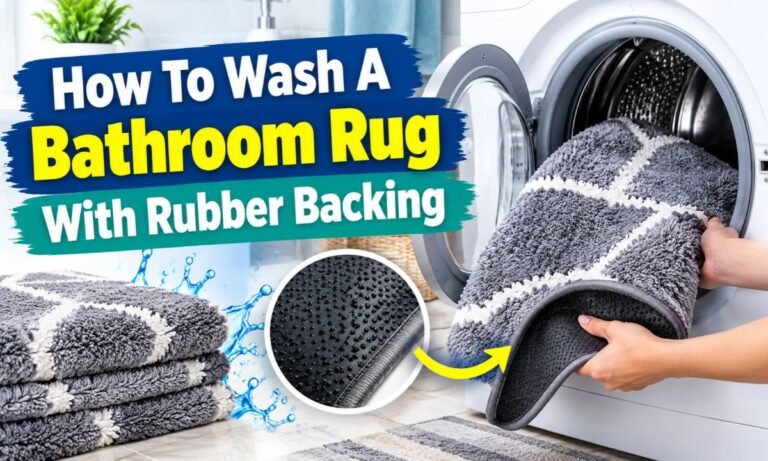
Yes, many bathroom rugs can go in the washing machine, but you must check the care label, backing, size, and machine limits first.
In American homes, bathroom rugs help keep cold tile floors comfortable and catch water near tubs, showers, and sinks. They also collect hair, dust, soap residue, and moisture during daily use. A machine wash can clean many of these rugs, but the wrong setting may damage the fabric or rubber backing.
The safest approach is simple: read the care label, shake off loose dirt, and choose a gentle wash that suits the rug. Small cotton and microfiber rugs are often easier to wash than thick mats or rugs with glued, foam, or rubber layers. If the label says to hand wash or spot clean, follow those directions instead.
Source: ahouseinthehills.com
Can Bathroom Rugs Go in the Washing Machine?
Yes, many bathroom rugs are machine washable. Cotton, polyester, and microfiber rugs often tolerate a washer when their care labels allow it. Still, the fabric alone does not tell the whole story. A rug may have a backing or inner layer that needs special care.
Before washing, look for a sewn-in label or care tag. It may list the water temperature, cycle, detergent guidance, and drying method. If there is no label, check the maker’s care instructions when available. Do not assume that a rug is washable just because it fits inside the drum.
The size and weight of the rug also matter. A small, thin mat may fit easily, while a thick rug can become very heavy after soaking up water. If the rug fills most of the drum or cannot move freely, use a suitable larger machine or clean it by another method.
Source: thespruce.com
Usually suitable when labeled washable
Thin cotton, polyester, and microfiber bathroom rugs are often machine washable if the backing and care label permit it.
Needs extra care
Memory foam mats, rubber-backed rugs, tufted rugs, and thick absorbent mats may need a special cycle or another cleaning method.
Do not machine wash without checking
Rugs with peeling backing, fragile glued layers, delicate trim, or instructions for hand washing should not go straight into the washer.
Why the Backing Matters
The backing holds the rug in place and helps it keep its shape. Some rugs use natural rubber, synthetic rubber, latex, foam, or a bonded coating. Heat, strong agitation, and repeated flexing can cause certain backing materials to crack, peel, or break apart.
Turn the rug over and inspect it before washing. If the backing feels sticky, flakes off, has cracks, or sheds small pieces, do not put it in the machine. Loose backing can damage the rug and leave debris in the washer.
Rubber or latex backing
Follow the exact care label. Some rugs permit gentle machine washing, while others require hand washing or spot cleaning.
Foam backing
Check for a specific washing method because foam can break down or lose its shape.
No backing
A simple fabric rug may be easier to wash, but its fiber, size, trim, and label still matter.
Which Bathroom Rugs Are Machine Washable?
The best way to decide is to match the rug’s material and construction to its care instructions. Two rugs that look alike may need different care because one has a fabric backing and the other has foam or rubber underneath. Use the table below as a starting point, not as a replacement for the label.
If you are unsure what a rug contains, do not test it with a hot or heavy wash. A cooler, gentle approach may reduce risk, but it cannot make a rug machine safe if the maker says otherwise.
Source: storage.googleapis.com
Cotton bathroom rugs
Many cotton rugs can be washed in a machine. Check for shrinkage warnings, color bleeding, and backing restrictions before choosing a cycle.
Microfiber bathroom rugs
Many microfiber mats are washable. Use mild detergent and avoid fabric softener if the care instructions warn against it, since residue can affect absorbency.
Polyester rugs
Polyester fibers often handle regular laundering well, but the backing, seams, and decorative parts may have stricter limits.
Memory foam bath mats
Some are machine washable, while others require gentle hand washing. Follow the manufacturer’s directions to protect the foam core.
Woven bamboo or wooden bath mats
These are not ordinary fabric rugs and should not be placed in a washing machine. Clean them according to their specific material care instructions.
Quick Material and Care Guide
Use this guide to narrow down your cleaning method. If a rug combines several materials, follow the strictest care requirement rather than the most convenient one.
Cotton
Machine wash if the label permits; use the stated temperature and check for shrinkage.
Microfiber
Use a gentle cycle and mild detergent when approved; avoid products that may leave a coating.
Rubber-backed fabric
Wash only if the label allows it, and avoid heat or agitation that may damage the backing.
Memory foam
Check the exact model instructions; do not wring or twist the mat.
Bamboo or wood
Keep it out of the washer and use the cleaning method designed for the material.
How to Wash Bathroom Rugs in a Washing Machine
Once you confirm that the rug is machine washable, prepare it before loading the washer. Removing loose dirt and hair helps the wash work better and keeps extra debris out of the machine. You should also check that the rug will fit without being packed tightly into the drum.
Use the care label to choose the cycle and temperature. When the label permits a machine wash but gives limited detail, a gentle cycle with cool water and mild detergent is a cautious starting point. Do not use this approach to override a clear instruction to hand wash or avoid machine washing.
Source: inthewash.co.uk
Step 1: Read the care label
Check the washing, temperature, spin, and drying symbols. Look for instructions about rubber backing, foam, or special finishes.
Step 2: Shake off loose dirt
Take the rug outside or over a suitable bin and shake it gently. Remove loose hair and lint by hand or with a vacuum suitable for the rug.
Step 3: Check for damage
Look for frayed seams, loose threads, cracked backing, peeling layers, or trim that could come apart during washing.
Step 4: Load the washer carefully
Place the rug in the drum without forcing it in. Make sure there is enough room for the rug to move, and follow the washer manual for bulky items.
Step 5: Add mild detergent
Use the amount stated on the detergent label for the load size. Too much detergent may leave residue in thick fibers.
Step 6: Choose the right cycle
Select the cycle and water temperature allowed by the rug label. Use a low or gentle spin if the instructions call for it.
Step 7: Check the rug after washing
Look for loose fibers, damaged backing, or detergent residue. If it still feels soapy and another rinse is permitted, follow the washer and rug instructions.
Should You Wash a Bathroom Rug by Itself?
Wash a rug alone when it is bulky, sheds fibers, has a delicate backing, or could transfer dirt to other laundry. A small, washable fabric rug may be washed with similar items if the care label and washer instructions permit it. Do not add heavy towels just to balance the load unless your washer manual recommends that approach.
Large or thick rugs can hold a surprising amount of water. If the machine struggles to spin, makes unusual banging noises, or displays an imbalance warning, stop the cycle and follow the washer manual. Do not force the machine to continue with an overloaded or uneven load.
Signs the load is too large
The rug cannot move freely, the drum is tightly packed, or the washer repeatedly struggles to spin.
Signs the load may be uneven
The washer bangs, shakes more than usual, or repeatedly pauses during the spin cycle.
What Washer Settings Should You Use?
The right washer settings depend on the rug’s label, not on a single rule for every bathroom mat. A gentle cycle and cool water are often a sensible choice when the maker permits machine washing, but some rugs have different instructions. Always give the label priority.
Avoid choosing hot water or a heavy-duty cycle simply because the rug is dirty. Heat can affect some synthetic backings and foam layers, while strong agitation can pull at seams or damage a delicate pile. If the rug needs more cleaning than its care instructions allow, consider a compatible hand-cleaning method instead.
Source: materialsix.com
Water temperature
Use cool, warm, or hot water only as allowed by the care label. Cool water is a cautious default when the label permits it and does not specify a higher temperature.
Wash cycle
Choose delicate or gentle when suitable. Use another cycle only when the rug instructions support it.
Detergent
Use a mild detergent in the correct amount. Avoid bleach unless the care label explicitly permits the specific product.
Fabric softener
Skip it when the manufacturer advises against it. Softener residue can reduce the water-absorbing performance of some fibers.
Spin speed
Follow the label’s spin instructions. A high spin may stress some backings, while a low spin may leave the rug wetter and require more drying time.
Can You Use Bleach on a Bathroom Rug?
Do not assume bleach is safe just because a rug is white. Bleach can fade colors, weaken some fibers, or damage the backing. Check both the rug label and the bleach product directions before using it.
Never mix bleach with ammonia, vinegar, toilet cleaner, or other cleaning products. Such mixtures can release dangerous gases or cause harmful reactions. If the rug needs stain treatment, use a product approved for its material and follow the label.
For colored rugs
Avoid chlorine bleach unless the manufacturer clearly allows it.
For stains
Test an approved stain remover on a hidden area first, following its instructions.
Can Rubber-Backed Bathroom Rugs Go in the Washer?
Some rubber-backed bathroom rugs can go in the washer, but others cannot. The type of rubber, the way it is attached, and the maker’s instructions all affect the answer. Check the label before washing, even if you have washed a similar-looking rug before.
Rubber and latex backing may become brittle, peel, or crack when exposed to unsuitable heat or repeated rough washing. A damaged backing can shed particles into the washer and leave the rug less stable on the floor. If the backing is already flaking or sticky, stop using the washer for that rug.
When machine washing is allowed, follow the specified cycle and drying method. Do not put a rubber-backed rug in a hot dryer unless its care instructions clearly permit it. Air drying is often the more cautious choice when heat may harm the backing.
Source: fifti-fifti.net
Before washing
Inspect the entire backing for cracks, peeling, sticky areas, or loose pieces.
During washing
Use only the cycle and water temperature allowed by the maker, and do not overload the drum.
After washing
Check the backing again. Stop machine washing if the material has begun to break down.
What If the Backing Is Peeling?
Do not wash a rug with loose or peeling backing in the machine. The backing may shed more material, and the rug may no longer lie flat or grip the floor as intended. If the rug is still usable, follow any maker-approved spot-cleaning instructions while you plan a suitable replacement.
Do not return a damaged rug to a wet tile floor if it slides, curls, or lifts at the edges. A rug that no longer stays in place can create a fall risk, especially near a tub or shower.
Clean small marks
Use a damp cloth and a cleaner suitable for the fabric, if the maker permits spot cleaning.
Replace when needed
Replace the rug if the backing breaks apart or the rug no longer stays flat and stable.
How to Dry Bathroom Rugs After Washing
Dry a bathroom rug according to its care label and make sure it is fully dry before returning it to the floor. Some fabric rugs can go in a dryer, while others need to air dry. The backing often determines whether dryer heat is safe.
A wet rug can take longer to dry than a normal towel because its pile and backing hold water. Good airflow helps moisture escape. If you air dry the rug indoors, spread it out or hang it so both sides can dry, and keep it away from surfaces that could be damaged by dripping water.
Source: thehomeatlas.com
Check the dryer instructions
Use a tumble dryer only if the rug label allows it, and select the stated temperature.
Air dry when required
Hang or spread the rug in a well-ventilated area so moisture does not remain trapped underneath.
Check both sides
Feel the pile and backing before putting the rug away or placing it on the floor.
Avoid direct high heat
Do not use a hot dryer or heater to speed drying if the material may shrink, melt, or break down.
Can You Put a Bathroom Rug in the Dryer?
Yes, if the care label says tumble drying is allowed. Follow the listed heat setting and any time limits. If the label says to line dry or air dry, do not use the dryer.
Rubber-backed, latex-backed, and foam-backed rugs need particular care because heat may damage the backing or inner layer. Air drying is a safer choice when dryer use is not approved. Do not assume that a low-heat setting is acceptable if the maker forbids tumble drying.
Dryer permitted
Use only the temperature and method shown on the label.
Dryer not permitted
Air dry the rug and allow enough time for the backing to dry fully.
Still damp after drying
Improve airflow and give the rug more time. Do not put a damp rug back on the bathroom floor.
How Often Should You Wash Bathroom Rugs?
Wash bathroom rugs based on how often they get wet, how many people use the bathroom, and how quickly the rug dries. A mat in a busy family bathroom may need washing more often than one in a guest bathroom used now and then. There is no single schedule that suits every home.
If the rug smells musty, feels grimy, or has visible stains, clean it according to its care instructions rather than waiting for a set day. Regular washing can remove dirt and residue, but a rug that stays wet for long periods also needs better drying and airflow.
Source: storage.googleapis.com
Busy bathroom
Check the rug often and wash it as needed when it collects dirt, hair, or body-care residue.
Guest bathroom
Wash it after use when it becomes wet or dirty, and before storing it for a long period.
Shared family bathroom
Set a regular check-in based on actual use and how quickly the mat dries.
Rug stays damp
Improve ventilation and hang the rug to dry between uses instead of relying on washing alone.
How to Keep a Bathroom Rug Fresh Between Washes
Hang the rug or lift it from the floor after use so moisture can escape. Keep the bathroom ventilated, especially after showers, and clean up standing water around the mat. These habits help the rug dry instead of trapping moisture against the floor.
Shake out loose hair and dust as needed. If the rug develops a persistent musty odor after washing and full drying, check for buildup, backing damage, or a damp bathroom floor. Do not cover up the smell with fragrance and assume the problem is solved.
Allow airflow
Lift or hang the rug so the underside can dry.
Remove loose debris
Shake or vacuum the rug using a method suitable for its fibers.
Inspect the floor
Check for trapped moisture under the rug and dry the floor before replacing it.
Common Bathroom Rug Washing Mistakes
Most washing problems happen when a rug’s construction is ignored. A mat that looks sturdy may contain foam, glue, or a backing that cannot handle the chosen cycle. A few checks before washing can help prevent damage and avoid a second cleanup job.
If a rug comes out misshapen, sticky, or shedding, do not repeat the same wash in the hope that it will recover. Check the care instructions and inspect the damage first. When the backing or structure has broken down, replacing the rug may be the most practical option.
Source: storage.googleapis.com
Ignoring the care label
Why it matters: The label gives the best available instructions for that specific rug. What to do: Check it before every new cleaning method.
Using too much detergent
Why it matters: Excess soap can remain in dense fibers and may leave the rug feeling stiff or soapy. What to do: Measure detergent for the actual load.
Overloading the washer
Why it matters: The rug may not clean well and can create an unbalanced load. What to do: Use a machine with enough capacity and follow its manual.
Using high heat without checking
Why it matters: Heat may shrink some fibers or damage foam and rubber layers. What to do: Follow the washing and drying temperatures on the label.
Putting a damp rug back on the floor
Why it matters: Trapped moisture can cause odors and may affect the floor underneath. What to do: Dry both sides fully before replacing the rug.
Washing a rug with peeling backing
Why it matters: Loose backing can shed and the rug may become unstable. What to do: Stop machine washing and assess whether the rug can still be used safely.
What to Do If the Rug Still Smells After Washing
First, make sure the rug is fully dry. A damp backing can hold a musty smell even when the surface feels dry. Then inspect the underside and the floor for moisture, soap residue, or damaged material.
If the care label allows another wash, follow its instructions and use the correct amount of detergent. Do not mix cleaning products or add bleach and vinegar together. If the odor persists after proper cleaning and drying, or the backing is breaking down, consider replacing the rug.
Check for dampness
Feel the center and backing, not just the surface fibers.
Look for residue
Follow the care label for any additional rinse or approved cleaning step.
Check for damage
Replace a rug that remains musty or unstable because its backing has deteriorated.
What If You Cannot Machine Wash the Rug?
If the label rules out machine washing, you can often clean the rug by hand. Start by removing loose dirt, then use a damp cloth and a suitable cleaner only if the maker permits it. Avoid soaking the whole mat unless its care instructions allow full immersion.
For a small washable-by-hand rug, use a basin or tub that can hold it without forcing or twisting the material. Apply the approved cleaning solution, gently work it through the fabric, and rinse as directed. Press out water without wringing the rug, then air dry it fully.
For a large, delicate, or unusually constructed rug, check the maker’s guidance or ask a cleaner who handles that type of material. A professional service may be appropriate when the rug is too large for home equipment or has a backing that could be damaged by ordinary washing.
Source: storage.googleapis.com
Spot clean
Best for small marks when the label allows it. Use a suitable cleaner and avoid soaking the backing.
Hand wash
Use only when the material can tolerate it. Clean gently and avoid twisting or stretching the rug.
Seek specific care advice
Ask the manufacturer or a qualified cleaner when the rug has delicate fibers, glued layers, or unclear instructions.
How to Hand Wash a Suitable Bathroom Rug
Fill a basin with the water temperature allowed by the label and add a small amount of suitable detergent. Clean the rug gently without scrubbing hard enough to pull fibers or damage the backing. Rinse as directed until the cleaning solution is removed.
Press water out with your hands or a clean towel. Do not twist a foam-backed or delicate rug to squeeze it dry. Spread it in a ventilated area and check both sides before putting it back on the floor.
Use compatible products
Choose a detergent or cleaner that the rug maker allows.
Handle gently
Avoid harsh scrubbing, wringing, and stretching.
Dry completely
Allow air to reach both sides and keep the rug off the floor while damp.
A Simple Decision Guide Before You Wash
Use this decision guide when you are unsure whether to put a bathroom rug in the washer. The key questions are whether the maker permits machine washing, whether the backing is intact, and whether your machine can handle the wet weight. If any answer raises concern, choose a gentler method.
Source: inthewash.co.uk
The label says machine washable and the rug is intact
Follow the listed temperature, cycle, detergent, spin, and drying instructions.
The label says hand wash or spot clean
Keep it out of the washer and use the approved cleaning method.
The label is missing
Look up the maker’s care instructions. If the material and backing remain unclear, do not assume machine washing is safe.
The backing is peeling or cracked
Do not machine wash it. Assess whether the rug can be cleaned safely or needs replacement.
The rug is too bulky for the washer
Do not force it into the drum. Use suitable larger-capacity equipment or another approved method.
Frequently Asked Questions
Q
Can I wash bathroom rugs with towels?
Sometimes, if the rug’s care label allows machine washing and the washer can handle the combined wet load. Avoid mixing a shedding rug with items that may collect loose fibers, and do not add towels just to balance the machine unless the washer instructions recommend it. Washing the rug separately is a cautious choice for bulky or rubber-backed mats.
Q
Should I wash a bathroom rug in hot or cold water?
Use the temperature on the care label. Cool water is a cautious option when the label permits it, but some rugs may have different requirements. Do not use hot water unless the maker allows it, especially when the rug has foam, rubber, or glued layers.
Q
Can I put a rubber-backed bath mat in the dryer?
Only if its care label clearly permits tumble drying. Heat can damage some rubber, latex, and foam backings. If the label says to air dry, hang or spread the mat in a well-ventilated area until both sides are fully dry.
Q
Can I wash a memory foam bathroom mat in the washing machine?
Some memory foam mats are machine washable, but others require hand washing or spot cleaning. Check the instructions for the exact mat before washing it. Avoid twisting or wringing the foam, and use only the drying method allowed by the maker.
Q
Why does my bathroom rug smell after washing?
The rug may still be damp inside, detergent may have built up in the fibers, or the backing may be breaking down. Check both sides and the floor underneath, then follow the label for any approved additional cleaning. If the odor remains after proper cleaning and full drying, inspect the rug for damage and consider replacing it.
Q
Can I wash two bathroom rugs at once?
Yes, if both rugs are machine washable and the washer has enough room for them to move freely. Do not combine thick or heavy rugs if the load becomes too bulky or unbalanced. Follow the washer manual and wash them separately when needed.
✦ Wrapping Up
Conclusion
Bathroom rugs can often go in the washing machine, but the care label, backing, material, and rug size decide whether it is safe. Cotton, microfiber, and some polyester rugs are commonly washable, while foam, rubber-backed, and delicate mats need closer attention. The right cycle and temperature matter just as much as the detergent you use.
Before washing, shake off dirt, inspect the backing, and make sure the rug fits your machine without crowding it. After washing, use the approved drying method and wait until both sides are fully dry before returning the rug to the bathroom. If the label forbids machine washing or the backing is falling apart, choose another cleaning method.
💡 Key Takeaway
Check the care label and inspect the backing first. If machine washing is allowed, use the specified gentle settings, avoid overloading the washer, and dry the rug fully before putting it back on the floor.
Learn how to remove mildew smell from a bath rug using washing, deodorizing, and proper drying. Includes tips for rubber-backed rugs and stubborn odors.
Is chenille good for a bath mat? Learn how chenille performs for absorbency, softness, drying, safety, durability, and care before choosing one for your bathroom.











3 Comments