Candle warmer lamps can be safer than open-flame candles, but they are not completely safe around cats and dogs. Heat, hot wax, electrical cords, and strong fragrances can still cause problems.
In American homes, scented candles are a popular way to make a living room, bedroom, or bathroom feel warm and cozy. Many pet owners in the United States now choose candle warmer lamps instead of traditional candles because these devices melt wax without lighting a wick. This removes the direct flame, but it does not remove every risk for curious cats and dogs.
A candle warmer lamp uses an electric bulb to heat the top of a candle. The warm wax releases fragrance into the room. Although this method avoids an open flame, the lamp, bulb, melted wax, and power cord can still cause burns, spills, or other accidents. Some scented wax products may also contain ingredients that irritate pets or pose a poisoning risk if swallowed or touched.
The safest approach is to look at both the lamp and the candle inside it. A well-made lamp placed out of reach, used according to its instructions, and paired with a mild, suitable fragrance may reduce some household risks. However, pets with asthma, allergies, or other breathing problems may need a fragrance-free home. Here is what cat and dog owners should know before using one.
Source: cuteness.com
Are Candle Warmer Lamps Safe Around Cats And Dogs?
Candle warmer lamps can be used with precautions, but they should not be treated as completely pet-safe devices. Their main benefit is that they melt candle wax without a burning wick. This removes the direct flame that can burn a curious nose, catch a dog’s tail, or start a fire if a candle falls over.
However, the lamp still uses electricity and heat. The bulb can become hot, the wax can remain warm enough to burn skin, and the device can fall if a pet bumps the table. A curious cat may jump onto the furniture, while a playful dog may knock the cord or base with its body.
The fragrance is another concern. Some scented candles contain essential oils or other ingredients that may cause irritation or poisoning after certain types of exposure. A scent that seems mild to a person may be too strong for a pet with a sensitive nose or breathing problem.
Therefore, the answer depends on the lamp design, candle ingredients, room size, ventilation, and your pet’s behavior. A lamp that is out of reach and used for a short period is generally a better setup than one placed on a low table where an animal can investigate it.
Source: diyproducts101.com
No direct flame
The lamp melts wax with an electric bulb rather than a burning wick. This removes one important fire and burn hazard.
Hot surfaces
The bulb, shade, and melted wax may become hot. A pet that touches them can suffer an injury.
Fragrance exposure
Scented wax releases fragrance into the room. Some ingredients and strong odors can irritate a cat’s or dog’s breathing.
Electrical risks
Loose cords, damaged plugs, and unstable bases can cause problems if a pet chews, pulls, or knocks the lamp.
Why Are Candle Warmer Lamps Different From Traditional Candles?
A traditional candle needs a flame to burn its wick and melt the wax. This creates a direct source of fire that can be dangerous when pets move around the room. A candle warmer lamp uses an electric bulb to heat the wax from above, so there is no burning wick during normal use.
This difference matters in homes with cats and dogs. For example, a cat that walks past a candle cannot accidentally catch its tail in a flame if the candle is being warmed by a lamp. A dog also cannot knock over a burning candle and spread an open flame in the same way.
Still, a flameless design does not mean a cool or harmless design. The lamp can heat the wax and nearby surfaces. It can also become a fire or shock hazard if the electrical parts are damaged or the device is poorly made.
Traditional candle
Has an open flame, hot wax, and a wick. A pet can knock it over or come into contact with the flame.
Candle warmer lamp
Uses an electric bulb instead of a flame. It still has hot parts, warm wax, and an electrical cord.
Can You Leave a Candle Warmer Lamp Running With Pets at Home?
It is better not to leave a candle warmer lamp running when you are away or asleep. Even if your cat or dog cannot reach it, an electrical fault, falling object, or unexpected accident can happen while nobody is watching.
Turn the lamp off when you leave the room for an extended period. Unplug it when it is no longer in use, following the manufacturer’s instructions. Give the bulb and wax time to cool before moving the candle or cleaning the device.
Before leaving
Switch off the lamp and unplug it if it is no longer needed.
Before bedtime
Make sure the warmer is off. Do not rely on your pet staying away from the device.
What Are the Main Risks of Candle Warmer Lamps for Pets?
The biggest risks come from heat, spilled wax, fragrance exposure, and electrical parts. These dangers affect cats and dogs in different ways. A cat may jump onto a shelf and touch the bulb, while a dog may pull a cord or knock a lamp off a side table.
Understanding each risk makes it easier to decide where to place the warmer and whether it belongs in your home at all. Remember that preventing an accident is much easier than treating a burn or possible poisoning.
Source: trendyreptiles.b-cdn.net
Burn injuries
A pet may touch the hot bulb, lamp shade, or melted wax. Burns can affect paws, noses, ears, and other exposed skin.
Wax spills
A knocked-over candle can spill warm wax onto the floor, furniture, or a pet’s coat.
Fragrance irritation
Strong scents may cause watery eyes, sneezing, coughing, or breathing discomfort.
Ingredient exposure
Some fragrance products contain essential oils that can be harmful if swallowed or absorbed through the skin.
Electrical accidents
A damaged cord or a pet chewing the cable can create a risk of electric shock or fire.
1. Hot Bulbs and Melted Wax Can Burn Pets
A candle warmer lamp produces heat to melt wax. Depending on the design and bulb, some parts can become hot during use. A curious cat may reach toward the bulb with a paw, while a dog may sniff the warm candle or bump the base with its nose.
Melted wax can also cause burns. If a pet knocks over the candle, warm wax may land on its paws, skin, or fur. Wax stuck to fur can be difficult to remove without causing more discomfort.
Never pull hardened wax from a pet’s coat if doing so causes pain or pulls the skin. Do not use a hair dryer, hot water, or household chemicals to remove it. Contact a veterinarian for advice, especially if the skin is red, blistered, painful, or covered by hot wax.
Keep paws away
Place the lamp where pets cannot reach the bulb, shade, candle, or base.
Avoid low tables
Coffee tables, floor stands, and low shelves are easy for many pets to reach.
Let the wax cool
Wait until the candle and wax have cooled before handling or moving them.
2. Electrical Cords Can Be Dangerous
Some dogs enjoy chewing objects, especially when they are young or bored. Cats may also bite, paw at, or play with loose electrical cords. A damaged power cable can expose live wires and cause an electric shock.
A cord can also pull the warmer off a table. This may break the glass candle jar, spill warm wax, or damage the lamp. A falling lamp can injure a pet that is resting nearby.
Keep cords behind furniture or use suitable cord covers that prevent pets from reaching them. Do not run a cable across a walkway where a dog can catch its paws or a cat can play with it. Never use a lamp with a frayed cable, loose plug, or damaged electrical housing.
Inspect the cable
Check for bite marks, cracks, exposed wires, loose connections, and damaged plugs.
Secure loose wires
Keep the cord out of reach and prevent it from hanging over furniture.
Replace damaged devices
Stop using a warmer if its electrical parts show signs of damage. Do not try to repair a faulty mains cord yourself.
3. Strong Fragrances Can Irritate a Pet’s Breathing
Cats and dogs have a strong sense of smell. A fragrance that seems pleasant to a person may be overwhelming to an animal. Some pets may develop watery eyes, sneezing, nasal irritation, coughing, or wheezing after exposure to strong household scents.
The Merck Veterinary Manual explains that passive fragrance sources, including candles, do not release oil droplets in the same way as some active diffusers. However, inhaled fragrance can still cause respiratory irritation. This distinction is useful because a candle warmer lamp should not automatically be treated as an ultrasonic essential oil diffuser.
Pets with asthma, chronic bronchitis, allergies, or other breathing problems may be more sensitive. Cats with asthma deserve particular care. If your pet already has a respiratory condition, ask your veterinarian before using scented wax products.
Watch for coughing
Repeated coughing or wheezing after the warmer is switched on may indicate irritation.
Improve fresh air
Turn off the warmer and allow the pet access to a clean, well-ventilated area.
Avoid strong scents
Do not use heavily scented products around pets with known breathing problems.
4. Some Wax Ingredients May Pose a Poisoning Risk
Not all scented candles use the same ingredients. Some contain synthetic fragrance mixtures, while others may contain essential oils or plant-based extracts. The risk depends on the exact ingredient, its concentration, the amount involved, and how the animal is exposed.
The Pet Poison Helpline explains that cats are especially sensitive to certain essential oils because their bodies have difficulty processing some of these compounds. Cats also groom themselves, which can increase the chance of swallowing substances that land on their fur. Dogs can also become ill after exposure to certain oils.
Essential oils such as tea tree, eucalyptus, peppermint, cinnamon, clove, citrus, pine, and pennyroyal are among the oils that raise safety concerns for pets. Their presence does not mean every scented candle will cause poisoning, but it is a good reason to check the ingredient information before use.
Do not assume that a candle is safe because its label says natural, plant-based, organic, or pet-friendly. These words do not prove that every ingredient is harmless to cats and dogs. If the fragrance ingredients are not clearly listed, choose a different product or avoid using it around your pets.
Check the ingredients
Look for essential oils and fragrance components that may be unsafe for cats or dogs.
Prevent licking
Never let pets lick melted wax, spilled fragrance oil, or the inside of a candle jar.
Avoid direct contact
Do not apply candle wax, fragrance oil, or essential oils to your pet’s skin or coat.
Are Candle Warmer Lamps More Dangerous for Cats or Dogs?
Both cats and dogs can be harmed by an unsafe candle warmer setup, but their habits can create different risks. Cats often climb, jump, and explore high surfaces. Dogs may bump furniture, chew cables, or investigate interesting smells with their noses and mouths.
Neither animal is automatically safe around a candle warmer. The best setup depends on your pet’s size, age, activity, and normal behavior. A calm older dog may leave a lamp alone, while a playful puppy may treat its cord like a chew toy.
Source: littledoggiesrule.com
Cats
May jump onto furniture, reach for the lamp, knock over the candle, or investigate warm wax. Cats also have special sensitivity to certain essential oils.
Dogs
May chew cords, bump tables, sniff hot wax, or lick spilled fragrance products. Puppies and active dogs may need extra barriers.
Why Cat Owners Need Extra Care
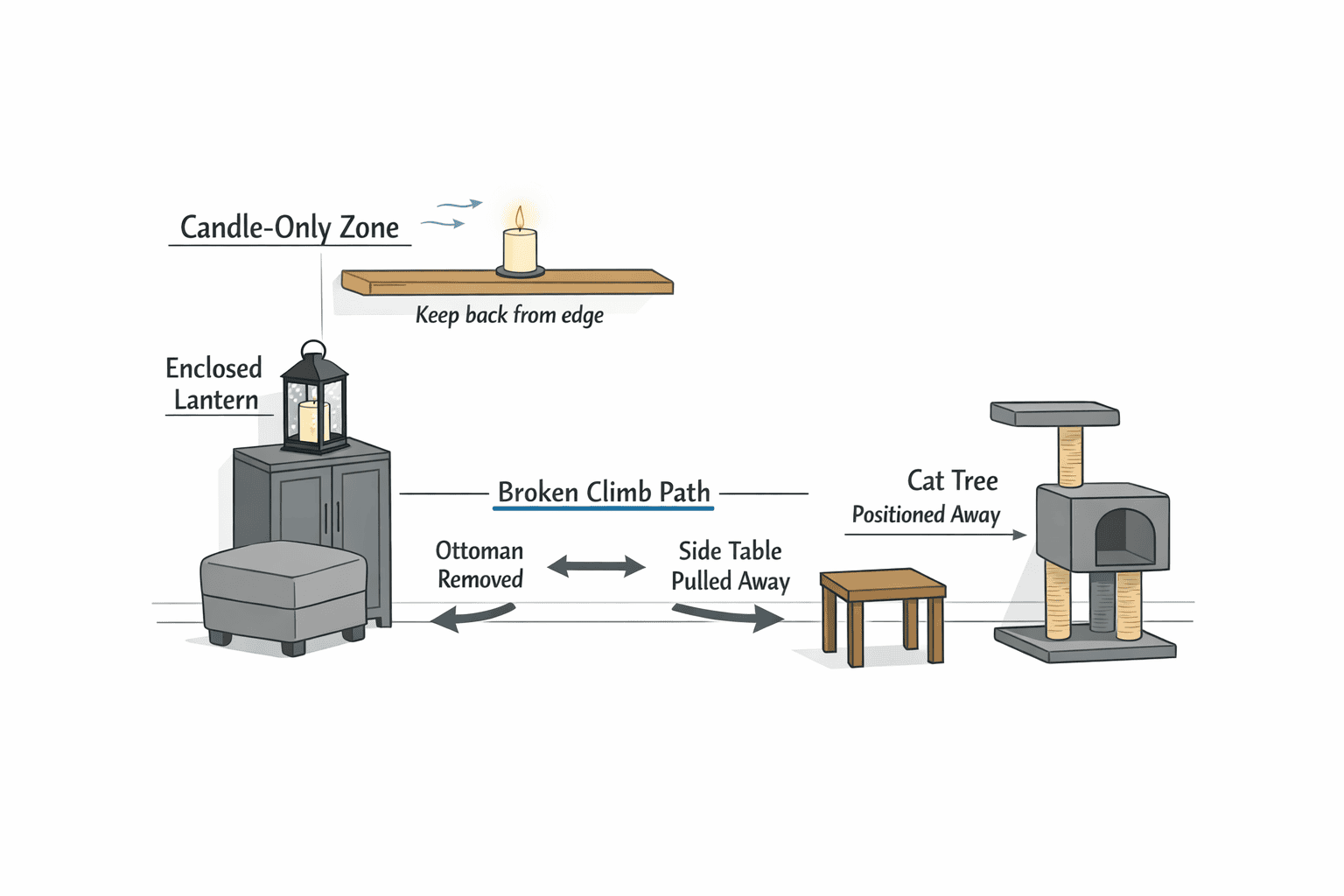
Cats are natural climbers. A warmer placed on a high shelf may seem safe, but a cat can often reach it by jumping from another piece of furniture. The lamp may also attract attention because of its light, warmth, and unusual shape.
There is also a difference in how cats process certain essential oils. Veterinary toxicology information identifies cats as more sensitive to some oils than dogs. Their grooming habits can increase the risk if an oil or other substance gets onto their coat.
If you have a cat, avoid placing a candle warmer anywhere it can jump or climb. Keep the candle, melted wax, and cord completely inaccessible. If your cat has asthma or another breathing condition, a fragrance-free home is the more cautious choice.
Watch climbing routes
Consider nearby chairs, sofas, shelves, and window ledges that your cat can use to reach the warmer.
Avoid scented products when needed
A cat with breathing problems may react even when it cannot touch the candle.
Prevent grooming exposure
Keep spilled wax and fragrance products away from your cat’s coat and paws.
Why Dog Owners Should Secure the Lamp and Cord
Dogs often explore their surroundings with their noses and mouths. A scented candle may attract a dog because it smells interesting. Some dogs may also lick melted wax or try to chew the power cord.
Large dogs can knock a table or stand with a wagging tail or an accidental bump. Small dogs may be able to reach low shelves and side tables. Puppies are especially likely to investigate unfamiliar objects.
Use a stable surface and keep the cord out of reach. If your dog tends to chew household items, do not use a warmer in an area where the dog can access it, even for a short time.
Keep cords protected
Prevent chewing and pulling by securing the cable away from your dog’s normal path.
Choose a stable location
Avoid furniture that moves or shakes when your dog walks past it.
Supervise young dogs
Puppies should not have access to a hot lamp, candle jar, or melted wax.
How to Use a Candle Warmer Lamp More Safely Around Pets
You can reduce many candle warmer accidents by choosing a safe location, checking the electrical parts, and controlling fragrance exposure. However, these steps reduce risk rather than guarantee that the device is harmless.
Before switching on the lamp, think about what your pet can reach. Check the floor, nearby furniture, jumping routes, electrical cords, and the location of the candle. If your pet can touch or knock over any part of the setup, choose another location.
Source: i5.walmartimages.com
Choose a stable surface
Use a level, sturdy surface that will not wobble when someone walks past it.
Keep it out of reach
Place the lamp where cats cannot jump to it and dogs cannot bump or pull it.
Check the electrical rating
Choose a properly rated device with suitable safety information and a plug designed for your home’s electrical system.
Use the correct bulb
Follow the manufacturer’s bulb type and wattage requirements. Never install a higher-wattage bulb to make the wax melt faster.
Control the fragrance
Avoid strong scents and products containing essential oils that may be harmful to pets.
Switch it off after use
Turn off the lamp, unplug it when appropriate, and let it cool before moving or cleaning it.
Step 1: Select the Right Location
Start by finding a location that is stable, dry, and away from pets. A sturdy counter or secured shelf may work better than a coffee table. However, a high location is not automatically safe if your cat can jump onto it.
Keep the lamp away from curtains, bedding, paper, plastic items, and other materials that could be damaged by heat. Do not place it near a water bowl, sink, or other source of moisture.
Good location
A stable surface with clear space around the lamp and no easy route for pets to reach it.
Poor location
A narrow shelf, low table, unstable stand, or surface next to a sofa or climbing area.
Step 2: Inspect the Lamp Before Every Use
Check the plug, power cable, bulb, shade, and base. Look for cracks, loose parts, damaged insulation, and signs of overheating. If the lamp has a timer or adjustable control, make sure it works as described in the manual.
Avoid using cheap, unverified electrical products that have unclear safety information. A candle warmer is still a household electrical appliance, even though its main purpose is to melt wax.
In October 2026, the UK’s Office for Product Safety and Standards published a report about a specific candle warmer lamp that presented a serious electric shock risk because of faulty electrical insulation. This report does not mean all candle warmer lamps are unsafe or that the model was recalled in the United States. It does show why checking the exact product and its electrical safety information matters.
Read the manual
Follow the exact setup, bulb, placement, and operating instructions for your model.
Check product alerts
Look for recalls or safety notices that match the exact brand and model number.
Stop using damaged lamps
A loose plug, exposed wire, burning smell, or unusual heat is a reason to switch off the device and stop using it.
Step 3: Check the Candle Ingredients
Read the candle label before placing it under the warmer. Look for essential oils and other fragrance ingredients that may be harmful to cats or dogs. If the ingredients are unclear, contact the manufacturer or choose an unscented alternative.
Remember that the term pet-safe is not a universal guarantee. A product may be marketed as suitable for pets without providing enough information about every ingredient or exposure level.
Do not add essential oils, perfume, or other liquids to the melted wax. This changes the product’s formula and may increase the chance of an unwanted exposure.
Prefer simple ingredients
Choose products with clear ingredient information and avoid concerning essential oils.
Do not mix products
Never add fragrance oils or household liquids to a candle unless the manufacturer specifically allows it.
Step 4: Keep the Room Comfortable
Use the warmer only in a room with suitable ventilation. Do not place it in a small, closed room where fragrance can build up. Keep a door open or allow your pet to move to another area without being forced to stay near the scent.
If your cat or dog leaves the room, do not force it to come back. Animals may avoid a smell that bothers them. Watch for changes in breathing, behavior, or appetite after using a scented product.
Allow an escape route
Your pet should be able to leave the room and reach fresh air.
Avoid closed spaces
Do not use strong fragrances in small bedrooms, pet crates, or poorly ventilated areas.
Step 5: Turn Off the Warmer and Let It Cool
When you finish using the warmer, switch it off according to the manufacturer’s instructions. Unplug it when it is no longer needed. Keep pets away while the bulb, candle jar, and melted wax cool.
Never move a candle while the wax is still hot or liquid. A sudden movement can spill wax onto your skin or your pet. Wait until the candle is cool and stable before removing it from the base.
Switch off first
Never move or adjust a working warmer unless its manual specifically allows the action.
Wait for cooling
Give the bulb, wax, and surrounding parts time to cool before cleaning or storage.
Which Candle Scents Should Pet Owners Avoid?
Pet owners should pay attention to the ingredients rather than judging a candle by its scent name alone. A candle labeled lavender, citrus, pine, or peppermint may contain essential oils or fragrance mixtures that are not suitable for every animal.
The Pet Poison Helpline and Merck Veterinary Manual identify several essential oils that can cause poisoning in cats and dogs. Exposure risk depends on the specific oil, concentration, amount, and route of contact. Ingestion and skin exposure can be more concerning than simply smelling a mild fragrance, although inhaled scents can still cause respiratory irritation.
This does not mean every candle containing a plant-derived fragrance will poison a pet. It means that pet owners should not assume a scent is harmless because it comes from a natural source. When an ingredient list includes a concerning oil, the cautious choice is to avoid using that candle around pets.
Source: animalwellnessacademy.org
Tea tree oil
Can cause serious poisoning in cats and dogs, especially when concentrated or absorbed through the skin.
Eucalyptus oil
Can pose a poisoning risk and may also irritate sensitive airways.
Peppermint oil
Is a known concern for cats and should not be assumed safe simply because it has a fresh scent.
Cinnamon oil
Can be harmful to cats and dogs, depending on the type and amount of exposure.
Pine oil
Can cause health problems after exposure and should be treated with caution.
Citrus oils
Some citrus oils, including limonene-containing products, can be harmful to cats.
Pennyroyal oil
Is a concerning essential oil associated with serious poisoning in pets.
Are Soy Candles Safer for Cats and Dogs?
Soy wax is a plant-based candle material, but that does not automatically make a soy candle safe for pets. The fragrance ingredients still matter. A soy candle can contain essential oils or other scents that may irritate an animal or create a poisoning risk if swallowed or absorbed.
The same rule applies to beeswax, coconut wax, and other candle materials. The base wax alone does not tell you whether the complete product is suitable for a home with cats and dogs.
If you want to reduce exposure, consider an unscented product with clearly listed ingredients. Even then, keep the warmer and melted wax out of reach because heat and electrical risks remain.
Do not judge by wax type
Soy, coconut, and beeswax do not guarantee that the candle’s fragrance is pet-safe.
Read the full label
Check the fragrance ingredients and any product warnings before use.
Are Unscented Candles Better for Pets?
Unscented candles may reduce the amount of fragrance released into the room. This can be helpful for pets that react to strong odors. However, unscented does not mean risk-free.
The lamp can still become hot, and the wax can still cause a burn or create a mess if the candle falls. An unscented candle is therefore a possible way to reduce fragrance exposure, not a replacement for proper electrical and heat safety.
Less fragrance
An unscented candle may be a better option for animals sensitive to household odors.
Same heat precautions
Keep the lamp and wax away from paws, noses, tails, and chewing mouths.
Signs Your Cat or Dog May Be Affected by a Candle Warmer
A pet may show signs of irritation, poisoning, or a burn after contact with a candle warmer. The symptoms depend on what happened. Breathing problems may follow fragrance exposure, while drooling or vomiting may occur after certain substances are swallowed.
Watch your pet closely when you introduce any new scented product. A sudden change in behavior can be an early warning. If symptoms appear, do not wait for them to become severe before seeking veterinary advice.
Source: cuteness.com
Watery eyes
Your pet may have excessive tearing or rub its face after exposure to a strong fragrance.
Sneezing or coughing
Repeated sneezing, coughing, or wheezing may indicate irritation of the airways.
Drooling
Unusual drooling can occur after exposure to certain irritating or toxic substances.
Vomiting
Vomiting may happen after a pet swallows a harmful fragrance ingredient or contaminated wax.
Weakness or poor balance
Unusual tiredness, wobbling, tremors, or difficulty walking may indicate a more serious exposure.
Skin redness or pain
Red, swollen, blistered, or painful skin may indicate a burn or contact irritation.
What Should You Do if Your Pet Breathes in Strong Fragrance?
Turn off the candle warmer and move your pet to fresh air. Open windows or doors if you can do so safely. Stop using the scented candle until you understand what caused the reaction.
Observe your pet’s breathing and behavior. If coughing, wheezing, or other signs do not resolve quickly, contact a veterinarian. Labored breathing, open-mouth breathing in a cat, collapse, or severe weakness requires emergency veterinary care.
Do not try to treat breathing problems with human medicines or home remedies. A veterinarian can assess whether the animal needs oxygen or other treatment.
Act quickly
Remove the source of fragrance and move the pet to fresh air.
Watch breathing
Look for rapid breathing, wheezing, coughing, or unusual effort when breathing.
Seek help
Contact a veterinarian promptly if symptoms continue or become worse.
What if Your Pet Licks or Eats Melted Candle Wax?
Do not assume that a small amount of candle wax is harmless. The risk depends on the candle’s ingredients, the amount swallowed, and the size and health of the animal. Fragrance oils and other additives may create additional concerns.
Remove any remaining wax from your pet’s reach. Keep the candle container or take a photo of its ingredient label so your veterinarian can identify the product.
Do not induce vomiting unless a veterinarian or poison-control professional specifically tells you to do so. Some substances can cause additional harm when brought back up.
Remove access
Prevent your pet from eating more wax or licking the spilled product.
Save product details
Keep the label, ingredient list, and estimated amount involved.
Call a professional
Contact your veterinarian or an animal poison-control service for guidance.
What if Your Pet Touches Hot Wax or the Bulb?
Move your pet away from the warmer and switch off the device if you can do so safely. Do not touch a hot bulb or spill liquid wax while trying to rescue an animal.
For a suspected thermal burn, contact a veterinarian promptly. Do not apply butter, oil, toothpaste, ice, or household creams. Do not pull wax or fur away from injured skin.
A veterinarian can assess the burn and advise on safe treatment. Severe pain, blistering, large affected areas, or burns on the face and paws need prompt attention.
Stop the heat source
Switch off the lamp and keep your pet away from the hot parts.
Avoid home remedies
Do not apply ice, butter, oils, or unapproved creams to a burn.
Get veterinary care
Have suspected burns assessed rather than trying to remove stuck wax yourself.
Safer Alternatives to Candle Warmer Lamps for Pet Owners
If you are concerned about heat, electrical cords, or fragrance exposure, you do not have to use a candle warmer to make your home feel comfortable. Several simple alternatives can create a pleasant atmosphere without warming scented wax.
The best option depends on why you use a candle. If you enjoy the soft appearance of candlelight, a battery-powered LED candle may work. If you want to remove household odors, cleaning the source is usually more useful than covering the smell with fragrance.
Source: glitz.beautyinsider.my
Battery-powered LED candles
Provide a candle-like appearance without an open flame, heated wax, or a mains power cord.
Unscented home decor
Use simple decorative items to create a cozy room without adding fragrance.
Fresh air
Open windows when conditions allow and improve normal room ventilation.
Regular cleaning
Remove odor sources by washing pet bedding, cleaning litter areas, and disposing of waste promptly.
Pet-safe home products
Choose household products based on their ingredients and intended use, not just marketing labels.
Are Battery-Operated LED Candles Safer for Cats and Dogs?
Battery-operated LED candles are often a better choice when you want the look of candlelight without heat or an open flame. They do not need melted wax, and they do not release fragrance during normal use.
However, these candles are not completely risk-free. Some have small removable batteries or decorative pieces that a curious pet could swallow. Keep them out of reach and inspect them for loose parts.
Choose a stable LED candle and place it where a pet cannot chew or knock it over. This is a practical alternative for homes where the main goal is soft decorative lighting.
No hot wax
LED candles do not need to melt wax to create a light effect.
No fragrance
They do not release scented wax into the room.
Battery safety
Keep button batteries and removable battery compartments away from pets.
How Can You Make Your Home Smell Fresh Without a Wax Warmer?
Start by finding the source of the odor instead of covering it with a strong fragrance. Wash pet blankets, clean food bowls, remove waste, and keep litter boxes clean. Regular vacuuming can also reduce hair, dust, and other odor sources.
Use fresh air when the weather and outdoor conditions permit. If you use cleaning products, follow their labels and keep pets away until the area is safe for them to return.
Avoid replacing a candle warmer with an essential oil diffuser without checking the risks. Active diffusers can spread oil droplets into the air, creating additional exposure routes for cats and other animals.
Clean regularly
Wash bedding and soft pet items, clean litter areas, and remove food waste.
Improve ventilation
Use fresh air to reduce trapped household odors when conditions allow.
Avoid strong fragrance
Do not use essential oil diffusers or room sprays as an automatic replacement for scented candles.
Common Mistakes to Avoid When Using Candle Warmers Around Pets
Many candle warmer accidents happen because owners assume that removing the flame makes the entire setup harmless. A warmer still has hot parts, electrical components, and a candle that can spill. Small mistakes can create risks that are easy to prevent.
Avoid these common habits, especially if you have a young, active, or curious pet.
Source: i5.walmartimages.com
Assuming flameless means risk-free
A warmer has no open flame, but its bulb and wax can still become hot enough to cause injury.
Leaving the warmer unattended
An electrical fault or accidental knock can happen when nobody is watching.
Placing it near a pet’s resting area
A dog bed or cat tree may give your pet easy access to the lamp.
Using any bulb that fits
A bulb with the wrong wattage or design may create excess heat or damage the device.
Trusting the pet-safe label
Marketing terms do not prove that every fragrance ingredient is harmless to every animal.
Ignoring early symptoms
Coughing, watery eyes, drooling, and unusual behavior should not be dismissed as normal.
Letting pets investigate melted wax
Even a small spill can cause contact with hot wax or potentially harmful fragrance ingredients.
Is It Safe to Put a Candle Warmer on a Wooden Table?
A wooden table may be suitable only if the warmer’s instructions allow that surface and the device is stable and properly placed. Check the manufacturer’s guidance about heat-resistant surfaces, clearance, and nearby materials.
Do not assume that every wooden surface can handle heat from a warmer. A damaged lamp or an unsuitable surface may lead to discoloration or other damage. Keep the device away from curtains, paper, and other items that could catch fire.
Follow the manual
Use the type of surface and clearance recommended for the exact warmer.
Keep the area clear
Remove paper, fabric, and other items from the space around the lamp.
Can You Use a Candle Warmer in a Pet’s Bedroom?
Using a scented warmer in a room where a pet sleeps is not a good idea, especially if the room is small or poorly ventilated. Your pet may spend several hours in that space and have little reason to move away from the fragrance.
A bedroom also contains soft items such as blankets, cushions, and pet beds. These can become hazards if a hot lamp falls or wax spills. Keep the sleeping area free from candle warmers and other unnecessary heat sources.
Keep sleeping areas fragrance-free
This reduces the chance of prolonged exposure to a scent that may irritate your pet.
Protect bedding
Keep hot electrical devices away from pet beds, blankets, and cushions.
Frequently Asked Questions
Q
Can I use a candle warmer lamp if I have a cat?
You may be able to use one with strict precautions, but it is not completely risk-free. Keep the lamp, hot bulb, melted wax, and electrical cord out of your cat’s reach. Also check the candle ingredients and avoid concerning essential oils. If your cat has asthma or another breathing condition, ask your veterinarian before using scented products.
Q
Are candle warmer lamps safer than burning candles around dogs?
Candle warmer lamps remove the open flame, which reduces the risk of a dog knocking over a burning candle or coming into contact with a flame. However, warm wax, hot bulbs, electrical cords, and fragrance ingredients can still cause harm. A properly placed lamp may reduce some risks, but it does not make the area completely safe.
Q
Can candle warmer lamps make cats sick?
Yes, a candle warmer may contribute to illness if it exposes a cat to irritating fragrance or harmful ingredients. Some essential oils can cause poisoning, while strong odors may trigger coughing, watery eyes, or breathing problems. The risk depends on the product, ingredients, concentration, and exposure. Turn off the warmer and contact a veterinarian if your cat shows unusual symptoms.
Q
Is candle wax toxic to dogs and cats?
The risk depends on the type of wax, fragrance ingredients, and amount swallowed. Some candle wax may cause stomach upset, while added fragrance oils can create more serious concerns. Never allow a pet to lick or eat melted wax. Contact your veterinarian or an animal poison-control service if your pet swallows scented wax, especially when the ingredients are unknown.
Q
How far should a candle warmer lamp be from pets?
There is no single safe distance that works for every lamp, pet, and room. The device should be completely inaccessible to your cat or dog, including from nearby furniture or climbing surfaces. Follow the manufacturer’s clearance instructions and keep the warmer away from pet beds, walkways, and flammable materials. If your pet can reach it, move it or stop using it.
Q
Can I leave my candle warmer on overnight?
It is better to switch it off before going to bed. A candle warmer is an electrical appliance with a heat source, and leaving it running without supervision adds unnecessary risk. Turn it off, unplug it when appropriate, and allow the bulb and wax to cool before moving the candle.
Q
Are pet-safe scented candles really safe?
The words pet-safe do not guarantee that a candle is harmless to every cat or dog. Pets have different sensitivities, and the ingredients and concentration matter. Check the complete ingredient information and avoid products containing essential oils known to cause poisoning. Even an unscented or carefully selected candle still needs proper heat and electrical precautions.
Q
What should I do if my cat or dog touches hot candle wax?
Move your pet away from the warmer and turn off the device if you can do so safely. Do not pull wax from the fur or apply ice, butter, oils, or household creams. Contact a veterinarian for advice, especially if the skin looks red, painful, swollen, or blistered. A suspected burn should be assessed rather than treated with home remedies.
✦ Wrapping Up
Conclusion
Candle warmer lamps can be a better choice than traditional burning candles in homes with cats and dogs because they remove the open flame. However, that does not make them completely safe. Hot bulbs, melted wax, electrical cords, strong fragrances, and certain essential oils can still cause injuries or health problems.
The best way to protect your pets is to think about the whole setup. Choose a stable location, keep the lamp out of reach, inspect the electrical parts, check the candle ingredients, and provide good ventilation. Never leave the warmer running when you are away or asleep.
If your pet has asthma, allergies, or a history of breathing problems, consider avoiding scented candle products altogether. Battery-operated LED candles are a useful alternative when you want soft lighting without hot wax or added fragrance.
Most importantly, pay attention to your pet’s behavior. Coughing, wheezing, watery eyes, vomiting, drooling, weakness, and signs of burns should never be ignored. Turn off the warmer and seek veterinary advice when you notice a possible reaction.
💡 Key Takeaway
Before using a candle warmer lamp, check its electrical condition, read the candle ingredient list, and make sure your cat or dog cannot reach any part of it. If you cannot provide a secure location or your pet reacts to fragrance, choose a battery-powered LED candle instead.