Your bathroom rug may stay damp because it traps water, dries too slowly, absorbs shower steam, or sits on a wet floor. Better airflow, proper washing, and a dry backing can help.
In American homes, a bathroom rug can feel wet long after a morning shower, even when the rest of the room looks dry. This is common in bathrooms with small windows, weak exhaust fans, shared family bathrooms, or thick rugs placed beside a tub or shower. Warm, moist air and water left in the rug fibers can keep the mat damp for hours.
The best fix depends on where the moisture comes from. A rug that is wet on top may be holding shower water, while one that feels damp underneath may be trapping moisture against the floor. If the rug becomes wet again when nobody uses the bathroom, look for a plumbing leak, water seepage, or moisture coming through the floor rather than blaming the rug alone.
Why Is My Bathroom Rug Always Damp?
A bathroom rug stays damp when it takes in water faster than it can release that water into the air. Each shower adds moisture through splashes, wet feet, and steam. If the room has poor airflow, the water remains in the fibers and backing instead of drying away.
The rug’s location, material, thickness, and backing all affect drying time. A thin cotton mat may dry fairly quickly in a room with good airflow, while a thick memory foam mat may stay wet longer. Even a quick-drying rug can remain damp if it sits on a wet tile floor.
Start by checking the top and underside of the rug. This simple check helps narrow down the cause before you buy a new mat or change your cleaning routine.
The top feels wet
Shower splashes, wet feet, and water dripping from your body may be soaking the rug.
The underside feels wet
The rug may trap water against the floor, or the floor itself may still be wet.
The rug smells musty
Repeated dampness may allow odor-causing microbes to grow. Check the fibers, seams, and backing.
The rug gets wet without use
Check nearby plumbing, the toilet base, the vanity, the tub, and the floor for signs of a leak.
How Long Should a Bathroom Rug Take to Dry?
There is no single drying time that applies to every bathroom rug. A thin mat in a warm, well-ventilated room may dry within a few hours, while a thick rug in a humid room may take much longer. Fiber type, water load, airflow, room temperature, and backing all affect the result.
Use a practical test instead of relying on a fixed number of hours. Lift the rug and touch the center, edges, and underside. If any area still feels cool and damp after the room has aired out, give it more time to dry in a place with better airflow.
Check the center
The thickest part may hold more water than the edges.
Check the backing
Moisture can remain under the rug even when the top feels dry.
1. Your Bathroom Has Too Much Humidity
High humidity is one of the most common reasons a bathroom rug stays damp. Hot showers release water vapor into the air, and that moisture can settle on cool surfaces or slow evaporation from wet fabric. When the air is already full of moisture, the rug has a harder time drying.
This problem often occurs in bathrooms with no windows, small exhaust fans, or doors that remain closed after a shower. It may be worse during humid weather, especially when outdoor air is also moist. The room can look clean and dry while the rug remains wet beneath the surface.
The key is to remove humid air instead of only warming the room. An exhaust fan that vents outdoors can carry moisture away, while a fan that simply recirculates air will not provide the same benefit.
Run the exhaust fan
Turn it on during a shower and keep it running afterward according to the fan’s instructions and the room’s moisture level.
Open the bathroom door
When privacy and safety allow, leave the door open after bathing so air can move through the room.
Use a humidity meter
A simple hygrometer can help you see whether the room stays humid long after a shower.
Improve air movement
A portable fan placed safely away from water can help move air across a damp rug.
How to Tell Whether Poor Ventilation Is the Problem
Look for several signs rather than relying on one clue. Foggy mirrors that stay fogged, condensation on walls, a lingering damp smell, and towels that dry slowly can all point to excess moisture. If the rug dries much faster when moved to another room, bathroom humidity or poor airflow may be part of the problem.
If you have an exhaust fan, check whether it seems to move air and whether its grille is clogged with dust. A fan that runs but does not clear moisture may be undersized, blocked, or improperly vented. Do not assume that hearing the motor means the fan is working well.
Clean the fan grille
Turn off power as appropriate and clean accessible dust according to the manufacturer’s instructions.
Check the exhaust path
If the fan has little airflow or moisture persists, a qualified professional can inspect the duct and exterior vent.
2. The Rug Is Too Thick or Absorbent
Some bathroom rugs hold a large amount of water in their fibers and take a long time to release it. Plush chenille, thick cotton, and memory foam mats can feel soft underfoot, but their dense construction may slow drying when the room lacks airflow. This does not mean these materials are always poor choices; their performance depends on the whole rug and how you use it.
A rug placed directly outside a shower may absorb water several times a day. If several people share the bathroom, the mat may become wet again before it has time to dry. This repeated wetting can leave the rug feeling damp from morning until night.
If the rug stays wet even after you improve ventilation, consider a thinner mat that is easier to hang and wash. Choose a rug that fits your household’s bathing habits rather than judging it only by how soft it feels.
Thick cotton
Often absorbs water well, but the dense pile and heavy wet fabric can take longer to dry.
Chenille
Its textured fibers can absorb splashes, but deep or dense pile may hold moisture between the strands.
Memory foam
Foam can retain water internally, and its backing may slow airflow through the mat.
Thin woven mats
These can be easier to air-dry, although actual performance depends on fiber type and construction.
Which Bathroom Rug Materials Dry Faster?
There is no material that dries fastest in every setting. A thin synthetic mat may dry quickly when spread out, while a thick mat made from the same broad fiber category may retain more water. Weave, pile height, fabric weight, backing, and airflow all matter.
For a bathroom that stays humid, a lightweight mat that can hang over a rack may be more useful than a deep, plush rug. If comfort matters, keep the thicker mat for times when it can dry fully between uses or rotate it with a second mat.
Choose low pile
Short fibers usually leave less deep material in which water can remain trapped.
Check care instructions
A washable rug that can be dried safely is easier to maintain than one that requires special handling.
Compare the full construction
Look at both the fabric and the backing, not just the label describing the top fibers.
3. The Rug Sits on a Wet Floor
A bathroom rug can feel damp underneath because it rests on water that has not dried from the floor. This often happens after a shower, when water runs from the tub or shower onto nearby tile. If you put the rug back before the floor dries, the underside can trap moisture against the surface.
The backing also affects how much air reaches the underside. Rubber or other nonporous coatings can reduce airflow, and some backings may hold water at their edges or between the rug and floor. A rug can therefore feel wet below even when the top seems almost dry.
Lift the mat after each shower and inspect the floor beneath it. Dry the floor with a towel, then hang the rug so both sides can air out. If the floor is wet again when nobody has used the shower, investigate the source rather than repeatedly drying the mat.
Dry the floor first
Remove standing water before putting the rug back in place.
Lift the rug daily
Let air reach the underside and inspect the floor for damp patches.
Check the backing
Look for peeling, cracking, sticky areas, or trapped moisture that may signal deterioration.
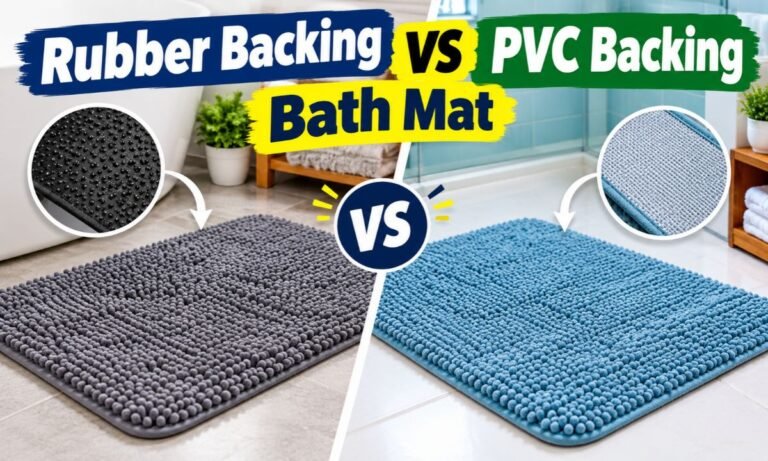
Can a Rubber-Backed Rug Cause Dampness?
A rubber-backed rug does not create water by itself, but it can slow drying when moisture gets underneath it. A backing designed to resist slipping or water may limit air exchange between the rug and the floor. This can be a problem when the mat is placed on a wet surface or left flat for long periods.
Do not remove or alter the backing without checking the manufacturer’s instructions. Some mats depend on that layer for their intended use, and damaged backing can affect stability. If moisture repeatedly collects underneath, use a suitable mat that can dry fully and follow the floor manufacturer’s guidance.
Use a dry, stable surface
Never place the mat over standing water or a visibly damp floor.
Protect smooth floors
Choose a backing suitable for your floor type, and check that it does not stain or react with the finish.
4. Water Splashes Onto the Rug During Showers
A rug may never dry because it receives fresh water every time someone showers. Water can escape from a shower curtain, pass through a gap in a door, or drip from wet feet as a person steps onto the mat. In a busy household, these small amounts can add up.
Check the rug’s position in relation to the shower door, curtain, tub edge, and bathroom entrance. A mat placed too close to a splash zone may collect more water than it can release between uses. Moving it a short distance may help, provided it still offers a safe place to step.
Also check the shower curtain or door seal for gaps. If water consistently reaches the same spot, a small change in curtain placement or a repair to a worn seal may reduce the amount of water that reaches the floor.
Watch where water lands
After a shower, look for wet tracks or puddles between the shower and the rug.
Adjust the curtain
Make sure the curtain sits inside the tub when the shower design requires it.
Check door seals
Replace damaged seals or ask a qualified installer to address persistent leaks.
Why Does the Rug Get Wet Even After a Quick Shower?
A short shower can still leave a mat wet if water splashes directly onto it or runs off a person’s legs and feet. The amount of water matters, but so does the time available for drying. A quick shower followed by several more household members may leave almost no dry period.
Try stepping onto a small, absorbent mat that you can hang immediately after use. If the bathroom is shared, give each mat a clear drying place instead of leaving wet mats layered on the floor.
Hang after use
Do not leave the mat flat if it has absorbed a noticeable amount of water.
Use a second mat
Rotate washable mats when the first one cannot dry between showers.
5. You Leave the Rug Flat After Bathing
Leaving a wet rug flat on the floor limits airflow around its underside. The top may be exposed to room air, but the bottom stays close to the floor and can remain damp for much longer. Thick rugs are especially likely to dry unevenly when left in one position.
A simple change in routine can make a clear difference. After showering, lift the rug, remove any puddles underneath, and hang the mat over a towel bar or drying rack if its weight and construction allow it. Spread it out so air reaches the center instead of folding it into a thick bundle.
Choose a stable place that does not block a walkway or sit near electrical outlets, heaters, or open flames. If the rug is too heavy to hang safely when wet, drape it over a sturdy rack or place it in a suitable laundry area to dry.
Lift it off the floor
This allows air to reach the underside and helps reveal hidden moisture.
Spread it out
Avoid tight folds that hold water between layers.
Rotate its position
If one side dries more slowly, turn or reposition the mat to expose damp areas.
A Simple Daily Drying Routine
You do not need a complicated cleaning schedule to help a bathroom rug dry. The most useful habit is to remove it from the damp floor as soon as practical after bathing. A short routine can stop one wet shower from leaving moisture behind for the rest of the day.
Step 1
Check for puddles and dry the floor around the shower.
Step 2
Lift and hang the rug with enough space for air to move around it.
Step 3
Run the bathroom exhaust fan and allow the room to air out.
Step 4
Feel the top and underside before putting the rug back.
6. The Rug Needs Washing or Has Soap and Dirt Buildup
Body oils, dust, soap residue, and other dirt can collect in bathroom rug fibers over time. These deposits may contribute to odors and make the rug feel less fresh, especially when it remains damp. Washing can help, but the wrong cleaning method may damage the fibers or backing.
Check the care label before washing. Some cotton rugs can go in a washing machine, while memory foam mats or rubber-backed products may require a gentler method or air drying. Avoid using hot water, bleach, or strong cleaners unless the label says they are suitable.
After washing, make sure the rug dries completely before placing it on the bathroom floor. A rug that is folded, piled up, or put back while still wet can develop a musty smell again even after a good wash.
Wash as directed
Follow the label for water temperature, detergent, machine use, and drying restrictions.
Use suitable detergent
Excess detergent can leave residue, so use the amount recommended for the load and machine.
Inspect the backing
Stop using a mat if its backing is breaking apart or has become sticky or unstable.
How Often Should You Wash a Bathroom Rug?
The right washing schedule depends on how often the bathroom is used, how much water reaches the rug, and whether the mat dries between uses. A shared family bathroom may need more frequent washing than a guest bathroom. Follow the manufacturer’s instructions and wash sooner if the rug becomes dirty, smells musty, or stays damp for long periods.
Washing is not a substitute for drying. If the rug repeatedly smells damp soon after laundering, focus on ventilation, the backing, and possible moisture beneath the mat.
Wash when needed
Visible soil, lingering odor, or repeated dampness are reasons to inspect and clean the rug.
Dry it fully
Do not store or reuse a wet rug after washing.
7. A Plumbing Leak or Hidden Moisture Is Keeping It Wet
If the rug becomes damp when nobody has showered, do not assume poor ventilation is the only cause. Water may be leaking from a toilet supply line, sink drain, faucet connection, shower valve, or nearby pipe. Water can also travel from another part of the room and collect beneath the rug.
Lift the rug and look for a damp patch that returns after you dry the floor. Check around the toilet base, under the vanity, beside the tub, and along visible plumbing. A water meter may help identify some continuous leaks in a home, but the correct check depends on the plumbing system and whether other water uses are occurring.
Persistent moisture can damage flooring and may support mold growth. If you find recurring water, soft flooring, swelling, peeling finishes, or a damp smell that does not clear, contact a qualified plumber or building professional. Do not pull up flooring or open walls unless you know how to do so safely.
Check visible plumbing
Look for drips, wet supply lines, loose connections, or water collecting inside the vanity.
Inspect the toilet area
Notice whether water reappears near the base or whether the floor feels soft. Avoid disturbing the toilet if you suspect a seal problem.
Watch the pattern
A damp spot that returns without shower use suggests a source beyond normal bath splashes.
Get help when needed
Use a qualified professional if the source is hidden, the floor is damaged, or the moisture keeps returning.
Could Moisture Be Coming Through the Floor?
It is possible, but a damp rug alone cannot prove that moisture is rising through the floor. Spills, plumbing leaks, water escaping from a shower, and condensation can cause similar signs. The floor type and the location of the damp patch help determine which cause is more likely.
If the floor remains damp after the room has been dry and unused, or if moisture appears along grout lines, wall edges, or floor seams, arrange a closer inspection. Do not seal the floor or cover the area with another rug until the cause is understood.
Avoid covering the area
Keep the affected floor clear so you can see whether moisture returns.
Document the pattern
Note when the dampness appears and whether it follows shower use, rain, or plumbing use elsewhere.
How to Dry a Bathroom Rug Faster
The fastest practical method is to remove excess water, expose both sides, and move moist air away. You do not always need a new rug or a special drying product. Start with the steps that cost little and address the source of moisture.
1. Lift the rug
Take it off the floor so trapped water cannot remain between the backing and the surface.
2. Dry the floor
Use a clean towel to remove visible water and check for moisture that returns.
3. Hang or spread the rug
Use a stable rack or line that supports the wet rug and lets air reach both sides.
4. Improve ventilation
Run the exhaust fan and open the door or window when appropriate.
5. Use a suitable laundry cycle
If the care label allows machine washing and spinning, remove excess water before air drying or using an approved dryer setting.
6. Check before reuse
Feel the center, edges, and underside to confirm the rug is fully dry.
Can You Use a Hair Dryer or Space Heater?
Avoid using a hair dryer or portable heater as a shortcut while the rug is on a wet bathroom floor. Electrical appliances and water create a shock risk, and excess heat can damage fibers, foam, or rubber backing. Space heaters can also create fire risks when placed near fabric.
Use natural airflow or a dryer only when the rug’s care instructions allow it. Keep electrical devices away from wet areas and follow the appliance manufacturer’s safety directions.
Choose airflow over high heat
A well-ventilated drying area is often the safer option for mats with delicate or rubberized backing.
Check dryer compatibility
Some mats can shrink, warp, or break down in a tumble dryer.
How to Prevent a Bathroom Rug From Staying Damp
Long-term prevention comes down to controlling water, choosing a rug that suits the room, and allowing it to dry between uses. A new mat may help, but it will not solve a leaking pipe or a bathroom that traps moisture. Make small changes first and see whether the dampness improves.
Choose a manageable rug
A lighter, lower-pile mat may be easier to dry than a heavy, deep-pile design.
Keep a drying spot ready
Use a rack or line where the rug can hang without blocking a door or walkway.
Control shower splashes
Check the curtain, shower door, and seals for gaps that send water onto the mat.
Maintain ventilation
Use the exhaust fan and make sure it vents properly to the outdoors.
Rotate washable mats
Keep a spare available when the main rug needs a full wash or a longer drying period.
Inspect the floor
Look beneath the mat regularly so hidden moisture does not go unnoticed.
A Quick Decision Table for Damp Rugs
Use the location and timing of the dampness to choose your next step. These clues do not prove a cause, but they can help you start with the most useful check.
Wet immediately after a shower
Check splash patterns, wet feet, and the position of the rug.
Wet underneath but nearly dry on top
Lift the mat, dry the floor, and improve airflow under the rug.
Damp for many hours
Check ventilation, rug thickness, and whether the mat can hang freely.
Musty after washing
Confirm the rug dried fully and check whether the backing or floor retains moisture.
Wet without shower use
Inspect visible plumbing and arrange professional help if the moisture returns.
When Should You Replace a Damp Bathroom Rug?
You do not need to throw away a rug just because it gets wet after a shower. If it washes well, dries fully, and has sound backing, regular care may be enough. Replacement makes sense when the rug no longer dries properly or its condition creates a hygiene or slipping concern.
A persistent musty odor after proper washing and complete drying may indicate that moisture or residue remains deep in the material. Visible mold, deteriorating foam, peeling backing, or a rug that no longer lies flat are also reasons to stop using it. Do not rely on perfume or fabric spray to hide a smell that keeps returning.
If you see mold on a rug, handle it in a way that avoids spreading dust or spores around the home. Follow the manufacturer’s cleaning instructions, and discard the rug if it cannot be cleaned safely or remains moldy. If the surrounding floor or wall is also affected, address the moisture source and consider qualified remediation advice.
Persistent odor
Replace the rug if a musty smell remains after suitable cleaning and complete drying.
Damaged backing
Cracks, peeling, or a sticky surface can make the mat unstable and harder to maintain.
Visible mold
Do not keep using a contaminated mat that cannot be cleaned effectively.
Repeated wetness
Find the cause before replacing the rug, or the new one may develop the same problem.
Can a Damp Bathroom Rug Grow Mold?
A rug that remains wet for long periods can support mold growth if moisture and suitable material are present. Dampness alone does not confirm that mold has developed, and a musty smell can have more than one cause. Look for visible spots, persistent odor, and moisture on the underside or nearby floor.
The most useful prevention is to keep the rug and floor dry and correct the source of excess moisture. If mold is widespread or keeps returning, do not simply wash the rug repeatedly while leaving the bathroom moisture problem unresolved.
Dry the rug completely
Avoid leaving a wet mat flat on the floor for long periods.
Fix ongoing moisture
Repair leaks and improve ventilation before placing another rug in the same spot.
Common Mistakes That Keep Bathroom Rugs Damp
A few everyday habits can make a damp rug problem last longer. These mistakes often seem harmless, but they can trap moisture or hide a problem that needs attention.
Leaving the rug flat all day
The underside gets little airflow, especially when the backing is nonporous.
Putting the rug back on a wet floor
This traps water underneath and may make the mat feel damp again within minutes.
Using more detergent than needed
Extra soap can leave residue and may make the rug harder to rinse clean.
Using high heat without checking the label
Heat can damage foam, rubber, and some synthetic fibers.
Covering a recurring damp patch
A second rug can hide a leak or floor problem instead of fixing it.
Ignoring a persistent musty smell
A lingering odor may signal trapped moisture or a cleaning problem that needs attention.
What If the Rug Still Feels Damp After You Try Everything?
Remove the rug for a full drying period and leave the floor exposed. If the floor stays dry but the rug dries slowly elsewhere, the rug’s construction or the bathroom’s humidity may be the issue. If the floor becomes wet again, focus on finding the water source.
If the bathroom remains humid despite proper fan use, or if dampness returns around plumbing or floor seams, get the room inspected. Persistent moisture can affect finishes and building materials, so repeated washing and replacing rugs is not a complete fix.
Test the rug separately
Dry it in a suitable, ventilated area to see whether it can return to a fully dry state.
Observe the bare floor
Look for moisture that returns without shower use.
Seek professional help
Use a plumber or building professional if you cannot identify the cause or signs of damage appear.
Frequently Asked Questions
Q
Why Is My Bathroom Rug Still Wet the Next Morning?
Your rug may be thick, may have a moisture-trapping backing, or may be drying in a bathroom with poor ventilation. It may also receive fresh water from repeated showers. Hang the rug so air reaches both sides, run the exhaust fan, and check whether the floor underneath is dry.
Q
Should I Leave My Bathroom Rug on the Floor Overnight?
A fully dry rug can stay on the floor if its backing is suitable for the surface and it does not slide. A wet rug should be lifted or hung when practical so the underside can dry. Leaving a damp mat flat overnight can trap moisture and contribute to musty odors.
Q
Does a Bathroom Exhaust Fan Help Dry a Bath Mat?
Yes, a properly installed exhaust fan that vents outdoors can reduce the moist air that slows evaporation. Run it during a shower and afterward as needed. If the mirror stays foggy or the rug remains damp for hours, the fan may need cleaning, repair, or a check of its airflow and exhaust duct.
Q
Can I Put a Damp Bathroom Rug in the Washing Machine?
A damp rug can often be washed if its care label allows machine washing and its condition is suitable. Check the material, backing, machine capacity, and washing instructions first. After washing, dry it fully using an approved method before putting it back on the floor.
Q
Why Does My Bathroom Rug Smell Musty Even After Washing?
The rug may not have dried fully, detergent residue may remain, or moisture may be trapped in thick fibers or the backing. Wash it according to the care label, rinse properly, and dry both sides completely. If the smell remains or visible mold is present, replace the rug if it cannot be cleaned safely and check for a damp floor or ventilation problem.
Q
Can a Bathroom Rug Damage a Wood or Vinyl Floor?
Prolonged moisture beneath a rug can affect some floor finishes and materials. Some backings may also react with certain floor coatings or leave marks. Check the flooring manufacturer’s care instructions, use a compatible rug, and lift it regularly to confirm that the floor underneath stays dry.
Q
Why Is the Bottom of My Bathroom Rug Wet but the Top Is Dry?
The rug may be trapping water against the floor, or moisture may be coming from the floor itself. Lift the rug, dry the surface, and check whether the dampness returns. If the floor becomes wet without shower use, investigate a possible leak or other hidden moisture source.
✦ Wrapping Up
Conclusion
A bathroom rug that always feels damp usually needs better airflow, less direct water exposure, or more time to dry. Thick fibers and water-resistant backing can slow the process, while a wet floor can keep the underside damp even when the top feels dry. Start by lifting the rug, drying the floor, and improving ventilation after each shower.
If the rug still becomes damp when the bathroom has not been used, look beyond the mat. Check visible plumbing, watch for recurring wet patches, and seek professional help if the moisture persists or the floor shows signs of damage. Once the source is under control, a washable rug that dries fully between uses can help keep the bathroom cleaner and more comfortable.
💡 Key Takeaway
Today, lift your bathroom rug, dry the floor beneath it, and hang the mat so both sides can air out. If the bare floor becomes damp again without shower use, investigate a possible leak before replacing the rug.





4 Comments