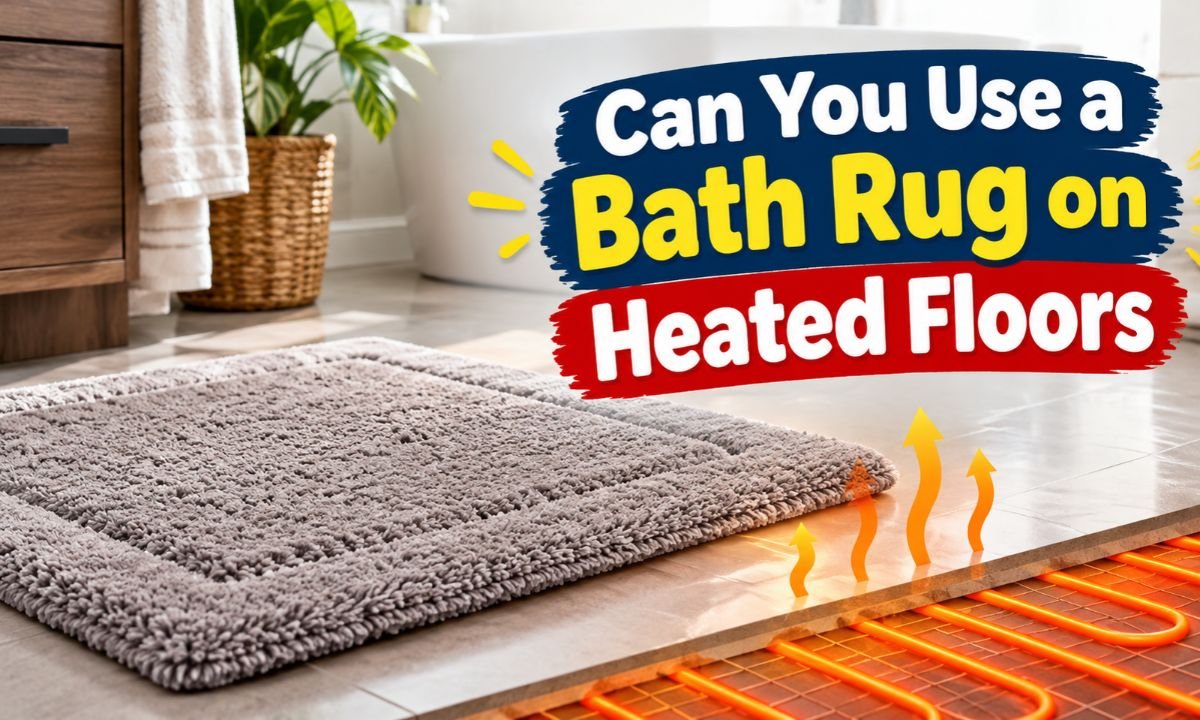
Yes, you can use a bath rug on heated floors if the rug is suitable for radiant heat, allows enough heat to pass through, and follows the heating system manufacturer’s rules.
In American homes, heated bathroom floors are a popular way to make cold tile more comfortable during winter mornings. A soft bath rug can add comfort, absorb water, and help prevent slips when you step out of the shower. However, the wrong rug can slow heat transfer and may cause problems if it traps too much warmth above the floor.
The safest choice depends on your heating system, rug material, backing, thickness, and care instructions. A thin, breathable bath rug is often a better starting point than a thick memory foam mat with a solid rubber backing. Before placing any rug on a heated floor, check the flooring and heating manuals because their limits take priority over general advice.
Source: thegreenhead.com
Can You Put a Bath Rug on a Heated Bathroom Floor?
Yes, many bath rugs can be used on heated floors, but compatibility matters more than appearance. A rug does not automatically become safe just because it is designed for a bathroom. Its materials and construction can affect how heat moves from the floor into the room.
Radiant floor heating warms the floor surface and transfers heat to nearby objects and the room. When you cover part of that surface with a rug, the rug adds another layer between the heated floor and the air. Depending on its thickness and insulation, that layer can slow heat transfer and change how the covered area warms up.
The amount of risk depends on the specific heating system and floor covering. A tile floor with an approved electric heating system may have different requirements from a floating vinyl floor above a hydronic heating system. Never assume that permission for one flooring type or heating product applies to every bathroom.
For most homeowners, the sensible approach is to use the smallest suitable rug that meets their needs, follow the system instructions, and avoid dense or heavily padded designs unless the manufacturer specifically permits them.
Source: contentgrid.homedepot-static.com
Check the heating system
Identify whether the floor uses electric heating cables, electric heating mats, or hot-water pipes. Read the instructions for the exact system rather than relying on general advice about heated floors.
Check the complete rug
Look at the surface fabric, backing, foam layer, and any added nonslip coating. Each layer can affect heat transfer, and the backing may have different temperature limits from the top fabric.
Keep the manufacturer’s limits in control
If the heating manual restricts rugs, coverings, or objects that can trap heat, follow that rule even if a rug seller describes the product as suitable for heated floors.
Why the Type of Heated Floor Matters
Electric radiant systems use heating cables or mats beneath the floor covering. Their instructions may include limits for floor temperature, floor materials, and objects placed on the finished surface. A rug can change local heat transfer, so compatibility should be checked before use.
Hydronic systems circulate warm water through pipes below the floor. These systems also depend on the design of the floor assembly and the temperature limits of the finished surface. Although their heat source differs from an electric system, a thick rug can still reduce heat reaching the room.
Some homes use electric heating mats specifically designed to sit above an existing floor. These are not the same as permanently installed underfloor heating. Follow the portable mat’s own instructions and never cover a heated mat with a bath rug unless the manufacturer clearly allows it.
Permanent underfloor heating
Check the heating system and finished-floor instructions for restrictions on rugs and insulating coverings.
Portable heated mats
Use only the accessories and coverings approved by the product manufacturer. Do not treat a portable electrical heating mat as ordinary floor heating.
How Bath Rugs Affect Radiant Floor Heating
Bath rugs affect heated floors mainly by adding thermal resistance. Thermal resistance describes how much a material slows the flow of heat. Thick, dense, or foam-filled rugs tend to resist heat flow more than thin fabrics, although the exact result depends on the complete rug construction.
When a rug covers a heated area, less heat may reach the room through that spot. The heating system may need more time to warm the room, and the covered area may respond differently from the uncovered floor. The size of the effect depends on the rug, floor assembly, heating controls, and operating conditions.
A rug can also change the temperature near the floor surface. Heat that would normally move into the room may remain beneath or within the covered layers for longer. This can matter when the flooring, rug backing, or adhesive has a strict temperature limit.
That does not mean every rug will damage a heated floor. It means you should avoid making assumptions based on fabric softness or rug thickness alone. Manufacturer approval is more useful than a general claim that a particular material is always safe.
Source: miro.medium.com
Reduced heat transfer
A thick rug can slow the movement of warmth from the floor into the bathroom, making heating less effective in the covered area.
Possible heat buildup
Some coverings can hold heat near the floor. Whether that creates a problem depends on the system design and the temperature limits of the materials involved.
Different warming patterns
The floor beneath a rug may respond differently from nearby uncovered areas. This difference alone does not prove damage, but it is a reason to check compatibility.
Does a Bath Rug Make Heated Floors Less Efficient?
It can. A rug adds resistance between the heated floor and the room, so less heat may pass through the covered area at the same time. A small, thin rug is likely to interfere less than a large, thick rug, but the exact effect cannot be calculated without reliable information about the materials and heating system.
For example, a small mat beside a sink covers less floor area than a thick runner stretching across most of a bathroom. The runner can block more of the available heat-transfer surface. This is a practical comparison, not a measured estimate of energy use or heating performance.
If your bathroom already struggles to stay warm, avoid covering large sections of the heated floor. If the room heats well and the manufacturer allows a small rug, you may be able to enjoy the comfort of a mat without a meaningful problem. Do not change the thermostat beyond its permitted settings to compensate for a rug.
Which Bath Rug Materials Work Best on Heated Floors?
The best bath rug for heated floors is one that the heating and flooring manufacturers permit, has a suitable backing, and does not create an overly insulating layer. Fabric type is a useful starting point, but the complete construction matters just as much. Two rugs made from the same fiber can behave differently because one has a thick foam core or dense backing.
Cotton and some thin microfiber rugs can be practical choices because they are often lightweight and easy to wash. However, a thick cotton bath mat may still hold heat and water. A thin microfiber rug with a solid backing may also be less suitable than its soft surface suggests.
Chenille rugs can feel plush underfoot and absorb water, but dense chenille piles may slow heat transfer and take longer to dry than thinner designs. Memory foam mats have a cushioned layer that can add insulation. These options are not automatically forbidden, but you should use them only when their instructions and the heating system’s rules allow them.
The rug’s backing deserves special attention. Rubber, latex, foam, and other nonslip materials may have specific temperature limits. Some backings can deteriorate, discolor flooring, or leave marks when exposed to unsuitable heat or cleaning products. Never assume a backing is safe simply because it prevents slipping on an ordinary floor.
Source: readytodiy.com
Thin cotton
A lightweight cotton rug can be a reasonable option if the backing and care instructions are compatible with the heating system. Check that it dries well between uses.
Thin microfiber
A lightweight microfiber mat may offer a useful balance of softness and low bulk. Inspect the backing and avoid thick, tightly layered versions unless approved.
Chenille
Chenille can feel soft and absorb water, but thick piles may hold heat and moisture. Choose a lighter construction only if the product instructions permit heated-floor use.
Memory foam
Foam adds cushioning but can increase thermal resistance. Avoid placing a foam mat over radiant heating unless the relevant manufacturers explicitly allow it.
Rubber-backed rugs
The rubber backing may have temperature and flooring compatibility limits. Confirm the exact backing material is approved rather than relying on the rug’s nonslip claim.
What About Wool and Other Natural Fibers?
Wool and other natural fibers can provide warmth and comfort, but they are not automatically ideal for a bathroom. Some rugs are dense, retain moisture, or require care that is less convenient in a damp room. Their suitability on heated floors depends on the weave, backing, construction, and product instructions.
For a bath rug, water absorption and drying time matter alongside heat transfer. A rug that remains damp for long periods may develop unpleasant odors or require more frequent washing. Choose a design that can be cleaned and dried as directed, and do not use a fiber label as a substitute for checking the full product specifications.
What Bath Rugs Should You Avoid?
Avoid rugs that the heating system or flooring manufacturer prohibits, especially products that create a thick insulating layer. A rug may look harmless while its backing or foam core prevents heat from moving away from the floor. This is why reading the full product information is more reliable than judging the rug by its top surface.
Large rugs that cover much of the heated bathroom floor deserve extra care. They can reduce the area available for heat transfer and may affect how the system warms the room. A large rug is not necessarily unsafe in every installation, but it should not be used without checking the relevant instructions.
Do not place a portable electric heating pad or heated drying mat beneath a bath rug unless both products are specifically designed and approved for that arrangement. Covering an electrical heating device can trap heat and create a hazard. Never use a bath rug to conceal a device’s vents, controls, cord, or warning labels.
Avoid damaged rugs, loose backing, curled corners, and mats that slide when wet. Heated flooring does not remove the usual bathroom hazards. A soft mat can still cause a fall if it moves underfoot or sits unevenly on the floor.
Source: m.media-amazon.com
Thick memory foam mats
Their dense foam layers may resist heat transfer. Use them only when the product and floor heating instructions confirm compatibility.
Oversized rugs without approval
A large covering can affect a wider part of the heated surface. Check the allowed coverage and temperature limits before using one.
Unknown or damaged backing
Do not use a rug when its backing material or temperature rating is unknown and the manufacturer cannot confirm suitability.
Rugs over portable electric heaters
Never cover a portable heating device unless its instructions expressly allow the arrangement. If the manual says to keep it uncovered, follow that requirement.
Slippery or curled mats
A rug that slides or curls at the edges can cause a trip or fall. Replace damaged mats and choose a stable design approved for your floor.
How to Choose a Safe Bath Rug for Heated Floors
Choose a bath rug by checking compatibility first, then comparing thickness, backing, absorbency, drying time, and grip. This order helps you avoid buying a rug that feels great but conflicts with the heating system. A product description that says soft, plush, or nonslip does not establish that it is suitable for radiant heat.
Start with the manual for your heating system and the instructions for your finished floor. If you have tile above electric heating cables, follow the rules for that installation. If your bathroom has vinyl, laminate, engineered wood, or another temperature-sensitive surface, check the flooring maker’s limits as well.
Next, inspect the rug label and product specifications. Look for clear information about the backing, washing instructions, and suitability for heated floors. If the information is missing, contact the rug manufacturer or choose another product with clearer guidance.
Finally, consider daily bathroom use. A good bath rug should absorb water, dry at a practical pace, lie flat, and stay in place. It should also be easy to lift for cleaning so moisture does not remain trapped between the rug and floor.
Source: contentgrid.homedepot-static.com
Compatibility
Confirm that the heating system and flooring manufacturers allow the proposed rug or floor covering.
Thickness
Favor a low-profile design over a bulky one when both are approved and meet your comfort needs.
Backing
Check that the backing can tolerate the floor’s permitted operating temperature and will not damage the finish.
Grip
Select a design that stays flat and resists movement on your specific flooring. Confirm that its backing is compatible with the floor finish.
Cleaning
Choose a rug that can be washed and dried according to its care label. Avoid leaving a wet mat on the floor for long periods.
A Simple Bath Rug Decision Table
Use this table as an initial screening tool, not as a replacement for the heating manual. A rug’s exact backing and construction can change the answer, even when two products appear to use the same fabric.
Thin cotton rug
Potentially suitable when the heating and flooring manufacturers allow it and the backing is compatible.
Thin microfiber rug
Potentially suitable if its complete construction is approved and it does not use a prohibited insulating backing.
Thick chenille mat
Requires careful checking because a dense pile can hold moisture and slow heat transfer.
Memory foam bath mat
Avoid unless the relevant manufacturers explicitly approve its use over the heated floor.
Large bathroom runner
Check the allowed coverage and the effects of covering a large section of the heated floor.
Rug with unknown rubber backing
Do not assume it is suitable. Confirm the backing’s temperature and flooring compatibility first.
Does a Rug Need a Special Heated-Floor Rating?
A clear statement from the rug manufacturer that the product is suitable for radiant heated floors can help, but it does not override the heating system’s instructions. Check whether the statement covers your type of heating and the backing material. A general claim that a rug is heat resistant may refer to a different use and may not establish suitability for prolonged contact with a heated floor.
If the product has no clear rating or compatibility statement, ask the manufacturer for written guidance. Give them the rug model, backing material, and heating system type. If they cannot confirm compatibility, choose a different rug rather than guessing.
How to Use a Bath Rug on Heated Floors
Once compatibility is confirmed, place the rug carefully and maintain it so that heat, water, and dirt do not build up underneath. The aim is to keep the mat useful without blocking more of the heated floor than necessary. A simple routine can help you spot problems early.
Before laying the rug down, make sure the floor is clean and dry. Check that the rug lies flat and that its backing is not damaged. Do not add an extra foam pad or nonslip underlay unless the heating and flooring manufacturers allow it, because another layer can change heat transfer.
Use the heating system within its normal approved settings. Do not raise the thermostat simply because a rug makes the floor feel less warm. If your system has a floor sensor or temperature limit, leave its settings within the manufacturer’s specified range.
After use, lift the rug when practical so the floor and the rug can dry. Follow the rug’s care instructions, and inspect the backing regularly for changes in texture, sticking, cracking, or discoloration. If anything looks unusual, stop using the rug until you have checked the cause.
Source: readytodiy.com
Step 1: Read the manuals
Check the heating system, finished flooring, and rug instructions. Resolve any conflict before putting the rug in place.
Step 2: Check the rug
Inspect the pile, backing, seams, and edges. Do not use a damaged rug or add an unapproved underlay.
Step 3: Prepare the floor
Clean and dry the floor before placing the mat. Remove any grit that could scratch the finish or cause uneven contact.
Step 4: Place the rug
Position the rug where it is useful while keeping the covered area as small as practical. Make sure it lies flat and does not obstruct doors or walking paths.
Step 5: Check normal operation
Use the heating system at its permitted settings. Watch for unusual smells, backing changes, unexpected floor behavior, or other signs of a problem.
Step 6: Dry and inspect
Lift the rug as needed, let both surfaces dry, and wash the rug according to its care label. Check the backing before returning it to the floor.
What Should You Do If the Floor Feels Too Hot?
If the floor beneath a rug feels unusually hot, remove the rug if you can do so safely and follow the heating system’s instructions. Do not touch a surface that appears dangerously hot or handle a damaged electrical device. If you notice a burning smell, smoke, sparking, or other electrical warning signs, stop using the affected equipment and seek appropriate professional help.
Check the thermostat and floor sensor only as directed by the manufacturer. Do not open electrical components or attempt repairs yourself. If the problem continues, contact the heating system manufacturer or a qualified heating professional to assess the system and floor covering.
How Often Should You Lift and Clean the Rug?
There is no single schedule that fits every household. A rug used by several people each day may need more frequent washing and drying than one used occasionally. Lift it whenever it becomes soaked, feels damp underneath, or has been left in place after a shower and needs to air out.
Follow the washing and drying instructions on the rug label. Do not use excessive heat in a dryer or place a rug on a separate heating device to speed up drying unless its instructions permit that use. Keeping the rug clean and dry also helps the nonslip backing perform as intended.
Bath Rug Safety, Moisture, and Slip Prevention
A bath rug must be safe for both the heated floor and the people using the bathroom. Heat compatibility alone does not make a rug safe to walk on. A mat can still slide, curl, or hold water against the floor, so grip and drying time remain important.
Choose a rug that lies flat and has a backing approved for your floor finish. Some backing materials can interact with certain finishes, so check the flooring manufacturer’s guidance before using a rubber or latex-backed mat. If the backing leaves a mark, becomes sticky, or damages the finish, remove the rug and seek guidance before using it again.
Moisture is another concern. Water trapped between a rug and the floor can make the surface slippery and may affect certain flooring materials. Heated floors may help a room feel warm, but they do not guarantee that a wet rug will dry quickly or that the floor underneath will remain dry.
Place the mat where you need it most, such as beside the shower or bathtub, while keeping walking paths clear. If the bathroom is shared with children, older adults, or anyone with balance concerns, pay special attention to a flat edge, reliable grip, and easy access to a dry standing area.
Source: m.media-amazon.com
Choose a stable mat
Look for a rug that lies flat, has a compatible nonslip backing, and does not shift easily when stepped on.
Keep it dry
Lift and air out a damp rug when needed. Do not assume the heating system will dry the mat safely while it remains in place.
Check the floor finish
Confirm that the rug backing is safe for the actual flooring material, especially when the floor uses vinyl, laminate, engineered wood, or a sensitive surface treatment.
Remove trip hazards
Replace curled, frayed, or damaged rugs. Keep the mat away from door swings and places where it could bunch up underfoot.
Can a Bath Rug Damage Heated Tile?
A compatible bath rug should not automatically damage heated tile, but the result depends on the heating installation, grout and tile materials, backing, and temperature limits. Tile itself is commonly used with radiant heating, yet that does not mean every covering placed on top is approved.
Potential problems may involve the rug backing, a surface treatment, or another material that cannot tolerate the local temperature. A rug may also conceal changes in the floor, making it harder to notice moisture or unusual wear. Check the instructions for the full installation and do not assume that the tile alone determines safety.
If you notice discoloration, sticky residue, unusual floor temperatures, or a persistent odor, remove the rug if safe and investigate before using it again. Contact the flooring or heating manufacturer if you cannot identify the cause.
What If You Have Vinyl or Laminate Flooring?
Vinyl and laminate flooring may have specific limits for surface temperature and the types of backing allowed. Some products can be affected by heat or by chemicals in certain rug backings. Check the flooring instructions and the radiant heating instructions together before choosing a mat.
Avoid adding a thick rug or separate pad simply because the floor feels cool. First confirm that the rug is allowed, then use the heating controls within the permitted range. If the flooring instructions prohibit rugs or insulating coverings, follow that restriction.
Common Mistakes to Avoid
The most common mistake is assuming that every bath rug works on every heated floor. A product can be safe on ordinary tile yet unsuitable for a particular radiant heating system. The details of the backing, insulation, and floor finish can change the answer.
Another mistake is judging compatibility by thickness alone. A thin rug with a poorly suited backing may be less appropriate than a slightly thicker rug that has been approved for the installation. Thickness is useful for screening choices, but it cannot replace the manufacturer’s guidance.
Some homeowners also assume that turning the thermostat up will make up for the heat blocked by a rug. This is not a reliable fix and may exceed the system or flooring temperature limits. Use only the settings allowed by the heating system manufacturer.
Finally, do not leave a wet mat in place for long periods or ignore changes in the backing. A rug that remains damp, develops an odor, or begins to stick to the floor needs attention. Regular checks help protect the floor and keep the bathroom safer.
Source: thegreenhead.com
Ignoring the manual
A seller’s general claim about heated-floor use does not override the instructions for your exact heating system or flooring.
Using an extra pad
A second layer may increase insulation and change how heat moves through the floor. Add one only when the manufacturers allow it.
Covering too much floor
A large runner may block more heat-transfer area than a small mat. Confirm that the intended coverage is allowed.
Raising the thermostat
Do not exceed permitted settings to compensate for reduced heat transfer. Ask a qualified professional if the room does not warm as expected.
Ignoring wet or damaged backing
Moisture, cracking, sticking, or curling can create maintenance and slip problems. Remove the rug and address the issue before reuse.
When Should You Ask a Professional?
Ask the heating system manufacturer or a qualified flooring professional when the instructions are unclear, the system has unusual temperature behavior, or the floor covering has strict heat limits. This is especially useful if your bathroom has a floating floor, a specialized finish, or a heating system installed beneath several layers of material.
You should also seek help if the floor develops a hot spot, the thermostat reports an error, or you notice a burning smell, visible damage, or unexplained discoloration. Do not lift installed flooring or open electrical components to investigate a problem yourself. Follow the system’s shutdown instructions and contact a qualified professional.
If you are planning a bathroom renovation, ask about rug compatibility before the final flooring and heating materials are selected. Confirm the allowed surface temperature, permitted coverings, and any limits on thermal resistance. Keeping those details with the product manuals can make future rug choices much easier.
Source: m.media-amazon.com
Unclear compatibility
Ask the heating manufacturer to confirm whether your exact rug and backing are allowed.
Unexpected heating behavior
Contact a qualified heating professional if the floor develops unusual hot areas or the system does not behave as expected.
Flooring damage
Consult the flooring manufacturer if you notice discoloration, warping, sticking, or another change beneath the rug.
Renovation planning
Confirm heating and flooring compatibility before installation so that the finished bathroom can be used as intended.
Frequently Asked Questions
Q
Can you leave a bath rug on a heated floor all day?
You may be able to leave a compatible bath rug on a heated floor all day if the heating and flooring manufacturers permit it. Check the rug’s backing and insulation, and make sure the product is approved for your system. If the instructions prohibit coverings or leave compatibility uncertain, do not leave the rug in place until you have confirmation.
Q
Are rubber-backed bath mats safe for heated floors?
Some rubber-backed mats may be suitable, but others may have temperature limits or react with certain flooring finishes. Check the backing material and the instructions for both the rug and the floor. If the manufacturer does not confirm compatibility, choose a different mat with clear specifications.
Q
Can a memory foam bath mat go on radiant heated floors?
Do not assume that a memory foam bath mat is suitable for radiant heating. Its foam layer may add thermal resistance and change heat transfer beneath the mat. Use it only if the rug and heating system manufacturers explicitly allow that combination.
Q
Will a bath rug stop my heated bathroom floor from working?
A bath rug usually does not switch off a properly functioning heating system, but it can reduce the heat that passes through the covered area. A thick rug may make the room warm more slowly or change the temperature beneath the covering. Follow the system instructions and avoid raising the thermostat beyond its approved limits.
Q
What is the best bath rug material for heated floors?
There is no single material that is best for every heated floor. A thin cotton or lightweight microfiber rug may be a practical option when its backing is compatible and the manufacturers permit its use. The full construction matters more than the fiber name, so check the product specifications before buying.
Q
Can I use a bath rug on heated vinyl or laminate flooring?
Possibly, but vinyl and laminate products can have specific surface-temperature limits and restrictions on rug backings. Check the flooring instructions and the radiant heating manual before placing a mat on the floor. Do not use a rug that conflicts with either manufacturer’s requirements.
Q
Should I use a nonslip pad under a bath rug on heated floors?
Use an extra nonslip pad only if the rug, flooring, and heating manufacturers permit it. An added layer can increase insulation, and some pad materials may react with certain floor finishes. A rug with an approved nonslip backing may be a simpler choice.
✦ Wrapping Up
Conclusion
You can use a bath rug on heated floors when the rug, its backing, the finished flooring, and the heating system are compatible. A lightweight rug may be a practical option because it often adds less insulation than a thick foam mat, but material and thickness alone cannot establish safety. Always check the instructions for the exact products in your bathroom.
Choose a rug that lies flat, absorbs water, dries well, and has a backing approved for your floor. Keep the mat clean, lift it when needed to let the floor dry, and watch for unusual heat, odor, sticking, or discoloration. If the manufacturer’s instructions prohibit rugs or you cannot confirm compatibility, leave the heated area uncovered and ask the manufacturer or a qualified professional for guidance.
💡 Key Takeaway
Before placing a bath rug on a heated floor, check the heating manual, flooring temperature limits, and rug backing specifications. If all three permit the combination, choose a low-profile rug that stays flat, dries well, and does not cover more heated floor than necessary.
Learn how often you should wash a bath mat, what changes the schedule, how to clean different materials, and how to keep your mat fresh between washes.












2 Comments