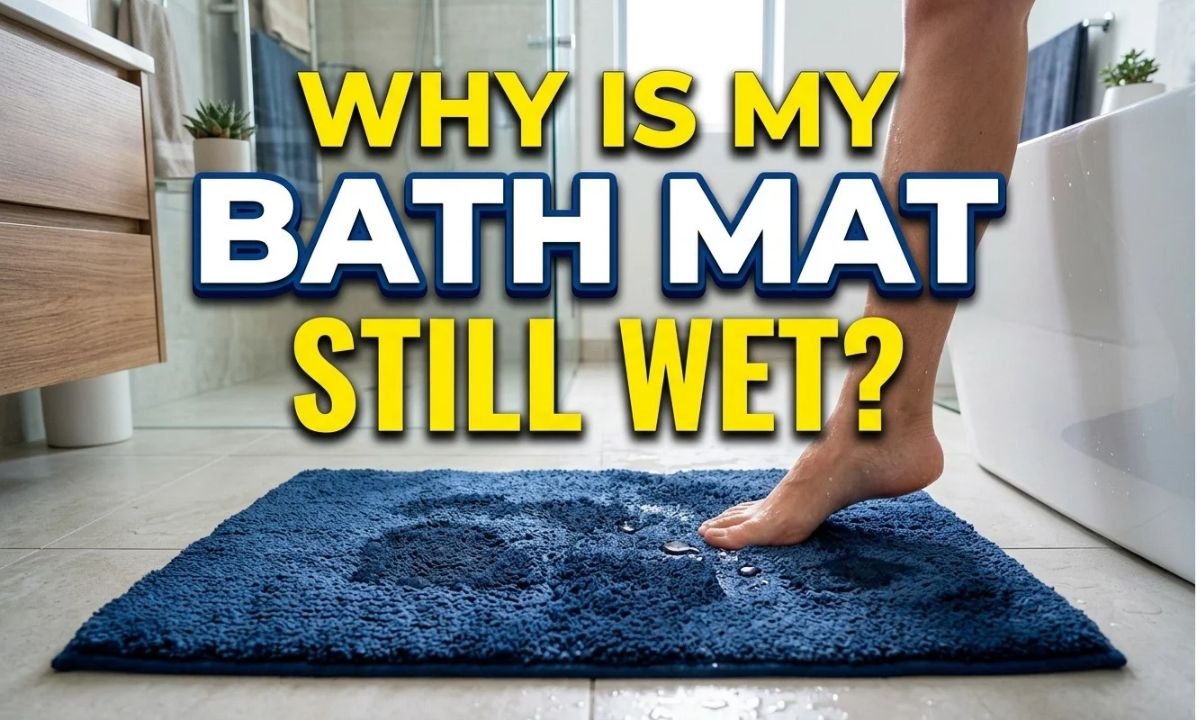
Your bath mat may still be wet because of poor airflow, high bathroom humidity, thick fibers, trapped moisture underneath, or frequent use before it dries.
In American homes, a bath mat can stay damp long after a shower, especially in bathrooms with closed windows, weak exhaust fans, or limited space to hang laundry. A mat that absorbs water from wet feet needs enough time and air circulation to release that moisture. Simply leaving it flat on the bathroom floor may not be enough.
The best fix depends on where the moisture comes from. A thick cotton or microfiber mat may need more drying time, while a mat that feels wet underneath may be sitting on a damp tile floor or trapping water against a non-slip backing. Checking the mat, floor, and bathroom ventilation can help you find the cause without immediately replacing the mat.
This guide explains the most common reasons bath mats stay wet, how to troubleshoot the problem, and which drying and cleaning habits can help. It also covers persistent musty odors, mold concerns, and when a different mat material may make sense.
Why Is My Bath Mat Still Wet After a Shower?
A bath mat stays wet when it absorbs water faster than the surrounding air and surface conditions allow it to dry. After a shower, water remains inside the fibers, between the fibers and backing, or underneath the mat. Drying depends on how much water the mat holds, how easily moisture can escape, and how much air moves around it.
A mat that feels slightly damp shortly after a shower is not necessarily defective. However, if it remains noticeably wet between uses, develops a musty smell, or leaves moisture on the floor, it is worth checking the following causes.
Poor bathroom ventilation
Steam from a hot shower raises indoor humidity. When humid air cannot escape, water evaporates more slowly from the mat.
A thick or dense mat
Deep cotton loops, plush microfiber, and dense layered construction can hold more water and take longer to dry than thin, open-weave mats.
A non-slip backing
Rubber or other relatively impermeable backing can restrict airflow through the underside and trap moisture between the mat and floor.
Repeated use
If several people use the same bathroom in quick succession, the mat may absorb another round of water before it has time to dry.
A damp floor underneath
Water from splashes, shower leaks, or condensation can keep the bottom of the mat wet even after its upper surface begins to feel dry.
How Long Should a Bath Mat Take to Dry?
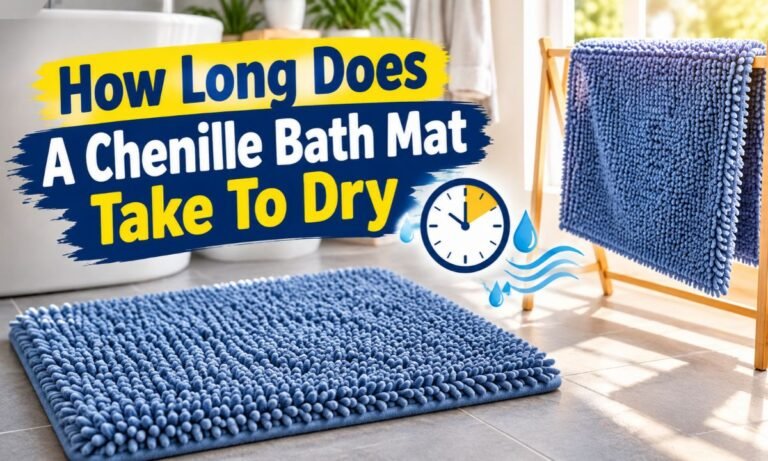
There is no single drying time that applies to every bath mat. A thin mat in a warm, well-ventilated room may dry within a few hours, while a thick, waterlogged mat in a humid bathroom can remain damp much longer. These are general expectations, not guaranteed drying times.
Material, thickness, backing, room temperature, humidity, and airflow all affect the result. A mat that stays wet overnight or remains damp between normal bathroom uses deserves closer attention, especially if it also smells musty.
Check the surface and underside
The top may feel dry while the backing or the floor underneath remains damp. Check both before putting the mat back in place.
Compare drying conditions
Notice whether the mat dries faster when hung in a ventilated room. A clear improvement suggests that airflow or bathroom humidity is contributing to the problem.
How Bathroom Humidity Keeps Your Bath Mat Damp
High humidity slows the evaporation of water from bath mat fibers. Hot showers release water vapor into the room, and that moisture can linger if the exhaust fan is ineffective or the bathroom has limited ventilation.
A bathroom can feel comfortable while still holding enough moisture to slow drying. Closing the bathroom door immediately after a shower without running an exhaust fan may allow humid air to remain trapped. Cool surfaces can also encourage condensation, adding moisture to floors and nearby materials.
In the United States, many bathrooms rely on mechanical exhaust fans rather than open windows, particularly in apartments and interior bathrooms. A working fan that exhausts air outdoors can help remove moisture, but a fan that is clogged, undersized, or vented improperly may provide limited benefit.
Run the exhaust fan
Use the bathroom exhaust fan during a shower and continue afterward according to the manufacturer’s guidance and the room’s drying needs.
Improve safe airflow
If practical, open the bathroom door after showering or open a window when outdoor conditions permit. Maintain privacy and avoid introducing outdoor moisture when conditions are very humid.
Check for condensation
Look for water on mirrors, windows, walls, and tile. Persistent condensation can indicate that moisture is not being removed effectively.
Inspect the fan
If the bathroom stays humid for a long time, check whether the fan is operating and whether its grille needs cleaning. Have suspected duct or electrical problems assessed by a qualified professional.
Can a Bathroom Without a Window Keep a Bath Mat Wet?
Yes. A bathroom without a window can have trouble releasing shower moisture if its mechanical ventilation is inadequate. The absence of a window does not automatically mean a mat will stay wet, but effective exhaust ventilation becomes especially important.
Run the exhaust fan, hang the mat where air can circulate around both sides, and keep it off the floor while it dries. If humidity remains high or condensation repeatedly forms, investigate the ventilation system instead of relying on a new mat alone.
Best first step
Improve moisture removal and give the mat more airflow before deciding that the material is the problem.
Does Your Bath Mat Material Affect Drying Time?
Yes. Bath mat materials differ in how they absorb, hold, and release water. However, material alone does not determine drying time. Pile height, fabric density, backing, and the way the mat is dried can matter just as much.
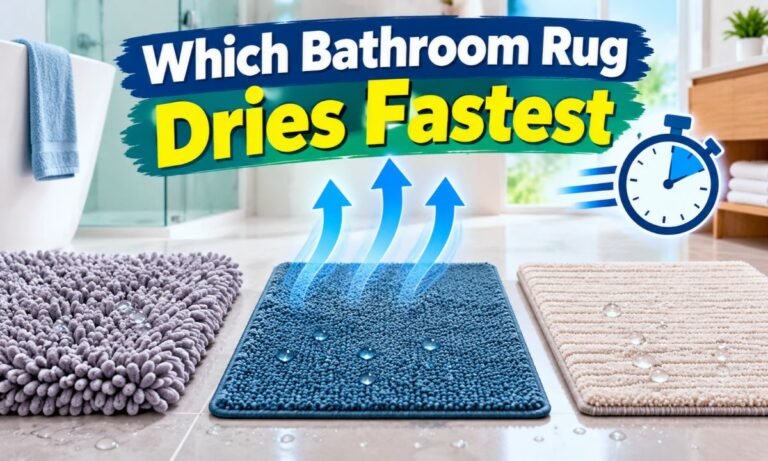
Cotton absorbs water readily and can feel comfortable underfoot, but thick cotton mats may retain considerable moisture. Microfiber can absorb water and dry relatively quickly in some constructions, although a dense pile or backing may slow drying. Bamboo and other slatted designs allow more airflow around the surface, but water can still collect underneath or between slats.
The best material for a frequently used bathroom is one that balances absorbency, drying speed, grip, comfort, and ease of washing. A highly absorbent mat is not necessarily the fastest-drying option.
Cotton
A familiar, washable option that absorbs water well. Thick or heavy cotton mats may need longer drying periods, especially in humid rooms.
Microfiber
Often soft and absorbent, with drying performance that varies by fiber construction, thickness, and backing.
Low-pile woven fabric
A thinner, less bulky construction may release moisture faster than a deep, dense pile when airflow is adequate.
Bamboo or slatted designs
Open spaces can improve airflow, but the floor beneath the mat still needs to remain dry and safe.
Memory foam or cushioned mats
Layered construction can retain water within the fabric or foam. Check the care label because not every cushioned mat is suitable for machine washing or tumble drying.
Can a Non-Slip Backing Stop a Bath Mat From Drying?
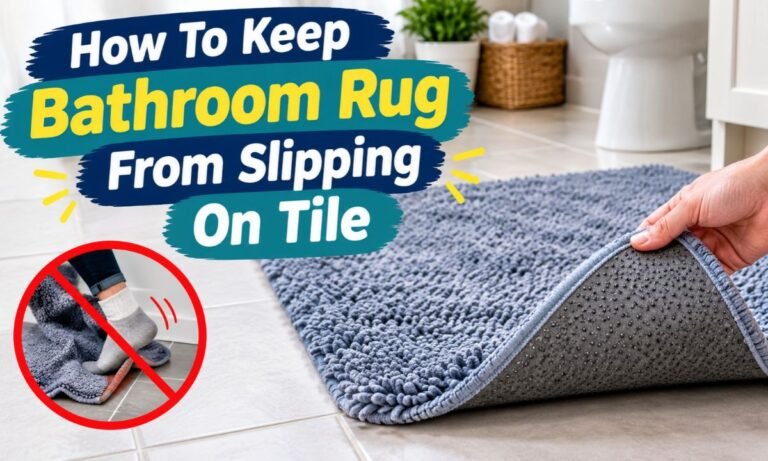
A non-slip backing can slow drying by limiting airflow through the underside. This is especially noticeable when a mat lies flat on a smooth, damp tile floor. Moisture may remain trapped between the backing and the floor even when the top looks dry.
The backing does not make every mat unsuitable. It provides useful grip, which can help reduce slipping, but it makes correct drying and care more important. Follow the manufacturer’s instructions, particularly for rubber-backed mats that can crack, peel, or deteriorate when exposed to unsuitable heat or harsh cleaning products.
Lift the mat after use
Hang it over a towel bar or drying rack if the backing and product instructions permit, allowing the underside to receive air.
Dry the floor separately
Wipe up water beneath the mat before returning it to the floor.
Replace deteriorating backing
If the backing becomes sticky, cracked, or detached, follow the manufacturer’s replacement advice. Do not rely on a damaged mat for slip protection.
How to Dry a Bath Mat Faster
The most reliable way to dry a damp bath mat is to remove excess water, expose both sides to moving air, and reduce bathroom humidity. These steps address the main causes without requiring special equipment.
Before using a dryer or applying heat, check the care label. Some fabric mats can be tumble-dried on an approved setting, while rubber-backed, foam-filled, or delicate mats may require air-drying.
1. Lift the mat off the floor
Move it to a clean drying rack or suitable towel bar so air can circulate around the top and underside. Make sure the hanging support can safely hold the mat’s weight when wet.
2. Remove excess water
If the mat is machine-washable and the care label permits it, use the recommended spin cycle. Avoid twisting or wringing materials that may stretch or damage the backing.
3. Increase air circulation
Run the exhaust fan or place the mat in a dry, well-ventilated room. A fan can help move air across the surface, provided it is positioned safely away from water and electrical hazards.
4. Spread out the fibers
Smooth folded sections and separate compressed pile so damp areas are not pressed together. Do not fold a wet mat over itself while it dries.
5. Check both sides before reuse
Feel the center, edges, backing, and floor underneath. Return the mat only when it is dry enough that it will not trap moisture against the floor.
Should You Put a Wet Bath Mat in the Dryer?
Only use a clothes dryer when the mat’s care label explicitly allows it. Some cotton mats can tolerate tumble drying, while rubber-backed mats, memory foam designs, and certain synthetic constructions may be damaged by high heat or tumbling.
If machine drying is permitted, use the recommended temperature and cycle. Stop if the backing becomes unusually hot, deforms, or shows signs of deterioration. When the instructions call for air-drying, use a rack with enough space for air to reach both sides.
Avoid guessing about heat
A mat that looks like ordinary fabric may contain a backing or inner layer that cannot tolerate dryer heat.
Do not use direct high heat
Avoid placing a mat against a space heater or other high-temperature source. Uneven heat can damage materials and create a fire or burn hazard.
A Simple Daily Drying Routine
After the last person showers, hang the mat rather than leaving it flat. Run the exhaust fan as needed, wipe away standing water, and leave enough space for air to circulate. Before the next shower, check that the mat and floor are dry.
In a busy household, rotating between two washable mats can help. Use one while the other dries completely. This is particularly useful when a bathroom has little ventilation or several people shower close together.
A sign the routine is working
The mat dries between uses, the floor remains dry underneath, and the fabric does not develop a persistent musty odor.
Why Is the Bottom of My Bath Mat Wet?
If the underside of your bath mat is wetter than the top, the mat may be trapping water against the floor or absorbing moisture from below. This can happen when the mat has a waterproof or rubberized backing, when shower splashes reach the floor, or when the floor has not dried before the mat is replaced.
Lift the mat and inspect the entire area. If the tile is wet, dry it thoroughly and leave the mat somewhere ventilated. Check whether the moisture returns when the mat has not been used; recurring water may point to condensation, a plumbing issue, or a shower enclosure that allows water to escape.
Wet floor only after showering
Look for splashes around the shower entrance, water escaping from a curtain, or gaps around a shower door.
Wet floor even when nobody showers
Check for condensation, nearby plumbing leaks, and moisture entering from adjacent surfaces. Persistent or unexplained water may require professional inspection.
Dampness directly under the backing
Improve airflow by hanging the mat and avoid putting it back until the floor is completely dry.
Can a Wet Bath Mat Damage the Bathroom Floor?
Repeated moisture trapped under a mat can contribute to discoloration, odor, or damage to some flooring materials and finishes. The risk depends on the floor construction, the condition of its seams, the backing material, and how long moisture remains trapped.
Tile itself is generally water-resistant, but grout, sealants, subfloor materials, and surrounding trim may be more vulnerable. Wood, laminate, and some vinyl flooring systems can also be affected by persistent moisture, depending on their construction and installation.
Lift the mat regularly, dry the floor, and check for swelling, staining, soft spots, or changes in the finish. If moisture keeps returning or the flooring shows signs of damage, address the water source rather than simply covering the area with another mat.
Prevent trapped moisture
Avoid leaving a soaked mat on the same spot for extended periods, especially on moisture-sensitive flooring.
Investigate recurring wetness
If the floor remains damp without obvious splashing, consider a plumbing or building moisture assessment.
How to Stop a Bath Mat From Smelling Musty
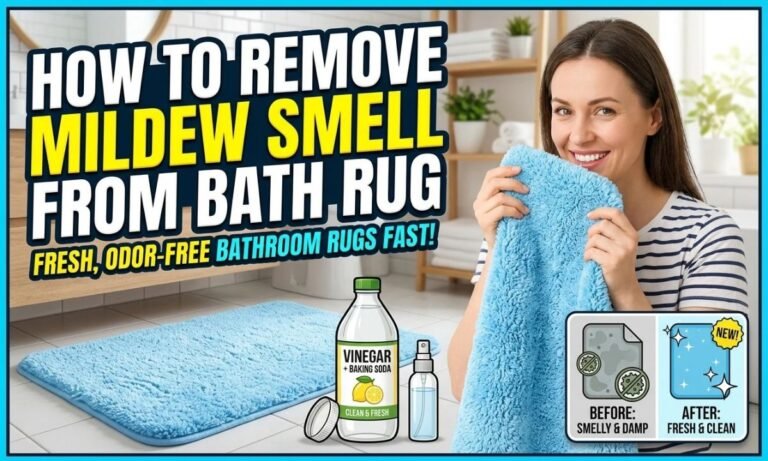
A musty smell usually means moisture has remained in the mat long enough for odor-causing residues or microbial growth to develop. Soap residue, body oils, skin cells, and bathroom dust can build up in the fibers, making an inadequately dried mat smell unpleasant.
A damp smell does not prove that mold is present, but persistent odor is a reason to clean and dry the mat rather than cover the smell with fragrance. Check the care label and use a suitable laundry detergent or cleaning method. Dry the mat completely before returning it to the floor.
If visible mold appears, handle the mat according to its material and the manufacturer’s cleaning guidance. A washable mat may be salvageable if it can be cleaned thoroughly, but a deeply contaminated, deteriorating, or persistently smelly mat may need replacement.
Wash it as directed
Follow the temperature, detergent, and washing instructions on the care label. Do not assume every mat can be machine-washed.
Dry it completely
Use the approved drying method and check the backing as well as the fabric before reuse.
Keep cleaning products separate
Never mix bleach with ammonia, acids such as vinegar, or other cleaning products. Dangerous fumes can result.
Check the surrounding bathroom
Clean visible soap residue and remove standing water from the floor. If dampness and mold keep returning, investigate the moisture source.
How Often Should You Wash a Bath Mat?
Wash a bath mat when it becomes dirty, develops an odor, or accumulates noticeable residue. A practical schedule depends on how often the bathroom is used, how quickly the mat dries, whether children or pets use the room, and whether the mat is shared by several people.
Frequent use and slow drying may call for more frequent washing. Follow the manufacturer’s care instructions and avoid using a mat that remains damp or smells musty after cleaning.
Wash sooner when needed
Do not wait for a fixed calendar date if the mat becomes visibly soiled, smells unpleasant, or stays damp for unusually long periods.
Inspect after washing
Check for peeling backing, loose fibers, persistent discoloration, and remaining odor before putting the mat back.
When Should You Replace a Bath Mat That Stays Wet?
Replace a bath mat when it can no longer be cleaned or dried adequately, its backing has deteriorated, or persistent odor and visible contamination remain after appropriate care. Before buying another mat, check whether poor ventilation or a wet floor is the actual cause; a replacement may have the same problem in the same conditions.
If the mat itself is the limiting factor, a thinner, washable design with a less bulky construction may dry more readily. Choose a mat that is appropriate for the floor surface and provides suitable slip resistance. A faster-drying mat is not automatically safer if it slides underfoot.
Consider a thinner mat
A low-pile design may hold less water than a deep, plush mat and may be easier to hang between uses.
Look for practical care instructions
Choose a material and construction that can be cleaned and dried using the equipment and space available in your home.
Check backing compatibility
Make sure the mat is suitable for your floor type and that its backing will not damage the flooring finish.
Use a second mat if necessary
Rotating two mats can give each one time to dry completely in a household with frequent showers.
Is a Quick-Drying Bath Mat Better Than a Highly Absorbent One?
The better option depends on how the bathroom is used. A highly absorbent mat can collect water from wet feet, but if it is thick and difficult to dry, it may remain damp between showers. A quick-drying construction can be more convenient in a humid or frequently used bathroom, provided it still absorbs enough water and stays securely in place.
For a busy family bathroom, prioritize a washable mat that can be hung easily and dried between uses. For a bathroom used occasionally, a thicker mat may be acceptable if the room is well ventilated and the mat is cared for properly.
Choose for the conditions
Match absorbency, thickness, drying method, and grip to your household’s usage and bathroom ventilation.
Common Mistakes That Keep Bath Mats Wet
Several everyday habits can prolong drying even when the mat is made from an absorbent, washable material. Correcting these habits is often easier than replacing the mat.
Leaving the mat flat after every shower
The underside receives little airflow, especially when a non-slip backing rests directly on the floor. Hang the mat when practical.
Placing it on a wet floor
Dry the floor before returning the mat. Otherwise, moisture from below can keep it damp.
Assuming the top is fully dry
Check the backing and center of the mat. Moisture can remain hidden in thick fibers or between layers.
Ignoring a weak exhaust fan
If steam and condensation linger, drying the mat alone will not address the bathroom’s moisture problem.
Using an unsuitable dryer setting
Excess heat can damage rubber backing, foam, or synthetic fibers. Follow the care label.
Covering up a persistent odor
Fragrances do not remove trapped moisture or soil. Clean the mat and investigate any recurring dampness.
A Quick Troubleshooting Checklist
Use this sequence to identify the likely cause without changing several things at once. Start with the floor and the mat itself, then assess drying conditions.
Step 1: Lift the mat
Check whether the floor underneath is wet. If it is, dry the floor and look for shower splashes, condensation, or a possible leak.
Step 2: Hang the mat
Allow air to reach both sides. If drying improves, trapped moisture or poor airflow was likely contributing.
Step 3: Improve ventilation
Run the exhaust fan and reduce lingering steam. If the room remains humid, inspect the ventilation system.
Step 4: Check the material
Review the care label and consider whether thick pile, foam, or dense backing is making drying difficult.
Step 5: Clean or replace if needed
Wash the mat using an approved method. Replace it if damage, contamination, or persistent odor cannot be resolved.
Frequently Asked Questions
Q
Why is my bath mat still wet the next morning?
Your bath mat may be holding water because the fibers are thick, the backing restricts airflow, or the bathroom remains humid overnight. Hang the mat so both sides receive air, run the exhaust fan as appropriate, and check the floor underneath. If it still stays damp, consider whether the mat is too dense for the room’s drying conditions.
Q
Should I hang my bath mat after every shower?
Hanging your bath mat after each shower is a useful way to help it dry, particularly if it has a thick pile or non-slip backing. Use a stable rack or towel bar that can support the wet mat, and follow the manufacturer’s instructions. Allow the floor underneath to dry before placing the mat back.
Q
Can a wet bath mat cause mold?
Persistent dampness can create conditions that support mold growth, particularly when moisture and organic material remain together. A wet mat does not automatically mean mold is present. Dry it thoroughly, wash it according to its care label, and address excess bathroom humidity. If mold keeps returning or spreads to walls or flooring, investigate the moisture source and seek qualified help when needed.
Q
Why does my bath mat smell bad even after washing?
A mat may smell musty after washing if moisture remains trapped in the fibers or backing, detergent and soil have built up, or microbial growth persists. Check the washing instructions, use an appropriate detergent, and make sure the mat dries completely. If the odor persists despite proper cleaning and drying, or the backing is deteriorating, replacement may be the more practical option.
Q
Does a bath mat need to dry completely between showers?
Ideally, a bath mat should dry completely between uses to limit persistent dampness and reduce the chance of musty odors. This is particularly important in humid bathrooms and for mats with thick pile or impermeable backing. If your household uses the bathroom frequently, hanging the mat between showers or rotating two washable mats can help.
Q
Can I put a wet bath mat on a heated bathroom floor?
Do not assume that a heated floor is a suitable drying method. Excess heat may damage some backings or materials, and a mat can restrict heat transfer depending on the floor system and manufacturer guidance. Follow the flooring and mat instructions, avoid covering heated flooring with products that are not approved for that use, and use a ventilated drying rack when uncertain.
✦ Wrapping Up
Conclusion
If your bath mat is still wet, start by checking the bathroom’s ventilation, the mat’s backing, and the floor underneath. High humidity, thick fibers, repeated use, and trapped moisture are common reasons a mat takes too long to dry. Hanging it after showering and allowing air to circulate around both sides can often improve drying without requiring a replacement.
If the mat continues to feel damp, develops a musty smell, or leaves moisture on the floor, clean it according to its care label and investigate the source of the water. Persistent dampness may call for better ventilation, a different mat construction, or professional help if a leak or building moisture problem is suspected.
💡 Key Takeaway
Today, lift your bath mat, dry the floor beneath it, and hang the mat in a well-ventilated area. Check both sides before putting it back, and improve bathroom ventilation if moisture continues to linger.
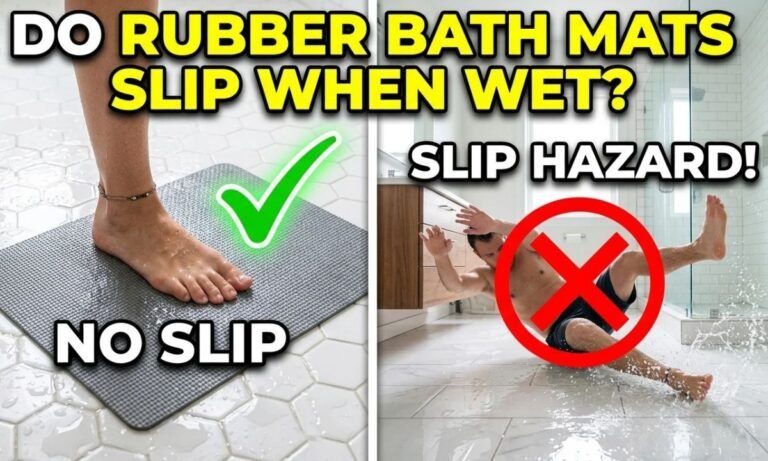
Do rubber backed bath mats slip when wet? Learn why they can move, what affects grip, how to test your mat, and how to reduce slipping in a U.S. bathroom.
Learn how to remove mildew smell from a bath rug using washing, deodorizing, and proper drying. Includes tips for rubber-backed rugs and stubborn odors.

One Comment