Most homes need two to three bath mats per bathroom, including one for daily use and one or two clean replacements.
In American homes, a bath mat is a simple way to keep the bathroom floor dry after a shower or bath. It can also make a cold tile floor feel more comfortable on a busy morning. But buying too many mats can take up closet space and create more laundry than you need.
The right number depends on your bathroom layout, how many people share it, and how often you do laundry. A couple with one full bathroom may need only two mats, while a large family may find three or four more useful. The goal is to have a clean, dry mat ready when the one in use needs washing.
You do not need a separate mat for every person or every day of the week. A small, well-planned set can meet most household needs. This guide explains how many to keep, where to place them, and how to manage them without cluttering your bathroom.
How Many Bath Mats Do You Really Need?
For most homes, two or three bath mats per bathroom are enough. One can stay in use while another is being washed or dried. A third gives you more flexibility when several people share the bathroom or when laundry takes longer.
Think of bath mats like towels. You need enough to cover daily use and laundry days, but you do not need a large pile. A spare mat helps you avoid stepping onto a wet floor when the main one needs cleaning.
There is no official rule that sets the right number of bath mats for every home. The figures below are practical planning suggestions, not health standards or product requirements.
One bath mat
This can work for a guest bathroom that sees little use or a household with a quick laundry routine. It leaves no backup when the mat is wet or in the wash.
Two bath mats
This is a good basic set for one person or a couple. Use one and keep the other clean and ready to replace it.
Three bath mats
This is a flexible choice for many family bathrooms. You can use one, wash one, and keep one ready as a spare.
Four or more bath mats
This may suit a large household, a bathroom with separate wet areas, or a home with more than one person using the same floor space at once.
The best starting point for a small household
If you live alone and have one bathroom, start with two bath mats. Use one near the shower or tub and keep the second in a clean, dry place. When the first mat needs washing, switch them.
A couple can often use the same two-mat system. You may need a third if both people shower at different times and the mat does not dry between uses.
The best starting point for a family
A family that shares one bathroom may benefit from three bath mats. More people can mean more water on the floor and less time for a mat to dry. A spare helps when the main mat becomes damp before laundry day.
Consider four mats if the bathroom is used heavily or if the household has a slow laundry routine. You can also keep a separate mat for a guest bathroom instead of moving the family mat between rooms.
How Household Size Changes the Number of Bath Mats
The number of people using a bathroom is one of the biggest factors in your decision. More users can mean more showers, more splashes, and less time for the mat to dry. Still, the number of people alone does not tell the whole story.
A family of four with two bathrooms may need fewer mats in each room than a couple who share one small bathroom all day. Look at how often each bathroom is used and whether users leave enough time for the mat to dry.
One person
Keep two mats for a simple rotation. One stays in use, and the other serves as a clean replacement.
Two people
Two or three mats are usually a sensible starting point. Choose three if the bathroom gets used close together in the morning.
Three to four people
Keep three mats, or four if the bathroom stays damp or laundry is not done often.
Five or more people
Consider four or more mats based on use. You may also benefit from separate mats for different shower or tub areas.
Do all family members need their own bath mat?
No. A bath mat is not the same as a personal bath towel. Several people can use a shared mat if it stays clean, dries fully between uses, and is washed as needed.
However, a shared mat may not work well when people take showers one after another. The next person may step onto a damp surface. In that case, a second mat or a faster drying routine can help.
If someone in the home has a skin condition, an infection, or a specific hygiene need, follow their health professional’s advice about sharing bathroom textiles.
How Many Bath Mats Does Each Bathroom Need?
Different bathrooms need different setups. A small half bath may not need a bath mat at all, while a large primary bathroom may need two mats in use at once. Match the number to the places where water reaches the floor.
Do not add mats just to fill empty floor space. Too many rugs can make a bathroom harder to clean and may create trip hazards, especially near doors, cabinets, and narrow walkways.
Primary bathroom
Keep two or three mats available. A larger room may need one near the shower and another near a separate tub or vanity if both areas get wet.
Shared family bathroom
Three mats are a useful starting point. Increase the number if several people use the room in quick succession.
Guest bathroom
One mat in use and one clean spare are usually enough. You can store the spare in a nearby linen closet.
Half bathroom
A bath mat is often unnecessary because there is no shower or tub. A small washable rug is optional if the floor needs extra comfort.
Bathroom with separate shower and tub
Two mats may be useful if both areas are used often. Keep an additional clean mat available for laundry rotation.
Should you put a bath mat in front of every sink?
Not always. A mat near a sink can catch splashes, but one mat in front of a double vanity may be enough if it covers the area where people stand. Two small mats can work if the sinks are far apart.
Leave enough room to open cabinet doors and move around. A mat should lie flat and should not block a walkway or create a raised edge that people may catch their feet on.
Do you need a bath mat outside the shower and tub?
A mat outside the shower or tub is usually the most useful one. It catches water from wet feet as you step out and gives you a dry place to stand while drying off.
If your shower has a wide door or your tub is close to a vanity, check where water lands after a normal shower. Place the mat where it can catch those drops without sitting against a door or blocking access.
A Simple Bath Mat Quantity Guide
Use this table as a starting point when deciding how many mats to buy. It assumes that you want one mat available for use and at least one clean replacement. Adjust the total if your bathroom has more than one wet area or your mats take a long time to dry.
These are practical household estimates. They are not fixed rules, and your laundry schedule may matter more than the number of people in your home.
Suggested number of bath mats by household
The table separates the number of mats to keep from the number you may want on the floor at one time.
One person, one bathroom
Keep two mats. Use one and save one for washing days.
Two people, one bathroom
Keep two or three mats. Choose three if the mat stays damp between showers.
Three or four people, one bathroom
Keep three or four mats. A spare helps during busy mornings and laundry days.
Five or more people, one bathroom
Keep four or more mats, depending on how often the bathroom is used and how quickly the mats dry.
One guest bathroom
Keep one or two mats. A clean spare is useful before visitors arrive.
How many mats should be on the floor at once?
Most small bathrooms need only one mat on the floor. A larger bathroom may need two if there are separate wet areas, such as a shower and a freestanding tub.
Keep the rest clean and stored away. A spare mat works best when it stays dry and does not collect dust or moisture in a crowded bathroom.
How Often Should You Wash Your Bath Mats?
Wash bath mats on a regular schedule and sooner when they become dirty, smell musty, or stay damp. The right interval depends on how many people use the bathroom, how much water reaches the mat, and how well it dries.
A mat can collect water, skin flakes, dust, hair, and residue from bathroom products. If it stays wet for long periods, it can also develop an unpleasant smell or support mold growth. A clean spare makes it easier to wash the mat before it becomes a problem.
Check the care label before washing. Some mats can go in a washing machine, while others need gentle hand washing or special care because of their backing or foam.
Wash when visibly dirty
Do not wait for a set laundry day if you see dirt, stains, or residue on the mat.
Wash when it smells
A musty smell can mean the mat has stayed damp or needs cleaning. Wash it and let it dry fully.
Wash after heavy use
A mat used by several people may need more frequent cleaning than one in a rarely used guest bathroom.
Follow the care label
Use the wash and dry method recommended for the fabric and backing. High heat can damage some materials.
Why a spare bath mat makes cleaning easier
A spare mat lets you remove the used one without leaving the floor uncovered. This is useful when the main mat needs a full wash and drying cycle.
It also helps prevent the habit of putting a damp mat straight back on the floor. Give each mat enough time to dry before storing it or using it again.
What if your bath mat never seems to dry?
Hang it over a suitable drying rack or towel bar after use, if the material and setup allow it. Spread it out so air can reach both sides. Do not leave it folded or bunched on the floor.
If the mat remains damp despite good airflow, consider a thinner or faster drying design. Also check whether the bathroom has poor ventilation or a leak that keeps the floor and mat wet.
If you see mold, clean the mat according to its care instructions. Replace it if the growth or odor remains after proper cleaning, or if the backing has started to break down.
What Type of Bath Mat Should You Keep?
The best bath mat for your home is one that suits your floor, dries well, and stays in place. Buying more mats will not solve problems caused by a poor fit or the wrong backing.
A thick mat may feel soft underfoot, but it can take longer to dry. A thin mat may dry faster but offer less cushioning. Think about how often the bathroom gets used and how much space you have to dry the mat.
Cotton bath mats
Cotton mats are often easy to wash and feel familiar underfoot. Check the care label and drying instructions, as thick cotton can hold a lot of water.
Microfiber bath mats
Microfiber can absorb water and may dry faster than some thick fabrics. Drying time still depends on the mat’s thickness, construction, and room airflow.
Memory foam bath mats
These mats offer a cushioned feel. Their foam core may need more time to dry, so check the care instructions and avoid leaving them wet on the floor.
Chenille bath mats
Chenille has a soft, textured surface that can feel comfortable. Its thick pile may collect hair and take time to dry, depending on the design.
Bamboo bath mats
A slatted bamboo mat does not work like a fabric mat. It allows water to pass through, so the floor beneath it must be checked and dried as needed.
Should you buy rubber-backed bath mats?
Rubber-backed mats can help limit movement on some floors, but they need proper care. Moisture trapped beneath a mat can affect the floor and may contribute to odor or surface damage.
Check whether the backing is suitable for your floor type. Some rubber or latex materials may react with certain floor finishes, and a mat that traps moisture can be a poor choice for a damp bathroom.
Lift the mat from time to time, check the floor beneath it, and let both surfaces dry. Never assume that a nonslip backing makes a wet bathroom floor safe.
Do you need a different mat for hardwood or vinyl floors?
Yes, floor type can change your choice. Wood and some vinyl floors may be affected by trapped moisture or unsuitable backing materials.
Use a mat that the flooring maker allows. Check the backing and care instructions, and lift the mat often enough to confirm that the floor below stays dry.
How to Build a Simple Bath Mat Rotation
A simple rotation helps you keep a clean mat ready without buying too many. You do not need a complex schedule. Just make sure the mat in use has time to dry and that a clean replacement is available.
Before setting up a rotation, check your washing machine capacity, the care labels, and the space available for drying. A large bath mat may not fit well in a small washer, even if it looks easy to clean.
Step 1: Choose the main mat
Pick a mat that fits the space outside your shower or tub. Make sure it lies flat and does not block doors or walkways.
Step 2: Set aside a clean spare
Store the replacement in a dry linen closet or another clean place. Do not store it while damp.
Step 3: Check the mat after use
Hang or spread it out to dry when practical. Check the underside and the floor for trapped moisture.
Step 4: Wash when needed
Follow the care label and wash sooner if the mat becomes dirty, smells unpleasant, or stays wet.
Step 5: Replace the clean mat
Put the spare in place only after checking that it is fully dry and in good condition.
Signs that your rotation is working
Your system is working if you always have a clean mat ready, the mat in use dries between showers, and the floor beneath it stays dry. You should not need to rush a wash just because there is no replacement.
If both mats are often wet at the same time, add a third or improve drying. If the spare sits unused for months, you may have more mats than you need.
What if you do not have enough drying space?
Choose a thinner mat or a design that can hang over a sturdy rack. You can also use a second bathroom or laundry drying area if it is clean and well ventilated.
Do not pile wet mats on top of one another. This slows drying and can lead to a musty smell. If drying space remains limited, keeping fewer thick mats and washing them more often may be easier.
Common Bath Mat Mistakes to Avoid
The number of mats is only part of good bathroom care. Placement, drying, washing, and floor compatibility matter just as much. Avoid these common mistakes when planning your set.
Buying too many mats
A large stack takes up storage space and adds laundry. Start with two or three, then add more only if your routine shows a real need.
Leaving a wet mat on the floor
A damp mat can trap moisture underneath. Hang it or spread it out to dry when possible.
Using a mat that is too large
A mat that reaches under doors or into narrow paths can bunch up or become a trip hazard. Measure the floor area before buying.
Ignoring the backing
A backing that is not suitable for your floor can cause problems. Check the flooring and mat instructions before use.
Putting a clean mat on a wet floor
Dry the floor first. A clean mat can become damp underneath if you place it over standing water.
Using a damaged nonslip backing
Cracked, peeling, or worn backing may no longer grip as intended. Replace the mat if it moves or no longer lies flat.
Assuming every mat can go in the dryer
Some materials and backings can be damaged by heat. Follow the label instead of using the same cycle for every mat.
Can too many bath mats make a bathroom less safe?
Yes. Several mats placed close together can create raised edges, uneven surfaces, and narrow walking paths. These issues may increase the chance of tripping, especially for children, older adults, and anyone with limited mobility.
Use only the mats that serve a clear purpose. Keep them flat, secure, and away from door swings. If a mat slides or curls at the edges, remove it until you can correct the problem.
When Should You Replace a Bath Mat?
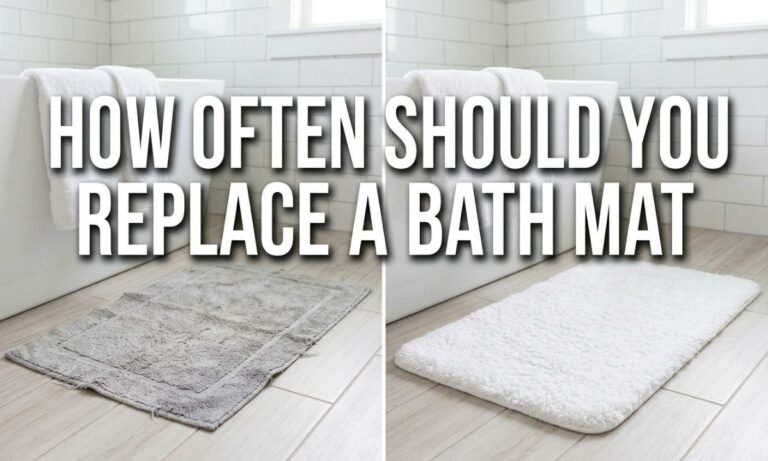
Replace a bath mat when it no longer cleans up well, dries properly, or stays flat and secure. There is no single replacement date that applies to every mat. Material quality, washing habits, and daily use all affect its useful life.
A mat that looks worn may still be usable if it washes clean and stays in good condition. On the other hand, a mat that smells musty after washing or has damaged backing may need to go even if its top still looks fine.
Persistent odor
A smell that remains after proper washing and complete drying can be a sign that the mat is difficult to clean or has retained moisture.
Visible mold that will not clean away
If mold remains after cleaning according to the care label, replace the mat rather than continuing to use it.
Damaged backing
Peeling, cracking, or crumbling backing can affect grip and leave residue on the floor.
Poor absorbency
If the mat no longer handles ordinary splashes and becomes unpleasant to use, a replacement may be sensible.
Curling or slipping
A mat that will not lie flat or stay in place can create a safety concern. Replace it if the problem cannot be fixed.
Should you keep old bath mats as spares?
Keep an older mat only if it is clean, fully dry, in good condition, and safe for the floor where you plan to use it. An old mat with worn backing or a lasting odor is not a useful spare.
If you no longer want it in the bathroom, consider another suitable household use only if the material is clean and intact. Do not use a damaged bath mat where someone could slip or trip.
How to Decide Whether You Need More Bath Mats
Before buying more, look at what happens during a normal week. If you often have no dry mat available, your current set may be too small. If clean mats sit unused in a closet, you may already have enough.
The simplest test is to track your mat use through one laundry cycle. Note when each mat becomes wet, when you wash it, and how long it takes to dry. This gives you a better answer than buying extra mats based on guesswork.
Add one mat if both are often in use or wet
A third mat can give you more time to wash and dry the others.
Add a separate mat for another wet area
A shower and a separate tub may each need a mat if both are used often.
Do not add mats to fix poor ventilation
If every mat stays damp, improve airflow and drying first. More mats will not solve a moisture problem.
Reduce the number if storage becomes a problem
Keep the mats that fit your routine and remove extras that rarely get used.
A practical example for a family of four
Imagine a family of four shares one bathroom. Two people shower in the morning, and two shower in the evening. The mat gets damp several times a day, and the laundry is done twice a week.
Three mats may be a sensible starting point. One can stay near the shower, one can be clean and ready, and the third can be washed or dried. If the mats still do not dry between uses, the family can add another or change to a thinner design.
This example is a planning model, not a rule for every family. A bathroom with good airflow and a quick drying routine may need fewer mats.
Frequently Asked Questions
Q
Is two bath mats enough for a family?
Two may be enough for a small family with good drying space and a regular laundry routine. However, three mats are often more convenient for a shared family bathroom because one can be in use while another is washed and a third is ready as a spare.
Q
Should I have a separate bath mat for every bathroom?
It is usually easier to keep mats assigned to each bathroom. This avoids carrying damp mats from room to room and helps you manage cleaning. A guest bathroom may need only one mat in use and one clean spare.
Q
How many bath mats should be in a small bathroom?
One mat on the floor is usually enough for a small bathroom. Keep a second clean mat as a replacement. Avoid adding extra rugs if they block doors, crowd the walkway, or make the floor harder to clean.
Q
Can two people share the same bath mat?
Yes, two people can share a bath mat if it stays clean and dries fully between uses. If one person showers soon after the other and the mat remains wet, use a second mat or improve the drying routine.
Q
Do I need a bath mat in front of the bathroom sink?
A sink mat is optional. It can catch water from handwashing and brushing teeth, but it is not essential in every bathroom. Use one if the floor often gets wet, and make sure it does not block cabinets or walking space.
Q
Can I use the same bath mat every day?
You can use the same mat regularly if it stays clean, dries fully, and is washed as needed. Do not leave it wet on the floor for long periods. A spare mat makes it easier to wash the main one without rushing its drying time.
Q
Should I keep bath mats rolled up when not in use?
Store bath mats only when they are fully dry. Rolling a damp mat can trap moisture and lead to a musty smell. A clean, dry linen closet or shelf is a better place for spare mats.
✦ Wrapping Up
Conclusion
For most homes, two or three bath mats per bathroom provide a good balance between comfort, cleanliness, and convenience. Two are often enough for one person or a couple, while three can make life easier in a busy family bathroom. Larger rooms may need more than one mat on the floor if they have separate wet areas.
The best number is the one that fits your household and laundry routine. A clean spare is useful, but a large stack is not necessary. Pay attention to drying time, floor type, mat size, and the condition of the backing.
If your current mat stays wet, smells unpleasant, or slips on the floor, deal with that issue before buying more. Better drying and a suitable mat can make a bigger difference than adding extra rugs.
💡 Key Takeaway
Start with two bath mats for a small household or three for a busy shared bathroom. Use one, keep a clean spare, and add another only if your current rotation cannot keep a dry mat ready.






One Comment