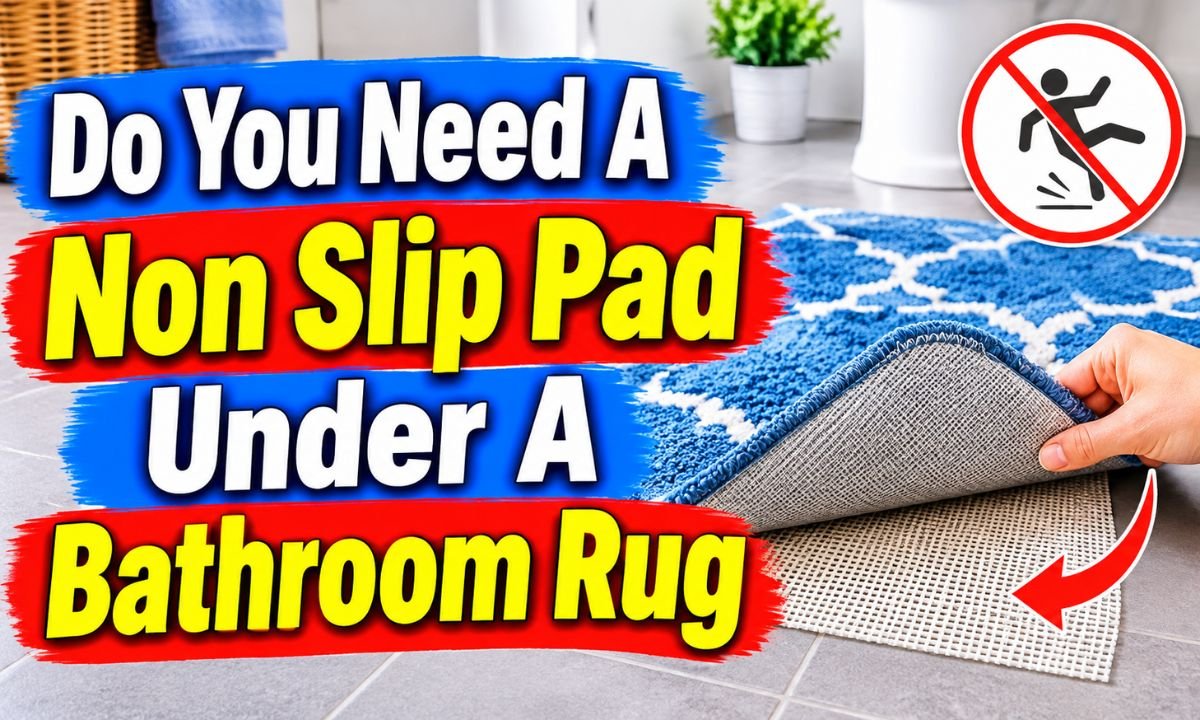
Yes, you generally need a non-slip pad under a bathroom rug if the rug does not have a secure, floor-safe backing. A suitable pad helps prevent sliding, bunching, and trips on smooth bathroom floors.
In American homes, bathroom floors come in many forms. You might have ceramic tile in a family bathroom, luxury vinyl plank in a newer home, or hardwood near a powder room. Whatever the floor type, a loose bathroom rug can move when someone steps on it, especially after a shower or bath.
A non-slip pad gives a bathroom rug extra grip against the floor. It helps keep the rug in place when you step out of the shower, stand at the sink, or walk across the room in bare feet. This can make your bathroom more comfortable and reduce one common household trip hazard.
However, not every bathroom rug needs a separate pad. Some rugs already have a suitable non-slip backing. Adding another layer beneath those rugs may make them too thick, uneven, or unstable. The right choice depends on the rug backing, floor material, room moisture, and the pad manufacturer’s instructions.
There is also a floor-care issue to consider. Some rubber, latex, PVC, and adhesive-backed products can stain or damage certain flooring finishes. A pad that grips well but harms your floor is not a good solution. You should check compatibility before placing any new material under your bathroom rug.
Why Do You Need a Non-Slip Pad Under a Bathroom Rug?
You need a non-slip pad when your bathroom rug cannot stay in place on its own. Smooth floors offer little resistance to many fabric rug backings. When you step onto a loose rug, your foot can push it forward or sideways.
This movement can create wrinkles, folded corners, and uneven edges. A rug that shifts under your feet can cause you to lose your balance. The risk may be greater when you are stepping out of a shower, carrying a towel, or walking through a dim bathroom.
A suitable non-slip pad creates friction between the rug and the floor. This added grip helps keep the rug steady during normal use. Some pads also add a small amount of cushioning, which can make a thin rug more comfortable.
Reduces rug movement
The pad helps stop the rug from sliding when someone steps on it, turns around, or moves between the sink and shower.
Helps prevent wrinkles
A stable rug is less likely to bunch up in the middle or develop folded corners that can catch your feet.
Improves underfoot comfort
Some thin pads provide a little cushioning beneath a flat bathroom rug without making it overly thick.
Protects the rug from movement
A suitable pad can reduce repeated rubbing between the rug and the floor, which may help limit wear on the backing.
How a Loose Bathroom Rug Becomes a Trip Hazard
A bathroom rug can look flat when nobody is using it. The problem begins when someone steps near one edge and pushes the fabric across the floor. Even a small movement can create a raised fold.
For example, imagine stepping out of a shower onto a small cotton rug. If the rug has no grip, your foot may move it forward while the rest of your body moves in another direction. That sudden change can affect your balance.
A non-slip pad helps reduce this movement, but it cannot remove every bathroom hazard. Wet floors, poor lighting, loose tiles, and clutter can still cause falls. Keep the entire walking area dry and clear.
Watch the corners
Corners that lift or curl can catch a toe, especially when someone walks quickly.
Check the center
A rug that wrinkles in the middle may not have enough grip or may be too large for its intended location.
Do All Bathroom Rugs Need an Extra Pad?
No. Some bathroom rugs already have a non-slip backing made to grip the floor. If that backing is in good condition and approved for your flooring, a second pad may not be necessary.
Check the product label before adding another layer. Look for information about the backing material, suitable floor types, washing instructions, and whether the rug is intended to be used with a separate underlay.
If the rug still slides despite having a non-slip backing, inspect the underside and floor. Dust, hair, soap residue, moisture, and worn backing can reduce grip. Clean and dry both surfaces before deciding whether a replacement rug or compatible pad is needed.
When Should You Use a Separate Non-Slip Rug Pad?
A separate pad is most useful when your bathroom rug has a plain fabric underside or a backing that does not grip your floor. It is also worth considering when the rug repeatedly shifts during normal use.
Small decorative rugs can be especially troublesome because they often weigh less than larger area rugs. They may move when someone steps on an edge or turns around near the sink.
Before buying a pad, test the rug carefully. Place it on a clean, dry floor and press down gently with your foot. If it slides, folds, or shifts, do not treat it as safe for regular use until you correct the problem.
Plain cotton rugs
A cotton rug without a gripping backing may move easily on smooth tile or vinyl. A compatible pad can help hold it in place.
Lightweight microfiber rugs
Some lightweight microfiber rugs need additional support because their low weight makes them easier to push across a smooth surface.
Older bathroom rugs
Repeated washing and everyday use can wear down certain backing materials. A rug that once stayed in place may begin to slide.
Small rugs near the sink
A small rug can shift when you step onto it from different directions. Check its grip before using it in a busy bathroom.
Signs That Your Bathroom Rug Needs a Pad
You do not need special tools to check whether your rug needs extra grip. A few simple observations can tell you whether it stays stable during normal bathroom use.
Look at the rug after walking across it several times. If it moves away from its original position, develops wrinkles, or has corners that lift, the backing may not be providing enough traction.
Do not keep using a loose rug while waiting for a new pad. Remove it from the walking area until you can secure it with a suitable solution.
The rug moves when stepped on
Any noticeable sliding means the rug is not staying securely in place.
The edges curl upward
Raised edges may catch your feet and create a trip hazard.
The rug bunches in the middle
Wrinkles suggest that the rug is moving or that the backing has lost its grip.
The backing feels worn
Cracking, peeling, flaking, or hardened material may indicate that the rug needs replacement.
What Type of Non-Slip Pad Is Best for a Bathroom Rug?
The best pad is one that grips your rug and works with your floor material. Bathroom conditions make this choice more important because water and humidity can affect the pad, rug backing, and floor beneath them.
Non-slip pads come in several forms. Common options include rubber-based mesh, silicone grip pads, EVA foam, and specialty materials made for particular floor types. Their performance and floor compatibility can differ.
Do not choose a pad only because its package says non-slip. Read the material information and check the manufacturer’s approved surfaces. A general claim does not prove that a pad is safe for every type of bathroom floor.
Rubber-based pads
These can provide strong grip, but some rubber compounds may react with certain flooring finishes. Confirm compatibility before use.
Silicone grip pads
Silicone-based products can offer traction without some of the issues associated with other backing materials. Still, check the product instructions and floor compatibility.
EVA foam pads
Ethylene-vinyl acetate foam is used in some non-slip products. Its suitability depends on the design, surface, and manufacturer’s instructions.
Mesh-style rug grippers
These pads are often thin and easy to trim. Choose a bathroom-suitable version that can be cleaned and dried properly.
Rubber Pads
Rubber pads are popular because many provide a firm grip. They can help stop a bathroom rug from moving across a suitable hard floor.
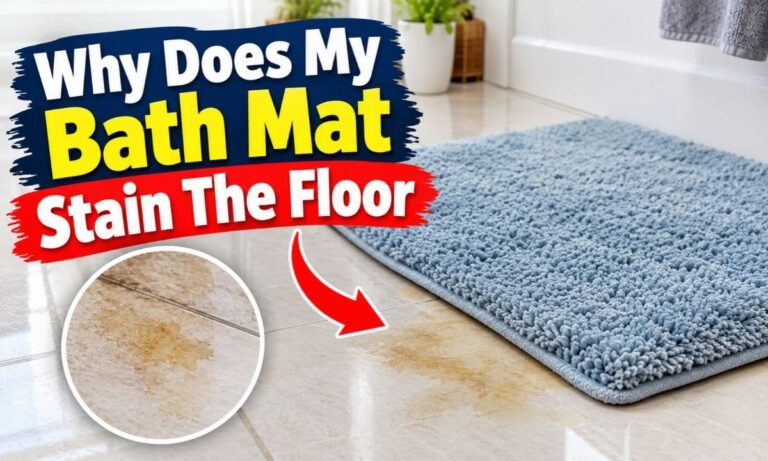
However, rubber is not automatically safe for every floor. Certain rubber and latex-backed products can discolor vinyl and other flooring finishes. The result may be a yellow, brown, or otherwise altered area that is difficult to remove.
Tarkett’s flooring maintenance guidance warns that rubber backings and dyes in floor mats can cause discoloration on its resilient flooring. It also advises checking whether a rug or pad is suitable for the applicable floor. This is why the flooring manufacturer’s instructions should guide your choice.
Main benefit
Many rubber products provide useful grip on compatible hard floors.
Main limitation
Some rubber compounds can react with particular flooring materials or finishes.
Silicone and EVA Pads
Silicone and EVA products are alternatives worth considering when a standard rubber pad is unsuitable. They are used in different types of rug grippers and underlays.
The material name alone does not guarantee floor safety. Products can contain coatings, bonding agents, or other materials that affect how they interact with a floor.
Choose a pad that clearly identifies its approved flooring types. If you cannot confirm compatibility, contact the pad manufacturer or flooring company before using it.
Check the full material description
Do not rely on a short product label when the manufacturer provides more detailed material information.
Check moisture instructions
Make sure the product is suitable for a bathroom and can be removed, cleaned, and dried as needed.
Mesh and Thin Rug Grippers
Thin mesh grippers can work well beneath lightweight bathroom rugs when the material is compatible with the floor. Their low profile can also reduce the chance of creating a raised edge.
Some mesh products are made for dry living areas rather than wet bathroom spaces. A pad that absorbs water or holds moisture may not be a good choice near a shower or bathtub.
Read the cleaning instructions and inspect the pad regularly. If it becomes sticky, brittle, stained, or loses its grip, replace it.
Best use
A compatible thin gripper can help stabilize a lightweight rug without adding much height.
Important limit
Not every mesh product is designed to handle repeated bathroom moisture.
Choose a Non-Slip Pad Based on Your Bathroom Floor
Your flooring type should guide your pad choice before you consider price, thickness, or appearance. The same backing can work well on one floor and cause problems on another.
Read the flooring care guide and look for specific warnings about rubber, latex, PVC, adhesives, and other pad materials. If the guide does not address a material, ask the flooring manufacturer instead of assuming it is safe.
The following table gives a starting point for your decision. It is not a universal compatibility chart because floor finishes, product formulas, and installation methods vary.
Bathroom Floor Compatibility Guide
Use this comparison to identify the main concern for your floor. Always confirm the final choice with the manufacturers of the flooring and rug pad.
Ceramic or porcelain tile
A compatible thin non-slip pad can help hold a rug on smooth tile. Check whether the tile has a special coating or textured surface and keep the area dry.
Luxury vinyl plank and sheet vinyl
Be cautious with rubber and latex backings because certain products can stain or discolor vinyl. Choose a product specifically approved for your exact flooring.
Laminate
Check the laminate maker’s instructions before using rubber, PVC, or adhesive-backed products. Avoid trapping moisture beneath the rug.
Finished hardwood
Use only a pad approved for the specific wood finish. Moisture and incompatible backing materials can affect the surface.
Natural stone
Check compatibility with the stone and any sealant. Avoid products that leave residue or trap moisture against the surface.
Why Vinyl Floors Need Extra Care
Vinyl flooring is common in American bathrooms because it is available in many designs and is relatively easy to maintain. However, some mat backings can leave permanent discoloration.
Tarkett specifically warns that rubber backings and dyes may discolor its resilient flooring. Other flooring brands may have their own restrictions, so do not assume that a product approved for one vinyl floor will work on another.
If you have luxury vinyl plank or sheet vinyl, look for a rug and pad that clearly state they are suitable for that flooring. Keep the backing dry and lift the rug regularly to inspect the surface.
Avoid guessing
A label that says suitable for hard floors may not cover every vinyl product.
Inspect for color changes
Check beneath the rug for yellowing, dark marks, sticky residue, or changes in the floor finish.
Follow the flooring warranty
Some manufacturers have specific rules about floor coverings and backing materials.
How to Install a Non-Slip Pad Under a Bathroom Rug
Installing a separate rug pad is usually simple, but the preparation matters. A dirty or damp floor can reduce grip and may trap unwanted moisture beneath the rug.
Before starting, check that the rug and pad are compatible with each other and with your flooring. Make sure the pad is intended for bathroom use and that its care instructions allow the cleaning routine you plan to follow.
You should also check the thickness. A pad that raises the rug too much can create an uneven edge, interfere with a door, or become another trip hazard.
What you need
Your bathroom rug, a compatible non-slip pad, a measuring tape, scissors if the pad is designed to be trimmed, and a clean cloth or mop.
Step 1: Clean and Dry the Floor
Remove the rug and clean the floor beneath it. Sweep or vacuum away hair, dust, and small particles that could affect the contact between the pad and floor.
Wipe away soap residue and other dirt with a floor-safe cleaner. Follow the cleaner’s instructions, then allow the surface to dry fully before continuing.
Do not place a new pad over a damp floor. Trapped moisture can contribute to odors and may affect certain flooring materials.
Step 2: Measure the Bathroom Rug
Measure the length and width of your rug. Use those measurements to select a pad that supports the rug without extending beyond its edges.
Many general area-rug pads are trimmed slightly smaller than the rug so the pad remains hidden. Mohawk Home, for example, recommends that its area rug pads be at least 2 inches smaller on each side. A small bathroom rug may need a different fit, so follow the specific pad manufacturer’s instructions.
The main goal is to avoid exposed pad edges. A visible or raised edge can catch a foot and create a new hazard.
Measure twice
Check the rug dimensions before cutting a pad to prevent an uneven or oversized result.
Check the shape
For a contoured toilet rug, use a pad made for that shape or follow the manufacturer’s trimming guidance.
Step 3: Trim the Pad if Needed
If the pad is designed to be cut, trim it carefully with suitable scissors. Keep the cut edges smooth and make sure no section extends beyond the rug.
Do not cut a product if its manufacturer says it must remain intact. Some pads have layered construction or special edge designs that should not be altered.
Avoid making the pad so small that important parts of the rug have no support. Follow the product instructions for the correct coverage.
Step 4: Position the Pad and Rug
Place the pad flat on the clean, dry floor. Remove any folds or wrinkles before placing the rug on top.
Check that the rug sits evenly across the pad. The pad should not create lumps, exposed corners, or raised sections.
If the rug has a built-in gripping backing, check whether the manufacturer permits an additional pad. Two gripping layers are not always more stable than one.
Step 5: Test the Rug Carefully
Once the rug is in place, press gently on several areas with your foot. Check whether the rug moves, bunches, or lifts at the edges.
Walk across it slowly in normal conditions. Do not deliberately step hard or test it with wet feet. The aim is to check ordinary stability without creating an unsafe situation.
If the rug still shifts, remove it and inspect the setup. The pad may be incompatible, incorrectly sized, worn, or unsuitable for the floor.
Signs of success
The rug stays flat, the edges remain down, the pad is hidden, and the rug does not noticeably shift during normal walking.
If the setup fails
Remove the rug and pad, clean and dry the surfaces, and check the product instructions. Replace an unsuitable or damaged product rather than adding random adhesive.
How to Keep a Bathroom Rug and Pad Clean and Dry
A non-slip pad needs regular care because bathrooms collect moisture, hair, dust, and soap residue. Even a good pad can lose its grip if dirt builds up between the rug and floor.
Moisture is another concern. A thick rug and pad can hold water after a shower, especially in a bathroom with poor airflow. If you leave the setup damp for long periods, it may develop a musty smell or contribute to surface problems.
Make it a habit to lift the rug and pad from time to time. Check the floor and both sides of the materials, then let everything dry before putting them back.
Lift the rug regularly
Check beneath it so moisture and dirt do not remain trapped for long periods.
Wash according to the label
Follow the rug and pad cleaning instructions. Do not assume that every backing can go into a washing machine.
Dry completely
Make sure the rug, pad, and floor are dry before putting the setup back in place.
Clean the floor beneath
Remove hair, dust, soap residue, and grit that could reduce grip or scratch the floor.
How Often Should You Lift the Rug?
The right schedule depends on how often the bathroom is used, how much water reaches the rug, and how quickly the room dries. A busy family bathroom may need more frequent checks than a guest bathroom.
As a practical routine, inspect the area at least weekly and whenever the rug becomes noticeably wet. Lift it sooner if you notice a damp smell, a change in the floor surface, or moisture around the edges.
Some rug-pad manufacturers suggest more frequent checks in humid conditions. Tumble, for example, recommends lifting and cleaning beneath its rug pads at least monthly in high-humidity climates. Its guidance is specific to its products, but it highlights why moisture checks matter.
After a large splash
Lift the rug and check whether water has reached the pad or floor.
When the rug smells musty
Remove the entire setup and check for trapped moisture, dirt, and signs of material breakdown.
During routine cleaning
Clean the floor beneath the pad before returning the dry rug.
What If the Rug Pad Develops a Musty Smell?
A musty smell can mean that moisture or dirt has remained trapped beneath the rug. It may also come from a rug that was washed and put back before it dried fully.
Remove the rug and pad. Check for visible mold, dark spots, damaged backing, and damp areas. Clean washable materials according to their labels and allow them to dry fully in a suitable, well-ventilated place.
If you find persistent mold, damaged flooring, or a smell that remains after cleaning and drying, stop using the affected materials. Replace products that cannot be cleaned properly and seek suitable help if the floor itself appears damaged.
Do not cover the smell
Air freshener will not fix moisture trapped beneath a rug.
Check the floor
Look for discoloration, soft spots, or visible damage before replacing the rug.
Common Mistakes to Avoid When Using a Bathroom Rug Pad
A non-slip pad can improve rug stability, but the wrong setup can create new problems. Many issues come from choosing a pad without checking the floor, adding too much thickness, or ignoring moisture.
A simple product label is not enough to establish compatibility. Always read the detailed instructions and avoid combining materials that the manufacturers have not approved for use together.
Using any rubber pad on any floor
Rubber products can react with some flooring finishes. Confirm compatibility before use.
Adding a pad beneath a rug that already has a backing
An extra layer may make the rug unstable or too thick. Check the rug instructions first.
Choosing a pad that is too large
An exposed edge can catch a foot or become visible around the rug.
Leaving a wet rug in place
Trapped moisture can lead to odors and may affect some floor materials.
Using adhesive without checking the floor
Tape, glue, and caulk may leave residue or damage finishes. Do not apply them unless the manufacturers approve the method.
Ignoring worn backing
A cracked or peeling pad may no longer provide dependable grip.
Why You Should Avoid Thick or Uneven Pads
A thick pad may feel soft, but extra cushioning is not always useful in a small bathroom. If it raises the rug too much, the edges can become more noticeable and may catch your feet.
Bathroom rugs are often placed in narrow spaces near doors, toilets, sinks, and showers. A raised rug may also interfere with a door or create an uneven step.
Choose a low-profile pad that supports the rug without making the edges bulky. The safest setup is stable, flat, and easy to walk across.
Why Shelf Liners Are Not Always a Good Substitute
Some people use kitchen shelf liners beneath bathroom rugs because they look similar to mesh rug grippers. However, shelf liners are not automatically designed for foot traffic, bathroom moisture, or contact with every flooring finish.
A shelf liner may shift, break down, or leave marks. Its material may also be unsuitable for the floor. Use a product specifically designed and approved for rug gripping instead.
The small price difference is not worth taking a chance with an unstable rug or damaged floor.
Do You Need a Non-Slip Pad If Your Bathroom Rug Has Rubber Backing?
Usually, no. If your bathroom rug has a sound, compatible rubber backing that grips the floor properly, you may not need a second pad.
However, the word rubber covers different materials and product formulas. Some backings may be unsuitable for vinyl or particular floor finishes. Others may wear down after repeated washing or exposure to heat.
Check the care label and flooring instructions before using the rug. If the backing has started to crack, peel, harden, or lose grip, replace the rug or choose an approved separate pad for a rug without a built-in backing.
Keep the existing backing if it works
Do not add another layer when the rug is already stable and the manufacturer approves its use on your floor.
Replace damaged backing
A worn backing may no longer hold the rug securely.
Check vinyl compatibility
Do not assume that a rubber-backed rug is safe for luxury vinyl or sheet vinyl.
Can You Put Two Non-Slip Layers Together?
It is generally better to use one suitable gripping system than to stack two products without checking their instructions. Two layers can move against each other or create an uneven surface.
If a rug has a built-in backing and still slides, first clean and dry the backing and floor. Check for damage and confirm whether the rug is approved for your floor type.
If the problem continues, choose a replacement rug or a pad system specifically approved for that combination. Do not assume that adding more grip material will always improve stability.
Bathroom Rug Pad Safety for Children and Older Adults
A stable bathroom rug is especially important in homes with young children, older adults, or anyone who has trouble with balance. A loose rug can create an unexpected movement underfoot.
Choose a flat, low-profile setup that does not curl at the edges. Keep the bathroom well lit, remove clutter, and wipe up water as soon as possible.
A rug pad is only one part of bathroom safety. It does not make a wet floor safe by itself, and it does not replace grab bars, proper lighting, or other suitable safety measures.
Choose a flat rug
Avoid thick edges, loose corners, and bulky pads that create uneven walking surfaces.
Keep the floor dry
Wipe up water near the shower, bathtub, and sink rather than relying on the rug to absorb every splash.
Keep walking paths clear
Do not place loose rugs where people must turn quickly or step over clutter.
Improve lighting
Make sure bathroom entrances and walking areas are easy to see, including at night.
Is a Non-Slip Rug Pad Enough for an Older Adult?
No. A rug pad can reduce the movement of a bathroom rug, but it cannot prevent every fall. People who have balance problems may need additional changes to make the bathroom safer.
A home safety review may identify a need for grab bars, better lighting, a stable shower seat, or changes to the bathroom layout. These changes should be selected based on the person’s needs and the room’s design.
If someone has repeated falls or difficulty walking safely, speak with a qualified healthcare or home-safety professional about suitable changes.
Bathroom Rug Pad vs. Non-Slip Bathroom Mat
A non-slip rug pad and a non-slip bathroom mat serve related but different purposes. A rug pad sits beneath a separate rug to help keep it in place. A bathroom mat is a complete floor covering that may already include a gripping backing.
You may prefer a separate pad if you already own a comfortable cotton or microfiber rug without a non-slip underside. A bathroom rug with a suitable built-in backing may be simpler because it does not require an extra layer.
Neither option should be confused with a bathtub or shower mat. Those products are designed for use on the bathing surface and have their own requirements.
Which Option Should You Choose?
The best option depends on what you already own and how well it stays in place. The following comparison can help you decide.
Separate rug and pad
Useful when you have a plain-backed rug and can find a compatible pad that keeps it stable.
Rug with built-in non-slip backing
Useful when the backing is suitable for your floor, remains in good condition, and holds the rug securely.
Ordinary rug without a pad
Not a good choice when it slides or bunches on a smooth bathroom floor.
Can You Use a Bathroom Rug Pad Inside the Shower?
No, an ordinary rug pad should not be used as a shower mat. It is not necessarily designed to provide traction for bare feet on a wet shower surface.
Use a product specifically labeled for bathtub or shower use. Follow its instructions about surface compatibility, suction cups, cleaning, and drying.
A rug pad belongs beneath a bathroom rug on the bathroom floor, outside the shower or bathtub. Keeping these uses separate helps avoid a dangerous mismatch.
What to Do If Your Bathroom Rug Still Slides After Adding a Pad
If your rug keeps moving after installation, do not assume that you need a thicker pad. The problem may be dirt, moisture, an incompatible surface, or worn material.
Remove the rug and pad before troubleshooting. Check each layer separately so you can find the cause rather than adding more products on top.
Check for dust and hair
Clean the floor and the pad surface. Small particles can interfere with contact and grip.
Check for moisture
Dry the floor, rug, and pad completely before testing the setup again.
Check pad placement
Make sure the pad lies flat and is positioned according to the manufacturer’s instructions.
Check material compatibility
Confirm that the pad is designed for your floor and rug backing.
Replace worn products
Discard pads that have become brittle, sticky, torn, or unable to grip.
When Should You Replace the Rug Pad?
Replace a pad when it no longer performs its main job. A damaged pad may look acceptable at first glance but can lose its ability to hold the rug in place.
Look for peeling layers, cracked material, permanent deformation, sticky patches, and areas that no longer grip. A pad that smells unpleasant despite proper cleaning and drying may also need replacement.
There is no single replacement schedule that applies to every pad. Material quality, washing, humidity, floor conditions, and daily use all affect its useful life.
Loss of grip
The rug moves even when the pad is clean, dry, and correctly positioned.
Visible damage
The pad has cracks, holes, tears, peeling layers, or hardened areas.
Persistent odor
The pad continues to smell unpleasant after appropriate cleaning and drying.
Frequently Asked Questions
Q
Do you need a non slip pad under every bathroom rug?
No. A separate pad is not necessary for every bathroom rug. If your rug already has a suitable non-slip backing that grips your floor and remains in good condition, an extra layer may not be needed.
However, a rug with a plain fabric underside may need a compatible pad, especially on smooth tile or other hard flooring. Check the rug and flooring instructions before choosing one.
Q
Can I put a non-slip pad under a rubber-backed bathroom rug?
You can only do this when the rug and pad manufacturers approve the combination. Many rubber-backed bathroom rugs already have enough grip, so an extra layer may make the setup unstable.
Also check the flooring material. Some rubber and latex backings can discolor vinyl and certain other surfaces. Do not add a second layer without checking compatibility.
Q
What can I use instead of a non-slip bathroom rug pad?
You can use a bathroom rug with a built-in non-slip backing that is approved for your floor. This removes the need for a separate underlay.
Some rugs also use manufacturer-approved grip systems. Avoid random adhesives, shelf liners, and improvised materials unless they are specifically approved for the rug and flooring. If you cannot make the rug stable, remove it from the walking area.
Q
Can a non-slip rug pad damage vinyl flooring?
Yes, certain rug pads and rubber-backed mats can discolor some vinyl flooring. The exact risk depends on the backing material, product formula, floor construction, and finish.
Check your vinyl flooring manufacturer’s care instructions before using a pad. Choose a product specifically approved for your flooring, and inspect beneath the rug regularly for color changes or residue.
Q
Should a non-slip pad be smaller than the bathroom rug?
Usually, the pad should remain hidden beneath the rug so that its edges do not stick out. Many general rug-pad instructions recommend trimming the pad smaller than the rug, but the correct margin depends on the product.
Follow the pad manufacturer’s sizing guidance. Make sure the pad still provides enough support and does not create exposed or raised edges.
Q
How often should I clean under a bathroom rug pad?
Inspect beneath the rug regularly, ideally at least once a week in a frequently used bathroom. Lift it sooner whenever water reaches the underside or the rug remains damp.
Clean the floor and pad according to their care instructions. Let everything dry completely before putting the rug back. Bathrooms with poor ventilation or high humidity may need more frequent checks.
Q
Can I use double-sided tape instead of a non-slip pad?
Double-sided rug tape may hold some rugs in place, but it is not suitable for every floor or rug backing. Adhesive can leave residue, affect floor finishes, or damage the rug when removed.
Check both manufacturers’ instructions before using tape. A compatible non-slip pad is often easier to remove and clean, but the right choice depends on the specific products.
Q
Is a non-slip bathroom rug pad waterproof?
Not necessarily. Some pads resist water, while others can absorb moisture or retain it between layers. A non-slip label does not mean that a product is waterproof.
Check the manufacturer’s material and cleaning information. Regardless of the pad type, lift the rug when it becomes wet and let the entire setup dry before replacing it.
✦ Wrapping Up
Conclusion
So, do you need a non-slip pad under a bathroom rug? In most cases, you should use one when your rug has no reliable grip and moves across the floor. A suitable pad can help prevent sliding, bunching, and raised edges that may cause trips.
You may not need an extra pad if your bathroom rug already has a secure backing that is compatible with your flooring. Adding another layer without checking the instructions can make the rug less stable rather than safer.
Always choose a pad based on your floor material. Be especially careful with vinyl, laminate, and finished hardwood because some backing materials can cause discoloration or other damage. Keep the rug and pad clean, inspect beneath them, and never put a damp setup back on the floor.
A bathroom rug should make your daily routine more comfortable, not create another hazard. The best setup is simple: a compatible rug, a suitable gripping surface, flat edges, and a clean, dry floor.
💡 Key Takeaway
Remove your bathroom rug, check its backing, identify your floor type, and choose a compatible non-slip pad only if the rug needs extra grip. Test the setup while it is dry, then lift and inspect it regularly.
Is chenille good for a bath mat? Learn how chenille performs for absorbency, softness, drying, safety, durability, and care before choosing one for your bathroom.


2 Comments