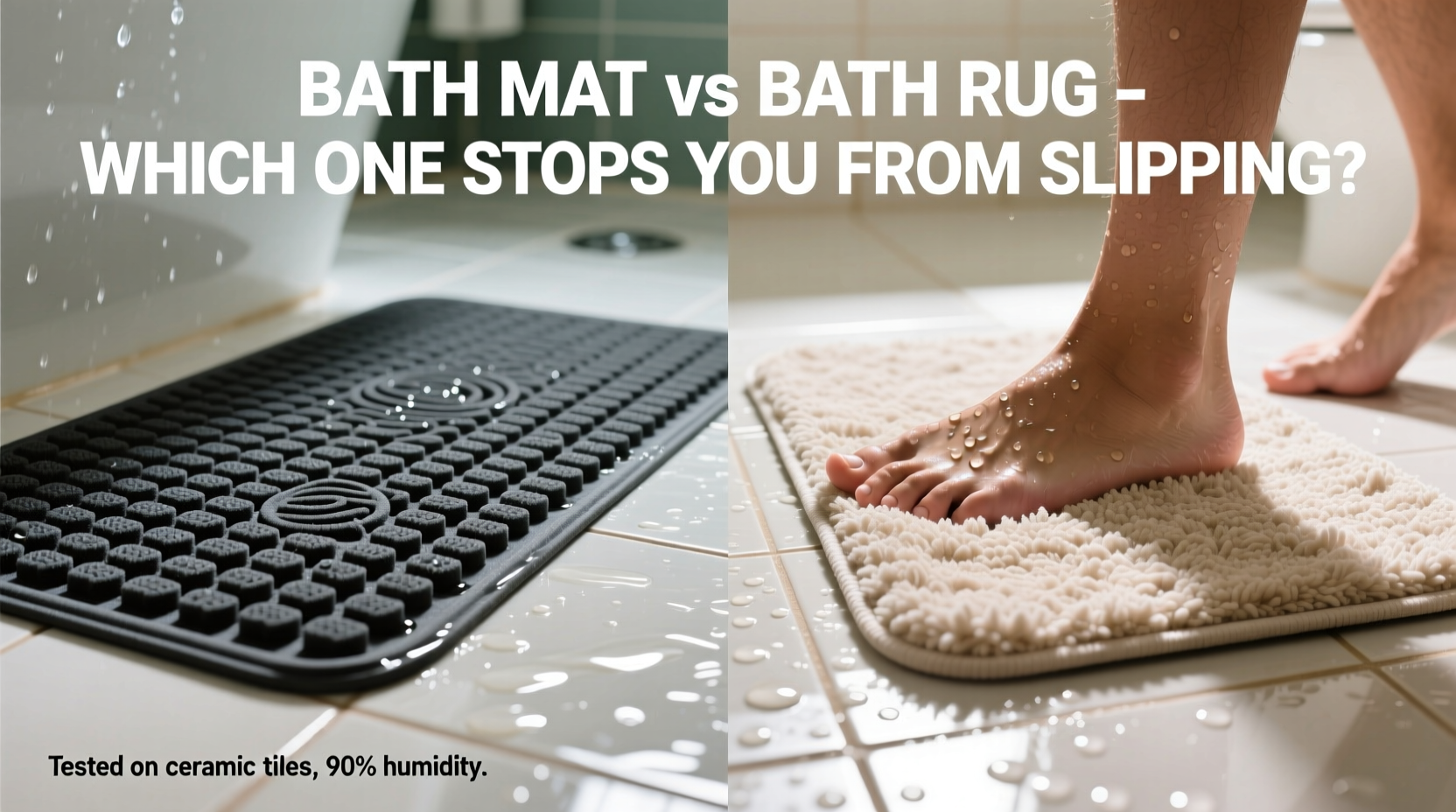
Make a bath rug less slippery by using a compatible non-slip rug pad, cleaning the rug and floor, drying the backing, and replacing worn or damaged rugs.
A bath rug should stay in place when you step out of the shower or bathtub. In American homes, bathroom floors may be made of ceramic tile, porcelain, natural stone, vinyl, or other smooth materials. Water, soap residue, and a worn rug backing can make these surfaces more slippery, so a rug that once felt secure may start to move.
The best fix depends on why the rug slides. A clean rug with a sound backing may need a suitable non-slip pad. A rug that curls, sheds its backing, or stays damp underneath may need more care or replacement. The goal is to keep the rug flat and stable without damaging the floor or creating another trip hazard.
Start by lifting the rug and checking both the underside and the floor. Look for moisture, soap film, loose fibers, cracks in the backing, and curled corners. Clean and dry both surfaces before choosing a fix, and keep the rug out of use until it stays firmly in place under normal foot pressure.
Source: amazon.com
Why Does a Bath Rug Become Slippery?
A bath rug can slide when the contact between its backing and the floor is too weak to resist the force of a foot. Smooth tile, moisture, soap residue, and a worn backing can all contribute. The rug may also bunch up when you step on its edge, creating a separate tripping risk.
Not every slippery rug has the same problem. Some rugs have no non-slip backing at all. Others have a backing that has worn away after repeated washing, heat exposure, or age. A rug can also lose stability when its backing is damp or when dirt and cleaning products build up on the floor.
The quickest way to find the cause is to inspect the rug and the surface beneath it. Do not test a questionable rug by walking across it with wet feet. Instead, examine it by hand while standing on a dry, stable surface.
Source: storage.googleapis.com
Smooth flooring
Glossy tile and other smooth surfaces can offer little resistance to an unsuitable rug backing. A compatible non-slip pad may help when the floor and rug are clean and dry.
Water and soap film
Moisture and residue can reduce traction or create a slippery film. Clean the floor with a product suitable for the flooring, then remove the residue and dry the area.
Worn backing
Rubber, latex, or other grip materials may crack, peel, crumble, or lose their texture. A damaged backing may no longer hold the rug in place.
Poor rug fit
A rug that is too small, too large for the space, or prone to curling may shift or bunch underfoot. A better-fitting rug can reduce these problems.
Water trapped between the rug and the floor can affect grip and encourage odors or material damage. Lift the rug regularly and let both surfaces dry.
How to Identify the Main Problem
If the rug slides easily while the floor and backing are dry, check whether the rug has a grip layer. If it does, inspect that layer for wear. If the rug stays in place when dry but moves after a shower, moisture or residue may be part of the problem.
If the corners lift or the rug forms folds, examine the shape and condition of the entire backing. If it has become brittle, sticky, cracked, or detached, adding another layer underneath may not solve the underlying issue.
Slides on a dry floor
Check the backing and consider a floor-compatible non-slip pad.
Slides after bathing
Check for water, soap residue, and dampness trapped under the rug.
Edges curl or bunch
Reshape only if the care instructions allow it. Replace a rug that will not lie flat.
Step 1: Clean and Dry the Rug and Floor
Cleaning is the first step because an extra grip layer cannot reliably solve a problem caused by dirt, soap film, or trapped water. Before you add anything underneath the rug, remove it from the bathroom and inspect the floor. Keep the area clear while you work.
Check the rug’s care label before washing it. Some bath rugs can go in a washing machine, while others need gentle hand washing or spot cleaning. Rubber-backed rugs may be damaged by high heat, harsh chemicals, or an unsuitable wash cycle, so follow the manufacturer’s instructions.
Clean the floor with a product approved for the surface. Rinse or wipe away residue as directed, then let the floor dry fully. Clean the rug backing if the care instructions permit it, and allow the rug to dry before putting it back.
Source: remotestylist.com
Remove loose dirt
Shake the rug outdoors or vacuum it if its construction and care instructions allow vacuuming.
Wash with care
Use the recommended water temperature, detergent, and cycle. Avoid bleach, solvents, and other harsh products unless the manufacturer explicitly permits them.
Dry both surfaces
Let the rug and the floor dry completely. Do not place a damp rug back on the floor and assume the backing will grip normally.
Inspect after cleaning
Check for peeling, cracks, hardened areas, loose threads, and curled corners before deciding whether the rug can be used again.
Why Drying Matters
A rug may feel dry on top while its underside remains damp. This is common when a thick pile or dense backing holds water. Lift the rug after use and give the underside and floor time to dry before laying it flat again.
Drying does not restore a backing that has worn out. If the rug still slides on a clean, dry floor, move on to a compatible grip solution or replace the rug.
Check the underside
Feel the backing and look for moisture before replacing the rug.
Improve airflow
Hang the rug over a suitable drying rack or bar if the care label allows it and the rug can dry without falling.
Step 2: Add a Compatible Non-Slip Rug Pad
A properly fitted non-slip rug pad is often the most useful option when a bath rug has no grip or its original backing offers too little traction. The pad sits between the rug and the floor and helps resist movement. It must be designed for both the rug and the type of flooring in your bathroom.
Do not assume that every rug pad works on every surface. Some materials may discolor vinyl, react with certain floor finishes, leave residue, or perform poorly on wet surfaces. Read the pad manufacturer’s instructions and check whether it is approved for your specific floor material.
A bathroom is a wet environment, so a pad intended only for dry living-room rugs may not be suitable. Look for clear guidance on use in bathrooms, cleaning, moisture, and compatibility. If the manufacturer does not confirm suitability for your floor, choose another method.
Source: YouTube > Linzsey’s lil Pad
Measure the rug
Measure the rug’s length and width so you can select a pad that supports it without protruding around the edges.
Check floor compatibility
Confirm that the pad is suitable for your exact flooring, such as ceramic tile, porcelain, vinyl, or sealed stone.
Trim only when allowed
If the manufacturer permits trimming, cut the pad to fit neatly under the rug. Keep the pad flat and free of folds.
Follow placement instructions
Install the pad on a clean, dry floor in the orientation stated by the manufacturer.
Inspect during use
Lift the rug periodically to check for moisture, residue, shifting, and changes to the floor finish.
How to Fit a Rug Pad Correctly
Place the rug on a clean, dry surface and check its shape. Lay the pad beneath it according to the product directions, then make sure the pad does not extend beyond the rug’s edges. An exposed edge can catch a toe or become visible as the rug shifts.
Smooth out folds and wrinkles before use. If the pad bunches up, slides on the floor, or changes the rug’s shape, remove it and reassess the fit. A pad that creates a new trip hazard is not a safe fix.
No exposed edges
Keep the pad fully beneath the rug unless the product design specifically requires a different arrangement.
No raised ridges
Replace a pad that creates bumps, folds, or uneven areas underfoot.
No unapproved adhesive
Do not add glue or tape to improve the pad’s grip unless the flooring and rug manufacturers approve that specific product.
Step 3: Use the Right Fix for Your Rug Type
The best method depends on the rug’s construction. A lightweight cotton mat, a thick microfiber rug, and a rubber-backed bath rug may react differently to pads, washing, and adhesive products. Check the care label and backing before making changes.
A separate non-slip pad may suit a rug with no grip layer, provided the pad is approved for bathroom use and the floor material. A rug with damaged rubber backing may need replacement rather than another layer. For a rug with a sound backing, cleaning and drying may be enough.
Source: rugvista.co.uk
Cotton bath rugs
These may lack a built-in grip layer. Consider a compatible non-slip pad if the rug stays flat and the pad is suitable for the floor.
Microfiber and chenille rugs
Their soft pile can hold moisture, so allow enough drying time. Check the underside for a grip layer and use only a compatible pad.
Memory foam bath rugs
Their foam construction may be sensitive to heat and certain cleaning methods. Follow the label and replace the rug if the foam or backing deforms.
Rubber-backed rugs
Inspect the backing for cracks, peeling, stickiness, or crumbling. Avoid high heat and unsuitable chemicals that may damage the grip material.
Flat woven rugs
These can shift easily if they are light and have no grip layer. A compatible, properly sized pad may help keep the rug stable.
Should You Use a Non-Slip Spray?
Some products are sold to add grip to rug backings, but they are not universal solutions. A spray may be unsuitable for certain rug fibers, rubber coatings, vinyl flooring, or finished surfaces. It may also change the backing’s texture or make cleaning more difficult.
Use a grip treatment only when the label clearly approves it for the rug material and the floor it will contact. Follow the instructions for application, drying, ventilation, and future washing. If compatibility is unclear, choose a suitable removable pad or replace the rug.
Read the full label
Confirm that the product is meant for rugs and is safe for the relevant backing and floor surface.
Avoid improvised coatings
Do not apply household glue, caulk, paint, or other unapproved substances to the backing.
Test only as directed
If the manufacturer recommends a small test area, follow that guidance and check for staining or material changes before wider use.
Step 4: Keep the Rug and Floor in Good Condition
A non-slip setup needs regular care. Dust, hair, lint, soap film, and moisture can build up beneath a rug, even when its top looks clean. Lift the rug often enough to check the floor and allow the underside to dry.
Wash the rug according to its care label and inspect the backing afterward. A rug may look clean but still be unsafe if the grip layer has cracked or detached. Avoid treating every loss of grip as a cleaning problem.
Keep the rug away from standing water and arrange it so it does not interfere with the bathroom door, shower entry, toilet area, or walking path. A rug should lie flat and leave enough clear space for normal movement.
Source: tipsbulletin.com
Lift the rug regularly
Check for trapped water, debris, residue, and signs of floor discoloration.
Follow washing instructions
Use the permitted cycle, detergent, and drying method. Do not assume that a rubber-backed rug can safely go in a hot dryer.
Keep edges flat
Replace a rug that develops permanent curls or folds that cannot be corrected using its approved care method.
Check after washing
Make sure the backing remains intact and the rug lies flat before returning it to the bathroom.
How Often Should You Check the Backing?
There is no single inspection schedule that fits every household. Check the rug whenever you lift it for cleaning, whenever it begins to move, and after washing or drying. Homes with frequent showers or heavy bathroom use may need more frequent checks.
Look for changes rather than relying only on the rug’s age. A newer rug with peeling backing may need replacement, while a well-maintained rug may remain usable longer. Condition and stability matter more than an arbitrary age limit.
Cracks or peeling
Stop using a rug if the backing breaks apart or no longer holds the rug securely.
Persistent dampness
Improve drying and airflow, and check whether the rug material is suitable for the bathroom.
Repeated movement
If the rug keeps shifting after cleaning and a compatible pad is fitted, replace it with a more stable option.
Step 5: Compare the Available Anti-Slip Methods
Choose a fix that addresses the actual cause of movement without harming the floor. A removable pad is useful when a rug needs extra grip and the pad is compatible with both surfaces. Cleaning is the better first step when residue or moisture is the problem.
No method can guarantee that a rug will never move, especially in a wet bathroom. The table below compares common options by their main purpose and the conditions that limit their use.
Source: alibaba.com
Which Method Should You Choose?
Use this table as a starting point, not as a guarantee of performance. Product materials, floor finishes, and rug construction vary, so follow the instructions for the exact items you own.
Cleaning and drying
Best first step when residue, dirt, or trapped moisture may be affecting grip. It will not repair a damaged backing.
Compatible non-slip pad
Useful for a rug that lacks grip. The pad must fit properly and be approved for the floor and bathroom conditions.
Approved grip treatment
May help some compatible rugs, but only if the product instructions confirm that it suits the rug backing and flooring.
Replacement rug
The sensible choice when the backing is damaged, the rug will not lie flat, or other fixes fail.
Common Mistakes That Can Make a Bath Rug Less Safe
A quick fix can create a new hazard if it adds bumps, residue, or an incompatible material under the rug. The safest approach is to use products made for the intended purpose and to follow the care instructions for both the rug and the floor.
Do not rely on a rug simply because it feels soft or heavy. Weight alone does not prove that the backing will grip smooth tile, especially when the floor is wet. Check stability on a dry floor before returning the rug to service.
Source: storage.googleapis.com
Using a loose towel underneath
A towel can bunch up, slide, or retain water. It is not a reliable substitute for a properly designed non-slip pad.
Using random double-sided tape
Tape may leave residue, damage the finish, or fail in damp conditions. Use it only if the product manufacturer and flooring guidance approve the specific application.
Applying household glue
Glue may harden unevenly, damage the rug, or stick to the floor. It can also make future cleaning difficult.
Putting the rug back while damp
Trapped moisture may affect grip, cause odors, and harm some backing materials or floor finishes.
Ignoring a worn backing
Cleaning cannot restore rubber or latex that has cracked, peeled, or crumbled. Replace the rug if the backing no longer works.
Testing with wet feet
Walking across a questionable rug is an unnecessary fall risk. Inspect it by hand and keep it out of use until the problem is corrected.
What About Silicone Caulk or Hot Glue?
DIY advice sometimes suggests adding lines or dots of silicone caulk or hot glue to a rug’s underside. These methods should not be treated as universal fixes. The materials may not bond well, may change the rug’s shape, or may damage the floor when the rug is moved.
Do not use these substances unless the rug and flooring manufacturers explicitly approve the exact material and application. A purpose-made, compatible pad or a replacement rug is generally easier to inspect and remove without leaving a permanent coating.
Avoid unverified materials
Do not assume that a product safe for one rug or floor is safe for another.
Protect the floor finish
If the flooring manufacturer warns against adhesives or rubber contact, follow that guidance.
How to Tell Whether the Fix Is Working
A successful fix leaves the rug flat, stable, and free of raised edges. Once the rug and floor are dry, press down gently on several parts of the rug by hand while standing securely beside it. Check whether the rug shifts, folds, or pulls away from the pad.
This hand check is only a preliminary inspection. It does not prove that the rug will remain secure during everyday use, especially after the floor becomes wet. If the rug moves at all, do not rely on it as a safe surface.
Recheck the setup after the next wash and whenever you notice movement. A pad can shift, a backing can wear, and moisture can collect under the rug over time. Ongoing inspection helps catch these changes before they create a hazard.
Source: storage.googleapis.com
The rug stays flat
There are no raised corners, curled edges, folds, or bumps that could catch a foot.
The backing remains intact
There are no loose flakes, cracks, sticky areas, or signs of material breakdown.
The pad stays hidden
The pad does not protrude, wrinkle, or move independently of the rug.
The floor remains in good condition
There is no visible discoloration, sticky residue, or surface damage beneath the rug.
What If the Rug Still Slides?
Remove the rug and pad, then check for moisture, residue, poor fit, and backing damage. Clean and dry the floor again if needed. Confirm that the pad is intended for the exact floor material and that it has been installed as directed.
If the rug still moves, stop using it in that location. Choose a rug with a suitable built-in grip layer, use a compatible replacement pad, or remove the rug until you can correct the problem. Do not keep adding layers to compensate for a setup that remains unstable.
Check the floor
Make sure the surface is clean, dry, and free of cleaning-product residue.
Check compatibility
Verify the rug and pad instructions for the exact floor and backing materials.
Replace damaged items
Discard a rug or pad that cannot stay flat and secure.
Extra Safety Tips for Children, Older Adults, and Busy Bathrooms
A sliding bath rug can be especially concerning for anyone who has trouble balancing, uses a mobility aid, or needs support when stepping out of a tub or shower. In these situations, do not rely on a loose rug as the main way to prevent a fall. Keep the walking area clear and use suitable safety equipment when needed.
A bath rug is not the same as a shower mat. A rug placed outside the tub may absorb water, but it is not designed to provide traction on the wet floor inside the tub or shower. Use a product specifically intended for that setting, following its instructions.
If someone needs help getting in or out of a bath, consider a broader bathroom safety assessment. Properly installed grab bars and other suitable aids may be more appropriate than relying on a rug alone. Seek help from a qualified professional when the bathroom layout or a person’s mobility needs make safe use uncertain.
Source: remotestylist.com
Keep the path clear
Place the rug away from door swings and narrow walking routes, and remove loose items that could cause a trip.
Do not layer rugs
Stacking rugs or placing a loose mat over another mat can create uneven edges and extra movement.
Choose the right setting
Use a bath rug outside the tub and a product designed for the wet bathing surface inside it.
Use proper support when needed
A rug cannot replace suitable grab bars, a stable shower seat, or other aids selected for the user’s needs.
A Simple Maintenance Plan for a Secure Bath Rug
A short maintenance routine can help you spot problems before the rug starts moving. The exact schedule depends on bathroom use, ventilation, rug material, and washing instructions. The key is to keep the underside clean and dry and to act quickly when the backing changes.
After bathing, hang or lift the rug when practical so moisture can escape. When cleaning the bathroom, check the floor beneath it and remove any soap film or residue. After each wash, inspect the backing and make sure the rug has dried before putting it back.
Source: woodworkingadvisor.com
After shower use
Check for pooled water and lift the rug if the underside is damp.
During bathroom cleaning
Clean the floor beneath the rug and allow the surface to dry fully.
After washing the rug
Inspect the backing, edges, and shape before returning it to the floor.
Whenever slipping begins
Stop using the rug until you identify the cause and confirm that the replacement or repair is stable.
When Is It Time to Replace a Bath Rug?
Replace the rug when its backing has broken down, the corners stay curled, the rug bunches up, or it repeatedly slides despite proper cleaning and a compatible pad. Persistent odors or visible damage may also indicate that the rug needs more than routine care.
A new rug is not automatically safer than an old one. Check its construction, care instructions, and suitability for your floor before buying it. If it has a grip backing, make sure the manufacturer approves that backing for the flooring in your bathroom.
Backing failure
Cracked, peeling, crumbling, or detached backing is a strong reason to stop using the rug.
Repeated slipping
A rug that keeps moving after reasonable corrective steps should not remain in a high-risk walking area.
Permanent distortion
A rug that will not lie flat can catch a foot and may be better replaced.
Frequently Asked Questions
Q
What is the easiest way to stop a bath rug from sliding?
First, clean and dry the rug backing and bathroom floor. If the rug still slides, use a properly fitted non-slip pad that is approved for the rug material and the exact floor type. Replace the rug if its backing is damaged or it will not lie flat.
Q
Can I use double-sided tape under a bath rug?
Only use tape when its manufacturer and the flooring guidance approve that specific application. Some tapes can leave sticky residue, damage floor finishes, or fail in damp conditions. A compatible removable rug pad is often easier to inspect and maintain.
Q
Does rubber backing always stop a bath rug from slipping?
No. Rubber backing may help, but its performance depends on the material, condition, floor surface, and presence of moisture or residue. Worn, cracked, or unsuitable backing may not provide reliable grip.
Q
Can I put a non-slip pad under a rubber-backed bath rug?
Possibly, but check both manufacturers’ instructions first. Some combinations can trap moisture, react with the floor finish, or make the rug uneven. Use a pad only when it is compatible with the backing and the bathroom floor.
Q
Why does my bath rug slide only when the floor is wet?
Water or soap residue may reduce the grip between the backing and the floor. Clean the floor with a suitable product, remove residue as directed, and let the floor and rug dry. If the rug still moves, choose a compatible grip solution or replace it.
Q
Can I use hot glue or silicone caulk to make a rug non-slip?
These are not universal fixes. They may damage the rug, leave residue, create uneven spots, or affect the floor finish. Use them only if the exact material and application are approved by the relevant manufacturers; otherwise, choose a suitable pad or a replacement rug.
Q
How can I tell if my bath rug is safe to use again?
Check that the rug and floor are dry, the backing is intact, the rug lies flat, and any pad stays hidden and does not bunch up. A gentle hand check can reveal obvious movement, but it cannot guarantee stability on a wet floor. If the rug shifts or its safety remains uncertain, do not use it until the problem is corrected.
✦ Wrapping Up
Conclusion
Making a bath rug less slippery starts with finding the cause. Clean and dry the rug and floor, inspect the backing, and use a compatible non-slip pad when the rug needs extra grip. Avoid improvised adhesives and loose layers that can create new hazards.
If the backing is damaged, the rug keeps curling, or it still moves after reasonable fixes, replace it. A stable rug should lie flat, stay in place, and allow the bathroom floor beneath it to remain clean and dry. Regular checks help you catch wear before it becomes a fall risk.
💡 Key Takeaway
Lift the rug, clean and dry both surfaces, inspect the backing, and fit a floor-compatible non-slip pad if needed. Keep the rug out of use if it still shifts or will not lie flat.
Can water under a bath mat cause it to slip? Learn why trapped water can reduce grip, how to check your mat, and practical ways to prevent bathroom slips.