To cut a bathroom rug to size, measure the space, mark the rug, check its backing, and trim it with a sharp tool suited to its material. Finish any exposed edges and make sure the rug still lies flat and grips the floor.
In American homes, bathrooms can range from compact apartment spaces to large rooms with double vanities, separate showers, and wide tubs. A standard bath mat may fit poorly around a toilet, vanity cabinet, or narrow doorway. Trimming a rug can help it fit the space, but the right method depends on the fabric, backing, and edge finish.
Before cutting, check whether your bathroom rug is woven, tufted, made from microfiber, or built with memory foam. Some mats have stitched borders, rubber backing, or a bonded foam layer that can unravel or separate when cut. A careful plan helps you avoid wasting a rug that would otherwise work well.
This guide explains how to measure, mark, cut, and finish a bathroom rug at home. It also covers non-slip backing, common mistakes, and situations in which replacing the rug or having it professionally trimmed is the better choice.
Source: www.youtube.com > Get It Done Home Repair
Can You Cut a Bathroom Rug to Size?
Yes, many bathroom rugs can be trimmed, but not every rug will hold up well after cutting. Simple fabric mats and some rug pads are easier to modify than rugs with thick foam, decorative borders, or tightly bound edges. The key is to understand how the rug is made before removing any material.
A rug is more than its visible top layer. It may include a pile of fibers, a woven base, an adhesive layer, a foam cushion, or a rubber backing. Cutting through these layers can expose loose fibers, weaken seams, or damage the surface that helps the mat grip the floor.
If your rug has a sewn border, inspect the edge before trimming. That border may keep the fabric from unraveling, so cutting through it can leave the new edge weak. If the rug is valuable, has an unusual shape, or uses a complex layered construction, professional alteration may be safer than a home cut.
Source: remotestylist.com
Usually easier to trim
Thin fabric rugs, basic flatwoven mats, and separate rug pads may be suitable for careful cutting when their construction allows it.
Needs extra care
Tufted rugs, thick microfiber mats, and mats with foam or rubber layers may need a suitable edge finish to keep their layers intact.
Often better left uncut
Rugs with intricate borders, delicate woven designs, bonded layers that separate easily, or valuable hand-finished edges may be difficult to repair after trimming.
Why Bathroom Rug Materials Matter
Cotton and other woven fabrics may release loose threads when cut across the weave. Tufted rugs can lose tufts along an exposed edge, while thick microfiber mats may have a pile that makes it hard to see the true cutting line. Memory foam mats can tear or deform if you use a dull blade or press too hard.
Rubber-backed rugs present a different challenge. The backing may crack, peel, or separate from the fabric when cut, especially if it is old or brittle. Read the care label and inspect a hidden area before deciding how to proceed.
Check the top layer
Look for loose loops, long fibers, stitched seams, or a pile that could hide the base fabric.
Check the underside
Look for rubber, latex-like coatings, foam, adhesive, or a separate backing layer.
Check the edge
Determine whether the edge is stitched, bound, woven, or simply cut before planning a new finish.
Tools and Supplies You Need
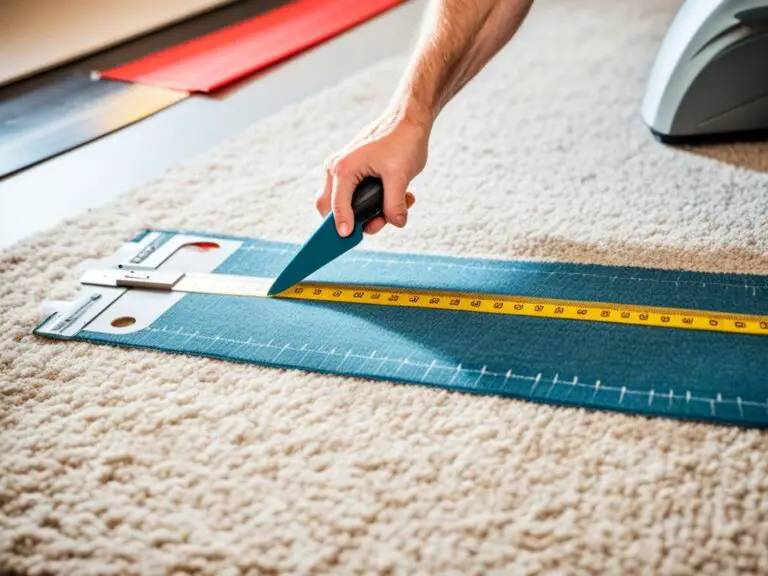
Gather your tools before you begin so you can measure and cut without rushing. The right tool should cut the rug’s fibers and backing cleanly without pulling the material or crushing its pile. A sharp pair of fabric scissors works for many thin mats, while a suitable utility knife may work better on some flat materials.
Use a cutting tool only on a surface designed to protect the floor beneath it. A self-healing cutting mat is useful for small rugs, and a large sacrificial board can help protect a work surface when the rug is too large for a cutting mat. Never cut directly on bathroom tile, wood flooring, a countertop, or another surface that could be damaged.
Keep the work area dry and clear. If the rug has been used, wash it according to its care label and let it dry fully before measuring. A damp rug can stretch or shift, making the final cut less accurate.
Source: ruglove.co.uk
Measuring tape or ruler
Use a tape measure for the room and a straight ruler for shorter measurements or narrow cuts.
Fabric scissors or a suitable cutting knife
Choose a sharp tool that matches the rug’s construction. Do not force a blade through thick material that it cannot cut cleanly.
Straightedge
A long ruler or straightedge helps create a consistent line across the rug.
Tailor’s chalk or a washable marker
Use a marking tool that is visible on the backing and will not permanently stain the rug’s finished surface.
Protective cutting surface
Place the rug on a suitable mat or board to protect the work area from blades.
Edge-finishing supplies
Depending on the rug, you may need suitable binding tape, thread, a sewing machine, or a repair method approved for the specific material.
Should You Use Scissors or a Utility Knife?
Use scissors when you can cut through the material in controlled strokes without crushing the pile. Fabric scissors are often practical for thin textile mats and fabric-based backing. Keep the blades aligned with the cutting line to avoid jagged edges.
A utility knife may suit certain flat, dense materials, including some rug pads, when the material can be cut safely on a protective board. Make shallow, controlled passes rather than trying to cut through every layer at once. Keep your free hand away from the blade path and retract or cover the blade whenever it is not in use.
Do not assume a utility knife is suitable for every rubber-backed or foam mat. If the material stretches, tears, or resists the blade, stop and reassess the tool or method.
Choose clean cuts over speed
A sharp, suitable tool reduces pulling and helps keep the new edge straight.
Protect your hands
Keep fingers outside the cutting path and never hold a rug in the air while cutting.
How to Measure a Bathroom Rug Correctly
Accurate measurement is the most important part of the job. Measure the open floor area where the rug will sit, not just the length and width of the bathroom. A mat that looks right on paper can still interfere with a door, catch under a vanity, or sit too close to a shower entrance.
Start by cleaning and drying the floor. Measure the usable space in at least two directions, then check the distance between fixed objects such as the vanity, tub, toilet, and doorway. If the floor space narrows at one end, measure that area separately instead of assuming the room is a perfect rectangle.
Remember that a bathroom rug should not have to fit tightly against every fixture. Leaving a small visible gap can make it easier to lift the mat for cleaning and drying. The amount of space you leave depends on the room layout, the rug’s thickness, and how the door moves.
Source: whatsmyrugsize.com
Measure the length
Measure from the intended front edge to the intended back edge of the rug’s usable area.
Measure the width
Check the narrowest usable width if cabinets, toilets, or other fixtures limit the space.
Check the door swing
Open and close the bathroom door to confirm that the rug will not bunch up or prevent the door from moving.
Check the rug’s thickness
A thick mat may catch under a door even if its footprint fits the floor.
Use a Simple Measurement Example
Suppose the clear floor area in front of a bathroom vanity measures 30 inches wide by 22 inches deep. Your existing rug measures 34 inches wide by 24 inches deep. If you center the rug, you would need to remove 4 inches from the total width and 2 inches from the total depth.
For an even, centered fit, that means trimming 2 inches from each side and 1 inch from each end. These numbers are only an example. Before making any cut, check the rug’s construction and decide whether its new edges can be finished safely.
If the rug has a directional pattern, a border, or a shape that is not rectangular, do not divide the excess evenly without considering the design. You may need to preserve one finished edge and remove more material from the opposite side.
Write down the target dimensions
Record the finished length and width before marking the rug.
Allow for the edge finish
If binding or stitching will add bulk or change the finished size, account for that before cutting.
Measure twice
Confirm the measurements against both the floor space and the rug before making the first cut.
Step-by-Step: How to Cut a Bathroom Rug to Size
Once you have checked the rug’s construction and measured the floor, you can plan the cut. Work slowly and keep the rug supported on a flat surface. The goal is to remove only the material needed for a good fit while preserving the rug’s strength and useful edge finishes.
Source: whatsmyrugsize.com
Step 1: Clean and dry the rug
Wash it only if the care label permits and let it dry completely. Remove lint, hair, and debris that could hide the cutting line.
Step 2: Lay the rug flat
Place it on a protected work surface with the backing visible if that makes the construction easier to inspect. Smooth out folds without stretching the material.
Step 3: Mark the finished dimensions
Use a tape measure and straightedge to mark the intended length and width. Check that the lines are square and that the remaining rug will fit the space.
Step 4: Plan the edge finish
Decide whether the cut edge needs binding, stitching, or another suitable finish. Do not cut through a decorative border unless you are prepared to replace or reconstruct it.
Step 5: Make a small test cut if practical
On a rug that can be trimmed safely, remove a small amount from a hidden or less visible area to see how the layers respond. Stop if the backing splits or fibers pull out.
Step 6: Cut along the marked line
Use the suitable cutting tool and keep it aligned with the guide. For thick material, use controlled passes rather than forcing the blade through.
Step 7: Inspect the new edge
Check for loose threads, exposed foam, peeling backing, uneven cuts, or damage to the pile. Trim only stray fibers that can be removed without weakening the rug.
Step 8: Finish the edge if needed
Use an appropriate binding or sewing method for the rug’s material. Allow any permitted adhesive or repair treatment to cure fully according to its instructions before placing the rug on the floor.
Step 9: Test the fit
Place the rug in the intended position and check its clearance around the door, fixtures, and walking path. Make any final adjustment only after confirming that the rug can still be finished securely.
How to Keep the Cut Straight
A straight cut starts with a clear line. Use a straightedge to connect your marks, and inspect the line from both ends before cutting. If the rug is flexible, secure it with suitable weights or clips placed away from the blade path so the material does not shift.
Do not pull the rug tight to make it easier to cut. Stretching can change the dimensions and leave the rug uneven once it relaxes. If the rug is large, ask another person to help keep the material supported and flat while you work.
Use several small marks
Mark the line at more than one point so small measuring errors do not create a slanted edge.
Check before each cut
Confirm the intended side and direction, especially when the rug has a pattern or a finished border.
How to Cut Different Types of Bathroom Rugs
The cutting method should match the rug, not the other way around. A thin cotton mat behaves differently from a memory foam mat or a rubber-backed microfiber rug. If you are unsure how a particular layer will respond, avoid a large cut until you have checked the care instructions and tested a small, suitable area.
Source: whatsmyrugsize.com
Cotton and flatwoven rugs
These may be easier to cut with sharp fabric scissors, but cut threads can unravel. A woven rug may need an appropriate stitched or bound edge.
Tufted rugs
Tufted fibers may loosen along the cut. If the rug’s backing depends on the edge to hold the tufts in place, trimming may require professional re-finishing.
Microfiber bath mats
The soft pile can hide the true base layer. Separate or flatten the pile carefully before marking, and check whether the backing can be cut without peeling.
Memory foam bath mats
Foam may tear, compress, or expose an unfinished inner layer. A cut may also affect how the mat sits on the floor, so replacement may be more practical.
Rubber-backed rugs
The rubber layer may crack or detach after trimming. Do not use a heat tool or a solvent to seal it unless the manufacturer specifically approves that method.
Rug pads
A separate pad is often easier to trim than the rug itself. Follow the pad maker’s instructions and keep the pad fully beneath the rug without exposed corners.
Can You Cut a Rubber-Backed Bathroom Rug?
Sometimes, but inspect the backing carefully before deciding. Some rubber-backed mats use a flexible layer that can be cut cleanly, while others have a coating that becomes brittle or separates from the fabric. If the backing is already flaking, cracking, or peeling, trimming is unlikely to restore its grip.
If you proceed, make a small test cut in a suitable area and examine both the fabric and the backing. Do not assume that an exposed rubber edge will remain stable after washing or repeated use. The manufacturer’s care instructions are the best starting point for deciding whether the mat can be altered.
Avoid melting the backing with a lighter, heat gun, or iron. Heat can damage the material, release unwanted fumes, or create an uneven edge. If the cut exposes a layer that cannot be safely repaired, replace the mat instead.
Stop if layers separate
A backing that peels away from the top fabric may no longer provide reliable support or grip.
Do not add an unapproved coating
Paint, general-purpose glue, and household sealants may change flexibility or traction and may not survive washing.
How to Prevent Fraying and Finish the Cut Edge
A clean cut is not always a finished cut. When a rug relies on woven threads, tufts, or a stitched border to hold its shape, an exposed edge can loosen over time. The right finish depends on the fabric, backing, washing method, and how the rug is used.
Before choosing a repair, check the care label and the construction of the edge. A finish that works on a flat cotton mat may be unsuitable for foam or rubber-backed material. If the rug is machine washable, the new edge must also tolerate the washing and drying method allowed by the manufacturer.
Source: whatsmyrugsize.com
Sewing
A suitable stitch can help control fraying on some fabric rugs. The thread and stitch type should match the material and expected care.
Binding tape
Compatible rug binding can cover an exposed edge. Confirm that the tape is intended for the rug’s thickness and backing and can be attached securely.
Professional edge binding
A rug repair service may be able to bind the new edge when the rug’s construction is too complex for a home repair.
No added finish
Some non-fraying synthetic materials may tolerate a clean exposed edge, but confirm that the backing and fibers remain secure before using the mat.
Should You Use Fabric Glue?
Fabric glue may help with some textile repairs, but it is not a universal edge sealant. A product that dries hard can leave a rough edge, while one that does not bond to the backing may peel away after moisture or washing. Check the glue label for compatibility with the exact materials and intended use.
Keep adhesives off the floor-facing surface unless the product is specifically designed for that purpose. A residue that reaches tile or vinyl may leave a slippery area, and an unsuitable adhesive may damage the flooring finish. Allow the repair to cure fully as directed before placing the mat in the bathroom.
If the rug’s backing is designed to grip the floor, do not cover that surface with an untested adhesive. Preserving traction matters more than hiding every loose fiber.
Follow the product label
Use only a repair product approved for the rug materials and the expected exposure to moisture.
Check flexibility
A repair that becomes stiff or brittle may crack as the rug bends or is washed.
How to Make Sure the Finished Rug Fits Safely
After trimming, test the rug in the actual bathroom before treating the project as complete. A rug can match the measurements and still create a problem if it curls at an edge, catches under a door, or slides across tile. A safe fit depends on both the size and the condition of the underside.
Place the rug on a clean, dry floor and smooth it out without stretching it. Walk around it carefully and check whether the edges lift when you step near them. Open and close the door, stand at the vanity, and confirm that the mat does not obstruct the path to the toilet or shower.
If the rug moves, do not rely on its weight alone to keep it still. Use a compatible non-slip rug pad or backing product only if it is suitable for the rug and floor type. Follow the product directions and keep the floor-facing area clean, since dust, soap residue, and moisture can affect traction.
Source: remotestylist.com
Check for curling
The new edge should lie flat without sharp corners that catch toes or create a trip hazard.
Check for sliding
The rug should stay in place during ordinary use. If it shifts, stop using it until the cause is addressed.
Check door clearance
The door should open and close freely without pushing the mat or folding its edge.
Check the backing
Make sure trimming has not exposed peeling layers or removed the material that helps the rug stay in place.
Check after cleaning
After the next permitted wash, inspect the edge and backing again for loose fibers, separation, or curling.
Why a Cut Rug May Still Slip
Cutting a rug changes its shape, but it does not improve the grip of its underside. A rug may slip because the backing is worn, the floor is wet, the mat is too light, or the original backing has deteriorated. Trimming can make the rug fit better without solving any of these issues.
If the mat continues to move, inspect the floor and backing before adding anything. Clean the floor with a method suitable for its surface, let it dry, and follow the rug or pad maker’s instructions for improving stability. Do not place loose towels or folded fabric beneath the mat as a substitute for a suitable non-slip solution.
Replace worn backing
If the underside is flaking or has lost its grip, replacement may be safer than further alteration.
Use a compatible pad
Choose a pad intended for the rug and floor material, and trim it so it does not extend beyond the rug.
Common Mistakes to Avoid
Most problems begin before the first cut. Rushing the measurements, ignoring the backing, or cutting through a finished border can turn a simple adjustment into a repair job. Taking time to inspect the rug and plan the edge finish is usually easier than trying to fix a damaged mat afterward.
Source: artofit.org
Cutting before checking the care label
The label may explain the material, washing limits, or backing restrictions that affect how the rug should be altered.
Removing too much material
A rug that is too small may leave the intended area uncovered. Trim gradually when the final fit is uncertain.
Cutting through the binding
Removing the original edge can release threads or tufts and leave no simple way to restore the finish.
Using a dull tool
A dull blade or blunt scissors can pull fibers, stretch the fabric, or leave an uneven edge.
Cutting on the bathroom floor
A blade can scratch tile, cut vinyl, or damage wood flooring. Use a protected work surface instead.
Ignoring loose backing
A mat with peeling or brittle backing may become less stable after trimming.
Using heat to seal the edge
Heat may melt synthetic fibers or backing and create fumes or damage. Use only a manufacturer-approved finishing method.
Skipping the final floor test
A rug can look neat but still curl, slip, or catch beneath the door when placed back in the bathroom.
When Should You Stop and Choose Another Option?
Stop if the rug’s backing begins to peel, the top fibers pull out in large amounts, or the cut exposes a foam layer that cannot be finished securely. These signs suggest that the material may not tolerate trimming. Continuing could damage the rug or leave an unstable edge.
A rug that has lost its grip, developed brittle backing, or become badly worn may be better replaced. If the mat is expensive or has a complex border, ask a rug repair service whether it can be resized and rebound. Compare that cost with a replacement mat that already fits the space.
Stop when layers separate
Do not keep cutting if the backing detaches from the fabric or breaks apart.
Choose repair for complex edges
Professional binding may preserve a rug that would be difficult to finish at home.
Choose replacement for worn backing
A new mat may be the more practical option when the old one cannot lie flat or grip the floor.
How to Decide Whether Cutting or Replacing Is Better
Trimming makes sense when the rug is in good condition, the size change is modest, and the new edges can be finished safely. Replacing it may make more sense when the mat has damaged backing, a complex border, or thick foam that will be difficult to cut cleanly. The choice depends on the rug’s value, condition, and the work needed to preserve its function.
Before cutting, consider whether moving the rug or using a smaller mat would solve the problem without altering the material. A narrow runner may suit a long vanity, while a small rectangular mat may fit better in front of a shower. Changing the placement can preserve the original edges and avoid a repair.
Source: www.youtube.com > Get It Done Home Repair
Cut the existing rug
Consider this when the rug is sound, the material is manageable, and a secure new edge is achievable.
Use a separate rug pad
If the rug is already the correct size but the pad is too large, trimming the pad may solve the issue without altering the rug itself.
Reposition the mat
Try a different placement when the current location is the problem rather than the rug’s overall size.
Buy a smaller mat
Replacement may be simpler when the existing rug has complex construction or a worn, unstable backing.
Seek professional alteration
A rug repair service may be able to resize and bind a rug when a home cut would leave the edge exposed.
What If Only the Rug Pad Is Too Large?
If the rug fits the room but the separate pad extends beyond its edges, trim the pad rather than cutting the rug. A pad that sticks out can be visible and may catch a foot. Check the manufacturer’s directions before cutting because some pads have specific orientation or installation requirements.
Place the rug over the pad and mark a pad outline that keeps the pad fully concealed. Remove both pieces from the floor before cutting, and use a suitable cutting surface. Afterward, check that the pad lies flat and does not extend beyond the rug on any side.
The pad should support the rug without creating raised edges. If trimming makes the pad curl or break apart, replace it with one that fits the rug and is compatible with the floor.
Keep the pad hidden
No part of the pad should protrude beyond the rug’s finished outline.
Match the floor type
Use a pad intended for the specific flooring material and follow its care instructions.
Care for Your Bathroom Rug After Trimming
A trimmed rug needs the same regular care as any bathroom mat, plus occasional checks of the new edge. Bathrooms expose rugs to water, soap, dust, hair, and frequent foot traffic. These conditions can make loose fibers, peeling backing, and curled edges more noticeable over time.
Follow the washing instructions on the care label. Some mats can go in a washing machine, while others need gentle hand cleaning or spot treatment. Do not assume a newly trimmed rug can tolerate a washer or dryer if its label does not permit that method.
Let the rug dry fully before putting it back on the floor. If the backing is damaged, avoid repeated washing or heavy handling until you decide whether the mat can be repaired. A damp rug placed on the floor can also trap moisture underneath, so lift it as needed to let both the mat and floor dry.
Source: whatsmyrugsize.com
Inspect the cut edge
Look for new loose threads, unraveling fibers, or separation between the surface and backing.
Follow care instructions
Use only the washing and drying methods permitted for the rug’s material and backing.
Keep the floor dry
Lift the mat after heavy splashes and let the underside and floor dry when needed.
Replace damaged mats
If the rug curls, slips, or sheds material after trimming, stop using it until it can be made stable.
How Often Should You Check the New Edge?
Inspect the edge after the first few uses and after the first wash allowed by the care label. If the edge stays flat and the backing remains attached, continue with normal care. Check more often if the mat is used by several people or receives frequent splashes.
If you notice a growing split, loose tufts, or a backing layer that peels away, do not simply cut off more material. Further trimming may make the problem worse. Repair the edge with a compatible method or replace the mat if it can no longer lie flat and stay in place.
Watch for loose fibers
A few removable stray fibers may be harmless, but ongoing shedding can signal a weak cut edge.
Watch for curling
An edge that lifts after washing or drying can become a trip hazard.
Frequently Asked Questions
Q
Can I cut a bathroom rug with regular scissors?
You can use sharp regular scissors for some thin, fabric-based bathroom rugs, but fabric scissors may provide a cleaner cut. Thick pile, dense backing, foam, and rubber can be harder to cut and may require another suitable method. If the scissors pull the fibers or crush the material, stop rather than forcing the cut.
Q
Will cutting a bathroom rug make it fray?
It can. Woven and tufted rugs may release threads or fibers when you cut through their structure, especially if you remove the original binding. Some synthetic materials may hold a clean edge, but this depends on how the rug is made. Inspect the cut and use a compatible binding or stitching method when needed.
Q
Can I cut a memory foam bath mat?
Some foam mats may be physically cut, but trimming can expose the foam, cause tearing, or affect how the mat lies on the floor. Check the manufacturer’s instructions before attempting it. If the edge cannot be finished securely or the backing becomes unstable, choose a mat that fits the space instead.
Q
Can I cut a non-slip bathroom rug without ruining the backing?
That depends on the backing material and how it is attached to the rug. A cut may leave some backings intact, while others may crack, peel, or lose their grip. Inspect the underside first, test a small suitable area if possible, and avoid unapproved adhesives or heat treatments. Replace the mat if the backing becomes damaged or unreliable.
Q
How much should I trim from my bathroom rug?
Trim only enough to achieve the intended finished dimensions. Measure the available floor area, account for doors and fixtures, and compare those measurements with the current rug. For an even, centered reduction, divide the excess between opposite sides, but preserve finished edges or patterns when needed. Remember to allow for any new binding.
Q
Can I cut a bathroom rug while it is still on the floor?
No. Remove the rug and place it on a protected, flat work surface before cutting. Cutting on bathroom tile, vinyl, laminate, or wood can damage the floor, and the hard surface may also make the cut harder to control. Keep your hands away from the blade path and use a tool suitable for the material.
Q
Is it better to cut the rug or the rug pad?
If the rug already fits the space but its separate pad is too large, trimming the pad is often the simpler option. Keep the pad fully beneath the rug and follow the pad maker’s instructions. If the rug itself is too large, assess whether its fabric and backing can be cut and finished safely before deciding to alter it.
✦ Wrapping Up
Conclusion
Learning how to cut a bathroom rug to size starts with careful measuring and a close look at the rug’s construction. A sharp, suitable tool and a clear cutting line can help you get the right dimensions, but the result also depends on whether the new edge can remain secure.
Before cutting, consider the rug’s fabric, pile, backing, and original border. Work on a protected surface, remove material carefully, and finish the exposed edge when needed. After trimming, test the rug on a clean, dry floor to make sure it lies flat, stays in place, and clears the door.
If the backing is brittle, the fibers pull loose, or the edge cannot be repaired safely, replacing the mat may be the better option. A well-fitted bathroom rug should do more than look neat; it should remain stable and easy to clean.
💡 Key Takeaway
Measure the usable floor space, inspect the rug’s backing, and plan the edge finish before making any cut. Trim slowly, check the result, and use the rug only when its edges lie flat and its grip remains reliable.
Find out what is the best material for a bathroom rug, including cotton, microfiber, bamboo, chenille, memory foam, and more. Compare absorbency, drying speed, comfort, safety, and care.








One Comment