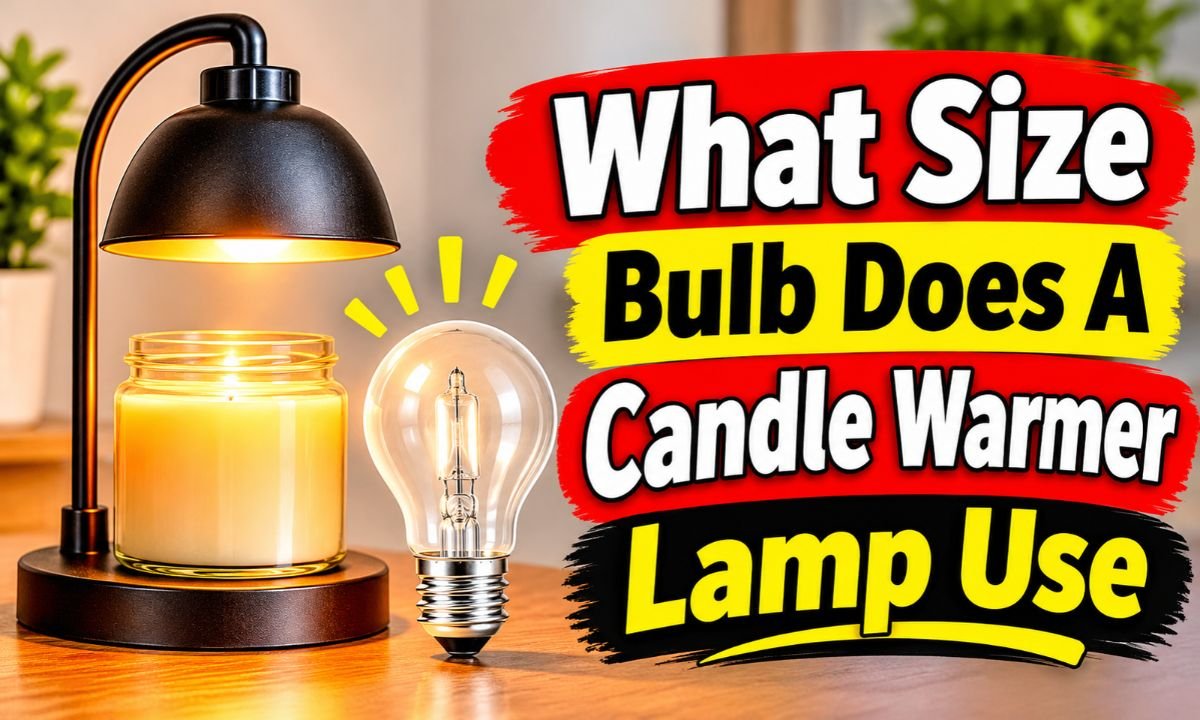
Most candle warmer lamps use a GU10 halogen bulb rated at 35 or 50 watts. Many US models use a 120V, 50W GU10 bulb, but your lamp’s label and manual determine the correct replacement.
Candle warmer lamps have become a popular choice in American homes. People use them in living rooms, bedrooms, home offices, and other spaces where they want the scent of a candle without lighting its wick. Instead of an open flame, the lamp uses heat from a bulb to melt the top layer of wax.
When the original bulb burns out, finding a replacement can be confusing. A quick search may show GU10 halogen bulbs, LED spotlights, and several wattage options. They can look alike, but they do not all produce the same heat or fit the same socket.
The most common choice for many US candle warmer lamps is a 50-watt GU10 halogen bulb. Some models call for a 35-watt bulb or another specific size. Before buying anything, check the lamp’s original bulb, product label, or instruction manual. Matching the base alone is not enough.
This guide explains how to identify the right bulb, understand wattage and voltage, replace it safely, and avoid common mistakes. It also covers what to do when a replacement fits but does not melt your candle as expected.
Source: amazon.co.uk
What Size Bulb Does a Candle Warmer Lamp Use?
Most traditional overhead candle warmer lamps use a GU10 halogen spotlight bulb. The common wattage options are 35 watts and 50 watts. Many models sold for US outlets use a 120V, 50W GU10 bulb.
For example, Marycele lists a GU10 120V 50W halogen bulb for its current compatible lamp models. SwitchBot also specifies a GU10 50W halogen bulb for its Candle Warmer Lamp. These examples show why GU10 50W is a common answer, but they do not make it a universal standard.
The right bulb is the one specified by your lamp manufacturer. A 35W bulb may fit the same type of socket as a 50W bulb, but that does not mean the two are interchangeable. The lower-wattage option may not supply the heat the lamp was designed to use.
Think of the bulb as the heater inside the lamp. Its job is not simply to make the candle look bright. It must send enough heat toward the wax to soften its upper layer without exceeding the lamp’s electrical and thermal limits.
Source: amazon.com
GU10 base
A two-pin twist-lock fitting used by many overhead candle warmer lamps.
35-watt option
Used by certain models that specify a lower heat output.
50-watt option
A common specification for many US candle warmer lamps.
120V rating
Common on US models designed for standard household electrical outlets.
Is a GU10 50W Bulb the Standard?
GU10 50W is a common specification, not a rule for every candle warmer. Many manufacturers use this combination because the bulb provides the heat needed to soften candle wax. However, other lamps may have different wattage limits or electrical requirements.
Some product manuals state GU10 as the socket type and 50W as the maximum permitted wattage. Other manuals list the exact bulb supplied with the product. Read both details before ordering a replacement.
If your lamp originally came with a 35W bulb, do not assume that a 50W replacement is better. A higher wattage can place extra heat on the socket, wiring, and shade.
Best starting point
Use the exact bulb specification printed on the original lamp or its manual.
Understanding Candle Warmer Bulb Size, Base, and Wattage
Three details matter when choosing a replacement: the base, wattage, and voltage. Each tells you something different about the bulb. Matching all three helps prevent fitting problems and overheating.
The base determines how the bulb connects to the lamp. Wattage describes its electrical power use. Voltage tells you which electrical supply the bulb is designed for. A bulb can have the right base but still be unsuitable for your lamp.
Source: walmart.com
Base size
Identifies the fitting that connects the bulb to the lamp socket.
Wattage
Shows the bulb’s rated electrical power and helps determine its heat output.
Voltage
Must match the electrical rating required by the lamp.
What Does GU10 Mean?
GU10 is the name of a bulb base. It has two short metal pins with enlarged ends. You insert the pins into matching holes in the socket and turn the bulb to lock it in place.
This fitting is common in spotlight lamps and many overhead candle warmer designs. It is different from a standard screw-in bulb. You cannot install a GU10 bulb in an ordinary screw socket without a suitable, approved fitting.
When shopping, look for the words GU10 base or GU10 fitting. Do not rely on a product title that only says spotlight bulb. Check the product specifications and compare the base with your original bulb.
Two-pin connection
The bulb has two short pins that enter matching socket holes.
Twist-lock design
A gentle turn secures the bulb in a compatible GU10 holder.
Does the Physical Bulb Size Matter?
Yes. The physical shape and diameter can affect whether the bulb fits beneath the lampshade. Two bulbs may have the same GU10 base but different body shapes or dimensions.
Check the old bulb before throwing it away. Look at its width, length, reflector shape, and any model markings. Compare these details with the replacement product information.
A bulb that is too large may not fit inside the shade. One that has a different reflector design may also direct heat differently. Use the size and shape approved for your exact lamp.
Compare the diameter
Make sure the replacement fits within the available socket and shade space.
Compare the shape
Use the same approved bulb style rather than guessing from the base alone.
What Is the Difference Between 35W and 50W?
A 50W bulb uses more electrical power than a 35W bulb. In a compatible halogen warmer, the higher rating generally produces more heat and may soften the wax faster.
A 35W bulb may be suitable for a lamp designed around that rating. It can produce less heat than a 50W bulb, which may lead to slower warming in a lamp designed for a stronger bulb.
The important point is that higher wattage is not automatically better. Your lamp has a specific heat and electrical limit. Never use a 50W bulb in a lamp rated for a maximum of 35W.
35W
A lower-power option for lamps that specifically require or permit it.
50W
A common option for compatible GU10 candle warmer lamps.
How to Find the Correct Replacement Bulb
The easiest way to find the correct replacement is to inspect the original bulb and the lamp’s specifications. You do not need to guess based on appearance or buy the first GU10 bulb you see online.
Start with the manufacturer’s label. It may be under the base, near the power cord, or on the lamp head. Look for the bulb type, rated voltage, maximum wattage, and any replacement instructions.
If the label is difficult to read, check the user manual or the manufacturer’s product support page. Use the exact model number when searching. Similar-looking lamps can have different sockets and bulb limits.
Source: amazon.ae
Check the original bulb
Read any printed details about the base, wattage, voltage, and bulb type.
Read the lamp label
Find the maximum wattage and electrical rating for the fixture.
Check the manual
Look for the manufacturer’s approved replacement specification.
Compare before buying
Match the fitting, voltage, wattage, and physical size.
Step 1: Turn Off and Unplug the Lamp
Switch off the candle warmer and unplug it from the wall. Do not try to remove the bulb while the lamp is connected to electricity.
Allow the bulb and shade to cool completely. Halogen bulbs can become very hot during use. Waiting helps prevent burns and makes the replacement process safer.
Safety first
Never handle a hot bulb or work on a powered lamp.
Step 2: Inspect the Existing Bulb
Once the lamp is cool, inspect the bulb without forcing it from its holder. Look for markings on its body or reflector. These may show the wattage, voltage, and bulb type.
If the bulb is broken, cracked, or stuck, do not pull hard on it. Stop and follow the manufacturer’s instructions or seek help from a qualified repair professional.
Record the details
Write down every readable marking before shopping for a replacement.
Step 3: Check the Lamp’s Maximum Wattage
The lamp’s maximum wattage is one of the most important details. If the label says GU10, 120V, and 50W maximum, the replacement must meet those requirements.
Do not treat the maximum wattage as a suggestion. It is a limit for the fixture. A bulb with a higher rating can create excess heat and damage parts that were not designed for it.
Follow the stated limit
Choose a bulb at or below the approved rating, while matching the exact required specification.
Step 4: Buy a Matching Bulb
Search for the exact model and replacement bulb specification. For example, if your manual calls for a GU10 120V 50W halogen bulb, use those details when shopping.
Read the full listing. Some products advertise a bulb as 50W equivalent. That phrase may describe brightness rather than actual power use. It does not mean the bulb produces the heat of a 50W halogen lamp.
Choose a replacement from a seller that provides clear electrical and fitting specifications. If the listing does not identify the bulb type or voltage, look for another listing.
Avoid vague listings
Do not buy a bulb when the seller does not state its actual wattage, voltage, and base.
Step 5: Install and Test the Replacement
For a GU10 fitting, align the two pins with the socket holes. Push the bulb gently into the holder and turn it in the direction stated in the manual until it locks into place.
Do not force the bulb. If it does not line up or turn easily, remove it and check the fitting. A bulb that needs excessive force may be the wrong type.
After installation, make sure the lamp is stable and the bulb is secure. Plug it in and test it according to the manufacturer’s instructions. Watch for flickering, unusual smells, or signs of overheating.
A good fit
The bulb sits securely without force or looseness.
Normal operation
The lamp turns on without unusual sounds, smells, or flickering.
Can You Use an LED Bulb in a Candle Warmer Lamp?
A regular LED bulb is usually not a suitable replacement for a halogen candle warmer bulb. The two types have different heating behavior. An LED is designed to produce light efficiently while limiting wasted heat.
A traditional candle warmer relies on heat from its bulb to soften the wax. A compatible halogen bulb produces the radiant heat needed for this job. A standard LED with the same base may light up, but it may not warm the candle enough.
This is why checking only the GU10 fitting is not enough. A GU10 LED and a GU10 halogen bulb can share a base while serving very different purposes.
There are candle warming products that use LEDs for lighting and a separate heating element for wax. Those designs are different. Do not assume that an LED-based warmer means you can replace the heating bulb in a traditional lamp with any LED.
Source: amazon.ca
Halogen
Produces heat that can warm the wax in a compatible traditional candle warmer lamp.
Standard LED
Uses less power and generally produces too little useful heat for a halogen-based warmer.
LED with a separate heater
A different product design in which a dedicated heating part warms the candle.
Why a 50W Equivalent LED Is Not the Same
A 50W equivalent LED is not necessarily a 50W bulb. The equivalent rating refers to an approximate brightness comparison with an older incandescent bulb.
For example, an LED that uses only a small amount of electrical power may produce light similar to a traditional 50W lamp. That does not mean it produces the same amount of heat.
If your candle warmer requires a 50W halogen bulb, do not use a 50W equivalent LED unless the manufacturer specifically approves that exact type for the heating function.
Read actual watts
Separate the bulb’s real power rating from its advertised equivalent brightness.
How Wattage Affects Candle Warming Performance
Wattage can affect how quickly a compatible candle warmer softens wax. A higher-rated halogen bulb generally produces more heat than a lower-rated bulb, provided the lamp is designed to handle that rating.
The distance between the bulb and the candle also matters. A bulb closer to the wax may transfer more heat to the surface. This is one reason adjustable-height lamps have different warming results depending on their setup.
Wax type, candle size, room conditions, and the fragrance blend can also affect how quickly a candle releases its scent. Therefore, wattage alone cannot predict an exact melting time.
Source: amazon.com.au
Bulb wattage
Affects the electrical power and heat produced by a compatible halogen bulb.
Lamp height
Changes the distance between the heat source and the wax.
Candle size
A wide or deep jar may warm differently from a small candle.
Wax composition
Different wax blends and fragrance formulas can respond differently to heat.
Does a 50W Bulb Melt Wax Faster Than a 35W Bulb?
A 50W halogen bulb will generally provide more heat than a 35W halogen bulb of a compatible design. This can help the wax soften faster when both bulbs are used in fixtures approved for their ratings.
However, you should not upgrade a 35W lamp to 50W just to speed up the process. The socket, shade, and wiring may not be rated for the extra heat.
If your candle warms slowly, first check the correct bulb type and lamp height. Do not solve a slow-melting problem by installing a stronger bulb without manufacturer approval.
Use the approved rating
A slower warming process is not a reason to exceed the lamp’s maximum wattage.
Does a Dimmer Change the Bulb Size?
No. A dimmer does not change the required base, voltage, or maximum wattage. It changes the lamp’s output within the limits of its design.
Some candle warmer lamps have several brightness settings. These settings can help adjust the heat reaching the wax and may change how quickly the top layer melts.
Use only a bulb compatible with the dimmer and fixture. A dimmer does not make an unsuitable LED or an oversized bulb safe to use.
Keep the correct bulb
The dimmer controls output; it does not replace the need for a matching bulb specification.
Common Candle Warmer Bulb Problems and Solutions
A candle warmer that stops working does not always need a new bulb. The problem may come from a loose connection, damaged socket, faulty switch, or electrical supply issue.
Start with simple visual checks. Turn off and unplug the lamp before inspecting it. Never touch the bulb or socket while the fixture is connected to power.
Source: amazon.com
Bulb does not turn on
Check whether the bulb is correctly seated and whether the lamp’s switch and power cord show visible damage.
Wax does not melt
Check that the installed bulb is the correct halogen type and approved wattage.
Bulb flickers
Turn off the lamp and inspect for visible damage. A loose or failing connection may need professional attention.
Bulb burns out repeatedly
Check for an incorrect bulb rating, poor socket condition, or another fixture fault.
Problem 1: The Bulb Fits but Does Not Melt the Candle
A bulb can fit into a GU10 socket and still be the wrong type. One common cause is using an LED instead of the required halogen bulb.
Another possibility is that the bulb has a lower wattage than the lamp requires. The wax may become slightly soft without forming the expected melted layer.
Turn off and unplug the lamp. Once cool, check the bulb markings and compare them with the manual. Replace an unsuitable bulb with the exact approved specification.
Likely cause
The bulb has the wrong technology or wattage.
Practical fix
Install a matching replacement approved by the lamp manufacturer.
Problem 2: The Bulb Keeps Burning Out
A bulb that fails often may point to a problem beyond normal wear. Using an incorrect wattage, poor electrical contact, or a damaged socket can affect bulb life.
Check the lamp label and compare it with the bulb specification. Look for visible discoloration, melted areas, or damaged socket parts. Do not continue using a lamp with these warning signs.
If the correct replacement also fails quickly, stop using the lamp. Have the fixture inspected or contact the manufacturer rather than repeatedly buying new bulbs.
Possible cause
An incorrect rating, damaged holder, or electrical fault.
When to stop
Stop using the lamp if the socket, cord, or shade shows heat damage.
Problem 3: The Bulb Flickers or Makes an Unusual Sound
Flickering can result from a poor connection, a failing bulb, or a fault in the lamp’s electrical parts. A buzzing or crackling sound should not be ignored.
Switch off and unplug the lamp. Allow it to cool, then inspect the bulb and visible socket area. Do not bend the pins, open electrical parts, or try to repair a damaged holder yourself.
If a correctly installed replacement still flickers, stop using the lamp and contact the manufacturer or a qualified repair professional.
Do not ignore warning signs
Persistent flickering, crackling, smoke, or burning smells require the lamp to be taken out of use.
Candle Warmer Lamp Safety Tips When Replacing a Bulb
A candle warmer lamp removes the need to burn a wick, but it still uses a hot electrical light source. The bulb, shade, and nearby surfaces can become hot during operation.
Safe replacement starts with disconnecting the power and allowing the fixture to cool. Follow the instructions for your exact model instead of using force or guessing how the bulb locks into place.
Halogen bulbs can be sensitive to oils left by bare fingers. When the manufacturer recommends it, handle the glass with a clean cloth or suitable gloves. Follow the bulb maker’s handling instructions.
Source: amazon.com
Unplug before replacement
Disconnect the lamp from the electrical outlet before touching the bulb.
Wait for cooling
Allow the bulb, socket area, and shade to cool fully.
Avoid excess wattage
Never install a bulb above the lamp’s maximum approved rating.
Keep the lamp clear
Keep curtains, paper, fabric, and other heat-sensitive items away from the lamp.
Protect children and pets
Place the lamp where people and pets cannot easily touch or knock it over.
Can You Touch a Halogen Bulb With Your Fingers?
It is best to avoid touching the glass of a halogen bulb with bare fingers when installing it. Skin oils can leave residue on the glass, which may affect the bulb under high operating temperatures.
Use a clean, dry cloth or gloves if the manufacturer recommends them. Hold the bulb by its base when possible, and keep the glass clean.
If you accidentally touch the glass, follow the bulb manufacturer’s cleaning instructions before use. Do not use an unapproved cleaning product.
Clean handling
Use a clean cloth and avoid leaving fingerprints on the glass.
Should You Leave a Candle Warmer Lamp On Overnight?
Do not leave a candle warmer running overnight unless the manufacturer specifically permits the intended use and you can follow its safety instructions. A timer is useful, but it does not replace proper supervision and safe placement.
Some lamps have automatic shutoff options, such as two-, four-, or eight-hour settings. Use the timer as directed and switch off the lamp when it is not needed.
Keep the candle wick unlit while using the warmer. The bulb is already providing the heat needed to soften the wax.
Use the timer correctly
Follow the lamp’s instructions for its automatic shutoff settings.
Keep the wick unlit
Do not burn the candle while it is under the warming lamp.
When Should You Replace the Entire Lamp?
A replacement bulb may not solve a problem caused by a damaged fixture. If the socket is cracked, the cord is frayed, the shade is distorted, or the lamp shows signs of overheating, stop using it.
A damaged electrical part can create a shock or fire risk. Do not try to cover the damage with tape or fit another bulb to see whether it works.
Contact the manufacturer about repair or replacement. If the lamp cannot be repaired safely, replace the complete fixture.
Replace or repair the fixture
Seek qualified help if the socket, wiring, plug, or housing is damaged.
Frequently Asked Questions
Q
Do all candle warmer lamps use GU10 bulbs?
No. GU10 is common in traditional overhead candle warmer lamps, but it is not universal. Different products may use other fittings or separate heating systems. Check your lamp’s manual and original bulb before ordering a replacement.
Q
Can I use a 35W bulb instead of a 50W bulb?
Only if your lamp manufacturer approves the 35W bulb. A lower-wattage bulb may produce less heat and may not warm the wax as intended. If your lamp specifies a 50W bulb, use the approved 50W replacement.
Q
Can I use a 50W bulb in a 35W candle warmer lamp?
No, not unless the manufacturer specifically approves it. A 50W bulb may exceed the lamp’s maximum rating and create excess heat. Always follow the wattage limit printed on the fixture or listed in its manual.
Q
Are candle warmer bulbs different from regular light bulbs?
They can look like ordinary spotlight bulbs, but their heating function matters. Traditional candle warmer lamps commonly use halogen bulbs because they produce useful heat. A regular LED spotlight may fit the same socket but usually will not melt the wax properly.
Q
How long does a candle warmer lamp bulb last?
Bulb life depends on its design, rated life, electrical conditions, and how often the lamp is used. Check the manufacturer’s stated lifespan rather than assuming all GU10 bulbs last the same amount of time. Frequent switching and fixture problems may also affect service life.
Q
Can I use a dimmable GU10 bulb in my candle warmer lamp?
Use a dimmable bulb only when the lamp manufacturer approves that bulb type. The dimmer and bulb must be compatible. A bulb that fits the socket may still flicker or operate incorrectly if it is not designed for the lamp’s control system.
Q
Why does my candle warmer bulb turn on but not melt the wax?
The bulb may be an LED, may have the wrong wattage, or may not be the correct type. The lamp may also be positioned too far from the candle. Unplug the lamp and check its bulb specification and height instructions before making changes.
Q
Where can I find the bulb size on my candle warmer lamp?
Look under the base, near the socket, or on the product information label. The original bulb may also have its type and wattage printed on the reflector or body. If these details are unclear, check the manual using the exact model number.
✦ Wrapping Up
Conclusion
Most traditional candle warmer lamps use a GU10 halogen bulb rated at 35W or 50W. For many US models, a 120V, 50W GU10 halogen bulb is the correct choice. However, the exact specification depends on the lamp.
Before buying a replacement, check the original bulb, product label, and instruction manual. Match the base, actual wattage, voltage, and physical size. Do not assume that every GU10 bulb will work just because it fits the socket.
Avoid using an ordinary LED as a replacement for a halogen heating bulb unless the manufacturer specifically approves it. Also, never exceed the lamp’s maximum wattage. These simple checks help protect the fixture and keep the candle warming process working as intended.
If the lamp still flickers, smells unusual, or fails to heat the wax after you install the correct bulb, stop using it and check with the manufacturer. A damaged socket or electrical part needs more than a new light bulb.
💡 Key Takeaway
Before ordering a replacement, unplug your candle warmer, let it cool, and record the original bulb’s base, voltage, and wattage. Match all three to the manufacturer’s approved specification. For many US models, this will be a GU10 120V 50W halogen bulb, but always verify your exact lamp.