Your candle warmer lamp may keep turning off because its automatic timer has expired, the bulb or power connection is faulty, the outlet is unstable, or an internal safety feature is stopping the lamp.
Candle warmer lamps are popular in American homes because they let people enjoy scented candles without lighting the wick. You may use one in a bedroom, living room, home office, or on a kitchen counter. But when the light suddenly goes out, it can interrupt your routine and leave you wondering whether the lamp is broken.
The good news is that some causes are easy to check. Many candle warmer lamps have built-in timers that switch off the heat after a set period. Other models may have a loose bulb, a worn power cord, a faulty control button, or an electrical problem. The key is to find out whether the lamp is following its normal settings or has developed a fault.
Start by checking the timer and power supply. Then look at the bulb, controls, and signs of excess heat. Do not keep restarting a lamp that smells burnt, sparks, makes unusual noises, or has a damaged cord. These signs can point to an electrical fault that needs professional attention or product replacement.
Source: manuals.plus
Why Does My Candle Warmer Lamp Keep Turning Off?
Your candle warmer lamp can keep turning off for several reasons, but the timer, power supply, bulb connection, and internal controls are the main places to start. The exact cause depends on when the lamp shuts down and whether it starts again without help.
For example, a lamp that turns off after exactly two hours may be working as designed. A lamp that goes dark after a few minutes, flickers before shutting down, or only works when you move its cord may have a different problem.
A candle warmer lamp uses an electric bulb to heat wax from above. This means its power supply and heating parts must work together. A problem in either area can interrupt operation.
Source: thespruce.com
Automatic timer
The selected timer period has ended, so the lamp switches off normally.
Overheating
Excess heat may cause a protective control to interrupt operation, if the model includes that feature.
Loose bulb
The bulb may not sit correctly in its socket, causing an unstable electrical connection.
Power supply problem
A loose plug, damaged cord, or faulty outlet may interrupt the flow of electricity.
Control malfunction
The timer, touch control, switch, or internal circuit may have developed a fault.
The Timing of the Shutdown Matters
Pay attention to how long the lamp stays on before it turns off. This small detail can help narrow down the cause without taking the lamp apart.
If it shuts off at the same time during every session, check the timer first. If it turns off at random times, inspect the external power supply and look for signs of overheating or a control problem.
Turns off after a set number of hours
The automatic timer may be active.
Turns off within a few minutes
Check the outlet, plug, bulb seating, and product-specific operating limits.
Turns off when the cord moves
Stop using the lamp. A damaged cord or loose electrical connection may be present.
Turns off after becoming very hot
Stop operation and let the unit cool. Continued shutdowns may indicate a heat-related fault.
1. The Automatic Timer Is Switching Off the Lamp
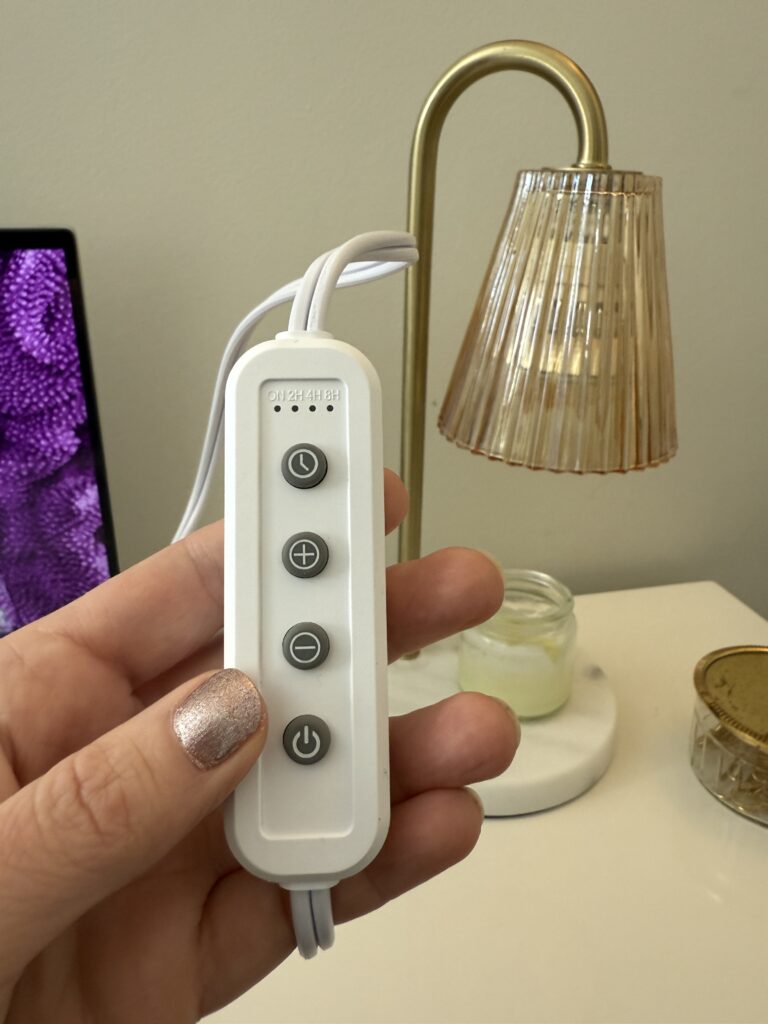
An active automatic timer is one of the simplest explanations for a candle warmer lamp that keeps turning off. Many models have preset shutdown options, such as 2, 4, or 8 hours. When the selected period ends, the lamp cuts power without needing you to press the off button.
This feature helps limit operating time. It can also make the lamp seem faulty if you forget which timer setting you selected.
Some lamps have separate buttons for brightness and timing. A small indicator light may show the selected period. Other designs use touch controls that cycle through several options.
Source: manuals.plus
Check the timer indicator
Look for a light or symbol showing whether the 2-hour, 4-hour, or 8-hour setting is active.
Read the instruction manual
Check how your model selects, cancels, and resets its automatic timer.
Choose the correct setting
Select the desired timer period according to the manufacturer’s instructions.
Watch the next session
Observe whether the lamp stays on for the selected period and then shuts off normally.
How to Tell Whether the Timer Is the Problem
Suppose your lamp turns off after two hours every time you use it. You check the controls and find that the 2H indicator is active. This strongly suggests normal timer operation rather than an electrical failure.
However, if the lamp switches off after an inconsistent period despite the timer being disabled, the timer circuit or another component may be faulty. Do not assume every shutdown is caused by the timer.
Normal behavior
The lamp switches off at the end of the selected timer period.
Possible timer fault
The lamp shuts off at random times or ignores the selected setting.
2. Your Candle Warmer Lamp May Be Overheating
Excess heat may cause a candle warmer lamp to shut down if its design includes thermal protection. Even when a model has no automatic overheat protection, excessive heat can damage its bulb, wiring, or electronic controls.
A warmer bulb produces heat as part of its normal job. The lampshade and nearby parts may become warm during use. However, a strong burning smell, smoke, discoloration, or unusual heat around the base or plug is not something to ignore.
Some manufacturers set limits on continuous operation. For example, a particular lamp manual may advise against running the device for more than four hours at a time. This is a model-specific instruction, not a universal rule for every candle warmer.
Source: reachwellth.com
Long operating sessions
Extended use may raise the temperature of the bulb, shade, and internal components.
Poor airflow
Crowding the lamp with objects or placing it in an enclosed space may limit heat release.
Incorrect bulb
A bulb with an unsuitable wattage or design may create conditions the lamp was not built to handle.
Blocked ventilation
Dust or objects near ventilation openings may affect heat release on models that have them.
How to Reduce Heat-Related Problems
If the lamp is simply warm during normal operation, check its manual for the expected temperature and operating time. Make sure it stands on a stable, open surface away from curtains, paper, bedding, and other items that can catch fire.
If the lamp becomes unusually hot or shuts off repeatedly, turn it off and unplug it if you can do so safely. Allow it to cool completely. Do not cover the shade or use a fan, water, or another improvised method to cool the electrical parts.
If it continues to shut down after cooling, stop using it and contact the manufacturer. A repeated heat-related shutdown is not a reason to keep restarting the device.
Give the lamp open space
Keep its shade and base clear of fabrics and objects that can trap heat.
Follow the operating limit
Use the continuous operating time stated in your specific product manual.
Check the bulb rating
Use only the bulb type and wattage approved for the lamp.
3. The Bulb Is Loose or Has Started to Fail
A loose or failing warming bulb can cause the lamp to flicker, stop heating, or lose its light. The bulb is a key part of the appliance because it provides the heat that melts the candle wax.
Some candle warmer lamps use GU10 bulbs with a twist-lock fitting. Others use small prong-base bulbs or another design. A bulb that looks similar to the original may still have the wrong voltage, wattage, or base.
If the bulb is loose, its electrical contact may become unreliable. A worn bulb may also stop working as it reaches the end of its useful life.
Source: amazon.com
Look for flickering
Repeated flickering before shutdown may point to a bulb or connection problem.
Check for visible damage
A darkened, cracked, or visibly damaged bulb should not be used.
Verify compatibility
Check the model manual before purchasing a replacement.
How to Check the Warming Bulb Safely
First, switch off and unplug the lamp. Wait until the bulb and shade are completely cool. Never try to tighten or remove a hot bulb.
Follow the manufacturer’s bulb replacement steps. Check whether the bulb is seated correctly and whether the socket shows visible damage. Do not bend pins, force a bulb into place, or touch exposed wiring.
If the bulb has visible damage or the socket is loose, stop using the lamp. A damaged socket needs proper repair or replacement, not repeated adjustment.
Use the correct base
Match the original bulb fitting, such as GU10 or the specified prong base.
Match the voltage
Use the voltage listed by the manufacturer for your exact lamp model.
Match the wattage
Never install a higher-wattage bulb to increase heat.
Check the socket
Do not use the lamp if the socket is cracked, burned, or visibly damaged.
4. The Electrical Outlet Is Causing Power Interruptions
A faulty outlet or unstable electrical connection can make your candle warmer lamp turn off without warning. The lamp may work for a short time and then lose power when the connection becomes interrupted.
Start by checking whether the plug is fully inserted. Look for a loose wall socket, damaged plug, dark marks, or unusual warmth around the outlet. Never touch a plug or outlet that is sparking, smoking, or showing signs of heat damage.
If the outlet appears normal, you can test it with another suitable appliance. If that appliance also loses power, the problem may be with the outlet or the electrical circuit rather than the candle warmer.
Source: lampinsider.com
Loose wall connection
A plug that does not fit securely may interrupt power.
Faulty outlet
A damaged receptacle may fail to supply steady power.
Circuit overload
Several high-power appliances on one circuit may cause a breaker to trip.
Damaged plug
Bent prongs, burn marks, or other damage can make the connection unsafe.
What to Do About an Unreliable Outlet
Unplug the lamp before inspecting its plug. If the plug or outlet is damaged, stop using that connection. Do not wiggle the plug to make the lamp work.
Avoid using an extension cord or power strip as a way to hide a faulty outlet. Follow the lamp manufacturer’s instructions for power connections.
If the outlet is loose, hot, discolored, or makes a crackling sound, have a qualified electrician inspect it. Do not remove the outlet cover or attempt electrical repairs unless you are qualified to do so.
Safe check
Look for visible damage while the lamp is unplugged.
Outlet test
Use another suitable appliance only if the outlet shows no warning signs.
Professional help
Contact an electrician if the outlet or circuit appears faulty.
5. A Damaged Power Cord May Be Interrupting Electricity
A damaged power cord can cause a candle warmer lamp to switch off when its electrical connection is disturbed. This may happen when the cord is bent, pinched, pulled, or worn from regular use.
Check the full visible length of the cord while the lamp is unplugged. Look for cuts, cracks, flattened areas, exposed wires, or signs of melting. Pay special attention to the point where the cord enters the base and the plug.
Do not continue using a lamp with a damaged cord. Do not wrap damaged sections with ordinary tape or attempt to splice the wire. The safest option is to have the product repaired through an authorized service provider or replace it.
Source: amazon.ca
Frayed insulation
Exposed or damaged insulation can create an electric shock or fire risk.
Bent plug prongs
Damaged prongs may not make a secure connection.
Loose cord entry
Movement where the cord enters the lamp may indicate internal damage.
Heat damage
Melting, discoloration, or a burnt smell requires immediate attention.
Why You Should Not Bend the Cord to Keep the Lamp On
Sometimes a lamp turns back on when someone moves its cord. This can make the problem look minor, but it may indicate a broken conductor or loose connection.
Repeatedly bending the cord can make the damage worse. Stop using the lamp instead of searching for a position that keeps it working.
Do not twist the cord
Twisting may increase damage inside the insulation.
Do not pull the plug by its wire
Hold the plug body when disconnecting an undamaged plug.
6. The Timer or Touch Control May Be Faulty
A faulty timer or touch control can cause a candle warmer lamp to turn off even when you have selected a longer operating period. This problem may affect lamps with electronic buttons, touch panels, or inline controllers.
For example, the lamp may respond to the power button but ignore the timer selection. It may also turn off when you try to change brightness. These symptoms suggest that the control system may not be working correctly.
Before assuming the control is broken, check the instruction manual. Some models require a short press for one function and a long press for another. A control may also need a reset after a power interruption.
Source: amazon.com
Unresponsive buttons
The controls do not respond consistently when pressed.
Incorrect timer behavior
The lamp shuts off even though a longer timer period is selected.
Unexpected control changes
The lamp switches modes without a clear input.
How to Reset a Candle Warmer Lamp
If the manufacturer provides a reset procedure, follow it exactly. Some electronic models may recover from a temporary control issue after being unplugged for a short period.
Switch the lamp off, unplug it, and let it cool completely. Wait for the period stated in the manual, then reconnect it and select the desired setting.
If the controls continue to behave incorrectly, stop trying repeated resets. A defective electronic control may need manufacturer service or product replacement.
Read the manual
Find the model-specific reset instructions.
Disconnect power
Unplug the lamp before carrying out the approved reset.
Test once
Check whether the controls respond normally after restarting.
7. Your Lamp May Have an Internal Electrical Fault
An internal electrical fault is another possible reason for repeated shutdowns. The lamp may have a damaged switch, failed circuit board, loose internal connection, or defective component.
These faults are harder to identify because the affected parts are inside the appliance. A lamp that turns off randomly, flickers, or refuses to restart may have an internal problem even when its bulb and outlet seem fine.
Do not open the base, remove internal wiring, or try to bypass a safety component. Candle warmer lamps contain electrical parts that can present a shock or fire risk if handled incorrectly.
Source: manuals.plus
Repeated random shutdowns
The lamp turns off at different times without a clear timer pattern.
Burning odor
A persistent electrical smell may indicate damaged components.
Unusual sounds
Crackling, buzzing, or popping from the electrical parts may signal a fault.
Repeated failure after restarting
The same problem returns even after checking the normal settings.
When to Replace the Lamp
Consider replacing the lamp if the manufacturer cannot provide a safe repair, the electrical parts are damaged, or the unit repeatedly shuts down after basic checks.
Check whether the product is covered by a warranty before disposing of it. Keep the model number and purchase information so the manufacturer can identify the correct replacement parts or service options.
Choose a replacement with clear instructions, compatible bulbs, a suitable timer, and reliable customer support. Do not assume that every lamp with similar features has the same electrical design.
Repair is unavailable
The manufacturer does not offer an approved repair or replacement part.
Electrical damage is visible
The plug, cord, socket, or base has signs of damage.
Shutdowns continue
The lamp remains unreliable after safe external checks.
How to Troubleshoot a Candle Warmer Lamp That Keeps Turning Off
The safest troubleshooting method is to start with simple settings and visible external problems. You do not need to dismantle the lamp to identify many common causes.
Before checking anything, switch off the warmer and unplug it. Let the bulb and shade cool completely. If you notice smoke, sparks, melted plastic, or a burning smell, skip the remaining tests and stop using the lamp.
Source: manuals.plus
Step 1: Check the timer
Look at the timer indicator and confirm whether the selected period has ended. Read the manual to understand how the controls work.
Step 2: Inspect the plug and cord
Look for loose connections, cuts, cracks, melting, and other visible damage. Do not use a damaged cord.
Step 3: Check the outlet
If the outlet looks normal, test it with another suitable appliance. Do not use an outlet that is loose, hot, or discolored.
Step 4: Inspect the bulb
Once the lamp is cool and unplugged, check whether the bulb appears damaged or incorrectly seated. Follow the model’s instructions.
Step 5: Check operating limits
Read the manual for continuous-use restrictions and cooling instructions.
Step 6: Follow the approved reset process
If the manual provides one, disconnect the lamp and perform the stated reset.
Step 7: Contact the manufacturer
If the lamp still shuts off unexpectedly, request an inspection, warranty replacement, or approved repair.
Signs That the Troubleshooting Worked
A successful fix should address the actual cause rather than simply make the lamp turn on again. For example, a timer issue is resolved when the lamp follows the selected timer period correctly.
If the problem was a compatible bulb that was not seated properly, the light should remain steady during normal operation. If the outlet was faulty, a qualified electrician should confirm that the electrical connection is safe.
Never treat a lamp that only works when its cord is moved or its controls are repeatedly pressed as repaired. Those symptoms can point to an ongoing fault.
Steady operation
The lamp remains on for the selected period without unexpected interruptions.
Normal controls
The timer and brightness settings respond as described in the manual.
No warning signs
There are no sparks, burning smells, damaged parts, or unusual electrical sounds.
Common Mistakes That Can Make the Problem Worse
Repeatedly turning a faulty lamp back on is one of the biggest mistakes to avoid. If the device is shutting down because of excess heat or an electrical fault, restarting it may increase the risk of damage.
Another common mistake is replacing the warming bulb with any bulb that fits. A matching shape does not prove that the voltage and wattage are correct.
It is also unwise to bypass the timer or open the electrical controls. These changes can remove intended protection or expose parts that should not be handled by an ordinary user.
Ignoring a burning smell
A burning odor can signal overheating or damaged electrical parts. Stop using the lamp.
Using an incorrect bulb
An incompatible bulb may cause poor performance or create unsafe operating conditions.
Leaving the lamp running while asleep
Do not rely on an automatic timer as a substitute for supervision. Switch off the lamp when you leave the room or go to sleep.
Using a damaged extension cord
A damaged or unsuitable power connection can increase electrical risk.
Opening the lamp base
Internal repairs should be left to qualified service personnel.
How to Prevent Your Candle Warmer Lamp From Turning Off Unexpectedly
Regular care can help prevent avoidable shutdowns and extend the useful life of your candle warmer lamp. Most maintenance involves keeping the lamp clean, checking the visible cord, and following the operating instructions.
Place the lamp on a level, stable surface. Keep the bulb and shade away from dust buildup, loose fabric, and objects that could block airflow. Always unplug the lamp and let it cool before cleaning.
Use the correct warming bulb and avoid pulling the cord when moving the appliance. Small habits like these can reduce wear on the electrical parts.
Follow the manual
Use the recommended timer settings and continuous operating limits.
Keep the lamp clean
Remove dust only when the unit is unplugged and completely cool. Follow the approved cleaning method.
Protect the power cord
Keep it away from furniture legs, sharp edges, and areas where people may step on it.
Use a compatible bulb
Check the required base, voltage, and wattage before replacing the bulb.
Place it safely
Keep the warmer on a stable surface away from curtains, bedding, paper, and other flammable items.
Inspect it regularly
Look for visible damage to the cord, plug, base, shade, and bulb before use.
Can You Leave a Candle Warmer Lamp On All Day?
You should not assume that a candle warmer lamp is designed to operate all day. The safe operating period depends on the exact model and the manufacturer’s instructions.
Some models have built-in timers, while others may require manual switching. Even when a lamp has an automatic shutdown feature, it should not be left running unattended or while you sleep.
Use the timer as directed, turn the lamp off when you leave the room, and allow it to cool according to the product instructions.
Check the rated operating period
Find the continuous-use instructions in the manual.
Use automatic shutoff correctly
Select a suitable timer period rather than relying on continuous operation.
Stay nearby
Do not leave a working heating appliance unattended.
When Should You Stop Using Your Candle Warmer Lamp?
Stop using the lamp immediately if you notice electrical warning signs. These include sparks, smoke, a burning plastic smell, exposed wires, melted insulation, or a plug that becomes unusually hot.
Unplug the lamp only if you can do so safely without touching a hot, damaged, or sparking part. If there is smoke or fire, keep away and follow your local emergency procedures.
Electrical product safety should never depend on guesswork. Product safety authorities have documented candle warmer lamp cases involving electric shock and fire hazards. This does not mean every warmer is dangerous, but it shows why damaged units should not remain in use.
If the lamp is under warranty, contact the seller or manufacturer. Provide the model number, a description of the shutdown pattern, and any visible signs of damage. Do not send a damaged unit back into use while waiting for a response.
Sparks or smoke
Stop using the lamp and keep away from the damaged electrical parts.
Burning smell
Disconnect power safely and do not restart the device.
Damaged plug or cord
Replace or professionally repair the appliance before further use.
Repeated unexplained shutdowns
Contact the manufacturer rather than bypassing its controls.
Troubleshooting Guide: Symptoms and Possible Causes
The following table connects common shutdown symptoms with likely causes and practical next steps. These are troubleshooting clues, not guaranteed diagnoses. More than one fault can produce similar symptoms.
Lamp turns off after 2, 4, or 8 hours
Likely cause: automatic timer. Next step: check the timer indicator and manual.
Lamp turns off after a short session
Possible cause: power interruption, overheating, or control fault. Next step: stop, cool the unit, and inspect the external connections.
Lamp flickers before turning off
Possible cause: bulb or electrical connection fault. Next step: unplug and inspect for visible damage.
Lamp works only when the cord moves
Possible cause: damaged cord or connection. Next step: stop using the lamp and arrange repair or replacement.
Lamp turns off when brightness changes
Possible cause: faulty control or electronic circuit. Next step: follow the approved reset instructions and contact support if the problem continues.
Lamp becomes unusually hot
Possible cause: excessive heat or a component fault. Next step: switch off, unplug safely, and stop use if the problem repeats.
Lamp does not turn back on
Possible cause: failed bulb, power issue, or internal fault. Next step: check the outlet and bulb only if the lamp has no damage or warning signs.
Research Notes and Useful Questions Not Always Covered by Basic Troubleshooting Guides
A useful troubleshooting guide should distinguish normal automatic shutdown from a possible electrical failure. Product support information for different candle warmer models confirms that timer periods, bulb types, and control methods vary. A setting that is correct for one model may not apply to another.
The main improvement in this guide is the focus on shutdown timing, visible warning signs, and safe decision-making. Instead of treating every shutdown as a timer problem, the reader can use the symptoms to decide whether a basic check is reasonable or whether the lamp should remain unplugged.
The following questions are practical next needs inferred from the main troubleshooting task. They are not presented as verified search-volume findings.
Why does my lamp turn off at exactly two hours?
Reader stage: troubleshooting. Likely explanation: an active automatic timer. Priority: high. Placement: timer section.
Can a wrong bulb make my warmer shut off?
Reader stage: repair. Likely explanation: an incompatible bulb may create electrical or heat problems. Priority: high. Placement: bulb section.
Should I keep restarting a warmer that shuts down?
Reader stage: safety decision. Answer: no, not if the shutdown is unexplained or accompanied by warning signs. Priority: high. Placement: safety section.
Reader stage: after troubleshooting. Answer: when electrical damage or repeated faults cannot be safely repaired. Priority: medium. Placement: replacement section.
Frequently Asked Questions
Q
Why does my candle warmer lamp turn off after two hours?
Your lamp may have a 2-hour automatic timer. Many models include preset shutdown periods, so the device switches off when the selected time ends.
Check the timer indicator and read the instruction manual. If the lamp turns off after two hours even when another setting is selected, the timer control may need attention.
Q
Why does my candle warmer lamp turn off after a few minutes?
A short shutdown may point to an unstable power connection, a loose bulb, overheating, or a faulty control. It is less likely to be normal timer operation if the selected period is much longer.
Unplug the lamp and let it cool. Check the visible cord, plug, outlet, and bulb for damage. If the problem continues, stop using the lamp and contact the manufacturer.
Q
Does a candle warmer lamp automatically shut off when it gets too hot?
Some models may include thermal protection, but you should not assume every candle warmer has this feature. Check your product manual to see whether an overheating shutdown is documented.
If your lamp repeatedly turns off because it becomes unusually hot, stop using it. Do not bypass a safety feature or keep restarting the unit.
Q
Can a bad bulb cause a candle warmer lamp to turn off?
Yes. A failing bulb or loose bulb connection can cause flickering, loss of light, or interrupted operation. A damaged socket may also affect the electrical connection.
Switch off and unplug the lamp before checking the bulb. Let it cool completely and use only a replacement that matches the manufacturer’s specified base, voltage, and wattage.
Q
Why does my candle warmer lamp turn off but still have power?
The lamp may have an active timer, a faulty touch control, or an internal electronic problem. The outlet may still work even though the warmer itself has stopped operating.
Check the timer and control settings first. If the lamp continues to shut down unexpectedly, contact the manufacturer for support.
Q
Can I leave my candle warmer lamp plugged in when it is off?
Follow the manufacturer’s instructions for your model. For added caution, unplug the warmer when it is not in use, especially if you will be away for an extended period.
Never leave a damaged lamp plugged in. Keep the plug and outlet away from moisture and make sure the electrical connection is in good condition.
Q
Should I replace my candle warmer lamp if it keeps turning off?
Not always. If the timer is responsible, the lamp may be working normally. A compatible replacement bulb or an approved repair may also resolve some problems.
However, replacement is the better option when the cord, plug, socket, or internal parts are damaged or the lamp continues to shut down unexpectedly. Never use a product that shows signs of electrical damage.
✦ Wrapping Up
Conclusion
If your candle warmer lamp keeps turning off, begin by checking the automatic timer. A selected 2-hour, 4-hour, or 8-hour setting may explain why the lamp stops working at a predictable time. If the shutdown happens randomly, check the visible power connections, bulb condition, and operating instructions.
Overheating, a faulty timer, a damaged cord, and internal electrical problems can also cause unexpected shutdowns. Always unplug the lamp before inspecting it, and allow the bulb and shade to cool completely. Never open the electrical components or use an incompatible bulb.
Most importantly, pay attention to warning signs. Sparks, smoke, a burning smell, melted insulation, or repeated unexplained shutdowns mean the lamp should no longer be used until it has been properly assessed. A safe replacement is better than risking an electrical accident.
💡 Key Takeaway
Switch off and unplug your candle warmer lamp, check its timer and manual, and inspect the visible cord and bulb for damage. If it still shuts off unexpectedly or shows signs of overheating, stop using it and contact the manufacturer.









2 Comments