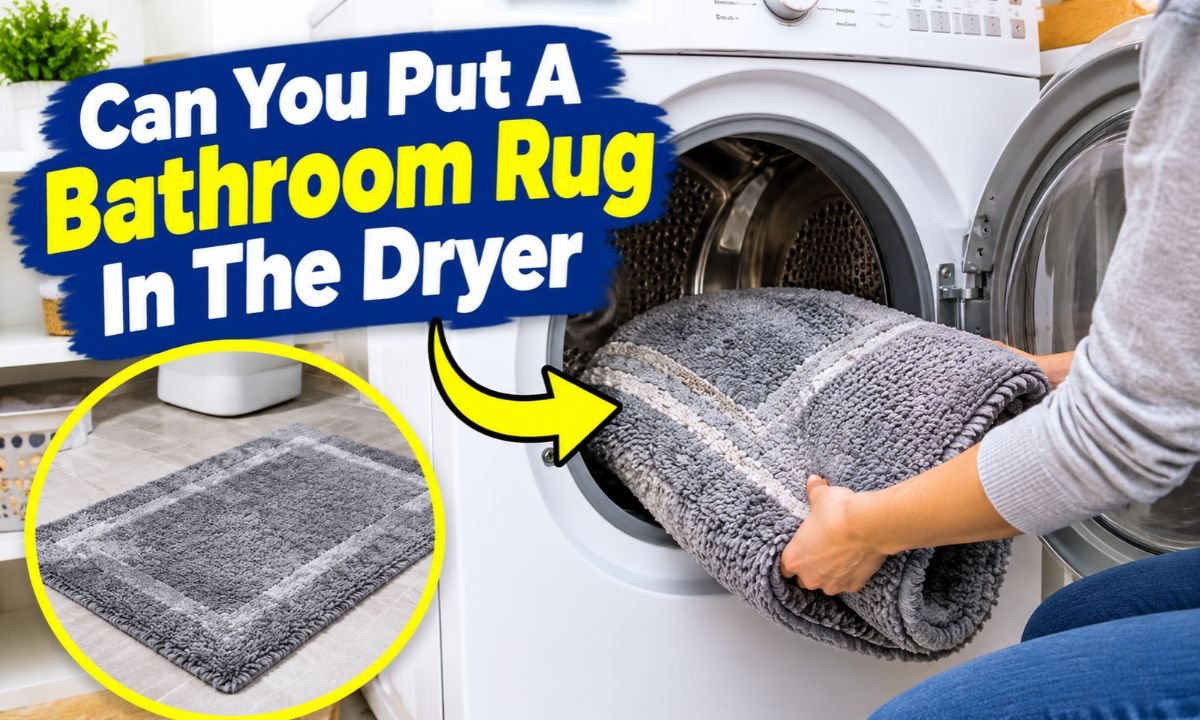
Yes, some bathroom rugs can go in the dryer, but the care label, backing, and material determine whether machine drying is safe.
In American homes, bathroom rugs often sit beside a bathtub, in front of a shower, or near a bathroom sink. They soak up water from wet feet and help keep tile floors dry. After washing, it may seem easy to toss the rug into the clothes dryer. However, the wrong heat setting can crack a rubber backing, loosen glue, shrink fibers, or damage the rug.
The safest way to dry a bathroom rug starts with its care label. Some cotton and fabric rugs can handle a low dryer setting, while rubber-backed mats, memory foam mats, and rugs with special coatings often need a different method. If the label is missing or unclear, air drying is usually the more cautious choice. This guide explains how to check your rug, choose a drying method, and avoid common mistakes.
Source: the-littlest-thistle.com
Can You Put a Bathroom Rug in the Dryer?
Yes, you can put certain bathroom rugs in the dryer, but not all of them. The correct method depends on the rug’s fabric, backing, construction, and care instructions. A simple cotton bath mat may tolerate low heat, while a similar-looking mat with a rubber base may be damaged by the same cycle.
The dryer setting matters, too. High heat can harm fibers and backing even when a rug is suitable for tumble drying. When the label permits machine drying, use the lowest approved heat setting and check the rug before the cycle ends. If you cannot confirm that the rug is dryer-safe, hang it to dry instead.
Do not assume that a rug is safe for the dryer just because it is safe for the washing machine. Washing and drying expose materials to different stresses. A rug may survive a gentle wash but still suffer damage from heat or repeated tumbling.
Source: machineanswered.com
Read the care label
Follow the maker’s instructions for washing, heat, and drying. Check any label attached to the rug or its packaging.
Inspect the backing
Look for rubber, latex, foam, adhesive, or a coated layer. These parts may react poorly to dryer heat.
Choose the cautious option
If the label is missing, the backing is peeling, or the material is unknown, air dry the rug.
Why the Material Matters
A bathroom rug is often made from more than one material. The upper surface may be cotton, polyester, chenille, or microfiber, while the underside may contain rubber or foam. Each layer responds to heat and moisture in a different way.
For example, the fabric may tolerate low heat while the backing becomes brittle or starts to peel. A rug with a foam core may also lose its shape. Check the full construction instead of judging the rug by its soft top layer alone.
Fabric surface
Cotton and some synthetic fabrics may be tumble dried if the care label permits it.
Rubber or latex backing
Heat can weaken, crack, or deform the backing, so follow the maker’s specific instructions.
Foam or bonded layers
These may be sensitive to heat and rough tumbling. Air drying is often the safer choice when instructions are unavailable.
Which Bathroom Rugs Can Go in the Dryer?
The best way to decide is to match the rug’s material and backing to its care label. The table below gives general guidance, not a guarantee for every rug in that category. The manufacturer’s instructions take priority because similar rugs can use different fibers, coatings, and adhesives.
If a rug contains several materials, follow the instructions for the most heat-sensitive part. When the label says not to tumble dry, do not try a short high-heat cycle to speed things up. Use a drying rack, clothesline, or another method allowed by the maker.
Source: theindoorsolution.com
Cotton bathroom rugs
Some cotton rugs can be tumble dried on low heat. Check for a rubber base, decorative trim, or shrinkage warnings before drying.
Microfiber rugs
Some are dryer-safe on low heat, while others require air drying. Heat can affect synthetic fibers or the backing.
Chenille bath mats
The soft pile may flatten, shed, or become misshapen under unsuitable heat. Use a dryer only if the label allows it.
Memory foam mats
Many require air drying because heat and tumbling can affect the foam or backing. Check the exact care instructions.
Rubber-backed rugs
Avoid machine drying unless the manufacturer clearly permits it. Air drying is a cautious default for unknown rubber-backed mats.
Bamboo bath mats
These are generally rigid mats rather than fabric rugs and should not go in a clothes dryer. Wipe them clean and let them dry as directed by the maker.
Quick Material and Drying Guide
Use this table as an initial check. It does not replace the care label, and a rug’s backing can change the recommendation even when its top fabric is dryer-safe.
Cotton with no sensitive backing
Possible method: low-heat tumble drying, but only when the label permits it.
Polyester or microfiber
Possible method: low heat or air drying, depending on the fabric and backing.
Chenille
Possible method: the labeled method; air drying is a cautious choice when instructions are unclear.
Memory foam
Possible method: air drying unless the maker explicitly approves another method.
Rubber-backed or latex-backed
Possible method: air drying when dryer safety is not clearly confirmed.
Bamboo or rigid wood-style mat
Possible method: wipe clean and dry in open air; do not tumble dry.
Why Rubber-Backed Bathroom Rugs Need Extra Care
Rubber-backed bathroom rugs need special care because their backing helps keep them in place, yet that layer may not tolerate dryer heat. Depending on the material, heat and tumbling can cause the backing to harden, crack, curl, or separate from the fabric. Once the backing breaks down, the rug may no longer grip the floor as intended.
A damaged backing can also leave small bits of material in the dryer. If you notice peeling or loose pieces before washing, do not put the rug in the dryer. Check the maker’s cleaning instructions and consider replacing the rug if its backing no longer stays intact.
The word rubber can refer to different compounds, and not every backing reacts in exactly the same way. That is why a universal temperature limit is not reliable. Use the exact care guidance for your rug rather than assuming that all rubber-backed mats have the same heat tolerance.
Source: housedigest.com
Look for early damage
Check for flaking, cracks, sticky patches, curled edges, or areas where the backing has separated from the fabric.
Keep heat low when approved
If the care label permits tumble drying, use the stated setting and avoid adding extra heat to shorten the cycle.
Replace unsafe mats
If the backing is brittle or no longer grips the floor, stop using the rug until you can repair or replace it safely.
Can You Put a Rubber-Backed Bath Mat in the Dryer on Low Heat?
Only if the manufacturer’s instructions explicitly allow it. Low heat is less intense than high heat, but it does not make every rubber or latex backing safe for machine drying. If the label says to line dry, flat dry, or avoid the dryer, follow that direction.
If you cannot find the label, choose air drying. This avoids exposing an unknown backing to a heat source and reduces the chance of damaging the rug.
Label permits low heat
Use the approved setting and check the rug during drying.
Label forbids tumble drying
Hang the rug or dry it flat as directed.
Label is missing
Air dry the rug rather than testing its heat tolerance in the dryer.
How to Dry a Bathroom Rug Safely
Start by checking the care label and removing as much water as the rug’s construction allows. A rug that is dripping wet can take longer to dry and may be too heavy for a small dryer. If the washer has a suitable spin-only setting, use it only when the rug’s care instructions allow machine spinning.
Once the rug is ready, choose a drying method that suits its material. For a dryer-safe rug, a low setting and regular checks can help reduce the risk of heat damage. For a rug with a sensitive backing or unclear instructions, air drying gives you more control.
Source: lettiandco.com
Step 1: Read the label
Confirm whether the rug can be tumble dried and check the permitted heat setting. If the label says not to use a dryer, stop here and air dry it.
Step 2: Remove excess water
Use an allowed spin cycle or press the rug gently between clean towels. Do not twist or wring a foam mat if that could damage its shape.
Step 3: Check the dryer
Make sure the drum is clean and the rug fits without being tightly packed. Follow the dryer maker’s instructions for bulky items and loads.
Step 4: Choose the approved setting
Select the lowest heat setting permitted by the rug’s label. Do not use high heat simply because the rug feels very wet.
Step 5: Check the rug during the cycle
Pause the dryer and inspect the rug if needed. Stop if you notice a strong unusual odor, melting, unusual stiffness, backing damage, or loose material.
Step 6: Confirm it is fully dry
Check the center, edges, underside, and thick pile. If any part is damp, continue with the approved method before putting the rug back on the floor.
How to Air-Dry a Bathroom Rug
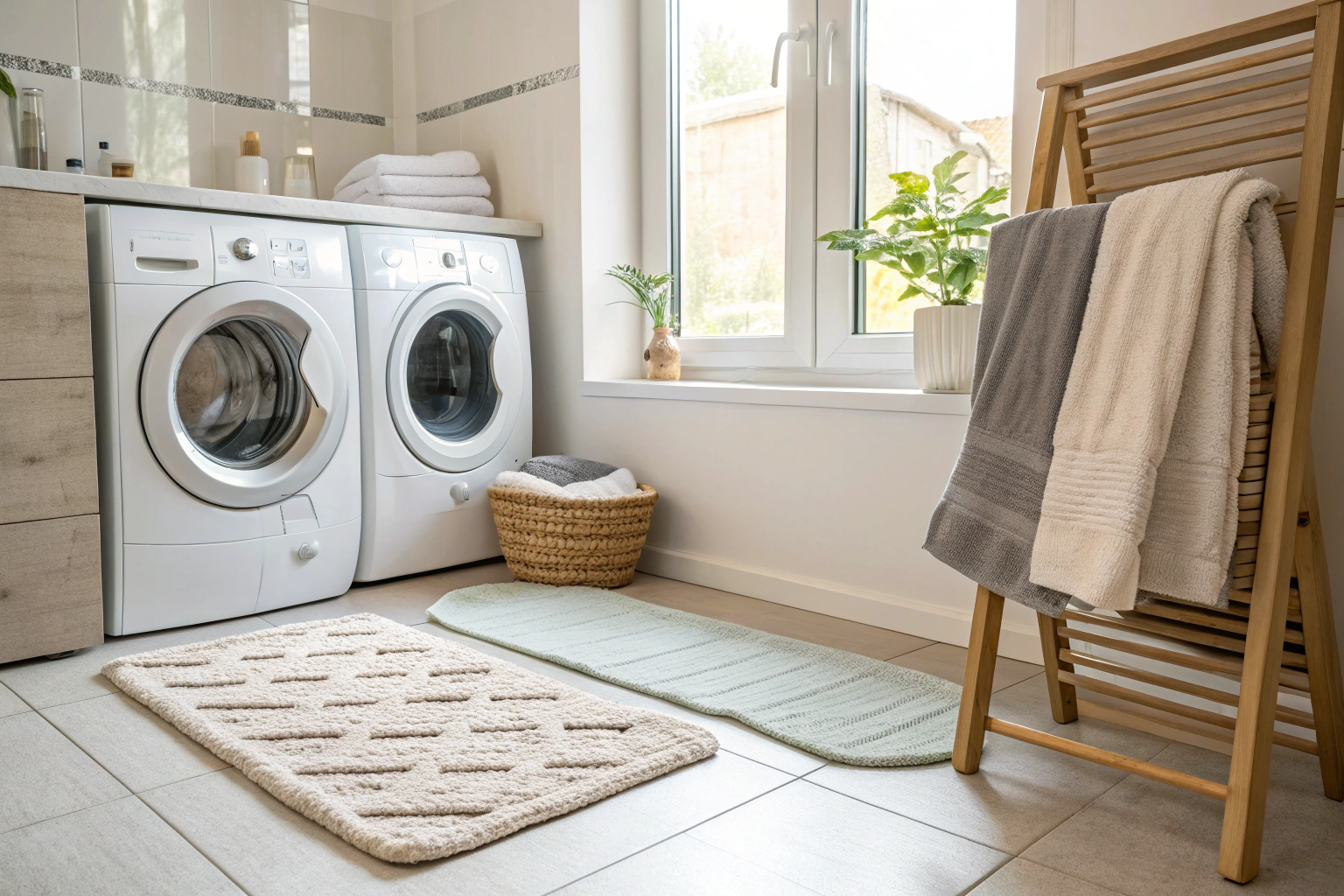
Air drying works well when a rug cannot go in the dryer or when its care instructions are unclear. First, remove excess water without stretching the rug. Then place it on a clean drying rack or hang it in a spot with good airflow, following any instructions about drying flat.
If you hang a thick rug over a narrow bar, its wet weight may pull the fibers or distort the shape. A broad rack gives the rug better support. For a foam mat that must dry flat, use a clean, ventilated surface and turn the mat when the instructions allow it.
Open a window when weather and outdoor air quality permit, or use a room fan to help move air around the rug. Keep the rug away from direct contact with heaters, radiators, and other hot surfaces. Do not return it to a damp bathroom floor until both sides are dry.
Use a ventilated area
Choose a place where air can move around the rug instead of trapping moisture beneath it.
Turn the rug when suitable
Let the underside dry, too. Follow the care instructions if the rug must remain flat.
Avoid direct heat
Do not place the rug on a radiator or press it against a space heater to speed up drying.
How Long Does a Bathroom Rug Take to Dry?
Drying time depends on the rug’s thickness, material, amount of water, room temperature, humidity, and airflow. A thin cotton mat may dry sooner than a dense chenille rug or a foam-backed mat. There is no single drying time that works for every bathroom rug.
Instead of relying only on the clock, check the rug’s thickest section and underside. If the center feels cool or damp, give it more time. A rug can feel dry on top while holding moisture in its pile or backing.
Thin, light rugs
These often release water more easily, though the actual drying time still depends on airflow and humidity.
Thick or dense rugs
These may need more time because moisture can remain trapped deep in the fibers.
Foam-backed rugs
Check both sides carefully, as the backing and inner layers may dry more slowly than the surface.
What Dryer Settings Should You Use?
For a rug that is confirmed as dryer-safe, use the setting stated on its care label. When low-heat tumble drying is allowed, it is generally a more cautious option than high heat. A no-heat or air-fluff setting may also be suitable for some rugs, but it still involves tumbling and is not automatically safe for every backing.
Do not use a dryer sheet or fabric softener as a substitute for proper cleaning or drying. These products may leave residue, and their suitability depends on the rug’s material and care instructions. If the label advises against them, leave them out.
A bathroom rug can also be bulky compared with ordinary laundry. Do not force it into a crowded drum or run a load that the appliance maker says is too heavy. If the rug cannot tumble freely, air dry it or use an appropriate larger machine according to the instructions.
Source: lettiandco.com
Low heat
Use it only when the rug’s label allows tumble drying at low heat.
Air fluff or no heat
Consider this only if the label permits tumbling without heat; the motion can still affect delicate rugs.
High heat
Avoid it unless the manufacturer’s instructions specifically permit it. High heat can damage sensitive fibers and backing.
Overloaded dryer
Do not cram a large, wet rug into a small drum. Follow the appliance maker’s load guidance.
Should You Dry a Bathroom Rug With Towels?
A clean, dry towel may help absorb some moisture when you press it gently against a wet rug. This can reduce the amount of water left before air drying. Avoid rubbing hard or twisting the rug, especially if it contains foam or delicate fibers.
Do not add heavy towels to a dryer load simply to speed up drying unless both items are suitable for the same cycle and the load remains within the appliance’s limits. Different items can have different care needs. Dry the rug separately when that is the clearest way to follow its instructions.
For air drying
Press with a clean towel to remove excess water, then place the rug in a well-ventilated spot.
For machine drying
Follow the labels for both items and the dryer maker’s load limits.
Common Signs of Dryer Damage
Check the rug before, during, and after drying. Early signs of damage may be easy to miss when the rug is wet, so inspect it again after it has cooled and dried. If the rug looks or feels different, do not assume that another dryer cycle will fix the problem.
The main warning signs include cracked backing, curled corners, loose fibers, a changed shape, or sections that have separated. A damaged rug may also lose grip on the bathroom floor. Stop using it if the backing no longer holds securely, because a loose rug can slide underfoot.
Source: lettiandco.com
Cracking or peeling
The backing may have been damaged by heat, age, or wear. Avoid further machine drying and assess whether the rug is still safe to use.
Shrinking or curling
The fabric may have reacted to heat or washing. Let the rug cool and follow the maker’s care advice before deciding whether it can be used.
Loose fibers or shedding
Heat or mechanical movement may have affected the pile. Check the label and avoid another cycle until you know the approved method.
A strong unusual odor
Stop the cycle and inspect the rug and dryer. If you suspect melting, scorching, or smoke, turn the appliance off and follow its safety instructions.
Loss of grip
A backing that has become smooth, brittle, or detached may no longer help keep the rug in place. Replace it if it cannot be made safe.
What to Do if the Rug Comes Out Stiff or Misshapen
First, let the rug cool fully and inspect its fabric, seams, and backing. A slightly flattened pile may recover with gentle hand fluffing if the care instructions permit it. Do not use another hot cycle in an attempt to restore the shape.
If the backing has cracked, melted, or separated, stop using the rug until you can confirm that it remains safe. Do not scrape loose backing into the dryer or continue tumbling a rug that sheds pieces. If the rug cannot be restored according to the manufacturer’s guidance, replacement is the safer choice.
Flattened fabric pile
Allow it to cool, then gently reshape or fluff the fibers if the label permits.
Damaged backing
Do not put the rug through another heat cycle. Check whether the maker offers a suitable care or repair option.
Loose pieces in the dryer
Remove the rug and inspect the drum and lint filter according to the appliance manual before using the dryer again.
How to Keep a Bathroom Rug Fresh Between Washes
A bathroom rug stays fresher when it dries fully between uses. Moisture from showers can collect in thick fibers and under the backing, especially in a small bathroom with poor airflow. Hanging the rug up after use, when its construction permits, helps prevent moisture from staying trapped against the floor.
Wash the rug as often as its care label and household needs require. Homes with frequent showers, children, pets, or heavy foot traffic may need to wash bathroom textiles more often than homes with less use. The right schedule depends on how wet and soiled the rug becomes, rather than a fixed rule for every home.
If a rug develops a musty smell, check whether it is drying fully and whether the underside or floor remains damp. Wash it according to the label and let it dry completely. If the odor returns quickly, inspect the backing and the floor beneath it; persistent odor may signal trapped moisture or material breakdown.
Source: theblackurbantimes.com
Improve airflow
Use the bathroom’s ventilation fan when appropriate and leave space around the rug while it dries.
Lift the rug after heavy use
Allow air to reach the underside instead of leaving a wet rug flat on the floor.
Keep the floor dry
Wipe up puddles and let the floor dry before replacing the rug.
Check for wear
Replace rugs that have persistent odors, damaged backing, or fibers that no longer stay attached.
Can a Damp Bathroom Rug Cause a Musty Smell?
Yes, a rug that stays damp can develop a musty odor as moisture and soil remain trapped in its fibers or backing. The smell can also come from a wet floor underneath the rug. Drying the rug fully and cleaning it according to the care label are sensible first steps.
If the smell remains after washing and thorough drying, inspect the backing for damage and check the area beneath the rug. Do not cover a damp floor with the rug again. If moisture keeps returning, address the source rather than relying on fragrance or extra dryer time.
Wash correctly
Use the care label’s recommended wash method and avoid adding products that the label does not permit.
Dry both sides
Check the underside and thick areas before putting the rug back.
Inspect the bathroom
Look for standing water, poor airflow, or recurring dampness under the mat.
Mistakes to Avoid When Drying Bathroom Rugs
The most common mistake is treating every bathroom rug like a bath towel. Rugs can have thick pile, foam layers, glued seams, or backing that responds poorly to heat. A few simple checks can prevent damage and help keep the rug safe to use.
Do not rely on a rug’s appearance alone. Two mats that look alike may have different backing materials or care requirements. Read the label each time you are unsure, and choose air drying when the correct method cannot be confirmed.
Source: housedigest.com
Ignoring the care label
The label is the best starting point for deciding whether machine drying is allowed and which setting to use.
Using high heat to save time
High heat can damage fibers, foam, coatings, and backing. Use only the approved setting.
Drying a dripping-wet rug
Remove excess water first when the rug’s instructions allow it. Follow the dryer maker’s guidance for bulky, heavy items.
Assuming no heat means no risk
Air-fluff cycles still tumble the rug. The movement may affect some delicate materials or layered mats.
Putting a damp rug back on the floor
Trapped moisture can lead to odor and may affect the floor. Make sure the rug and the area beneath it are dry.
Using a heater as a shortcut
Do not place the rug against a heater or near an open flame. Use normal airflow and a safe drying area.
Is It Safe to Leave a Bathroom Rug in the Dryer Overnight?
Do not leave a dryer running unattended overnight just to dry a bathroom rug. Follow the appliance manufacturer’s operating and safety instructions, clean the lint filter as directed, and stop the cycle if you notice an unusual smell or sound. A rug that needs a long drying period may be better suited to air drying.
Once a dryer cycle ends, remove the rug and check that it is fully dry. Leaving damp fabric in a closed drum can allow odors to develop, while leaving a hot rug piled up may trap heat and moisture. Store or replace the rug only after it has cooled and dried.
Stay with normal safe use
Follow the appliance manual and avoid running the dryer while you are asleep or away from home.
Check the filter
Clean the lint filter as directed by the dryer manufacturer before or after use.
Stop if something seems wrong
Turn the dryer off if you notice smoke, scorching, melting, or another unusual warning sign.
Choosing the Best Drying Method for Your Situation
The right method depends on what you know about the rug and what equipment you have. If the label clearly permits tumble drying, a low approved setting may be convenient. If the backing is sensitive, the label is missing, or the rug is too bulky for your dryer, air drying is the more cautious option.
A drying rack is useful when a rug needs support and airflow. A clothesline may work for some fabric rugs, but a heavy wet mat can stretch if it hangs from one narrow point. Follow the maker’s instructions about whether the rug should hang or lie flat.
Source: theindoorsolution.com
You have a dryer-safe cotton rug
Use the approved tumble-dry setting, avoid excessive heat, and check the rug before the cycle ends.
You have a rubber-backed mat
Air dry it unless the maker clearly permits machine drying.
You have a memory foam rug
Follow the specific instructions for the foam and backing; use flat air drying if directed.
You need to dry the rug quickly
Remove excess water with an approved spin cycle or clean towels, then improve airflow in a safe place.
You cannot identify the material
Avoid experimenting with dryer heat. Use a ventilated air-drying method that supports the rug’s weight.
A Simple Decision Checklist
Before drying your rug, answer three questions: Does the label allow tumble drying? Is the backing suitable for the approved setting? Can your dryer handle the rug’s size and wet weight? If you cannot answer yes to all three, choose an appropriate air-drying method.
After drying, check that the rug has kept its shape and that its backing remains intact. Make sure it is fully dry before placing it on the floor. If it curls, slips, sheds backing, or develops a persistent odor, stop using it until you have resolved the problem.
All checks pass
Follow the care label and use the approved dryer setting.
The label forbids the dryer
Air dry the rug using the method specified by the maker.
The label is missing or unclear
Use cautious air drying rather than testing the rug in a hot dryer.
Research Notes and Next Questions for Readers
This guide addresses the main practical question: whether a bathroom rug can go in a dryer and how to choose a safe drying method. The recommendations are general material-care guidance, not the result of hands-on testing of every rug type. Exact heat limits and care requirements depend on the product and its construction.
A useful next step is to check the rug’s label or the manufacturer’s care page for the exact model. If the instructions conflict with general advice, follow the product-specific directions. If the instructions cannot be found, air drying avoids making an unsupported assumption about heat tolerance.
Source: lettiandco.com
Question: Can this exact rug go in the dryer?
Reader stage: before drying. Basis: inferred next need from the main task. Coverage: answered generally, but the exact product requires its care label. Benefit: prevents avoidable material damage. Priority: high.
Question: How can I dry a thick mat faster?
Reader stage: during drying. Basis: inferred next need. Coverage: addressed through excess-water removal and airflow. Benefit: helps reduce drying time without adding unsafe heat. Priority: high.
Question: Why does my rug smell musty after washing?
Reader stage: after washing. Basis: inferred next need. Coverage: addressed through complete drying and checking the underside. Benefit: helps identify trapped moisture or damaged backing. Priority: medium.
Question: Is my rug still safe after its backing cracks?
Reader stage: after possible damage. Basis: inferred next need. Coverage: addressed through inspection and replacement guidance. Benefit: reduces the chance of using a mat that no longer grips the floor. Priority: high.
Frequently Asked Questions
Q
Can you put a bathroom rug in the dryer on low heat?
Yes, if the rug’s care label permits tumble drying on low heat. Some fabric rugs can tolerate this setting, but certain rubber-backed, foam-backed, or layered mats cannot. If the label is missing or unclear, air drying is the safer default.
Q
Can rubber-backed bathroom rugs go in the dryer?
Many rubber-backed rugs should not be machine dried unless the manufacturer explicitly allows it. Heat may cause the backing to crack, curl, harden, or separate from the fabric. Check the product instructions and air dry the rug if you cannot confirm that tumble drying is safe.
Q
Can you put a memory foam bath mat in the dryer?
Do not assume that a memory foam bath mat is dryer-safe. Heat and tumbling may damage its foam, seams, or backing. Follow the manufacturer’s instructions, and use flat air drying when that is the stated method.
Q
How do you dry a bathroom rug quickly without a dryer?
Remove excess water with an approved washer spin cycle or by gently pressing the rug with clean towels. Place it on a drying rack or another suitable surface in a well-ventilated area. Turn it when allowed so both sides can dry, and keep it away from direct heat.
Q
Can you put a wet bathroom rug back on the floor?
It is best to wait until the rug and the floor beneath it are fully dry. A damp rug can trap moisture and develop an unpleasant smell. Check the thickest part of the rug and its backing before returning it to the bathroom.
Q
What should you do if a bathroom rug shrinks in the dryer?
Let the rug cool, then check its shape, seams, and backing. Do not run another hot cycle to try to stretch it back. If the rug has curled edges, damaged backing, or no longer stays in place, stop using it until it can be made safe or replaced.
Q
Can you dry a bathroom rug with a hair dryer or space heater?
Avoid using a space heater or another direct heat source to dry a rug. A hair dryer may also concentrate heat in one area and damage sensitive fibers or backing. A drying rack and good airflow are safer general choices when the product instructions do not permit machine drying.
✦ Wrapping Up
Conclusion
You can put some bathroom rugs in the dryer, but the care label must allow it. Cotton and certain synthetic rugs may tolerate low-heat drying, while rubber-backed mats, memory foam rugs, and layered designs often need air drying. The material on the underside matters just as much as the fabric on top.
When the label is missing or the rug shows signs of wear, avoid guessing. Remove excess water gently, let the rug dry in a well-ventilated place, and check both sides before putting it back on the floor. A little extra drying time is better than damaging the backing or using a mat that no longer grips.
💡 Key Takeaway
Check the care label and backing first. Use only an approved dryer setting, or air dry the rug fully before returning it to the bathroom.
Find out what is the best material for a bathroom rug, including cotton, microfiber, bamboo, chenille, memory foam, and more. Compare absorbency, drying speed, comfort, safety, and care.









One Comment