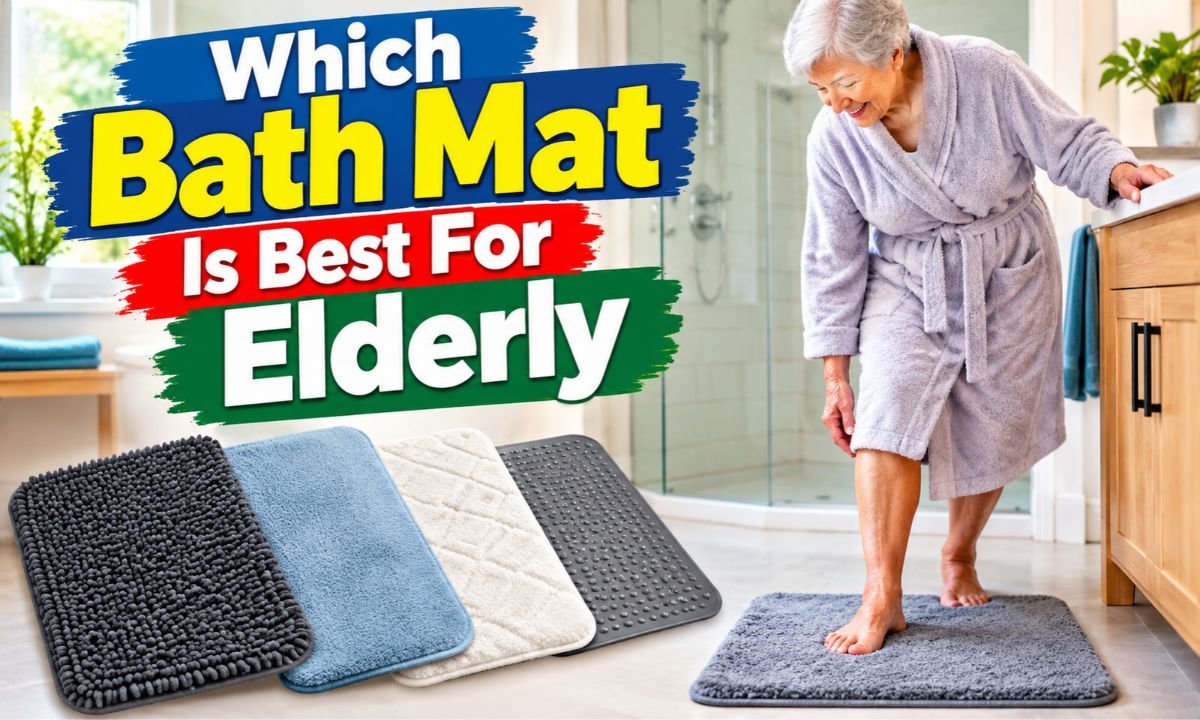
The best bath mat for an older adult has a secure grip, a low profile, a stable surface, and a fit suited to the bathroom.
In American homes, a bathroom can become a risky place when the floor is wet, the tub has a high edge, or a towel slides underfoot. Older adults may face extra challenges when they stand up, turn, or step out of a shower. A well-chosen bath mat can help, but the right type depends on where it will sit and how the person moves.
For a mat outside the tub or shower, look for a flat, firmly anchored design with a non-slip backing made for the floor type. Inside a bathtub or shower, choose a mat designed for wet use, with strong suction cups that fit the surface. Neither type replaces grab bars, good lighting, or help from a health professional when balance or mobility is a concern.
Which Bath Mat Is Best for Elderly Adults?
The best bath mat for an older adult is one that stays in place, creates no raised obstacle, and suits the surface where it will be used. For the floor outside a tub or shower, a thin mat with a firm, non-slip backing is often a practical choice. For inside the tub or shower, use a mat designed for wet conditions and made to grip that specific surface.
There is no single mat that works best in every bathroom. A person who walks steadily may need a different setup from someone who uses a walker, has trouble lifting their feet, or needs help getting in and out of a tub. The safest choice depends on the person’s mobility, the bathroom layout, and the mat’s ability to stay firmly in place.
Think of a bath mat as one part of a safety plan, not as a guarantee against falls. Even a mat with a strong grip can become slippery when soap, shampoo, or body oils build up on it. A secure bathing area also needs a clear path, good light, suitable handholds, and a way to get help if needed.
Best for the floor outside the shower
Choose a low-profile mat with a backing made for the exact floor material. The mat should not slide, bunch up, or have corners that curl.
Best for inside the tub
Choose a tub mat with suction cups and a textured top. Confirm that it fits the tub’s shape and can attach to the surface.
Best for a walk-in shower
Use a mat made for shower floors only if its design is compatible with the floor and does not block drainage. Some textured shower floors may work better without an added mat.
Best for a person using a walker
A clear, firm route may be safer than a loose mat. Ask an occupational therapist to assess whether any mat can be used without obstructing the mobility aid.
Why grip matters more than softness
A soft mat may feel pleasant under bare feet, but comfort alone does not make it safe. A thick or springy surface can make standing and turning less steady for someone with poor balance or weak legs. A mat that slides underfoot can create a sudden loss of support.
Give priority to stability, a flat edge, and a surface that remains manageable when damp. If a person needs cushioning because their feet hurt, consider that need separately from fall prevention. A health professional can help balance comfort and safety.
Look for a stable surface
The mat should not sink, fold, or shift when the person steps on it.
Check the edge
A thin, flat edge is less likely to catch a toe than a tall, raised border.
Types of Bath Mats and How They Compare
Bath mats come in several styles, but their uses are not interchangeable. A mat made to absorb water outside the shower may not be safe inside a bathtub. Likewise, a suction-cup mat intended for a tub may not attach to a textured or porous shower floor.
Compare the main types by their intended location, grip, cleaning needs, and effect on movement. The safest option is the one that remains secure in the real bathroom, rather than the one with the softest feel or the most features.
Thin rubber-backed floor mat
Can work well outside a shower if the backing is compatible with the floor, stays in place, and lies flat. Check the manufacturer’s guidance for wood, vinyl, tile, and other surfaces.
Suction-cup tub mat
Designed to grip a smooth tub surface during bathing. It needs a clean, suitable surface and regular checks to confirm that the cups still hold.
Textured shower mat
May offer added underfoot texture in a compatible shower. It must not rock, curl, cover a drain, or trap water in a way that makes cleaning difficult.
Memory foam mat
Offers a soft feel but may be too thick or yielding for a person with balance problems. Consider a flatter option if stepping onto it feels unstable.
Cotton or microfiber absorbent mat
Can soak up water outside the bathing area, but the backing and the mat’s ability to remain flat determine whether it is suitable for an older adult.
Wooden or bamboo slatted mat
Allows water to pass through the gaps, but it can shift, rock, or have uneven edges. It is not automatically safer than a soft mat and should be avoided if it creates an unstable step.
Rubber and PVC mats
Rubber and PVC are common materials for bathroom mats. The material name alone does not prove that a mat is slip-resistant, because the shape, backing, surface texture, and fit also affect performance. A rubber-backed floor mat must be approved for the type of floor on which it will sit.
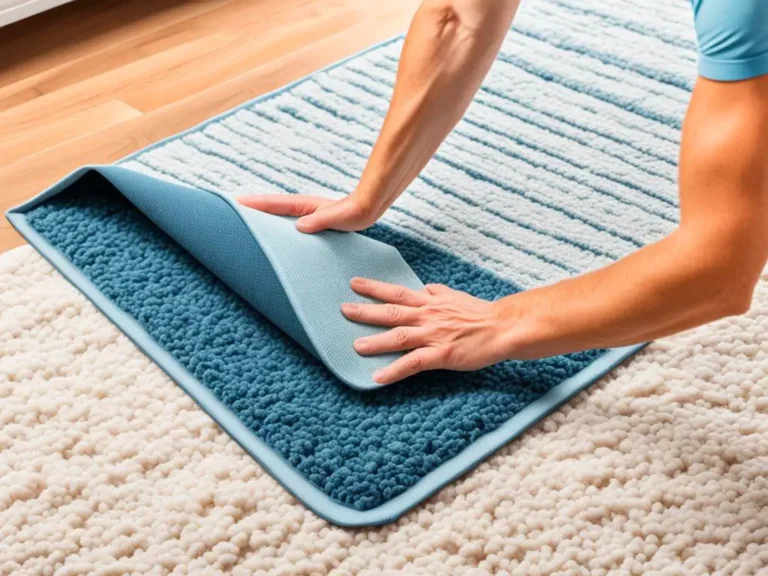
Some backings can discolor or damage certain floor finishes, particularly if moisture becomes trapped underneath. Read the flooring and mat instructions before use, and lift the mat during cleaning so both surfaces can dry.
For outside the tub
Check that the backing is designed for the exact floor type and does not slide when the floor is damp.
For inside the tub
Choose a model specifically intended for bathing, rather than a floor mat that happens to be made of rubber or plastic.
Do memory foam and plush mats suit seniors?
Not always. Deep foam and long pile can feel comfortable, but they may compress underfoot and make it harder to sense the floor. Thick edges can also create a trip point, especially for someone who takes short steps or has limited ability to lift their feet.
If an older adult strongly prefers a soft mat, test the setup while the person is wearing their usual safe footwear or standing as they normally would, with appropriate support nearby. If the mat shifts, sinks, or changes their balance, choose a firmer and flatter design.
Avoid deep pile when balance is poor
A flat, firm surface is usually easier to step onto and move across.
Do not judge by touch alone
Pressing a mat with a hand does not show how stable it will feel under a person’s full weight.
How to Choose a Safe Bath Mat for an Older Adult
Start by looking at the person’s actual movements in the bathroom. Notice where they step, turn, reach, and pause. A mat that works for someone who walks unaided may cause problems for someone who uses a cane, walker, or shower chair.
Measure the area before buying a mat. Leave enough clear floor for the person’s feet and mobility aid, and make sure the mat does not cover a drain, block a door, or interfere with a shower chair. A mat that is too small may shift, while an oversized mat may bunch against a wall or fixture.
If possible, have the person and a caregiver check the proposed setup together. The goal is a clear and predictable route, not simply a soft place to stand. If the person cannot step over a mat safely, removing the mat may be the better choice.
1. Match the mat to its location
Use a floor mat outside the bathing area and a bathing mat inside the tub or shower only when the product is designed for that use.
2. Check the backing or suction cups
For a floor mat, confirm that the backing suits the flooring. For a tub mat, press the suction cups onto a clean, smooth surface and test that they hold before bathing.
3. Choose a low profile
Avoid high borders, thick foam, curled corners, and loose fabric that can catch a foot or mobility aid.
4. Check the surface under wet conditions
The top should provide useful texture and should not become coated with soap or residue that makes it slick. Follow the product’s care instructions.
5. Plan for cleaning and drying
Choose a mat that can be lifted, cleaned, and dried without excessive effort. A mat that stays damp or is hard to clean may be a poor long-term fit.
6. Check movement before use
With the area dry and appropriate support available, check whether the mat moves, folds, or catches at the edge. Do not ask a person with poor balance to test it alone.
Consider a tub mat with suction cups designed for that tub, after confirming that the surface is suitable.
The person uses a walker or takes very small steps
Prioritize a clear route and consider leaving out a loose floor mat. Seek an occupational therapy assessment if the best setup is unclear.
The shower floor is textured or uneven
Do not assume suction cups will hold. Check the shower and mat instructions, and consider a professionally assessed alternative.
The person cannot safely step over a raised edge
Choose a flat route without a raised mat, or use a bathing setup designed for easier access.
Bath Mats Inside the Tub Versus Outside the Shower
The most important distinction is where the mat will be used. A bath mat outside the shower helps absorb water and may reduce sliding only when its backing grips the floor. A mat inside the tub is exposed to water, soap, and body products, so it needs a design made for that wet environment.
Do not move an ordinary absorbent rug into the tub just because its underside feels rubbery. Floor mats are not necessarily designed to attach to a wet bathing surface. Likewise, a suction-cup tub mat is not a substitute for a floor mat unless its manufacturer specifically permits that use.
Outside the bathing area
Place the mat where the person’s feet naturally land after bathing, provided it does not create an obstacle. Keep the surrounding floor clear and dry.
Inside a bathtub
Follow the manufacturer’s instructions for placement and suction. Confirm that the mat does not obstruct the drain or create a raised, unstable surface.
Inside a walk-in shower
Check whether the mat is suitable for the floor material and slope. Do not use one that shifts, traps water, or interferes with drainage.
When no mat is suitable
A bare but properly maintained textured shower floor, combined with suitable grab bars and bathing aids, may be more appropriate than an unstable mat.
How to check a suction-cup mat
Clean the tub surface and the mat according to the instructions before fitting it. Press each suction cup into place and inspect the whole mat to make sure it is attached securely. If the surface is textured, curved, or worn, the cups may not seal properly.
Before each bath or shower, check for loose corners and cups that have lifted. Stop using the mat if it moves or peels away from the surface. Suction cups can lose their hold with age, dirt, soap residue, or an unsuitable surface.
Check before every use
Look for lifted cups, curled edges, cracks, or a mat that slides when pressed.
Clean it as directed
Remove soap and body-product residue that may affect grip, and allow the mat to dry as instructed.
Replace worn mats
Do not rely on suction cups that no longer hold firmly or a surface that has become smooth and slippery.
Bath Mat Features That Matter for Seniors
Several small design details can make a mat easier or harder to use. The best choice has an appropriate surface, a secure attachment, a manageable weight, and edges that remain flat. It should also be easy for the person or caregiver to lift and clean.
Do not rely on a product label that simply says non-slip. That phrase does not tell you whether the mat suits a particular floor, whether the suction cups will hold in a textured tub, or whether the mat remains stable when wet. Check the instructions, materials, and fit instead.
Flat edges
Look for edges that do not curl or rise sharply above the floor. A low edge reduces one potential trip obstacle.
Secure grip
The backing or suction cups should be suited to the surface. Grip should be checked after cleaning and during regular use.
A stable top
Choose a surface that does not fold, buckle, or compress so much that standing becomes harder.
Drainage
For wet areas, make sure the mat allows water to drain as intended and does not create standing water or cover the drain.
Easy cleaning
A washable or easy-to-rinse mat is useful when the person or caregiver has limited time or hand strength.
Suitable size
The mat should cover the needed area without blocking a door, crowding the toilet, or interfering with a walker or shower chair.
Clear care instructions
Choose a product with instructions for cleaning, drying, surface compatibility, and replacement.
Are antimicrobial or mildew-resistant claims necessary?
These claims are not a substitute for cleaning and drying. Bathroom mats can collect soap residue, skin oils, and moisture, so regular care still matters. Check what the manufacturer actually claims and the conditions under which the feature applies.
A mat that is easy to rinse and dry may be more useful than one with a special label but poor drainage. If a mat develops persistent odor, visible mold, damaged backing, or a surface that cannot be cleaned, stop using it until it can be properly cleaned or replaced.
Choose care you can manage
Follow the stated washing method and avoid cleaning products that could damage the material.
Do not ignore wear
Cracks, peeling backing, weakened suction cups, and stubborn buildup are reasons to reassess the mat.
How a Bath Mat Fits Into a Safer Bathroom
A bath mat cannot make every bathroom safe. For an older adult who has fallen before, feels dizzy, has weak legs, or struggles to get in and out of the tub, a broader safety review may be needed. The bathing surface, transfer method, grab bars, lighting, and access to help all affect risk.
In the United States, an occupational therapist can assess daily activities and recommend changes suited to a person’s mobility. A clinician can also review repeated dizziness, faintness, medication concerns, or new balance problems. Do not treat a mat as the answer to a sudden change in walking or balance.
Install suitable grab bars
Properly installed grab bars provide a handhold designed for support. Towel bars and soap holders are not safe substitutes.
Improve lighting
Make the route to the bathroom easy to see, including at night. Reduce glare and shadows where possible.
Keep the route clear
Remove loose rugs, clutter, cords, and items that may catch a foot, cane, or walker.
Consider a shower chair
A suitable shower chair may reduce the need to stand during bathing, but it must fit the space and remain stable.
Review tub access
If stepping over the tub wall is difficult, consider professional advice about transfer aids or a more accessible bathing arrangement.
Arrange help when needed
A person who cannot safely transfer, stand, or recover balance should not be expected to manage bathing alone simply because a non-slip mat is present.
When to seek professional advice
Ask a health professional for a fall-risk review if the person has had a recent fall, feels unsteady, or has trouble standing up from a chair or getting into the shower. An occupational therapist may recommend equipment and changes based on the person’s movement and home layout.
Seek prompt medical care for new or worsening balance problems. If a fall causes a serious injury, loss of consciousness, severe pain, or possible head or neck injury, call 911 in the United States. Do not try to lift someone with a suspected serious injury unless there is an immediate danger that requires movement.
After a fall
Review what happened and consider medical advice, especially after a head strike, injury, or unexplained loss of balance.
For repeated dizziness
Arrange a clinical assessment rather than trying to solve the problem with a different mat.
For transfer difficulties
Ask about an occupational therapy assessment and bathing aids that match the person’s needs.
Common Bath Mat Mistakes to Avoid
Many bathroom hazards come from the way a mat fits into the room rather than from the material alone. A mat may look secure when dry but move after water reaches the floor. It may also become a problem if someone places it across the route used by a walker or leaves it bunched near the tub.
Inspect the whole bathing area rather than judging the mat in isolation. If the person changes how they walk, begins using a mobility aid, or needs more help with bathing, review the setup again.
Using one mat for every purpose
A floor mat, a tub mat, and a shower mat have different jobs. Use each only where its design is intended to work.
Choosing a mat because it feels soft
A thick, plush surface can compress or catch the feet. Stability and a low profile should come first when balance is limited.
Assuming suction cups work on every surface
Textured, curved, or uneven surfaces may prevent a secure seal. Follow the product’s surface requirements.
Leaving the mat wet all day
Persistent dampness can encourage buildup and make the surrounding area wet. Lift and dry the mat as directed.
Ignoring curled corners
A curled edge can catch a toe or mobility aid. Stop using the mat until it can be corrected or replaced.
Using a towel as a substitute
A loose bath towel can bunch up and slide. Use a purpose-made mat only when it can be anchored securely.
Treating the mat as a replacement for grab bars
A mat does not provide a stable handhold for sitting, standing, or transferring. Install suitable support where needed.
Ignoring the floor beneath the mat
Water or residue under a mat can affect grip and damage some floor finishes. Check and dry both surfaces during care.
What if the mat still slips?
Stop using a mat that shifts underfoot. For a floor mat, check whether the backing suits the floor and whether moisture or residue has collected underneath. For a tub mat, check the suction cups and surface compatibility.
If the mat still moves after correct cleaning and installation, replace it or remove it. Do not try to fix a slippery mat with loose tape, extra fabric, or an improvised layer that can create another trip hazard. If no suitable mat stays secure, seek professional guidance on the bathing setup.
Check the surface
Clean and dry it using methods approved for the flooring or tub.
Check the mat
Look for worn backing, damaged cups, stretched material, and curled edges.
Remove the hazard
If the mat cannot be made stable, do not keep using it in the hope that it will improve.
Cleaning, Drying, and Replacing a Bath Mat
Regular care helps a mat remain clean and makes it easier to spot damage. Follow the manufacturer’s instructions because washing methods vary by material, backing, and suction-cup design. A mat that can be cleaned without heavy lifting may be easier for an older adult or caregiver to maintain.
After bathing, remove standing water where practical and allow the mat to dry as directed. Lift floor mats so moisture does not remain trapped underneath, provided lifting can be done safely. If the person cannot manage this task without bending, stretching, or losing balance, a caregiver should handle it or choose a simpler setup.
Clean on a regular schedule
Use the cleaning method and frequency stated by the manufacturer, and clean sooner when soap, dirt, or body products build up.
Dry both sides
When the design allows it, dry the underside as well as the top to limit trapped moisture and residue.
Inspect after washing
Check that the backing still grips, the edges remain flat, and the mat has not cracked or stretched.
Replace when grip fails
There is no universal replacement interval for every mat. Replace it when its grip, structure, or cleanliness can no longer be maintained.
Store it safely
Do not leave a folded mat or loose mat leaning in the walking path. Store it where it cannot fall or become a new obstacle.
How often should a bath mat be replaced?
Replace a mat when it no longer stays in place, the suction cups no longer hold, the backing peels, the surface cracks, or persistent buildup cannot be removed. A fixed number of months is not reliable for every household because use, moisture, cleaning, and product quality differ.
Check the mat regularly and after any event that may have damaged it, such as a hard pull, a fall against it, or an unsuccessful wash. If the mat has become unreliable, do not wait for the next scheduled cleaning to replace it.
Replace for loss of grip
A mat that moves or releases from the tub should not remain in use.
Replace for structural damage
Cracks, tears, curling, and peeling backing can affect stability.
Replace for persistent contamination
If the mat remains moldy or foul-smelling after appropriate cleaning, stop using it and assess whether replacement is needed.
A Practical Checklist Before Buying
Before choosing a bath mat, check the needs of the person who will use it and the features of the bathroom. A short checklist can help prevent a purchase that looks right online but does not fit the actual space. If possible, take measurements and read the care instructions before ordering.
Location
Is the mat for the floor, the bathtub, or the shower? Confirm that the product is intended for that exact use.
Floor or tub material
Check compatibility with the surface, including any texture, slope, finish, or curve.
Mobility
Consider short steps, poor balance, limited foot lift, a cane, a walker, or a shower chair.
Profile and edges
Choose a low-profile design that lies flat and does not block a door or walking route.
Grip and drainage
Check the backing or suction cups and make sure water can drain as intended.
Cleaning
Confirm that the mat can be cleaned and dried in a way the household can manage.
Support nearby
Check whether properly installed grab bars, a shower chair, or professional advice is also needed.
Return and replacement options
Review the seller’s return terms and the manufacturer’s care guidance. Do not keep an unsuitable mat simply because it has already been purchased.
A simple example
Imagine an older adult who walks without a mobility aid but feels unsteady when stepping out of a shower onto a wet tile floor. A thin, absorbent mat with a backing approved for that tile may be a reasonable option if it remains firmly in place and lies flat.
Now imagine someone who uses a walker and has trouble lifting their feet. Even a low mat may catch a walker leg or change the height of the walking surface. For this person, a clear route and an occupational therapy assessment may be more useful than adding a mat.
The deciding factor
Choose based on how the person moves through the bathroom, not just the product’s material or advertised features.
Research Note and Next-Question Gap Map
This guide addresses the main decision: selecting a bath mat for an older adult based on grip, location, fit, mobility, and care. It also separates the role of a mat from other bathroom safety measures so readers do not mistake one accessory for a complete fall-prevention plan.
The following next-question map is an editorial analysis of practical needs that follow from the buying decision. These are inferred reader needs, not verified search-volume findings. No claim is made that a live search-results audit or hands-on product test was completed for this article.
Question: Should the mat go inside or outside the tub?
Stage: Before purchase. Basis: Inferred next need from the difference between floor mats and bathing mats. Coverage: Answered in this guide. Benefit: Helps prevent using a product in an area for which it was not designed. Evidence needed for product-specific decisions: Manufacturer instructions and surface compatibility.
Question: What if suction cups do not stick to the shower floor?
Stage: Setup and troubleshooting. Basis: Inferred next need from the dependence of suction on surface type. Coverage: Answered in this guide. Benefit: Encourages stopping use when the mat shifts. Evidence needed: The exact mat instructions and shower-surface material.
Question: Is a thick memory foam mat safe for someone who uses a walker?
Stage: Choosing a mat. Basis: Inferred next need from the interaction between mat height and mobility aids. Coverage: Answered in this guide. Benefit: Draws attention to edges, compression, and clearance. Evidence needed for an individual recommendation: Assessment of the person’s gait and home layout.
Question: How can a caregiver keep a mat clean without creating a lifting hazard?
Stage: Ongoing care. Basis: Inferred next need from cleaning and drying requirements. Coverage: Answered in this guide. Benefit: Makes maintenance part of the safety plan. Evidence needed: Product care instructions and an assessment of what the caregiver can safely manage.
Question: When is a bath mat not enough?
Stage: Safety review. Basis: Inferred next need from the limits of a mat for people with balance or transfer problems. Coverage: Answered in this guide. Benefit: Points readers toward grab bars, bathing aids, and professional assessment when appropriate. Evidence needed for personal decisions: Clinical or occupational therapy evaluation.
Evidence limits
This article provides general safety guidance and does not establish that one material or brand prevents falls better than all others. No product was represented as tested by the author, and no universal replacement interval or personal risk estimate is claimed.
For a product-specific decision, verify the current instructions for the exact model, the permitted surface, cleaning method, and limitations. For a person with a history of falls or difficulty transferring, an individual assessment is more useful than a general product ranking.
Documented product details
Use manufacturer instructions to verify intended use, surface compatibility, and care requirements.
Individual safety needs
Use a qualified clinician or occupational therapist to assess concerns that depend on the person’s mobility and bathroom layout.
Frequently Asked Questions
Q
What type of bath mat is safest for an elderly person?
For the floor outside a tub or shower, a thin mat with a secure backing designed for the floor type is often a practical choice. Inside the tub, choose a mat designed for wet use with suction cups that fit the surface. The safest option depends on mobility, floor material, and whether the mat remains stable.
Q
Are rubber bath mats better than fabric mats for seniors?
Not in every situation. A rubber or rubber-backed mat may offer useful grip when it is designed for the surface, but material alone does not prove safety. A fabric mat with a suitable backing may work outside the shower, while an ordinary fabric floor mat should not be used inside a tub unless its instructions specifically permit that use.
Q
Should an elderly person use a bath mat inside the shower?
Only if the mat is designed for that shower surface and stays securely in place. Suction cups may not hold on textured or uneven floors, and a loose mat can create a hazard. If no suitable mat fits, consider other safety measures and ask an occupational therapist about the bathing setup.
Q
Are memory foam bath mats safe for older adults?
They may not be the best choice for someone with poor balance, weak legs, or trouble lifting their feet. Thick foam can compress underfoot, and raised edges can catch a toe or mobility aid. A low-profile, firm mat may be easier to step onto, provided its backing is secure.
Q
How often should a bath mat be cleaned?
Follow the manufacturer’s cleaning instructions and clean it sooner if soap, dirt, or body-product residue builds up. Let the mat dry as directed, and check the underside for trapped moisture when the design allows. Replace it if it remains contaminated or loses its grip.
Q
Do bath mats prevent falls in older adults?
A suitable mat may help manage wet surfaces, but it cannot guarantee that a fall will not occur. A loose or poorly fitted mat can create another hazard. Bathroom safety may also require grab bars, better lighting, a shower chair, a clear walking route, and an individual fall-risk assessment.
Q
What should I do if an elderly family member keeps slipping in the bathroom?
Stop using any mat that shifts and check for wet floors, curled edges, poor lighting, and missing handholds. Arrange a medical assessment for repeated falls, dizziness, or new balance problems, and consider an occupational therapy home-safety review. Call 911 in the United States for a serious injury, loss of consciousness, or a suspected severe head or neck injury.
✦ Wrapping Up
Conclusion
The best bath mat for an older adult is not always the softest, thickest, or most expensive. It is the mat that suits the bathing area, grips the correct surface, lies flat, and does not interfere with the person’s steps or mobility aid. A floor mat and a tub mat serve different purposes, so choose the right design for the location.
Keep the mat clean, dry it as directed, and inspect it for loose backing, worn suction cups, cracks, and curled edges. If it moves underfoot, stop using it. For an older adult who has fallen, feels unsteady, or struggles to transfer, a bath mat alone is not enough; professional advice can help identify safer equipment and changes.
💡 Key Takeaway
Before buying, identify where the mat will go, check the surface and the person’s mobility, choose a low-profile design that stays secure, and review the whole bathroom for other fall hazards.