To fix a curling bathroom rug, lay it flat, gently reverse-roll the raised edges, and hold them down with clean, even weights until the rug keeps its shape. Check the backing before using heat, moisture, or adhesive.
A curling bathroom rug can turn a simple trip to the bathroom into a safety concern. In American homes, bathroom rugs often sit on ceramic tile, porcelain, vinyl, laminate, or hardwood floors. A raised corner can catch a bare foot, shift under your weight, or create a tripping risk near a bathtub or shower.
The good news is that many curling rugs can be fixed at home. A new rug may simply remember how it was folded or rolled for shipping. An older rug may curl because of moisture, washing, heat, poor storage, or a backing that has started to wear out.
Before trying a repair, check the rug’s care label and inspect its underside. A rug with an intact backing may respond to gentle reshaping and weight. However, a mat with cracked rubber, peeling layers, or a sticky underside may need replacement rather than another repair attempt.
This guide explains how to flatten curled bathroom rugs, identify the cause, choose a safe repair method, and prevent the problem from returning. It also covers special concerns for rubber-backed mats, heated floors, and common bathroom flooring.
Source: lemonslavenderandlaundry.com
Why Does a Bathroom Rug Start Curling?
A bathroom rug curls when its fabric, backing, or overall shape no longer rests evenly on the floor. One corner may lift, both ends may turn upward, or the entire edge may form a wave. The cause determines which repair method is likely to work.
Bathroom rugs face conditions that many living room rugs do not. They often absorb water, sit in humid air, and go through regular washing and drying. These changes can affect the fabric and backing in different ways.
A curled corner does not always mean the rug is ruined. However, a rug that keeps lifting after reshaping may have a more serious backing or construction problem.
Source: i.pinimg.com
Shipping and storage
A new rug may retain the shape of its packaging. Tight rolls and folds can leave corners bent even after the rug is placed on the bathroom floor.
Frequent washing
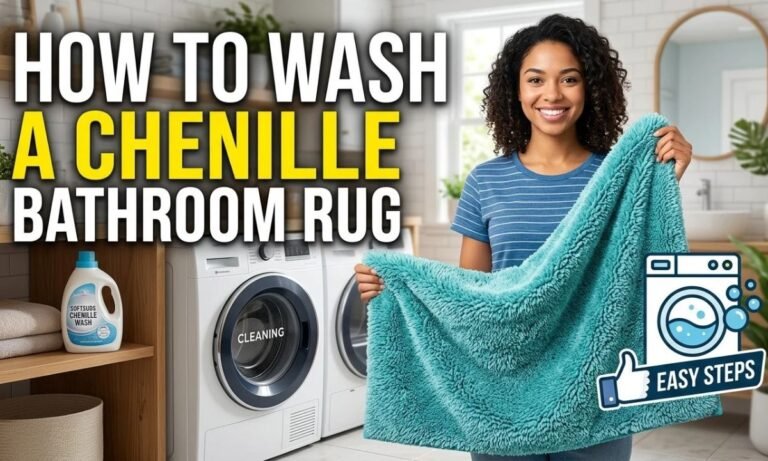
Repeated washing, strong spin cycles, and unsuitable drying methods can affect the fabric and backing differently. This may cause the rug to shrink, bend, or lose its original shape.
Moisture buildup
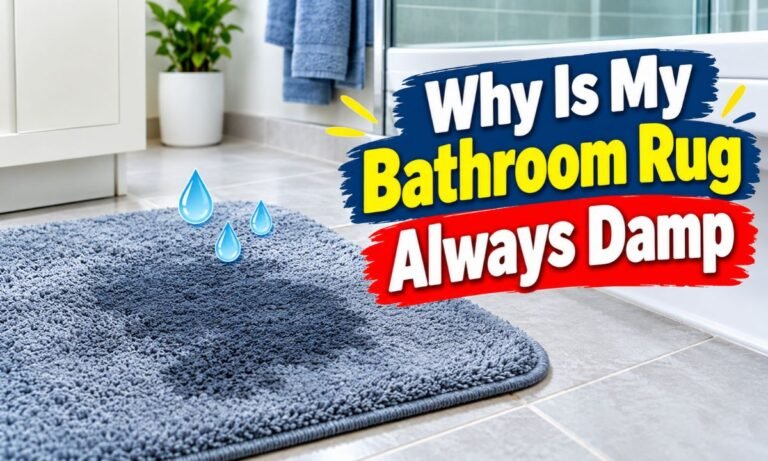
Water trapped under a bathroom rug can affect some backing materials and may contribute to deterioration. It can also leave the floor damp and make the mat less stable.
Heat exposure
Hot dryers, radiators, direct heat, and unapproved heated-floor use can soften or distort certain synthetic backings.
Aging backing
Rubber, latex, and other backing materials can become brittle, sticky, cracked, or detached over time. Once the backing loses its shape, simple flattening may not last.
Poor floor contact
A rug placed over dirt, soap residue, a raised floor joint, or an unsuitable underlay may not sit evenly. Repeated movement can make the edges lift.
How to Identify the Cause Before Repairing the Rug
Start by lifting the rug and examining both sides. Look for cracks, peeling, sticky areas, loose fibers, and sections where the fabric has separated from the backing. These signs suggest that the problem may involve material damage rather than a simple crease.
Next, check when the curling started. If the rug was new or recently unpacked, packaging memory may be responsible. If the problem appeared after washing or drying, review the laundry method and the care label before repeating it.
One corner curls upward
A folded corner, storage crease, or uneven edge may be responsible. Try gentle reshaping and flat weights if the backing is sound.
All four corners curl
The rug may have retained its rolled shape or may have an unsuitable backing. Check whether it lies flat when placed on another clean, dry surface.
The middle forms a bump
Look for trapped dirt, a folded underlay, or a change in the rug’s backing. Do not cover a raised section without finding the cause.
The rug curls after every wash
The washing or drying process may be changing its shape. Follow the manufacturer’s instructions and stop using any cycle or heat setting that causes damage.
How to Fix a Curling Bathroom Rug Step by Step
The safest starting point is to reshape the rug without adding heat, water, or adhesive. This works best for mild curls caused by shipping, folding, or temporary changes in shape. It also avoids unnecessary stress on rubber and latex backing.
Set aside a clean, dry area where the rug can lie flat. A dry laundry room, spare room, or other smooth surface can work. Keep the rug away from a doorway or walkway while you repair it so nobody trips over the raised edge.
Source: plastimake.com
What you need
A clean, flat surface, a dry towel, a few heavy books or other broad flat weights, and a soft cloth to protect the rug from marks.
Before you begin
Read the care label, inspect the backing, and make sure the rug is completely dry. Do not attempt to reshape a rug that has brittle, peeling, or badly damaged backing.
Step 1: Remove and Inspect the Bathroom Rug
Pick up the rug and move it away from the bathtub, shower, toilet, or sink. Check the entire underside for damage. Pay close attention to the corners because they often show the first signs of backing failure.
If the rug is wet, let it dry according to its care instructions. Never trap a damp mat beneath heavy objects for a long period. Trapped moisture can create odor and other problems, especially in a bathroom with poor airflow.
Also inspect the bathroom floor. Remove loose hair, dust, soap residue, and other debris. A clean surface helps the rug sit evenly when you return it.
Good sign
The fabric and backing remain attached, flexible, and free from cracks or sticky patches.
Warning sign
The backing flakes, peels, breaks apart, or feels unusually sticky. Do not rely on reshaping to restore its grip.
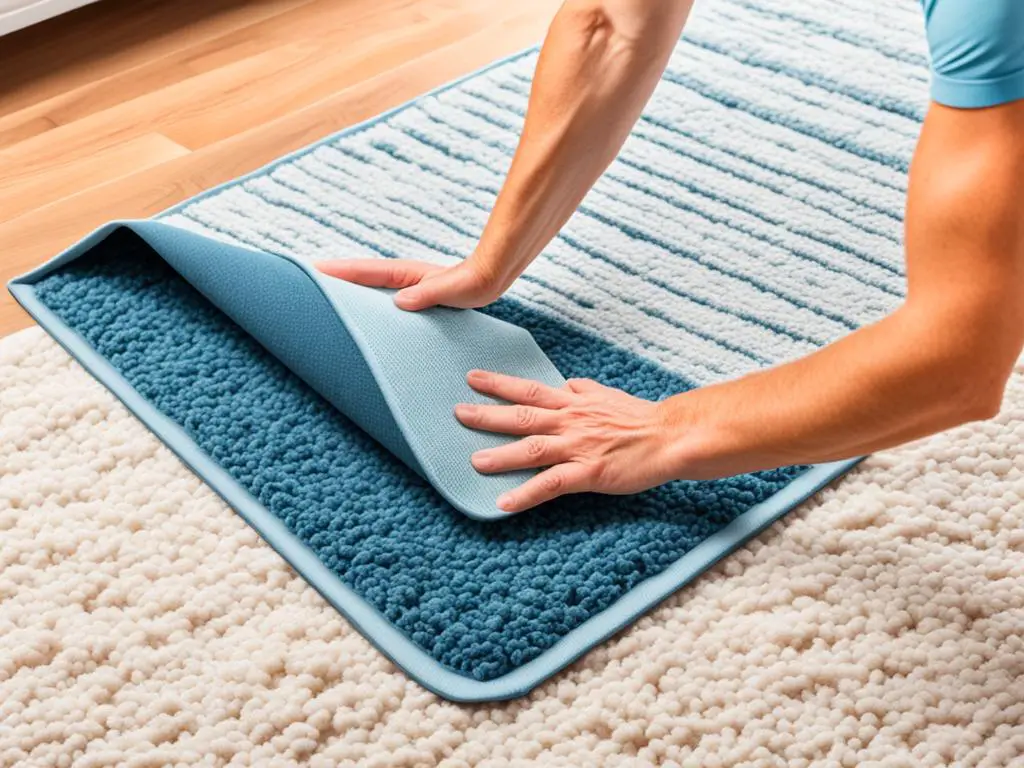
Step 2: Reverse-Roll the Curled Edge
Reverse rolling helps counter the bend that the rug has developed. If one end curls upward, gently roll that section in the opposite direction. Avoid making a sharp crease or forcing a stiff corner to bend.
For a rug with several curled edges, you can roll the whole rug in the opposite direction if its construction allows it. Follow the manufacturer’s instructions if the rug has a thick memory foam layer, rigid backing, or special layered design.
Leave the rug in the reverse-rolled position for a short period, then unroll it and check its shape. Some rugs respond quickly, while others need more time and repeated gentle reshaping.
For one raised corner
Work on that corner alone. Gently curve it in the opposite direction without folding the backing.
For a curled long edge
Roll the affected edge in the opposite direction and keep the roll loose enough to avoid crushing the rug.
For a new bathroom rug
Give the rug time to relax after unpacking. Do not force a tight reverse roll if the care label warns against bending.
Step 3: Place the Rug Flat
Unroll the rug and place it backing-side down on a clean, level surface. Smooth the fabric gently from the center toward the edges. This helps remove small folds without pulling the fibers or stretching the corners.
Check that the edges touch the surface. If one corner still rises, avoid pressing it down with your foot. Repeated pressure can make the curl worse or damage loose fibers.
Keep the surface dry
A dry surface helps prevent moisture from becoming trapped beneath the rug.
Avoid sharp folds
Do not bend the corner sharply backward. A strong crease can damage the backing or leave a new fold.
Step 4: Hold the Corners Down With Weight
Place a clean, dry towel over the curled section if the rug needs protection from marks. Set a broad, flat book or another stable weight on top. The weight should hold the corner flat without crushing the pile or creating a new dent.
For a larger rug, use several evenly spaced weights along the raised edge. Do not use a narrow or sharp object that may leave a permanent mark. Keep the weights away from areas where children or pets could knock them over.
Leave the rug under weight for about 24 to 48 hours as a practical starting point, then inspect it. This is not a guaranteed repair time; the result depends on the material, backing, and degree of curling. If the manufacturer gives a different time, follow its guidance.
Use broad weights
Choose flat books or stable objects that spread pressure over the affected area.
Protect the fabric
Use a clean barrier if the weight could leave a stain, rust mark, or pressure mark.
Check the result
Remove the weights and see whether the edge remains flat without support.
Step 5: Return the Rug and Check Its Stability
Once the rug lies flat, place it back on a clean, completely dry bathroom floor. Check every edge and corner before using it. The rug should not rock, bunch up, slide, or lift when you gently press near its edges.
If the rug stays flat but moves easily across the floor, investigate whether a compatible non-slip underlay is suitable. Do not assume that any adhesive grip or rubber pad will work with every floor type.
If the same corner lifts again, remove the rug and inspect the backing. A repeated curl can mean the material has a permanent bend or has started to fail.
Signs of success
The edges touch the floor, the backing remains intact, and the rug stays in place during normal use.
Signs the repair failed
The corner rises again, the mat slides, or the backing separates from the fabric.
Can Heat Help Flatten a Curling Bathroom Rug?
Heat can relax some rug materials, but it is not a safe general solution for bathroom rugs. Many bath mats have rubber, latex, foam, or layered synthetic backing. These materials may soften, melt, shrink, or lose their grip when exposed to too much heat.
A method that works on a woven area rug may damage a rubber-backed bath mat. Before using a clothes steamer, hair dryer, iron, or warm air, check the manufacturer’s instructions for the exact rug. If the label does not allow heat, do not use it.
The Institute of Inspection, Cleaning and Restoration Certification discusses edge curling in woven rugs and identifies controlled steaming and weighting as possible treatments in certain cases. Its guidance also warns that an iron can be too hot for synthetic fibers. This guidance concerns area rugs, so it should not be treated as automatic permission to heat a bathroom mat.
Source: i2.wp.com
Avoid direct ironing
An iron can create concentrated heat and pressure. It may scorch fibers, flatten the pile, or damage the backing.
Do not pour hot water on the rug
Hot water can affect adhesives, backing materials, dyes, and layered construction. It can also leave the rug difficult to dry.
Do not place the mat on a radiator
Direct heat can distort some backing materials and may create an uneven result.
Using a Hair Dryer Only When the Manufacturer Allows It
If the care instructions specifically allow gentle warm air, follow the stated distance, heat setting, and treatment time. Keep the air moving rather than holding it in one spot. Stop at once if the backing becomes sticky, smells unusual, or changes shape.
Do not use a hair dryer on an unknown backing simply because the rug is difficult to flatten. If you cannot confirm heat compatibility, use dry reshaping and weight instead. These methods take longer but avoid the risks linked to direct heat.
Check the care label
Confirm that warm air is allowed for the exact rug material.
Avoid concentrated heat
Do not aim hot air at one spot for a long time.
Let the rug cool
Allow the material to return to room temperature before checking whether it stays flat.
When Steam Is Not a Good Choice
Steam is not suitable for every bathroom rug. Memory foam, rubber-backed mats, delicate fibers, printed surfaces, and rugs with unknown adhesives may react poorly to heat and moisture.
A rug that has already started peeling or cracking should not be steamed. The treatment cannot restore a deteriorating backing, and extra heat may make the damage worse.
Unknown materials
Avoid steam when you cannot confirm the rug’s fiber and backing construction.
Rubber or latex damage
Do not attempt to soften or reshape a backing that is already breaking down.
Delicate rugs
Ask the manufacturer or a qualified rug care professional before applying heat or moisture.
How to Fix a Curling Bathroom Rug With Rubber Backing
A rubber-backed bathroom rug needs extra care because its backing helps keep it in place on a smooth floor. If that layer becomes distorted, the rug may curl, slide, or separate from its fabric surface.
First, check whether the backing is still flexible and firmly attached. If it is sound, try the dry reverse-roll and weight method. Avoid direct heat, strong chemicals, and unapproved adhesives.
Some rubber-backed mats are designed for machine washing, while others require hand washing or spot cleaning. Their drying instructions also differ. The care label should guide every cleaning and reshaping step.
Source: i.pinimg.com
Intact rubber backing
Gentle reshaping may help if the problem is only a temporary bend or fold.
Cracked rubber backing
The mat may no longer provide reliable grip. Replace it if the damage affects its stability.
Peeling backing
A backing that separates from the fabric cannot be made reliable by placing weights on top.
Sticky backing
Sticky or tacky areas may indicate material breakdown. Stop using the rug until you determine whether it is safe to keep.
Why Rubber-Backed Bathroom Rugs Curl After Washing
The fabric and backing do not always respond to washing and drying in the same way. Water, movement in the washer, and heat can change the shape of one layer more than another. This difference may pull the corners upward or cause the mat to buckle.
A strong spin cycle can also twist a lightweight mat. If the rug comes out of the washer with a new fold or raised corner, do not place it in a hot dryer unless its care label specifically permits machine drying.
Check the washing instructions before the next laundry cycle. Use only the approved water temperature, detergent, washer setting, and drying method.
Wash gently
Use the cycle recommended by the manufacturer. Avoid rough washing methods that can twist or stress the backing.
Use suitable detergent
Choose a detergent allowed by the care label and avoid harsh chemicals that may affect the rug.
Dry correctly
Air-dry the mat if the label requires it. Do not assume that all rubber-backed rugs can go in a tumble dryer.
Can You Repair a Rubber Backing That Has Started Peeling?
A peeling rubber backing is usually a replacement issue rather than a simple curling problem. Glue, household sealant, and random repair tape may not bond safely to the material. They can also leave a rough or raised area that creates another trip hazard.
If the backing is separating across a large area, the rug cannot provide dependable support. Replace it with a mat that is suitable for your bathroom floor and the way you wash and dry it.
Do not cover loose backing with tape
Tape may loosen with moisture and repeated cleaning. It can also create an uneven surface.
Do not use household glue
Unapproved glue may damage the rug or leave a hard patch that prevents it from lying flat.
Replace badly damaged mats
A new mat is the safer option when the backing no longer holds its shape or grip.
Can a Non-Slip Rug Pad Stop Bathroom Rug Corners From Curling?
A suitable non-slip rug pad can help a bathroom rug stay in place, but it does not repair a damaged corner. It is most useful when the rug is in good condition, lies flat after reshaping, and moves because its underside does not grip the floor well.
Choose an underlay that is approved for both the rug and the bathroom flooring. Some products can stain, discolor, or leave residue on certain vinyl, hardwood, and other floor finishes. The fact that a pad is labeled non-slip does not mean it works with every surface.
A pad should sit fully inside the rug’s outline. If it sticks out beyond the edge, it may create a new raised area and become another tripping risk. Follow the pad maker’s instructions for cutting, placement, cleaning, and floor compatibility.
Source: homefurniturediy.com
For ceramic or porcelain tile
Choose an underlay specifically approved for the tile and rug. Make sure both surfaces are clean and dry before installation.
For vinyl flooring
Check the flooring manufacturer’s compatibility guidance. Some rubber and adhesive materials can react with vinyl finishes.
For hardwood flooring
Use only an underlay approved for the floor’s finish. Avoid materials that can trap moisture or transfer color.
For heated bathroom floors
Confirm that both the rug and underlay are approved for heated-floor use. Heat can change some materials over time.
How to Install a Compatible Rug Underlay
Remove the rug and clean the floor. Let the surface dry fully before placing the underlay. Check its instructions to confirm which side faces the floor and which side faces the rug.
Trim the underlay only if its manufacturer permits cutting. Keep every edge inside the rug’s footprint. Then place the rug over it and check that the whole arrangement lies flat.
Lift the rug from time to time to inspect the floor and underlay. Remove moisture, clean any residue, and allow everything to dry before putting the mat back.
Check the dimensions
The underlay should be smaller than the rug so that it does not show around the edges.
Check floor compatibility
Read the manufacturer’s instructions before placing rubber, foam, or adhesive products on the floor.
Check stability
Press gently near the corners to make sure the rug does not shift or bunch.
Should You Use Double-Sided Rug Tape?
Double-sided rug tape can hold certain rugs in place, but it is not a universal bathroom fix. Water, cleaning products, and humidity can affect adhesive performance. Tape may also leave residue or damage a floor finish when removed.
Before using tape, confirm that the tape maker approves it for the exact flooring material and that the rug manufacturer permits adhesive contact with its backing. Avoid placing tape on a damp surface or using ordinary carpet tape without checking its intended use.
If you cannot confirm compatibility, choose a different mat or a suitable non-adhesive underlay. A bathroom rug should stay flat without relying on a product that may damage the floor.
Use approved tape only
Check the label for the exact floor type and rug backing.
Keep the surfaces dry
Never apply adhesive to a wet or freshly cleaned floor.
Remove it carefully
Follow the tape manufacturer’s removal instructions to reduce the risk of residue or floor damage.
How to Prevent a Bathroom Rug From Curling Again
Preventing another curl starts with proper drying, careful washing, and regular checks of the backing. A rug that stays damp or sits on an unsuitable floor surface may develop new problems even after a successful repair.
After every bath or shower, lift the rug when practical and let the floor and underside dry. This is especially helpful in small bathrooms with limited ventilation. Do not leave a wet mat folded over itself or pressed against a wall for long periods.
Storage also matters. Avoid folding the rug tightly or placing heavy items on one corner for long periods. If you need to store it, follow the manufacturer’s instructions and keep it in a dry place.
Source: i.pinimg.com
Keep both sides dry
Allow the rug and floor to dry before placing the mat back in its normal position.
Follow washing instructions
Use the recommended cycle and temperature to reduce stress on the fabric and backing.
Avoid unapproved heat
Keep the rug away from hot surfaces and use only the drying method listed on its care label.
Check the backing regularly
Look for peeling, cracking, sticky patches, and areas where the backing has separated.
Choose the right size
A rug that is pressed against a toilet base, cabinet, door, or tub edge may bend or bunch up.
Keep the floor clean
Remove dust, hair, soap residue, and other debris that can interfere with the rug’s contact with the floor.
How Often Should You Check a Bathroom Rug?
A quick check during normal bathroom cleaning is a useful habit. Lift the mat, inspect its underside, and look for damp areas, new bends, and changes in texture. Pay extra attention after washing or when the bathroom has been unusually humid.
There is no single inspection schedule that fits every rug. A mat used several times a day may need more frequent checks than one in a guest bathroom. Let the amount of use, moisture, and the condition of the backing guide your routine.
After washing
Check whether the mat has returned to its normal shape and whether the backing remains attached.
After heavy use
Look for wet patches underneath and corners that have shifted.
During routine cleaning
Check for cracks, loose fibers, peeling, and floor discoloration.
Choose a Bathroom Rug That Suits Your Floor
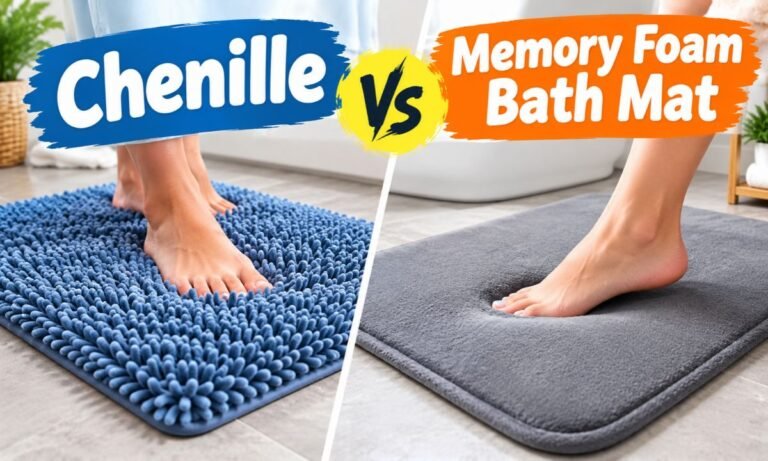
The right bathroom rug should match the floor, washing routine, and moisture level in the room. A mat that works well on tile may not be suitable for every vinyl or hardwood finish. Check the product instructions before purchase rather than relying on appearance alone.
Consider the rug’s backing, thickness, size, and drying needs. A thick mat may feel soft underfoot, but it may take longer to dry. A lightweight mat may dry more easily but can move if its backing does not grip the floor.
For small bathrooms
Choose a size that does not touch the door, toilet base, or cabinet when placed flat.
For busy family bathrooms
Look for a rug with clear washing instructions and a backing suited to frequent use.
For bathrooms with heated floors
Confirm that the mat and any underlay are approved for the floor’s heating system.
For hardwood bathrooms
Prioritize floor-compatible materials and a routine that allows the surface beneath the mat to dry.
When Should You Replace a Curling Bathroom Rug?
Replace a bathroom rug when its backing can no longer keep it flat and stable. A temporary bend may respond to gentle reshaping, but a damaged backing is a different problem. Continuing to use an unstable mat can create a trip or slip risk.
Look at the underside rather than judging the rug only by its appearance. A rug may still look attractive from above while its backing has become brittle, loose, or sticky. If the material breaks apart when handled, another round of flattening is unlikely to restore dependable performance.
You should also consider replacement if the rug repeatedly curls after careful reshaping, shifts across the floor, or develops a permanent wave. A replacement should fit the room and be suitable for the flooring material.
Source: i.pinimg.com
Cracked backing
Visible cracks suggest that the backing has lost some of its original flexibility.
Peeling layers
A backing that separates from the fabric may not provide stable support.
Sticky or crumbling material
These changes can indicate material breakdown and may leave residue on the floor.
Repeated curling
If the rug keeps lifting after reasonable repair attempts, the shape may be permanently distorted.
Persistent movement
A rug that slides or bunches when stepped on should not remain in regular use.
Unusual floor marks
Discoloration or residue under the rug may indicate an incompatible or deteriorating backing.
Is It Better to Repair or Replace the Rug?
The decision depends on the condition of the backing, the amount of curling, and whether the rug remains stable. A new mat with a small packaging crease may be worth reshaping. An older mat with damaged rubber or separated layers is usually better replaced.
Do not spend money on several adhesives or repair products when the basic material has failed. A repair that only hides the curl without restoring stability does not solve the underlying problem.
Repair it
Choose gentle reshaping when the rug is clean, dry, flexible, and structurally sound.
Add an underlay
Consider this when the rug lies flat but moves on the floor and both manufacturers approve the combination.
Replace it
Choose replacement when the backing is cracked, sticky, peeling, permanently warped, or unable to hold the rug in place.
Common Mistakes to Avoid When Fixing a Curling Bathroom Rug
A quick repair can become a costly mistake when the method does not match the rug’s material. Bathroom rugs are often made with several layers, and each layer may respond differently to water, heat, pressure, and adhesive.
Use a gentle approach and stop when the backing shows signs of damage. The goal is not just to make the rug look flat. It must also remain stable and safe to use on the bathroom floor.
Source: plastimake.com
Using too much heat
A hot iron, hair dryer, or radiator can damage synthetic fibers and rubber backing. Follow the care instructions instead of guessing.
Soaking the rug
Too much water can make drying difficult and may affect adhesives, dyes, or backing materials.
Using sharp objects to hold corners
Pins, nails, and other sharp items can damage the rug and create injury risks.
Applying strong household glue
Unapproved glue can leave hard spots, affect the floor, or fail when exposed to bathroom moisture.
Using a random rubber pad
An incompatible pad may discolor or mark some floors and may not hold the rug securely.
Ignoring a damaged backing
A badly worn backing cannot be restored by adding weight or pressing the corner flat.
Putting a damp rug back on the floor
Trapped moisture can lead to unpleasant odors and may affect the rug or floor.
Continuing to use a raised corner
Move the rug out of the walking area until it can be repaired or replaced. Do not leave a known trip hazard in place.
What If the Rug Still Curls After Several Days?
If the rug does not stay flat after careful reverse rolling and weighting, inspect it again. Check whether the floor is level, whether the backing has changed, and whether an underlay is pushing against the edges.
If the rug is new, contact the seller or manufacturer before trying stronger treatments. Ask whether the curl is expected to relax and which repair methods are approved for that model. Keep the packaging and purchase details if you may need to request an exchange.
If the rug is valuable, delicate, or made from an unfamiliar material, ask a qualified rug care professional for an assessment. A professional can help identify whether the problem is a surface crease, construction issue, or backing failure.
For a new rug
Check the return policy and manufacturer’s flattening instructions.
For an older rug
Inspect for backing deterioration and consider replacement if the structure is no longer sound.
For a valuable rug
Seek professional advice before using heat, moisture, or adhesive treatments.
Quick Comparison of Bathroom Rug Curling Fixes
Different repair methods suit different problems. Use the comparison below to choose a starting point based on the rug’s condition and the type of curl. The safest option is usually the one that changes the rug’s shape without damaging its backing.
Source: i2.wp.com
Reverse rolling
Best for mild curls caused by shipping, folding, or storage. It requires no added heat or adhesive.
Flat weights
Best for corners that need steady pressure after reshaping. Use a clean barrier and distribute the weight evenly.
Compatible underlay
Best for a rug that lies flat but moves on the floor. It must be approved for the flooring and rug materials.
Approved gentle heat
Only consider it when the manufacturer clearly permits the method. It is not appropriate for every synthetic or rubber-backed mat.
Replacement
Best when the backing is deteriorating, the rug remains warped, or the mat cannot stay safely in place.
Which Fix Should You Try First?
For a new rug with intact backing, start with reverse rolling and flat weights. For a mat that curls after washing, review the laundry instructions and let it dry fully before attempting to reshape it.
For a rug that stays flat but slides, investigate a compatible non-slip underlay. For a mat with peeling or cracked backing, stop trying to repair it and replace it.
New and slightly curled
Start with gentle reshaping and time.
Curled after washing
Check the care label, drying method, and backing condition.
Check whether an approved non-slip underlay can improve stability.
Cracked or peeling
Replace the mat rather than applying heat or glue.
Frequently Asked Questions
Q
How long does it take to flatten a curling bathroom rug?
A mild curl may improve after a short period of reverse rolling and weighting. A more stubborn bend may need several days of gentle reshaping. The exact time depends on the fabric, backing, and severity of the curl.
Check the rug regularly rather than leaving heavy objects on it without inspection. If it still curls after reasonable attempts, look for backing damage or ask the manufacturer for advice.
Q
Can I put a curling bathroom rug in the dryer?
Only use a dryer if the manufacturer’s care instructions specifically allow it. Some bathroom rugs can be tumble-dried, while others need to air-dry. Rubber- and latex-backed mats may be damaged by excessive heat.
Check the label for the approved temperature and drying cycle. If the instructions are missing or unclear, avoid high heat and choose a suitable air-drying method.
Q
Can I use an iron to flatten a bathroom rug?
Do not iron a bathroom rug unless its manufacturer specifically approves that method. Direct heat and pressure may damage the fibers, foam, rubber, latex, or adhesive layers.
Try gentle reverse rolling and evenly distributed weight first. If the rug is delicate or has an unknown backing, ask the manufacturer or a rug care professional before using heat.
Q
Why does my bathroom rug curl after every wash?
Repeated curling after washing may mean the fabric and backing are responding differently to water, agitation, or heat. A strong spin cycle or unsuitable dryer setting may also change the rug’s shape.
Check the care label and use the recommended washing and drying methods. If the backing is cracked, sticky, or separating from the fabric, replacement may be necessary.
Q
Does a rug pad stop bathroom rugs from curling?
A compatible non-slip rug pad can help keep a sound bathroom rug in place. It may reduce movement and help prevent mild edges from lifting again after reshaping.
However, a pad cannot repair damaged backing or correct a permanent bend. Make sure the pad is approved for the bathroom floor and fits completely inside the rug’s outline.
Q
Can I use double-sided tape on a bathroom rug?
You can consider rug tape only when both the rug and flooring manufacturers approve the product. Some adhesives can leave residue, damage floor finishes, or react with vinyl and other surfaces.
Keep the floor and rug dry before application and follow the removal instructions. Avoid ordinary household tape as a permanent bathroom repair.
Q
Why does my bathroom rug curl at all four corners?
All four corners may curl because the rug was tightly rolled or folded during shipping or storage. Changes in moisture, washing, or backing condition can also affect the whole rug.
Inspect the underside and try gentle reverse rolling if the backing is intact. If the entire mat has become stiff, cracked, or warped, it may need replacement.
Q
Is a curling bathroom rug dangerous?
Yes, a raised rug corner can catch a foot and cause someone to trip. A mat that moves across a wet bathroom floor can also increase the risk of slipping.
Remove an unstable rug from the walking area until you have repaired or replaced it. Do not keep using it just because the curl looks small.
Q
Can I put a bathroom rug on heated floors?
That depends on the floor heating system and the rug materials. Some rugs and underlays may not be suitable for heated floors because heat can affect their backing or adhesives.
Check both manufacturers’ instructions before placing the mat over the heated surface. Do not assume that a rug is compatible simply because it fits the room.
Q
Should I replace a bathroom rug with peeling rubber backing?
Yes, replacement is generally the safer choice when rubber backing is peeling, crumbling, sticky, or separating from the fabric. These changes can affect the rug’s ability to stay in place.
Household glue and random tape are not reliable ways to restore a damaged backing. Choose a replacement mat that is suitable for your floor and washing routine.
✦ Wrapping Up
Conclusion
A curling bathroom rug does not always need to be replaced. If the backing is still in good condition, gentle reverse rolling, careful reshaping, and evenly spread weight may help restore its flat shape. Give the rug time to relax and check the results before putting it back on the bathroom floor.
The material matters when choosing a repair. Avoid direct heat, soaking, and unapproved adhesives, especially on rubber-backed and foam-backed mats. If the rug keeps curling or its backing has started to crack, peel, or crumble, replacement is the more sensible choice.
Regular care can help prevent the problem from returning. Wash and dry the rug according to its label, keep moisture from collecting underneath, and use only floor-compatible underlays. Most of all, make sure every corner stays flat and the mat does not slide before using it again.
💡 Key Takeaway
Start by removing the rug, checking its backing, and letting it dry completely. If it is still in good condition, gently reverse-roll the curled edge, lay the rug flat, and hold it down with clean, broad weights for 24 to 48 hours. Recheck its stability before returning it to the bathroom. Replace the rug if the backing is damaged or the mat cannot stay flat and secure.